From Workplace Exhaustion to Human Vitality: Finding White Space [Juliet Funt]
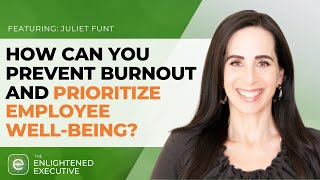
A recorded interview (Susan Drumm with Juliet Funt) about reclaiming creativity and reducing busyness at work by restoring "white space" — unscheduled micro- and macro-time that allows people to think, reflect, and contribute. Funt frames white space with a fire metaphor (space = oxygen), argues for a reductive mindset (do less, surrender tasks), and offers practical tactics: insert small interstitial "wedges" of 3s–5s–1–5 minutes, never let calendar events touch (create 5–15 minute stripes), shorten meetings (25/50-minute rules), run a "palace of priorities" planning exercise to remove low-value projects, and explore Results-Only Work Environment (RO/ROWE) thinking. She highlights leadership actions: make vulnerable admissions, "walk around" or ask frontline employees "How does it feel to work here?" to close empathy gaps. Evidence and claims include ~12 years of applied work, case stories (e.g., John the security guard who produced many patents because his role had 95% white space), and measured client improvements (about 25–30% of meetings/emails/reporting judged unnecessary, with substantial talent-value impact). Guest contact: julietfunt.com.
Questions this video answers
April 4, 2023
Costco; Pepsi; Nike; Wells Fargo
A Minute to Think
About 12 years
About 25–30%
Chapters
Foreign Hi, I'm Susan Drumm. And welcome to the Enlightened Executive, where your personal evolution sparks your leadership evolution. Each episode we feature groundbreaking techniques and strategies to help you get the edge in personal and leadership effectiveness. This episode is brought to you by Meritage Leadership. At Meritage, we strengthen leaders and empower teams to achieve high performance. Go to meritageleadership.com to learn more. Today we're discussing productivity and how to reclaim creativity and conquer busyness with your teams. And I'm happy to introduce Juliet Fundt. Juliet is a keynote speaker and an evangelist for freeing the potential of companies by unburdening their talent from busy work. Her mantra is we release the potential of your most valuable resource, your people. Juliet has worked with dozens of companies including Costco, Pepsi, Nike, and Wells Fargo. And she's the author of A Minute to Think, which helps leaders claw back thousands of hours in lost productivity, liberate their talent from low value work, and find more time to think. So welcome, Juliet.
Thank you. Thanks for having me.
Well, I'm really excited to have you here to talk about how we leverage our time and spend our time both as leaders and how we're spending our team's time. And one of the things that we've been talking about was that this is a unique moment in time to take a look at this. Can you share a little bit more about your perspective with that and why, why now?
Yeah. So I'll start you off with kind of the foundational metaphor that we need to understand the work that we care about, and then we can go into the topical relevance of it. The metaphor that we want to play with is that of building a fire. And if you build a fire, which I learned along the way from not being good at it as a child, you need a lot of different ingredients. You could have fire starter, that industrial chemical stuff, maybe pine cones, good wood. And no matter what you add, if you skip one foundational ingredient, your fire will never ignite. And that ingredient is space. It's the space in between those combustibles that allows a fire to ignite and actually draws a spark into a flame. And so when we talk about creativity or productivity or getting the best of talent, what we really want is we want the spark of who we've hired to ignite into a big, broad, beautiful blaze of all that they're capable of in all of these areas. But we don't oxygenate them. We crush them with emails and meetings and decks and reports and paperwork and garbage all day long. And then we expect Somehow for them to have vitality and contribution. This is a pre pandemic, post pandemic reality. We've been doing this work for about 20 years looking for what we call white space at work. The time in between that time without assignment, where you can think, pause, reflect, recuperate, ponder, mull, question and assumption. All of the wonderful thinking work that infuses work with quality that has been extinguished and the reason that we call it white is back in the day of coaching senior executives, we'd open up the day planner, the actual physical paper planner, and the first line to try to find a sense of contribution or creativity was how much white space is on each day. The actual white blocks that had nothing scaled scheduled on them because we knew that unscheduled time is the unlock for all sorts of contribution. And so we have to really start there, this idea of space and white space. But it's a really, really, really hard time now for it. We're in, you know, we're two years into this pandemic grind and we've seamlessly, I don't know exactly the company size of most of your listeners, but in the larger and mid sized companies, two years of crushing pandemic exhaustion, sublimated, denied, we pushed through and now we're going to turn the corner right to a recession and budget cuts and layoffs and with absolutely no empathic inhale to see how are people even standing up at this point. Much less creativity and contribution. So it's a dire time for human vitality at work and it's something that I'm really concerned about. This topical is this momentary juncture that we're at in terms of human weariness?
Yes, yes. I think two things that you bring up. One is this idea that I find some senior leaders want to optimize time. They're really focused on optimizing time and somehow they've equated optimizing time with fill every moment. Because if I'm wasting a moment, then it's a wasted day or waste of time or I'm not being effective. And I think there's a mindset shift that's really important around what is effectiveness ultimately. And I love your analogy of the fire because we're missing the oxygen to be more effective, just to keep going at it and going at it and going at it doesn't actually produce the results that you are truly intending to create. So that's, that's kind of like one backdrop and the other piece that I would hear a lot from leaders is like, well, that's all well and good. I'd love to have that too. But we are in a situation, the big. But we are in a situation right now, and. And I'm just getting crushed with meetings and the demands that we need to do. And so how is this even possible? Like, great in theory, but put it in practice, right? How, how do we do it?
So I'll tell you, we have 12 years of doing this work with measurable pre and post to show that it's not a fantasy, that you can actually make work lighter. And the productivity angle is definitely important. We use that word. You use that word. But the Trojan horse of our work is, yes, we come in to make you more productive and we help, but we also really care about all the tolerated misery that human beings have to deal with in just going to do the thing they call a job. And so the beauty is that these two really symbiotic tracks can go forward at the same time, which is, yeah, you can become more productive. And ironically, the same things that you do to become more productive make better priorities, optimize waste, reduce garbage. They also make work more sane and humane for people. They make people turn laptops off after dinner. They make people take vacation. The same tactics beautifully lead to good for the people, good for the business. And so that's what we care about. And I promise you that it's possible. We have lots of good case studies to show that it is. But you do need to step into, as you said, a different mindset. Because the additive mindset of work, additiveness being tied to valor, is one that we have to let go of and dismantle. And we teach in the book what we call a reductive mindset. Reductive has other meanings, but we're talking about the mathematical sense of what can you surrender, reduce, let go, stop doing, do less, give to a vendor, do less perfectly. If we can't find places to be what we call reductive, then that magical unlock of having thinking time and happy people will never happen.
Yes, yes. And the ability to, to value the white space, that it doesn't mean that you're not doing your job. And I've also found people, what do I do during that time? Like, I'm not sure if I'm not in motion.
Yes.
And accomplishing something, what do I do with myself? And I also think there's a reason why that's also a bit scary. Because often when it's almost like we're using action to soothe anxiety, it's not like we are.
We are absolutely using action to solve anxiety. There's more free floating anxiety at work right now than maybe any time I've ever been a professional. And it's so easy to use the dopamine and the digital stimulation and the channels and the checking in the newness and the fullness to just calm, you know, you're reminding me there's a. We talk a lot of times about busyness will make you comfortably numb. And there was a client of mine whose husband died three years before I met her at a live event. And she said to me, I never took a long shower for the whole three years between when he passed away and when I started doing your work. Because I knew that in that moment if I was doing nothing, that the grief would catch up to me finally. And so she would get in and get out. And we're just getting in and get out of every moment to not feel the ambiguity and the fear and the exhaustion. And I, I couldn't agree with you more that there's a very important emotional shaking hands with the reality of your emotions that can occur during that time. I think the avenue into getting senior leaders to care might be one track over which is if you can't reflect or ponder or let an idea germinate, how can you ever have an aha, breakthrough game changing idea? We tell a story in the book about this guy named John who I love. He is a security guard at a Fortune 200 insurance company. And John the security guard in this company where they really focus on solving a lot of problems and creating a lot of patents. It happens that John the security guard holds the record for filing the most patents in this giant company and not the guys in innovation, not the brainiacs that were invented that were hired to do so. I met him and I interviewed him and we talked about how he is really smart and he's very unique, obviously, but his job is 95% white space. So he's waiting for something to occur. He's on duty, on deck. And in all that time he follows ideas, he vets them, he iterates, he plays, he solves, he rejects. And the kicker of the story is two different times he was promoted into, from security into innovation. And he stayed there a little while and then he took a demotion in both position and salary back to security two times because when they made him an official innovation guy, they filled his day with all this corporate crap and then he could, he couldn't think anymore and he stopped producing the things that gave him professional pleasure and a sense of accomplishment.
Yeah, Just having that amount of space, what you can create. Now, what would you. What is your recommendation for how much white space should we have in a day? When is too much and what is too little? Well, we kind of know what's too little. Like, if you look at your calendar and you don't have. You barely have time to eat or use the restroom. Yeah, you definitely have a problem.
Well, I'll tell you that the foundational tool that people use to get started is to think of it very, very minimalistically, because nobody has room for these executive stretches of white space. We just want little sips. And so think about a wedge of time. We call this the wedge. One wedge of little time that's inserted between any two activities in your day that would have been connected without it. And it just is opening and inserting these little interstitial sips of 3 seconds, 5 seconds, a minute, 2 minutes, 5 minutes. You'd be shocked when you can just oxygenate a little bit. I think you and I were started late today because in two different locations, the hard wire that was supposed to connect me to you failed. And I drove from one to the other and arrived at the other and found that it was failing there too. So by the time I came to you, if I hadn't taken 30 seconds.
Oh.
To just shift, I would have been at half mast for the whole interview. And so we have to look at that interstitial use first. One way you can think about it in terms of the basic calendar is just imagine your calendar, which for most executives looks like a paint swatch. It probably looks like color, color, color, color, color, color, color, all the way down. You start with one simple rule, which is never let the colors touch. We want to see stripes in your calendar because each little stripe is going to be a 5 or 10 or 15 minute buffer that allows you that time. And I could go much more into detail about how those stripes are used, if you like. But just starting there is the first.
And one easy way to do that is, you know, we get in the mindset that meetings need to be 30 minutes or 60 minutes, but they don't. We actually end up filling the time. So on your 30 minute meetings, if you can make them 25 minutes, like as a matter of course, and on your hour meetings, they're 50 minutes and you've got at least 10 minutes of white space there to be able to do something differently during that time. Where takes notes. Right. So how often are we running from meeting to meeting? We're getting great Ideas, but they never get actual implemented. Yes, because we forgot them. Because we're on to the next thing right now. Think about 10 minutes. You can take the notes or record what you need. All of that thing. All of those things. Absolutely.
And you could be a human who might actually need to pee or eat or breathe or do all the things that we're pretending our robotic selves do not need to do anymore.
Yes. Yes. Well, you talked about the concept of the empathy gap. Can you explain a little bit more about what you mean by that and how it's impacting our busyness?
Yes. There is a. A kind of a chronic problem in corporations as they get larger, that executive leadership is too far from the pain to see it or to believe it. And I think one of the reasons why this really horrible state of exhaustion is persisting is that senior executives often have not been helped in the right way to look at their own empathy gap, the gap of their understanding of what's really going on in the ground. Now, when you begin talking about this, leaders will freeze up because it sounds like an accusation. But if you can soften and just say, I wonder if it would be good for my business to consider my own empathy gap. I wonder if I have one. And I often tell them that there's a softness that goes around this. The front line also has an empathy gap. Back to senior leadership. They don't understand the pressures of the quarterly shareholder call or making payroll or any of the things that keep you up at night, but likely you have one down to them as well. Now, senior executives think the empathy gap is two cliffs and they're both standing on the edge of a cliff, and it's really close. HR thinks the empathy gap is about here, and the frontline thinks the empathy gap is around here. And so we question and we ask questions to find out where is it that I don't really understand? So when we're working with senior leaders, first we have to talk them out of taking the idea of the empathy gap personally. And then we have to start saying, if you were to be curious and neutral, if you were to become an anthropologist to your own life, how could you investigate to find out if you did in fact have an empathy gap? One way is to walk around at levels far beneath your level and just talk to people about how they're feeling. You'd be absolutely shocked how few senior leaders make time to just go around. Or if it has to be zoom, zoom around and just say, it occurs to me that I'm so busy, I may not have actually asked you this question. How does it feel to work here? And when you ask people with the word feel in there, it shifts them into a different kind of thinking. That's about the visceral, the experiential. It's the reason people stay, it's the reason people leave. How does it feel to work here? So that's, that's one of several ways that leaders can begin addressing their own empathy gap. And I don't believe that the weariness and the waste of corporate America is going to be solved unless we can tick leaders in that direction.
Yes, yes. I think as I love that question and I think there isn't enough of that work because leaders are also having no white space to actually do that. And I've had leaders or encourage them to block time on their calendar, at least on Fridays to go walk around or Thursday, whatever that, towards the end of the week to see, how was this week for you? This week? Was there a high point? Was there a low point? What has made you want to jump out of bed in the morning? And what's made you basically want to crawl back in or not leave your bed? And knowing that and asking it that way versus sometimes it can be scary to say, well, how does it feel to work here? Well, what do I say? Do I tell the honest truth of what it really feels like? And how can leaders open the door to get the honest truth with that? And so much of it has to be your energy as you go into those conversations.
Absolutely. Also, you have to start with something. We call it making a vulnerable admission. If you've pondered your own contribution to weariness and waste as a leader, you'll probably be able to find one thing that you've done wrong. And I just had to do this with my team on this off site we came back through, I started talking about here's the things in 22 that I feel I'm still doing imperfectly as a leader and I'd like to commit to doing them differently. When you begin with an admission of, you know what? I think I'm the one sending email on Sunday night or, you know, I never take a vacation, so I can't model for you how important it is when you make a vulnerable admission. There's a humanity that's unlocked and it can build upon this beautiful authenticity that the pandemic has opened for us where we see people in their real Life and the CFO's Cat Walks across the keyboard and he doesn't seem so scary anymore. And so we can Just keep doubling down on that sweetness and authenticity by picking something that is true and copying to it. And when leaders do that, it won't open the door for the CEO talking to a new hire. They're still going to be closed off. But you can shift that power distance.
I love that. What a wonderful suggestion. And thinking, if you're going to open that door, how have you contributed to it so that it isn't so scary for people to share? Yeah.
You know, my dad was Alan Funt from the Candid Camera show. And I think a lot of your audience might be too young to remember that show, but it was very famous if you.
I do remember.
Yes. Right. So ask your parents, for those of you who don't know. But it was huge. It was the very first reality television show. And when he interviewed children, my dad would have this little exercise. He knew that there would be a very strong power distance and they would be clammed up, big strong guy sitting in a little kindergarten chair. And so he would feign the inability to blow out a match. He would light a match and he'd go. And then he would turn to the youngster and say, can you blow this out for me? And for a moment, the power distance reversed itself and the youngster was able to help and step up. And so that moment of closing the power distance then unlocked a lot of really beautiful, authentic conversation. Leaders have to sit and say, I get it. That my stature, my title, my personality might be creating a power distance. What are some things I can do to humanize myself? And that vulnerable admission is the first one we always recommend.
What a great story from your dad.
Thank you.
Love that. Now you talked about this concept of palace of priorities and organized. Tell us a little bit more about that concept.
This is a fun one because if we're being reductive, we have to start the year with the right amount of stuff in the first place. So we just, I was telling you before we started recording, we, our team just came back from our off site where we planned the entire year the way that we did that. People get intrigued by the behind the scenes activities of a productivity person unleashing their tools on themselves. So it might be fun to share. We do something that we call the palace of priorities. The reason it's palace is it looks a little bit like columns with a roof. When the process is finished, you begin by picking a sticky color. Sticky note, color. We put all of our priorities for the year in pink sticky notes, put them up on a wall. Then we put all of our Projects for the year that would fall underneath those priorities on blue post it notes. And we put them up on the wall and then we segmented them in two areas. This is sales, this is marketing, this is ops, et cetera. And when you have those groupings, you have pink at the top and blue on the bottom. Then is the reductive part of planning your year where the whole team sits and and stares at the wall and says, is there anything that we should take off the wall? Is there anything we can let go of? Is there anything we should stop doing or shrink in scope or give to a vendor or do in 24? Where can we let go to slim down this pile before we really commit to it? And it's amazing to watch. It took us about four hours to get it on the wall and then to take things off of the wall and the mirage of being reductive, the mirage of letting things go. As you think, oh, when I crumple up that post it note, I'll know it's the right thing to do and I'll feel good about doing it. And you never do because you wouldn't have put it on the wall in the first place if you didn't love the thing. Every crumpled post it note is a surrender. But every crumpled post it note also is unleaking bandwidth and unlocking bandwidth and bandwidth and bandwidth for you guys to do more on the things that remain on the wall. And then at the end of the day, you draw lines and arrows up and this is where the, the roof of the palace comes from as you draw lines and arrows up to your why the inspiration, the reason, the meaning, the what gets you up in the morning part of it. And when we finished, we took a break for lunch and then we ended up. This was a longer process that had started earlier, but then we made project plans for everything on the wall. And I'll tell you, you can do a process for a small to mid sized company in one day, for a larger company in two to three days that will leave you so clear that it will leave you no discretionary confusion. When you sit down and say what should I do today? It would just be like a laser. Going forward, it's one of our favorite.
Everyone's aligned on that because they also helped contribute to that. So often I see some leaders setting the context for it, but it doesn't get translated down the path of where do I, how do I make trade offs? You said this was important. You said this is important. I can't cover both. How do I Make trade offs between those.
Right.
And, and getting some sense and vision in there because this is a visioning exercise. Ultimately, where do we want to be by the end of the year? What do we want to have accomplished? And, and you know, the crumpled pieces of paper maybe are you put. You just, you crumple them up and maybe just put them in a little Ziploc baggie that you take out again.
I love that idea for later. Yes.
It's not like they're gone. Sometimes people hold on to the idea. They're not gone forever. And maybe even six months into the year, you look at how well are we doing against these and can we add that back or not?
No.
We should probably wait till our planning thing in 2024.
You know, ye, what's interesting is if you follow the psychological clinging to each idea right before you. This was just two days ago we did this. Right before you take it off the wall, you feel like, oh, we can't take that off. And then right after you take it off the wall you go, ah, I feel so much lighter now because I have one less thing. And it's a fascinating experience to surrender in that way. Once you build the muscle of this repeated reduction, you can now do that again and again throughout the year. We advocate quarterly or monthly times where you look at everything on your plate. We use a whiteboarding program called Miro, but you can use anyone that you want and put a bunch of stuff up and say, what's waste? What's unnecessary? What do we hate doing? What is everyone complaining about? What can we let go of? When we measure clients before and after on our initiatives, when we do training, we usually see about 25 to 30% of their meeting, email and messaging and reporting, all forecasting categories reported as. This feels unnecessary to me, but somehow those tasks remain on the plate. And if you take talent value and you connect it then to 25 to 30% of their time, that's a million dollars annually for every 50 people in things that people wish they weren't doing all day long. Yes, that's what we need to relieve.
Absolutely, absolutely. So we've talked about a number of things that leaders can do so far. What's one other additional thing that you can say, okay, tomorrow to make a difference and really start and make this year different than the last. What's one piece of advice or suggestion where they could take action?
I think that I would have them dedicate a half an hour tomorrow to reading about the concept called row. RO stands for Results only Work environment and if that leader sat down and googled row and read about why it's wonderful and how to apply it and what it looks like, it would stimulate ideas. They may not grasp or implement every single one of those ideas, but ROE is the answer to this horrible argument going back and forth about freedom and autonomy and return to the office and working at home. A results only work environment means all we care about are your results. Now, results means personal productivity, but it also means team productivity and community. So there has to be some give and take. If you refocus yourself as a leader on creating a results only work environment, you let go of all the taking it personally and all the I wish it was the way it was before and you just say what would help us create great results? And I think that would create a filter for every leader listening and to have a spectacular 23 yes, what's so.
Important are those two additional pieces not just results in terms of sales or return, but the team productivity as well as the community and the culture.
Yes, because if you use RO can sometimes be an excuse for the work from home people to say I'm never coming back to the office because I can get better results at home and if they're defining it very thinly as I get more stuff done. But if you look at the holistic results of what we're building as a company, then results only work environment takes on more nuances and can be even more interesting to explore.
Beautifully said. So where can people learn more?
Oh thank you. They can come to julietfont.com and we'll tell you all about the wonderful ways that we operationalize these concepts in companies. We would love to do that.
Excellent. Well, thank you so much for joining and talking about this really important topic because as leaders focus on mental health and noticing that there's more mental health challenges in the workplace, this is the culprit. Let's take a deeper look.
Thank you so much for having me.
If you like this episode, you're not going to want to miss my interview with Robert Mack, who helps individuals and organizations achieve a balance of professional success, success, authentic personal happiness, and organizational health. Let's lead the way. Hope you enjoyed today's episode and I'd like to point you to the next important step. Hit the subscribe button and the bell to get notified when we release new content. I'll see you on the next episode of the Enlightened Executive. Sam.
More from Susan


Why the Biggest Doors Open When You're Not in the Room | Michael Roderick & Susan Drumm





The Simple Audit That Adds a Human Touch to Every Customer Interaction #shorts


