Giving a Voice to the Unsung Leader [Dorie Clark]
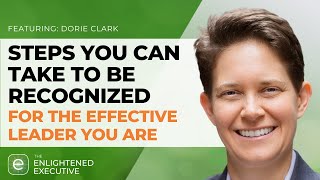
YouTube interview on The Enlightened Executive (host Susan Drumm) with Dorie Clark about self-reinvention, getting recognized as a leader, and practicing long-term thinking. Clark outlines three components for being recognized: content creation (share ideas publicly), social proof (visible credibility markers), and network (people who amplify you). They discuss practical tactics for internal-company visibility, entrepreneurial content strategies (e.g., using podcasts to build relationships), and overcoming common barriers to long-term thinking. Clark shares her book The Long Game (subtitle: How to Be a Long-Term Thinker in a Short-Term World), notes its publisher approval on Feb 28, 2020 (immediately before COVID disruptions), and points listeners to a free Long Game strategic thinking self-assessment at dorieclark.com.
Questions this video answers
February 28, 2020.
March 1, 2020 (mentioned in the interview).
dorieclark.com (free resource mentioned in the interview).
Chapters
Hi, I'm Susan Drumm and welcome to the Enlightened Executive where your personal evolution sparks your leadership evolution. Each episode we feature groundbreaking techniques and strategies to help you get the edge in personal and leadership effectiveness. This episode is brought to you by Meritage Leadership. At Meritage, we strengthen leaders, empower teams to achieve high performance. Go to meritageleadership.com to learn more. Today we're talking about self reinvention and playing for the long game and I'm so excited and honored to have Dorie Clark on the show today. Dori helps individuals and companies get their best ideas heard in a crowded, noisy world. Dori is a Wall Street Journal best selling author of several books including the Long Game, Entrepreneurial you, Reinventing you and Stand out, which was named the number one leadership book of the year by Inc. Magazine. She's been named one of the top 50 thinkers globally by Thinkers50 and honored as the number one communication coach by Marshall Goldsmith. She's a keynote speaker and teaches at Duke as well as Columbia Business School and as a graduate of the Harvard Divinity School and has produced multiple Grammy winning jazz album. So I'm excited about that because we both have a love of music and we'll have to get into that a little bit later, but welcome Dori. We have a lot in common and I'm so excited to share some of your wisdom with my audience.
Thank you so much Susan. I'm really glad to talk with you.
So tell me, if you had to boil it down, what is the one message that you want to make sure that any listener of the show would need to know to be a more effective leader?
I have long been focused on the question of how we make sure other people recognize that we are effective leaders because I get so frustrated because we often live in this world where the loudest voices are the ones that win, not the people who actually are the best or are the best leaders or have the best ideas. And so something that has been quite important to me in my work is trying to give people the skills that so that we can actually make sure that you are recognized for your expertise rather than being the tree that falls in the forest because it is so crowded and so noisy. Frankly, it's just a lot easier for people to overlook you. And I don't want people to overlook really talented leaders.
I love that mission and I think it's something we share. The reason I started this podcast because I saw so many great examples of tremendous leadership that nobody knows about, right? They just see there's examples everywhere of poor leadership out in the media. But let's actually celebrate and honor and hold up as role models, those who are able to lead from a more conscious perspective. So tell us a little bit about some of the strategies that you help people with to be able to do that, to get their voice heard in a crowded, busy world.
Yeah, absolutely. So ultimately, when it comes to getting your ideas heard and recognized, there's three key components that I've centered in on. I spent probably close to a decade really looking into this and researching it. And what I've discovered is that if you're going to be recognized for your expertise, whether we're talking about inside your company or in your field more broadly, the three things that we've got to keep our eyes on. Number one is content creation. Number two is social proof. Number three is network. And I'll explain really briefly what I mean by them. For content creation, it just really means you need to start sharing your ideas publicly. It doesn't matter. I'm using content in a super agnostic way. It could be writing, it could be speaking, it could be presenting on panels, you know, whatever it is, could be doing a podcast. But somehow you need to give people a way to discover your ideas. Otherwise the people who know you will think you're great, but no, you know, it's like maybe they'll tell one person, but it's not like the world's going to discover you. You need to give other people a way to find you. And content creation is that way. Number two is social proof. People are always looking for shortcuts. And again, it's if they, if they don't have time to vet someone thoroughly, and most of the time they don't, it's a lot easier to just say no or to just ignore them. With social proof, this is basically the quick and dirty markers of your credibility. It's making sure that you are visibly credible to other people so that they're willing to give you and your ideas a chance. And third, and finally is your network, because you need to be in the conversation. You need people amplifying you, amplifying your ideas, and it enables you, of course, to do the same thing for others. Those are the three most important pieces.
That'S so clear and well articulated and probably for some feels more overwhelming to execute on. Right, so let's start with the first one, getting out there, creating the platform to share your ideas. Imagine someone is more. I'm going to give the example within a company and they say, well, how do I create the platform? I'M not so interested about the broader world being interested, but I want my company to recognize me. That's what I often see within, within a company. How do I create a platform for that to happen? What advice would you share?
There are some really simple things that people can do. Just low, low hanging fruit. And it's ways to essentially like, mark yourself as a team player and to mark yourself as someone who is willing to share knowledge and not hoard knowledge. Which companies like unsurprisingly. Right. Like, oh wow, how men she. This is a person who's like willing to help other people. That's. That's novel. Okay. You know, it gets them to notice you. It could be literally something as simple as, okay, you have identified a great new technique for doing xyz. Guess what, you could volunteer to host a lunch and learn so that you can tell other people how to do it. Maybe you volunteer to write an article for the company newsletter or have some have somebody interview you if there's like a communications team about it for the company newsletter. Something that I feel like is always wildly overlooked is the internal company social networks. Because most people ignore them because they think they're lame, which may be true, but the people who are invested in you using internal company social networks are the leaders. They're the people who are like, no, we need information sharing. And so if you actually are one of the handful of people that are using a actively these internal social networks to be like, hey, I have this idea, you'll get noticed. I literally have someone that I know who was a clerk, a clerk in a Burberry store, and she actually was able to build a relationship with the CEO of Burberry because she posted something in response to, you know, one of the CEO's posts on the internal social network. And because this was not a very competitive field, her post got noticed and she got to have these private conversations with the CEO. It's a lot easier than people think.
Wow, that is great. And just think about what doors could open up for you if you do take the time to share your thoughts and there's a need for it. Right. There's a hunger in pulling that. So I love those ideas. What about for, let's say the entrepreneur who feels like, oh, there's just podcasting is now really crowded. It is really crowded for, you know, it seems almost they're hearing this and saying, well, that's easier within a company. Try getting out into the mass markets and getting your message noticed. What advice do you have there?
Yeah. So if you're if you're an entrepreneur and you're trying to, you know, get out there, I mean, yeah, it's true, right? It's always, it's always like that, you know, annoying Asian proverb, right? You know, oh, the best time to plant the tree was 20 years ago. And it's like, yeah, I know, I know it would have been. But unfortunately, you did not start the podcast 20 years ago. You know, also, podcasts weren't a thing 20 years ago, but, you know, nonetheless, we know it's a lot more crowded today than it was a decade ago, let's say. But that being said, what I think is probably most important is for whatever method you're using to get your ideas out there is to not focus on reach as the only metric or the first metric that you're thinking about, because odds are it's going to take a while before you have reach if you start the podcast. Yeah, it's going to be whatever 10 people in your mom listening at first. And that's true, you know, even if you're a fairly successful professional, takes time to build up. So what I think is critical is trying to identify, I will call them like intermediary wins that you can have so that even if no one listens to the podcast, even if no one reads the article, that you still have derived value from it. So, for instance, a really good example, if you're an entrepreneur, let's say you start a podcast where you interview prospective clients. You know, oh, I'm selling things into whatever, the hospitality industry. Why don't I have a podcast where I interview a bunch of hospitality industry CEOs? Well, that seems like a good idea. And you know what? It becomes the cherry on top if people listen to that. But even if no one does, it has given you an opportunity to have hour long conversations with exactly the right people that you want to build professional relationships with.
Exactly. So you got to think about there's different use cases for the podcast. And, and I also think it's important to polish your skills in presenting in this format because video format is the future and is present now. And I think it can intimidate some people so good that you start small and get your feet wet and practice because you get better and better and better. Even when I think about, I started this podcast a year, a little over a year ago, how far we've come as a team on working it. And also in terms of the comfort factor in conducting these interviews, let's say.
Yeah, you raise an important point, Susan, which is That a lot of people think of it as a negative, that they don't have a big following right out of the gate. It's actually a positive because you're probably not that good. We just have to make peace with it. But, but also, the good news is you will get better rapidly. And by the time you have been practicing, you know, in, in your dark closet where no one is, is listening, when you actually do start to get noticed and breakthrough, you will be so much better that you'll look back on those initial episodes and you're like, oh, wow, that actually was great that, you know, 10 people were listening because, you know, now I can see how much I've improved.
Yes, yes. Now, what about your second piece around social proof? And the reason for that, the other piece I hear from people is like, they hate social media. They don't want to have to promote their stuff on social media. And boy, do I get that. What, what do you say to that? Resistance.
Yeah. So, you know, you're exactly right. A lot of people are fairly resentful of social media. And, and I, of course, can understand why that's the case. But I also think it's important to recognize people often almost deliberately overblow it. They're like, oh, well, it takes so much time. It takes so much effort. It's like, well, you know, actually, yes, it's true, you theoretically could be on social media for 24 hours a day, but literally no one is telling you to do that. That is not the goal. I was actually talking with somebody from LinkedIn recently, and they were saying, you know, the, the optimal amount of times to post on LinkedIn is like, you know, one, one to three times a week. Like, it's not a lot. It's not, it's not like, oh, my God, I have to do this every five minutes. You know, it's like, no, you, you actually, you want to be thoughtful about it, but these are things that you could, you could easily, easily do in 30 to 60 minutes per week. As a, as a professional, just like, okay, you post a little bit, you see if anybody sent you a message, maybe you scroll through and see if anything big has happened and, you know, whatever. So I think that, like a lot of things in life, a little bit is good, too much is terrible, and we just have to be stewards of our time. But also, the other point is that the good news is that social proof is so much bigger than social media. I mean, it is true that it is a form of social proof. If you have, you know, A million followers or 100,000 followers on one of these platforms. That's true. But there's plenty of other things that you can do. A great form of social proof would be, okay, you, you won an award in your field or you are the chapter president of your regional blah, blah, blah association, or maybe you're involved and you're the head of a charity board or your alumni association, or maybe you've been quoted in publications that people in your field have heard of. All of these things are excellent forms of social proof.
Yes. And there are other ways to get your message out through those platforms. Often I look at specific women's groups that would be women wonderful to talk to executives and after doing that, ask them do they want to promote their organization and how can we co promote that? So I'll help on my end, they help on their end. And it's a win win for both of us. And so there's great opportunities in that.
That's awesome. Yeah, yeah.
And so your most recent book, the Long Game, tell me what has been most surprising to people in studying that, studying your methodology there.
Well, so the Long Game, the subtitle of it is how to Be a Long Term Thinker in a Short Term World. And actually, I think one of the most ironic pieces about all of this was this was indeed a book that I wrote during the pandemic. And in fact it got approved by the publisher February 28, 2020. So literally the next day, March 1, 2020, was the day that the first Covid case was diagnosed in New York, which is where I was living at the time. And as soon as I get this book deal about long term thinking, the entire world goes violently short term. And we're thrown into that context. And so literally we're a week OR 2 into COVID 19 and I was on some group call because everybody was on a million zoom calls the first couple of weeks of COVID And you know, I was mentioning, oh, I just got this book deal and the person, you know, the person says, oh, you know, what's it about? And I said long term thing. He just like laughed at me. He's just like, ha, ha ha, yeah, I guess we don't need that anymore. So yeah, there is a little bit of a central irony, but. But I contend, and I actually really do believe this, that you know, it's not that short term thinking is bad. Short term thinking can be extremely helpful when there's a crisis. You have to adapt, you got to move fast. But it's equally true that it is not a good thing to only do short term thinking. We have to learn how to flex our muscles and be able to switch where we need to. And so I feel like this is actually, I believe, an optimal moment to actually be thoughtful about, like, well, okay, who do we want to be now? How do we want to be now and begin to sort of reorient ourselves? Like we've all been sort of living in short term thinking for the past two years. Maybe it's not a bad idea to start cross training again and developing our long term thinking skills.
Yeah, it's an incredibly pivotal moment now that you have to say, what do you need to do differently going forward to address more of the long term, long term strategy thinking what you really want for your life. Because like you said, if you don't do it now, coming out of the pandemic, you're just going to get swept up again with all the short term need to take care of this and that. So now's the time. I love that concept. What do people find most difficult about really taking that idea and that mindset into practice? Is it truly an issue of time where it's like, yeah, that'd be nice, but I just don't have time for that. It's a luxury and they see it as that. Is that what gets in the way or are there other things?
Well, certainly I think most people believe that time is the issue. There was a study that was done a few years ago which said that among senior leaders, 96% said they didn't have enough time to do long term thinking. So kind of ironic. I mean, pretty much everyone thinks it's important, but then nobody has time to actually do it. What I've come to believe is, I mean, yes, of course we're busy. It is true that we're busy, that's not wrong. But that is also not the only issue. Because the truth is doing long term thinking, it's not like actually that takes a huge amount of time. It's not like, oh, I need 10 hours to do long term thinking. Doing long term thinking could be done in the shower. It can be done in a minute. It's really just a question of what is your orientation, what's your perspective? What gets in the way is often other things. One is just the feeling of perceived busyness that their mind can't escape from the minutiae. That's part of it. Part of it is also, frankly, there's been some really interesting research out of Columbia University and they've shown that especially in American business culture, we often like to feel busy because it is a proxy for feeling important. And that's something that even if we claim we don't want, we kind of secretly do. And so we may be sabotage.
It's like you want to wear the busy badge because you ask anyone, how, how's it, how are you doing? They'll say, oh, busy. So busy. Right?
That's right.
Think about how many times you ask that question and how many times the response back is busy. Well, what happens if, like, if you don't say that, like, are you less important? It's like, oh, I'm so important because I'm so busy. Right?
Yeah, absolutely. It's sort of a socially sanctioned way of saying, oh, I'm so in demand. Thanks for asking.
Right, right. And I get it, people are all also feeling overwhelmed. But it's like, what are we really filling your time with? I think looking at that, you know, it's, that's the. Take the step back and think about how can you create the bigger two hour block even if you did that one time during your week where it was a little bit more, less check the box on these tasks and to do lists, but you took a step back that could go such a long way to creating your long game. And then I also think, but I wonder, do people even know what their long game is? Does that lack of vision get in the way of them actually spending the time? What's your take there?
Yeah, well, I think, I think it's an interesting point. I mean, certainly a lot of folks that I talk to sometimes hesitate to create long range goals because, you know, what they often say is, well, I wouldn't know how to reach it. You know, I just, you know, that sounds impractical. I wouldn't know how to get there. But actually, one of my contentions in the long game is that it's good, it's fine, it's appropriate that you don't know how to get somewhere, you know, 20 years from now. It would actually be preposterous to imagine that you could plan something today that in 20 years would play out exactly the way that you're thinking. Like, I mean, how many of us predicted that we'd spend two years underground in a pandemic? Like, probably not that many. Right. There's a lot of things that can happen that we have no way of knowing. So the issue is not like, oh, gosh, you know, I really want to do X, Y, Z, but I don't know how to do it in 20 years. You know, you have 20 years to figure it out. So I think the question is, set the goal, even if it seems weird, outlandish, whatever, impossible. All you need to know is what is your next step? You don't have to look even beyond that. This is very much an example of, like, you can drive in the fog as long as you can keep going a foot at a time.
Right, right. Tell us a bit about your journey to where you've gotten stuck, what you've learned in that process. I think it's really helpful to hear, you know, what the shift was that really helped fuel you to the next level of growth for yourself.
Well, you know, I spent the first part of my career, Susan, really just getting like so many doors shut and having to adapt to it. And I think for many of us that's the case. Right. The careers that we have now are the result of who said no to us along the way and then us being like, okay, well, I guess not that. Let's see what else we got. So in my case, I originally thought that I was going to go into academia, and so I got a master's degree and then I applied to three different doctoral programs, all, all of which turned me down. So I, you know, I didn't have a plan B. I thought I'd get into at least one of them. So I had no idea. So I had to kind of pivot and I ended up getting a job as a journalist, which I did for a year, and then I got laid off because, you know, hashtag journalism and okay, great. So then I went to work on political campaigns. I worked in two different kind of high profile political campaigns, both of which lost so that I had to find something else to do. Just like, ah, you know, you just keep getting slapped by the universe. But I think one of the more satisfying things in life is understanding. And it's, it's hard to imagine at first because it doesn't seem self evident, but it's, it's understanding that there actually are more ways to reach your goal than you might imagine. And so in my case, I, you know, I wanted to be a professor. I wanted to teach. It turns out I've found a way to do that. Within a few years of getting turned down by all the doctoral programs, I was able to be an adjunct professor at some leading national universities because I came in through the side door. I was able to use my professional credentials as a way in and I taught journalism classes because, hey, I had become a journalist and I didn't have to spend eight years getting a PhD, and now for many years, I've taught for two of the world's leading business schools. And I've done it without a PhD, I've done it without an MBA, but I've managed to break my way in through this side door. So I think for all of us, it's kind of a question of, like, all right, if our first initial hypothesis about how we're getting somewhere doesn't work, how can we find a plan B that'll let us in the back? I'm curious. How do you think about these things, Susan?
Yeah, I also had an experience like that in my career. It took a lot of twists and turns, and yet all of it I use in leadership development today. So I went to law school and didn't end up practicing law. After I looked at the experience of what my life would be like as an associate, and I thought, oh, this is not for me. I don't know what I'm going to do because I have all this loan debt. So what else? What else can. And I think this question of what else? So then what else was consulting. And I got it went from there to Boston Consulting Group and from there to NBC and did some work in marketing and development. But the most interesting twist was pursuing. I wasn't sure what I wanted to do. I wasn't happy in any of those circumstances. And I thought, well, what I almost said, look, what's wrong with me? Like, do I just not like working? I knew that wasn't true because I was quite driven. To go to law school, you have to be quite driven.
Yeah. You don't seem too pathologically lazy.
So what was off? And that's where I just took a step back. I'm like, I'm just going to pursue passion for a moment and see where it takes me. And that's where I got a master's in drama and in London. Right.
Oh, my goodness. Were you like, a Shakespearean actress?
Yes, yes. Shakespeare, Restoration theater, Chekhov, the classics. And so what a departure. And think about this. This is five years after law school. Now, did I know what I was going to do with that? No, I didn't. But again, I think I was. I had this intuition that I just wanted to do it, and it didn't make sense at the time, but I learned so much in that that I now use in leadership development that I can see how all the dots connect, but I didn't see it at the time. So to your point about the fog and just seeing the next step ahead you never know how the things in your background are going to come together to serve you later on. And I think that that's been the lesson for me.
I love that. What a great story. That's amazing.
Yeah, it was definitely fun, but people thought I was crazy at the time and that's okay. Can you listen to your own internal calling? I think that's another important piece in what you're talking about. What is the internal calling? Do you take enough time to sit back, meditate, or whatever you need to do to hear that versus you? Talk about getting noticed in a busy, crowded world. How about putting all your listening into a busy crowded world versus getting quiet with yourself to know what the next step is?
Yeah. Amen. Amen. Are you still doing theater stuff?
No, not so much. I would say the best is speaking on stage and leading workshops is where I can draw on some of those skills. But more it's about the underlying mindsets that you get from acting around being really authentic, learning to connect to people, learning to deal with that inner critic inside the head. All of that gets infused into the coaching work that we do.
So. Yeah, so true.
Yes. So tell. What is one thing that people could do tomorrow that would best support them along the journey that you're hoping that they make in switching to the long game and really get them themselves noticed?
Yeah. So one question that I like to ask myself and I, I will suggest that it may be helpful to others that I talk about in the long game. You know, sometimes people will ask, they're like, so what is long term? What's the definition of long term? And of course, I mean, there's not one definition, right? It's not like, oh, well, you know, nine years and 11 months is not long term, but 10 years, that's long term. I mean, you know, no, obviously it's a little squishier than that. But the way that I think about long term thinking is that actually it's a framework, it's a mindset. And if you're doing it right, it even can apply in the very short term. But it's a different way of looking at the world. And so the question that I like to ask is, what is something that I can do today that will make tomorrow better and easier? How do you just make tomorrow easier? And so just as one example, if you want to work out tomorrow, if you in the long term want to be the kind of person that is healthy, that is fit, that, you know, prepares for your old age by being, you know, you know, fit and Healthy. A thing that you can do is literally lay out your gym clothes tonight. Now that is not a quote unquote long term action. It is a thing you are doing right now and it is a small thing but it is in service of enabling a goal that you have identified as important to you now and for the next 20 or 30 years. So that's how I like to think about it.
I love that suggestion so much. I want to tell you I think your philosophy really helped me along the way as well. I've been writing a book for over three and a half years. It's finally going to be published this fall and there were definitely times I thought what am I, this is, what am I doing this for? You know, I've got all this project work I gotta deal with and I just remembered your message around how important it was and now I'm really excited about that and I just want to say like what you're talking about works and that's why I was so excited to have you on the show today. Where can people learn more and about your work and get in touch?
Thank you so much Susan. I appreciate it. It's great to have a chance to talk with you. So if folks are interested in strategic thinking like we've been talking about, the new book is called the Long how to be a Long Term Thinker in a Short Term World. And actually I have a free resource if folks are interested which is the long game strategic thinking self assessment and you can it shows you how to apply long term thinking to your own life, your own career and folks can get it for free@doryclark.com the awesome we.
Will put that in the show notes as well. Thank you so much for being on the show today. This was really fun and I'm glad we got a chance to connect here.
Thank you Susan.
If you like this episode, you're not going to want to miss my interview with David Rendell who discusses how to lean into personal strengths instead of weaknesses. Let's lead the way. Hope you enjoyed today's episode and I'd like to point you to the next important step. Hit the subscribe button and the bell to get notified when we release new content. I'll see you on the next episode of the Enlightened Executive.
More from Susan


Why the Biggest Doors Open When You're Not in the Room | Michael Roderick & Susan Drumm





The Simple Audit That Adds a Human Touch to Every Customer Interaction #shorts


