How Finding Your Life Purpose Will Make You a Better Leader (feat. Rabbi Jacobson)
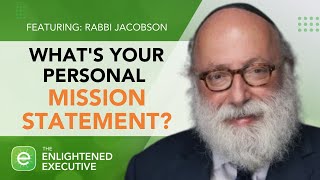
Susan Drumm talks with Rabbi Simon Jacobson about how leaders who live with purpose build stronger teams and better organizations. They discuss pandemic shifts in what people want from work, and share habits like morning gratitude and nightly reflection that help leaders cultivate meaning.
Questions this video answers
June 2, 2021.
Over 400,000 copies.
Nearly a dozen languages.
Over the last 40 years.
Six continents and 40 states.
Chapters
Hi, I'm Susan Drumm. And welcome to the Enlightened Executive, where your personal evolution sparks your leadership evolution. Each episode we feature groundbreaking techniques and strategies to help you get the edge in personal and leadership effectiveness. Today I'm thrilled to introduce Rabbi Simon Jacobson, author of the best selling book Toward a Meaningful Life that has sold over 400,000 copies to date and been translated into nearly a dozen languages. His work has helped bridge the divide between the secular and spiritual worlds through a combination of live and online programming. Rabbi Jacobson heads the Meaningful Life center, which presents the universal teachings of Torah to people of all backgrounds. The Meaningful Life center, called a spiritual Starbucks by the New York Times, is an outgrowth of Rabbi Jacobson's teachings with thousands of participants. Over the last 40 years, Rabbi Jacobson has lectured on psychospiritual issues in six continents and 40 states. He's been interviewed on over 300 radio and TV shows, including CBS, CNN, PBS, MSNBC, Fox, and NPR. So welcome, Rabbi Jacobson.
Thank you, Susan. Thank you for having me. I love the title, the Enlightened Executive.
Oh, great, great. And I'm happy you're joining us because you've written the book on a meaningful life and I would love for you to share. What does that mean to you?
Since we're talking about executive and leadership and business. I think the best example is business 101 is that no entity can function without a mission statement. You have to have a short, succinct and unique mission statement. And I would apply the same to our personal lives. That a human being to be most effective and most efficient and to really actualize our potential requires a mission oriented life. Most of us are reactive and not proactive. So a meaningful life really means living the life with an objective, with purpose, and doing everything focused toward that end goal. That's what makes it meaningful. And of course, meaningfulness always includes more than just personal gain. A mission statement is always about some higher cause serving a need that's greater than yourself. So imagine each of us would have that type of meaningful mission in life and a vision, mission oriented life, that's really a meaningful life.
We are so aligned on that. Yes, yes, yes is what I want to shout. Helping, you know, the work that we do, helping leaders connect to the meaningful mission, other than rising through the ranks. Right. What is the mission for the organization? What is the broader meaning for you? How do you help people find that.
It'S always good to begin with the problem and then talk about the solution? Because the fact is, many of us Grow up in our society, we'll say, our Western society, our schooling and education is very much about functionality. You know, learn your skills, try to monetize it, and have a successful life. But very rarely are we really taught why are you here? Which should be the driving engine. I often ask people, I say, so who are you? And they give me their business card. And I say, that's what you do. That's not who you are. And often someone will respond with a sigh, hey, you know what? I've been doing this for so long. What I do has become who I am. And of course, if you think about the absurdity of that, who you are should dictate what you do. So many of us are. Once we get ready into the career, into the workplace, we need to make ends meet, and we get caught up in the mean, in the means, and we forget about the end. So what I try to do is to recalibrate and help people focus. Why are you doing all of this in the first place? And the answer can be just to make money so I can purchase and do whatever I wish. It has to have some type of. I would call it spiritual or psychological or emotional, deeper purpose with a higher value as an end. And this is not necessarily a religious statement. This is just something more transcendent than just survival.
And why would you say. I completely agree. Why would you say that so important to someone who maybe is hearing that concept for the first time?
Let's talk about what makes us tick. We human beings, even though we do need to survive, which means to eat, to drink, to sleep, we need shelter, we need companionship, we need intimacy and so on. But there's another part of us that everyone knows is. We'll call it the transcendent voice. That's when we talk about things like, what do you stand for? What are your values? When we. Some people experience transcendence through literature, through travel, through love, through faith, through music. And when a person doesn't feed and nourish that part of themselves, we'll call it the soul, they will not be fully happy. Anxiety and all the other psychological issues people struggle with is really a hunger coming from a deeper place. Because you see people who can be billionaires and usually successful on the material level, but they can be miserable within. So it's literally like feeding a part of yourself that is necessary, as necessary, if not more necessary than your material life is. That way. I always put it in my book, Taught a Meaningful Life. I say that the soul needs to be nourished just as Much as the body.
Absolutely. And so the piece around people, finding what that means to them. Because if you think that getting the promotion or becoming the CEO one day or taking your company public will create happiness for you, I'm here to also say I've seen it many times. It does not. If there isn't this anchoring to what does it mean to you and how are you fulfilling on a purpose? Because otherwise that's just stuff, right? That's just stuff and accolades.
Look, many corporations today, Susan, as you know, probably better than I, are recognizing that it's not just getting efficient workers or efficient leaders. You also need to address their personal needs. That's why you'll find a lot of corporations, they serve family support, psychological support. Because leadership is not just about running an efficient machine. It's about wholesomeness in the sense that the people working love what they're doing, they're invested in it. Workers that are not internally happy are ultimately not going to really be. That ultimately will compromise their productivity. So I think there's a recognition even, even if it's self serving, a recognition that if you really want to have the best people working for you, they need to love what they're doing and they need to have passion. And passion is very much connected to those inner voices that I think are being more and more recognized.
Yes. Well, tell us about the Meaningful Life center and what difference that has made for people in what you've described as your mission.
I'll share with you a story, an actual story that I remember was around a little more than 15 years ago, just one example among many. There was a CEO of a pretty big company in Manhattan in New York City. And I get a call one day from his assistant. He wants to speak with me. I knew of his name. He's a well known person. I don't want to use the name because without his permission. But he says to me, I want to thank you. I just finished reading Toward a Meaningful Life last few months and I'm in love with ideas. And one of the suggestions you made, I decided to embrace that in your workplace should have a charity box on your desk. He says, I'm known as a cutthroat, an ethical but a very tough negotiator. At home I'm a little lamb, but at my workplace I'm known as aggressive. And I put this charity box on my desk and the meetings we had with potential investors, clients and so on, and mergers we began to talk about, hey, why is this charity box suddenly on your desk? And I Would give everybody a few coins to drop into the box. And it changed, he says. It transformed my work environment because until that point, everything was negotiations and tough and aggressive back and forth. And here they suddenly saw I'm a man with a heart, with a soul, and everyone began to open up. He says it created a whole new level of trust and a whole new level of communication, which was far more personal. So just as an example, that's what I would like to believe. The Meaningful Life center is what I tried to do with my beautiful team, which is to help people to introduce a little more soul, a little more heart, a little more purpose, deeper, higher purpose. It's not only the amount of money you're going to make, but it's not only getting the best deal, it's also creating relationships that are enduring. There was a time when people thought the only thing is get the deal. Success means short term. But no, there's a long term picture. And you want to include it to be more holistic in a much larger sense. I should add, especially now, Covid has been a global wake up call, including in this level, because suddenly people realize that you're not in control of everything and you need to have some deeper and higher thing you stand for. So I'd like to believe that that's what we do.
Yeah, let's talk more about that because I think given what has happened over the past year with the pandemic and how that's influenced people at work at a very deep level, their personal life and their work life, what do you think that that was there to teach us?
Well, the first thing is as soon as your life, excuse me, as soon as your life is disrupted in the way that it was disrupted by the pandemic, which means your plans, your schedules, whether it's. If you have a family and schooling, your entertainment, sports, I mean, every sector of society was disrupted. And suddenly you realize, one second, number one, is I'm not in total control of what's coming next. And number two, I may not be as dependent as I thought I was on all these things. Like one guy told me, he said to me, you know, I can't go to my favorite restaurant now once a week. There's no baseball. This we're talking last year, especially in the height of it all. And I said, so what are you doing with your free time? He says, that's a good question. So I think the first thing it did was it freed us. And I obviously came with pain and loss. And that's the sad part. But on the positive note, it freed us from the trappings that we always think we're dependent on, the comfort zones, the security blankets. And in the healthy sense, it allowed many people to start exploring something that was deeper. I remember speaking to a group of students on a zoom students across this country. And I asked them, it was mid June 2020, right in the middle of the pandemic, the height of it. And I said, what are your three most important priorities? And they all chatted on the zoom very similarly. They said, family values, the people and the things we love. I said, what would you have answered in January 2020? And they all said, video games, sex, money, sports. Right there you see a simple response like that. How kind of shift now the question is whether we'll be maintained. That's, of course, our work is to make sure that people stay focused on that level.
But you can get trapped.
We've gotten trapped in the comfort zones of our material successes, let's be honest.
Yes. Yeah, for sure. And it was a big wake up call to reconnecting. What I've heard with a lot of leaders is, boy, you know, some of them can be quite road warriors prior to this. Now they had time to really spend with the family and connect and having family dinners in a way they never have. And, you know, obviously there were so many horrible stories out of this experience, but there are some wonderful blessings in that people are reconnecting with their family in a way that they never have. So I think it'll be interesting to see how we, when we open up. Are there ways to stay connected when people go back to the workforce, workplace, when they start traveling again for work? How are you going to maintain this level of connection with those that are most important to you in addition to your team? Right.
Well, two things that I was using almost like a mantra during this time is, number one, is even though socially distant, but spiritually more connected than ever, number two was the idea that you cannot control what happens around you, but you totally control your attitude to it. In other words, how you navigate. A good swimmer cannot determine or predict whether there'll be a storm, but they know how to swim through it. They know how to go with the flow. Keeping that in mind, I think is vital in leadership and in every area of life.
Yeah, exactly. Well, I'd love to hear some additional stories, if you don't mind, about how you've seen the work that you do impact leadership and impact leaders or entrepreneurs in their business life when they do this inner work.
Well, throughout this past year, I Must say I've been more busy than ever because there's a deeper receptivity and vulnerability. And I've been speaking to many different groups, but including leaders. I had quite a few online virtual workshops with leaders. And I'll share with you a few of the interactions and some that. Some things that came out of it. You see, I think it was Warren Buffett that said, regarding investments, he says, only when the tide is out, do you see who's been swimming naked. You know, when we're challenged in this way, and I've said this to a number of leaders in different sectors of our society, business leaders and educational leaders. When things are going well, you can't really know what you're made of. It's when we're challenged and things unpredictable and uncertainty is around us is when the true leader is going to rise. Because then how do you deal with situations that you didn't expect? And that's when you have to dig deeper into your inner resources. So I remember one individual, one business leader, speaking to me afterwards, following up, and he said he implemented some of the things we spoke about, which was, first of all, you need to introduce more heart and soul into this. You can't just expect, especially when people can't come to work, they have to work remotely. Some of them have challenges. Excuse me, some of them have personal challenges, health challenges. So suddenly as a leader, you're forced to become a person with a heart and soul. You can't just demand efficiency. And he said, I never really understood and appreciated. I always saw it as part of being a sensitive leader. Yes, of course, you need to have empathy. But now when people were so challenged, he said it created a much deeper loyalty between. Because people saw I'm a human being and I understand, I'm with you. We're in the same boat. We both have the vulnerabilities, we both have concerns. And I also offered myself as you can call me if you have any personal challenges. Don't think you can only call me about. Purely about our work. They said it created relationships you never expected before. And that I think is a critical component because once you can turn a relationship between the leader and those and your. I don't call them subordinates or the people you are to lead. And there's that, like a great line that I love, I use a lot, is people don't care how much you know until they know how much you care. When you have that empathy, it changes the relationship in a very profound way.
Absolutely. And I'm wondering how leaders have responded to the pandemic with their team and employees. I've seen all over the map. And those that really reached out in a more personal way than they ever have before are reaping the benefits of a team that's more loyal than ever. Those that tried to make it business as usual and were more worried about, are you being productive at home and what can I get from you? Suffered in the end in terms of loyalty and commitment from their team. And so noticing that difference, people will celebrate you, with you in the good times, but it's really in the bad times when how you show up will make the difference for years and years to come. And this was a proving ground really, for leadership.
Absolutely. I suggested one of my workshops. I said, this may sound counterintuitive, but I suggest that give a bonus to all your workers during this time. Doesn't have to be a big bonus, a token bonus. And a few people said, one second. Now we need to really. We don't know what's going to happen financially. I can tell you I did it in my own organization as well. The goodwill that that creates, especially people knowing that it's difficult means that there's a vote of confidence. So obviously I wouldn't tell anyone to put themselves at risk. But such gestures can have tremendous, as you said, tremendous return results.
Yes. It seems like we're in a place of polarity with. We have connectivity, growing in some instances, like the examples we've given. And at the same time, there's a deeper divide among people than ever, particularly in the political side. Right. And even now, you know, corporation against politics. Right. And what do you have to say about our growing divide culturally and spiritually?
It pains me. First of all, it pains me deeply because I come from a school of thought that the entire universe and all human beings, no matter what culture, race, background, belief system, are really all parts of one organism. My romantic poetry, I would say it's like musical notes in one large symphony. So in fact, when one person is hurting, we are all hurting. Think of the organs in the body. We're not separate entities. So when I see that polarization, it's not just painful to see people fighting about sometimes petty things and inflexibility and unable to communicate. It's really like not appreciating the underlying unity that we all, at the end of the day, need each other. And even our diversity is part of, like e pluribus unum from the many. 1. It's not to annihilate diversity, it's to appreciate the Harmony within diversity. So on an existential and spiritual level, that's very painful to see that. But on the other hand, I've also learned and I also teach that every challenge is meant to also teach us something. The polarization, as painful as it is, tells us that we are living very superficially because let's put it very bluntly, and I've said this to many people, especially leaders. I said, let me ask you something. You're pro Trump or you're anti Trump in the Trump days last year or other political positions, cnn, Fox, I mean, the list goes on. I said, let me ask you something. Your political position and that of the person you disagree with, does that have any impact on your children, on their relationship with your spouse, on the things you love? And they look at me firstly and say, you know what, interesting question. Not really. I said, has it made you a better person? And what you really see is happening is we're getting caught up almost like in the cowboy Indian simplistic, like you know, I come from New York, so there's the Yankee Red Sox baseball.
Right, right.
And, and, and this is like living vicariously in, almost like not focusing on what makes us tick. I, for example, I have no idea what your position is, Susan, but I love you as a human being and it really doesn't even matter even if you and I were to proven that we disagree politically about something. And I'm not saying that's the case, I'm talking to you soul to soul about things that matter, about your life, my life, what makes us tick, how do we appreciate and grow our love, what do we believe in, deeper values, what kind of mark we're going to make in this universe. So what I like to do in addressing the polarization, instead of becoming another party and arguing to lift the dialogue to another place, to take the so called lift the bar, let's talk about the things that truly matter instead of groveling over the details and the minutia that often don't even make a difference.
Yes. And all the assumptions we make when we hear somebody is supporting one thing over another as opposed to getting so divided and focusing on where our differences lie, let's focus on what we all truly care about, which is the human connection and making that well, how can people live a more meaningful life? Because it would seem to me that that is an antidote to a lot of the things that we're facing right now and the divisiveness being one of them. What are some simple things that people can do?
Absolutely. And I Go back to the business example. If a business isn't functioning and they bring in consultants and advisors to figure out what's going on, the first place they will always begin with is, is there a clear and focused mission? And does everybody know that mission on your team? So I would make a very simple suggestion. Every morning when you wake up, before you get involved with anything else, just you can say it as a prayer, as a chant, as a meditation. Focus on thank you gratitude for getting a new day, a fresh new day. Thank you for my soul, the purpose of my life can take just a few minutes. But don't get caught up in the details before you state that I am thankful for my life and how am I going to use my day to live up to the vote of confidence that I was given and how will I actualize my soul's purpose? That I think is vital because that creates number one awareness. When there's no awareness, then we get distracted. Then everything that happens in our day will drag us one direction, next direction, the same thing. But when you go to sleep, before you fall asleep, instead of falling asleep with a newspaper on your nose or with a television on or with your mobile phone, why don't you read something that's soothing, calming poetry, something spiritual, a prayer, anything that speaks to your heart. Listen to nice music with the one that you love that allows you to enter that peaceful time of sleep instead of with all the anxieties of the day. You enter the day and it's bookmarked at the beginning and the end with the real focus and the more you can do that throughout the day. Signposts that you remind yourself don't get caught up in the rush hour. Look at and listen to the deeper voices within you. Is the critical step to really allowing yourself to rise up above the fray and transcend all that we talked about polarization or all the other conflicting voices and forces out there.
Yes, I love the book ends of how you start your day with gratitude and you end your day in a state of peace and create the conditions that will allow you to have the peace watching. Probably the late night news is not going to do that for you, nor is it designed to. It's not designed to promote peace from what I've seen.
So I saw an interesting statistic. Susan, if I may.
Yeah.
That by the time that in the western world, especially in America, by the time of age 20, the average man or woman has seen or heard 1 million advertisements. 1 million. Now you can imagine everyone is selling us something. You need to take Control of your life, of what is entering and going out of your system. Because we're really. Our minds and our hearts are being inundated by an information revolution that is actually overload. And it's important to start discovering your own, what we call the still, silent, quiet voice within you.
What would you suggest people do to help them discover their meaningful mission? If they're like, well, this is great. I want to, but I just don't know what that is. What's one step they could take?
You have to create some space. And that space has to include not what you're busy doing, but what you'd like to achieve in this life. The problem is we're riding already at 90 miles an hour, and we're expecting to be able to introduce something new into your life. You have to slow down. It could be at a weekend, it could be in the morning, it can be an afternoon. But you need to take create space, and the space has to be focused on your inner life, not on your outer life. That, to me, is one of the key first steps. Without that, as I said, you're rushing and it's almost impossible. How do you get someone's attention when they're completely overwhelmed with all the different things happening in their lives? So to me, it's creating space.
Yeah, creating that space so that you can hear what that mission is, does. No one can tell you what your mission is. I think you have to find it, and you have to find it by taking time out to listen to what. What that inner calling is and what lights you up and what gifts that you bring, and how can you best help those who need them the most in the world? That's why you were given the gifts at the end of the day.
Oliver Wendell Holmes, Susan, has a very tragic but powerful poem called the Voiceless, in which he begins with this line. Alas to those that die with their songs still inside them. Alas to those that die with their song still inside them. We all have a beautiful song, many songs to be sung, but very often the choices we make is to please others or to fill someone else's expectations. And many of us have lost sight of our own inner voice and the courage to sing it. So I like to believe that the program like this, which I commend you to really focus on these inner matters, is to learn to sing your song and not just conform and follow the herd. You have something unique about you. You were born an Original. Don't become a copy.
Yes. What a beautiful way for us to wrap up this conversation. I so appreciate it. Where could people learn more about Meaningful Life center or your work?
Well, meaningfullife.com it's as simple as that. We have a website, meaningfullife.com which is an outgrowth of my book Toward a Meaningful Life. And you have a full array of resources and programs and texts. And above all, I welcome any every one of your listeners to write to me. Any questions? I'm a big I cherish the intersection, what we call the cross pollination of souls in communicating. I really celebrate our diversity and I love to hear actually opinions that are not like my own because that's how we grow.
Absolutely. Well, you have such wonderful energy. I am so grateful that you joined us today to talk about these issues, which are far more important at the end of the day than revenue this quarter. So as much as important as that is, it's not as important as this. So thank you for taking the time. And until the next episode, thank you.
So much for having me. Susan, it was wonderful.
Hope you enjoyed today's episode. And I'd like to point you to the next important step. Hit the subscribe button and the bell to get notified when we release new content. I'll see you on the next episode of the Enlightened Executive.
More from Susan


Why the Biggest Doors Open When You're Not in the Room | Michael Roderick & Susan Drumm





The Simple Audit That Adds a Human Touch to Every Customer Interaction #shorts


