How Personal Growth Drives Team Success
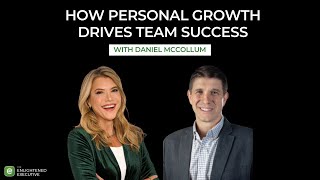
A hosted interview on the Enlightened Executive (YouTube) in which Susan Drumm interviews Daniel McCollum about his personal and leadership evolution. Daniel recounts growing up in Charlotte, a computer science degree, a mission in Moscow, living in Malawi (2009) which clarified his purpose toward social entrepreneurship, and returning to launch Torrent Consulting in June 2012. The conversation frames major life moves as pattern interruptions that led to clarity and an entrepreneurial path focused on using business to help people.
Chapters
Foreign hi, I'm Susan Drummond. Welcome to the Enlightened Executive where your personal evolution sparks your leadership evolution. Each episode we feature groundbreaking techniques and strategies to help you get the edge in personal and leadership effectiveness. This episode is brought to you by Meritage Leadership. At Meritage, we strengthen leaders and empower teams to achieve high performance. Go to meritageleadership.com to learn more. Are you curious about your own development path to enlightened leadership? Take our free 5 minute quiz@susandrum.com to discover your superpower and the roadblocks that could get in your way of effective leadership. Today we're looking at social entrepreneurship and I'm delighted to introduce Daniel McCollum. Daniel is the founder and chairman of Torrent Consulting, a salesforce consulting partner with office locations in the US And Guatemala, and also founder and CEO of Torrent Sourcing, an ethical sourcing company focused on helping businesses in the US Access the talent in Guatemala. Raised in Charlotte, North Carolina, Daniel has previously lived in Moscow, Malawi, and now Antigua, Guatemala, and has studied different cultures and businesses in different areas of the world. So welcome, Daniel.
Thank you, Susan. It's great to be here with you.
Well, you have had a very interesting journey living abroad, so perhaps we could start there. And one of the things I'm particularly interested in is the patterns that you discovered you were leading in your life and how some of these moves really shifted them or shook it up and what you discovered on the other side of breaking a pattern. So maybe we can start a little bit about your journey and the different areas of the world that you've lived in.
Yeah, so I think, you know, I graduated with a computer science degree and after doing a two year mission in Moscow, Russia, in my early twenties, I spent the rest of my twenties working in consulting. And I was, I did, I did a stint in corporate consulting, I did nonprofit consulting and, you know, really love consulting. I love the idea of coming in and helping a business or organization from the outside. And so but in 2009, I, my wife and I decided we were going to move overseas to, to Malawi, Africa, which is a small country in southern part of Africa. It's landlocked. It's one of the poorest countries in the world. And so we both quit our jobs. I was doing consulting. I quit, quit my job. And right as we were going into the Great Recession of 2008, 2009, and then my wife was a schoolteacher and she quit as well. And so we went to Malawi.
And you know, I think, wait, why now? So what happened that that has someone says, I'm going to go move to Malawi, a small landlocked country in the middle of Africa.
Yeah, I, you know, I think my wife had lived in India for a year, working in an orphanage. She took a year off when she was 19. She took a year off college. And so we both had a global mindset, I think. And so we, we said, wouldn't it be awesome if we went somewhere to serve and kind of give back before we start to try to have kids and have a family and get to, to lock down. Right. And so we wanted to just have that experience together. And so we had a lo. We had a connection there, not with somebody we knew. It was a brother of a friend of ours. And so we talked a few times and he said, if you come over, I'll put you to work helping people. And so, yeah, we went over to, you know, we showed up not speaking the language and not really knowing a lot about. We'd never been to that part of the world, but really with a desire to, to help people. So, you know, I think looking back, for me, I'd spent almost 10 years in my career, my 20s and you know, doing, like I said, consulting and in the non profit space, in the corporate space. And I, I think looking back, I was a bit, you know, I was a bit at a crossroads, probably. I tell people I had my midlife crisis at 31. So, you know, I think I was searching for something more and didn't know what it was, but just felt drawn to take that big. I mean, it's a big leap of faith, right, to pick up. And we packed our part, our condo and rented it out and went for a year.
Wow. And so that's a big pattern, interruption.
Right.
And I love that, that it wasn't. And one of the things we'll be talking about is like, do you have to break a pattern or make a change based on pain or can it come from a different direction? And it sounds like in this instance it was more an awareness of just feeling unfulfilled, fulfilled, and wanting to find a source of fulfillment in your life.
Yeah, I have this pattern, as you mentioned. I'm living in Guatemala now. I've been here seven and a half years. But I do think as I've reflected on this, as I've gotten, you know, I think my journey in life has taken me farther. You know, I've reflected on this. I think there is something internal, I think that has driven me. Right. I think, and I think, and I. Maybe I'll Have a chance to get into it a little bit. But I, I do think this idea, like, people ask me, like, well, why'd you move? And I'm like, I don't know. It was like something internal in me, right. It wasn't a rash decision. It was very thought out. It was wrestling for probably a year or two and for each of these moves. But there's something, There was something deep in me, right. My spirit was like calling me to leave and go to these places. Right. And so that, that was what was happening. And fortunately, I have an amazing wife who also was willing to, to go on the journey and had the same desire. Right. To. To go explore the world and, and, and. And give back in the process. And, you know, we, we talk in our family about the McCullum adventures. Like, I think it's this a bit of an adventure mindset. And so. Yeah, so I think in 2009, we decided to do that. That was, it was this internal desire, right? And drive and. Yeah, yeah.
And when, when you got there, what was your experience and what did you learn? How did it change you?
Yeah, so I. What I learned, I had wrestled with this idea because I had worked in the nonprofit space and I had worked in, you know, call it corporate consulting, right. A career kind of the corporate America, like, dream, right. And so I had wrestled with, like, trying to choose between one. One or the other. One side being, I want to live a life that's impacting people and have. Making a difference in the world. And then the other life was like, I love technology. I'm a consultant. I'm. I'm an entrepreneur, which I probably didn't really even know at the time fully, but, like, now I really know I am an entrepreneur. That is what I breathe. And so. But I wrestle with those two. Like, I felt like I had to choose one path or the other. So when you show up to a country like Malawi with 16 million people and the poverty that I saw, I mean, you quickly, you know, as a problem solver, a leader, social entrepreneur, or an entrepreneur, like, you start to ask, like, well, how do you help people? Right? It's like, there's. The problem's so big. And so I was fortunate because I was able to plug into some micro financing programs that were going on. And I learned a lot about that. I started reading books about this new concept, social entrepreneurship. I mean, it was in 2009, it was a pretty new word, even in a phrase. And I think Tom Shoes was kind of the first big social business that really became Mainstream. And so I, I also connected with a few social entrepreneurs that were living there, building businesses, employing people. They were using their profits to build hospitals and orphanages. And they saw their employees as like their extended, you know, family. And so, I mean, when you're sitting there and seeing that and experiencing that, it just had an immense impact. And, you know, I, I tell people Malawi wasn't life changing for me, but it was life clarifying. It really brought those two ideas of how do I help people with my life and then how do I use my entrepreneurial skills, hence the word social entrepreneur. It's like we're trying to solve a social problem using entrepreneurial means, business means. Right? And so, yeah, that was. I tell people I had to go 8,000 miles away from, like, Charlotte, my upbringing and my world to actually see and live that out for a year. And it was a, it was a hard year. It was challenging. I wrestled a lot, right, with. And you know, Malawi is not an easy place to live. It's. It's pretty, it's hard to get to and, you know, it's certainly, it's certainly a difficult place to live. But, you know, I left with a sense of purpose in my Life that at 32, this is what I'm supposed to do with my life. I don't know what, you know, that was the, that's the framework. I don't know what it all looks like. I didn't know at the time, at least, you know, this was 15 years ago. And so coming back to, to Charlotte, I had, I had no idea what that was going to look like. I just knew in my heart, like, this is how I'm supposed to spend my life. I'm supposed to help people through business, period.
Yeah, well, that's, I mean, what a gift that is, right? And so it required you breaking the traditional path, the pattern that you would normally be in. I'm sure some people thought you were crazy, like, wow, how are you possibly going to go and do this? And yet coming out of it, you had a clarity of, this is my purpose in life. Do you know how many times I hear people say, I just don't know what my purpose is or what I'm supposed to be doing, right? And, and sometimes you've gotta dig deep and follow that intuition, that guide for how it's going to reveal itself. You know, the same, I mean, the same thing happened to me. You know, at 30, I go to drama school and get a master's in acting five years after law school. That, that's Crazy. But I was following this deep intuition that I needed to go that way, and it opened up the career that I do today as a result.
Amazing.
Yeah, yeah, yeah. So tell me when you. So you came back and you're like, I know what I need to do, Then what happened?
So I went back to my old job. I was fortunate they hired me back, which was not a given when I left. So I came back to do consulting in the nonprofit space, and I ended up. I spent two more years there. And so I got to another crossroads, the spring of 2012. And so there had been some turnover in my organization. And honestly, I was just wrestling again with, like, ah, man, I learned this big lesson 2 years ago living in Malawi. And then I came back, and we. We had our first child during that time. And so. And I was working, but I was just wrestling. And I. I got to another crossroads. I had a. I had a new job opportunity to go back into corporate consulting. I was enrolled to go get an international mba because I was like, I have this global mindset, and it was at one of the top programs in the. In the country, and it just didn't feel right. You use the word intuition. I think that's probably one of the most undervalued words and terms in our. In our lives, in business, even. And so, yeah, I remember I was on the phone. It was May 2012, and I was on the phone with my wife, and I was like, they're gonna call me in an hour to ask if I'm gonna accept this job. What do I say? And she's like, I think you need to pursue your dream. I think you need to go out and start your own business. And I'd always want, like, I kind of always had in the back of my mind, this desire, I'm gonna go out on my own. Hence the entrepreneurial. Yeah, right. Like, driving me. And like I said, I didn't really realize that probably in my 20s, but by my 30s, I started to realize, like, I'm probably supposed to be an entrepreneur, not go sit in a gray cubicle, right. One of the towers, and get. Get paid well and get an mba. But that was not. Yeah. So they called, and I said, no, I turned down the job. And then I quit my job four weeks later and started my first company, Torrent Consulting, in the middle of June 2012.
Yes. Yes. So you start the consulting, and what was it primarily focused on?
Well, eventually it took us about a year, year and a half to kind of figure out what we were going to niche in, but we ended up becoming a salesforce.com consulting partner. So I picked up some of those skills and had some previous CRM experience and some of my other previous jobs. And so, yeah, we went all in and said we're gonna go be a Salesforce consulting company in in mostly in the southeast of the U.S. in the Midwest, is where.
More from Susan


Why the Biggest Doors Open When You're Not in the Room | Michael Roderick & Susan Drumm





The Simple Audit That Adds a Human Touch to Every Customer Interaction #shorts


