How to Improve Your Mental Health in the Workplace (feat. Joey Klein)
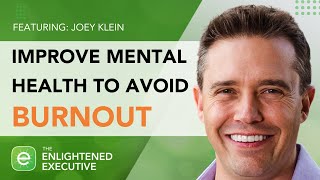
This is a transcript of a YouTube interview on Susan Drumm’s “Enlightened Executive” featuring Joey Klein, founder of Inner Matrix Systems. Klein explains the “Inner Matrix” — the internal interplay of emotions, thoughts, and the nervous system — and argues that leaders must train their emotional/nervous-system responses (not just manage feelings) to perform under stress. He links his martial-arts experience to developing emotional capacity, describes how conditioning from early life shapes reflexive emotional responses, and offers a simple practice: (1) notice your state, (2) calm the sympathetic response with combined breath+body techniques (tongue to palate, gentle smile, head-to-toe scan, controlled nasal breathing with holds), and (3) redirect and reinforce productive states. He gives a corporate client example where shifting a manager from anxiety/overwhelm to centered calm improved team likability and performance. URLs for more info: intermatrixsystems.com and joeykline.com.
Chapters
Hi, I'm Susan Drumm and welcome to the Enlightened Executive where your personal evolution sparks your leadership evolution. Each episode we feature groundbreaking techniques and strategies to help you get the edge in personal and leadership effectiveness. Today I'm excited to introduce Joey Klein, the founder and CEO of Inner Matrix Systems, a personal mastery training system for high achievers. For more than 20 years, IMS has delivered proprietary methodology that rewires, trains and aligns the nervous system, emotions and thought strategies to create real life Results. Klein and IMS have worked with more than 80,000 individuals from around the world, both live and online training programs as well as one on one coaching. Their clients have included Boeing, IBM, Dell, Google, Coca Cola and the World Health Organization. He's the author of the Inner Matrix, Leveraging the art and science of Personal mastery to create real life results. So welcome Joey, thank you for joining us.
Hey, it's great to be here. Thank you so much for having me.
Yes. So your book is titled the Inner Matrix. I would love to hear what the title refers to and how that relates to leadership.
Absolutely. So the title came by way of sort of the idea that we create from the inside out, which we hear about often. That's pretty prevalent out in the world today. But I really look at anytime I work with a high performer, there's sort of three components that we look to bring together. Number one is the emotions that we feel which leads to the thoughts that we have. And then the nervous system component that sort of works in there as well in terms of like neurobiology and really understanding why this stuff does create our outer reality in terms of the things happening inside us. So the inner matrix is all of the things that occur within us that ultimately define our outer circumstances.
Got it. And how does that relate to helping leaders and executives and entrepreneurs.
Yeah, so leaders, executives, entrepreneurs, that's a high stress reality. Anybody in those realities know that that is a really intense environment to be in. And not only do you have a lot of responsibility, but you're also managing a lot of other people, most likely from a leadership perspective. And one's ability to manage state is essential. So you know, we've all had just like as a basic example, those times when we've gotten upset, whether it was at work or just with a significant other or something like. And weren't aware of where we were and didn't take that moment to maybe calm ourself down and then took an action and then went whoops.
Right.
Like we feel bad about our behavior a little bit later. So when we Run hot or we're in a stressed environment. A lot of times we don't even realize that we're in a fight or flight reality because we notice it maybe if we're really angry, as an example, if we catch it in time. But a lot of times we're in a stupid state, so to speak, emotionally speaking, where we do things that we regret because we feel insecure. Insecure or sad or any number of other things. And if we're not catching ourself when we're there, we're ultimately not going to be performing at our best all the time. And if we have a extenuating circumstance occur, like a big cash flow event in a company or a buyout or something like this, all of a sudden we might be in a stress state, not realize it. And in order to perform at our best, we really need to understand how to line ourselves up so that we are able to realize our potential, so to speak.
Yes, yes. So how we navigate some of those big events and small events and what is going on internally will get reflected externally. Right. So I am curious to know what. Tell me a little bit more about what it is. What is the Inner Matrix System? How do you use it?
Yeah. So Inner Matrix Systems is essentially a training system for high achievers. And so you know, you go to the gym, if you want to get fit, you to want, want to get in shape. Right. We all know to work out and to eat well and then that's going to translate to optimal health and wellbeing. We don't really have systems like that, or there are not a lot of them that are prevalent for keeping ourselves as tuned up, we'll say internally in terms of emotionally and mentally. And so Intermatrix Systems has really brought together a training system so that we optimize our emotional and mental space so that we're not just sort of managing or getting by, but we really are kind of getting everything that we can from our emotional selves and our mental selves.
Got it. So can you share a little bit about how you do that? How do we get the most of our best? Emotional interstate?
Certainly. So a lot of people, when we think of emotions, we often don't think of them as being trained and conditioned. A lot of us don't even really know what they are. We just kind of think of them as these feelings that we have to manage when it comes to our emotional selves. But what we don't realize oftentimes is that our environment and our caregivers, et cetera, condition the Emotions that we feel if we go back to childbirth. Right. And like when we were first, you know, in the first few years of existence, the mirror neurons in the brain were taking in all of this information into our unconscious mind. The brain at that time was in what we call a delta state. And so it was just absorbing information. And primarily the information was absorbing was, was emotion. Because we didn't have language, we couldn't communicate with other people yet. And so we were, we were being conditioned and imprinted with these emotional realities. Right. If we had really, you know, highly emotional, intellig, intelligent parents as an example who all they experience with joy and inspiration and love, well then we got really lucky. That was probably none of our environment. Right. We had a mixture of things. And so maybe fear, anxiety, unworthiness was the thing in our environment. And so if we have conditioned certain emotions like fear as an example, or sadness or anger, as we were speaking about earlier, my brain learns how to get quick to that response. And anger literally has me behave a certain way. We get defensive, we go into fight or, or flight. You know, all those things occur. And if that's something that I've trained and I've conditioned over time, I need to know how do I basically deactivate or undo that conditioning and training like a bad reflex and then how do I train another state? Right. How do we get into training something like joy or optimism or inspiration or even just positive thinking. Right. Instead of looking at all the things that could go wrong, how do I start focusing on all the things that I could go? Right. That's not just something that we need to know to do. A lot of us know to do those things. Right. We've all read the books that say, hey, you should do X. Where it oftentimes falls apart is in the actual training and conditioning to bridge the gap from one to the other and making sure that what we're training actually is the component or the talent or the technique, the skill set that we need to produce the result we're looking for. So just training happiness isn't going to necessarily do anything if what we really need is creativity as an example.
Yeah. And so you mentioned the training and conditioning and I know you have a martial arts background. What's the connection? Connection between those two things and the system?
Yeah. So speaking of high intense environments. Right. In martial arts, I would get in a ring and fight an opponent. Right. When you think about what that really means, like you're getting in the ring with someone who's basically been training and whose job it is to hurt you, essentially, right? And it is your job essentially to hurt them. I mean, if we really kind of break it down to the basics, so that's a situation of high intensity. And what I found in martial arts that I really developed was really emotional capacity. Because when you first start fighting, when you first get in a ring, even though you've practiced and you trained and you work the techniques, like you freak out because somebody's hitting you, right? And then when you get hit, it doesn't.
Real world. Yes.
Yeah, real world. It hurts when you get hit. That is no fun. And especially me, I used to be very quick to anger back in the day. So, like, when I got angry, like when I got hit, I got pissed off. And, you know, people, you know, sometimes think that's a good thing, but it's not because you can't think when you're mad. We've all had that experience again of doing stupid stuff when we're angry, right? And things that we regret the same thing when you're, you're competing in competition, like when I would get hit, I would get angry, and then I would just, I would fall apart, right? Or I would get focused on winning and feel like I have to win. Um, and then I would feel anxious and then I would fall apart. And so I would perform really well in the, in the dojo where we were training. Then when it came to competition, I would tend to kind of fall apart. And what I realized was that my emotions would shift, like in the Dojong or when I'm training. You know, I felt happy and it was just fun for me. I was in the flow. And then when I go to competition, I was either anxious, afraid, or pissed off. And then the technique and the form and literally things that I was very good at, I was incapable of accessing and executing on because of my emotional state. Literally prevented my nervous system from performing the way that it could, my body from performing the way it could. And so through meditation, part of that I learned in martial arts. I learned to calm my emotions down so that I could remain calm and at peace, even though there was this high intense situation of combat going on. And I was getting hit and I was hitting back and all, all the things that were going on. You know, I learned to just relax and stay calm, cool and collected, and even enjoy the process, even though it was a high intense situation. And I've learned that that translates. Although the environment is different, there's actually many similarities. When you're, when you're an entrepreneur, you're a business owner or you're an executive and you, you know, you've got a billion dollars in sales that you're, you're in charge of. Right. And you're $300 million behind and you got four days to go. And like these are high intense situations. Just like being in the ring where we don't know how to, we're not going to be able to perform at our best.
Yes. And every time you're letting that fight or flight response or that, you know, increased anger, frustration, irritation, you're not in the highest reasoning part of your brain. So you're actually not going to make, as you mentioned before, the best decisions. But that's easier said than done. Like just what about certain situations? Weren't being angry. Right. They weren't being frustrated. And in other episodes we've talked about the importance of feeling those emotions so that you can get the information from them and then move on. But I've even seen when you talk about performance similarly in the acting world, I did some acting earlier in my career and people would do really well in rehearsal. And then when it comes time to be on the stage, that's when things got a little hairy and it was like, well, what's the difference there? You're actually out on the ring. You know, in your case, you're in the ring now, you're actually feeling the pain of a punch that you get on you. And now you've got to manage your state in that respect. So I love the analogy that you have and how you developed it. And so it sounds like the system is all designed for you to be able to remain in that highest reasoning part of the brain when you're faced with higher stress situations. Is that accurate?
Yeah, I would say we want to break it down a few key things. Number one, the system trains us to become aware of where we are. Similar to what you were speaking before. If I don't know that I'm in a fear based state, then I don't know to transition to a love based state. Number one, create sensitivity of where I'm at. Number two is understand what that is telling me, what is the information that I'm receiving there then number three, how do we turn it off? If we're in a fear based state, how do we turn on those more productive states, love based states. And then how do we continually condition those states so that the fear based states are less our reflex? And those more performing states, love and inspiration, compassion, joy, et cetera are our natural reflex. That's where we go as our natural inclination. And we don't go to the fear based states as often. And so like a bit like a distinction as an example that I think, you know, that, that, that we look at inside of our training is a lot of people think of, you know, how important it is to quote unquote, as you were saying earlier, like feel an emotion. And, and so as an example, I think a lot of people, when they go into this idea of feeling their emotion, I'll hear them say things like, well, I need to honor, you know, where I'm at. And I think that if we kind of, if we make a little distinction there as opposed to looking at emotions as, you know, informing us about something that's happening. Like if a relationship or something that's going on at the job and I feel frustrated and I allow that frustration to inform what's happening, I'm going to decide something's wrong and somebody's not doing well and maybe they're not doing their job. And if I let that anger, that frustration inform what's happening, I'm not going to assess the situation accurately or well. And so for me, anger informs where we're at. So if I notice that I feel frustrated or angry and then what I know is that I'm not in a great place to assess the situation and to take action. And more probable, if I do execute, I'm going to do something that's going to get me a result that I would rather not have. And so if I look at emotions as informing where I'm at, that gives me a little bit of a different way of interacting with emotions as opposed to, I think the natural inclination which is people let emotions define the world or the environment that's around them or sort of validate or verify what's happening as maybe good or not good or right or wrong. And so I think when we make that small adjustment and we go, oh, you know what I feel sad. That's letting me know where I'm at. And again, if we look at it neurologically, a lot of people think of as fear based states as like fear itself or like anger. But from a neurological perspective, sadness and insecurity and shame and guilt are all along the fear based spectrum from brain science, right. In terms of the brainstem being active, et cetera. And we're not going to be able to access creative thinking and critical thinking. And so when people think of this idea of like, you know, I deserve to be angry or I have a right to feel sad, it's like that's actually true. Like we get to choose however we're going to feel. But the real question is, what's the outcome that we want to achieve in any space in life? And certain emotions are going to give us access to that outcome, both as an experience of life and also in terms of the thoughtfulness of what actions we should take and the ability to execute on those actions or. Or not. And if we decide that it's more important to feel a certain way than it is to get a result, that's where I think we can really get stuck.
Yeah, I'm seeing a really interesting link between what you're talking about and the work of the HeartMath Institute. I'm not sure if you're familiar with them. I recently had the center director. They've been doing research on the role of emotions in creating heart brain coherence. And that can be measured by your heart rate variability. And you access that by looking at which kind of are you in renewing emotions such as care, appreciation and gratitude, or are you in depleting emotions such as anger, fear, frustration, guilt, shame? But the studies are what are so fascinating in terms of how it's impacting you physiologically. So I didn't know if you referenced any of the work that they've been doing, I think for about 20 years now on. On that heart brain connection. Have you seen that?
I've seen it. I dove a little bit into it and I've had a lot of clients who have done a deep dive into it. So I'm aware of some of it. Some of the science that really interests me are how they measure the electromagnetic field around the heart and how literally by measuring the electromagnetic field, they can see that it expands and it contracts based on the emotions that we feel. That's a fun way to just give some science and evidence to that the emotions that we feel have an effect and they've seen that that information, so to speak, that's passed through those electromagnetic fields actually have an impact on the people around us. And that people at an unconscious level respond to sort of that information that comes from that electromagnetic field as well as from the neurons in our brain communicate with the neurons in other people's brain. So another way to think of that impact, and one thing that I found fascinating in the heart mouth science that they get into is sort of this idea where it's like, hey, I could be feeling, you know, say, sad or overwhelmed, and then maybe I'm just meeting you for the first time, or maybe I work with you and I say something pleasant like, hey, I hope you're having a great day. The emotion that I'm in is what your unconscious self is going to respond to. And your system will make a determination as to whether or not you're safe. I'm safe, the situation is safe, good or bad. Before your analytical process even begins, before the mind even starts thinking, we've already made these assessments and judgments based on literally the space, somebody.
Yes, yes. And that brings us to leadership. So I'd be curious to know how your system has helped executives or entrepreneurs in their leadership and in performing their role and how that's impacted business. Can you share a little bit about that or a story or two of what you've seen?
Yeah, a couple come to my mind. I was working with a lady who was in an upper levels management position at a Fortune 100 company and she hired me because her, she kind of got, you know, a lot of, like a lot of us, you know, a lot of people do in corporations, you know, get promoted because of your past performance and then you end up in management or upper management. But you don't necessarily get a lot of training on like, how do you manage this position now. You're just sort of expected to figure it out. Right. So they ended up in one of those positions and their team was, was about to riot on them. Like they were literally in the background discussing, you know, how do we get rid of this person? Because they essentially hated her, right. And she couldn't understand why. And what she was up to was basically, you know, treating people the way that, that, you know, as though, as though they were herself. And so the things that worked for her was a little bit of, you know, that, that kind of like tough love reality, you know, or sort of, you know, bringing a sense of intensity all the time. But the emotion that she brought to the space inside that intensity was, you know, anxiety and a bit of overwhelm, which a lot of us could drive with. And so, you know, that was leading her to have impacts that she wasn't aware she was having happening. And she essentially wasn't noting where she was either. And literally by doing nothing more than showing her how to move out of that overwhelm and anxiety and get to a place of centered calm. Like that adjustment in itself simply made her aware of the space she was in and the impact she was having on people, which before was still occurring, but it wasn't showing up on her radar. She wasn't able to notice that the impact had occurred. Right. Did the person actually Hear me? Did they not hear me? Did they leave the, the one on one that I just had with them? And were they. Did they leave happy and inspired or, you know, are they obviously upset? Like, that was all the same. Like, it was just like, here's the information and now you should go do what you're going to do is kind of the typical way that it went down. And when we made this adjustment to where it was like, okay, I'm calm and collected, right? I'm calm and cool, so to speak, I'm relaxed and I'm paying attention not just to the information I'm giving this person, but started to pay attention to the, the emotion that they were feeling. Like, where was their space? And she, yes, we obviously have to give sales talks and everybody has to meet their quotas. And like, we all know that needs to happen. But when she started paying attention to the space someone was in, were they afraid, were they anxious, were they hopeful, were they excited? And she started sort of, you know, tending that space first. Not only did people just genuinely like her more because they felt more connected to her, but it translated to everybody working better together as a culture and getting the numbers. And so essentially, like within the course of a year, you know, she was, she was promoted to leader of the year. And she got, you know, something like three promotions, which is not very common, you know, at a company of that size. And it was literally because, like, if we broke it down, like, yes, she could do her job well, otherwise she'd never get to that place. But the difference that changes. People literally just liked her. And so likability can go a lot further than we think, but it also does practically translate to higher performance. Before long, like, her team was simply doing numbers that nobody else else was. She had the same system, they had the same training that everybody else had. And all of a sudden, upper level management and others are looking and going, well, why are you getting these results nobody else has? And it was literally because they all just liked engaging with each other and they were doing it from a higher emotional state, if you will. Right?
Yes. How accurate was she in determining the state that they were in? Because sometimes I get this question. Leaders might say, oh, I think they're feeling down when they're actually not feeling that way. Right. And how do you work with leaders to kind of assess that accurately?
Well, if we have the right training toolkit, right, you can literally train empathy, you can train emotional sensitivity, but it's not something that is easy or natural to people, believe it or not, right? A lot of people think that it's easy and natural, but what most people do do, and we've all had this experience where it's like, you know, we're kind of assessing other people through ourselves. And so if we feel a certain way, we're assuming that's where the other person is when more oftentimes than not, that's not where they are. So when we learn to, or when we can get our nervous system, you know, to find that calm, centered place, like through the right breath technique, we can go over, you know, one of those before we wrap up here, and we can get to a place where we center ourselves. We're kind of in a space of like centered neutrality is the best way I know how to describe it. Through empathy. Right. The mirror neurons in our brain, we can literally strengthen the capacity of those neurons to start to actually become sensitive to the space other people are in, whether that's through a video call, whether you're sitting there in person with them, et cetera. And then it's always important to follow up with never assuming that's where they are, but rather asking qualified questions so that you make sure that you're verifying the space that you're tuning into as being accurate and correct. Right. So if we, we don't kind of follow it up with, with, with the questions to ensure that's where we are, then we don't really know if it's us or if we're actually being sensitive.
To them, projecting what we think it is on them. Absolutely.
Exactly.
Gotta get, have some idea and start to build that intuitive sense. But check in and be curious about what, where they actually are. And a lot of times I find people are willing to share, you know, what's going on, and they appreciate being asked, ask those questions about what's going on for them. So. Well, I'd love for you to share something that would be something that listeners can do today, right now, to start along this path that you've outlined. Is there a technique that you could share with us?
Absolutely. I think to get started on this, I think it's as simple as, number one, creating awareness, sensitivity. And then, number two, how do we turn off that sympathetic response in the brain when we're overactive and we need to quiet the emotion down. And then third, how do we turn on a new space? And if we can literally just get our hands around that, it's a decent beginning, it's a decent start. And so it's as simple as asking the question in this moment, how am I feeling, feeling and not necessarily looking to name the emotion that's present, although somebody can do that. That's great, right? Am I happy? Am I sad? Do I feel confident or insecure, whatever. But more starting to notice it from the nervous system reality of do I feel just a general sense of contraction or we'll just call it. People tend to refer to it as stress. Today it's like, oh, I just feel stress. Well, do I feel a low level of stress? Do I feel a high level of stress? Direct to no stress. Like the idea is if we even feel a low level of stress, then we're in a fight or flight response. We're not going to perform at our best, we're not going to access our highest capacities. So simply asking the question, where am I? And that's something we could all do anytime. Like anybody could do it right now. Just how am I feeling? And then the second thing is, where is the mind in the future? Is the mind thinking into the past? Is the mind's general theme worry and focused on a problem? Is the mind present? Is it optimistic? Is it just simply where is it? Then once we notice where we are, whether we're in that fear based state or not taking a note and just quieting that state down, it's as simple as breathing. I think that the more elements we add to breath, the more effective it is. Rather than just taking like a deep full in breath and out breath, combining breath and body is key. So taking the tongue and then gently place it to the palate or the roof of the mouth, make sure we have that physical smile on the face telling the brain that we're happy and okay, do a quick scan of the body head to toe, just make sure that we're as relaxed as possible. And then breathing in and out through the nose. So a nice 2, 3, 4 second breath in, pause, hold the breath at the top and then exhaling and then a pause, hold the breath at the bottom. And this repeating that cycle until we sort of notice the system relax, right? We go from that low stress state or high stress state to no stress. Like we feel a sense of just sort of tranquility or ease or relaxation. And as soon as we sort of get to that, that place of just feeling sort of open and relaxed, you know, that's a good indication that our parasympathetic nervous system has become active and we're moving more into, we'll call it those love based sides of expression. From a neuroscience reality of like love and joy, peace, compassion, etc. And then when we're in that space, starting to just reaffirm it with the mind, and I find like. Like just, just acknowledging that we're there with why is a good way to just start training those higher states and finding a way back there. So when we're feeling a sense of, say, peace, just affirming why we feel that way, or when we're feeling inspired, just sort of affirming why we feel that way. So we connect those two things together so that later on, when I need to pick that back up, you know, I can go into my toolkit and just sort of re. Acknowledge the past reason as to why I was feeling that way when I was actually feeling it. It. And it'll start to sort of tell the system to go back there. And so just breaking it down in terms of where am I checking in, breathing, relax, redirect. And if we want to start very simply, like, that's the essence of where to get started. A lot of people, when they get started with this, usually will take note of how activated they are and they haven't realized how hot they run.
Yes, yes. I think that ability to step in. You call it the inner matrix. Matrix. But we're so focused on the external world and what's occurring that we lose sight of what's actually happening in here. And in order to do what you're talking about, you need to pull back and check in with yourself so that, you know, where are you in this scale and so that you know what to do about it and how to shift, as opposed to trying to control Sam and Bob and what they're trying to do. Right. Which is. Which is where our focus of attention can intend to go without. Without doing what you're suggesting, which is checking in.
Yeah, right. I had a. I had a martial. My martial arts master, you know, he was Asian, and he used to always say, like, the difference between West Western mind and Eastern mind is that the Western mind, you know, sort of like. Like you speak and then you think after. And. And that's kind of how we drive.
Right.
And you also. He always used to say, like, pay attention. He's like, you know, you know, a lot of people in his culture, as he would say, right. He goes, Asians. Those were his words. He says, you know, we, like, in the east, like, we would, like, when somebody asks you a question, there's a pause, and then we would communicate. Right. Because we would think about whether or not we should communicate the thing we're about to say and the impact that it Might have. So as opposing to, you know, sort of speaking and then sort of having it occur afterwards as to whether we should have done that or not, or a lot of times not having it occur at all. You know, just sort of taking that check in of like, where am I? What I'm about to do and is it actually going to produce the outcome that I'm looking for? And I find if we can train that as a reflex where it just becomes like an automatic response where we literally just go, where am I? Like, what's, what's the thing I'm about to do? Is that actually going to create the impact and outcome that I want? Like, that alone can be a game changer for a lot of people because what we don't realize is we're in a constant sort of reactive state. Right. Many of us are thinking about what we want to respond with before the other person finishes their sentence.
Yeah. We don't even know what they said. Yeah.
We've missed half of it.
I've only caught the first half and then the second half. While you were still talking, I was formulating what I was going to say next, which you probably already answered that, right? No, it's. This is. This is fantastic. I couldn't agree more with it.
And then even stopping on the other side, you know, like after we sort of deliver the message, like, stop and pay attention, what did that just do to them as opposed to, you know, just immediately looking for their response. Right. But first, foremost, like, what was the impact of that? And I think if we add those little points of paying attention, we'll start to realize how much we've been missing and opportunities to leverage.
Yes. Yes. Where can people learn more because this is so needed. How can they get in touch with you or learn about the system?
Yeah. Best thing is intermatrix.com or intermatrixsystems.com excuse me. Or joeykline.com so both of those are great places to land and check out.
Well, awesome. Thank you so much for joining us today and sharing this wisdom and I love your stories and I love how you've integrated what you learned in the martial arts world with business and leaders. So thank you for being here.
Absolutely. Thanks for having me.
Hope you enjoyed today's episode and I'd like to point you to the next important step. Hit the subscribe button and the bell to get notified when we release new content. I'll see you on the next episode of the Enlightened Executive SA.
More from Susan


Why the Biggest Doors Open When You're Not in the Room | Michael Roderick & Susan Drumm





The Simple Audit That Adds a Human Touch to Every Customer Interaction #shorts


