Improving Client and Employee Retention Through Giftology (feat. John Ruhlin)
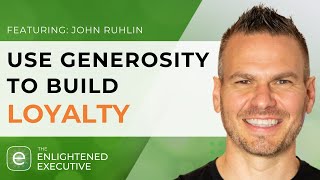
John Ruhlin, founder of Giftology, explains how thoughtful gifts and gestures deepen client and employee relationships. He shares case studies showing measurable results: one client's referrals jumped 107%. The strategy includes handwritten notes, including spouses, and creative investments like house cleaning for employees, not branded swag.
Questions this video answers
August 3, 2021.
He became the number-one performer out of 1.5 million sales reps for Cutco.
Referrals increased 107% over their best year ever.
About $2,500 per employee per year (house cleaning every other week).
They sent $5,000 mattresses to employees.
Chapters
Hi, I'm Susan Drummond. Welcome to the enlightened executive where your personal evolution sparks your leadership evolution. Each episode we feature groundbreaking techniques and strategies to help you get the edge in personal and leadership effectiveness. And today, I'm thrilled to talk with John Rulin, an international keynote speaker and entrepreneur, and he's the founder and author of Giftology. John is the leading authority in maximizing customer loyalty through radical generosity and has been featured in Fox News, Forbes, Fast Company, New York Times. And while becoming the number one performer out of 1.5 million sales reps for Cutco, John developed a system of using generosity to gain access to elite clients and generate thousands of referrals. He and his firm now help automate this process for individuals and organizations like ubs, Raymond James, Keller Williams, the Chicago Clubs, and Caesar's Palace. John and the Giftology team can help any individual turn their clients into their own personal sales force to drive exponential growth. So welcome, John.
Hey, thanks for having me.
So I love that the focus of your business is teaching others that the art of generosity. Perhaps you can share a little bit more about what you mean by that.
Well, I think that whether you sell widgets or insurance or whether you lead a company that's doing a million in revenue or 10 billion in revenue, every business rises and falls on relationships. Relationships with your employees, your clients, your vendors, your suppliers, your mentors, your investors. And most people, if they're honest with themselves, they're not very good at showing generosity, even maybe to their spouse or to interpersonal relationships, let alone. It feels awkward and uncomfortable to show up for people with gifts and generosity in business. It feels like, oh, I'm supposed to do that at Christmas. Check the box. Here's your bottles of wine. Yet we know that people thrive, and they flourish when you show up for them in uncommon ways, when you love on them, when you do things in a unique way and show them that you, when their back's in the corner, you have their back. And so really, the core of giftology and radical generosity has nothing to do with the gift. Like, it's not trinkets and swag. It's how do you show up for people and show them that you care about them? Because if people feel that, then they run through walls for you. They're engaged. If they, if you do that, then they refer you business. And we all want more referrals. We all want more access to deals, but we're not very good at using the generosity because it feels weird and weak and uncomfortable. And so the core of the business is teaching people that and then helping them execute it.
Yeah, okay, got it. So how would you respond to a feeling of, well, is this a give to get? Is it really generous when I'm giving you these things in order to get more business?
Yeah. Well, I would say that most of the people that are listening to this or that are in business. Well, we all run for profit businesses. We're not like a church, we're not a charity. Like, we all want more deals, we want more revenue. But we can tell when somebody takes us out to a nice dinner or to a ball game or to the masters or on a cruise ship. Yes, they want to grow the relationship and part of that is revenue. But you can tell when somebody gives you something and then ask for something. Hey, here's, I took you out to dinner. Now I want to, I want to review your financial plan. That wasn't a gift, that was. Now you're expecting something. It's like if you do something for your spouse and then that night you expect something. That wasn't a gift, that was a manipulate, manipulation. But if you do nice things for people and you say, I'm going to do this to 100 people or a thousand people, you know that some of them are going to turn into amazing relationships. If you spend time with them, if you invest in them, some of them are going to fall on rocky soil and not turn into anything. But you ruin things by having expectations. So, yeah, we want things to. Just did an interview a few hours ago with somebody who does it and he's a realtor and he crushes it in Utah. He spends hundreds of thousands of dollars doing these amazing gatherings. He doesn't track it. He just knows that if he does that, like it produces 100x, I call it return on relationship. Because he's doing it the right way. He's giving the gift like with an open palm, no strings attached. And if you do that consistently enough and play, you know, most people play the long game, it's days. The long game is decades. And if you're building those kind of relationships, we all know that if we do great things with people and spend great time with them and invest in the relationship, that good things will come back. It might take a decade, it might take five years before they're in a position of power or authority, or maybe, maybe it's not the right timing or maybe you don't have the right offering. But most people will do their nice things experientially at a certain, at a level 10 and then they're gifting, they do it like, you know, a Motel 6 level. And then they wonder why nobody cares. It's because they're not showing up for people generously and authentically. They're trying to. They're trying to market their way or give swag and trinkets. And that's not really generosity. That's a manipulate. If you put your logo on something, that's a manipulation, too. It's not a gift. And so most people have messed up and don't understand the little nuances and details of relationship building. And so they're like, oh, yeah, like, give to get. And like, no, that's not what it is at all. It's pour into people and do that enough times and it comes back to you. And oftentimes ways you don't even expect.
Well, I'm sure you have some good examples of that, which we're going to dig into in a minute. But I'm wondering then, so what was the reason for starting giftology?
Yeah. Well, I grew up in Ohio. Most people think, well, you know, we have the Cubs as clients and pro sport, about 25 pro sports teams. Like John, maybe John was born in New York or la. The right family. His dad worked for, like, the commissioner or something. I grew up milking goats on a farm on 47 acres in the middle of nowhere as well. Ohio town of 317 people, Delroy. And so I grew up around not having things. I grew up around not having connections and deal flow and access and the right country club and all that stuff. But I wanted to get out of Dodge. And so when I went to college, I was going to go be a doctor. And my girlfriend's dad was this rainmaking attorney, and he was super generous. He was the guy that would find a deal on noodles and everybody at church the next Sunday, like, two to 300 people would walk away with, like, a year's supply of noodles. And I'm like, Paul, that was 40 G's. Are you nuts?
Wow.
And he just got this smile on his face. He just showed up for people that way. It wasn't tactical. He just understood that if you pour into people, it would come back a hundredfold in different ways. So when you grow up poor, you notice those things. And I'm like, I want to be Paul when I'm 60. So as I was interning with Cutco, I went and pitched him knives, thinking he gives, you know, these are, you know, pocket knives that are costing 100 to $200 a piece. I'm thinking maybe he'll give them away to all of his clients. And you know, it's a weird conversation, by the way, to have a, you know, pitch your girlfriend's knives. But he didn't make me feel uncomfortable. He's just a salt of the earth, a sweet man. And so he said, john, I don't want to order the pocket knives. I want to order paring knives. I'm like, you want to give a bunch of business guys like CEOs of million and billion dollar companies like kitchen tool? That's weird. Why? I'm a country bunk. I'm a country bumpkin kid at 20. Like I don't get the correlation. And he said, john, the reason I have more referrals, access, deal flow. In the last 35 years, I figured out if you pour into and take care of the family and business, everything else takes care of itself. So it was at that moment I realized it wasn't about the stupid knives. Although to this day we do millions of dollars in the knives. The knives were the delivery vehicle for this emotion, this connection. And I started to realize nobody in business was teaching this. We've now like spoken at MIT and Google and crazy places because there's, you know, there's, you know, all kinds of courses on, you name it to get your mba, but where's the, you know, where's the gifting and gratitude to grow your business? Course there isn't one like gifting really? Are you serious? And people don't understand that it's not really about the gift. It's about emotional intelligence. It's about relationships and all these things. And so I started to mimic Paul as a 20 year old. And by the time I was a senior in college, I'd become Cutco's number one sales rep in the history of the company out of 1.5 million over 70 years. So what I'm talking about isn't this woo woo, hold hands and sing Kumbaya and it'll all just work out. We've been doing this for the last 21 years. And the reason we have Fortune 500 companies as clients all the way down to 10 to 20 million dollars startups and everywhere in between is it's not industry specific, it's not company size specific. It's like when I spoke at Google, they're like, john, engineer raised his hand, does this work in technology? And I laughed and I was like, I said, are there human beings here? He's like, yeah, there's like 100,000 of us. I said, well then it works, it works. In Africa, it works in Idaho, it works in Silicon Valley, it works in, you know, in Asia.
It works for human beings.
It works for engaging. If you, if, if you have to work and engage and motivate and incent, like if you have to connect with humans, then this methodology I didn't create.
You know, it also works for dogs too.
Yeah, yeah, it works for animals. Anything that's alive. So people are like, oh, this woo woo stuff. I'm like, no. Like there's been books, you know, like Robert Cialdini, Ph.D. wrote Influence and Persuasion. Like there's all of these studies that show like, if you do, if you follow the blueprint, if you follow the playbook now, if you don't follow people all the time, like I did giftology, it didn't work. And I'm like, did you follow the recipe? They're like, well, I did giftology. Ish. And I'm like, you could bake bread a hundred thousand times, but if you don't put yeast in, you don't get bread. And if you think that you're going to do this and you're going to cut corners and you're like not going to put a handwritten note with it and you're all, if you don't follow the recipe, don't expect to get 1000x return on relationship because you're trying to automate it.
Yeah, we're going to need to hear a little bit about the recipe. One thing I want to key in on is about this whole mindset of the generosity not only to clients, but I also want to turn it in to employees.
Right.
Those on your team. And that same mindset that you mentioned before, that hey, you're going to give your clients a gift at the end of the year because it's holiday time and that's the only time I'm thinking about giving you something. Same is true for the employees.
Right.
And your team. And so maybe at the end of the year you give them a bonus, but it's become an expectation to some degree that you're going to get that. So maybe you can also share what is your philosophy in using this inside the company?
Yeah, well, I think that it's amazing how many people will hire. A leader will say, we need to hire some more people, we need more bodies, we need more employees, whatever level they are. And it'll add 100, 200, 500,000 million dollars in labor and overhead to a company and they'll make the decision in five minutes and then they won't invest that Same million dollars in the people that they already have, or the hundred or a thousand relationships on the client side that they already have. They'll hire, they'll add overhead, and they're not thinking. And they're like, well, we, you know, we pay great salary. I'm like, that's fine. That's table stakes. We offer 401k. Nobody brags about their 401k. And it might cost the company 10, $20,000 an employee per year. And so what we've realized is that you have to get creative about the dollars that you're investing. It's not spending more money than your competitors. It's being more creative with the dollars. So you're great example of that. I realized all of our employees, you know, we've been remote for 12 years, and we're like, how do we build culture? And, you know, whether you have an office or not, like most like Google, like, they'll do anything to keep you on site at Google. All the caffeine you want, all the food you want. But they don't necessarily always make your life better in your marriage or at home with your kids. And so we realized with our employees, a competitive advantage. We would pay to have their houses cleaned. Every employee gets it. They don't get cash. They get house cleaning every other week, year round. It cost us $2,500 on average per employee per year. And even Google was like, how do you afford to do that? And I'm like, let me ask you a question. When you're hiring somebody and you're paying their salary 75 to 85 grand, you don't think anything of that $10,000 Delta. It's like, whether you hire them at 75 or 85, you don't care. You just got to hire that person. That's $10,000 per employee. What if you just took half of that amount, five grand, and said, we're going to show up for our employees in a way that makes that. That's braggable. That makes their life better at home. And so we do that. During the pandemic, we sent $5,000 mattresses to our employees, saying, hey, we know you and your spouse are stressed. We want you to have a great, nice rest. They'll have that for the next 20 years. And subconsciously they realize, like, he or she cares about me, not just as an employee, but as a person. And if you want to get somebody to think like an owner and take responsibility, you have to connect with their heart, not just their head. And most people have not Thought strategically about their employees. Same thing with clients. They'll take them on a nice trip. And I had a client, one of the top financial advising coaching companies in the world, Millions of dollars, all their advisors, that their clients are seven figure earners. And they literally are like, john, does this thing work with our clients? Like, they're basically like, oh, the gifting thing, that's cute. And I'm like, let's test it out with your top.
I like how they call it cute.
Yeah, like, oh, that's. Oh, you know, this private equity guy. All these other things. Like, oh, that's cute. I said, let's test it out. He's like, okay. So the only reason he took the meeting, by the way, after meeting him at a $25,000 mastermind, was I sent gifts to his house and I included his wife with every gift. It had her name on it as well. She started to ask about John Rulin. Never met me before. He's like, okay, I'm gonna, I'll play. So we sent something, and it was knives. We sent knives to his top 200 relationships, all seven figure earners. And he fought me every step of the way. I don't know the wife's name. I'm like, because it was all men. It was like 200 middle aged, married white dudes and 99% of them. I'm like, if you don't do the wife, we're not doing the deal. He's like, are you serious? I'm like, gotta include the inner circle. He's like, can we just give them out at the event? I'm like, nope, we gotta send them two weeks ahead of time. He's like, can't we just type the letter? I'm like, nope, it's gotta be handwritten notes. So we did all this to 200 people, dropped a few hundred dollars a person, and people like, a few hundred dollars. I'm like, you'll spend a few hundred dollars on a bar tab every night of the week and never think anything of it. You'll take somebody to the Ritz in Tahiti and drop $10,000 a person. Nobody fights that. But you want to spend $500 on a gift and people are like, losing their mind. It's like the same level of person. So we do this thing to 200 people. He has this event. It's the same event he's had for five straight years afterwards. He asked for referrals, and a referral to him is worth six figures because the client will stick on for five years, 25 grand a year for coaching. And I didn't recommend this, but he asked for referrals at the end of this survey, and he's like, john, if I would increase my referrals by 5%, I would have been elated. He said, I've checked it three different times with three different employees. Our referrals went up 107% over our best year ever.
Amazing.
And the only thing we did different were your stupid gifts. And I laugh.
What do you think the resistance is to initially to doing this work like you just experienced with this client?
Yeah. Well, I think that. I think it's weird. Most people don't feel comfortable gifting their spouse, let alone their top 200 clients or their top 5,000 employees. Like, it feels. It feels weird. It feels nebulous because it's such a black sheet thing. There's not a. Like a. You can't like, exactly measure. It's not like a Facebook ad where you can say, this got this many clicks. Like, you're dealing with human beings. You're dealing with relationships. It's like asking the ROI of taking all of your clients or employees on a cruise or to Mexico or to the masters. What's the roi? I don't know. You're dealing with human beings. But we all know experientially that if you invest in relationships, they flourish. And. But gifting feels like. Because most people's idea of a gift is swag. It's promotional process trinkets. And so that. That's not what we teach. Like, if you put a logo on it, you're actually trying to promoting yourself.
Yeah, you're marketing yourself.
You're actually spending money to piss off or guilt the other person. They end up. It ends up at goodwill. That's not a gift. That's a promotional item.
Part of that is looking at the unexpected. Right. Unexpectedly delighting people. When it becomes an expectation like, yeah, I always take my clients to the masters, or, yeah, I always send a gift at Christmas time. How much of it is about doing the unexpected for your clients?
It's. The timing is just as important as what you're sending, whether it's for your employees. To your point, bonus gets rolled into overhead. It gets expected. Like, that's part of my salary. It's like showing up for, you know, be like me wife and four kids. It'd be like showing up for my wife on anniversaries, birthdays, and Valentine's Day. It's like, those are table six.
Yes.
I don't earn brownie points. Because I got some. My wife something for a birthday. And you don't get brownie points if you show up for your clients at Christmas or it's your company's, hey, it's our 50th anniversary. Nobody cares. Yes, you care. You give a gift on. Now they know that everybody got this, you know, got a gift. Whereas if you show up, like, we could take the same silly knife set and if we show it for people as a just because, not because of a deal, I won't allow clients on the agency side, they're like, companies are like, john, we want to do referral gifts with you. I'm like, you can't hire us to do that. And they're like, what are you talking about? And I'm like, are you in the relationship business or the transaction business? And everybody says, even if you sell toilet paper, like, oh, we're all about value. We're all about relationships. I'm like, somebody gives you a referral and you send them a thousand dollar bottle of wine and you think you're like, you know, Daddy Warbucks. In their head, they're thinking, I know that they just did, you know, like, on the financial side, this did a million dollars off that and they sent me a thousand bucks. Because you just turned it into a tit for tat. Whereas if you took all of your relationships, let's say you have a Rolodex of 10,000 people, if you'd pare it down to your top 500 and invest $1,000 in each of them, that's 500 grand. If you loved on them at unexpected times as a. Just because I was thinking of you, now those people are subconsciously wanting to go see you win, and they want to reciprocate just how we like. Whether you believe in a God or not, it's the DNA of a human being. It's how we've been wired. And so most people do referral gifts or they do deal gifts or milestone gifts. Those you get no surprise and delight. Because it's like, oh, you hit this milestone, you hit this mark. Here's your incentive. An incentive isn't a gift. An incentive is if you do this, you get this. It's why I hate, like, milestone gifts. Like, you work someplace for 10 years, you put in 20,000 hours of blood, sweat and tears, and you can watch. Here's your catalog of crappy stuff that you don't want from China that you could get at Target or Walmart. And that's like your. And so people are like, what do you have for $100? And I'm like, for somebody that's worked 10 years for you, I'm like, I give a nicer gift to my intern who's not even officially an employee, then you give to your 10 year employee. I'm like, that's embarrassing. You're actually pissing off. You want to know why you're losing employees? Because they don't feel seen and appreciated and heard.
Like, you're given the fact that retention is such a big deal right now.
With return to work.
Oh my gosh.
This is a way for you to guarantee that your employees are coming back and loving working for you because they know you care. And ultimately, each of these gifts that you mentioned, you mentioned personalized, you mentioned handwritten note at unexpected times. Each of those is showing somebody that you're thinking about them. Not just at Christmas time, not just at, oh, I hired you and I wooed you and now get to work and shut up in the car.
Yeah, yeah. What do you pay in recruiting costs to get somebody to come and then like after they work for 10 years, here's like the $500 clock. Like, it's embarrassing, but people, because it's become so standard, it's just like, well, we gotta have anniversary gifts. And people don't even. They just click their brain off and they think, oh, that that's an HR issue. And we didn't realize is every like, whether it's internal, external, it's all like, it's all relationships. And as a leader, I don't care if you're in sales, marketing, or the CEO, you better be thinking about how people feel about you and how they feel about the company and the relationship. And it's amazing how many people will hire a headhunter and drop 100 grand, but they won't invest 100 grand across this many employees or this many clients. It's like, it's so weird. But they view it differently. They view it as a different bucket. It's like, oh, that's just a cost of doing business. What they don't realize is they could spend way less money by just taking care of the relationships they already have and showing up for them. Most of the gifts that we do include somebody's spouse. Why? Because most people spouse aren't included on the super bowl boondoggle or the pebble beach trip or the whatever. And so the more I can build help a company and a leader think not just about the employer or the client, but the people around them. The reason we landed Google as A client and got on their stage was because I took care of not just the decision maker, we took care of the people, the event planners and the assistants and the, all the other people that are usually treated like, you know, lesser than the second class citizen. The second class citizens. Like when we work with a pro sports team, I'm like, what are you doing for all the, your suite owners, their assistants, they're like, oh, we do this pretzels. I'm like, you're doing a junior varsity gift to the person who's actually doing all the work? Are you dumb?
Yes.
Are you like, do you not have any emotional intelligence to understand that they're the ones that are going to control whether you get on their calendar and schedule to re sign them for that half million dollar suite? Mike, I treat the gatekeeper. I hate that word. I treat the receptionist or the assistant or the event planner, the junior level marketing person at the same level as the CEO. And when our clients do that, they're like, oh my gosh, we're getting more deals. I'm like, no, duh.
Well, that's another important mindset, right?
Don't just, don't just pay. Pay it forward to the person that you're trying to, you know, get to or impress or retain. Right?
Yeah. Take care of all of the people around. There's a whole ecosystem where we have some clients that they're like, they had one that reached out the other day. Like, John, we have, you know, this million dollar client. How many, like, we have 30 different people that we're in touch with across all these divisions. How many of them should we select a gift? And I'm like, how, you know, is it a profitable client? They're like, yeah, it's super profitable. I'm like, if they lose them, how big a deal is that? They're like, it's a really big deal. And I'm like, I would send it to all 30. In fact, I would say, could we send it to 35? Could we add five people to the list? And they're like, that's a lot of gifts. I'm like, you invest, let's call it 25 grand in those 30 relationships. And you're telling me that it's worth $250,000 in profit to you? That's a, like, you're basically reinvesting maybe 10% of net profit, but if they go away, you lose the full 250. And that's multiplied out over however many years that you don't have them as a client. I'M like, you want them to stay as a client, but you also want the junior level marketing person that leaves and goes to another company. Who do you want to be the first phone call that they make? And they're like, we want that phone call. And I'm like, if you want to term your clients and your employees into salespeople for you, this is how you capture their heart. And I mean, I can't tell you, like Cameron Herald, who eventually will be on your show. I will make sure that that happens. But Cameron's written five books. Whatever else, if I wanted to hire Cameron as a sales rep, he wouldn't do it for $2 million a year. I've invested 25 grand in that relationship. That's where the Brooks Brothers experience came from.25 grand over the course of a decade. People are like, 25 grand on one relationship. I'm like, it's produced a 50x ROR, 50x ROI.
Amazing.
Seven figures. 25 grand to get Cameron for a decade selling for me when I couldn't get it for one year for $2 million. That's where people are like, John, you're just talking about being extravagant and frivolous. I'm like, I'm actually, I grew up garage sailing with my mom and watching her like, turn a dollar into what more than what most people could turn a hundred dollars into. I'm actually super frugal. I want to invest a dollar and have it be paying dividends a decade from now. And the only way that you can do that is through humans and inspiring them to go, want to see you win. And that's where like, somebody has a sales force of 200 people, you know, the 200 sales reps. I'm like, I will win because I will help my client get 200 of their clients to sell on their behalf. And it'll be 1/100 the cost of hiring 200 sales reps. And by the way, the 200 clients will sell better than your sales reps because they're, they're unbiased. They're like, they want to see you.
Win and they miss it. Yes.
Right.
And they're.
Selling it for you in a way.
They're selling it for you, your salesforce, because never do.
Yeah. Like five words, you talk to your client. Five words from you is worth more than 5,000 words from me or my sales rep. And we all know that.
Yeah. Is there a different way of showing that you care?
Right.
I'm thinking of five languages of love and there's acts of Service.
Right.
There's quality time. Well, there's obviously physical touch, but we're not going there. And there's gift giving. Right. And so this is really playing into the gift giving and so kind of related to this, but it's a little bit. Acts of service is. What about the gift, where you allow your client to choose what charity to donate to? Is that effective as well?
I think it's fine. I don't like to let them pick the charity. If they have a charity that you want to support that they're raising money for, you either want to be the first person to donate, the last person to donate, or the biggest donation, because everything else in the middle just kind of becomes noise. But you would never say, in lieu of taking you to the Masters and going out to dinner with you, I made a donation to this random charity or to a donation you honor, you'd be like, I want to spend time with you. I want to spend time with the Masters with you. I'm not gonna do. In lieu of doing this, I'm gonna go do this. But people do that with gifting all the tangible gifts all the time. It feels weird, the amount of people that are like, so they just kind of hit the easy button. They didn't want to know. They didn't want to know me well enough to send me something, so they just decided to make. Try to look good by sending the charity some money. So there's nothing wrong with supporting somebody's charity, but that does not go in lieu of spending time with them at the Masters or dinner or building a relationship. And it's not in lieu of sending a thoughtful artifact that says, I know you and I see you, and I care about you and your family. It's in addition to people all the time say, what's better, an experience or a gift? Physical gift. I'm like, the best is a once in a lifetime experience once or twice a year. Not a lane, like middle of the road, like Ritz Level. And then a once in a lifetime artifact that reminds them of the experience and tangibly, subconsciously reminds them that they care about the person. So it's not one or the other, it's both. And if you want to add a cherry element, awesome. But most people go and hit the easy button, and they're not really deepening the relationship. There's. All they want is check the box and be done. Christmas or the holidays.
Yes. Yeah.
And that's not communicating. It's not deepening the relationship. It's better than sending them swag it's better than sending them a fruit basket or a bottle of wine and their dad's an alcoholic. And you're like, oh, I didn't know them well enough to know that. So I think that, yeah, the best is both. And add a charity element. But don't, like, use that as a substitute because that's not going to. It's not going to communicate.
Yeah, got it, Got it. And so what is one thing, if somebody wants, you know, they're inspired by this, they want to jump in, start doing this with their team doing this. What's one thing that. That you would recommend they do today?
I would say that in business, you have a sales plan, financial plan, operational plan, marketing plan. You know, personally, you might have a workout plan or whatever. Most people don't have a relationship plan. If business rises and falls on relationships, clients, employees, suppliers, mentors, investors, how are you going to show up? In an uncommon, unusual way, physically, the same level that you do experientially. Most people are deer in headlights. They're like, what are you talking about? Like, we don't have that. Yeah, we take people to Mexico, we take people to Africa, but physically, we have a swag closet. We have an online. We have an online store with golf balls with our logo on it. I'm like, no. So you need to have a relationship plan. What percentage of profit are we going to reinvest back into our employees, into our clients, to keep them, grow them, and to eventually turn all of your relationships into advocates and sales reps for you? That's the end. That, that's the secret sauce is when people are being inspired to go act on your behalf. That's where the exponential opportunity comes from. And so if your tribe wants to go download our full blueprint of what we would charge tens of thousands of dollars to walk through with a client, they can steal our secret sauce, our recipe. It's like, people are like, what's the cool, sexy gift? I'm like, that's step number seven. Step number one is, who are you sending it to? What do they value? Do they have a spouse? Do they have an assistant? What's the timing? How much? What should the frequency be? The entire playbook is there. They can go. And it's really just a fancy Excel spreadsheet, but giftology system.com allows them to have access to everything. And then what's interesting is people are like, you're giving it all away. Why would you do that? And I'm like, it's the idea. That's the idea. Inspire leaders to go do it. But once they realize it's not hard to do this one time for one person. If you have to do this, like, anybody can be a thoughtful giftologist, a thoughtful relationship builder with one person. If they put the intention. People like John, you're just talented with this. And I'm like, my love language. Go back to five love languages, words of affirmation. Second is touch. Gifting isn't my love language. I've realized that this is a tool in business that most people think they're a 7 out of 10 on, and really they're a negative 3. They suck at it. So it's a lever point. It's a point of leverage. And I'm an introvert, actually. So I've used gifting to open doors and grow, you know, multinational companies. Because I'm not the life of the party. Naturally, I play an extrovert on stage, but I'm actually like, still the country bumpkin kid who is milking goats. I just realized that there's a formula to all of this. And so to do it for one person, not difficult. But if you want to scale your thoughtfulness, that's where most people start cutting corners. And they're like, I would just type the letter. I would just outsource it to Amazon. And what they don't realize is they might be investing the dollars, six, seven, eight figures into these things, but they're not getting the ROR because it's not landing. It feels stale, it feels automated, it feels fake, it feels branded. It feels like, oh, just crap is showing up in a box that doesn't. It has to have the emotional connection. In America and really most culture around the world, we don't need more stuff. But we all have room for a thoughtful artifact. We all have room for somebody to say, I care about you. I know you, I see you, I value you. That's where, like, people are like, you.
Know, you got to put the time in to think and get to know the person to be, understand how what would be most thoughtful here. So if our listeners want to learn more about this, want to understand the recipe, obviously there's the book Giftology. Obviously, there's working with your company. And you just mentioned the spreadsheet. Can you share how people can get in touch with you?
Yeah, well, I mean, John, that's my actual personal email. John, at giftologygroup, you don't want me handling your relationship plan. I'm the guy that gets to be the ambassador and, you know, the talking head. My wife says, you're the talking head. You're, you know, your team does all the work and I'm like, they do a team of giftologists that developed a strategy and all of that, but they can email me directly at Johnny Giftology Group and happy to connect you to a giftologist to see is it a fit for the types of relationships that somebody is looking to build.
Completely sold. You got me hooked.
Love it.
I know you were the number one salesperson at Get Go.
I'm good at transferring. I'm not good at many things, but transferring enthusiasm tends to be something that God's blessed me with. So. Yeah.
And if you love this episode, you're not going to want to miss my interview with Erica Ariel Fox, who talks about the need to negotiate with yourself first before doing any other types of negotiation. Hope you enjoyed today's episode and I'd like to point you to the next important step. Hit the subscribe button and the bell to get notified when we release new content. I'll see you on the next episode of the Enlightened Executive.
More from Susan


Why the Biggest Doors Open When You're Not in the Room | Michael Roderick & Susan Drumm





The Simple Audit That Adds a Human Touch to Every Customer Interaction #shorts


