Strategies for Combating Burnout with Jay Abbasi
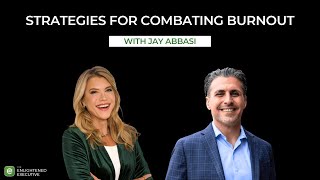
Jay Abbasi describes his rapid rise at Tesla and the personal crisis that made him rethink work. He outlines a daily routine called the fundamental six: eating well, hydration, sleep, exercise, self-care, and positive consumption. He also recommends pattern interrupts and delegating when workload becomes unsustainable.
Questions this video answers
January 15, 2025
62% of employees are experiencing burnout (mentioned by the host).
2014
Over 1,000 employees
Six promotions
Chapters
Foreign.
Hi, I'm Susan Drummond. Welcome to the Enlightened Executive, where your personal evolution sparks your leadership evolution. Each episode we feature groundbreaking techniques and strategies to help you get the edge in personal and leadership effectiveness. Are you curious about your own development path to enlightened leadership? Take our free 5 minute quiz@susandrum.com to learn about your superpower and roadblocks that could get in your way of effective leadership. Today we're focusing on avoiding burnout in the workplace. And I'm happy to introduce my guest, Jay Abbasi. Jay is a speaker, coach and former Tesla leader with a mission to help professionals boost performance without burning out. After his father's sudden passing in 2014, Jay redefined his approach to life and career, transforming personal hardship into a catalyst for growth. At Tesla, he rose to lead national training programs, overseeing the development of over 1,000 employees across North America. Today, Jay combines his corporate experience with his passion for mindfulness, resilience and well being to inspire and equip audiences to thrive under pressure. His message is simple. Success is not about avoiding challenges, but mastering them with balance and clarity. So welcome, Jay.
Thank you so much, Susan. I appreciate the introduction and I'm excited to be here.
So tell me a little bit about why burnout is important to you and what as you start into this. One of the things that I heard a recent statistic on is that 62% of employees are experiencing burnout, many of them feeling that they have to be constantly on 24 7. So certainly it is a widespread phenomenon. Why? Why did you get into this particular space? Why is it important to you?
Yeah, so about 10 years ago, I was someone who was riding on autopilot in my life. I was just doing what everyone else told me I should do. You have a job, you go to work. I was in school too. My daughter was 2 at the time and I was just doing, doing, doing, going, going, going. And I wasn't really happy. I wasn't fulfilled. I didn't have any direction. I didn't know how to fix it either. And then my father suddenly passed away. My mother calls me at 6am and says, your father had a heart attack and we don't know if he's going to make it. He passed before I even got to the hospital. And when that happened, it forced me to have to go within and ask some more important questions about my life. What am I doing? Where am I going? How can I make a meaningful impact on the world before my time comes? Because I don't know how much time I had My father thought he had a lot more time. And we all feel that way, don't we?
Yeah, we do. Right?
It led me down this path of discovery, of finding the answers to those questions. And it was a mix of personal development and learning more about how to optimize my own energy and my focus and to find my purpose. And I combined that with some Eastern philosophies of how to be present, how to learn, how to let go, how to not be caught in my own stuff. And then as I made my transitions in my life, I left this finance company, I started working at Tesla, and then within four years, I got promoted six times there. And I was really, really succeeding. But I was watching, Susan, everybody around everybody, but a lot of people burning out, a lot of people struggling. And I realized that there are things that I learned for me that I know could help them. And so when my chapter at Tesla ended, the natural progression was for me to be able to offer that in the form of speaking and coaching. And I've had a wonderful opportunity to really impact people's lives, meet them where they are, and really help them to optimize their performance without having to sacrifice their own well being to do so.
Yeah, yeah, right. It's like we still have all the obligations and demands and things are changing at a faster and faster rate. So how do we keep up without getting into burnout situations? Right. So what was most important in your journey to discovering this along your personal growth path?
Well, I think the most important discovery of all was learning how to practice what I call self observation. So if we think about what happens throughout the day, we just are running from one thing to another to another to another to another. And then we all of a sudden are in our beds wondering, what did I do today? And I realized that it was not a healthy thing to do without having moments of pause throughout my day. And so the practice of self observation for me is I observe myself in my activities. I'm watching me as I am interacting with people. And it's something that's quite simple. If I ask anybody right now, I ask you right now, Susan, to just notice you as you're listening to me. You can do that, Right?
Right.
It's a simple little shift in our attention. And I realized the more I was doing that, the more I was able to recognize when I was falling into these spirals that I was falling into before I realized, and I know you love the term, the word patterns, I was falling into those patterns that were unhealthy for me. And so I started to just observe myself more and more, and it became a little bit of an obsession. And that in a good way, where I was. I was really watching myself. And I wanted to dive deeper into that through mindfulness, through meditation, and through just emotional intelligence and being observant. And it was a game changer for me. And it was something that now I make a fundamental factor of any of the coaching or the speaking that I do, that I help people to create a practice like that for themselves.
Yeah, absolutely. Because if you don't know what it's happening, you have no power to access or change it. So learning to take a moment and be the observer, you know, the example I give. And this is also true with teams. You know, so often teams just keep going at it. They just keep playing and playing. Well, imagine a sports team did this. They never watched the tapes. They never reviewed how they played. They just kept playing games over and over and over again like they wouldn't get any, essentially. They might get better in some things, but, you know, we need that. That step of observation, of stepping back, Right. That's why they watch the tapes, they watch how they play. They take that time out. And teams need to do this for themselves, and individuals need to do this for themselves as well.
Absolutely. And what you just said triggered a story, a memory of mine of when I was a manager early on in my career at Tesla. And while I don't have the tape of my. Of my coaching of people, you can gather feedback as a leader and just ask your direct reports, right? How am I? What do you think of how I'm doing? Right. What can I do better? That's essentially the same thing, right? So I'm this new leader at Tesla, and one of my top performers and I are on a phone call, and I ask him, his name is George. I say, george, how can I be better for you? And he hesitated, and he said, jay, you're doing great. You're doing. You're doing. Everything you're doing is perfect. I said, wait a minute, George. I noticed a little hesitation there. Like, it's okay. Like, please tell me how I can be better. I want to learn. Right? And he said to me, when we're going through a hard time and we're feeling stuck, so often you just say, everything's gonna be all right, George. Like, just. You have more time now to be able to work on this. Instead of that, you. You respond with positivity, but you don't really acknowledge what we're going through, and that hurts. And that Stuff. Right. It's a stab in the heart, but in a good way. And that I learned something. Wow, George. Like, I guess I never really realized that. And because of that feedback, I recognize that I need to be. I need to acknowledge whatever anyone's going through, and I need to be better at not just jumping into the solution of how I fix it, but to meet them where they are and acknowledge them for what they're feeling and then guide them through that step by step.
Yes. Right. Right. So that's a great example of really leaning in to realize your focus is on. I think I'm. As a. My job as a leader is just to solve problems. Right. I imagine that's. That's your intention, and that's a good intention. And at the same time, there's another calling for you to be a leader, which is actually connecting and meeting people where they are. Like, that's also your job. And so if you're just out there thinking you're supposed to be solving problems and not doing the job of connecting and just acknowledging to see you get it, you get them. Okay, let's try to solve this together. Like, that beat is. And it can be just a beat almost. Right. But needs to happen where someone feels like you're with them, and that's how you build trust. Right. So.
So absolutely. Absolutely. You have to meet them where they are. You know, you want them to climb a mountain. You can't be from the top of the mountain screaming, hey, just walk faster. Right. You have to go down to meet them where they are and then guide them up gradually. That's the lesson I learned from that conversation I had with George.
Yeah. Well, tell us a little bit more about your days at Tesla. What else did you learn about managing others through change and complexity, which certainly went through a lot of that, as well as managing your own sense of stability and resilience.
What? What? I learned a few things. I have a few stories. So many, actually. Tesla. Tesla was like a roller coaster, Susan. It was like, you know, you ever be on a roller coaster, and then you get off the roller coaster for. And you're like, was I really on that thing for that long?
Oh, yeah.
That's what it was. That's what it was like working at Tesla, and my friends who are there now, they can relate. So one of the things. Example, like, we were in a meeting once, and we were discussing how to create training for people who would be doing the phone calls, the sales calls to clients, and then being able to then transfer them over to the Advisors in the store. And so we were discussing with the sales leadership, you know, how are we going to create a training program for this and so on. So we're in the meeting and we're talking through it, and then the sales leader leaves. And I see my manager, who's the head of global training. He's looking at his phone and he has this look on his face, like dread. And I'm like, what's. What's up? What's going on? He said, I'm going to share my screen and show you something. What he showed us was a tweet by Elon that they are closing all the stores nationwide, all the Tesla stores. That's how we found out.
Oh, wow.
Exactly. So we had no clue this was coming. We had no plan for it. Okay. I remember what we ended up doing was my manager and I just said, do you want to just go get a drink somewhere, Take some time? That's what we did. That's what we did. And we just. We had to, like, let it go. But what it really taught me was the ability to be adaptable. Because what we had to do is, okay, this is what it's like now. We have to adapt. We have to adjust. And we did, right? Yeah. We took some time to just take a break and step away because we had done all this work towards one thing, and now we're moving in a different direction. But the benefit of that was a few things. One, working with people to be able to, hey, connect on this and say, you know, I'm not alone in this. We're together. And then two, was to be able to say, okay, this is what it is. I accept it as it is. And now what's the new plan? And how can we be adaptable to this environment and not be too stuck in one way? Because if I was. If I was stuck in one way, I would have been frustrated, angry, and I wouldn't have been able to perform. It was more like, okay, I have to be a chameleon here. I have to flow with what's happening and come up with a new plan.
Right, right. And that's where I think most people also struggle. Because unfortunately, or fortunately, you know, we're living in a time of escalating complexity. You know, change is happening at a faster and faster rate, and it's exponential, essentially.
And.
And so what. What I think is causing a lot of the burnout is people not kind of understanding that this is the new normal and understanding it, but also being able to flex more quickly because we Find safety in our patterns because we've been doing them for so long. Right. And so now things are shifting. How do I adapt more easily and not hold on to the old ways of doing things? How do I shift? Yes, there's some comfort, loss, but then there's what opens up is creativity and the opportunity to really learn how resilient you are. Because we are quite resilient if we allow ourselves to be.
Yeah. And the way I oftentimes describe burnout is it's when you're disconnected, you're disconnected from purpose, you're disconnected from the people around you. And therefore you're wasting your energy on something that you feel. You don't feel connected to anymore because you had an idea of the way it was supposed to be. It's not that way anymore. So you've lost connection to it. Right. In that what's happening is there's attachment, you've attached to something having to be fixed in a certain way. So it is the job of the individual as well as the leader to be able to realign and reinterpret your situation and be able to connect the dots still towards purpose, towards one another. So there's two things there, right? One is how I do it within myself, which is to be able to say, okay, it didn't go exactly the way I planned. What am I really doing this for? What's the meaning behind this? What's my role in something greater than myself? Right. Which is what I feel is so powerful about a company like Tesla, which is there's something greater than the individual, that. That the mission is right, to accelerate the world's transition to sustainable energy. That is something that the people who work at Tesla, who are really driven, they're really bought into that. Right. So the leadership has done a great job of connecting everyone towards purpose there and then as an individual, it's to say, okay, I have to be adaptable so that I can stay connected to that purpose. So the leader has to realign that perception for everybody, to get everybody on board with something greater than themselves. And then the individual has to do it within themselves.
Yeah, yeah, for sure, for sure. So, well, let's get tactical here. What are some of the pieces of advice you give to your clients about managing burnout or avoiding it?
Well, I think the most important thing is to look at first the most critical components of your day to day that are the fundamentals. So I call them the fundamental six. These are the things that we do to stay charged every single day, day. Each of us carry around this thing, our cell phone, you make sure it's charged every day. You're never gonna let your phone die. Your phone is with you everywhere you go, right? And you charge it every day so that the next day it's at a hundred percent. Why would you do that for your cell phone but not for yourself? So you have to do that for you. How you do that for you is these six areas. And the six areas are simple. It's healthy eating, hydration, sufficient sleep, physical exercise, self care, and positive consumption. Positive consumption is. I am feeding my mind with positivity through great books, a great podcast like this, for example. This is my way of bringing positivity into my life. So the first thing I do is let's take inventory of those six areas. What needs the focus right now? Don't try to fix everything at once. Don't try to fix all six in one day. Let's start with one and be able to really improve that exponentially. And then we can move to the next area that needs some work. If you just do those, if you have six of those six things are checked every single day, you are doing a great job of avoiding burnout. So that's the first thing I would encourage people to do. And then the next is to be able to then bring in those practices, like I was saying earlier, of stillness, of being able to bring yourself to the present moment in the form of, let's say a meditation or yoga or prayer. Really depends on the individual. And, and I, I feel there's no right answer. There's not just a one size fits all thing here. For me, it's Zen meditation. I just Simply sit for 10 minutes and I observe. I observe my breath, I observe myself in the present moment. And I just sit there in stillness. It's rewiring my brain. It's helping me to be able to, as you said before, notice the pattern before it gets too far. So I'd say those are the first two things that I encourage everyone to do. Tactically assess your fundamental six and commit to a practice of stillness every single day.
So what is your fundamental six look like? Let's get or a client's fundamental six.
Yeah. So with healthy eating, it's. Okay, are you meal plan prepping or you. How are you setting yourself up for success? And with the way in which I encourage everyone to approach this is use systems of habit forming. Meaning don't make it where you have to rely on willpower for these things. Set yourself up to where it's nice and easy. So in other words, if you're someone who loves a lot of junk food at night, don't try to tell yourself, I'm not going to eat junk food tonight. Just get rid of it. Don't have it in the house. Nice and simple, right. If I don't have access to it, then I'm not going to be as tempted for it. Right. So that's an example of, let's say healthy eating with hydration. Same thing, make it nice and easy for yourself. Get your water filled up the day before. So that way you could just jump right into it with, with sleep. I'm not a sleep expert, but I always encourage people to consider how can you reduce, let's say, your screen time at night to be able to have a nice healthier sleep with self care. I talk through the meditation as a means to be able to do that physical exercise. Finding something like for me, I go to the Gym at least four days every single week, but I don't go for two hours, Susan. I go for 20 minutes, nice and easy. I make it nice and easy on myself. And it's always like after I drop off my daughter at school. So I just go to the gym after that. I don't have to really force myself to. And with something like positive consumption, I incorporate it into my day. So in other words, rather than saying I have to sit for half an hour and read a book when I'm very busy, it's I listen to an audiobook on the way home from driving my daughter to school and then I listen to it while I'm at the gym. So that audiobook is my positive consumption for the day. So that's how it looks for me. But it's create an easy plan for yourself. Reduce the friction as much as possible.
Yes, well, and I think creating a plan is important. And then I love this idea too of sort of prepping for the week, getting yourself organized. Right. If you know it's going to be. You live intense weeks, how do you make sure that you get ahead? And one example, like for me on the healthy eating piece is I love having eggs or egg whites. Like I need some protein in the morning while cooking an omelette, which I love to do. I don't always have time to cook the omelette. So one of the things that I start doing is creating my own egg bites. You know, the same ones you get at Starbucks or whatever, just getting that going. Or you can even buy them now in the store where they're frozen and you pop them in the Microwave and it's much better than a pop tart. Okay. So so but it's stuff like that that you, you got it at the ready, you know. And I know a lot of people that also prep dinners, you know, create something big on Sunday. They have leftovers a couple days or they find ways to reconfigure the chicken that they cooked right on Sunday. So all of these that just requires that, that sort of initial planning. And the same way workout. I mean I work out five to six days a week and I travel. I mean I've been on a plane once a week from mid October to mid January and I still find a way to, to get to the gym. How is that possible? Well, when I am here there's my schedule is already booked out and, and they're pre planned things. It's Pilates one day, it's strength training another day and rotates right. It's hiking. I have like a little block for hiking or whatever on the weekends. So when I wake up on Tuesday I know exactly what it is I'm going to do. Like I know what the appointment is, I'm going, I don't have to think about it.
Yeah.
And I think that that sort of setting up now some people might not like all that structure and look, I'm a type 7 who loves freedom and flexibility in the enneagram. So. But there is sort of solace in the, in that structure right. Where I've got enough to worry about, I don't want, I don't have to worry about. It's all like sort of done. So just really encourage those that are struggling. You know, as we get into the new year, what is it that you can make more automatic in your life? Like just turnkey that you don't have to think about because the structure is set up.
That's a wonderful way to put it. Automatic where you, you know, that's the same reason why Steve Jobs every day he wore the same thing was because he didn't want to have to think about it and use willpower every morning to decide on what he was going to wear. It's exactly the same thing. And if you're someone who is likes the spontaneity and wants to have that, then put that into the plan. It's that simple. Like one of my clients, like she was like Jay, I cannot have the same routine every single day. That's just not me. I said I'm not going to tell you to not be you. Then just create your plan so that allows for the Spontaneity, but you're doing it in a proactive way rather than a reactive way.
Yes. That's why I'd be the same. If I did the same workout every day, I'd be so bored out of my mind. But I build in the variety because every day it's doing something different. But I created the schedule to know that it happens, that you know, so I'm not in the excuse of why it didn't happen. And I think sometimes people just get stuck on one idea. But there's so many things I. I had a client who has built in Pickleball as she loves it so much now, and she never used to work out before, and now she's so connected to that. And that's where she found her groove. Right. And she doesn't mind doing it several times a week. So that I think it's. There's also a process of learning yourself, like, how do you need to sort of gamify it for you in order to make that work?
Yeah. And I love the word. Love the fact you use the word connected, because you have to find what activity connects you, gets you connected in life. And everyone's different there. You just have to be able to know what it is and create the plan for it. Because burnout is not about what you're doing. It's about what you're not doing. And if you're not doing things that connect you to yourself, to purpose, to your environment, that's what creates the burnout.
And so what do you say to the person that's like, look, that is all well and good, but I've got so much. The reason I'm burnt out is because I've just got so much on my plate. I don't have time to do these six things you're talking about. Jay, what do you say to that?
I would tell them that's nonsense because I've worked with CEOs, I've worked with people who have incredibly high demand. There's always a way. You just haven't yet prioritized it. You have said it's not important enough. That's the problem. So I would say we need to address that belief that you think it's not important. If you thought it was important enough, you would find a way. You would make the time to be able to do it. Now, I'm assuming, by the way, that someone who maybe doesn't have or isn't in a situation where they are psychologically unsafe. If you're psychologically unsafe, meaning the environment is One where it doesn't matter who it is or how you're handling it, it is really a threatening environment. Then you need to leave that environment. That's, that's, that's a very important thing here. I don't mean to minimize that, but let's assume that it's not that. Let's assume that it's a safe place then it's about what you're prioritizing. And what you need to recognize then is there are things that you most likely will have to let go of, delegate, eliminate or automate so that you can prioritize these fundamental six and be happier and also perform better. Because I assume that all that stuff that you're putting on, that's put on you is also making you less effective.
Right, Right. People just don't recognize the efficiency. Right. You know, I worked with a client who was unbelievably successful billionaire and, but he could not stop working and he had a fundamental belief that if he doesn't stop, like everything is going to like that's why he was successful. Well, and, and so he couldn't imagine taking a week off vacation like that didn't even heard of, let me tell you that now he's just about to go take three weeks in Asia off with his family because. And his business is doing even better than it does before. Right. It's so much of our belief because he learned how to delegate. He learned how to like let things go and create the systems and structures to let others perform. And he was just trapped in this sort of fundamental belief. So you switch the mindset and the belief that's holding you back, then a whole new set of actions. And I, I swear to you, when we started, if you would have told, told him, yeah in, in one year you're going to be able to take a three week vacation. It would have been like that's not happening.
That's amazing. And, and what's, what's fascinating is it's just a story we're telling ourselves outside of doctors in an emergency room. No one's gonna die if you don't respond to that email right away. Right. No one's at really at threat.
Yeah.
When you decide to stop your day at 5 or 6, whenever it is at the end of the day versus working all the way through the night. So helping, I find helping people to really come to that realization that nothing really is as urgent as your mind is making it out to be, that that is your mind playing a little bit of a trick on you to be able to notice that and then make better decisions in the moment that will ensure that your well being and everyone's well being around you is really being considered in the long run. I find that that alone makes that switch for people in their mindset.
Absolutely, absolutely. So what's one thing that you would suggest a leader does tomorrow either for themselves or for them? Team to avoid burnout?
Yeah, I think one of the things that helps for the individual would be to come up with something that would interrupt a pattern. So you, you have patterns that you fall into and you, you most likely, especially leaders that I think are listening to this podcast are quite self aware. They notice that they can fall into these kind of patterns. Right. So you know your pattern. You know that you may fall into either overworking or anxiety or worrying, whatever it is, give yourself something that you use as a tool. So for example, I was working with someone just before this call and her pattern interrupt she came up with was it's not always about me. So she's going to be telling herself that's her, that's her, that's her pattern. It's not always about me. And have it as something that you write somewhere that you can look at, you can see in your environment. Or it could be a question question such as what's within my control or what's my role right now? Something that forces your mind to have to stop the pattern and go down a different path. If you can create a pattern interrupt for yourself and you really bring it up over and over again, you are actually rewiring your b brain and you are going to avoid burnout, that's for sure.
Absolutely. And as listeners know, we, we. I'm a big fan of using music to make that pattern interrupt, but all about the pattern interruption and generating new patterns that actually work for you. So thank you for sharing your thoughts today and your experience at Tesla and everything you've learned. Really glad you could be here.
Oh, thank you so much, Susan. This was wonderful. I really enjoyed it and hopefully we can do it again in the future.
Yeah, sounds great. We have so much in common too. So if you like this episode, you're not going to want to miss my interview with Matt Hudson, who combines challenge with support, nurturing both personal and professional growth amongst his team. Let's all lead the way. Hope you enjoyed today's episode and I'd like to point you to the next important step. Hit the subscribe button and the bell to get notified when we release new content. I'll see you on the next episode. Of the enlightened Executive.
More from Susan


Why the Biggest Doors Open When You're Not in the Room | Michael Roderick & Susan Drumm





The Simple Audit That Adds a Human Touch to Every Customer Interaction #shorts


