The Value of Failure [Omar Zenhom]
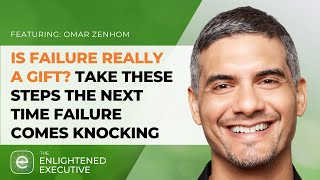
A YouTube interview (Enlightened Executive) where Susan Drumm interviews Omar Zenhom about the value of failure for entrepreneurs and leaders. Omar traces his path from 13 years as a teacher to full-time entrepreneurship (deciding to leave academia in 2012), launching the $100 MBA podcast and founding Webinar Ninja (launched 2014) to solve pain points in webinar software. He emphasizes learning from setbacks, recruiting for fit (autonomy vs. hand‑holding), transactional validation (sell before building), small iterative pivots, and using past strengths (teaching) to differentiate. The episode includes concrete milestones: Webinar Ninja sold out beta spots in 24 hours, has about 15,000 users, and the $100 MBA podcast has over 100 million downloads across 1,400+ episodes and received Apple "Best of iTunes" recognition.
Questions this video answers
2012
2014
About 15,000 users
Beta spots sold out in 24 hours
Over 100 million downloads across 1,400+ episodes
Chapters
Hi, I'm Susan Drumm. And welcome to the Enlightened Executive where your personal evolution sparks your leadership evolution. Each episode we feature groundbreaking techniques and strategies to help you get the edge in personal and leadership effectiveness. This episode is brought to you by Meritage Leadership. At Meritage, we strengthen leaders and empower teams to achieve high performance. Go to meritageleadership.com to learn more. Today we're focusing on the art of failure and what an entrepreneur or team leader can learn from their greatest challenges. And I'm delighted to introduce my guest, Omar Zenholm. Omar is the co founder and CEO of Webinar Ninja, a software platform for teaching, not meeting. He's also the host of the popular podcast the $100 MBA Show. With over a million webinar attendees to date, Webinar Ninja has grown rapidly since its founding in 2014, and the $100 MBA show consistently ranks among the best business podcasts in over 30 countries, with over 100 million downloads across 1400 plus episodes. An educator at the secondary university level for over a dozen years, Omar has decided to apply his natural passion for teaching and learning to the world. So welcome Omar.
It's good to be here, Susan. Thanks for having me.
Well, I had a wonderful time on your podcast last year and I'm happy to have you with me here today. Love to hear a little bit about your entrepreneurial journey. And since we are focusing on what can we learn from failure, to hear about some of those stumbles, missteps that maybe actually were blessings in disguise.
Yeah, totally. For those who don't know, I grew up in the us Born in New York, I live in Sydney, Australia now. And growing up, my parents are immigrants from Egypt. My dad was in sales. If you ever grew up in a family where one of your parents was in sales, you know that it could be quite up and down. You know, one summer vacation you're at Disney World, the next time it's the backyard. So growing up in that environment, I was kind of looking for some stability, trying to find a career that, you know, didn't have so much unpredictability. So I just wanted to go into teaching. That's what I thought. Everybody needs to learn. So I'm going to be a teacher. I did my degree, I started teaching at the high school level and that was kind of my jam for 13 years before I became a full time entrepreneur. I built some businesses on the side as I discovered the Internet back in 2021. Sorry, 2001. Much older than that. Yeah, in 2001. But moving up in my teaching career. I remember When I was 24, I was 24 years old, I applied to be the head of the year 10 team at the school I was working at, um, and alongside me, who was also applying for this job, was a good friend of mine, now, Gus. And he. He got the job and I didn't. And look, in hindsight, it made total sense, obviously, but at the time, I was very disappointed because I really wanted the job. But Gus came from corporate. He was a corporate vice president of Del Monte. He has lots of leadership experience. The guy was just a natural, you know, And I was crushed by the fact that I didn't get the job, but it was probably the best thing that could have happened at that time, because, you know, Gus actually went for bad for me when I didn't get the position. He actually went to the principal and said, hey, thanks for the position. I would love to have Omar as kind of like somebody who could be, you know, assistant lead or something like that so that, you know, he can learn from me. And I didn't ask him to do this or anything. I was just like, this Gus guy sucks. But anyway, he. He actually did that for me. And, you know, I was still a teacher, and I still did all my teaching hours, but on top of it, I had to take on the responsibility of being kind of like assistant lead teacher. But I learned a ton from him about leadership, about how to handle different types of people. If anybody has any relatives in teaching, they know the teaching world attracts some really interesting characters. You know, there's a lot of different personalities that go into the teaching world. Very eccentric characters, and they're not easy to manage. And it's super hard also to manage people that have job security. You know, it's not like they have the fear of losing their job. People know that they're needed, and no one's going to step in. The middle of the year, it's hard to find a new teacher.
Really got to work on your influence skills there.
I mean, exactly.
Meeting without authority, which is a program we do.
Yeah, yeah. And Gus really taught me the ropes. And the funny thing is that I don't know if he planned this or what, but a year later, he stepped down and I took his position. So I learned a ton in that year. I learned how to really not only manage myself, but manage others and manage my time and manage my workload. It was a very demanding position. And then from there, I continued to move up in. In. In the organization, and then I moved to the tertiary level. And became, you know, a chair department at the university I was working at. And a ton of things I've learned just from that experience, because I really think I wouldn't be the leader I am today if it wasn't for those learning experiences early on. And losing that job.
Right, right. And so losing that job at the end, you look back and you're saying it was the best thing. But at the time, what were you saying to yourself about it?
I thought, you know, I look back at my mindset back then, and I'm embarrassed, really. I'm embarrassed of the things I told myself. And it was more. It was. It was really pointing the finger at other people, wasn't really saying, I need to be better. It was more like, oh, you know, they. They went with the easy choice, or, you know, of course they went with this person because he's older or whatever. I made up all these excuses, but the real reality is Gus was the better person for the job. He was well qualified. He did it effortlessly. And I actually learned that in that year where I was kind of being groomed by him. And I realized, oh, this guy's actually very good, much better than I am. And the thing about being an entrepreneur, about being somebody who would start a business, you have to be a little bit delusional sometimes to believe in things that other people don't, so you can actually get it started. But, you know, you should have a healthy dose of that, not completely delusional. So, yeah, I've learned over the years that usually if things don't go your way, you are the person that is to blame. And it's not. I don't want to say blame, but you're responsible for the outcome. Meaning that when you're responsible for something, it doesn't necessarily mean it's your fault. It means you need to take responsibility for what happened and how to move forward and the next steps and to learn from it, like we all should. But in the moment, obviously, it hurts and it burns and it feels like an injustice has happened. But at the same time, you have to realize, okay, how can I use this to my advantage?
You know, I think what you're pointing to is a real milestone. I would say marker about how we deal with disappointment. How do we deal with our dreams being dashed? And what do we say? Do we blame others? Do we go external? Do we blame ourselves? Or is there a different mindset altogether? I notice as leaders mature or have been doing the work, the more they are at peace with. With things like this. Now, it doesn't mean you can't continue to work. But they don't. They don't do either extreme. They don't blame themselves, they don't blame other people. They say, what is here for me to learn. And as an educator, I would assume that's what you really got a dose of that year.
Yeah. And I think that looking back at it, I was incredibly lucky that Gus saw something in me to even entertain the idea of, you know, training me and helping me and, and seeing me get better.
What would you suggest to an up and coming leader when they think about how they need to flex their leadership based on the person?
Yeah. I think if you look at your team, what I found in my own experience, it could be different for other people, is that depending on the talent level of your team, they're going to be managed in a different way. Some people need a little bit more hand holding than others. Some people, they need more autonomy. Some people, they actually want everything to be prescriptive. So you have to know who you're recruiting in the first place. So if you are the kind of person that don't like to micromanage, you just want to tell people, run, run with it, and just tell them how to do, you know, I need you to do this, and you don't tell them how to do it. They just pull it off. You got to hire somebody that can do that. You can't just expect everybody to do that or to be like you. This is a mistake I made early on in my career where I just thought, oh, everybody's autonomous and everybody wants to kind of just run with it and have ownership. No, a lot of people are just like, I don't want to screw this up. I don't want to, you know, you know, do the wrong thing and make the wrong decision. And I'm. And I was getting frustrated. I was like, I got to make every little decision for them. What's wrong with this person? Just get on with it. And then I realized, oh, you know, this is not their way of operating. I need to find somebody who does want to operate like that, who is autonomous, that wants that, you know, very little direction. So a lot of us can save a lot of headaches and gray hairs if we just spend a little bit more time and be a little bit more deliberate when it comes to recruitment and hiring the right people for the right jobs. You know, for example, you know, if you're hiring an executive assistant or a VA or somebody like that's going to be on your team, you need Somebody to be able to take. Make decisions without you being involved. Or they could be at least trained and has done that before, has a track record of doing that. Because otherwise you're going to feel like this person's redundant. Like, I'm making all the decisions. The point of this person is so to take time and effort off my plate. So you got. I've learned that you need to really be mindful when you're recruiting who you're hiring. And I'm not interested in, like, what they say in the interview. I'm actually more interested in what they've done in the past. History is a good indicator of what they're capable of doing. It's not saying that you don't judge potential, but it's very hard to bet on somebody if they haven't proven they're able to do something.
Yeah. So I think asking questions that show that background around making decisions or who do you like working with? Where have you been frustrated in working with people in the past? Why were you frustrated with them? And you listen for the answers. Were they frustrated because they felt micromanaged and they prefer to be autonomous, or were they frustrated because they felt like they didn't have enough guidance? Well, to your point, then there's your answer. Then this person's going to need a lot of guidance. I think asking people about their pet peeves is a great way to understand what it is that you're going to be dealing with. Because whatever their pet peeves are, they're coming in and they're bringing that to the workplace.
Right? Yeah. And one of the strategies that has helped me when I interview is that I actually want them to tell me actual, real story, and I'll stop them midpoint if they, If I ask them, like, you know, if you ask a question like, you know, can you tell me of a time where you disagreed with a colleague and how you handled that disagreement? They'd be like, well, usually when I don't want to hear about usually. Sorry, I'm sorry to interrupt you, but I want you to actually tell me a time. Like one time I disagreed my colleague, because we wanted to put our social media icons on the bottom of the page. And they said that that's a horrible idea. And I, you know, I had to bring it up to the next meet. I want an actual story. And they were like. And then they'll, you can stop and think, take your time, but I don't want hypotheticals because we could all make up hypotheticals and look great. So give me an Actual story is something I often have to stop and ask them to do a few times in an interview because it's just not natural. People don't think. They actually think of real examples.
Yes. Well, share with us a little bit more your journey to entrepreneurship and what some of the failures that you experienced along the way.
Yeah. So when I was in teaching, when I started my teaching career back in 2001, I was fascinated with the Internet. I thought, this place is incredible. I am a believer that it was much easier to get around the Internet and it was really much easier to kind of get some traction because it's a very noisy place right now and there's a lot of distractions, especially with social media. But I started building businesses on the side. My first business was basically an arbitrage business. I used to sell a rare Air Jordans, which are sneakers for people that are looking for a specific type or a model of Air Jordan. So I actually never really bought them. I would advertise them and then I would find somebody who was selling that exact pair and then sell it for a profit. And really, I didn't see as a business. I actually just did it as an experiment to see, can you make money on the Internet? Like, is this something that actually could be done? And then when I made that first dollar outside my paycheck, I was just like, this is incredible. Like, I can't believe this actually happened. A complete stranger, you know, said, I want this. And I fulfilled this, this product for them and they, they bought it. And then I started to build other side businesses. I learned how to build websites. I learned how to, you know, cobbled together some blogs. This is before even PayPal or WordPress. You know, this is, this is really, you know, I'm aging myself here. But, you know, it was a great time for me to learn. And I. For me, my biggest teacher were books. I used to read tons of books just because I was new to the entrepreneurial world. I wanted to learn who are these crazy people that create things out of thin air and manifest it in the world, you know, And I really started to get attracted to it. Eventually I started building some substantial businesses. And then year 13 of my educational career, I was doing really well in my job. I was actually. I was a chair department. And then I was going to actually try to get the next position, which is the head of the head of the department. And I was really interested in finding out, like, when am I going to get this position? Because I was actually acting chair for a year and a half. The person that was in the position left. And then I fulfilled that position for free. Basically I was getting my own salary. I didn't get the job officially, but I was killing it. I was doing a great job. I was adding so much value to the university. And then I went to my supervisor, the dean at the time, I said to her, hey, when am I going to get this job? I've been doing a great job for about a year and a half now and everything's improved and all our numbers and our metrics are great. And I saw her face change and she was kind of like, almost like I can't hide the truth from you. And she just said, listen, the director of the university told me that he wants to make an outside hire for this position, somebody outside the organization. And in that moment I just felt totally crushed, totally disappointed. And I say in that moment my frustration outgrew my fear of leaving my job, of taking that full time leap into entrepreneurship. And in that moment I just said, you know what, I'm just going to bet myself, you know, I worked my ass off and it doesn't matter if I can't. I don't have control over my destiny. They decide to make an outside hire, that's their decision. I can't do anything about it. So at that moment I decided to go into full time entrepreneurship. And that was 2012. A year later I started the $100 MBA and the $100 MBA podcast because I, I knew that there were other people like myself who started businesses by just learning and self teaching them their the skills of business, whether it's sales of finance or, or marketing or you know, building a team or leadership. And I wanted to be able to put it together for people that maybe don't want to go back to business school but just want to know enough so they could start their own small business. So I started the hundred dollar MBA with that idea in mind. And then 2014 I was running webinars to sell my products and services from the hundred dollar MBA using webinars. I hated all the different software out there because it wasn't really conducive to teaching. And as a former teacher that really was important to me, being able to focus on my content and not on all the technology and making sure everything works. So I decided to create something for myself to make things easier. I we pre sold it to our community. We sold out our beta spots in 24 hours. So we knew that that was a major pain point. A lot of people hated what they were using at the time of our webinars. So from there, we launched Webinar Ninja, which is our webinar platform. And, you know, it's now almost eight years. Yeah, this month will be eight years of webinar ninja, and we've had over 15,000 users. It's been an incredible journey growing a software company alongside my podcast. And I've learned a ton. If anybody's ever worked in software or built a software business, they know that this is. It's a hell of a ride. But at the same time, there's a lot of mistakes that you learn well.
So let's focus on those. So in entrepreneurship, what you know, either those experiences of the podcast, starting the podcast, what failures did you experience?
So with the podcast, a lot of people don't know that before I started the 100 RMBA show, we started another podcast, was an interview podcast. And we did it for 46 episodes. But it wasn't getting any traction. We weren't getting that many downloads. I think on a good day, we would get like 400 downloads on an episode. And that's good and all, but we were looking to get more traffic than we were currently getting in our blog. So I sat down with my co founder and my partner in life and business, Nicole, and we thought, hey, what's going on with the show? Why is this not working? And we realized, okay, we don't really differentiate ourselves from other interview podcasts. We're not really adding any value to the business world in podcasting. And the podcast was essentially a failure because, you know, we got all these great guests on and things like that, but we weren't really moving the needle at all. So we realized, okay, how can we differentiate? And we realized in the moment that, you know, we're not really leveraging our strengths in any way. You know, like, it's like I'm doing things that don't come natural to me. So what comes natural to me? Well, teaching does. So why don't I teach on the podcast? And we thought of another podcast called Coffee Break Spanish and Coffee Break French, which is language lessons, daily language lessons. And we thought, you know, no one's doing something like this for business. I love to teach. I would love to teach a short business lesson every day. Let me do that. So we actually went to work. We actually stopped taking any client work for two months and worked on the podcast, recorded the first 30 episodes in the cans to make sure that everything's great. I think I recorded episode one like, 12 times over and over.
Have to totally rebrand the podcast, when you did that?
Well, we just launched a whole new podcast. Branding. Yeah, we just totally starting from scratch. Yeah, it was a huge gamble, but we really believed in the concept. We thought, you know, if. When I started as an entrepreneur, I'd love to have like a 10 minute episode of something every day so that I can get better and apply that. So we did that. We launched the $100 MBA show and we just had our heads down. We worked hard, we tried to make sure that the podcast was successful. We still didn't really see it start growing until we started. Week two. Week three, we started to get new noteworthy. We started ranking high on the business charts. By week five or six, we were getting 10,000 downloads an episode. We're like, oh, God, okay, this has really struck a nerve. We're doing something right. But then we just kind of had our heads down. We launched in August, and then in December, I get all these tweets from people that I admire but don't even know, like Alex Bloomberg. And. And they're saying to me, congratulations. I'm like, congratulations for what? I'm. I don't know. This. I don't know. Alex. Alex is like big time. And. And we realized that itunes has awarded us best of itunes, which they work to only like a dozen podcasts a year, which is like winning an Oscar in podcast world. And it was like, really incredible because I realized, okay, this is, this is working.
Yes.
Yeah. And I, and it's all because I didn't deny my past. I didn't say, okay, I'm a business person now. I'm not going to do what I did before. No. I've invested 13 years of my life and degrees and education and blood, sweat and tears. I'm going to use that teaching experience and use it in my podcast. And I think, and we reached out to Apple, actually asked like, you know, thank you for the award, but, you know, can we ask why we were selected? And they said, well, you added something to the genre of business that we haven't seen before, which is, you know, daily lessons rather than interviews or banter or discussions. And I thought, okay, that's great. We were able to differentiate and add unique value because the honest truth is, is that I was competing with Tim Ferriss, who all he does is have New York Times bestsellers come out of his ass. This guy just wins all day long. We have Pat Flynn that has a podcast since 2006 or even earlier than that. Same thing with Jordan Harbinger or Entrepreneurs on Fire. These guys were Just, like, killing it. I'm like, how am I going to differentiate and stand out from that crowd? So I'm glad that I didn't neglect my past and I learned from a mistake and say, hey, let's focus on what we do best.
Taking the gamble to follow your heart and seeing it pay off was massive change. But I think also the ability to let go of something that's not working, that's another thing I heard you do. And after you've already invested a lot.
Right.
And I think a lot of people would keep pouring, well, let's just try to keep making this better and better. But you just cut the strings and moved on. How long did it take you from the time you started till you got that award from Apple?
We launched in August of 2014. So, like, four or five months. It took four or five months, but I say it took longer because we had all the things I learned from the failed podcast. I applied it. So that was part of the journey of getting to that point in terms of being that type of podcast or qualifying for that kind of show. I also want to say that I don't feel like I quit on the show. Like, I feel like I just quit on that version of the show. So I'm not saying that that's a bad thing, but I just want to communicate that a lot of people, they feel like, okay, podcasting didn't work. I still believed in podcasting. I just thought, I'm doing this wrong. You know, I'm doing this wrong. I got a course correct. I need to pivot. And I think there's a big difference, because I see a lot of entrepreneurs, they launch a business, they think it's a great idea, and then it doesn't do well. It fizzles out. And they're like, this business thing's not for me. Like, well, maybe it's not the business in general, but maybe this business in particular or this product or this service, you need to tweak it so that you can find some success.
Yes. What would you recommend to someone that is struggling in that area or, you know, they're trying to get their business off the ground, or they're trying to get their team engaged and they're feeling frustrated.
Yeah.
What is a. What's something that they could do tomorrow?
That's a good question. I think what I've learned over the last 20 years is it's never a good sign when you're pushing a boulder up a hill too long. There's. When I say too long, I mean, in today's day and age, I would say a year, just because if you have to really exert a lot of effort to be able to sell whatever you're selling, there's probably not a strong need for it in the market. The marketplace will tell you if you have a good product or service. It should not be so hard for you to sell what you have. People should be actually looking for it and finding you. And that really, I would say, is probably where most success comes from, is actually having a solution to an actual pain or problem. If you have something that's lukewarm or may not do so well in certain times of the economy, it's not worth all the hard work and effort you're gonna have to put in to for years to build a successful business. So it's really important for you to validate your idea in real world examples. I'm not, I'm a big believer in actually having a transactional validation. What does that mean? I mean, don't ask your friends and family, would you buy this? Actually sell it to them. Say, hey, do you like this graphic T shirt? Great. Can you put down an order for $25? Can you Venmo me 25 bucks or PayPal me and I will send it to you in two weeks. You know, like, if they don't say yes to that, that means they're not willing to part with their money. So you need to make sure that actually can happen on scale so that you can be able to have a viable business. And that was what I learned the hard way through a lot of different businesses I started and dropped and changed and pivoted. Is that the offer itself, whatever you're offering, has to be compelling enough. You know, think about how we buy. Think, think about anything you bought. You know, whether it's designer shoes or a watch or a vacation or a laptop or whatever it is, there was a strong enough need for you to go and grab that or buy that or spend money on that for you to do that. So that, that would be my advice, is that if you're struggling and you're, you know, it shouldn't be that hard. Of course you're gonna have to put in some hard work. But give it a year. I would say give it a year. And you should. Things should start getting easier and easier as you start building out your business and your marketing funnels and all that kind of stuff. But if it's not getting easier, you need to question, have you really validated this product?
Right? And then what pivots Just like you had to make a pivot and noticing after a year this isn't working. What pivot do you need to make to try a new beta version of what you're going out with? So excellent.
Definitely. And when you're making these pivots, they don't have to be grandiose pivots. They could be small iterations, small changes. One of my buddies, Noah Kagan from AppSumo, he always loves this exercise. We ask them, if you're ever making a change in your business or starting a new business, think about what is the minimal viable version of this business. And he gives the example of like, what's the minimal viable version of Google? If I wanted to create a competitor to Google, what would be the minimal viable version? It would literally be, email me a question and I'll email you back the answer. And some of us, we have a hard time going down to that minimal viable version because we think of business, we think of Walmart and McDonald's and Nike and really it starts there. And if you read any of those biographies, it started with one little hamburger shop or selling somebody else's shoes for Nike's example. So just think about what is the smallest thing I can do to validate that idea.
Yes, absolutely. Well, this has been fascinating to hear your story. Thank you for sharing. And I'm curious to know where people can learn more if they want to be following you on your journey. The $100 MBA.
Sure. So if you love podcasts, we're on every platform you can just search the $100 MBA for on your favorite podcast app. If you're interested in running webinars, live events, courses, you can go to webinar ninja.com we got lots of free materials and courses and blog posts for you to check out to get started if you're looking to sell your content online.
Awesome. Thank you. And if you like this episode, you're not going to want to miss my interview with Jonathan Kaiser, who shares his concept of practicing selfless leadership to help entrepreneurs build trust and create brand loyalty.
Thanks, Susan.
Please lead the way. Hope you enjoyed today's episode and I'd like to point you to the next important step. Hit the subscribe button and the bell to get notified when we release new content. I'll see you on the next episode of the Enlightened Executive.
Sa.
More from Susan


Why the Biggest Doors Open When You're Not in the Room | Michael Roderick & Susan Drumm





The Simple Audit That Adds a Human Touch to Every Customer Interaction #shorts


