What Is Holding Back Your Leadership Effectiveness? [The Leader's Playlist]
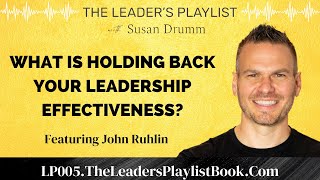
Podcast-style YouTube interview (Susan Drumm with John Rulin) about The Leader's Playlist: a framework and book that uses music + neuroscience to identify limiting internal "playlists" formed in childhood and re-anchor new patterns through music-anchored practices. Susan describes a seven-step process (including identifying a "belly full" motivation, naming old playlists, anchoring with songs, and adopting a meaningful mission), shares composite client stories illustrating shifts in leadership and personal life, and points listeners to a masterclass, coaching, and the book for next steps.
Chapters
Foreign.
Hi, I'm Susan Drum and welcome to this special edition of the Enlightened Executive, a seven episode podcast series on the Leaders Playlist. How to unleash the power of music and neuroscience to transform your leadership and your Life. Go to susandrum.combook to learn more about these concepts and the book. And with me today to talk about this is John Rulin who is just an all around incredible man. He is all about how to show up and build relationships with clients and partners through his company, Giftology. And he's an international keynote speaker, author, entrepreneur and we've known each other through a mastermind that we're both in. So I'm just delighted to have you on the show. Thank you so much for coming on to talk with me about the message that we'd like to get out into the world.
Yeah, no, Susan, this is, this is, this has been a long time coming, right? The book, us getting to talk, you know, bring. Bringing you to the, to the forefront of leaders minds. And I'm, I'm super excited to have this conversation.
Awesome. Thank you, thank you. I mean it's great to be talking about this but also sharing the conversation. Right. And not just keeping it private.
So yeah, you can't. You work with world leaders and like these billionaires or whatever else, like people need like more than just the. Your tight little inner circle needs to know about this, that's for sure.
Yes. Yeah. So tell me, what would you most want to know from what you've heard already?
Yeah, well, I think I just had a recent experience and I'll tie back to that in a little bit. But I think that most people want to know like the core of what you're talking about with the Leaders playlist. I think, you know, it sounds music oriented but it's, you know, it's obviously more than just like a Spotify or itunes playlist. Talk about what, what kind of connections and what are people going to learn when they dive into the book?
Yes. Yeah. So we all have a ceiling on our leadership effectiveness that impacts how we view the world and how we lead others. And there is actually no ceiling, but I think people get stuck and perceive that there is and get frustrated. And mostly it's looking at how do I change the external world, how do I get my team to engage more and be more committed to the work, how do I retain talent or attract talent, how do I, you know, scale my organization more effectively? All of these things people may, leaders may experience, how it impacts their ability to create the outcomes that they really want.
Yeah.
What we're really talking about is there's something inside you about the way you view the world that, yes, acts as a fuel or a superpower, but also can get in your way when you're faced with greater escalating complexity, which, frankly, we all are at this stage of the game. And so the leaders playlist is really looking at what is this internal program or playlist that's running you. And that playlist was formed in early years, way back in childhood, in how we survived and dealt with certain wounds or challenges in our life. So the playlist, when I talk about it, is not, though, just talking about it figuratively in that example. It's also about how to talk about. Look at it. Literally, in the book, we go through details about how music transforms the brain and how music is essentially a brain hack to help you make change faster. So the playlist is both, I say, a metaphor and reality. And so we're using music to help you make the shifts from that old playlist to a new playlist.
Wow. So the, the. The research around or the, you know, like, I know I have four girls, and we talked about, like, you know, wanting like, Beethoven or Bach or something be played while, you know, the babies are in my wife's stomach. And like, so that mean there's really, like, you know, not just figuratively, but, like, music is soothing. It's medicine. It's power. Like, it shapes things more than just like, some emotions. Like, you're talking like, you know, like.
How the brain's wire, the power to heal brain damage. I mean, it's unbelievable. Think about Alzheimer's patients who are unresponsive and come alive when they. They hear their favorite song. It's like they're back. And the other piece that we talk about is music lights up all regions of the brain. It, in a way, tills the soil to make these new synapses form more quickly. So if you want to pair making a change with music now, you're in, I don't know, essentially a turbo drive. Right. You're in more warp speed. You're in ludicrous speed. Right. And that's what we're really talking about. So, yeah, music has just such an incredible ability to do this, and they're not even sure exactly how that all works. They just see the results of it.
Yeah, well, I'm assuming, like, when I think of. I boil things down into, like, basic things. I'm a farm kid, I grew up milking goats. It sounds like it's almost like a Fertilizer. It's like miracle grow, Right? I mean, like. And I'm assuming, like, all the. I mean, we're realizing more and more like the whole world's just energy. Right. So, like. So it's a frequency.
Exactly.
That, like, feeds in. And, you know, since our brains are just energy and our bodies are just energy, like you're putting, you know, it's like, go out in the sun, you get your vitamin D, you get your whatever. But they're. So you're saying music really is able to feed and, like, accelerate those sorts of things like, that you want to have happen in the body.
Exactly, exactly. We are all energy. We are. We have a frequency. The Earth has a frequency. We have a frequency. And you can measure that frequency 3ft off your body from your heart that goes out. They actually. They can measure from the head as well. The energy coming from the head is about an inch and a half off your body. So think about the signal. And emotions themselves have certain frequencies. So the signal you're broadcasting is essentially what's going to get returned to you. And that's what we want to understand. Well, what's the deeper seated frequency that you're broadcasting and how can you actually change that frequency using music, which is frequency, to be able to broadcast a new message out into the world. So.
So that. Because that becomes the impetus or the nudge to go from one frequency to another frequency. So it is like you can use.
Music both to catch your old frequency that you're in. And I use it as. It's like a way to, like, oh, I don't want to go down that path again. So you use music that way as well as really getting yourself energetically into the state that you most want to be in using music. You know, you think about athletes, know this, right? They. They're able, but we're not. I want to make clear that I'm not just about like, oh, use music to shift your mood, which it will do. I'm looking at this from a much deeper perspective of saying use music, not only shift your mood, but to notice old patterns that hold you back and groove in new neural pathways that will be with you more frequently even when you don't have the music anymore as the crutch, so to speak.
Yeah, it actually, like a record, you're putting it into the substrate, which is you. So it's like taking the record and saying, hey, I got this. I need. I want to sing a different tune without having to have. Because I know when I go on stage, like, I have certain music I want to listen to and I have a certain walkout song that reminds me of my girls. Oh, it's the, it's Imagine Dragons Natural.
Oh, yeah.
Which is a great beat. But what's funny is one of my now 6 year old, when she was like 2, she thought it said nacho boat, not natural. So she would be. So she'd be like, play nacho boat. And I'm like, what are you talking about? It took me like a month to figure out that it was actually natural. And so it makes me laugh, it makes me like just feel. It shifts my mood, it shifts my energy and all that. But the idea of being able to have that five days from now or seven days from now as a leader, when you don't have time to jam out to a certain tune or to go deeper than that, is pretty really powerful. So you got a client that wants to use this. You're coaching somebody, where do they start? What's the kindergarten version or level? What's step number one to be able to kick off and start to use this as a leader.
Is there an area in your life that you want to change? I call it in my book. I go through a seven step process to identify the old playlist, anchor it with music, look to create the new playlist, what that is for you and what are the songs that are going to best energetically bring that out in you and. But the step, first step is getting a belly full. That's what I call it. It was from a phrase my girlfriend, old roommate Kari would say is like you, you just haven't had a belly full yet. And that was a little bit like you, you need to get to a point where, hey, I don't want to keep going down this path. I want to make a change here because without that, it's going to be hard for you to really do the work to shift such a core pattern under, underneath. And so we might look at what's working. Like, let's focus on what's working for you, what's working in your leadership and spend a little time there before we go to where have you had a belly full in your life? That or your work that you see there's a recurring pattern and you want to shift it. And maybe you've tried a lot of different approaches to doing that. And so that's where we start and we start to look at that and then we do a little bit of work to look at. Where else has this pattern? What is the pattern? Where else has this pattern shown up in your life and even what's the earliest memory you think you might have of feeling those same emotions that this pattern brings up in you?
So when you say belly fool, is that like, is that like a fun euphemism for like, pain? Like, where's the pain? Where's the, where's the issue? Where's the, where have you got. Where do you get kicked in the face, kicked in the teeth? I mean, really, like most of the time it's, we're not motivated to change when things are pleasurable. Like the learning experiences come from like, you know, like hurt a wound. This isn't working, right? I mean, so belly full is like, where are you getting kicked in the teeth? Or where are you not liking the results or not liking how you're feeling, or other people are responding negatively or something's not going well in a particular area of your life. Let's start there and use that as like the fuel to say, yep, gotta shift.
Cool.
Makes, Makes, makes sense. So you know what, give me some examples. Like what, you know, like, what are the craziest things you've seen people be able to shift? Or hey, this is where they were at, you know, on the verge of this or addiction or divorce or that. Like, what are the bad places they were? And then like real life case studies of where you've been able to help.
People get to, gosh, so many great stories. And know that these are the stories that I tell are sort of compositions because I wouldn't give out specific client detail. And in the book I say these are composite characters over 20 years of coaching. You know, I'm, I'm bringing together. But one I talk about is her name is Sahar and she was an entrepreneur in her mid-30s. And like many entrepreneurs, felt the thrill of going out and starting her own business in software and, and really grew it. But like many entrepreneurs, she found it difficult to scale any further because as she confided in me, leading a team feels like an oppressive burden. And you know, it was that she was the incredible individual contributor, but she couldn't create the capacity or conditions for others to thrive and didn't understand where she was getting in her own way. And ultimately what we discovered is she had an old playlist of I am all alone. And that started in childhood where, like, she had to rely on her to get by. You know, she couldn't rely on her family as much as she would have liked, and that just kept carrying into her leadership. So what happened to her is eventually the private Equity firm invested, had to replace her as CEO, and she felt like she was giving up her baby for adoption. It was very humbling experience. And that's her belly full. And the work that we did is to look at how do we shift this playlist. She had an old song that we decided would be Survivor that represented to her the old playlist by Beyonce. And it was just like, it would allow her to catch herself when she went into that survival mode. Like, oh, there's Beyonce again. Oh, yeah, that's. Do I want to choose that? I already know where that goes. I already know where that pathway goes. And it gives her a decision point to then decide what's the new playlist going to be. And the new playlist is like, was around. Help is all around her. Right. And we had all sorts of songs that represented that to her. And she started her next company and this time really super successful. Brought it up to about 70 million and just crushed it. So. But this time, the way she did that is she was able to. To leverage her team because help was all around her.
Wow, that's super cool. It's. One of my friends just started podcast and is working with a lot of guys. It's called Mary Game. And he talks about he was on his second marriage and they were separated, and he started to do some deep digging into his past and whatever else, and he gave him his alter ego, who he was before, a different name, and he called it Trevor. And even his wife now will be like, that's like the biggest. You know, it's like a trigger. Like, when did Trevor show up again? And he knows immediately, oh, I'm.
I'm.
You know, in your words, it's a playlist. I'm going down that same end. But it becomes like an immediate, like, course. Correct. Like, oh, nope, I don't want to go down that path anymore. Like, so I can see how that'd be powerful and be like, yeah, we're not going Beyonce style. Right. And now we're, you know, like, um. It makes a lot of sense.
Yes, yes.
So anybody, any other instances or examples or case studies? I know it's more historical fiction, so it's not an exact one, but like, anybody else that comes to mind that you're like, wow, this. This person was here, and this is where they shifted to that. You want to share?
Yeah. I mean, in the book, I go through nine stories like these, and they represent the nine most common childhood wounds or old playlists that I've seen to help people see if they can Identify themselves in one of those. And I wanted to highlight for you one story because the natural was his old playlist. And the reason that was. It really depends on what does music do for you. That's why it's very personal. What emotion does it evoke in you? For you, that would be your new playlist. For him, it was his old playlist. And part of that had to do with the fact that he was a CEO of a marketing company that ended up. He had this strong bravado all the time. Like, very much, like, border on what people would call arrogance. Like, we're going to crush it. We're going to make this happen. And while that is awesome and what you kind of need as an entrepreneur to really build up a company, what it limits you is maybe seeing where the potential pitfalls are or blind spots. And when their team member would come and say, look at this issue. We've got this issue that, you know, he like, oh, we're, you know, it's okay. We're. Here's how we're going to tackle it. We're going to do this and this. But he just had such a confidence in it, and I love that about him. But the reality was he misstepped and got slapped with a loss. Couple lawsuits that really put the company in terrible disarray where they had to lay off several, like a lot of people. And that was. That was his bellyful. That was quite humbling to look at. Okay, we. People love this charismatic side to me, but there's some aspect of it that doesn't work and how do I shift that? And his, you know, what we did is look at his own childhood around. He had this playlist of I don't feel safe. And the way he counteracted that is like, I'm going to be larger than life and I'm going to be super confident. Kind of like, you know, when a bear is approaching you, you get really big. Well, that's what he would do. He would get really big. But the reality was he was running from fear. Yeah, you would see this guy and you would never think he was fearful.
But that's what was.
Why did he have to, like, kind of be the big, you know, big bear all the time if there wasn't actually something he was running from?
So he was insecure and unsafe and all of those things.
And being able to shift that for him just opened up so many doors. More vulnerability to build with his team, more willing to listen, and was able to turn the company around. And today it's thriving. So. But more also in the personal life. I see a lot of. That's why it's your lead. It transforms your leadership and your life. Because how he showed up to his family was different too.
Yeah. Can't be a silo, Right. It's like things are going to trickle over no matter what.
Yes.
So I'm assuming, I mean, you work with leaders, which oftentimes are type A. Is there a way for you to help people that are set in their ways, like, shift before they get that they have to lay off dozens or hundreds or thousands of people that. Is there a way to get them to get a taste of the belly full so that they're not so locked into their ways to make a shift? Or if you're, you know, if you're, if you're somebody that's mentoring somebody, you're like, hey, I know these guys, you know, they need to make a shift, but they haven't had their humbling moment yet. What do you do there?
Yeah, I, you know, I hate the fact that it seems like change comes out of suffering because I don't want to suffer. I don't want other people to suffer. And yet that's been the reality of what I've seen.
Yeah.
So I think if you already have a growth mindset and you say, I want to get ahead of this and explore what it is that how can I grow even more, then great, we can work. But not willing to look at the problem. So it's all about a willingness. Not willing to explore how some childhood wounds might be showing up in your leadership. Then there's not really much I can do at that space. And there's plenty of people who do. So I say focus on those who are ready. Ready to make the shift.
Yeah. Have you seen. I have a lot of friends and mentors. I'm a straight laced farm kid. So, like, this is new for me. But I've seen a lot of people that are using plant medicine and different things to open their heart up and open up their experience and maybe even a number of friends of mine that have realized they didn't have. They didn't know they had trauma, they didn't know that they were abused, they didn't know. But that was revealed from MDMA or different versions of that. Have you seen a correlation or people leveraging something like that to open themselves up? I actually had an experience for the first time and did. And music was a part of that. There was a playlist that we had and I heard music and felt music In a way, people would go to concerts and cry and be like, obsessed with a band and travel with them, 30 cities. I'm like, that's the dumbest thing in the world. Like, I just never understood it in my head. It's like, what a waste of time. But the feeling I had from the music combined with the medicine was like, oh, my gosh. Like, I feel and understood music and it shifted things and opened me up to. What other things have I been missing or not aware of?
Yes.
Any correlation there for you or any. You want to speak into that? For sure.
On the Enlightened Executive, we did a whole episode on Ayahuasca and the impact for. For a vc, prominent VC person in San Francisco and how it shifted. What can happen is you have a dramatic shift in perspective, and if you anchor that with music, then you're grooving it in even more. And what a coach I work with likes to say is you can't put the toothpaste back in the tube. Once you see sort of what, what the way you've been living and you wake up from that, it can be quite transformational. And I think, I think the work in those, Those things is how do you integrate the learnings? Because I see people doing it and they want to keep going back to the experience of taking that and actually not living life as it's supposed to be lived, rather than, I'm going to take this and anchor the perspective. And I think music can really help that. Anchoring.
Yeah. No, I mean, yeah, you talked to some people. They've done like 15 ayahuasca experiences or whatever the experiences are, and they seem maybe bought into the experience and the hard work. Right. Is the integration and the actual, like, changing and shifting. And even though you have. Even though you had your eyes open, you still have to do the work and that sometimes I don't know, at least for myself. Why can't I just, like, can I just do the work in like 24 hours? Go all in for 24 hours and make it done? Yeah. So something that's, that's near and near to my heart, obviously, is, you know, getting people to think differently about generosity by giving, about loving on the relationships, you know, have you. You see a correlation between doing this work and being able to show up more generously with employees and clients and partners? Talk about that bridge, what that looks like.
Yes. Because you're, you're not trying to protect ego, identity and self image as much so you can naturally give more to others and be more attuned. And more empathetic from different perspectives. And that's really where giving comes from. I'm focused on you. The other, not so much myself and my own situation and what went wrong and why did this happen to me and all those things, that victim mindset. And I like to say that, you know, you're either running from something or running towards something. And running from something has to do with the old playlist. Just like the example I gave you in that leader. Don't want to feel unsafe. So I'm going to do everything I can to make sure that I don't have that experience. And yet why does that keep showing up? Because I'm running from it. What is the more compelling mission? And that's step seven is what is the meaningful mission outside yourself that you can get committed to that is more powerful than feeding this old wound? And that meaningful mission often is giving to other people. So it's basically step seven is.
Yeah, yeah. That's the shift is. Is outward focus not in. It's like, hey, go. That's awesome. Is there. I mean, as we kind of wrap up. Is there. You know, so you got the book you like. Obviously there's like a recipe, a blueprint there. What's, you know, people want more than the book. What are the options out there that allow them to integrate, take it step further and like, and maybe even go deep enough to be able to help other people start to do this as well.
We have a masterclass that also talks about the concepts and helps people start to think about what their old and new playlist may be in much more depth. So I would encourage that as a next step. And there's some additional. Additional coaching. So we have coaches that can help. If you go to the leaders playlist book.com they'll have all the information there about the book, the concepts, and where you can get copies and where to go from there.
Awesome. Well, I'm. I'm excited to share it with my team. I guess that the. The experience I've had recently, you know, with music and medicine and, like, the timeliness for me personally is really, really spot on. So super excited to help you get this out into the world, Susan. I'm proud of you.
Thank you. Thank you so much for coming on here, helping getting out to the world by us having this conversation. So I'm super grateful for the work you're doing in the world and the message and how you've influenced me as well. So thank you for all of that.
My pleasure.
All right, let's lead the way. Curious about the concepts we talked about in this episode? Go to the leaders playlistbook.com to learn more and purchase the book. And stay tuned for the next episode of the Leaders Playlist.
More from Susan


Why the Biggest Doors Open When You're Not in the Room | Michael Roderick & Susan Drumm





The Simple Audit That Adds a Human Touch to Every Customer Interaction #shorts


