E56: Why AI Agents Need Memory with Taranjeet Singh (Mem0
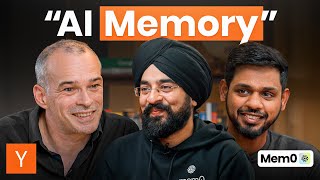
Taranjeet Singh spent seven years and seven Y Combinator rejections before founding Mem0, which solves the core problem that LLMs forget everything. The startup built a memory layer that works across any AI model, storing and retrieving context so agents can maintain state and remember conversations over time.
Questions this video answers
Deep Research
Everyone's pocket
Caching
Build it yourself, but also mentions Crew, OpenAI Agent SDK, Agno
Chapters
I applied to YC 7 times. The 7th time I got in. And one thing that I learned early on in my career is be with the best people.
Welcome to Partner Path, a podcast that unpacks the venture capital and growth equity ecosystem from a junior perspective. Young entrepreneurs and investors have already had a massive impact on the industry. Having started unicorns and launched billion-dollar funds. We discuss these success stories and more by sharing perspectives and advice from some of the industry's most prominent role models. This podcast expresses our views as of the date published and does not represent the views of and is not endorsed by any company for which we work. Before we get to the episode, Laura and I are excited to announce a partnership with Overlap. Fresh out of Y Combinator's summer batch, Overlap is an AI-driven app that uses large language models to curate the best moments from podcast episodes. Imagine having a smart assistant who reads through every podcast transcript, finds the best parts or parts most relevant to your search, and strings them together to form a new curated stream of content. That is what Overlap does. I personally use Overlap to explore content on future podcast guests and highly recommend it as another diligence tool for investors. Check out Overlap on the App Store today.
Today we are talking with Taranjeet Singh, founder and CEO of Memzero. Taranjeet was a product manager at KataBook and founder of CookUp AI before Memzero. Now Taranjeet is focused on building the memory layer for AI agents. Welcome.
Hey Laura, thank you for having me on the podcast. Really pumped to be here.
I'm excited. We're gonna talk all about agents today.
Yeah.
So you've been in the startup space for a decade now. It would be great to walk us through highlights from your 7 startups and maybe any learnings that you've brought along the way.
I've been taking attempts in doing my own startup since 2012 back in India. I was in college, in second year of my college, and I've taken multiple attempts in starting a company. And each attempt, I would be ahead from the previous attempt. I would learn something and I would improve it in the next attempt. And at one point of time, I mean, there has been never a problem in building a product and getting users. At one point of time, we were also making some sort of revenue, but somewhere down the line, things didn't work out. But one thing that I learned hardcore is you have to keep taking attempts. So you have to just take risks. Somewhere down the line, one of the risks that you take will work, work out, and that's how you'll end up starting like a company or a big company out there.
What was the biggest risk that you took within the 7?
My 7 attempts, for the 5 attempts I was part-time, so I would like be working. I mean, I had some financial responsibilities, so I would be either working or attending my college. The 2 attempts that I took, one in 2018 and one in 2022, I left my job. And the 2022 attempt was like a very big one wherein like I was doing like a lot of cool stuff there, but I ended up I should leave and figure out something in AI. And I think that was one of the biggest risks because at that point of time I had a lot of responsibilities, a lot of debt also. But somehow I knew I'll figure out something. I don't know how, but that gut feeling was very strong at that point of time. And so I just ended up taking the jump of being full-time. And when I was full-time, I think the mindset change wherein it was not like, oh, now I've done my job, I have to figure out something on the nights and weekends. It was more like, this is everything. And that's when I was able to move very fast. I was also able to quickly learn a lot of new things about the market.
So after CapTable, you went to CookUp AI. What did you learn about the market that informed your decision to start CookUp?
What happened that I was back in like, so I left my job in October 2022 and I was like tinkering with something like a copilot for marketeers because I come from a product background. So I was like, we should have some sort of copilot. While I was building that, I noticed that there are already products in the market and back in India it is cheaper to get a person than to have a copilot. So my target audience and the market was at that point of time was wrong. And then what happened that I kept iterating and talking to a lot of companies out there. I remember this very clearly, 30th November and 1st December, GPT and ChatGPT was launched, and I was doing a lot of Twitter threads around GPT and its capabilities. And that's when I realized that it's like a new programming language wherein you could build something on top of it. So that's when I launched CookUp. So I think what happened that I got closer to the Twitter community. I remember I deleted my account and I then re— I mean, I created it again. It was like literally nobody was there who was following me, but I started from scratch again and I got into this Twitter circle and that's where I think my life changed, wherein like I still was in India, like a little delayed effect of things that were happening here. But Twitter was like the place to talk everything AI. I was like all plugged into vector database embeddings and like GPT APIs. People were jailbreaking GPTs that day. So that accelerated my learning into the market as well. And then since then I've just been on Twitter and that has helped me stay on top of the market very fast.
Do you leverage Twitter for go-to-market?
Yeah, I mean, my primary— from CookUp, I ended up starting EmbedChain. It was basically a tweet that went viral. We got like 1,600 stars in 4 or 5 days. A lot of my company efforts have been on Twitter only. Like we are like— both Memzero is also big on Twitter. My co-founder and CTO, Deshraj, he's also a Twitter personality and I also tweet actively. So yeah, it's like a good, a big part of our GTM strategy.
And speaking of GTM, what was the decision to go from India to the US? Were there any cultural differences?
Cultural differences are there for sure. I think apart from that, I feel in India, the kind of work that I was trying to do at that point of time was a little ahead of problems around there. The population is very huge and there are problems at scale over there. And I was trying to build like a DevTool product over there. And that too was a framework. It was not like something that you could plug in and your cloud cost would be optimized. I was trying to build a framework that would help you do that. So I noticed that, I mean, I tried talking to a few folks back in India. People are very smart there, but for the kind of people that I was trying to get for my startup. On the investment side of things, I felt that they get what I'm doing, but for them it was a little early. So that's when I figured out that— and all my traction on Twitter was from people in US. I got lucky there when like Harrison also tweeted about us back when like when we launched. So what happened that we got a lot of users from here and that plugged me deeply into here. So I then wrote like 200 cold emails to people in the US and I was just trying my best to get to US. Two people responded, and that's how I ended up being in US.
Do you have any growth hacks or feedback for people trying to go viral on Twitter or spread the word?
So, I mean, I've been asked this question a lot of times, and I still keep thinking, was it a growth hack or was it something that genuinely clicked? I feel it's the latter one, wherein right now in AI products, whatever you launch, If it is something that people can relate, it tends to go viral. And one of my core things that I learned at Khatabook also, which was the company when— which was the previous company where I was working, is like, you know, you have to make it easy. So I mean, that's in my DNA, very like whatever I do, I just try to remove all the steps in the funnel. I always think of, I mean, everything is a funnel for me. I always think of like, okay, this step, this step, this step. And then I try my best to make it easy. For a person to move from step 1 in the funnel to step 3 as fast as possible. And the Twitter threads are also a funnel wherein, let's say, if you're trying to launch something or market something over there, it's a funnel wherein like first you are trying to create awareness and then it's an acquisition that's happening. So you have to make it like super easy for them to quickly come to your GitHub. And in the first fold of the GitHub itself, there should be like a pip install or like an npm install and then in the first 2 or 3 lines of code that explains what this is about, that they can copy and quickly run it on the terminal. So that is what I nailed when— I mean, that is what we have been nailing for quite some time, wherein like we make it super easy. And once you do that, what happens, that few people will try it out, they might tweet about you, and then that's how the growth loop plugs in. But this is what I would say my growth hack or growth tactic is.
Were you marketing your GPT store, CookUp AI? Is that what you're promoting?
I marketed a lot of things. So this is like December 2022. I built this GPT store called cookup.ai. It was the first GPT store. I was building like a lot of cool apps on top of it, like Product Manager, Growth Marketeer GPT. What happened that I built this fun app called New Year Resolution, wherein like you could come and you could enter in your Twitter username and it will scan your entire Twitter profile. Back when it was Twitter, and it will give you like a good new year resolutions. And there, there would be like a share button that you can share on Twitter, right? So what happened that it went viral. People from all over the world used it. Even some politicians also from like South America and North America used it. They were sharing their new resolution. Music community was sharing their new resolution. And that's when it went viral, wherein like these people were creating loops for me to bring in more users. And the homepage was optimized for like a GPT kind of experience wherein you could have your own writer GPT, you could have your own song lyrics GPT, these sort of things. So I first did it for that, then I also did it for EmbedChain and for Memzero. But yeah.
Well, it's a good transition then. Let's go into Memzero, but first you applied to YC 6 times, which shows persistence and determination beyond what I can Fathom. What was your thinking not to give up and why YC?
I think I applied to YC 7 times. The 7th time I got in. And one thing that I learned early on in my career is be with the best people. If you are with the best people, everything else compounds, right? So back in like 2007 to 2011, I used to do like a lot of quizzing back in my school. That's how I got to know about Silicon Valley while in India, in not a small town, but like somewhat like wherein like the roots are of technology are less. I read about Dropbox, I read about Airbnb, I read about Sam Altman, I read about Paul Graham. That's when I got to know about them. And so that thing instilled— I mean, that was like very much instilled in me early on. And my father has a watch shop and I would like help him run the shop. So both these things were like very on instilled in me. So in 2012 only I was clear that no matter whatever be the circumstances around me, I will start my own company. I was not clear what will I do. I was not clear where will the company be based. And I was not clear of how will I even start it. But I was super clear in 2012 that I will start a company at some point of time. Back then, people around me would feel me that I would be like a CTO of a company. My roommates and my friends still are sometimes, they ask me like, we consider that you would be like a CTO, like you are a techie. But now you're a CEO. So I was like, I mean, it's fine. I think both the things are valuable, but that thing was there. And then I knew YC is the best, so I kept applying to YC, and every rejection helped me understand why am I getting rejected. And the core theme was think bigger and think if your— whatever you are building is actually needed or not. And that just kept me motivated. I applied like 7 times. I even gave My first interview was in 2022 November. I remember it was like 2 AM in India in the night when I gave the interview and I learned a lot from that 10-minute interview. So that's the core for why I kept applying.
Why do you think that they didn't accept you the first two times?
I think YC has— I have realized that, I mean, people from outside may feel, but I think YC's core principle is super clear. Are you building something that people want and are you like one of the best teams to build it? Back then I was building something that few people would have wanted and maybe right now I was getting growth but that may not end up becoming a business. So I think like that was one like one of the feedbacks that I learned and the other few attempts I was also solo. Sometimes I've also applied by myself and then I think I realized that it's hard to do a lot of things on your own. So I think that's what the learning was. But when the— in the 7th attempt for like MBE Chain/Memzero, when we were applying, Deshraj and I have been friends for 12 years. He was my junior in my college, and we have built a lot of things together in the past. And we were like on like a trajectory of iterating very fast and like evolving with the market. And we were also building something that people wanted, and I think that's how we got into YC.
I think that's a great transition into Memzero. What did you apply to YC with? What was the idea? Is it still the idea that stands today?
Yeah, I think the name that we applied to YC was EmbedChain, but the idea was still the same, wherein we are building a self-improving memory layer for AI agents and LLMs. That was the idea. The name was EmbedChain, and we heard this feedback that EmbedChain sounds like a crypto first name, and it was difficult to pronounce also. Some people would call it embedded chain, and we were trying to go for a more catchy but very easy to pronounce name. So we went for Memzero. People still confuse it with like memo, but it's fine. It reflects that we are focused on memory.
Now a quick word from our sponsor. Laura and I are thrilled to announce a partnership with Grata, an intuitive deal sourcing and diligence platform. Keep missing out on private market deals? Ditch the Rolodex and get Grata. Grata's AI-powered platform provides accurate data, deep insights and time-saving workflows that help get more deals done. And it's trusted by over 500 firms and 3,000 dealmakers, including myself. I've personally used Grada in both my deal sourcing and diligence workflows and would recommend their tool to any investor across private equity, growth equity, corp dev, or investment banking. We've negotiated a special offer for our audience. Mention PartnerPath to the Grada team during signup and you'll get free executive seats for your partners and MDs included in your subscription. Now back to the episode.
Why memory? What are the problems today that folks are needing memory for agents or applications?
The transition from EmbedChain to Memzero is quite interesting. We were in India doing a quick, a short offsite with 1 or 2 interns that we had in India, and we built this quick on top of EmbedChain, which was called Sadhguru AI, and Sadhguru is a very big personality in India. That app went viral on Reddit and on LinkedIn and Twitter, and it ended up attracting like a lot of users. And one of the common feedback that we got from all the users is, this app is dumb. It doesn't remember anything about me. And this is like December 2023 when we were in India and we realized, oh, something is happening here. I mean, we are doing RAG. It's fine, but we were doing RAG, but then people are also complaining that it's not remembering things. And that's when we started diving deep into the LLM side of things and we realized that by nature LLMs are stateless. You have this short-term memory, which is the context available, and you can put everything there. But if you want to have, let's say, an AI companion or even an AI agent that evolves with you, that knows that, oh, you are Taranjeet Singh Singh, you are in India, now you're in SF, you do this, this, this, and as you are progressing day by day, your personality is evolving. That sort of behavior is very hard to replicate just by doing RAG. So that's how we just started building early versions of MemZero and the current state agents, I feel like there are a lot of problems in agents. They are not reliable. But one of the primary reasons that we feel they are not reliable is they have this amnesia problem wherein they forget what was the feedback given in the last run, or let's say if I made some error, how do I correct from that error? Let's say if I am like a new EA that I've been hired for like someone and I made this error that I missed adding your email signature, and if I've gotten this feedback, the next time I'll just automatically correct it. That native capability in AI agents is missing right now. And the primary way that we at Memzero feel is by adding like a gold memory wherein like the Memory is smart enough to understand what's happening. The memory is automatically enabling agents to improve over time.
What's the primary use case today? How are people— what does Memzero look in action?
I think the primary use case is, I mean, AI agents and still like chat applications. The idea is that everybody in the market is building like an AI assistant or an AI agent. And they want this native capability wherein whenever this assistant or agent is interacting with a user, it remembers about them and it uses that interaction as a learning data point to improve over time. So we call it like the stateful agents out there. That's more like a geeky and a techie term, but the idea is that it's basically you can plug it in, you can plug it in any agent, you can plug it in any therapy assistant, you can plug it in any email assistant. You can plug it everywhere wherein you are interacting with LLM and you want that each interaction should fuel in, should better the capabilities for the next interaction.
If you're already using the OpenAI APIs, why don't you use their memory feature as well?
I think the OpenAI API, first of all, the OpenAI API doesn't explicitly have memory. And even if they have memory, the idea is that developers are preferring multiple LLMs. Somebody is using OpenAI for, let's say, writing but Claude for coding. And open source LLMs are also there. Somebody using some forked version, like some fine-tuned version of Llama out there. Now in that case, if you tie your memory to like a single LLM out there, it becomes difficult for you because memory is not read-only. Memory updates over time. Imagine that you are using two LLMs out there. How will you pass the update from one LLM to other LLM? If you're building like a good architecture, it makes sense to decouple it from LLMs. And keep it at a neutral position when it talks to any LLM out there. So that's why we feel even if like OpenAI has memory, first of all, they have memory in the ChatGPT, not explicitly as any in, in the API. That's good for us. That's actually helping us bring more education into the market out there. And we know that people are using multiple LLMs and it makes a lot of sense for this memory to be neutral to any LLM and even any framework.
So architecturally, how are you able to maintain enough precision accuracy to surface memory at the right time and work across the models, open source or closed?
Yeah, so the idea is that we don't rely on models much. We rely on a pipeline. So we have— what we have done is we have built in like a very good understanding of what is a memory, when to even consider something as a memory and when to not, then how to extract it. And then when we are extracting something, we have to go back and update previous references. So we have gotten very good in understanding this over time. And the second thing that we have built in is like a good retrieval system which uses a combination of a vector database and a graph database. And what we do is at the time of retrieval, we fetch these relevant snippets from both the databases individually, and then we apply like a scoring mechanism wherein we try to re-rank information on the basis of some sort of relevancy recency and importance out there. Now, since we are doing this in an LLM agnostic way, we don't care whatever LLM you want to use. The only place that we need LLM is to extract something as a memory out there. So that's how we are able to work well across any LLM out there. And I would say like, the idea is that I wouldn't say that we have solved it 100% because it's a hard general purpose problem out there, but we serve like a lot of customers. At scale, and we are able to maintain a good accuracy. We are able to maintain a good precision and recall using our algorithms.
Are there any limitations today in like the memory features or algorithms?
I wouldn't say that there are no limitations, but one thing that I feel is memory is such a horizontal problem that each customer and developer has different expectation. Some developer would be interested in capturing every nuance in a professional setting, but the other might be just interested in capturing every nuance in a healthcare setting. How to do that at a horizontal level is still something that we are actually exploring a lot of the things there and then make it such that it's like super self-serve right now. We have given them an option to customize few things like they can come in, they can say that, oh, this is what we do and this is like some of the settings or like some of the things that we want to consider as Memry. We even want to reach at a point where they don't even just have to do that. They just sign up, they tell us that this is the use case, and automatically the platform is configured for them. So that at scale across every vertical is something that we are solving actively towards.
What are the main verticals right now you're serving?
So one of the main verticals right now is therapy and all sorts of AI companion out there. The other big vertical is AI agents, state management. So we started working with like BrowserUse also, wherein we are powering the entire state management logic for them. Which is like browser agents. And the third thing is, as you are building like AI agentic workflows, or like the agentic workflows out there, each workflow tends to build upon— there is like a proper state for each next workflow to refer from previous workflow. So that also is something that we, you know, solve right now, where like we do like proper state management on top of each workflows out there.
How do you think about like scaling the business in terms of it's open source today. You have a ton of traction from your community. One, how do you foster that community and serve it in the right way? And then second, how do you think about converting those users eventually paid users?
Deshraj and I have been pro-open source users since our college. We both even built like an open source alternative to Kaggle back in 2016, which actually went viral in like CMU, Google, and Microsoft communities. And the reason I'm telling you this is because that's in our DNA. So it's not only that we have just open sourced something because we feel that's good, it's because we actually believe truly in like open source softwares out there. Django is like something that I've spent a lot of my career on and it's open source. So that's why I think like I've grown up around open source software. So that DNA has helped us stay on top of all our user requests. We are like very closer to our users. Our users are on Twitter, Discord, and GitHub, and like we try to interact a lot with them whenever there is like any oh, issue that's opened up, we try to quickly respond to them and we try to get them into Discord to chat more, to quickly address it. So that's something that we do. So like, our support is very good. And since our support is very good, I think it's a compounding effect when like people say that, oh, there was this issue that was there in this project, but they fixed it in like few hours. And then they talk about it, and that's like a loop that's happening where like more people come up. So that's how we are able to Foster community, and then we listen to all sorts of feedback that they're sharing. And third is we both and the entire team is like developers, so we know we need this and we add it ourselves only. So that has helped us. I think, yeah, that's how we are able to foster the community out there. Coming to your second question of how do we think to monetize, the idea is very clear there, wherein like we have open source a part of our product, which is the core logic so that you can take it and add it into your app, but you have to do a lot of things yourself. Like you'll have to manage that even the pipeline that is there is not optimized because we can't open source like a lot of infra stuff out there. That's like a lot of background jobs that we run in. So the offering is like, you know, you can use the open source offering, get started, even use it in production, maybe make money also. But if you're looking for like a hosted accurate, low-latency solution with like a lot of features on top of it. And one of them is like user observability. So we go very deep into giving you the full visibility of what your user is talking about. That rests on the platform. So that's how we are thinking about monitoring.
And you have like a managed offering.
Yeah.
How important, I guess, is integrations with the other agent infrastructure companies out there and partnerships in this space? Just because you're seeing so many areas pop up across— you have frameworks, you have routing, you have hosting, you have memory. You have evaluations, you have observability, and everyone's shooting towards the same goal and trying to make agents actually work in production, given these non-deterministic behaviors of the models. I'm just wondering how you think about the broader ecosystem.
I'm like super optimistic about everything. I feel like all the things that is happening is eventually benefiting developers and consumers. Regarding the partnership, I'm like very bullish on that as well. We're like, right now we are not building an end-to-end agentic framework out there. What we are doing is we are building, we are solving one core piece of the entire stack and we just want to do that well because I think that's one of the biggest problems out there that we should solve and that should be solved. So what we do is we are there in every agentic framework that you can imagine. We power, we are there in like Mastra, we are there in Crew, we are there in AutoGen. So the idea is that we are there as an option for any developer to use us in the framework that they like. And yeah, I think that has helped us a lot in staying on top of the market as well. Pally understanding like what kind of use cases and agents people are building.
How do you think the framework companies stand out in such a crowded market?
I don't know. If I would have known, maybe I would have been building something myself, to be honest. But the idea is that each framework tries to cater to like a different set of developers. Like some frameworks are for like more advanced developers, so they are like complicated to get started. And once you learn them, you can do like way, way mature things. But the other frameworks are more built for like a developer who is like right now new to programming or even new to AI and they want to quickly get started something. But I think all of the frameworks will converge at like some point where like they are super easy to get started, but they are complicated enough to solve every use case out there. I don't know right now the answer to this, but I feel like multiple frameworks might be there, like, and even like the model providers are also launching their framework. So I feel like a lot of frameworks might exist. I don't know the answer to this question, to be honest.
Yeah, no, there doesn't have to be an answer. Time will tell.
Yeah, I think that's it.
And you've managed to stay really lean. You have what, 5 people? That's incredible. How have you stayed so lean and kept up with product velocity?
I think that goes back to my co-founder and CTO. He worked at Tesla Autopilot, and one thing that I learned, and I still learn a lot from him, is like how to get high quality, high caliber people on the team and still keep shipping fast, but still keep the team lean. And the secret sauce is just get people who are a high agency, who can do great stuff without even you pointing them to do it. I think that's it in the Tesla culture. I believe like I am like very high agency in the sense like whenever like something is there, I'll just figure it out and I want like same kind of people on our team and that's how we have kept the team size to people like these only who are like go-getters. They may not be experts right now, but I know in a year or two they will be experts, but they move very fast and they are obsessed with what they are building. They are super obsessed with the customers. So one of our engineers was like an introvert and was not good at even talking to a lot of people, but I don't know what happened in the past 6 months, he has gotten so great that he's quickly able to handle all the customer conversations. We have a Slack connect with every customer, right? So he's properly able to maintain it so well that I feel at this rate of progress, he'll do great. So I think that's how We have just kept the team lean because everyone is like high caliber and everybody is obsessed and everybody is owning the customer out there.
How do you think about finding that level of talent?
I think that's where I got lucky also, where like I was on Twitter and so far all the hires that we have made is either Twitter or GitHub. One of the hires that we made is from like a very small town in India. He just posted like some cool and like very beautiful frontend application video on Twitter. And it was there in my feed. I just DM'd him. We got on a call for the next 15 minutes. We gave him a quick assignment. It was supposed to be there for like a week. I mean, the assignment, he got back to us in like a day and we hired him the next day. And I think now the young people, they are coming up, they are like super good, especially because of all the new tools that have come up. Plus they have this new energy, they have this new different way of thinking things, and they are becoming active on Twitter. And my entire feed, like a part of my entire feed, is just some cool demos. And everyone that I see, I'll just reach out to them and I'll message them with like some sort of, your work is great, and I'll leave keywords for me. Your frontend, I love the frontend. And then that becomes like a system for me to search. And then I, that's how, you know, keep getting good people out there. And GitHub also, like, our GitHub is like very good. We are about to reach, I think, 200 contributors now. One of the primary sources of us hiring good people is GitHub because somebody will come up, they'll just open a PR, and we'll just merge it. And then I'll go through with the PR, and then I'll just either reach out to them on LinkedIn, email, or Twitter. And that's how we've been like, gotten good people also. So both these things work well for us right now.
That's incredible. How long do you think it takes to evaluate if someone's not a fit after hiring them?
You get to know them, you get to know that in like max 2-3 weeks. We had to let go of someone recently and we could just see it. One thing that I've learned late on in my life is gut, trusting my gut, trusting my instincts. I feel like gut is something which, I mean, a lot of us don't give value to, but I don't know how, but somehow it always tells you the right thing. And I and Deshraj were somehow there that this person may not be a good fit, but we were like, fine, it's early, it's remote, let's give it a try. And at that week one also, you're like, fine, still early, but we got to that it's not the right fit.
Do you think that you found a way to make a hybrid model work? Because it sounds like your team is India and San Francisco.
Right now, somehow we have figured it out. 3 of us are in SF, 2 in India, and the Indian people right now are like up late so that they can spend time with us till afternoon of our time. And so far it has been working well because the culture which I actually learned very good, learned a lot from Deshraj is timelines. So there is a linear task and there is a timeline. There's a linear task, there is a timeline. And since there's a timeline, that's a good forcing function to encourage everyone to ship fast. We just try to remove every meeting in the company. We still have like a scrum, daily scrum is there wherein we talk because it's remote. But apart from that, like no other meeting is there in the company and you just focus on shipping. All of us are there in the Slack and that's how we have been able to manage this thing very well.
That's incredible. Before we hop into the ending questions, would love just to get your take on the general agent market and outside of Memery, what areas are you bullish on within the infrastructure space?
I think the general market, we are still in the very early phases of this entire new market that has come up. We are seeing it as now, so we are seeing like, you know, oh, this market is— this is not working out, or this, this— there is this competition, or there is this thing not clear. But I think we need to consider it like the very early of a new market out there. So in like 5 years from now, this will be like a very mature market. You'll have that, oh, this is how I do things. So that sort of thing I feel like will happen. One of the primary things that I believe is Memry, which is like a key player out there. The other thing that I believe, I don't know how will it pan out in like an infra setting, but is some sort of interoperability out there wherein like, like an agent is there, the agent is properly able to interact with other agents out there. It's also able to interact with Web 2.0 apps, is also able to interact with websites, that sort of seamless behavior like a human has. I can just open a mobile app. I can open a website. I think the agent will also try to do that to access information. So that sort of, I don't know how to put it, but that's what I feel like will be one other key infra player wherein I don't know if somebody will index the entire apps and website or if they'll just create agentic APIs or like new AI APIs on top of existing APIs so that this new set of paradigm can interact with them. That will also be like an important player in this thing. Cool.
You ready to hop into a quickfire round?
Yeah, sure.
What's your favorite agent on the market today?
Deep Research.
Where will AI be in the next 5 years?
Everyone's pocket.
What's the most surprising Memzero use case?
Caching. Yeah.
What is your favorite agent framework today? And it could change in a week or two.
I mean, I would say build it yourself because I'm a developer and I think I can just build it myself. But if I have to choose something, I think it's hard because there are like a lot of like Crew is good, OpenAI Agent SDK is good, Agno is good. So all of them are doing a good job.
It's okay. There can be a few. Awesome. Thank you so much for coming on. That was fun.
Yeah. Thank you for having me. It was really fun.