This Startup Is Trying To Solve The AI Memory Problem
Taranjeet Singh and Deshraj built Memzero to give AI agents persistent memory. Their hybrid storage system lets agents retrieve past interactions without bloating prompts, cutting costs and latency. The startup has 14M Python downloads, 41k GitHub stars, and just raised $24M.
Chapters
Today I'm joined by Taranjeet Singh and Deshraj, the founders of Memzero. They just announced a $24 million raise to build the memory layer for AI. Congrats, guys, and welcome.
Thank you. Thank you. Thank you for having us.
All right. Tell us, what is Memzero today?
First of all, thank you for having us. Memzero is building memory layer for AI agents. Right now everybody is trying to create an AI agent and all of them are using LLM, but there is a fundamental issue. LLMs are stateless. They don't remember things like human remembers. So we are trying to fix that for every agent and every AI app that anybody is creating out there.
It means that every time someone does a prompt, then the agent starts from scratch and don't remember whatever happened before.
Yeah.
What's the current state of the business?
The current state of the business is doing well. We are the most adopted solution in the market in terms of traction. We recently crossed 14 million Python package downloads, 41,000 GitHub stars.
Yeah, you're open source, right?
Yeah, we are open source and we are used by thousands of companies across. We not only power memory for companies, we also provide memory for major agentic frameworks like AWS Agents SDK, Crew AI, Flowwise, etc. And recently we announced our $24 million funding round.
And what are the main benefits here? Of course, agents get that memory, but what is the benefit for them?
The main benefit for anyone who is using a solution like Memzero in their AI agent is like their agent improves over time. It's like let's say if I'm building a trip planner agent and I'm like whenever I'm going to New York I want to stay in Airbnb, the agent will remember this preference and the next time whenever I'm automatically booking a trip to New York it will just surface it. So that's the first benefit wherein like the new AI apps and agents that are coming, they know you in the best possible way. And then apart from that, for developers, we also help them save cost because we optimize the prompt and we also help them save latency.
How do you save cost? That's interesting because you have more data.
No, so the most naive way wherein anybody who wants to have some sort of memory layer is by passing everything into the context window. When you pass everything into the context window, you are sending more tokens, so more cost and more latency. We, on the other hand, will optimize for the right and the most accurate information. That's how we save cost in 2%.
So instead of like talking everything that happened and then copy-pasting that in the prompt, you can be more smart about what you share.
Yep, yep.
Awesome. Tell us more about how you started. Where are you from, guys?
I'll go first. You know, I'm from India. I moved to US last year, and my journey involves me taking 7 attempts in starting a company. I took the first attempt in 2012, this is the 7th attempt in me starting a company and I got lucky that I got Deshraj as a co-founder and CTO in this journey along.
When did you meet him?
We met actually during our undergrad, we're undergrad friends, we know each other since like 2012, so been 13 years. We did a lot of projects like during our undergrad, a lot of side projects and always wanted to like start something of our own. TJ was doing a lot of things in India, I was here working at Tesla Autopilot where I was leading the AI platform team. And then he was shifting here and we were like, let's build something together. And that's how this whole story came together.
And then you joined Fourrosties and applied to YC.
Exactly.
Yeah.
And I remember when you applied, you actually joined us with another idea, not Memzero, right? What happened? Can you tell us a little bit more of that story?
So we got into YC in summer '24 batch and we were interviewing with you around March and April of 2024. At that time we were going through a shift from not just focusing on RAG and focusing more on solving the statelessness problem of LLMs. When we were applying the company name and the product name was still Embedchain but we were behind the hood tinkering with the memory idea. The genesis of this idea is from an app that Deshraj and I built in December '23, it was called Sadhguru AI. Sadhguru is a very famous Indian yogi. That app went viral in India and one of the common feedback from that application was that this app is cool but it is kind of dumb because it doesn't remember anything about my meditative journey. So that's when we started thinking like why is this happening and we realized that it's because LLMs are stateless. RAG is one way to give context about a knowledge base but then Deshraj and I kept thinking about it and we were like this is something deeper than that and that's how we started tinkering with like early versions of Memzero and Embedchain and we remember when both of us met you for the first time at YC retreat and we were like talking about all the algorithms that we've developed and you were like why haven't you launched yet and within like 36 hours we ended up launching from Embedchain to Memzero and since then the journey has been really great.
That's awesome, that's awesome. Yeah, like the traction, the point of traction has been very, very impressive, people started adopting right away. It's so funny to see that the idea came from a side project that was a consumer app that took off pretty much. That's excellent. Let's go back to the product. So how does that work exactly, like the inside of the product? I'm a developer, I implement you in my product, how is that going to work?
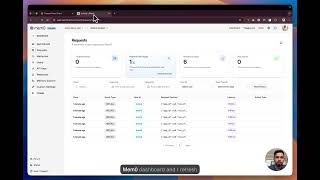
I mean, I'll just cover from like a high-level perspective. So the product is composed of two primitives. One is like adding a memory and the other one is like searching a memory. And these primitives reflect in our APIs. So we make it very easy for a developer to give us any sort of data they feel is important on a user level. We try our best to understand what is important from that and then we build a state on top of it. So let's say if you're like building like a personal companion, you'll give us your chat responses, we'll try to extract meaningful information from it and we'll try to build a state on top of it. Building a state is important because that helps us in understanding how the evolution is happening. And then whenever the user is coming, let's say the user is trying to start a new conversation, we'll give you the most important information out there. Behind the hood, we go through a technical process which Dheeshraj can talk about.
Yeah.
So our algorithm is actually like a hybrid data store architecture that we have implemented where we are actually, whenever some unstructured information that comes into Mensero, we basically try to classify that into a key-value pair depending on what kind of information it is or as a semantic chunk or as like a graph memory which we call basically where you're trying to basically create like relations between like different facts that you're collecting so that later whenever developer is actually requesting like hey, give me relevant information that you know about me, we go and like pull information from all these three sources and we do it effectively and do it in real time. So that helps you basically have like a really low latency in terms of retrieval and still have like high accuracy. By doing all of this, you're also able to save cost and latency because instead of putting everything into the context window, which is going to be expensive and slow, so it just solves the problem for them.
To be able to create all of that representation of the memory of the end user, you need to understand the actual application. You need to understand what's the actual purpose of the application.
That's the part which is somewhat hard, but it's also easy. Where we put in a lot of effort to understand what the developer is building. So during onboarding of the product, we try to understand like what are you trying to build. And memory is an expectation problem. So like for you, your memory might be different, for me my memories might be different, even for the same task. So we try our best both on the open source and on the cloud version that you can customize anything that's possible. So you can come down and you can be like, hey, I don't want like this kind of memories to be captured, I want this. And all of this is in Prillain plain natural language. So you can do that.
It's going to be interpreted by an LLM.
Yeah, and then we try to form rules on top of it and then we rerun the pipeline, we update all the memories for you.
Do you have any good examples of use cases, like things that people have done with the product?
When we talk about Memry, I think Memry should be a default primitive whenever you're building an AI application. A couple of high-level use cases that we have seen across People try to use some sort of memory solution for efficiently managing their context encoding agents, people try to use some sort of memory solution when they're building a personal companion, people try to use memory solutions in education wherein they want to remember the learning trajectory, in healthcare wherein they want to remember everything about the patient and the medicine, in finance they want to remember the entire trade history. So it's like wherever you're building like an LLM-based application and you want it to get better over time, you should need memory and you should use MemZero.
We have also started seeing this very interesting pattern now where instead of capturing memories about humans, people are actually now building more and more agents. So they want memories about the agent. So they want to capture more and more of that as well.
Excellent. Is there sometimes an issue when memories become stale? Is there any kind of decay of the memories that you want to use them differently?
Yeah. So that's a very good question actually. So we have been seeing this pattern from our users where different developers actually ask for different kind of decay. Sometimes customers are like, "Hey, I want a hard decay where after 6 months I don't care about any memory." Sometimes developers ask for exponential decay where they care more about the recent stuff, but they want to forget as memories get super old. Sometimes we have also seen developers ask about certain things depending on their application. Let's say someone is building a travel planner agent, things that are related to travel preferences always matter no matter how old they are. But they still want to forget other stuff which are probably not that relevant. So we are seeing these interesting patterns and we have implementations of each of these decay mechanisms.
Is that same thing like they are going to describe what they want in plain language?
It is kind of, but there are certain other knobs that you can also tune basically to enable that.
Okay, excellent. Let's take a step back quickly. OpenAI recently launched this memory layer for OpenAI. Other labs are building the same, of course. Are you still relevant in that world? What does it mean for you?
Yeah, I think it's a good thing for us wherein all the big labs are launching memory and the memory is available in their consumer offerings and it's a matter of time that it becomes available as an API for developers. The fact that it's good for us is because they're educating the market that you need memory as a default primitive in any AI application. But for us it's good because developers are using multiple LLMs whenever they're building an AI application, right, and memory is not just read-only, memory is write-only also. So in that case, as in best engineering practice and even like as a first principle thinking, you would not want to tie your memory to any model provider out there. For model provider, memory is the next mode because models are becoming a commodity, but for a developer, because they're using multiple LLMs, it should be decoupled.
Is able to own the memory and not always have the option to change model.
Yeah.
Okay, that makes complete sense. And on that note, you mentioned that you work with other frameworks, other partners like AWS. How does that work? People using these frameworks have you out of the box?
Yeah, so we not only serve the customers, we also provide memory to agentic frameworks. We are the exclusive memory provider in the AWS agent SDK called Strands. And then we power memory for all the other major agent frameworks like Crew AI, Flowwise. The idea is that memory is something which should be neutral to anything, it should be neutral to framework, it should be neutral to your model provider, it should be neutral to LLM. So that's how we gave it like as a very simple tool called in any of the agent frameworks out there and developers who are using multiple frameworks even can have their memory in a central fashion and like keep it like decoupled from anything out there.
You recently announced your big fundraising, like $24 million from Basiset and Peak15 and others. Why did they seed you? What convinced them to invest?
First of all, it's a $24 million seed plus Series A round. Our seed was done by— led by Kindred, Series A was led by Basiset. Basiset participated in our seed round and we have known Lan very well for over a year. And we really like the partnership so far. And when we decided to raise, they quickly got back to us with like the fact that they wanted to double down on us. And we were fortunate enough to raise from them, Peak15, Kindred, YC, and a lot of other angels, great angels as well.
That's awesome. So they saw like the traction, pretty much they were already insiders, they knew things were working and wanted to double down. What are you going to do with all this money?
I mean, we want to build the best possible memory product on the planet. We're going to use this fund to hire the best possible team so that we can build the best possible product, nothing else.
How big is the team today?
So we're like now 10 people split across India and SF office.
And so what role are you hiring for?
So we're hiring across, we're hiring for applied AI, we're hiring for full stack, we're hiring for forward deployed, we're hiring for GTM engineer, Nishraj can give like a 1-minute pitch also.
No, I think across the engineering organization basically we're trying to double down and like ship as fast as possible and that's why like full stack forward deployed, applied AI, research engineer, front end, back end.
Both here and in India?
Both, yes, that's correct.
And like whatever work we're doing I think like on engineering side it's like one of the most challenging work out there. You have to build a low-latency infra product and you're solving an expectation problem. So you have to cater to every user and you have to make sure that memories work well, reliably at scale.
Excellent. And what do you see next happening in that world of memory for AI? What would be your vision a year or 2 years from now?
We recently came up with this 3 sentences while brainstorming. We call it like make it work, make it neutral and make it portable. Right now we're in the first two phases wherein like memory works but memory should work very well across any domain out there so we have to keep pushing the frontiers of that and we want to keep it neutral, it should not be tied to anything out there. But the broader theme that we see maybe which happens in like 5-10 years from now is like we're going through a technological shift. So far we as humans have been interacting with any technology using swipe, scroll, and click, but that's going to change. It's going to be a lot of agent interfaces. For the first time, you and I can chat with any app or can talk with any app and the app can talk back to you. So we, you, everyone is accumulating rich personal data and that. And history has shown us multiple times that user expectation always move towards less friction. So 5 years down the line when you're having like hundreds of AI apps in your life on a day-to-day basis and you would have given every app some custom instruction about how it should be and you're trying the 101 app and you're like why doesn't this app just get me. So that's the future where we're excited.
It's the portable, like you want to— like any person, any consumer, any like you, me, we want all of the agents we work with to know us and to share that information.
Yes, yes, so that's the future that we're excited towards. We don't know when will that happen but we believe that there is a high chance It is going to happen, and wherever that happens, we want to build the infrastructure that caters to the developers for today's needs and for tomorrow's expectations.
Excellent. Before to conclude, let's go back quickly on your journey as founders. Is there anything you wish you could tell you when you were starting?
I think one thing that I have realized for my journey is focus is very critical, and it goes back to fundamentals of computer science also. I was thinking recently that whenever doing a startup you want to make sure you apply DFS rather than applying BFS so that you stay focused when you're actually working on the startup. So if you have multiple ideas, in the age of AI you have so many ideas, always stay focused, focus on one thing, go deep, build it, talk to customers.
Well, in your case you kind of defocused yourself by building that consumer app and it worked.
Exactly, yeah. It was a blessing in disguise for us.
Blessing in disguise, yeah. Not what you would recommend for users.
I think for For me I think I mean it sounds very philosophical but it's like something that I've tested multiple times in my life. I think everything is possible, you just have to believe in it and you just have to make it work. If you're like hell-bent like I've been trying to do my own company since like 2012, it took me like 13-14 years. I think if I would have just thought harder and if I'd have just had like more conviction in myself I would have just made it I might have made it work earlier. So I would say believe in yourself.
It would not have taken like 13 years, but maybe, yeah.
Yeah, I mean, I think believe in yourself is a very simple but powerful statement.
That's great advice. Taranjeet Singh, Deshraj, thank you so much for joining us today. It was great to have you.
Thank you for having us. Thank you.