Taranjeet Singh - Silicon Minds, Human Hearts
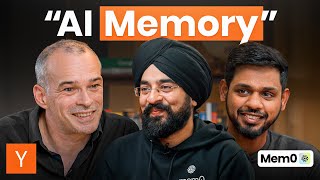
In this interview recorded at GitHub headquarters, host Roland talks with Taranjeet Singh, CEO and founder of Memzero, about the motivation, design, and impact of Memzero—a memory layer that makes large language models (LLMs) stateful. Singh recounts his early AI work in India, the shift from building a simple Retrieval‑Augmented Generation (RAG) framework called EmbedChain to creating Memzero after noticing developers needed persistent user‑specific state. He explains how Memzero plugs into any LLM, tracks and updates arbitrary pieces of information, resolves conflicting states with a reasoning model, and offers a React component that lets end‑users view and edit their memory. The conversation moves to concrete use cases: personal AI companions, healthcare and financial assistants, and general autonomous agents that need to remember preferences over time. Singh likens autonomous agents to growing babies that learn from human correction, stressing the need for human oversight. He shares a vision of a proactive, hyper‑personalized internet where AI anticipates actions (e.g., auto‑drafting messages, personalized UI). He raises the “randomness effect” – the risk that overly deterministic agents could eliminate human variety – and suggests future models will incorporate stochasticity and trigger‑based overrides. Singh also mentions recent technical surprises such as O1’s reasoning capabilities and DeepSeek’s chain‑of‑thought transparency, and he describes personal benefits of AI tools like ChatGPT for his family. The interview blends technical description, product storytelling, philosophical reflection, and personal anecdotes, offering a holistic view of Memzero’s role in the evolving AI ecosystem.
Chapters
Hi and welcome to another episode of Silicon Minds Human Hearts. For the global AI community, I'm Roland and I'm here today at GitHub headquarters with Taranjeet Singh, the CEO and founder for Memzero.
Welcome. Hey, really thank you for having me here. Excited to be sharing things about Memzero and AI with you and everyone.
Yeah, excellent. Looking forward to our discussion. But first, maybe introduce yourself.
Yeah. So I'm Taranjeet Singh Singh. I'm one of the founders of Memzero. Memzero is building the memory layer for AI agents and AI apps. We are open source on GitHub with 24,000+ stars, and developers love us. They use us to build stateful agents. They use us to build agents that adapt to any user over time. Before that, I grew up in India and been like part of some well-known Indian startups. Got a chance to move here last year and since then I've been building Memzero.
Awesome. Because I think you started in just software engineering, what got you in AI?
Yeah, so I mean, my first stint with AI was in 2014 in India in my undergrad college. I built a project which was tokenization for Hindi language. Hindi is the main language in India and that's how I learned about basics of natural language processing and that's how I started. And then in 2016 and 2017, I was working in machine learning, information retrieval, search, and NLP domain. And then I also contributed to a popular book in AI And that's how my journey in AI has been. I was right on time when this ChatGPT wave was about to start, left my job right before that only. So got a chance to build a product and a company here.
Because when the LLMs came around, it totally revolutionized the entire AI spectrum because natural language processing was hard in the past. And I'm not saying it's easy, but LLMs totally makes it different. What do you think on this? What is your take on this?
Yeah, I think I remember like back in my job, we were building like a search engine for kids and we have to do like so many grammar parsing, we have to do like so many semantic understanding and it was literally like a complicated system and still then and it wouldn't cover all the cases. But with LLM, you give it like any text, and it would automatically understand what is being talked about. You can use it to summarize it, you can use it to convert it to any other language. So with LLM, I think it has become very easy for anyone to give it any unstructured text or anything and they'll just make sense of it, which is like a very fundamental shift in the current landscape that we have.
Yeah, it made a lot of things easy, but it had new problems as well. Memory, for instance, was one of them. Of course, we did a lot of things with RAG, but you built an entire solution around memory. What does Memzero do?
Yeah, so I mean, we initially were building a RAG framework called EmbedChain. That was like the simplest framework to create RAG applications for any developer. While building that, we noticed that a lot of our developers, whenever they're building applications using LLM, they're trying to maintain the end-user state So let's say if you're building a trip planner agent and you're making it live for your users, you would maintain like, oh, for user 1, the user is based in San Francisco, user 2, maybe they're based in New York. So these were like some states that they were trying to maintain and then it got us thinking like, why is this happening? And we realized that the current LLMs that we have, they are stateless. They are there, they understand, they can give you answers, but they don't maintain this context over time with you. So right now I'm in GitHub HQ, they don't know this, right? And then we started going deeper and we realized that this happened because natively they don't have this concept of memory, concept of things and memory updating over time. So that's why we started building Memzero. It functions with any LLM wherein you plug in this technology and any LLM will become stateful and will maintain states for anything that you want.
Yeah, that's so cool and so convenient. But that also, because with software development in the past has been the case, if you have multiple data sources, things can, well, almost get out of hand and change over time on two different spots. Does Memzero deal with those issues?
Yeah, so I mean, like, I mean, yeah, so like when we solve this, like, it's a hard problem. I mean, we cannot solve it like fully, and like we are trying our best to solve it. In the best way possible, but there are some times wherein there are some conflicting states being there. So now with the reasoning model also that are there, so we're introducing this capability wherein we can reason now, okay, Taranjeet Singh was in GitHub HQ but for only 30 minutes, but now he's back to his office. So these are some advancements that are happening on the LLM side which are also helping us. But yeah, different data sources, different information do come up. but we try our best to make sense of it in the best way possible and give you like an accurate representation of the current state.
And as a user, are you able to see your state? Yes. To view your state and to— yeah, probably not change your state.
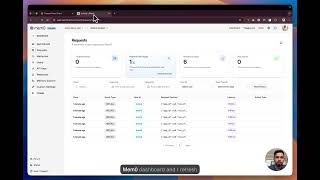
Yeah, so you, you as a user, we also build like a cool React component wherein like, uh, if you are building a consumer-facing application and you want them like a convenient way to expose their memory, so we give you like a React component wherein like you can just show all the memories there. They have the option to even edit it. So let's say if I deduce that my location is right now San Francisco, but I can even update it to be very precise that this street in San Francisco.
Okay.
So we do that.
And security-wise, it is all handled for you?
You don't have to?
Yeah, you don't have to.
Yeah.
Well, that's very good. You have some use cases you can share just around how your product is being used?
Yeah, I think a lot of, I mean, we see like a lot of interesting use cases. Our simple pitch is that whenever you are using any LLM and you want it to remember things about a user or you're building an AI agent and you want it to improve over time, you should use Memzero. We have seen a lot of use cases, one of them is some sort of personal AI companion. Somebody is building a personal AI productivity companion, somebody is building a personal AI companion for kids. So this is one vertical where you can see companions and they always have this natural concept of interacting with users, so that's where memory is needed. We also see some applications in healthcare and financial domains where people are building some sort of healthcare assistant or some sort of financial assistant and they want to remember things about you like, oh, you bought this share in the past and now you're thinking to buy it again, this is how you can, this is your history. And then another bigger use case that we see is AI agents. So right now everybody is trying to create an agent and Agents have this fundamental problem that they forget things even in the current execution or over time and they don't remember. Let's say I'm building a trip planner agent right now and I like Airbnb more than hotel. I wanted to remember for the rest of the life that whenever I'm making, like asking for a trip, it should automatically give me Airbnbs and not hotel. But what will happen that, I mean, this agent will forget. Now, so if you plug in MemZero there, the agent will remember that, oh, I have to give Airbnbs to Taranjeet, but to some other person, maybe it can be hotel. So that is like another big use case for us.
So then it benefits, the more your system is being used, the more the user benefits.
Yeah, and eventually it becomes personalized. So let's say, I grew up in India, so I have like a very natural fond for Indian food. So now if I'm interacting with like some food AI agent, the food AI agent will know that Taranjeet Singh has a natural preference for Indian food and it'll automatically suggest me things because it is my agent. It is getting personalized with me over time.
Yeah.
And even past preference, if you have allergies or something, then that could be very helpful as well. And you of course mentioned agents. And if you hear agents, then you immediately think autonomous agents, or at least I do. To me, that is a cool, very cool aspect of of using these agents.
How do you feel?
How can we balance the autonomous agents with human oversight?
I think I see agent more like a baby growing up. When baby will learn things on the fly and then will understand it and use. So let's say if a baby make mistakes right now, Maybe the parents will give instructions or correct the mistake and then the baby will next time understand that, oh, I don't have to do this. So that's how I think the concept like the autonomous agent also, though they are autonomous in a way, but right now the technology is not there yet wherein we can give them full control to do things. So right now we see a lot of agents in the market which are not taking action or which are taking action which is not harmful. So I was reading through this voice agent example where people are using voice agents to take calls which are outside their business hours or take calls which are low ticket size, where the impact is there. So I think right now, I mean, when we are seeing this adoption, people are trying to— people want to offload things, but they have this natural mindset that it can go any other side also. We saw some Customer support example in airlines also. So I think that's how it is, but this is a very fundamental concept wherein I think more and more innovation will come up and we'll see how will the control go from an autonomous agent to a human and to back. And maybe this control also learns that, okay, this was the first time wherein I have to post something on LinkedIn and I was stuck here because I was not aware of this. But the human helped me complete this, and next time it remembers, and maybe next time it is automatically able to proceed like one step ahead of it. So that also learning is there.
Yeah, so this is now what we're— with agents, what we're dealing with, with the— we're still learning ourselves how these agents should behave. Where do you see this going in like 3 years, 3 to 5 years?
I think, I mean, one thing that we at Memzero are very excited about is like, I think right now everything around us is very reactive. So let's say if I have to text my mom maybe like how is she doing, I'll pick up my phone and I'll just open WhatsApp and I'll just text her. I feel like or maybe let's say I have to maybe like ask Honor companies like what's the plan for lunch and it's like daily at 12:30 we go for lunch. So this is so reactive. I think one thing that I feel strongly will happen is like technology, the way we experience internet and AI will make it more proactive. So instead of me picking up my phone and sending a Slack message to my teammates that, hey, let's go for lunch, what might happen is this proactiveness will automatically compose a message for me. It might be the possibility that the message is already sent. So I feel like the proactiveness part will come up wherein the technology is making me— let's say I have to come to I have to come here today, so I automatically receive a very personalized reminder that you should leave now, otherwise you'll get late. So that will happen. And the other thing that we feel and are working towards is like we feel like the way we experience internet right now is like very static. I mean, I am not a— maybe like I don't like using mouse much, I like using keyboard much, and maybe like the websites are not built for me in that way. Or like the UI that I see, let's say DoorDash, like I order a fixed set of food items maybe per week. So why doesn't the UI automatically update with respect to me? So we feel like the internet and the internet experience will become super personalized or hyper-personalized to an individual. I might see DoorDash in a different way and you might see DoorDash in a different way. So, I mean, I think the next wave or next step on the ladder where we are headed is like AI, I mean, the internet becoming proactive, internet becoming hyper-personalized to me, and that's what we are very excited at. Imagine that I just don't have to open Slack and type something, it is automatically there and things are getting automated and we just leave for lunch.
Yeah, it will certainly help in our day-to-day lives, but Isn't there also then the risk of almost those choices being made for you without you even realizing them? For instance, if you had the restaurant example, if you look at hotels, if you always pick the one brand of hotel, at one point the assistant or the agent will not ask you anymore. It will just book that certain brand of hotel.
Yeah.
And that will do, or the top reviewed item on your list. That will do something to businesses and how they will interact with customers and on the internet. Is this something you're taking into account for Memzero as well?
Yeah, I think so. I call this the randomness effect where like humans, as humans, like we are also autonomous agent, right? I can do things on my own, but I have this random concept of maybe let's say if I've been eating like Indian food for like 5 days straight, the 6th day I might order like some salad, right? So I have this randomness concept in me. I think in the AI wave right now or in the AI era right now we haven't seen this concept coming up wherein the LLMs have started reasoning that they'll explain why they're taking particular action but they don't have this randomness concept right now. So there might be a possibility where when we imagine this future obviously we might have like AI is automatically making choices for me but I think I'm fine As long as it is making my life more convenient and it is making me, I mean, it is making me productive, save time. Because like there are certain things which I feel like I'll most likely do it that way only, I won't change. And then I think like one other thing is like if I change, then there is like some trigger that happens. Maybe like today I'm not in the mood to eat like Indian food because maybe I just want to try something new, right? So there is like trigger element, right? So I think If we can somehow pass that trigger also to AI, I think they can also understand. So I think I understand that there is like that thing there, but I think with time it will get solved.
As long as we're still our autonomous agents.
Yeah, we can always interrupt it, right? We can always say that, okay, you thought that I should eat like this food today. I'm not in the mood. I'll cancel it. I'll just interrupt you. You always have the option to go and interrupt it.
That's so fun that these LLMs are tends to surprise us sometimes. Yeah, um, I had that yesterday with O1 just, uh, actually being surprised with itself when it, um, the prompt I gave it was— he thought it wouldn't pass his guidelines, and then he reasoned on it and it still passed it, and he was surprised himself. What was your, your moment of the last few months that you were pleasantly surprised by?
I think I was like surprised with a new— with this O1 like thing, like the new paradigm. I was like, you know, wow, this is like now we can understand like why things are happening that way. And then the other thing that surprised me was like Deepseek, where they exposed the entire chain of thoughts. So now I could see like what exactly is happening. And I think one of the ways that we as humans learn is by understanding like how have you or how has the other person made a choice. And if I can just go and introspect, okay, let's say like Paul Graham wrote like some blog post and I can just put that blog post and I can reason and I can get the reasoning of, oh, Paul is thinking like this in this paragraph, in this, like this. Imagine like what I mean, I will get like, I think like that's like a big unlock for everyone within. Like you can now understand that how people think, how people write, and then you can use that to learn and get better. So I think like that, that was also like another moment for me wherein like I was like very much surprised and happy that this happened.
Yeah, so good. And the question that we ask, try to ask everyone. How has AI impacted your day-to-day life? So your work life, that is clear. You built an entire company around AI, right?
Yeah.
But what is your favorite AI service that you use in your personal life?
I think, I mean, to me, I mean, I am like, you know, I mean, I use like right now ChatGPT, Perplexity also to a certain extent in my day-to-day life. I use Midjourney for all the AI work. And I use it to be more— let's say I'm writing something and I'm not sure like will this— does this message hit the tone of the current email or not, so I use it for that. But for me the biggest unlock that I'm seeing is in my mother's life wherein like she's in India right now and I've just told her about ChatGPT and I think she is hooked. I mean my brother was applying for some internships and I think he was not writing like a proper email I don't know how and why my mom ended up, but she somehow played around with ChatGPT and she was able to compose a very good email. And now I think she's super hooked to ChatGPT. Instead of asking me for something, she'll first ask ChatGPT. And I think that's a very big productivity unlock also that I see in her life. And she's now, I think she's also learning more and more. About things. So like she's trying to read more about history of our religion, history of some aspects in history in India. So now she'll just interact with ChatGPT as like another human and like just get things done. So like I see, I mean, in personal life, if you talk about, I think like that's the biggest unlock that I'm seeing in my parents' life.
Yeah, it's so good. Yeah, it's made it so easy to just to absorb all the knowledge that is out there. Yeah, now perfect. Well, thank you so much for being with us. It was a very nice discussion. Um, I hope to see so much more from you in the future. I'll definitely check out Memzero in the future again.
Yeah, yeah, thank you for having me. Like, loved it. Uh, super great.
Yeah, for sure. Thank you.
Thank you.