Exclusive | Tasha K. x Presidential Candidate Robert F. Kennedy Jr. | Full Live Interview
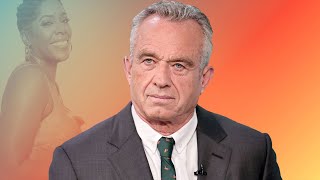
This content was created by Latasha Transrina Kebe. This content was uploaded by Latasha Transrina Kebe. This is a YouTube live interview titled "Exclusive | Tasha K. x Presidential Candidate Robert F. Kennedy Jr. | Full Live Interview" (created 2024-06-08). The piece is a hosted conversation by Latasha Transrina Kebe (Tasha K) with guest Robert F. Kennedy Jr., interspersed with sponsor ads and promo spots. The interview addresses recent media clips accusing Kennedy of racism, his efforts to appear on presidential debate stages, COVID lockdown impacts, criminal justice reform and prison/school-to-prison pipeline issues, reparations and economic investment in Black communities, and his environmental litigation background.
Chapters
And if anybody asks, everything's allegedly. Even my name's allegedly. Hey y'all, how y'all doing? Happy Effery Friday! Y'all know I can't cuss on YouTube, it's censored, you know what I'm saying? We do that on tashakaylive.com. I hope you're in here. I hope you're settled in. I hope that you got everything that you need because we're gonna go ahead and get started. Okay, we got somebody important here in the building. What's wrong? Okay, um, before we bring up, all right, presidential candidate, uh, Robert F. Kennedy Jr., of course we do got to show some love to our sponsors. All right, now we have him in the building to address the media smear campaign that has happened today via The Shade Room and a few other publications. They're trying to label, uh, Mr. Kennedy Jr. as racist, and that is not such, okay? And he is here to address all of it, okay? But before we bring him up, we do got to show the sponsors some love, which means Boldly Raise a Glass 2. We'll be right back, y'all. Make sure y'all like, share, subscribe, and hold that thought. Let's go!
Never be boxed in with Voglams half-rim glasses and take your eyewear game to the next level. Dark hair may be shaped like a box but knows no end when it comes to amplifying your look.
Manly is everything but that, but the styling possibilities with these round frames are infinite. Danielle exudes confidence and will instantly have you feeling like the boss that you are.
And Hannah will make your heart stop and jaw dropping these super unique frames. It's time to take your style out of the box. Visit vuglam.com and grab these stylish and comfortable frames plus more. Use the code Tasha K at checkout for a special discount.
Make sure y'all get y'all spectacles, 'cause I got mine, okay?
And take advantage of that code.
Let me pour up a little wine here, okay?
'Cause I'm excited about this interview.
I'm a huge fan, especially a Kennedy fan and things like that. And so I just want us to celebrate Wino Style for our independent presidential candidate, all right? And so tell you a little bit about it more. Now recently, it was actually earlier today, The Shade Room and amongst other media publications and stuff, they posted a series of videos trying to paint Mr.
Robert F. Kennedy as a racist. Okay, let's go ahead and show some of these videos here.
We're both 6'3", 6'4" respectively, 250 pounds and very strong. They were capable of this crime and very rough, kind of gangsters. I have spoken to both of them. Um, one of them is Black. Um, when Martha Moxley's body was found, it was covered with hairs from a Black person. American, one of the hairs was Negroid, and nobody's ever been able to explain that.
All right, all right, so we have Mr. Robert F. Kennedy Jr. here with us. Juanos, y'all raise your wine glasses, let's go! How you doing?
Hey, Taj, thanks for having me. Sorry, I'm just finishing my dinner.
Anytime. What you eat for dinner? What your wife cook?
I saw her like getting you set up and everything.
She— I, I just landed in Miami a half an hour ago, so I ordered something at the hotel. And then you and I had a little problem getting this, this video going, so my, my dinner came right on time.
I'm sorry about that, but you know, our studio was in Miami. We could have had you in person.
Oh, I didn't know you were in Miami.
Yeah, but that's okay. Next time I'm gonna get you. Don't worry about that. We're gonna make sure we know where your whereabouts are. We know you're busy.
Um, you are the independent candidate running right now for president, uh, against Trump and Biden.
Okay, will we see you at the debate in Atlanta?
I'm hoping. You know, we're litigating right now against CNN. I, um, I meet all the criteria for being on the debate stage. CNN, the Biden campaign has said that President Biden will not go on this stage if I'm on it. And so CNN is trying to keep me off the stage, but CNN is in a jam because I meet all their criteria for being on this stage. In fact, I meet it better than Trump. President Trump or President Biden, um, because I'm now on the ballot in, in enough states to get 278 electoral votes. And the, the, uh, the criteria for getting on the debate stage is you have to be on the ballot in enough states to get 270 electoral votes, which is the victory, right? And neither of them are on either ballot. And so under the FEC law rules, if they hold a debate and those guys— and they try to exclude me, it's an illegal campaign contribution by CNN to their campaigns. They can't do that. So we're litigating against them. We're trying to get up on the debate stage. I don't think either candidate wants to debate me. I don't really think he wants to talk about the giant, uh, budget deficits they'd run up— $34 trillion. I don't think either wants to talk about the chronic disease epidemic that now affects 60% of our kids. I don't think they— either of them want to talk about the COVID lockdowns where they shut down 3.3 million businesses with no due process, no just compensation, no scientific citation.
Yes, how you was the first to come.
You came after Fauci first. You wrote a book on Fauci. Now they, they starting to drag you.
I said, I said, I said Robert F. Kennedy Jr. been on his ass.
Yeah, 41, 41% of Black-owned businesses, Tosh, that closed during the pandemic will never reopen. And a lot of those businesses had 3 generations of equity in them, of hard work. You know, building those businesses for the families. And now those businesses are gone, and they left open Walmart, Amazon, and, you know, that don't pay any taxes and don't contribute to our communities. It was really a catastrophe. They shifted— Trump and Biden, in 500 days, they created 500 new billionaires, a billionaire a day. They shifted $4 trillion from the working poor in this country and from the middle class to this new oligarchy of billionaires. And, you know, I'm going to ask him about that on the debating stage and nobody else is going to.
Yeah, that's very surprising that Biden would try to keep you, and we're going to say allegedly, from entering the stage like that. But you've had to go as far as to file a lawsuit just to rightfully get on the stage because you are the highest, you know, you are the independent candidate, so you belong on that stage regardless. And so we don't even know if Trump is going to be able to be president. So technically it could be between you and Biden.
So you, have a right to be on that debate stage?
Yeah, I should be on the debate stage. I have a right. I have enough support. I have 15% in, in, in the polling companies that they need, that they listed. Of those 12 polling companies, I'm at 15% in 5 of them, 6 of them now, including CNN's own poll. And that was one of the criteria, you had to be at 15%, but I'm there. So Yeah, illegal for them to exclude me, but we'll see what they do.
Yeah, we'll see.
I mean, they're gonna have to do something because Trump in trouble. Where do we go?
What if he goes to jail? Like, he can't be president.
I don't see Biden, like, pardon— giving him a pardon at all.
Surprisingly, you can go to jail and still be president. There's only 3 requirements for being president in the Constitution. One is that you're over 35, two, that you were born in this country, and three, that you're a current citizen. And that's it. So you could be in jail, you could be facing the death penalty, and they, you know, you could— they couldn't stop you from being president.
So if he were to become president, right, the president-elect, could he— and he was in jail, and he was in jail—
did he pardon himself?
Could he really pardon himself?
That is a constitutional question that has never been questioned before. So I'm sure that he will try to do that, and there's nothing that— I mean, you have to study, you know, the courts will study the language of the Constitution and see whether, you know, that was what they intended.
I don't think they intended that, but yeah, and we got plenty of felons here. I mean, we would have a larger Black vote if the felons If we didn't have these minor offenses and stuff that, you know, Biden, uh, signed into legislation, uh, and a lot of Black people, a lot of Black men in jail for petty crimes and stuff like that. And so, uh, but they felons and they can't vote. But that's crazy that the president could be a felon and still be president. That's crazy.
All of those, uh, all of those Black felon men who, uh, who can't vote, they, they can still run for president.
And I said that just like how they can't get no jobs and qualify for jobs and stuff like that, they can own a business. So it's really putting them in a higher position in society. And you know, most business owners, you know, but we have some that you've kind of gone after, like, you know, Monsanto and DuPont and stuff. You got a lot of money for the American people from them companies, and they was poisoning people and things like that. You was working with the Cochran firm and everything to get justice, and you brought justice home civilly.
Yep, I worked with Johnny Cochran on a bunch of cases. I, you know, I, I was probably the premier lawyer in the country bringing environmental justice cases. My first case as an environmental lawyer was representing NAACP in Austin, New York, keeping a waste transfer facility out of the oldest Black community in the Hudson Valley. But I represented I spent 20% of my time representing the Indian tribes and treaty negotiations and litigation against big polluters and resource extraction companies and representing poor people all over our country, Hispanic farm workers who are being poisoned by pesticides. The Monsanto case, my client was a Black school superintendent in California who got non-Hodgkin's lymphoma from spraying Roundup, which he was required to do by his school. His whole body was covered with postulating lesions. He's an incredible guy. His name is Dwayne Lee Johnson, and we got him $289 million.
Yeah, I saw that number. I said, I need to hit you because you, you really stand on business out here. You know how to bring a lawsuit home. I said, he know how to get the money. I know who to call now.
I'm in with the Kennedys now.
What you talking about? We done hit the I'm sorry that you had to be here on such, uh, like, you know, controversial circumstances. And you know, your, uh, uh, Angela Statton's very, very good friend of mine. She's now helping you, um, uh, with your campaign and stuff like that. And she called me and asked me personally, um, if I would take this interview and, uh, discuss, uh, some of the things that are being painted about you in the media, particularly about, uh, involving your cousin. Okay, now your cousin's name is Michael Skakel, okay? And he was convicted. Okay, all right, I do want to get the names right here. Okay, now Michael was—
when Michael was 15 years old, right, next door neighbor, a girl called Martha Moxley, was murdered. Michael was 11 miles away with 5 eyewitnesses when it happened. And he was never a suspect. And 27— 20 years later, 27 years later, Mark Fuhrman— do you remember Mark Fuhrman? He was involved in the O.J. Simpson trial, and he, and he was a racist, and he got— and he was the one who, he, he tried to plant evidence on O.J., and the jury, when they freed O.J., Afterwards, they were asked, why did you do it? And a lot of them said, because of Mark Fuhrman.
Yeah, it was police corruption.
Yeah, Fuhrman was convicted of perjury, and he was— he could no longer work as a police officer. So he tried to make a living writing books in which he was going to solve cold cases. One of the cases, the first case that he went to solve, was the case of Martha Moxley. And he studied it for 6 weeks, and then he wrote a short book in which he blamed my cousin Michael Skakel. And there was a tremendous amount of public furor. Oh, there's a cousin— Michael Skakel was not a Kennedy, but he was a distant cousin of the Kennedys and an in-law. Um, and so there was a furor about, oh, he got away with it because he had influence. And he was convicted wrongly. And, you know, there were so many As you know, there were so many bad things that happened in that trial that the prosecutors pulled. He was sentenced to life in prison. I knew him very well. I had gone to AA with him for, at that point, about 15 years.
I—
we had a very intimate relationship. I knew he had not committed the murder, and I began investigating it. I wrote an article for The Atlantic Monthly which I showed that he couldn't have. And after I wrote that article, a man called me, contacted me by fax, and said, I know who killed her.
Was it Kobe Bryant's cousin Tony Bryant that called you?
Well, no, it was another guy who was friends with Kobe Bryant's cousin. Kobe Bryant's cousin Tony was a basketball prodigy. He was from New York. His mother was a very famous filmmaker. She was the first Black woman win an Academy Award for producing and for writing children's television or children's film. And the family was a very, very prominent Black family in New York, and Tony had been sent to a school in Greenwich where he, he knew, where he was a classmate of my cousin Michael Skakel's. He then left that school after 2 years and went back to school in New York City. And, but he met two guys in New York City who were kind of— Tony was a very big guy, and these two guys were kind of big, athletic, and they were kind of gangsters. One of them was white, one of them was Black. And Tony started bringing these kids up to Greenwich on weekends, and he was the one who introduced, um, these boys to Martha Moxley, to the girl. And then on Halloween Eve, he went up with them and they told him on the train on the way up here, we're going to get her and we're going to rape her and we're going to, we're going to take her caveman style. We're going to drag her in the woods and knock her on the head. And, um, and that's what they did. He, Tony didn't want anything to do with it. So he took a train right back to New York. The next day, these two boys came to him and said, yeah, we killed her. So he kept that inside of him for 27 years, and he saw— he assumed that when Michael Skakel went on trial, that Michael would never get convicted because there was no evidence. But Michael did get convicted, and afterwards he called this other man, who then called me, who was also a classmate. And, and that guy later committed suicide. And Tony Bryan said, I've got this on my conscience and I, um, and I gotta unload it. And I called Tony Bryan and he picked up the phone and he said, I've been waiting for this phone call for 27 years.
We have a clip. Let me, let me interrupt you here for a second. We have a clip from a, uh, confessional that's been on YouTube for years. Okay, yeah, and he's, he's telling— I believe it's an attorney in this video— what he saw. Now, he is the cousin of Kobe Bryant, and so he said he's been holding this, and it was actually his friends that you just described that, uh, killed this young white girl at the time. It wasn't your cousin.
So repeatedly, and then repeatedly confessed to it, right?
So we're gonna go ahead and, and play Tony's confessional. Receipt time. Let's go.
Did Burr or Adolf say anything while they were holding the club at all? Anything that they were going to do, or did they hold it longer than you or anybody?
Oh yeah, they were using them as sort of like walking sticks.
They were?
Yes.
Okay.
I just remember hearing those words and saying, you know what, I've had enough.
Okay. So them saying the words while holding a golf club is going to get me a girl.
Yeah, but it's, you know, I got my caveman club, right? And I'm going to go grab somebody and pull them by hair and do what cavemen do.
Okay. And again, I hate to repeat it again, but gathering caveman style is a club and dragging your woman away by the hair.
Exactly.
Okay.
So you said goodbye to them that night, right?
I said, I'll see you later.
I was just, that's, they asked you to stay. They say, you sure you don't want to stay? I'm like, nah, my mom wants me to go. Because, you know, mom was an excuse, but I knew better. I knew that I needed to go because this wasn't a situation I really wanted to be in. I didn't feel comfortable with being that out of control. Out of control. No wonder. Who are you going to go to?
You say out of control. How bad do you think these guys were by the time you left them?
Capable of what?
Anything.
Because of what?
Their demeanor? Because of the drugs? Because of the alcohol?
What?
What?
A combination of everything.
Okay, so that is, uh, Kobe Bryant's cousin Tony Bryant, who you said called you he had been carrying this for many years and he wanted to get it off his chest, that it was his friends who happened to be Black, um, that did this. One of them was Black. Okay. And then of course you had explained that some of the clips that are going viral now on social media, because, um, it seems like the media is trying to paint you as a racist, right? Because these interviews that you were doing talking about the real killers of this, this young white girl Um, you know, they, they extracted very triggering things with you using words like Negro or Black guy. It was huge Black guys and stuff like that. And it looks bad when you're saying it, right? But it's essentially, you know, according to the eyewitness here— uh, not eyewitness, but someone who was with the boys that night—
it was facts.
And your cousin—
and I— and by the way, I don't use the word Negro. Um, it was— I was reading from the autopsy report. Okay, that the hairs were negroid, and that— and so, you know, it's not a word that is part of my lexicon or my daily—
okay, well, I'm glad you cleared that up because they did extract— and that's what happens when you don't tell the whole story. It was like clip after clip of you.
By the way, uh-huh, this is You know, this is not kind of a spontaneous story that's appearing on the media. This is being pumped. Those videos are being created by Joe Biden and the DNC because they're trying to discredit me to hurt my support among Black— my support among Black Americans is growing exponentially. I'm going on all the podcasts. I'm talking about the program, about how we're going to get capital back into the Black communities, how we're going to restore all these businesses that President Biden destroyed during the COVID lockdowns, how we're going to end the school-to-prison pipeline, how we're going to do prison reform. Oh, that's going to be, um, that's going to get rid of the nonviolent offenders into drug addiction treatment and, and, and, and end this, you know, process, which incidentally Joe Biden was the one who initiated. He was the one who wrote 1986 Drug Act that had— that gave penalties for crack cocaine 100 times the penalty for powder cocaine. So a Black kid in Queens who got picked up for crack would get 100 times the penalty of a white kid right across the bridge in Westchester County who got busted for powder cocaine.
Yeah, I know, I know, I know, I know.
Listen, I am not—
Biden wrote the 1994 Crime Bill, which had the super predator provisions. It had the three strikes, you're out. It had mandatory sentencing. And those two bills in 8 years doubled the number of Black men in American prisons. The average from the American Civil War till 1986, it now doubled. And that is a direct result of two bills that President Biden wrote. And then his vice president, Kamala Harris, was notorious when she was attorney general of California, heavily, heavily criticized for violating repeated Supreme Court orders that she release prisoners, nonviolent prisoners, from the overcrowded California jails. 5,000 prisoners who had been judged that they were nonviolent, they were highly unlikely to have any recidivism. They were people who were good people, and they were supposed to get out. She refused to let them out. She repeatedly defied those court orders, and she wanted to build a reputation for herself as the law enforcement attorney general.
I can tell you this.
Listen, we don't consider that woman Black anyway, and neither does she. So Biden put up there to appeal to us and pander to us, and I just don't like her. And I know who Biden really is. I've been following them for years, okay? And so, um, here's the thing, you know, I know, I know who you are. I've done my research on you. I've known who your family is. You know, the president, John F. Kennedy, okay, um, walked beside Dr. Martin Luther King and helped to literally put the civil rights movement in place. I know where you come from. I know who your father is. I know what you guys stand for. So the mere fact that they are trying to paint you as a racist when we all know who, in my opinion, is the real racist, and it's Joe Biden. And the entire time, he didn't even know that he was raising the alleged Black son that he has in his own house, okay? So while he was worried about locking niggas up and his son was becoming one behind the scenes, doing dope, not paying child support and shit like that, That's who we should have been focused on instead of focusing on locking up our young boys just for stuff that they had no control over, because we know who put crack and cocaine into the communities. Okay, and so I just want to— I just have a few more questions. Are we going on 30 minutes?
And it's the same agency that killed my uncle, by the way.
Yes, I know, I know. John F. Kennedy is not his father. His father's name is Robert F. Kennedy.
He was a turncoat brother.
My, my, your brother, he's your uncle.
My father was Robert Kennedy. He was killed.
And the president, that's your uncle? Yes. So I—
they acting like I don't know the family tree around here.
I read, guys. Listen, I know I act like I don't because I got the wine, but I want to say this, uh, to you, Mr. Kennedy Jr., um, I, I applaud everything that you've done over the years. You've been a lawyer. You haven't been in politics. You haven't been lobbying. Um, there's a lot of administrations that have been— the same companies that you have sued Okay, and got money for because they polluted our communities with chemicals and things like that, and they put them in the poorest of the poorest communities. Like Monsanto, like DuPont, you've worked alongside of the Cochran firm. Like I said, your, uh, uncle worked alongside of Dr. Martin Luther King. Y'all have been standing on business for many years. I do want to ask you this because it's just a question for my viewers, and then I got something that I want to ask you personally myself. How do you feel about reparations for African Americans?
Well, you know, let me say this. I, I, for 20 years, I was, I was fighting for reparations for American Indians. And, you know, that 20% of my— for 40 years, 20% of my work was doing treaty work for them and doing litigation against people who were mainly resource extraction companies that were stealing from the tribes. So I think there's a strong moral case for reparations for Black Americans. I don't tell people that I'm going to do that because I don't— for two reasons. One is the reparations for systemic racism since the Civil War are now clearly illegal under the Harvard decision that was written by John Roberts and by judges that Trump appointed. So it's now off the table. You could do— legally, it would be— it would probably pass constitutional muster to do reparations if you could directly trace your ancestry to slavery. And though that would pass constitutional muster, but then you would have to get Congress to appropriate the money, and that will never happen. So I don't tell people I'm going to do things that I know I can't do, or I believe I can't do. I tell people I'm going to do things that I know I can do. And if you look at my program, restoring Black communities, the education system, but also getting capital into Black neighborhoods and making sure that there's only 25 Black banks left in this country.
What?
Up 25 Black banks. There was hundreds of them, and they're all underfunded because the Fed does not give them money. So they're, you know, so if you live in a Black neighborhood, you're not going to get a home improvement loan, you're not going to get a business loan. And, and if you starve neighborhoods of capital, you're going to create crime waves. And that's what's happening in the Black community, is there's no equity left. They've systematically been stripped of equity, so people don't own houses, which means they can't borrow money, which means they can't start a business, which means even if they have an entrepreneurial impulse, they can't pursue it. They're not part of the American system because they do not have ownership, and that is systematic. And I could talk to you about that all night, but I, I'm just saying that is my program, is to equity back into those communities, to get capital back into those communities, to get financial intelligence and information. In other words, accrued financial knowledge to the people so that they can start businesses. I've been doing this for 40 years. I've been on the board. My father started Bedford-Stuyvesant Restoration to restore economically the poorest neighborhoods in New York, Bedford-Stuyvesant. When he died, I took his place on the board, and it is a model community development corporation. We have brought all of the stores that were boarded up in that community— you had to go 75 blocks to go shopping at a grocery store— and now we brought grocery stores to that community. The, the commerce in that community is exploding off the streets. We know how to do it. I know how to do it, and that is what I'm going to do as president. It's going to be One of my big focuses also fixing the education system so Black families have choice. We need to have charter schools where if the public school is not working for me, you go to another public school, which is a charter school. You don't tell Black family, "Yeah, your school doesn't work. It's broken. Just wait there 10 years till we'll fix it." It's not good enough. We need to give them choice. And if you get kids who are well-educated, who have hope for their future, that is the way to deal with crime and addiction and all these other issues that we're facing.
I agree. I agree. And I'm glad you, you touched on that. That was one of the questions that the audience, my White Notes, was asking was about reparations. And I like that you're not making any false promises or pandering to our community because that happens a lot.
You know, let me tell you something. I had on my podcast the other day, the head of the Black Farmers Association, and he won a lawsuit. He, you know, he's been a Black farmer all his life. He's my age, around 70 years old. And he was going to USDA. USDA has a program that gives grants and loans to small farmers. And what they found was when the Black farmer would go into that program, the guy who was running that program for decades was an overt racist. So the Black farmers who would go in there would never get a loan. They would never get a grant. And any white farmer could walk in there and get, you know, any— and there'd be the waiting room would be filled with Black farmers who are waiting for days, day after day, and they'd never get anything. And they'd watch white farmers just come in, pick up their check, and leave. He sued and he won the suit. A jury found that the USDA, this individual, over time had stolen $500 billion from small farmers. It was something they were owed and were entitled to. He sued, he won the lawsuit, they gave him a $500 billion settlement, and what happened to it? When you sue the federal government, Congress has to appropriate the money to pay the lawsuit, and Congress refused to appropriate it. Even something where it is not a reparation, it is just that they are owed the money, and there is no question.
They got it.
and they— and Congress won't even give them that. So if you imagine that Congress is going to ever, you know, pass reparations for, you know, back to slavery, it's just not happening. And that's why I say we got to figure out something that we can do tomorrow because we can't wait 10 years. There's a crisis right now in the Black community. We have to do prison reform. We have to get rid of the prison to I mean, the school-to-prison pipeline, we have to fix the schools and we need to get capital into those communities.
Let me, let me ask you a question and I'm gonna respond, you know, after you answer. And it's a, you know, I feel like, you know, we hear from a lot of the candidates as to what they feel Black people need or want. And a lot of the things that you said are really valid, right? I'm a firm believer that, you know, everything does start with the family, with the mother and the father in the home. But unfortunately, we have a lot of fathers that are out of the home. Inflation is crazy and things like that. Have you truly ever asked, um, Black people like what it is that we really need?
I would say I have that conversation all the time. For one thing, I'm friends with your friend Angela Stanton King. Oh, she puts me in front of groups all the time in which we have that discussion. Now, I'm not a politician. You know, I've been— I never intended to run for president. I was, you know, I'm an attorney. I represent poor people. I represent people of color. I represent people who have been injured by, you know, environmental toxins. So that's kind of my expertise. But, you know, I've been around the civil rights movement from when I was a kid. You know, I was with my dad when he was shot. And who else was there? Coretta Scott King. My father was the first one who flew out immediately. When my father did a civil rights march in '63 where King did the "I Have a Dream" speech, my father did the Poor People's Campaign. The two of them were killed a month apart. And, um, you know, my father did the— sent the U.S. Marshals down to integrate the University of Alabama. They say he sent 16,000 U.S. Marshals down to integrate, to get James Meredith, who's my friend, into Ole Miss. Um, he did the free— he sent the, uh, the U.S. Marshals and Justice Department officials down to protect the Freedom Riders. He was the one who litigated the Selma March. All of these issues were issues that my family was deeply involved in, that was happening in my house growing up. I grew up with these leaders. John Lewis was part of my household, Ralph Abernathy. I knew all the civil rights leaders growing up my whole life. It's part of my DNA. It's part of the way I think about the world. I know our country is not going to live up to its promise as an exemplary nation until we become a nation of equality.
Yeah, I mean, Congress— and this is why, you know, everybody is focused. Yeah, we need to, we need to vote when it comes to the presidential race and stuff. Um, and I think everybody's just so much focused, but it's like, it's the Congress that we really have to pay attention to and who we, we put in those seats and things like that. And so I'm glad that you spoke on this, and I just want to say this, um, like I said, I've, I've done, you know, my research on you And I know who you are. I know what you represent. You're not a politician, okay? You're not, you know, being lobbied to, to pass laws in favor of companies that are poisoning our communities. You're actually going after those companies like Monsanto and DuPont and hundreds of other companies that you went after alongside of other Black firms and things like that. And of course, it's in your bloodline. And, and you guys really have stood on that. You have sacrificed your life. You don't even have your father here. Because of his, his sacrifice and dedication to just being a good human being. And, and I feel— and please don't take this the wrong way, and, and I, I already know that it's gonna be some shit when I say this, and I don't— and it's kind of like, may a hit dog holler, but I'm not talking to you in general. I'm talking to, uh, anybody that's running for office or any type of seat, whether it's a Senate seat or anything. I just feel that if they really asked us as Black people what we I would tell them on behalf of Black people, we just want a decent human being, a decent truth-telling human being, not a cracker. Because here's the thing, for years.
I'm just gonna put it out there. We have had—
and if we're gonna look at the technical definition of a cracker, it's somebody who used to crack the whip on, on niggas in the plantation. And I feel that, you know, given these elections when, you know, the candidates are talking about what Black people need or what brown people need or what Indians need or Americans as, as a whole need, they're forgetting to ask us what it is that we need. And we just want a decent human being. It doesn't matter his race. Color or background or anything like that. We just want somebody to not pander to us. And I feel like when it comes to Trump, when it comes to Biden, they pander. And when you see that pandering, in my opinion, those crackers are pandering to niggas. And then they use rappers and things like that to come pander to Black people. But it doesn't work with Black people because Black people, we are watching what's going on. We're coming out to the polls. We're not being led by You know, a female rapper that promotes God knows what, you know, to the world, but then wants to tell us, you know, where our— how our tax dollars need to be spent or who we need to vote for. I'm just— I'm just tired of the bullshit all around, period. And I feel that, like, for someone like you who comes from what you come from, you're not a politician. I think personally and the winos are here too, that you will get the Black vote if you keep being that great human being that you've always been your entire career.
Latasha, thanks so much, and thanks for having me on the show.
I, I, anytime.
I'm gonna hit you next time I'm in Miami.
Anytime. Thank you so much, and, uh, I wish you luck, and I hope that you get on that debate stage.
Winos, make sure y'all follow Robert F. Kennedy Jr. And we're gonna go ahead and drop you down. All you got to do is say, now we gotta go, bye. All right, shout out to Angela Staten. Okay, and you know, that's another reason why I fuck with him.
He got a Black woman running his shit, you know what I'm saying?
Like, I told him all the time, you want to get some shit done, anybody, hire you a Black woman. You ain't got to pander to us. We'll get you in front of the people. We'll tell you the truth because Black women, we see right through the bullshit. That's why Black men don't want shit to do with us because we see right through their asses.
Anyway, I hope that y'all enjoyed, uh, uh, Miss Kennedy. And please get out and vote, and I— he will be getting mine.
Okay, all right, uh, listen, we're gonna go ahead and, uh, sign on off.
I appreciate everything. Uh, we are gonna run the Blue Glam ad. Make sure y'all use my coupon code. Please don't forget, guys, Sunday we are in Tampa at the Funny Bone for our wine, gossip, and comedy show. We still got some tickets left. You can go to my website, tashakayonstage.com, to purchase those tickets. You can also, uh, purchase tickets to our Philadelphia show as well as our Raleigh show and Orlando show. You never know, I may have Mr.
Kennedy Jr. in the building.
Okay, they got money too, and I need a little bit.
Yes, they do.
I may have to ask him for a little something.
Okay, I hope to see y'all this Sunday. I love y'all, and now I gotta go. Bye!
You be boxed in with VuGlam's half-rim glasses and take your eyewear game to the next level. Dark hair may be shaped like a box but knows no end when it comes to amplification.
To simplify your look. Manly is everything but that, but the styling possibilities with these round frames are infinite. Danielle exudes confidence and will instantly have you feeling like the boss that you are.
And Hannah will make your heart stop and jaw dropping these super unique frames. It's time to take your style out of the box. Visit vuglam.com and grab these stylish and comfortable frames plus more. Use the code TASHA_K at checkout for a special discount. Never be boxed in with Voglams' half-rim glasses and take your eyewear game to the next level. Darhan may be shaped like a box but knows no end when it comes to amplifying your look.
Manly is everything but that, but the styling possibilities with these round frames are infinite. Danielle exudes confidence and will instantly have you feeling like the boss that you are.
And Hannah will make your heart stop and jaw drop in these super unique frames. It's time to take your style style out of the box, visit vooqlam.com and grab these stylish and comfortable frames plus more. Use the code Tasha K at checkout for a special discount.
More from Latasha
Ray J Debt EXPLODES? | Tasha K & Chad Van Horn Talk Financial Secrets They Don’t Tell You!
LATE POST‼️ Winos PLEASE don’t run my team off! I need them for these events!😩😳