EXPL0SlVE! | Houston Doctor PUTS the S.T.D NUMBERS on Blast! This is the WORST it’s been in Decades!
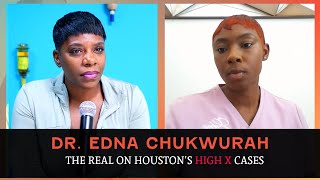
In this interview hosted by Latasha Transrina Kebe, internal‑medicine physician Dr. Edna Chukwura (Nigerian‑American, based in Houston) discusses the alarming rise of sexually transmitted infections (STIs) and HIV in the Houston area. She cites Houston Health Department data showing roughly 35,000 reported HIV cases in Harris County, with about 29,000 people living with HIV – roughly 1 in 100 residents. The highest transmission risk is male‑to‑male sex, accounting for about 74% of new HIV diagnoses, especially among men in their 20s‑30s. Dr. Chukwura explains that many patients are unaware of PrEP, that PrEP is not 100 % protective, and that proper HIV testing requires a 2‑3 week window after exposure. She outlines recommended testing frequencies (every 2‑3 weeks for high‑risk individuals, annually for lower‑risk) and stresses the importance of honest communication and education. The conversation also covers other STIs – 31,000 chlamydia cases, 11,000 gonorrhea, 6,000 syphilis – with higher symptom reporting in women. HPV is described as ubiquitous, with vaccines available up to age 45, and routine Pap smears recommended yearly. Dr. Chukwura debunks myths about polio and other vaccines, emphasizing their safety and the role of vaccination mandates. Additional dialogue highlights the ease of accessing STD testing through free clinics, direct‑to‑consumer panels, and digital health tools like MyChart, urging listeners to know their own and partners’ status before sexual activity. She clarifies HIV and other STD transmission routes, noting that oral‑to‑vaginal and oral‑to‑anal contact can also spread infections, countering misconceptions in lesbian and bisexual communities. The interview intersperses informal, profanity‑laden banter, occasional off‑topic commentary from a third speaker about Gypsy Rose and media leaks, and personal anecdotes about sexual health, relationship dynamics, and the challenges of stigma in Black and brown communities. Dr. Chukwura promotes her online presence (edna.md, @edna.md) for further education and appointments.
Chapters
So, Dr. Edna Chukwura.
You can call me Dr.
Edna, that's fine.
I know, but I want your last name too.
Chukwura. Chukwura.
Chukwura. Okay, Dr. Edna Chukwura. You are Nigerian?
I am.
Very beautiful at that. You know, the Nigerians think I don't like them. Do they? Yes, because they get mad when I say Nigeria is Africa, isn't in Africa. And they, you know, they like to say that they're not African. And I'm like, they say they're Nigerian. It's a whole blog sphere on this.
Okay, so let me tell you, I stay out. Okay, I stay out of blogs and I don't argue with people, so I don't even pay. Okay, but you know Nigerians, we're very, uh, prideful people, let me just say that. So I'm not—
I know. And then they get upset when I, like, I do stories on the scammers and stuff, and I, I'm like, this is my job. It's like, but it's totally Nigerian. I'm like, but those are the ones that happen to come up that is scam. I do white-collar crime too.
She said it's equal opportunity.
Yes. I'm like, y'all ain't saying nothing when I talked about, you know, all these other scammers and stuff like that. But anyway, but no, I'm glad that we finally got a chance to get you on. You were I was actually referred, and I gotta start, you know, I like a sister that's a doctor that can speak on some things.
Yes, ma'am, let's do it.
Yes. Um, and so when that— we posted some stats from Houston. Um, your friend, uh, I don't know if she added— I don't know if we have her scheduled for interview. I did know—
I'm not sure. I'm not sure.
I don't want to say her name because I don't want to, you know, get her in trouble or anything like that, because, you know, the medical field is very different.
Yes.
And I just don't want to start no shit. It won't be no shit, you know what I'm saying? But she ended up making a video. She's a nurse, and she basically said, I think in one day, uh, I think there were 17,000 cases of just HIV alone that was, that was, uh, you know, uh, diagnosed in one day in Houston. And then there was a plethora of other STDs and things like that. And so, um, I did reach out to her and asked her to do an interview because people were saying she shouldn't have put that information out or did she have HIV? Is that the reason why she was putting it out? Like, they were attacking her for letting the public know what the fuck is going on, you know?
Right. Just to clarify though, so the initial post that went viral, that, you know, that 7— it was like 42,000 or some crazy number— that wasn't her. That was somebody who screenshot some statistics from the health department, Texas Health Department. Oh, okay. Talking about her experience at the hospital. She works at a hospital, we're not gonna name no names or anything like that, and her seeing that constant influx of HIV cases. And we're seeing that across the board.
Oh my gosh. And so she, she referred you, she said this is somebody that you need to talk to, um, that can really get down to the business. Because I, I'm gonna be honest with you, I was shocked.
Yeah, yeah, yeah.
In one day.
So it's not 17,000, that's, that's not true, but our numbers are still bad. Tasha, our numbers are like terrible, terrible. So we're gonna talk about it, but our numbers are really bad. Our numbers are alarming in terms of how many people we have and then just the rate in which it's increasing. It's, it's like 10, it's like steady.
And this is just in Houston alone, just in Houston.
So I'm a Houston physician, I'm based in Houston, I practice in Houston. And so, you know, getting the numbers, you know, the numbers that I report are always from either the Houston Health Department or the Texas Department of Health, but this is what we're seeing in Houston. Sometimes I speak to Texas in general, but primarily we're going to talk about Houston for sure.
Okay, now give us a little bit about your background real quick. Where, you know, I know you're Nigerian, you're based out of Houston. What type of doctor are you?
I am an internal medicine physician by training and a medical consultant as well. So for those who don't know, like, what internal medicine doctor does, we do everything internal, right? So all of the organ functions, all the systems within, that's what we work with. So we have to have a very broad knowledge of things. And primarily the doctors that you're going to see working in the hospital taking care of patients, that's us. We stay in the hospital for the majority of things. We can do outpatient medicine and stuff like that, but by and large, we're in the hospital doing that type of stuff.
Okay, okay. Well, I'm honored to have you here, especially someone that's actually down there, because, you know, I saw the post and I said, whoa, whoa, it's not out here for real. Now, of course, let's— I just want to get right into it. There's this stigma. They're blaming the LGBTQ community for this. You went from actually being for Gypsy in the beginning. That's how you got all the information. And then as you were developing this series, you started to uncover more. You was like, well, we're not dealing with a victim.
Well, in the history of ever, Tasha, and when have we ever listened to what a murderer says about their victim? No murderer has ever come out and been like, yep, I did it, and they were awful, and I hated them, and that's why I did it.
You are going to be the first on record to state that this whole thing that we've ever known about Gypsy Rose was a scam.
The only person who should be in trouble for leaking her medical information should be her stepmother. Yes, if they didn't want it out there, then they shouldn't have given it to everybody like it was fucking candy. Oh, you gave it to HBO, you gave it to A&E, you gave it to bloggers, you gave it to podcasters, you gave it to the stalker lady on the street that freaking— you gave them to everyone. You can no longer claim that they're private when you gave them to anyone and everyone that spoke to you. And sue me because I have them.
That's why the government don't like white women, because y'all be finding out everything. The only time I've ever heard of that chromosome deletion is from your parents or cousins, or they're somewhere around there, like in West Virginia, babe.
If you don't know this yet, Tasha, Christy admitted on national television that she's the one who split up Ryan and Joe and Gypsy and was talking to Ken the whole time, trying to get Ken back together with Gypsy. And she's proud of it. She's proud of it that she broke up a freaking marriage that her daughter had, a man who really cared about her, and introduced her to the new— to the old fiancé. Yeah, I got the old fiancé back in her life.
Baby, is it that Gypsy's carrying?
Hell if I know. I don't even know if she's carrying one at this point.
Oh, hell no. Oh, where do you hear this?
If you don't know this yet, watch this full program and and other exclusive content on www.tashaklive.com. Let me speak to the numbers, right? And I did a post about this because I'm not— what I don't do is argue with people. I'll let the numbers speak for themselves. But so, yes and no, to answer your question, yes and no. So our highest transmission risk, right, in terms of how people contract it, is males who have sex with males. So biological males that have sex with biological males, by like 74%. It's, it is the majority.
74%.
Yeah. So according to our most recent numbers in terms of the new diagnoses, right? And that has always been the trend. If you look year by year and our most recent numbers, at least for HIV, go to 2022. And you have to remember that things get epidemiologically, things get backdated. So we're not in 2024 because we're still in that year. So we cannot, you know, talk about those numbers because we're still getting that data. So our data is a little back by like a year or two. So 2022, 2023 are going to be our most recent numbers. And based upon that, The trend is always our highest transmission risk is going to be male-to-male sex. So you can take it as you want. I, you know, I guess that would fall back to the facts, right? So if you're— if you are going to say what particular community, by definition, men that have sex with men are homosexual, right, and gay. That is the definition, no slander or anything like that. So that would fall under the guise of the LGBT community. If that's okay, correct answer.
Okay. And so let me ask you something, like, PrEP is not— like, they don't— are they not making enough? Like, is—
or, you know, a lot of people don't know about PrEP, right? That's the first thing. So there hasn't been a lot of education about what PrEP is, especially if you're talking about like the demographic that's 30 and above, because PrEP is still relatively new, came out in the last decade or two. And so you have the older population that just did not have access to it and don't know about it, and then generally it's not taught. And so then, and also on our side, a lot of providers Providers don't know about PrEP, right? So they don't even have the information and the training, just to be honest, to even give that information to a patient as an option. That's the problem. That's the first thing. So there's a lot of miseducation on both sides. Then the other concern about PrEP is you have, uh, not everyone, and again, I'm not here to stigmatize, but you do have a demographic of people who use, you know, take PrEP but still engage in very high promiscuous behavior because they think it's, I like to say, a get out of jail free card.
You know, oh, Doctor, you have no— let me tell you something. Oh, Jasmine over there. Yeah, Jasmine. Yeah, I'm about to get— I'm like, yeah, she already know where I'm going with this. So I interviewed this nasty-ass heifer, right? I ain't gonna tell you her name or nothing like that. And she had a chart of all the people that she was sleeping with. She said she was polyamorous. And so she was like, I sleep with women, I sleep with men. And I'm like, well, how are you not contracting anything? She's like, because I'm on PrEP. And I'm like, huh? And then she sat her funky ass on my show to tell me that she can do that because she's on PrEP.
No, ma'am.
I said, well, what does that mean? That's— she said, well, it's 100% effective against HIV. I said, that's a lie. That's like them making birth control 100% effective.
That is—
she was like, well, you don't know the numbers, you're not a doctor.
Well, I am. That is categorically false, okay? PrEP decreases your risk of transmission, but it does not absolve it, okay? And, and if you are going to be on PrEP— so the way PrEP works is first and foremost you need to have a negative HIV test, right? And the way HIV testing works, just to kind of give a little background— so if you have sex today and you go get tested for HIV tomorrow and it's negative, right, the antibodies that are produced that we use to test for HIV have not been produced, right? So if you had a positive exposure, say for instance you— we know you caught it, but we don't know yet by testing. You've had sex with someone who was HIV positive and you go test the next day, or even the next, like, few days, it will give you more likely than not a false negative. Takes time for it to be produced, the antibodies to be produced in the body so that it pops positive on a test, right?
So how long we talking?
So we always tell patients at least wait 2 to 3 weeks, right? And if you're sexually active, you want to get tested at least at an interval of a few, every few months. So if you had an exposure, say today, okay, you can get tested in 2 or 3 weeks. Okay, that gives us one, but we always recommend another test in a few weeks thereafter so that we know that, that, you know, because it takes time. And so I say that to say we have to start with a negative HIV test, number one, and then we put you on PrEP. But again, a lot of times we have a false negative, a false negative because of that reason. And then also in between that time, it doesn't guarantee 100% like reduction risk. You still can catch HIV, especially if you're engaging in promiscuous behavior like, you know, that heifer that you're talking about. You know, you—
I said you're not gonna sit on my show and, and I'm gonna disseminate a video to millions of people thinking that they can just have sex because that's— yeah, that's your right to have sex. But to sit up here and say the reason you can have free sex is because you're protecting yourself I said, that's not protecting yourself, and it's, it's wrong information. She was like, well, it's 100% effective against getting HIV. And I said, that is 100% wrong and it's irresponsible. And so therefore I'm ending this damn interview. No, I sure did. I'm not, I'm not about to do that. Like, I got so many kids that watch my show, right? And I'll be damned if somebody ignorant, just because you want to justify your promiscuous behavior and try to make it okay No, ma'am, we're not, we're not about to do that.
That's definitely misinformation. So let's just get that record straight. PrEP is not, it's not a get out of jail free card. It's not go, go run wild. It helps to reduce your transmission risk by a lot, but it doesn't absolve you and it doesn't protect you from other STDs. That's another thing. So, you know, you can still catch HIV, you can still catch syphilis, chlamydia, gonorrhea, all these other diseases as well. And so that's not how we use PrEP.
Thank you so much. I wish I had had you then, but I got you now.
That's all that matters.
I got you now, Dr. Anna, for real. So, um, so, okay, so what you're seeing— let me ask you something. Why is it more, I guess, mainly amongst men and anal sex though?
You know what I think it is? And this is a little bit of medicine and a little bit of speculation. All right, so there is a stigma, obviously, especially with the advent of AIDS and how AIDS, you know, back in the '70s. Yeah, yeah, yeah, yeah. And just homosexual behavior being so stigmatized, right? And so there was a level, again, a level of secrecy and just that kind of was kind of carried over, right? That people, men who have sex with men, men are afraid to, you know, kind of be out in the open and openly say that they're gay, etc. They have to have a certain image, whatever, you know, whatever the cultural thing background is. So that compounded with the fact that that means a lot of people are not reporting. A lot of people are not getting tested, a lot of people are not going in, then you kind of are not being able, from the medical standpoint, being able to catch and treat, right? Historically, men don't go into the doctor's office as much as women, and that's by any race and age. Yeah, see that men do not go to the doctor as often. So that's also another thing. So you have men who don't know their status on top of not having, you know, not disclosing that they're having sex with other men. And so it's being passed along in this community without being checked. If that makes sense.
Okay, okay.
That's kind of how I deduced that between medicine and what, you know, culture, what we've seen.
Okay, I can see that because I'm gonna be honest, I got some friends, you, a lot, a lot of like gay friends, and I'm like, y'all still going to these, these, these parties and these bathhouses and stuff? And you just, they, you know, they ain't even got to say the name, let's go. I'm like, y'all crazy. Hell no.
There is, you know, unfortunately there is a lot of promiscuous behavior amongst a lot of different groups. Everybody, everybody, right? But our highest risk are, unfortunately, are homosexual males or males who have sex with males. And another thing is we have men who don't identify as homosexual but have sex with men, and they have a hard time grasping that concept. You'd be surprised, you know, I engage in sex with men, but I don't like men. So I'm, you know, I'm like, I don't know what that means, but by definition that don't mean this. But, you know, cognitive dissonance, let me just say that in terms.
And as a doctor, when you get someone that's, uh, that says that to you, like, what do you say to them?
Like, so, you know, for me, I can go from politically correct down to You know, so it just depends on the patient, but education is key first. You know, what we're never going to do is play in my, in my office. I'm not going to sugarcoat things. You know, this is what this is, this is what the definition is. Um, you know, we're not going to change definitions or facts, so I'm going to educate you and then we're going to have a real conversation because that's the only way I can help you. You need to come to terms with whatever you need to come to terms with. Um, and we can do that over a course of time, but what we're not going to do is, is recreate a narrative that's not there or rework something to fit your ideal. So education and an honest conversation, and then we can move forward.
What— okay, so when we're looking at demographics though, so what, what are we looking at in terms of demographic? Is it, is it more Black male? Is it more white male? Latina?
I figured you would ask. So thank you. I always come with the numbers. That's all I have. Look, let me tell you what I, what I will never do is go back and forth. We're going to talk about the numbers and we're going to leave where it's at. Um, okay, these numbers here are from the Houston Health Department, okay? And these represent our 2021 numbers. And this is what I posted in my reel, and I actually posted this chart in and of itself. And then I have 2023 numbers for other STDs besides HIV. So let's talk about HIV because that's the big one, right? So we have about 35,000 reported cases of HIV in Houston, just Houston, Harris County. Houston makes up the majority of Harris County. So we have other little small cities, Pearland, you know, others, little— that, but by and large, Houston makes up the majority. Of the 35,000, about 29,000 are still living, right? So that's that. So just 29,000 in Houston, that equates to, when you take our entire population, which is about 2.3 million, about 1 in 100 per— every 1 in 100 people have HIV/AIDS. Damn. So I always— I saw one of my patients the other day. I said, look, so they were trying to grapple with the number because he had a positive HIV test. We're kind of talking about it. He was like, you know, trying to figure out how he got it. Not going to get into his storyline, but I said to him, I said, look, 1 in 100. So you've been to Chapman and Kirby on Sunday in Houston. He's like, hell yeah, I've been to Chapman and Kirby. I said, so Chapman and Kirby's capacity can hold about 600 people. So that means 6 people in there on average have HIV/AIDS.
Just—
and if you've ever been to Houston and you know how tight Chapman and Kirby can get, that gives you a good number. 6 people in there by definition, if we use that number to equate. Now in terms of our male-female, because that's what you want to know, males make up about— of that $29K, males make up about $22K.
Oh shit.
Yeah, yeah. And women make up the rest. That's the first thing. And then when we break it down by race, so our African Americans, those who identify Black African American, make about $14K. That's men and women. 14K. Followed—
that's a big chunk.
That is a big chunk. That's more than half. Um, and then followed by our Hispanic, which make up about 9K. Okay, okay.
That's, that's still big. Black and brown, that is—
it is black and brown, unfortunately. It's going to make up our majority. Now, when you talk about age in terms of age. So we break it down by decade— 20s, 30s, 40s, 50s— and that's because of the use of HIV medication, right? So HIV medication prolongs life. So what we're seeing is we're seeing people live longer into their 50s, 60s, and 70s with HIV because there's medication. So it's an even distribution, if that makes sense.
Okay.
Like I said to you before, our highest transmission— so when we talk about and we ask, how did you contract, uh, uh, HIV? 17,000 individuals of that 29 were from male-to-male transmission.
Damn.
Yeah, so that's where we're getting this demographic. So if you paint the picture, at least per these numbers from the Houston Health Department, our highest risk group is going to be our 20s and 30-year-old males who have sex with other males.
Jesus.
That's our highest risk by definition in these numbers.
Okay. Yeah. All right. And you would think, like, with all the education that's out there, we would, we would see a great reduction in it. But I guess since diabetes numbers ain't going down, this, this ain't going down no time soon either. Like, damn.
Yeah, they overall, overall HIV rates in the nation, and including Texas and Houston, have slowed, right? But comparatively, Houston to other major cities still is higher, right? If that makes sense.
So overall, this is like number 3, right?
It's a— with how the numbers fluctuate so much, right? So Houston, in terms of like Texas, at one point they're always usually in the top 5. You'd be surprised what other cities are in the top 5, like Austin, Dallas, Laredo, Texas is always in there for some reason.
I don't know what they're doing at the border, but I would have thought DC, New York, and Atlanta.
Well, no, I'm talking about just in San Francisco.
Okay, just in Texas. Okay, I got it.
These are Texas cities, but yeah, I mean, New York New York, just because of sheer numbers. California always makes a list. Your bigger states are going to always make the list just because they're bigger. But yeah, and in terms of cities, in Texas always rounds out the top 5 no matter what.
Damn.
Yeah, I mean, there's not that many cities, the major cities in Houston— I mean, in Texas, if you want to be honest, it's only like— yeah, so we can only do much. But yeah, so that's our— those are our HIV numbers. Now our 2023 STDs, so everything outside of HIV Um, I got just— I got these numbers just for this interview, so I was like, let me get some more numbers.
Thank you, I appreciate you coming with the receipts.
Yes ma'am, I always come with receipts. So chlamydia, we got about 31,000 people living with chlamydia reported, reported cases, new cases for 2020.
The ones that go to the doctor.
Yeah, chlamydia is our— chlamydia and gonorrhea are always our most reported and are usually higher reported in our females because they are more symptomatic. Women are always likely to be more symptomatic than men just because of our anatomy. So, okay, yeah, we just— women will— are more likely to experience symptoms, period. So they're— and they're more likely to go to the doctor, just, you know, from everything I said before. So that's that. So 31,000 new cases for chlamydia in 2023. Gonorrhea was 11,000 and syphilis was 6,000. Yeah, so we got a lot of, a lot of numbers. Yeah.
Okay. Jesus. Hot out here. I'm coming down there wrapped in Saran Wrap even though I'm married.
I always make this joke. I say Houston stands for hookah, hot wings, and herpes. That's what the H stands for. And humidity. So come on if you want, but just be careful. I tell people it's a good time, but people lose their mind.
Houston is a good time. That's where we're doing our wino weekend at this year for New Year's Eve. So yeah, we coming to turn Houston up. But like I said, whatever they get when they get there, it's on their own. They're going to have to sign a waiver when they come down there with the winos, okay? We did not get you— you did this on your own. Be careful on your own. Yeah, be careful. I am. So, um, when, when these males are coming to the doctor, and let's just say they're, they're seeing someone like you, of course, um, and they're getting this positive diagnosis, are they, are they coming in because they are symptomatic, or are they just— because you— I know a lot of men don't go to the doctor.
Yeah.
So is it producing symptoms to where they have to go get checked, and it's like, Hey, you know, have you had a test? It's a mix.
It's interesting. And a lot of the time it depends on the age group. So the older males are coming in because they're concerned on their own, because I hate to be that one, but they've had encounters with younger people, um, and so they're like, let me get checked, or they're at the insistence of their spouse or whatnot. So the older ones, for whatever reason, I would say they're on their own fruition, regardless if they have symptoms or not, will come in.
More often than not.
Let me just get these tests done. A lot of the younger demographics, so your teens and 20s and 30s, are coming in symptomatic. But a lot of the time HIV does not have symptoms. So a lot of the time we find patients when we are putting them on PrEP, for instance, like they want to get on medication but we have to get that HIV test first. That's when we find out a lot of them are HIV positive. Um, yeah, unfortunately I've had a few of those cases where like, actually we can't put you on PrEP because you already have this, we have to put you on a full-blown treatment, um, for that. And so, you know, some people come— it's a mix, honestly, Tasha. Some people come in on their own fruition, people come in because they're starting new relationships and want to be responsible, you know, like, like you should, um, or about to engage in sexual activity and they want to know their status, etc. So we get a mix of all types of things.
Now, the people that— when you do tell them, because I, I hear, you know, amongst the young people, it's like they don't give a fuck no more. So when they're getting these diagnoses, are they scared? Or because they're, they're being told now that they can live a healthy life, that they just like, oh, okay, give me my meds, I'm cool, and then they back out?
I will say this, the fear that one had in the '80s and '70s about HIV and AIDS does not seem to carry with some of these, these patients in their 20s. And I think, yes, you kind of hit it on the head. Not everyone, right? I'm not speaking to them, but there are some in there that are like like it's the equivalent of like an infection, you know, a cold, and give me some antibiotics and we're okay. A lot of the patients that I treat, a good majority of them already— like, if I'm meeting them for the first time, already have HIV. A lot of our young ones, I would say maybe a fourth, it's actually kind of crazy. They're already on HIV medications because they've already been— they already have an established diagnosis. We're seeing a lot of that. Um, and so, you know, it's a good thing that we have HIV medication, right, and that you can live a long, healthy life and, and not die from HIV/AIDS like people were dying in the '70s and '80s. But on the flip side, you have certain demographics that we're talking about that abuse it, abuse the advances of medication, and really disregard the fact that you have something that can help prolong your life that otherwise would kill you.
Let me ask you this, because I was reading some articles a few years ago, um, this is probably— I think it was like around 32 years old, I'm 42— it's around 10 years ago, and they were saying that what they're seeing now with people that have like Say first you got an HIV diagnosis in this person and that person, and they're both engaging in sex. Like, doctors are still recommending that you use protection even if someone else has HIV and you're in a relationship together, because it could transmit into an irresistible version of HIV that medicine can't treat.
Absolutely. So all HIV is not the same, right? There are different strains, different viruses, more— some are more aggressive than others. And people are in different stages of HIV, right? So AIDS, like AIDS, for instance, is the final progression of HIV. So it's basically where your immune system can't come back. It's so compromised, right? So there's different stages. And so just because you have HIV and I have HIV, just for, you know, purposes, doesn't mean we have the same type, right? And HIV is a virus. It replicates, it can mutate. So if it comes in contact with a different version, it's going to take those pieces that it doesn't have and create a super infection or a super form of itself. And so—
and I saw that, and it was called Super AIDS or something.
Super infection, essentially.
Yeah.
And so, yeah, we still— you still definitely want to use a condom, still want to be on medications and do everything you can to not transmit it as if you didn't have it. Even if I'm dating someone who has HIV as well, for sure.
Damn, this is really educational. See, it's just nice to have an expert here because I do read a lot of science. Is, you know, a lot of medicine and stuff like that. Even though I'm not a doctor, I go to my doctor with shit. He's like, how did you know that? I'm like, I was just reading the medical journal, you know what I'm saying? I, I want to know what the hell going on, you know what I'm saying? Like, you should. It's a study. So, um, even because I have thyroid problems, so I'm always reading like the new information that's coming out, the new studies, and you know how metabolic disease, especially if you come from a family with, you know, that is predisposed to diabetes and stuff like that, but based on you know, your diet and lifestyle and stress and all that stuff. Yeah, I'm always trying to stay on top of it, like, because you just— you never know. And half of the population now has endocrine, you know, endocrine issues and disorders. Yeah, like, and so yeah, I wonder what the hell going on, you know? Right, that's what I'm coming out— I want it, like, give it to me.
You need to— and the thing about it is, but I'm like, you got your phone in your hand, you got everything you need. I mean, granted, not everything on the internet is true, Okay, TikTok is not the source, but you know, I digress. But you can really find some educators and websites that really will teach you and give you the lay of the land for free, for the free. Um, and I tell them all the time, yeah, it's really not that hard to find. I educate so much on my page for this reason, right? Because a lot of the time you don't get people that look like me that can identify the same, you know, whatever the case may be, or talk the lingo, or just break it down simply, right? And so there's so many of us on social media that are credentialed, that's not going to give you, you know, bullshit— excuse my language— and give you the information that you need the way you need it. And so there's no reason, there's no excuse.
Let's talk about a silent one that a lot of people like, they tend to ignore because they think it's like, uh, you know, not as important. HPV.
HPV, human papillomavirus. So human papillomavirus is the most common virus. It's sexually— it's an interesting one because it's a sexually transmitted virus for the most part, um, and it's what we— it's almost ubiquitous. Like, almost everyone has it, unfortunately. Now, HPV is one of those things where in which there's vaccines for it, right? And so, you know, there— and they've extended it. You can get it from, I think, all the way up to age 45 now in terms of that. Oh shit, like that.
That's if you don't have it.
You can still get it if you have it.
What? See, they don't even talk about that shit.
Yeah, right.
So I'm gonna go get my shot.
More effective. It's effective if you don't have it.
Okay.
Any vaccine is best when you don't have it, right? That's it. And HPV is what causes warts, genital warts, who don't know. And so yes, get the vaccine. And then, you know, people— the vaccine conversation is a whole nother conversation.
Listen, you see a motherfucker live around here with polio, you, you gonna get your shot. I don't give a fuck what nobody say, okay? They be thinking, oh, measles and chickenpox and shit. No, no, we're talking about the, the motherfucker that, you know, polio, your arms and shit twisted.
No, no, she said no, ma'am. And people are like, well, polio doesn't exist anymore. I'm like, why do you think polio doesn't exist?
Who told you that?
Well, first and foremost, it's, it's so uncommon in the United States. And I'm like, it's uncommon in the United States because of vaccines, but not in New York.
It's not— you—
it's— well, back when there was a mandate, back I think in the 1950s when polio like erupted, there was a nationwide mandate that you had to get a polio vaccine, right? And so people were— you had to get it. And so that was how literally the reduction of polio happened in the United States, to the point where like people don't It's almost— it's eradicated in this country. Like, so uncommon. But you can get your polio vaccine or you don't have to.
But you can get your twisted arms if you want to. I just waited to get my kids vaccines. And you don't have to get them all at the same time. I staggered my children. He ain't got to come to this shot, this appointment, get 9 shots.
No.
You can say, okay, I'm going to do 1 shot this week, 1 shot next month. As long as by the time they get ready to go to school, they got they shit.
There's a schedule that we typically use per guidelines. But I always tell, I tell patients, I don't work with kids, but I always tell parents, like, work with your pediatrician, right? You can have a game plan with your pediatrician in terms of vaccinations and things.
Exactly.
Or that work for you, that make you comfortable, right? You don't have to come in and get— not give your kids 9 shots at one time. I don't know if I'd be comfortable with that, but you can have a schedule that makes sense and they can still get the immunity that they need. And ask the questions. You know, a lot of people write things off without getting the information that they need to actually make an educated decision for themselves.
Yeah, so back to HPV.
Yes, ma'am.
So what about— because they're saying that HPV, uh, you know, from what I was reading, could develop into like ovarian cancer, cervical cancer, uterine cancer.
So HPV is responsible for two things: genital warts and for cervical cancer. So HPV has many different strains, like there's, there's, there's high risk and low risk, just to make it easy. And the high strains, especially in our women, certain strains of it can cause— is responsible for cervical cancer. Hence why we always recommend a Pap smear after a certain age, 21 per guidelines. And you get it every— I always recommend, look, get your Pap smear every year. Your insurance—
I got mine scheduled for next Wednesday.
Yeah, every year.
I say get one every year.
It's covered. So I'm just, you know, don't— I'm like, you're sure you're already paying for it, so go ahead and get it, you know. Yeah, every year. But yes, it's responsible not for uterine— not for uterine ovarian, but cervical. Cancer and genital warts. Yeah, it's preventable. Let's just say that it's very—
okay. And I'm glad that you said that because a lot of people think like you don't have to— if you just go every year, let them check, you will be fine. I do know like in India, you know what I'm saying, because like I said, I stay on the, like, on the medical journal sites and stuff like that. Yeah, they're preventing it to the point when it comes to HPV, they're just freezing the services if you're done having kids. They're pre-freezing cervix— your cervix and all that shit. They're doing volunteer hysterectomies if the women are done, so they don't catch that shit.
Cut it out. Cut it.
They're like, over here you gotta wait till it develop and then they'll, they'll, you know, they'll do your cancer treatment. Over there they're like, we ain't got the money for the cancer treatment, so we just— you done having kids, let's take this shit out.
Let's go. No.
Yeah.
Our guidelines, and a lot of women don't like, especially because there's no, unfortunately, like HPV screening outside of our cervical Pap smear screenings. We don't have any for like for men, unfortunately. We don't have any, at least standardized screening for men to test them and screen them, right? We only have for women. And so a lot of women come into my office because I do Pap smears as well. I'm not an OB-GYN, but I'm trained to do Pap smears and basic women's care, right? So if you can't get an OB-GYN, I got you until I can get you to OB-GYN, right? Okay, but a lot of women are, you know, told you don't need it every year, get it every 3 years, get it— so if you're over 30— some of the guys— there's two, there's two governing bodies that we use, right? So we use the, uh, let's just say two bodies. I'm not even gonna name them because they're too long, but one recommends every year and the other one recommends every 3 to 5 years depending on your age. Now, okay, one is made by a group of men And let's just say that one is made and has recommendations from women. So you go with, you know, let's just say that.
I say every year because I say if you fucking, you need to be at somebody's doctor's office. You do.
You absolutely do. You know, this—
you, you can't wait that you— I'm married. I've been married 18 years, man. 18 years. But I still don't trust that nigga like that. I go get my— I go get my checkup. And you know what he be standing up and saying? What the doctor say about us? You know about us. What?
Well, how's our health?
That's exactly what he be saying. If you ain't got it, I ain't got it. I'm good, I'm good. I was like, you going? And I make his ass go, but yeah, he be, he be doing that. What they say? I told— we good.
All men do that. All men do that.
Yes, man does that too.
We good.
He waiting on the results too. I'm like, Why you waiting? So why are you so eager? What's going on? Well, I want to know what you were doing. What? Like, you know what I'm saying? Like, we still go through the fuck shit in the house, but like, I don't care. I've been, like I said, I got 2 kids by this man. I've been married 18 years, but I'm telling you, I says every year, every 3 months, even for internal meds, I'm in somebody's office like, what's up?
And you know, I hate to be that one, but it's a red flag, you know. When I'm like, you've been talking to someone for like 2 years and you've never— they've never gone to the doctor, the dentist, anywhere? Like they haven't had any type of checkup? You ever heard— they never made an appointment in front of you? I'm like, that— even if not for that other person, for yourself, right? Like, because I—
because you can get STDs too from the mouth, you know?
Oh yeah, that's another thing. So, you know, if you're sexually active, you should at least get one screen a year. Even if you have the same partner, you're using condoms, just get one screen a year. Like, that's fine. You know, if you're more sexually active, you have more partners, I always say 3 months. You know, just go ahead and get it every 3 months. Your insurance will cover it, right? You can't go every day, but you can go every—
what if you got a chart?
No, ma'am, keep the chart.
So what? I told you, I interviewed a girl and she had a chart. She said, well, I sleep with this person on Tuesday, but then this person sleeps with this person and I sleep with this person, but then I have like 10 partners and they all sleep with each other. And I'm like, you probably sick right now, bitch, and don't even know it.
I don't recommend a chart. I don't highly not recommend.
Let me— I'm like, how does your coochie take it? I don't get it. You know, maybe they built like porn stars, but even like some of the porn stars, like Pinky, ended up doing an interview and she was saying she had to stop having sex with men because she kept contracting shit. Like, she was like, they was going outside of the network doing what they do, and every time she was having issues down there. So she just decided to put on a strap-on and just do what she do without having to exchange bodily fluids no more. She said she was done.
Yeah, I mean, that, that can get tired. I would imagine that would get tired, especially for our women, because a lot of these STDs can cause infertility.
You went from actually being for Gypsy in the beginning. That's how you got all the information. And then as you were developing this series, you started to uncover more. You was like, well, we're not dealing with a victim.
Well, in the history of ever, Tasha, and when have we ever listened to what a murderer says about their victim? No murderer has ever come out and been like, yep, I did it, and they were awful, and I hated them, and that's why I did it.
You are going to be the first on record to state that this whole thing that we've ever known about Gypsy Rose was a scam.
The only person who should be in trouble for leaking her medical information should be her stepmother. Yes, if they didn't want it out there, then they shouldn't have given it to everybody like it was fucking candy. Oh, you gave it to HBO, you gave it to A&E, you gave it to bloggers, you gave it to podcasters, you gave it to the stalker lady on the street that Freaking— you gave them to everyone. You can no longer claim that they're private when you gave them to anyone and everyone that spoke. And then they tried to turn around and sue me and sue me because I have them.
That's why the government don't like white women, because y'all be finding out everything. The only time I've ever heard of that chromosome deletion is from your parents or cousins, or they're somewhere around there, like in West Virginia, baby.
If you don't know this yet, Tasha, Christy admitted on national television that she's the one who split up Ryan and Gypsy and was talking to Ken the whole time trying to get Ken back together with Gypsy. And she's proud of it. She's proud of it that she broke up a freaking marriage that her daughter had, a man who really cared about her, and introduced her to the new— to the old fiancé.
Yeah.
Got the old fiancé back in her life.
So whose baby is it that Gypsy's carrying?
Hell if I know.
I don't even know if she's carrying one at this point.
Oh, hell no. Oh, wait till you hear this.
If you don't know this yet—
Watch this full program and other exclusive content on www.tashaklive.com. Right? And so, you know, outside of having something that we can't cure, right, if you continue to get chlamydia and gonorrhea over and over and over and over again, you can get what we call pelvic inflammatory disease where you can't have kids. Kids, or you can't— you're a turtle.
I had PID at 18.
Yeah, you can.
First time having sex, that dirty-ass nigga had the nerve to tell me I gave it to him. Bitch, what? And I, and I caught it with somebody that was grown after, so I'm like, no. So I know, but PID, they can't tell you like where you got it or what caused it, so they couldn't tell me, right? But I was like, where else did I get it from?
No, that is correct. So pelvic inflammatory disease is not just due to STDs. I don't want to make it like it's just STDs, but it's commonly caused by it, right? The number one reason is, is an STD, an untreated one. And so I'm like, for that reason, if you— and I'm not saying kids are the end-all be-all, but if you want to just have a normal functioning system, just be careful, you know? And yeah, just can't keep catching these, these, these diseases.
Look, it took me one, one time, first time. Oh no, no, no, no, no, no, no, we, we done. And because I, you know, the reason I think mine went it, you know, for however long it went is because it was my first time engaging in any type of sexual activity. Of course I couldn't go to my mom and them about what was going on, you know what I'm saying? I'm thinking this is a part of like, oh, um, this is natural, I'm having sex now, I go from, you know, purity to now, these are some of the things that go along with it.
Yes.
Until I started having pain and then I had to end up getting a shot.
Yep. And a lot of people don't recognize the symptoms. Like, first off, a lot of people don't recognize the symptoms, and then a lot of people don't recognize what's not normal on both sides. Like, that smell is not normal, you know. I've had to tell many women that's right, normal smell, that, you know, if you smell that, that, that's sign of something. That color discharge is not normal. That's not normal, um, you know what I mean. For men, you having penile discharge when you're not erect is not normal, you know. Like, there are certain things that are not normal, even if all your friends have the same symptoms. That's not normal. Go to the doctor. Let me, let me get you tested, please.
That's why, listen, I'm very, very— I, I'm transparent about everything. I'm 42 years old, and like I said, like, the only way to not get yourself into something is to know something. And so that's why I'm transparent. And I, I really believe that, you know, as parents and as providers such as yourself, the more we talk about it, we just got to keep drilling it into their head, you know, into people's heads. And so, um, that's, that's what this platform is about, because I was just like, you know, ain't no ain't nobody gonna sit on my platform and spew out no misinformation because, you know, yeah, they're trying to like justify their promiscuity and I'm like, it's still— there's— there is still not safe. The safest way, honestly, one partner that you can trust. Yeah, but you still have to do your due diligence.
Yes.
And getting yourself tested, you can't 100% trust everybody. But I'm gonna be honest with you, could you, could you speak on that? When it comes to the stats, when it comes to, uh, monogamous relationships, yes, are you seeing less in monogamy versus polyamory or polygamy? So this is a whole new thing.
Yeah, I mean, probably we— so we don't have direct numbers on like polyamorous relationships, but okay, before that falls into high-risk sexual behavior, right? So catching something if I have sex with one person versus 10 people I mean, naturally, a statistic about that, my risk goes up. What we do find though is in terms of just outside of the male-to-male transmission, when we break down our women, right, their highest risk is males. Okay, sex with males, right? Because by way of the fact that our highest, our most risky age group is, and sex and demographic are males that have sex with males, right? And then they go back and women. So What we do see in a certain demographic, in certain, certain groups, unfortunately, in monogamous relationships, like how other people get it, not getting tested themselves. So they're stepping out of the relationship, doing stuff with other people, not getting tested, have HIV or some other STD, and bring it back. We have a lot of people who unfortunately catch STDs and HIV in that way, right? By no, by no fault of their own. They're married, you know, they're trusting their partner. And this is on both sides. I'm not blaming men or women, but right, correct. They're married, they're, they're thinking, you know, it's us, we can have unprotected sex, like I have your— we have kids, etc. And one is stepping up on the other, tap dancing around the community, has something and brings it back.
A lot of times, a lot of the— especially in the line of work that I know, women be knowing that they men be cheating. I had a girl the other day go viral and say that she would rather catch an STD from her partner than him have a baby on her, because a baby you can't get rid of. But I said, but an STD you can't get rid of either, bitch. And some of them you can't. But this is their mentality. And a lot of women, I feel like, you know, when you know, when you know when ain't being honest, ain't being truthful. And I feel like in today's society, we just don't have room to play.
We—
you tell one lie, I can't trust you with nothing else. So the fact is, like, you know that he's possibly sleeping around and you continue to lay down with him.
Yeah.
People— unprotected.
No, that's wild. First off, that's diabolical work having to pick between a baby, outside baby, or inside.
Or STD.
That's not—
I wish I would.
That is not the decision.
I pick peace by myself.
Yes. That would be my sentiment as well. There's no reason why that should be your option choices. Leave. Honestly, but I mean, no, that, that is— that's, that's unfortunate. That's unfortunate. That should not be the case at all.
Okay, but do you guys still recommend— you know, it's easier to track when you're just with one person. Yeah, one person that you can trust.
Yes.
Oh yeah, you know, people like— and if you choose to stay with a man that you know is outside or even a woman that's outside, it's kind of like a risk that you're taking.
It's a risk that you're taking. Why you would take it, I'm not sure, because again, for all these reasons that we talked about, HIV is not curable. You can still die from HIV even on meds. Like, it's not, you know, it's not like a one— it's a great drug, but it's not like a wonder drug. You could still have a lot of infections, other things that you can succumb from. Who wants her— you know, who wants herpes? Who wants chlamydia? Like, Let's not normalize STDs. That's the problem. We— our society is normalizing certain things, and I'm like, this is not anything to be normal. With the advent of medication, yes, we can treat you, but you can still have problems.
And this is not normal behavior, which means you catch an infection, you got cancer, you got HIV at the same time.
A lot—
you need an immune system to fight cancer.
You need an immune system to do a lot of things. And so a lot of the time, people with HIV and AIDS do not die from HIV. HIV and AIDS directly. They die from what we call secondary infections because your immune system is so low. They succumb to things that if your immune system was regular or normal, that you wouldn't even have an issue with, right? So a lot of people don't realize—
basically don't get sick.
Yeah, exactly. So yes, your best bet if you're going to be sexually active, find someone you really like, go get tested beforehand, you know, keep it open, keep the conversation. And the thing about it, Tasha, and I've been going on a whole little soapbox, people just don't want to be transparent. Right? Be transparent and have that open communication. People are scared to have it. People don't want to have it for whatever reason or the other, but it's just really not— it's lack of transparency for yourself and to yourself and to others. And so because of that, we have this cyclical problem where we're just seeing our communities, especially our Black and brown communities— I hate to be that one— constantly perpetuating this narrative. And the data shows it, that we are just not getting any better when it comes to being these with promiscuity.
And you know, that's another reason why I'm so transparent on my platform is because like, you know, because they always say you always pushing for marriage and relationships and Black fam. I am, I really am, um, because I think that's, that's, that's the way to go. I'm very old school. But I remember like, you know, being, uh, uh, 6, you know, a month in with my husband.
This—
he wasn't my husband at the time, he was somebody I was dating, right? And, uh, we wanted to go from having, uh, protected sex to unprotected sex. And so the conversation was had between us, initiated by him saying, hey, you know, right, you're somebody that I want to get serious with, you're somebody that I want to have kids with, can we possibly go get tested, right, so that we can go ahead? And I'm like, well, a month in, but he was like, yeah, but I'm— I know. I'm like, okay, no. And so we both got our tests, and when we was clear, we It was good.
It was— y'all were— and look at you.
When I go to the doctor now, he'd be like, what they say about us?
He wasn't playing about you. He wasn't playing about you. You know, Jesus.
Now, was it scary? Because a lot of people don't like to get that reality. Was it scary? It's always scary. Every time I go get a pap smear, I'm like, are they gonna find something? It's just the subconscious of like the what if you go in you're trying to be on the preventative side. But what with medicine now, I'm like, okay, if something come up, at least if I catch it, we good.
Yeah. Yes. And that's what I think of it. Like, nobody wants to be at the doctor's office.
Nobody.
And I don't want to be at the doctor's office, you know what I mean?
And you work there.
I work there, and I am the doctor, you know. I barely want to—
I gotta do these tests on myself.
I'm like, let's be quick, fast. But I know my status, right? I want to know my status. I want to know. I just want to know because not knowing is, is ridiculous, you know, at this age, at this— at my big age, you know what I mean? As an adult with all the information on my fingertips, we can treat you for the majority of things. And you don't want to get to 50, 60, we find out you have full-blown AIDS or full-blown something, and it's it's— we're working, we're working against the clock, you know what I mean? And so just your status, come in. It's not as bad, I promise you, it's not as bad as it is. Like, you've been to the doctor, it's not as bad as it is. Yeah, specifically, right, HIV, there are, there are programs and companies that allow you to do from your house. Like, there are new kits for chlamydia and gonorrhea, all right, that you can do from your house. You can order it online, do the swab and send it back type of thing.
You can get on a, you can get on a, a virtual clinic from your house and be like, hey, I just got this diagnosis at CVS from a CVS kit, can I get some medicine for it? And they'll write you your prescription all from your house.
You can get orders. We, I put orders in for patients all the time for full STD panels. They don't have— they just have to go to the lab, get their blood work done, whatever it is, and it's just, it's just me and you. You don't have— you can bypass all of that. There's, at this point, there's too many 8 avenues to get tested, and it's free. A lot of it is free. There's free clinics. Like, you have no excuse.
They can get a— you can, before even meeting somebody, like, if you want to know if they serious. Me, my days, if I was to enter the dating market, I would have a stack of them in the, in the, um, in the pantry from CVS. Like, okay, we finna do this. Hold on, swab. We're gonna wait 20 minutes. All right, I don't know what we can do, you know what I'm saying? I'm still probably gonna use protection, right? But you're gonna hit this swab over here, open your mouth, let's go. I'm just saying. And that's how you know when people really serious about you, but they'd be like, ah, nah, nah, nah, nah, nah, like, yeah, yeah, it's unfortunate.
We need to change. I'm glad, you know, we're having these conversations like you said so we can change the narrative, because it should be the norm to be— to know someone's status. That's it. Know your status. That should be the norm.
Not— let me know what you got. You should have a MyChart up on your phone.
This is What's your MyChart look like? Not how much you make. How was your MyChart?
What was your credit score? When the last time you been? My chart say this, what's yours? But I appreciate it. And last but not least, um, because you know the lesbians run around here thinking they can't catch nothing either.
Oh, you can, you can. Oh, you can. Okay, so let me, let me— HIV is, in terms of transmission, it does not need penetration from a man. Man, right? Like, it doesn't need to be male to female. HIV is transmitted through certain secretions. So vaginal secretions. So if y'all rubbing, you know, these together, boom, okay? It's shed through blood, it's shed through semen, pre-semen, okay? Breast milk and anal secretions. So take it as— it's not, it's not spread through tears and sweat touching person with HIV. That's not how it's spread. It's all— it's literally sexual fluids, if you will. So By that means you can still catch HIV and herpes and other STDs if you are, you know, you still have sexual contact with—
because they seem to think like, you know, especially in the lesbian world, like, well, I'm not taking dick. And a lot of studs around here I know personally, you know what I'm saying, they— even though they act like niggas, they still take dick sometimes, for real. And so that still puts you at risk. And especially, like, my thing is the mouth to vaginal.
Yes, oral to vaginal. You can— so if someone has a lesion or has HIV and they're positive and they're giving you oral sex and you're a female, because again, female anatomy is literally wide open, it's— we are receptors. I hate to sound like that, but we— and so if someone's giving you oral sex and they have HIV or any STD in the mouth, there you go. You don't need to have male to female sexual encounter to to catch any of this.
Well, listen, thank you, Dr. Edna, because these young people have no clue.
I hope y'all have learned a little bit.
Yes, yes, yeah, we're gonna make sure we put— we put these on rerun. Boom, boom, you know what I'm saying? And so, um, anything else you want to leave us with before we go? I know you got to get back to work. We've been here for about an hour.
Yeah, no, thank you for having me, first and foremost. And I mean, the takeaway— I always say this on my, on my platform, on my page— your status, right? I always say, because I'm a big age, at your big age, know your status and know the status of the person that you're talking to, because it's not worth it. If, if I have seen and have talked to so many patients who regret their decisions, they always say it was never worth it. So take it for what it is, you know, you're worth more.
Thank you, I really appreciate you. Uh, we're definitely gonna have you back here again. Could you let everybody know where they can find you, follow you, book you for an appointment.
I'm wearing my logo, so Edna MD, edna.md is my handle on all the handles that you can find me at. Website is www.ednamd. We make it very simple here. Consult stuff, and MD, you can find everything on my platform.
All right, shout out to— and I love it— shout out to the Black Doc.
Thank you for having me, Tasha.
I love it. How long did you go to school for? How long did How long did it take?
13 years.
Damn, long time. But you got that check though, honey.
Yes, it's checking. We thank God.
Yes, ma'am. Yes, ma'am. Thank you so much. Anytime. But listen, I appreciate you, and all you got to do is say, now I gotta go.
Bye.
More from Latasha


Ray J Debt EXPLODES? | Tasha K & Chad Van Horn Talk Financial Secrets They Don’t Tell You!

LATE POST‼️ Winos PLEASE don’t run my team off! I need them for these events!😩😳