Rising Black Billionaire Carlos Watson Opens Up about Facing 40 Years in Prison! | Full Interview
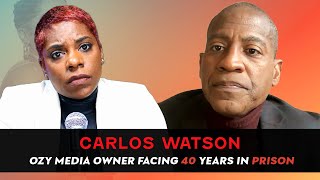
In this hour‑long YouTube interview, host Latasha Transrina Kebe speaks with media entrepreneur Carlos Watson, founder of OZY Media, about his meteoric rise, the company’s rapid growth and high valuations, and the subsequent legal battle that has left him on house arrest and facing a potential 40‑year prison sentence. Watson recounts building OZY from a family‑run news venture into a multi‑platform media company that attracted major advertisers, won an Emmy, and was valued at $2 billion, with offers to buy it for $300 million. He argues the prosecution is a wrongful conviction rooted in racial bias, citing the lack of Black jurors, the prosecution’s focus on a single employee’s misconduct, and the judge’s alleged conflicts of interest involving hedge‑fund investments. The conversation expands to broader themes of systemic injustice against Black entrepreneurs, the scarcity of Black‑owned publicly traded companies, and the personal toll of incarceration. Watson shares his personal resilience, support from family and community, and a call to action for listeners to raise awareness, contact senators, and support his documentary. The interview ends with mutual expressions of gratitude and hope that the story will spark change.
Chapters
All right, so we got the Carlos Watson. I want to say in the wine cellar, but we got you virtually piped in from the Bay Area.
Yes.
Okay.
Happy to be here.
I'm glad that you're happy to be here. And I got to tell you, you are probably the best dressed person I've ever seen that was on house arrest. Thank you.
You know what? I had to represent for Florida because you and I are both from Florida. I'm from Miami.
Yeah, OK. I had to show you. OK, Panama City in the house, you know?
There you go.
But like, for real, I'm like, most people on house arrest, you see them, you know, they smoking blunts. They got tattoos everywhere. They got dressed down. You know, their house is dirty. You know what I'm saying? I can tell, like, your bathroom is clean.
My bathroom is always clean. You know what? I grew up in a junkie house, to tell you the truth. My dad was a little bit of a packrat, and, uh, okay. And so I like to keep it clean. I'd rather have less stuff and it be clean and organized than stuff all over the place. So that's me, man.
I gotta say, you look great. Keep it up. You represent house arrest really well. Now I'm glad that you're able to laugh.
I haven't had anybody make me laugh in a long time. I mean, this is a great I don't believe that.
I don't believe that because you have such a great smile. So, but it seems like to me, because I could, you know, I could feel your energy, that you're in great spirits. Um, you know, given, you know, the unfortunate circumstances, like you were due to be sentenced on December 13th, uh, in New York for conspiracy to commit fraud, conspiracy to commit wire fraud, and identity theft.
Yeah, it's real. It's a wrongful conviction. It was a wrongful prosecution to begin with. As you may or may not know, I started a business literally where I'm sitting at the table with my mother and father 10 years ago. It was a news and media company, OZY, that had great newsletters. We had great TV shows, podcasts, festivals.
We were always— It was a big deal. Your company— It was, it was a big deal. Up and rising, take it. You guys were taking a lot of eyes off of a lot of big, big platforms. So I do want to, you know, kind of bow to you in that, that aspect because that hasn't happened at all, especially in Black media, for you to capture the type of attention that you did forming your company. So I do want to just throw that in there. But go ahead, brag about yourself. Harvard Law, Stanford Law. Go ahead, go ahead, run it down.
You know what? You know, here's what I will say. I will say that as bad as this is, I think one of the reasons why you see me still smiling is because I know I'm innocent. And so I still sleep, which I know doesn't always happen for people. You going to offer me some of that or I'm not going to get it?
No, no, you say you don't drink, so I'm safe. It's more for me. But go ahead, keep going. You got money, you got— you can buy your own. Go ahead.
Cheers.
Cheers.
Cheers. Cheers. All right. Okay, go ahead, go ahead.
Yes.
Look, it is, it has been as crazy as you think. It's been as difficult as you think. If you had built something over 10 years, if you had hired 1,000 people, if you had won an Emmy Award, if you'd had 2 of your series submitted for Pulitzer Prize, if you had tens of millions of readers and viewers, if you had clients like Coke and Target and Walmart advertising in your newsletters, your TV shows, your podcasts, your festivals, We still have shows today. We just found out one of our shows, Black Women Own the Conversation, just got picked up by Max, by HBO Max. And so—
Congratulations. So you making money on house arrest too? Damn, bro. Like, for real, can you— you got people that's in the house, Carlos, that ain't on house arrest and still can't make no money. So congratulations.
Latasha, I need to be careful with being with somebody who's got such a great sense of humor because you— That's what I'm just saying.
Like, I got to call it for what it is. Like, you literally about to be sentenced for something that, in my opinion, you did not do. And, you know, it was kind of like— how can I put it— like, wrong place, wrong time, being around the wrong people, wrong crowd, you know, not doing your due diligence. But, you know, you being a thief, you committing any type of fraud or anything like that, it's like you were just the, the top guy, you know, and I was taking the fall.
I was a top guy. I wasn't even— I live in California, as you say, they're prosecuting me out of New York. I never had an office in Brooklyn, never had clients, never had big investors, never had any of my executives there. So the whole thing feels suspicious. The prosecutors who've prosecuted me 90% of the time, even though the area they're in is increasingly white, prosecute black and brown people. As somebody said, they must have run out of Black and brown people in Brooklyn because now they're importing us from California, right? I mean, you had gotten prosecuted by Utah. You would think that was kind of crazy if all of a sudden—
I've never even been to Utah. Like, what am I doing here?
That's how I feel. That's how I feel. So it is.
So your business was ran out of pretty much the Bay Area.
Not pretty much, only the Bay Area. We ran this business out of the Bay Area. We built something strong. And you know what this is? And I say this because you're a Floridian. This is like Rosewood, or this is like Tulsa. We build a business that other people like BuzzFeed wanted to buy. They tried once, twice, and then 5 times to buy us. They offered more and more money. Ultimately, they offered $300 million, which is a lot of money.
That's how valuable— Wow. They offer you $300 million to buy your company that you started 10 years ago.
Yes.
And you said what?
You sound like my dad. Um, um, you know, we thought about it for a long time because I still eat at Chipotle.
And, um, so you must make more than $300 million, Carlo.
You know what? You know what? We were, we were about to, Tasha. We were honestly about to become the first— you've never heard of a company in Silicon Valley that was Black-owned that went public. You've heard about Tesla, Apple, Uber, Airbnb, all those. But I bet you if I asked you, name a Black company in Silicon Valley that's gone public, that's a billion-dollar company, you can't name one. You know more Black presidents than you know Black publicly traded companies.
I was like, the first thing that came to my mind was Waymo, and they have a Black female CEO, but it's not a Black-owned— yeah, it's not a Yeah, they don't own it. So you were the only one.
I was about to be the only one. So JPMorgan was about to value us at $2 billion. And our competitors who had tried to buy us—
They're doing what we do here, media.
Doing what we're doing here. We went from—
Go ahead, keep going, keep going.
We went from zero to $300 million to $2 billion. And when the people who wanted to buy us saw that they couldn't buy us because we were going from $300 million to $2 billion, they decided to destroy us. It basically is, you know, an age-old story for Black businesses. And as you said, we were beating them at their own game. We were winning clients like GM and Ford and Coke and Target that they thought were their own and they thought they should win. And we were putting TV shows on Hulu and Amazon and PBS. Our podcasts were on Spotify, on Apple, on iHeart. Our festivals, the President Joe Biden was inviting himself to our festivals. We didn't even invite him. We got a call from Secret Service saying the president wants to come. So it was a, it was a, it was very sobering that they could beginning in September of 2021, start telling lies about us in their paper, smear us. They talked about one real thing and then tried to extend it. They said that my former COO pretended to be someone else on a phone call, which he did. But they said that it was a pitch for money. It wasn't a pitch for money. We had worked with that group, Goldman Sachs, for 6 months. They had made us an offer in December. We signed it in January. They were doing reference calls. It was now February. They had talked to Hulu. They had talked to TikTok. They had talked to NBC. They talked to A&E, all said good things. And when it got to the last one, for whatever reason, he decided to pretend he was someone he wasn't. That thing went left. I tried to stop it. People don't like how I tried to stop it. They think I should have tackled him. But I didn't tackle him. As soon as it was over, I got on the phone. I called Goldman Sachs, who was involved. I called Google, who was involved. I called our board. We went through it. We had a board meeting. We kicked him off the board. We suspended him. And then about a couple of weeks later, Goldman said, I don't like that. We're not going to do that deal, but we're going to sign a new deal with you. And then they signed a second deal and then Google made an offer. And so the people who know the most said there's no crime here. There's nothing that's so wrong that I'm going to stop doing business with someone we've been doing business with for years who's done good business by us. We want to make sure that he moves that other guy out of the company, which we were in the process of doing. But they didn't say we're going to stop doing business. But along comes Ben Smith later that fall, seeing how well Ozzy's doing, seeing that Ozzy was gearing up to go public eventually, and his company wanted to go public at a similar time, which would allow him to make money. $23.5 million is how much money he was about to make. And so he decided to lie in the New York Times and make it look like OZY was a fake company, like it was media Theranos. Whereas you and I know, Tasha, he could have easily written, OZY is one of the most innovative young companies. They're not only doing digital, they're doing TV. They won an Emmy. They're doing podcasts, they're doing festivals. But not everything is perfect. A year ago, one of their guys went left. Here's what happened. But they got it cleaned up and they're moving on. That's the honest way.
And it's like, how do you as a, you know, as a president, as a founder of a company, watch everybody?
Especially, you know, if you have people all over the world. Right? I mean, we had any given time, we had 300 or 400 people in probably 50 different countries because we had freelance reporters and we had freelance programmers who were building the website and our social as well as our TV shows, podcasts, and festivals. So we did have a lot of people. You, you, I mean, no matter how good you are and how hardworking you are, you can't tell me what everyone is doing if you've got 300 or 400 people you're responsible for.
So let me, let's, let's get down to business real quick. I mean, $2 billion you were valued at.
Yeah.
In 10 years, like I'm coming up on 10 years and my value ain't, ain't, ain't We broke around here. I love that. Okay, that's what Harvard Law does. That's what Stanford does. You are very educated.
Thank you.
And you got into a lot of spaces that Blacks typically don't get into. And then not only that, you gain the trust. Not only that, you built a media platform that had eyes on you. And we all know that advertisers like eyes on their platform, and they like clean eyes. They don't want controversy. They don't want any of those things. Like, your content was very, very clean, even across the board, and it was ran truly by a Black man without baby oil.
There was no baby oil involved. But you know what I was, I was proud of, and I think my, my family felt strongly about this, 90% of the people we hired, Tasha, were Black Brown or women. Like, you've been at I don't know how many media companies. There's no mainstream media company, not the New York Times, not CNN, not HBO. If I asked you what, how diverse they were, it's not going to come close to 90%. What's it going to be, 20% maybe, 30%?
Yeah, especially publicly traded companies. Like, correct. No, they, I mean, hell, our White House is not even all, there's no Black in it right now. None. Not even, not even— what, how do you say her name? Kalima? Kamala? I call her Kamala. Listen, um, yeah, so you, you don't find that, and I, I don't think it's something that should be taken, uh, lightly because you were changing how media was done and how they did business in the community and how they brought business to the community and things like that. And so it's just unfortunate that you are facing up to 40 years in prison It's basically a life sentence.
Right. And, and, and, you know, just to be clear, when they say that they want to give me 37 years, Elizabeth Holmes, who ran Theranos and they said committed a billion-dollar fraud, who's white, got 11 years. Bernie Madoff, very famous, served 13 years before he died. The average murderer gets 16 and a half years. So just to give you a sense of what they're saying. They're saying they're going to give me more time than you'd give a double murderer. They're saying that they're going to give me more time than Elizabeth Holmes and Bernie Madoff served combined. Just so you can hear what they're saying.
For something that an employee of yours did without your consent or knowledge, and when you found out about it, you got rid of them. And now here you are.
And not only that—
Because you were simply, in my opinion, making too much money and taking too much money out of other companies' pockets that had been around a lot longer than you.
You know, a couple of weeks before this attack where he went after me in Brooklyn, we had just been announced to have—
Who is he?
This guy, Ben Smith. So there was a guy named Ben Smith. Who was the number 2 guy at BuzzFeed. And he was the guy who originally wrote me an email back in 2019 saying, BuzzFeed's still around? Exactly, exactly, exactly, exactly. It was dying and they were trying to catch a fast-moving, fast-rising company in order to save themselves. And so they were trying to grab OZY. They were trying to get us on the cheap, as crazy as $300 million being on the cheap sound. They were trying to get us on the cheap. And we knew that our value was more than that. And it's a little bit like Black Wall Street. We said no. And they said, okay.
And here you are now.
And here I am. I mean, just to be really clear, if I had sold to them and therefore saved BuzzFeed and BuzzFeed was no longer dead, but now had TV shows and podcasts and festivals and all these kind of good things, you think they'd be saying that I was a crook? You think they'd be saying anything bad about me? Or do you think they'd be holding me up at every event? Saying that this shows how cutting edge and smart we are, that we've got people like him.
That's incredibly scary. Like that— I don't, I don't think you— like, I don't, I don't, I don't even understand how you're here and able to kind of smile through this and, and look as great as you do, because you were doing legit business And every business has people— have people that steal. I mean, we can talk about Popeyes, people taking money out the register. They take it home. Do you understand what I'm saying? They're eating chicken on the clock that they didn't pay for. Like, you have employees that do that and you're being charged instead of fined. Because normally when companies participate in like what they call like securities fraud or anything like that, they fine them.
Even President Trump, right? Even those, those convictions in New York. Around fraud, he got fined, but no one talked about sending him to jail for 37 years. Right. And so, and in my case, Tasha, they're not even saying fraud. Just to be really clear, they charged me with conspiracy to commit because you and I both know if I had actually committed fraud, they would be showing you that left, right and center and they would be trying to give me 75 years, not 37. And so I know for a lot of people, whenever they hear that prosecutors do something, they're like, there's so much smoke, there's got to be some fire in it. And I keep saying, maybe that's true. But what if it's not? What if it is possible that Tasha is living her life in Florida, somebody in Utah decides they want to buy her, she says no, 18 months later, they said, see, she's a liar and a fake, and they get their friends, literally their neighbors and their friends, to prosecute and arrest her. And they do it in broad daylight. And they convince everybody that Tasha is a liar and a fake, even though she's been running her business for 10, 15 years now, right? Even though people have watched her, they've listened to her, they've met her in person. She put her own money on the line, right? She took the lowest salary in the company. You can see it. Tax returns there. You can see it, right? Even though the person who did do stuff wrote not one, not two, but three confession letters, which they tried to hide until we found it and outed them, and they still tried to suppress it.
So the prosecution had confession letters from the guy that was in your company that was conspiring to commit fraud, whom you guys did fire, and they suppressed it because they wanted you gone.
Correct. Because that's the story that they wanted to tell, and because that's what their buddy and their neighbor, this bad guy, Dan Smith—
well, you, in their eyes, you took a lot of money out of their pocket.
And was about to take a lot more.
How much?
If we could go from $300 million in value to $2 billion in 2 years, what would have happened? So, that's 6 or 7 times growth. What would have happened 2 years further? What would have happened 4 years further? What would happen to somebody who's doing TV shows like Black Women Own the Conversation and The Contenders and Breaking Big and has got podcasts like The Future of X and The Thread and is doing festivals in Central Park with people like John Legend and Trevor Noah and Padma Lakshmi. I mean, that's a real—
It costs money to bring them out now. You got to be making some money to bring out Trevor Noah.
You have to be making some money. You have to be making some money. And we were because we were doing— one of the things I prided myself on was always making sure that every customer not only got what they expected, but 25% more. So if you came to me and you were hoping to get, you know, call it 1,000 eyeballs, I wanted to make sure you got 1,250. If you came to me and you said, you know, Carlos, I want 4 episodes, I wanted to give you 5, right? That what I always heard from my parents is we need to overdeliver. We're never going to get treated the same. And so we need to make sure that even though we just got in the TV business a couple of years ago, we win an Emmy, even though we just started our newsletter a couple of years before that. Let's make sure that we're submitting things for Pulitzer Prizes. And so that's what Ozzie was doing.
I mean, we hear about this all the time and right now, and, you know, especially in this climate in 2024, we've seen so many Black entertainers, people that we've looked up to for many years that were considered our idols, that were considered people that were of status in our community, which were the celebrities, which were the ballplayers, which were the musicians and things like that. And so, and I don't— it is easy to kind of put you in that category, but you're outside of that category. Like, you know, yes, you were a very public figure, but like, you weren't very flashy with it. You didn't run, um, you, you know, like you said, you don't even drink or smoke, right?
Right.
You know, and, and it's like, and you put only your education and your talent and your God-given passion into building this company, and now you are about to literally go to jail, probably for the rest of your life, over a mistake that one of your employees made, all because you were making too much money and you were taking a lot of big, big contracts from white-owned companies.
You remember what— I don't know if you're a fan of The Wire, but you remember what Brother Muzan said on The Wire.
No, I don't remember that. What did he say? Remind me.
The most dangerous thing in America is a Black man with a library card.
So why didn't you do this in Africa?
You want to know the truth? I think about it all the time now. And it's interesting when I listen to— I'm listening to a lot of autobiographies. So another one of the reasons why my spirit is good is because I haven't left it just to me. I've tried to be present and hear from a variety of places and spaces. And part of that has been going back and hearing what Mandela had to say when he was in jail and hearing what a woman named Ellen Johnson Sirleaf, the first female president in Africa, hearing what Frederick Douglass had to say. And I believe in who I am, who I was raised to be. I know that if we weren't being successful, they wouldn't have come after us. It's funny, I was listening to Kanye's mom, rest in peace, Dr. West, say to him as a young man before he broke big, she said, when giants look in the mirror, they don't actually see giants. And so, you know, similarly, when I was building this company with my family and others, I wasn't feeling, as crazy as this may sound, I wasn't feeling like a success. I was feeling like someone who was trying to make sure I made payroll. Next week, right? And I was feeling like someone who was trying to make sure that our employees were growing or making—
I can feel that.
That I promised something to Hulu or Amazon or whomever that I was actually going to deliver that and more. And so I was in the United Airlines Million Mile Club because I was flying, you know, 4 or 5 days a week. I was rarely home. I still drive a 15-year-old car. I've lived in the same house for 20 years. I don't have a second house, a third house. Gone to the same dentist I had for 30 years. And so, I'm saying that to say that while I didn't see myself as having been successful, to your point, we were starting to win enough big deals from people that they saw us as a target. And it is interesting. It does make me wonder what I would say to my younger self. Would I say, you know, don't compete on this soil, as you said, consider Africa and other places? Would I say if you are going to compete, be even quieter about it? You know, there was a time when we were struggling so hard that I thought about replacing myself as CEO with one of my young white employees because I knew that literally almost like taking your name off a resume or taking your picture off of LinkedIn or, you know, de-Blacking, you know, your house, you know, putting other people's pictures up. I knew that if I put this young white skinny white guy with an accent up, They would have said, this is amazing. They would have said this is worth $5 billion. Right. And I knew that. I knew that. And so I do wonder that sometimes. But, but, you know, the other piece of it that I come out with, Tasha, and part of the reason why my spirit is different is not only my faith and believing that there's a reason for this. But, you know, my cousin said to me, I have a cousin in Texas, Michelle, and she said, you know, If they are doing this that easily to you, how many other people do you think they're doing this to? She said, she said, just like it wasn't one kid being abused by the Catholic Church, just like it wasn't one person facing Harvey Weinstein, just like it wasn't one black motorist getting pulled over and beaten by police. She said, there's no chance that you're the only one this is happening to. She said, if they are so bold to be doing this to you, She's like, think about all the people they must be doing this to day and night who just don't have the voice to speak up. And so part of the reason I'm speaking up is because it's wrong. But part of the reason I'm speaking up is because if we don't, I guarantee you they will just do it more and more. I mean, since we filed our motion to disqualify our judge, we've heard from two other Black attorneys who said this has happened to me, right?
With this same judge?
Same judge. And they have said—
Let's talk about your judge because your judge, you know, from what I saw, and I read an article that Rutgers published, basically the judge rejecting OZY Media and you's recusal request over hedge fund investments. Basically, he struck it down saying that he had already, I guess, told you guys about, I guess, his conflicts of interest per se in these companies. Because it's like, how does a judge fairly preside over a case and make sure that you have a, a very clean trial, a non-biased trial, if he has vested interests, which means money and stocks placed in the, in the companies that you and OZY Media, your company, are being accused of fraudulently conspiring against? Like, how do you as a judge Like, how is that fair?
If he gets— his name is Eric Committee, and he literally had tens of millions of dollars in these funds that own Google and Goldman and Live Nation. And not only that, his best friends, the ones he brought to present him at the Senate for his confirmation hearing, were in charge of the investigations. Not only that, he co-invested in other companies along with these people. So not only did he own their stock, but he said, hey, why don't we together invest in this third company? Not only that, he oversaw a relationship with each of them that was worth $1 billion for a decade. I mean, it's not only that, he is able to order Ozzy and me to pay a fine and get a check. I'm not making that up. He's able to order a fine and get a check. And so what I said and the reason why we went over his head—
So basically he get a check off the back end of what you pay.
Correct. He could say, this is a bad guy. I don't like him. I want him to pay X amount of money, $1 million, $10 million. And oh, by the way, here's my check. Thank you. Yeah. And so people should look at that. And what I keep saying is it's possible that I'm a bullshitter. It's possible that I'm just making stuff up. But on the small chance that I'm not, then what?
No, I mean, I saw the chart posted. I'm going to put the chart up in here. Please, Jazz, make sure you just— while we talking, you know, you put the judge little head at the top and you put the connect the dots of all these companies that he represents or has interest in or money in. And so that he was basically representing—
Tasha, think about it. If he is that bold with it in my case, what do you think he's doing all the other times? You think I'm the only one he's doing this to? Or do you think he feels like there are no rules that apply to him and I'm going to do what I want to do. And even when you call me on it, I'm going to be so bold as to call— this is what he called the motion, which was brought against him, by the way. By one of his former colleagues, who himself is a former prosecutor in the very same office, he called it frivolous. So that's somebody saying Tasha's right to a fair trial. Tasha's right to know that whoever the judge is doesn't have like millions of dollars on the line and his best friends are over there and his partners are over there, that if Tasha tries to bring that up, she's being frivolous. She's being silly. That's basically what he said. And we'll see whether or not his bosses on the Second Circuit agree with that. And if they say, yep, that's right, then that's a lot for Black people to hear. Black people should hear that loud and clear if his bosses on the Second Circuit say, yeah, he could do that. You should hear that.
This reminds me of the Pennsylvania judges that were up north. I believe they were close to Pittsburgh. And there were some private prisons up there. And there were not many bodies in that prison. And so they somehow conspired with the judge to basically pay him per body that he sent to work in their prisons because the prisons were farms. So, and they needed bodies and they got funding from state, from the state to operate those private prisons. You know how it works. And so I remember it took years for them to bring these judges down because these judges were getting kickbacks on how many Black boys that they kicked into these prisons and made do hard labor for petty crimes.
You know, one of the things I say, so they, you know, after this railroad of a trial where they wouldn't allow us to have any witnesses, we asked to put on 30, including Aussie investors who said I was innocent, Aussie lawyers who said I was innocent, Aussie executives who said I was innocent, former CFO of the Yankees. They wouldn't let us put any of those. They only let us put on 3 witnesses. They let the other side put on 25. When we asked to put 800 pieces of evidence into admissions, they let us put in about 10 or 15. And then they gave the jury the wrong jury instructions to make it easy to convict me. When they did that, even then, normally, if someone's a first-time offender, has followed all the rules, you allow that person to go home, get their affairs in order, pursue an appeal, right? That's normally what happens. They immediately threw me into one of the most dangerous prisons in the country. And they very purposely threw me into general population on that. And even when I tried to get bail, they denied it again and again until we went from 2 people guaranteeing my bail to 17, including my elderly aunts. They made all my elderly aunts get on the phone and guarantee my bail as part of that, right?
Like you were going to flee the country.
Like I was going to flee the country instead of what they knew I was going to do, which is speak out and fight them. Right. And so it is, it is, you know, when Katt Williams earlier this year saying, you know, lies are going to be exposed. Right. And said things that to some people sounded at the time, if not crazy, it sounded over the top. You know, I hope people keep watching this story because, you know, I think something really wrong has happened, but I think I'm just the tip of the iceberg. I don't think that they could do it that casually and they've only done it one time. I think when you open up the hood and you look at it, sadly, you're going to feel that not only is there Eric Garner and Trayvon, but you're going to feel like there's Ahmaud Arbery and there's Sandra Bland and there's Breonna Taylor. And no matter how many times they try to tell us it's one bad apple or it's one-off, we know that's not the case, right? We know it's not the case. We know this is happening again and again. And you see it in these prisons. There's not one or two innocent people in that prison. They're making money off us hand over fist. They are finding mistakes and calling them crimes, mistakes that if someone white did it, they would never call it a crime. They might get upset, they might give you a fine, but they wouldn't call those crimes.
I mean, Trump got 35 felonies right now. He ain't even seen the inside of jail. Unless you can, you know, he on record saying grab him by the pussy when you see him, don't ask. So with sentencing around the corner, you've already asked the judge to step aside. He said no, to step down. Where do you see this going?
You know, I don't know if I'm— if I tell you the truth, I don't know. I'm— I don't believe in fairy tales, so I don't believe that's fair. Always happens. I know that I'm innocent. I know the evidence is really clear. I know the judge has a crazy conflict. I know the jury instructions were wrong. One of the only Black jurors— they put no Black men on the jury and they put 7 white men on the jury in Brooklyn. How does that happen? How could Brooklyn have a jury of my peers and there's not one Black man on the jury, but there's 7 white men? How is that even possible? But I think—
and I'm sure they probably all had, uh, vested interests in these companies as well too, because who's not? I mean, these are very publicly traded companies, and how do you get a jury that's, that's impartial?
I hope, I, I hope, I hope it gets looked at. I think that, that, Tasha, part of the reason why, um, I wanted to come on with you and I wanted your audience at least to hear this because, because again, I know that people have brothers and cousins and husbands and boyfriends and fathers, and I know jacked up stuff has happened to them too. And I know that there's a part of them that knows it, but there's a part of them that everyone's telling them, no, they did it, or they're getting what they deserved, or if they didn't do this, they did something else. But I know that there are a lot of people who've had a version or having a version of what I'm having. And I'm saying that if we don't speak up, As bad as it is today, I promise you it's going to get worse. I promise you it's going to get worse. The minute that they send me to jail, you know they're going to send an email around to all the different prosecutors' offices in celebration and saying, who's your Carlos Watson? What piece of Black excellence are you going to get? Right. And, you know, and they don't have to say those words for everybody to know exactly what they mean. And if people think it's not going to happen, if they think that we're immune from it, I don't think that's the case. And so I'm hoping that we shine a light. I'm hoping that people pay attention. I'm praying every day that people like yourself will spread the word. And, and, you know, I, I, you know, my pastor said that God's in the details and, and that maybe, maybe, just maybe part of this test is so that I can be a greater blessing and, and that if nothing else, maybe at least I will shine a light on this. So the next time this is happening to someone else, other people around them will believe it in the moment and they may fight differently for it. And so, you know, I don't want to be a martyr. I don't want that. I don't have any illusions about where they're about to send me and what that means. But I do know that if you don't fight, Tasha, if you don't fight, they're just going to keep on doing it.
They're just—
they're going to keep on doing it and they're going to do it.
I admire the fight in you. And, you know, me and you have been kind of back and forth about this for the last couple of months because I was a little uneasy about doing your story because I didn't feel like it was— it was the right platform, you know, at first. And then, you know, once I thought about it and I prayed on it and I said, you know, this happens every day. Within our community. And you do not have a criminal record. You're not taking lives. You're not taking food off the table. When it comes to people, you're not even taking from anyone. Like, your company was built and it gave— it gave people jobs, it gave people hope, it gave a lot of Black creatives who were underserved and underpaid in Hollywood, uh, the chance to really, you know, show their creative side and, and, you know, live out their dreams and things like that. And The biggest blessing of it all was to be managed and owned and operated by a Black man who understood your voice. Now, I hate to, to even compare, but when you see like someone like you, and then there's a Tyler Perry, and, you know, your, your team had complete creative control over what it was that they did. They made us, they made us They made us look good. My apologies on that. I thought my, uh, ringer was off. Like, your content, you know, I've watched it. I've spent a lot of time watching it. It was very clean. It was very elegant. It was very sophisticated. It showed us in a very, very, very good and prestigious light. It represented exactly who you were— educated. You came from, you know, um, educated parents, a Black mom and dad who helped you to build this. I just met your sisters before we started this. And so, you know, this is, this is a Black-owned thing. It's not like you forgot, you know, who you were and just kind of gave your riches over to the other side, because there are a lot of people who are in your position who are highly educated. And, you know, they, they, they sit and they eat with the best, but they never look back. But your whole thing was not only did you look back, you went back, and you brought everybody with you. You know, you're going, you know, you're facing almost life in prison. I'm asking who's beside you now?
Yeah. You know, one of the hard things— I'm blessed. I'm blessed. I'm not just saying that to say that. I'm saying that because I know, you know, when I was in the prison in Brooklyn, visit day was a hard day because most people don't have anyone visiting, right? Most of us don't have anyone to visit. And it breaks people's hearts. And if anyone's ever been in a foster home or in a foster center and you see the look in people's eyes on those days, and they want someone to come and visit when someone doesn't come visit, it's hard. It's hard. It's even harder for grown men because we're told not to show emotion. But I know, I could see how people were in the lead-up to visit day, like an hour, and I could see how they were on the other side of that. And I'm talking about strong grown men. It was hard. So I know that most of us don't have someone, even though people fight over the phone. Most of us don't have anyone to call, right? We don't have anyone to call. And so even though I know that there are people who I wish had stuck with me, And there are people who I wish were speaking up and telling the truth of their experience, whether as an investor, as a client, as people who worked with me and for me. You know, I'm grateful to have my dad. My mom's passed, and a lot of my extended family has been good. I've had a number of friends who I'll always be grateful to. And I've also had people who didn't know me before Tasha, but who showed up at hearings every day and spoke out when they saw something wrong going on and cared. And it did make me ask, you know, who have I been over the years? And have I shown up for people when it was difficult and not easy and when people were saying bad stuff about them? And I hope that I did, but I know that if I ever get a chance again, I would show up even an even different and an even stronger way, because I know what it's like when they lie about you and they make everybody run from you and they make everybody scared. And so it's been hard, but I'm here. I'm here. I'm grateful. I'm blessed. My pastor, who's from New Orleans originally, actually Louisiana, started calling. He He felt moved to call me about a week ago, and he said, Carlos, I want to reach out to some of those people who've walked away from you, whether they were celebrities or investors or others. And he started to call folks, Tasha, and, you know, a lot of people wouldn't call back. But slowly but surely, people have started to, and several of them have written letters of support, have offered to help. And so, you know, I'm gonna, I'm gonna keep hope alive. I'm gonna I'm, I'm, I'm, you know, uh, uh, they're gonna have to put me under, uh, before I surrender.
And, um, I always, I always say this, and, you know, I tell every Black man this, and my viewers, they always say— what do they call me, Jasmine? Male identified is what they call me, right? And, uh, yeah, like, whatever that means, but okay, okay, whatever, you know. But I always say, and, you know, an educated Black man that understands his position and who he is as a Black man and knows he's a Black man, um, but operates as a human, is a nuclear bomb to the United States and in general, you know. And it just, um, you know, when I look at you— and you're not the first, you're not going to be the last— it just, it gives me that. Like, you, you were educated at the same schools that they were. You're, uh, very attractive, very educated, you're charismatic, you're smart. And, um, you, you beat them at their own game. And now this is the only way that they feel that they can beat you. And I just wish— and, you know, we can't turn back time, but if you do get another chance, you know, I know that you had reached back and you helped your people. And I, I ask that you will continue to do that, um, because I don't think that you're going to spend a lot of time in jail. I just don't think so. I just, you know, with all of the errors that they've been making, even in the Weinstein case and Bill Cosby's case and things like that, there's there's no doubt about it that I, I feel that, you know, a court of appeals is going to overturn your conviction, if not just throw it out completely, um, because of the judicial errors and the errors, you know, under the judge and things like that. So I, I do think that if you were to get this sentence, I, I don't think you're going to spend more than 3 years in jail. And during that time, you know, I do want you to take this if you happen to go, but if you don't, still, like put your company in Africa, South Africa. You can still get contracts in the U.S. Coke advertises, GM advertises, they all advertise over there, and they can't touch you.
You know, you know, Tasha, it's so funny you say that because your mom, as a young woman, um, moved to Africa back before people were doing that, in the late '50s, early '60s. She moved as the daughter of a Baptist minister and as a teacher. She moved to teach young Black Angolan women in Angola in southern, southwestern Africa. And so, and she ended up teaching students from all around the continent. And so when I was growing up, they actually call me, my family calls me by a Zimbabwean name. There's a particular tribe there, the Shona tribe. And so that was always kind of my touchstone. And my mom would always get mad when some of those crazy TV shows like Tarzan would come on trying to denigrate Africa because she would say Africa is where civilization started. Africa is where humanity started.
Yeah.
Best and brightest are, whether it's science or the arts, whether it's love and medicine.
So many Black billionaires that you can't count.
Yeah, yeah, yeah.
You know, like, I just, I just feel like there's always going to be a cap and America is only going to allow you to make so much money.
You know, I think that that's— then I really believe in what you're saying. I think the time is coming where a lot of Black people are going to ask themselves, what would happen if 50 million Black Americans move? Like, think about what you'd lose. I mean, you'd lose the science that gave you the cell phone. You'd lose the science that gave you blood transfusion. You know, you'd, you'd lose music, right? I mean, imagine America without the music.
It would become very bland and, you know, unsalted.
You know what it would become? It would become England, right? It'd become Spain, right? It would become a, a modest country that doesn't have the vibrancy and the verve and the ambition Like that didn't come to America naturally. That came because the best and the brightest from the original continent were forced over here and managed to turn trash into energy, right? We managed to turn your throwaways into fried chicken. We managed to turn downtime into jazz music. We managed to turn all of the pain you were trying to inflict into Richard Wright and Ta-Nehisi Coates, right? That we did all of that and we moved this thing forward, that we took your lack of interest in our physical talent and we turned that into baseball and basketball and football. We built the South, right? We built the economy of the South. America wouldn't have this economy if we didn't do that backbreaking labor. And by the way, it wasn't just backbreaking labor. Who do you think was inventing new ways to grow the crops? We were. You think we figured that out? We figured out how to redo agriculture for the world. So I am with you. And I do think that that'll be, you know, obviously Black Americans thought about that in the 1850s and the 1860s. And in the lead up to the Civil War, a number of Black Americans moved to places like Liberia and Sierra Leone and were thinking about moving to other places. Businesses as well. And it was a little bit more of a trickle. But I think you're right. If it turns out that, that what we just had over the last 20 years was the second Black Reconstruction, meaning that there was a moment when it looked like we were going to get, if not a seat at the table, at least get a chance to walk into the door. But if it turns out that that was short-lived, and that's it, I think one of the conversations for a lot of Black Americans is to say peace. Say, great, you do it the way you guys want to do it here. I know we got a lot of skin in the game. I know we put 300 years of labor in the game. But guess what? We're creative. We're vibrant. We're ferocious.
And we built here. We can build anywhere.
And so we can work with artificial intelligence. And now we, now we can multiply our creativity 100x. And so great. Let's go head to head and let's see what you can do. And let's see what we can do.
Yeah, I'm glad you know that. And, you know, every, every person that is building something is going to face obstacles. You know, there was a moment when they tried to take my company out, they tried to take me, my husband, and everything that we had out. It didn't work. You know, for us, for a few years, we went through trials and tribulations where I didn't even take a salary. You know, and you know, I just like, you know what I'm talking about. I know what you're talking about. In order to just keep it going, like, I just stayed focused. And I think the more you just continue to follow your heart and stay focused and use that same type of energy to create, you know, what this outcome is going to be, because you created the present as well as your future, um, I think you're going to be fine. And I'm glad and I'm honored that I did end up taking your story. And even if it does well or if it doesn't do well, it is start to, um, to just, you know, take a stand and put your foot down and say, you know what, I'm not going down without a fight. And it's only just the beginning. Yeah, it's only just the beginning. And so, um, you know, I'm going to be praying for you. I'm gonna keep your family in prayers. Is there anything that you want to add before we wrap this up? We're right at an hour, you know.
You know, I just— I, I really, uh, it may seem like whatever to people, but I do want to say this to you. I realize that this is different than the shows that you sometimes do. So, I realize you had to take a risk and I realize you're taking a risk. And I realize as an entrepreneur that it costs money to take a risk. It's not like free that you have to make a decision to spend some time telling my story instead of telling another story that you could be telling. And I just want to thank you for that.
Oh, no, no, it's okay. No, it's okay. I always just want to make sure that you know, we're able to ensure that, you know, our platform can help and be of service. Because, you know, it is, it is a bit, you know, it's really controversial over here. It's really, you know, what's that word I'm looking for, Jasmine? She's, she's my other brain. Um, you know, exploitive, you know, we, you know, we exploit people a lot over here. And, uh, you know, And you make people laugh, Tasha.
I love you.
You make people laugh. But it's our stories. It ain't like white folks exploiting us. It's me. And I exploit white people too, you understand? Like, for real, everybody's across the table. And so I just wanted to make sure, Carlos, that we were handling— because, I mean, your life is at stake here. This is your life. And if I'm like, listen, if we can tell all that other shit, we can definitely bring you on here and it's not going to hurt us or or hold us back. I just wanted to make sure that I was, you know, in line with what I was supposed to do for you and not cross that line of being, you know, exploited. Because it is your life at the end of the day. Like, you're— like I said, you got this judge that's about to probably give you the max just because you are doing an interview.
Yeah, yeah. Well, you know, and, and again, it's, it's bigger than him, um, right? It's bigger than him. He's not the judge for everything. God is, and it's bigger than him. And he may or may not appreciate that, but I believe that.
And, um, and so he could have came out here really, really going at his ass, like, you know, you know.
But look, it's eventually going to come to light. Like I said, there's no way that I'm the only one. We already got two calls from Black lawyers, and more and more people are going to step up and tell the truth about their experience with him. It's not going to be me forcing it. Other people are going to say, I worked with Eric Committee as a judge. I worked with Eric Committee I worked with him when he was a prosecutor. And here's what happened to me. And that story is going to be told. And the mainstream media is not going to be the first one to tell it. They won't. They'll cover up. They'll minimize it. They'll say this is people playing the race card or whatever they will say. But eventually, truth crushes.
Don't white folks always say that? They playing the race card. Well, we wouldn't have a card to play if you didn't deal it.
Correct.
You know, like if you didn't deal the hand, we wouldn't have it to play. You know, What are we supposed to say? Yeah, oh, we're human beings now after you've trained us that we're colored people, that we're Black people? Like, come on, stop, stop, stop, stop. So, but listen, um, before we, uh, because we're gonna wrap it up, we're gonna wrap it up. And like I said, um, this is not going to be the last time we talk. I am going to be, um, keeping up, keeping up with your story. I did do an interview yesterday, um, no, the day before yesterday with the gentleman, and I did speak briefly about your case and did let everybody know that you were going to be coming on to to talk about it and things like that. So, you know, they're gonna get some idea of, you know, what it is, just kind of get them warmed up to you and stuff like that. And I'm sure they've seen your interviews. I mean, you've interviewed a lot of their favorite celebrities and things like that, all the good stuff, you know, all the positive stuff. You know, we do the— the— what you— what you ain't trying to talk about over here, like, that's what we want, you know. How do you feel How do you feel, like, if you had to turn back time and do things over, what do you think should have happened? How would you have handled everything?
You know, I obviously wouldn't have hired Samir and the woman it seems he may have been having some kind of affair with, Susie Han. I wouldn't have hired them. I would— Wait a minute.
So you had two executives in your company that was fucking each other?
They were sending texts to each other at 2:48 and 3:48 in the morning about, I ate your chicken. That's a booty call. So whatever that means, that means.
That's a booty call. You know what it means.
Yeah, whatever that means, that means. And I didn't know it, by the way. I didn't know it. To your point again about you were so busy running your company and traveling, I didn't know it. And I trusted them and I shouldn't have. So that's one thing I wouldn't have done. I would have exposed this guy, Ben Smith, sooner and his conflicts. I would have screamed and shouted.
And that's the reporter. That's the reporter from BuzzFeed that worked for BuzzFeed that really kind of kickstarted this whole investigation on you.
I could buy my company, but I wouldn't sell it. Moved to another company and used them to destroy me by running lies, basically. And then got his friends in the local prosecutor's office to go after me, even though I don't have anything to do with Brooklyn and I live in California. And I think, you know, again, one of the things that I don't think we— again, when you're struggling to make it, again, you don't see yourself as having made it. And so you're not like preparing for what happens when they realize I'm successful and they're going to attack me. And so, you don't do kind of like that disaster preparedness kind of stuff. But if I was teaching young Black entrepreneurs, I'd say, I know you don't feel— I know you're worried about making the next payroll and blah, blah, blah. But trust me, you're on the path and we need to do some disaster preparedness because they are going to realize that you're successful before you do. And they are not going to be slow or silent about taking you out. They're going to be aggressive and rapid, and, and no one else is going to be able to help you. And you have to do the right things literally within 24 hours. If you don't, the die gets set really quickly. And so I would have, I would have prepared myself better for that.
Okay. Yeah. Okay. Well, listen, we're definitely going to keep you in prayers, and, um, if anybody does want to reach out to you and just, you know, send you love, write you, where can they find you, follow you, contact you?
Yeah, yeah. Um, uh, they can hit me, uh, on Twitter. I'm @CarlosWatson. Uh, they can hit me on Instagram, um, @OzzyCarlos. Um, I, I, I— we've got a new documentary that just came out that's on YouTube called Whose Son Is Next? Uh, The Troubling Case of Carlos Watson. And some people have been writing to their senators asking their senators to look into this, especially if their senators are on the Judiciary Committee. And I hope that people will do that. People like Chuck Grassley from Iowa or Lindsey Graham from South Carolina or Dick Durbin from Illinois. A lot of Black people in Chicago. I hope people will look at that. So, yeah.
Okay. All right, Carlos, it was a pleasure. It's definitely not going to be the last time we speak. But until then, my prayers are with you. My prayers are with your family. And let's hope this interview does what it does.
I know it will. I know it will. Thank you.
I appreciate it. Now we gotta go for now. Say bye. Yes, sir! Yes, sir! Yes, sir! Yes, sir! Yes, sir! Yes, sir! Yes, sir! Yes, sir! Yes, sir!
More from Latasha

Ray J Debt EXPLODES? | Tasha K & Chad Van Horn Talk Financial Secrets They Don’t Tell You!
LATE POST‼️ Winos PLEASE don’t run my team off! I need them for these events!😩😳