They Don’t Want Y’all to Know This! Chad Van Horn & Tasha K Break Down How to ERASE DEBT!
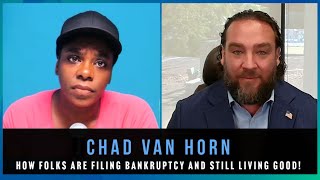
In this YouTube interview, host Latasha "Tasha" Transrina Kebe welcomes consumer‑bankruptcy attorney Chad Van Horn to discuss how individuals can eliminate overwhelming debt. Van Horn explains his firm’s rapid growth—opening offices in Pittsburgh and Indianapolis and filing nearly 200 bankruptcy cases, making it a top national filer. He outlines that Chapter 7 bankruptcy is the most common solution (60‑70% of filings), detailing how debtors can keep their homes, cars, and retirement accounts thanks to homestead and vehicle exemptions, especially in Florida. The conversation debunks common myths about creditor intimidation, student‑loan discharge, and the impact of collections, emphasizing that collections do not automatically lead to wage garnishment or account freezes and that settlements as low as 10% of the debt are possible. Van Horn walks through the Chapter 7 process: a 3‑4 month filing period, a 341 meeting, a 60‑day waiting period, and a discharge, followed by 12‑18 months to rebuild credit. They discuss credit‑card rebuilding after bankruptcy, noting the loss of existing cards but the ability to quickly re‑establish credit. Throughout, Van Horn stresses the emotional relief debt relief can bring, shares a dramatic settlement story, and repeatedly offers free, no‑obligation consultations via vanhorn.ai or vanhornlawgroup.com. The interview ends with light‑hearted banter and a call to action for viewers to contact Van Horn for help becoming debt‑free.
Chapters
Hey, Chad Van Horn, you're back, man. What's going on?
I'm back, Tasha. I got the lighting. I got the mic set up. I got everything set up now. And now we can talk about getting people out of debt finally.
Yes, because I thought you needed some financial help because your equipment wasn't working. Working last week. I was gonna send you a YouTube starter package, man.
Sometimes we need it. No, every, every day you need to be humble just a little bit. I can tell you that was my day for sure.
Okay, well, listen, I want to jump right into it. Business has been really, really good for you guys. Like, you're starting a new, a new law firm.
Yep. So we're opening an office up in Pittsburgh, Pennsylvania, my hometown. I'm so excited to move, move up there, uh, have some of my staff help train my, my Pittsburgh employees. We're hiring now. We just got our office space last month. We filed almost 200 bankruptcy cases, what made us— which made us the top filer in the country. So no longer top filer in Broward, top filer in Florida, we're talking the whole country now. So we're moving to Pittsburgh and we're looking at an office in Indianapolis, Indiana. So we're really expanding. This is really a great time for Van Horn Law Group.
I don't know if you're going to be able to expand the way that we need to because all these leads are coming in. Like, you guys are 200 cases. That's a lot of cases for a law firm.
It's a lot of cases. I remember we used to file 5 to 10 cases a month when I first got started, and I thought that was a lot. And then we got up to, you know, 20, 30, now, now getting to 200. Uh, fortunately, I have an incredible team that's working with the clients. We have more 5-star reviews than we've ever received as well. So we're making sure the quality stands there and we have, we have the quantity. Obviously there's a lot of people struggling with debt, so we want to be available to those people 6 days a week and in different geographic territories now.
Okay. What is the average like? I mean, how many Chapter 7s are you doing? Is that the most popular case that you're filing right now? Or Chapter 7s?
Chapter 7s are the most popular case. As you say, what do you say? We ain't got it right.
We ain't got it. Matter of fact, we just filmed a movie. It's on Tubi right now, streaming live for free, called I Ain't Got It.
Look, so, so when you ain't got it, Chapter 7 is the way to go. That's the one where you're debt-free in about 3 to 4 months and you don't normally don't pay anything back. So that's our number one case that we're filing right now. That, that makes up about 60 to 70% of the cases that we're filing. And of course, 13s will be after that, and then we have a few 11s every month as well.
Are people filing Chapter 7s that own houses and cars, are they going to get to keep their house and their car?
That's the beautiful thing about Chapter 7s, and we're seeing a lot of seniors that are filing Chapter 7 as well, and they get to keep their house, uh, homestead protected in Florida, get to keep their car. We fought hard to get that car exemption increased, and they get to keep their retirement accounts, which is really important, especially if you're of retirement age. So not only are you getting rid of that debt, you're retaining a lot of the things that you worked really hard for so you can enjoy the benefits of all your hard work instead of all that money going back toward interest.
What about— so they can't keep retirement. So 401(k)s included as well too.
401(k)s, IRAs, all of that is included as an exempt asset, meaning the creditors cannot touch it.
Tell me, why do creditors got so many people like scared? Like, it's so crazy. Like, even people when I'm talking to you, they're like, there's no way he can get like student loans discharged. That's not true. Like, it's just so many There's just some things that I'm seeing that are just kind of being talked about on social media that are just not true. It's like I always tell, you know, when I'm doing anything, and I hope that my viewers can really, really get this, especially when they're going to, you know, when you're being introduced to anything, like, ask first before you assume.
Like, yeah, well, this has been ingrained in us for many, many years, and the creditors are organized. Now, individuals going through debt are not organized because you don't know when you're going to be a debtor in bankruptcy or not. Really a fund that's funding this. There's a National Association of Consumer Bankruptcy Attorneys. The American Bankruptcy Institute does a lot to push forward debtors' rights, but it's not organized like a Bank of America, a Chase, you know, these billion-dollar organizations that are really shaping policy at the federal level and shaping the message to debtors. And they don't even realize it's being shaped that way. So that's why it's really important that shows like yours is really getting the real information out there of what can benefit a person individually instead of what the industry might want you to think.
I had a creditor call my husband last week, and it was the funniest thing ever. I think it was for— I can't remember exactly what it was for, but they said if he didn't make a payment, it was going to go to collections. He was like, well, send it to collections. And they were like, what? No, we're not. He said, send it to collections. I'll deal with it from collections. Because even if it gets sent to collections, it's still not on his credit report yet. But it's going to be a third of what is old.
It really is an empowering thing to just have a little bit of knowledge because you get these threats and many people are stressed out, so they don't know what's truth or not. And there's so many scams out there as well where people saying pay these tolls or you're going to go to jail or whatever you're going to get. Yeah, if something goes into collections, that doesn't mean they're going to garnish your wages. That doesn't mean they're going to freeze your bank account. All that means is somebody else is going to call you and you could always make a deal with the collection companies. And like you said, sometimes you get a settlement for as little as 30 to 40%. Our best settlement was 10% with a large private student loan creditor where we settled $200,000 worth of private student loans for $20,000. It was an incredible moment and there were special circumstances in play. But you really can get great settlements, uh, if even if something is in collections. Obviously, once there's a lawsuit filed, once they get a judgment, then they can start seizing things from you. So you got to be really careful with lawsuits and judgments. But still, even at the judgment stage, you can either wipe it out with a bankruptcy or settle it, uh, with a negotiated settlement.
$20,000 on top of $200,000.
Good deals.
That's, that's insane.
Yep. Yep.
That, that is insane.
Life, and it was literally life-changing for the client because I remember this debt, his dad co-signed it for him and it really caused them not to talk. He, when he settled that debt, he called his dad right after and they both were crying. And that's, that just shows how emotional debt can be. I mean, not talking to your son over a debt. and, and for that relationship to be fixed by one settlement is unreal. Um, but that, that's the power. That's the power of, uh, just a little bit of knowledge, a little bit of effort, getting something done.
What's the, uh, what's the process of a Chapter 7? How long does it typically take from when a person calls you to when it's filed to when it's discharged? What is the lifeline of that looking like these days?
It's amazing because people don't believe me when I tell you Chapter 7 is so simple. We've done it. We've done it thousands of times at this point. Basically, 3 to 4 months beginning to end, takes 12 to 18 months to rebuild your credit afterwards. But that whole process that you're involved is really just getting to— getting the documents together, going to one Zoom meeting, which is called a 341 meeting, about 30 days after we file, and then you are done. And then we just have to wait for the clock to run out, and that takes another 60 days. You get your discharge order, case closed. You can reestablish credit the day after your case is closed. So It's one of the quickest federal process processes you can do, and it really is a life-changing one. One of my clients told me today I make it sound like playing Candyland, which is kind of funny, but you know, it really is easy. Once you first make that phone call to me, that's the hardest thing is the first phone call to me because people just want to say, you know, I'm going to work a couple extra hours, you know, I'm going to hit the lottery, I'm going to go to Hard Rock, make some money. None of those usually work out. So get with me. We'll put together a strategy that truly will get you debt-free. There'll be a beginning and an end. And, you know, by, by the end of the year, you'll be debt-free.
I got a family member I'm trying to get to call you. She's in Jacksonville, and I am trying to lay it out. Normally I could sell snow to an Eskimo, but she is not listening to me. I'm talking about upside down on a home mortgage, 2 years behind on homeowners association. They've already liened the property, upside down on a car, $250,000 student loans, and just picked up a second job. And when I say I've laid out Plan A, Plan B, Plan C, Plan D, and that person is under the impression that they can work it off, I said, you almost have $1 million in debt. With interest and you make $70,000 a year, that means you will be working 35, 40 years to pay this off.
You know, you know, sometimes family is the worst at listening to you, especially if you're an expert, right? And even, even my family, sometimes I have to convince my wife of things. But if some random person on Instagram tells her versus, versus a family member, They'll listen to that random person on Instagram. So it's a dangerous thing. Um, but the best thing I would say is consultations with me are free. They're always free. I will meet with anybody if you call and you request to meet with me. I'm happy to hop on a phone call. So if you have a friend, a family member, somebody that you just can't convince, convince them. Don't convince them to file bankruptcy, do debt negotiation. Convince them to have a 10-minute conversation with me for free. We're just gonna get some basic information. I'll lay it out for, for them. And then if they hate it, just let them know. I hate this. I'm gonna go work 3 jobs and pay everything off. That option will always be there. But if I can present you with a better option that's gonna put you, your family, your kids, whoever in a better position moving forward, why not invest the 10 minutes that it takes to do that analysis?
I'm gonna try. I'm telling you every day I'm, I'm working, uh, I'm working. I'm like, This is $1 million of debt worth of— with $70,000 gross pay a year, there's no way 2, 3, 4 jobs are going to pay that.
And, and it's not like living in Jacksonville is super cheap either. It's not South Florida. Jacksonville's expensive as well. Like, everywhere, everywhere is for, um, for what you call modular, like, houses.
They don't even have brick homes. It's like one hurricane, the house is done.
Yeah, that's— then that's the scary part, that we still have those in, in South Florida, because obviously the insurance isn't going to take care of anything if a hurricane comes through. So we're getting into season, uh, and insurance obviously is through the roof right now. So, um, people really just need to look out for themselves, make sure they're looking at their budget, see what they truly can afford. And I— and, you know, I've worked 2 or 3 jobs before. That's a short-term, uh, fix. If you're trying to do that long term you're going to start getting medical bills. You're going to start missing work because you're sick and you're going to shorten your life. So you just got to be really, really careful. And especially if you're in a relationship, that's going to hurt that relationship as well. Or if you want to find a relationship one day, if you're working 2, 3 jobs, it's hard to be in a relationship on top of that.
After my Chapter 7 that I did, I believe in 2011, if I'm not mistaken, I got a secured card with Discover for $200. Um, I put gas on it every month for 3 months. They changed it to an unsecured card in 3 months. And then, um, every 6 months they increased it until it got to about, I want to say, $8,000, $9,000. And I just included it in the bankruptcy that I did with you. But I've had that card that long. Yeah. And I wouldn't give it up because I was just like, they helped, you know, I was able to rebuild my credit and and do a lot with that. And they were reporting to my credit report, like, every month that I made, like, a $10 payment. Like, I would always pay it off though. So if I use $50, I paid $50 and paid it off before the due date. So it rose my credit just tremendously. And then when I built that all the way up until I just recently filed with you, it, you know, of course, it was sad that it had to go, but I know how to get it again.
Yeah, and that's the thing, actually, back in the day, you used to be able to keep a credit card if it had no balance or a low balance on it. You could say, I'm going to reaffirm and keep this out. That, that all changed, unfortunately, because, uh, you're bringing that emotional part back because everybody has that credit card. Like, I remember the credit card that I have, it's the first credit card, like, I got to keep that forever. Exactly. And I have a great history, I pay it off every month, and that, that's my little baby. Uh, so to lose that's tough and that's definitely one of the negative sides of filing bankruptcy. But you hit on the positive. Once you get through it, you can rebuild right away. Yeah, you just got to nurture it, right? Get it, get it, get it back to where it needs to be.
I think I'm going to call Discover next month and be like, give me $200 on this. And, uh, I promise you that's all it takes is $200 and they'll, they'll build it from there and they'll increase. They don't care about your past, and Capital One is the same. Um, I was excited to let the Amexes go because Amex is just crazy with their fees. I'm sorry, Amex, but I'm just— I was happy to let it go.
You might have to get a Discover sponsorship here too, or— I mean, you're saying some nice things about them.
I know, I had the, uh, and with Amex, I had the, like, the heavy card, the Platinum. You know what I'm saying? And I had to turn that one into YouTube. I was like, damn it, but you gotta go. It's a heavy-ass car, heavy-ass baby, let's go. So, um, but I can, I can get them back, and I just haven't— it's funny, I haven't even started, uh, rebuilding yet since my bankruptcy with you because I'm just, I'm just comfortable now. I'm just excited to be, you know, heading towards like debt-free. Like, I wasn't really in debt before, it was just that situation, but like you know, real debt-free in like 2 years or less.
So yeah, and, and many of my clients too, they, they end up saying, I— especially if they already have a home, they have a car, they're like, I'm gonna live, I'm gonna live a cash lifestyle and, and make it easy. And, and that is not a bad way to live. It really isn't, especially if, if you already have your mortgage or if you have your house and you really won't need credit in the foreseeable future. That's not a bad way to live. I think that especially since, you know, most Americans, they worry about their credit score and you may need access to the credit system that you should have at least some basic credit so that you have history if you, if your car dies and you need to go get a loan. But yeah, not relying on it is just a beautiful thing. And then putting some money away in a savings account, that's even better.
I love it. Chad, please tell, you know, the viewers where they can book you for a free consultation, you personally.
If you want to book me personally, we have a link. It's vanhorn.ai to book a link. If you're in Pennsylvania, Western Pennsylvania, if you're in Florida, soon to be Indiana, Indianapolis, but not yet, uh, you can go there. If you're anywhere else, you can just go to the website vanhornlawgroup.com and you can put in a message there, and I'm going to connect you with one of my friends directly, and they'll make sure that you're taken care of.
I love it, Chad. Listen, I can't wait to have you back for our next Q&A. Hopefully you'll be hosting them yourself without me. And just be chilling with a glass of wine with the white nose and helping them to come up with solutions to become debt-free. So thank you. I always love these, these brief interactions that we have to just kind of put out information that could just help free other people. People think it's just too good to be true, but I'm telling you, it's true. Yeah.
And, and I can't wait until we see the success stories that come back on from people that we spoke where they can tell the people, because those are the people that can tell the story like you do of This is real. This is life-changing. And I appreciate everything that you're doing. You're the best, Tasha.
Thank you, Chad. Thank you. So we'll see you for our next Q&A, right?
I can't wait. Everything's going to work. It's going to be incredible.
All right. You showed up looking like a Latina. I said, this man done changed his whole race. Look at you. I was like, he dark-skinned. Where you been, Chad? Where'd you go?
Hey, I was laying out of the pool at the Coral Gables down there. So I think a little bit of that Latino flair Uh, came over my— came over to me.
But, uh, you speaking Spanish? Because you could get away with it. You speaking Spanish? Un poco. I say poquito, poquito. Listen, thank you so much, so much, Chad. Please contact Chad Van Horn. You can also follow him on Van Horn Law Group or CVD. What is your personal, uh, Instagram, Chad?
CVHLaw.
CBHLaw. Okay, personally, you'll see him in a Squid Game uniform as well too. So me and your marketing team are trying to move that photo to the side.
Okay. Yeah, Meta has their own things. When you have that blue checkmark, man, they don't want you to change.
I got you. Thank you so much, Chad. We'll see you next week.
Okay, thanks so much.
Alrighty, bye. Yes.
More from Latasha



Ray J Debt EXPLODES? | Tasha K & Chad Van Horn Talk Financial Secrets They Don’t Tell You!

LATE POST‼️ Winos PLEASE don’t run my team off! I need them for these events!😩😳