Can Electrical Stimulation Rewire the MS Brain? The Science of Neuroplasticity with NeuFit
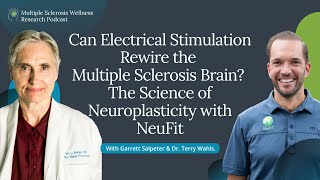
Dr. Terry Wahls interviews Garrett Salpeter, founder of NeuFit, about electrical stimulation and neuroplasticity in MS. They discuss how combining electrical stimulation with task-specific training can restore neurological function, share patient success stories, and explain why professional guidance matters in rehabilitation.
Welcome to another episode of the Multiple Sclerosis Wellness Research Podcast. And so welcome all these walls warriors. Now these interviews again are where we explore the science and strategies beyond achieving optimal health and well being. I'm your host, Dr. Terry Wahls and and I am doing these podcasts, these interviews to help you know there is so much that we can do to restore our health and vitality. I sit down with our leading experts, scientists, researchers, practitioners and bring you the latest insights in functional medicine, nutrition, lifestyle optimization, how we can best take care of ourselves so that we can thrive and into our 70s, 80s, 90s, 100 and beyond. Now, today's interview is being brought to you by nufit, their electrical stimulation device. The newbie, along with the new FIT methodology empowers you with a targeted approach to healing by identifying your specific needs, helping reset your body's natural mechanisms and facilitating breakthroughs on your journey to enhanced health and thriving. I'm thrilled to be joined by Garrett Salpeter, the owner of NewFit and the founder of the new fit method. Garrett used his training engineering in neuroscience to create the new FIT and patented his electrical therapy device, the Newbie. He and his team have trained thousands of physicians, therapists and other professionals in new FIT methodology. And these practitioners have used New FIT and this methodology to help their patients recover faster from injury. So these are the professional athletes that they take care of, reverse chronic pain and restore function loss to neurologic injuries and diseases. He is also used by dozens of professional sports teams and universities as the subject of multiple ongoing trials evaluating the effectiveness of New FIT technology in areas like post operative recovery, muscle hypertrophy, functional recovery, and this is what's really important functional recovery for people with ms, stroke and other neuropathies. Garrett is the host of the New FIT Undercurrent podcast and the best selling book the New Fit Method. Okay, let's dive in. This is going to be a really great interview. You know, I always love our conversations, Garrett. I think it's so important for people to understand the power that the combination of what you've designed in the newbie with the correct exercise task specific training. So let's talk about how using the newbie with this task specific training, how that interacts with the nervous system.
So the idea is that neurological adaptation has a strong specificity component, often called the SED principle specific adaptation to imposed demand s aid. And so if you are attempting to restore function or improve your ability to perform a task, you have to be working at the specific components of that task. So for example, if you're trying to work on walking gait, doing a lot of hand dexterity work isn't necessarily going to translate. At some point, you actually have to use your feet and ankles, your thighs, your hips. You have to use the balance and coordination and movement patterns of that walking gait, for example. So there's the task. Specific nature of rehabilitation and training is very important. And the other piece that we need in order to actually drive adaptation is that we need to have enough stimulation on those specific nerve pathways. And that means that oftentimes it can take tens of thousands or hundreds of thousands of repetitions to drive change, drive neuroplasticity. Neuroplastic adaptations.
Let me stop for a moment. When I went to medical school a few years ago, you know, we were taught that, you know, the brain you got as a child, but we got to be an adult. If there was damage to your brain, your spinal cord, you're just shut out of luck that you couldn't really repair that. All the work of building our brain and spinal cord happened in our youth. And we got to have gray hair like me. If there's any damage, it couldn't recover. And now we have much more awareness that the brain and spinal cord and cranial nerves, by the way, are continually remodeling themselves in response to our environment. And that's that neuroplastic thing you just mentioned, that neuroplasticity. Why don't we take just a moment for you to talk more about the neuroplasticity that occurs in the brain, the spinal cord, and out the motor nerves involved in the nerves that are talking to our feet, that help us pick our ankle, our foot up so we aren't stumbling due to foot drop.
It's a really wonderful topic. And there's so many parts to this. So neuroplasticity, as you described, just at a high level is the ability of the nervous system to change and adapt. And one of my change and adapt in response to experience environmental inputs. And so some of that is just taking in the inputs from the environment around us. So, for example, a child who grows up here in the United States is going to hear a lot of English or perhaps Spanish being spoken, and they're going to understand the intonations and the sounds, inflections of that language. Whereas a child born in China is going to. Their brain is going to mold and adapt so that they speak and hear the intonations of that Mandarin or Cantonese language. So, so a lot of it, just at a high level is Adaptation to inputs to the environment. And like you said, Dr. Wallace, it's the ability to change that's so much greater than what we originally thought. So there's a few parts to this here. One is neuroplasticity by itself is not necessarily positive. The changes can happen in a negative direction, too. So it's not just all this rosy, wonderful thing, because there is also a dark side to it. So we'll talk about that. But overall, the changes in the nervous system are such that it's either structural remodeling, sometimes it's repairing and rebuilding nerve pathways, sometimes it's rebuilding connections or making new connections between nerves, especially in the brain, where each neuron can have a thousand or so connections with other neurons. So a lot of the. The function is really in the network and the connections. So sometimes it's remodeling connections, sometimes it's actually rebuilding or remodeling nerves themselves. And generally, of course, we're attempting to leverage that, harness the power of neuroplasticity to restore function. So it's about creating improvements there. And so that's where it takes a significant number of repetitions in order to help the body understand that, hey, it is worth investing the energy and resources it takes a lot just to keep the lights on, so to speak, just to. Just to do basic survival tasks. So to invest additional energy and resources to rebuild these nervous system pathways, you need a lot of input. So the body gets the point that it's worth investing.
You know, our brain, our nervous system is so expensive to maintain. Anything that we are not using will be reallocated to other parts of our bodies and brain and nervous system that are being used. So if you ever had a cast on, your muscles atrophied very quickly because they weren't being used. Our brain and nervous system will redirect from parts of our brain and nervous system that are not being used very much to parts that are still being used. And so how does the newbie help us out with that?
That gets us back into this notion of specificity. If we want to. If we want to stimulate certain pathways that are related to certain functions that we're looking to improve, we need to get these repetitions, get those stimulation, get those inputs on those specific pathways. And if we're talking about walking, for example, imagine you're sitting here listening to this conversation, and you hear us talking about needing thousands of repetitions of walking, and yet you might be in a wheelchair, and you're thinking, well, I can't take one step. How Am I supposed to take thousands and thousands of steps? And the answer is that you have to build up to that by getting the component parts, which means getting the stimulation on the nervous system pathways that control the component actions of gait, that control knee extension and ankle dorsiflexion, ankle plantar flexion, like you asked Dr. Walls about, if someone had foot drop, for example, and how we would regenerate or how we would restore help to improve that function, restore that function. So, of course, there's multiple things that need to happen. The brain in the motor cortex has to be able to send a signal down. Of course, basal ganglia, cerebellum are going to be involved in that. And then from the brain, it's going down to the spinal cord, and then from the spinal cord out, the peripheral nerves that travel down to the leg control the muscles of the foot, ankle, and lower leg. And what we want to do is stimulate, essentially provide sensory inputs from that area so that one, the brain can find that area more clearly. Because if it hasn't been moving recently, the brain's not getting as much information from that area. So that's the first step. And like you said, Dr. Wahls, if the brain is not getting information from that area, it will actually start to pay less attention to it, start to reallocate some of those resources to other parts of the brain that actually control and communicate with other parts of the body. So part of it is re establishing that connection in the first place, and then it's sending the signals over and over again as if the movement is happening. Even if you listening to this, aren't able to do that movement yet, you can send the signal as if you're doing it. So you start to stimulate those underlying nerve pathways as if you were doing the movement. And so you can start to literally program in that pattern neurologically. I think it's a wonderful metaphor to think of the nervous system like you're programming software in a computer. You start to send that signal over and over again. You build up the underlying nervous system control pathways, and then eventually, as those strengthen, they're able to send enough signal to reach that threshold. Assuming you have enough bandwidth to adapt, start to send that signal, eventually it reaches that threshold where it can create movement.
So what we're describing is very different than the devices that are simply assisting, as opposed to re educating the nervous system. I know there are some devices that people can wear that assist picking up the forefoot to treat foot drop, but what you're describing is, is a re. Education of the nervous system. Can you give us a little more detail about that difference?
That's a great point, Dr. Walts. And I think this really speaks to one of the biggest differences in the paradigm that we're talking about. So you may have, listen this, you may have experienced one of these devices that as Dr. Rawls described, you walk and it triggers your tibialis anterior shin muscle to help lift the foot at the right time during walking gait. And that certainly has value. That can be very helpful and useful. It can improve quality of life, improve ability to walk. There is one limitation, which is that you're not getting as much of a training effect to train your own ability to perform that movement without that device on. So it's a bit of a crutch that you will have to continue to rely on. And if you're okay with that, that's fine. That adds value. What we're talking about here is a different paradigm where neuromuscular re education is the goal. In other words, we are working to provide that input to train your nervous system to be able to more effectively do that movement on your own, even when you're not using the machine. So it's about building that skill, building your own internal ability to control that movement, to initiate and control that movement so that you become less reliant on the external device over time.
Now what, what the error that I see many people in the community make is that I'm going to go look for an electrical therapy device. I will again, there are a variety of devices you can buy. I'll buy it on my own. I'll start putting the electrodes on, and I'm not working with anyone on how to design the exercise and do the education of my nervous system. And so people are pretty quickly disappointed in the level of response that they get from their device that they got over the counter. So what I'd like you to talk about is if you're doing electrical stimulation of the muscles, the importance of the physical therapy, the designing the exercise, designing the task specific stuff that gets. That is part of this training. I don't think the public understands that very well.
That's a great point and a great topic, Dr. Walls. And for you listening to this, the, there's. There's really two components to this discussion. One is the technology itself, the, the type of device that you might be using, the type of current. Like we talk a lot about the difference between alternating current and direct current. I'll come back to that in terms of Dr. Wall's point about the methodology, the overall construction of the program, guidance from a physical therapist or other qualified professional. There's a lot of value in that. Remember, we talked about the importance of specificity, for example, so being sure that you're doing. We also talked about how neuroplasticity can have a dark side, right? And we can adapt in a negative or less desirable direction, too. So we want to make sure that if you're going to spend the time and effort, and quite frankly, the money to do anything rehabilitative, you want to make sure that's directed as effectively as possible. So the specificity of where you put the pads, what movements you do, how high you turn it up, that all matters because one, it's the signal that you send. I really encourage you to think of rehabilitation, think of exercise, think of movement like a drug. Think about it. You need to have the right drug for the right purpose, and you need to have the right dose and the right amount taken at the right frequency. And if you're, if you're doing that, you know, if you're taking the right drug, it can have profoundly positive effects and doing it dosed correctly. But if you do the wrong drug or the wrong dose, it can have, you know, significant adverse effects. Right? So that's part of it. And then there's also, in addition to, you know, getting the right drug is like the equivalent of getting the right signal at the right places and doing the right activities that are going to help you build towards your functional goals. And then there's also the component of dosing, which is how high you're turning up the machine, how often you're doing it. And here, especially with ms, I mean, this is important for everybody, to balance work and effort with fatigue and recovery so that you get the right amount. Because if you do too little, if you're too sedentary, there's no impetus to make a positive change. But if you do too much, that can be just as bad or sometimes even worse. And so a lot of times it's balancing the dose, it's having that guidance and that outside perspective to understand, okay, we want to turn it up to this power level, see how we respond when we do this much work. And then based on that response, we titrate up, titrate down, keep it the same, and adapt that over time. So it's really valuable to have that type of coaching to help understand what to look for. What to look for in terms of how high you're getting up on the machine is a signal for how effectively you're recovering and adapting, looking at all other things like sleep, heart rate variability, looking at your appetite, looking at other things like bowel function, looking at subjectively your levels of energy, all these other things that play into it. So there's a lot of variables that go into it. And if you have Ms. Or some neurodegenerative condition, you likely have the experience of being more, more sensitive to fatigue and overwork and things like that. So striking that balance is even more important for you.
Now for our listeners, I hear many folks saying, you know, Dr. Walls, you have this amazing story, amazing recovery. But like who else has recovered from profound disability? I think it's just you and maybe your doctor screwed up, maybe you didn't really have Ms. You know, I'm still hearing that craziness. So I think it'll be super helpful for the listeners to hear what have you guys seen in the ms, you know, what kind of improvement and like how long might this journey to improved function take?
We've seen some really inspiring stories and examples of success. I'll mention one just published study. We have a case series that was published in 20, 20, 23 or 24, a case series looking at seven Ms. Patients and functional recovery, seeing improvements in spasticity and strength and walking distances and walking speeds and things like that. So, you know, some good published data there. We also had another.
Hang on for the listeners. We're talking published in peer reviewed scientific journals. So I want to make that very clear. Peer reviewed scientific journals followed patients prospectively with these interventions. That's a really big deal. Now back to you.
Yes, thank you for emphasizing that. Dr. Wahls. We had another published in early 2025. This was a randomized control trial with 150 diabetic neuropathy patients, polyneuropathy patients, peripheral neuropathy patients, and so a slightly different population but similar mechanism in terms of there is some degeneration of nervous system tissue of axons and myelin. And we saw using the direct current of the newbie, actually this was cool. It's a little bit of an aside, but this was the first study that we're aware of that compared head to head, the effects of alternating current and direct current in humans. So there's 150 patients, 75 got more traditional alternating current like tens units. And what they got is what most people expected, which is a little bit of reduction in pain. Right. Some symptom management and that's good. There's value there with the direct current of the newbie, the new fit product, neurobioelectric stimulator with that direct current. The other 75 patients, not only did they get as much or more pain relief, but they got improvements in sensation, improved function, ability to perform activities of daily living. They also saw increases in EMG amplitude and nerve conduction velocity, which means there is actual, objectively measured regeneration of axons and nerve and myelin in their peripheral nerves. So there is some. So I start here because as you mentioned, Dr. Walls, it is important and valuable to see peer reviewed scientific articles. So. So there's a couple there. And then in terms of the stories that we've seen, the examples of success, it's so inspiring. In my book and in another interview you and I have done before, I've told the story of a woman named Wendy who had Ms. For nearly 30 years. She heard about us, actually through Dr. Walls, and she flew down from Milwaukee, Wisconsin to visit us in Austin, Texas and had this amazing experience where in the first, she was here with us for an intensive. So she did five days, two treatments a day, and at the end of the first day, she was able to extend her knee. So if she's, you know, she was sitting in a wheelchair and she couldn't for the last few years, she couldn't, you know, engage her quad to straighten her leg, to lift her foot and ankle up. And at the end of the first day, she was able to do that for the first time in a few years. At the end of the second day, she was able to, for the first time again in one or two years, to bend down and put on her own shoes and socks because she had so much spasticity and a lack of control that she couldn't actually bend at the hips and spine to get down that low. And then at the end of the week, she had told us at the beginning of the week how her goal was to be able to walk a few steps holding her husband's hand. Her stretch goal was to be able to walk her son down the aisle at his wedding. And at the end of that five days, she actually took a couple steps with holding her husband's hand. And it was like, we're literally in tears watching this happen in the clinic. And she made so much progress over the first five days that she wouldn't dream of stopping. So she actually brought a device home with her, worked with our team remotely, like you were Talking about earlier, Dr. Walls, setting up a program, working to optimize it. And she did four days, a week of intense work and then a couple other lighter days of more recovery. Oriented work for the next two years and continued to make progress and did reach her stretch goal of walking her son down the aisle at his wedding. And then a couple more years later.
Oh, hang on, I want to point out, at the wedding. So it's beautiful, beautiful video. And there's a video of her doing the mother son dance. Now, of course, you wouldn't have been able to dance alone, but oh my goodness, it brought tears to my eyes.
Yeah, yeah. So you're not the only one who's had really just a transformational recovery experience. So another couple of years later, she's hiking, she's dancing solo. Her husband actually sent me a video recently of her dancing at a rock concert. And he said, thank you for giving me my wife back. It was this just really amazing story. She also, along the way, regained her driver's license, which she had lost. She went back to start volunteering at the school where she used to teach, but had to quit because of her disability. So a really inspiring story. And there's several others. There's a gentleman that we work with here locally in Austin who's actually an announcer for football, for soccer, for Telemundo. So. So he's got a great voice and great personality and he was only able to walk because of Ms. By the time he came in to see us, he was only able to walk for about 10 to 20 steps. So he was wheelchair bound. He had to get pushed around into the soccer stadium and his stretch goal was to be able to walk from his car to the press box and walk around within the soccer stadium. And he was able to do that. He went up to being able to walk for 15 to 20 minutes and just made, made huge progress. This gentleman, Jorge. And you know, there's another woman who's, whose story I love, who was a, a high level concert pianist playing the piano. And she was actually going in her early 20s to Juilliard, the, you know, famous music school, and had to withdraw because she started to notice some deficits in function. Got diagnosed with Ms. And lost the dexterity that she needed to play the piano at a high level. And fast forward in her late 30s, 15 to 16, 17 years later, she came to one of our Ms. Boot camps and started working with the newbie on her hand. Dexterity started seeing some improvements and about six weeks later, she sent us a video of her with the electric glove on. So the direct current is actually connected to these gloves that she's wearing. So she was doing her hand dexterity exercises. And then with the gloves on she was playing her scales on the piano and it was just this amazingly beautiful, amazingly beautiful sound and experience.
So for the listeners, it is possible we need the idea, the inspiration, the stretch goal, and then I think the electrical therapy device is incredibly powerful with the team that can help you design your training program. Now, I know fatigue is another big problem. The longer people have ms, the more likely it is that fatigue becomes disabling. And actually the leading reason that people leave the workforce are fatigue, depression, anxiety, brain fog, those four things. And does this device have anything to offer for people who don't have any fixed disability yet other than the worsening fatigue and or cognitive issues?
So, yes, it definitely does. I would, if it's okay with you, Dr. Walls, like to just go back and make one more comment on some of these stories. So there, there often is this pattern, like with Wendy, the woman who came down from Wisconsin. You know, I mentioned that she made a lot of progress in the first intensive period of several days, but then she continued on, you know, for a couple years and then continued beyond that to continue to make progress. So it often is the case that people come to our intensives. We have this Ms. Boot camp that's a long weekend where you come work with us for two sessions a day for three days. And we have other activities and learnings and serve wallets, compliant meals. And some people make progress and start to see surprisingly significant improvements. Spasticity reduced, or they sleep better, or they can do new movements in the span of three days. And it's like, gosh, how did someone make progress that quickly? So there's sort of two stages in this journey. The first is this quick initial stage where, like, we talked a little bit about the dark side of neuroplasticity, about use it or lose it. So our brains and nervous system overall, their first priority is, is to protect us, to ensure survival. And so a lot of what our brains do is actually limit us, right? Our brain doesn't want us to do too much and expend too much energy in case there's a famine tomorrow or it doesn't want us to stretch too far and move too fast in case we get injured, because those are all threats literally to our survival. So a lot of what our brains do is hold us back. It's sort of like, you know, there's these studies that say that the number one fear, even greater than the fear of death is the fear of public speaking. Why is that? It's because. Because our brains hold us back from not wanting to get embarrassed and Lose our sense of belonging and get kicked out of our community and have to fend for ourselves, because that could be a threat to survival. So when someone makes these quick improvements, it often is tapping into function that they already had. It was just their brains were blocking them from expressing it. So it's this software reprogramming or this re education effect to show the brain that, hey, yes, it is actually safe to allow this function, allow you to tap into this reservoir of function that was already there. It was just dormant, not able to be expressed. And then once you get back to that true baseline, then from there it's a matter of applying all these principles of neuroplasticity to help remodel the nervous system, rebuild nervous system pathways, and improve function over there. So there can be sort of a quick blip of improvement and then it's sort of a, a slow and steady thinking, like an athlete who's trying to make progress over a full Olympic cycle or really work on your career. It's sort of that longer, slower growth, more sustainable rate of growth too. So there's sort of two stages in that. I just want to clarify that because, you know, not necessarily everyone has huge progress right away, but there often is this staged approach, you know, and the.
People who I've worked with, who've been the most successful, can tap into their athletic experience sometime in their life. And it might be reaching all the way back to when they were in elementary school or high school or perhaps a college athlete, someone who worked with a coach and worked with a team. Really, they have a, an edge that helps them be a bit more successful. We may have to help the person who doesn't have an athletic experience to begin to think about this in a more athletic way and to see themselves as part of a team, working closely with a coach in developing this training program.
And I promise I'll get back to your question. Dr. Walls, on fatigue and brain fog. I believe if you have a body, you're an athlete, and think about what are the biggest lessons that people learn through athletic experience. Well, one of them is delayed gratification. You have to train now, sacrifice now, go to bed on time, eat the right meals, work hard, push yourself in training, go through that discomfort in order to win a competition, win a medal, or just see your times improve or see your ability improve over time. There's, there's this strong component of delayed gratification, which of course serves us many times in life, and then learning to overcome adversity. You don't always win. You don't always get a call from the referees. Things don't always happen in your favor or the way that you wish and you have to yet continue on. So there's all these wonderful lessons that we can apply to recovering from something like Ms. So, definitely, I encourage everyone to identify as an athlete, adopt that mindset of understanding that, you know, what I do today, the effort I put in both to my training, my rehabilitation, and to my recovery, that affects me being a portion of a percent better tomorrow. And if I do that the next day and the next day, eventually that accumulates to something really wonderful over time. So a great job.
When I first started my journey using an electrical therapy device, I fortunately had started working with a physical therapist who was primarily treating athletes, and he used electrical stimulation for his athletes. And he knew that I'd been a former athlete in martial arts. And I'm sure that's why I was so successful, because I really viewed this as athletic training. I had already had some experience with electrical stimulation in my athletic life, and so it is super, super helpful to be thinking about this in a more athletic way. Even if you've never been an athlete, have the newbie team can help you begin to visualize, as athletes do, training for that big goal in your life.
Absolutely. That's beautifully said, and I hope it's all right. Dr. Walls, if I turn the table on you, I'd like to ask you a question. I know, I know, role reversal here, but in your book, you talk about in the early 2000s, your experience using electrical stimulation for hours and hours and hours a day and how that was part of your recovery. So that was, of course, before we had the newbie, before you and I met in 2017 or 18, and you started using it. So can you compare your experience?
Oh, yeah.
Of electrical stimulation.
So, you know, I was using Russian protocol and all of my devices, and I tried a variety of devices. They were alternating current. And my research team was really nervous because they knew how much time I was doing. They said, terry, there's no data on the safety. They were very concerned that I was harming myself. I would intermittently try to reduce the amount of time, but I could tell cognitively I did not like that. It was super interesting. At work, I would do isometrics while I was getting my current, so I was gradually increasing the amount of time, the amount of isometrics. And my physical therapist, I never told him how much current I was doing because I was afraid he'd take my device away. And I'm sure he would have, but he was like, wow, you are making just amazing progress. So intermittently I would try to reduce my current time, and I could tell my mental clarity was not as good, my mood was not as good. So I'd just go back to the amount of time and, you know, fast forward. You and I met, we. I had some experience with the newbie, the direct current. And it's different subjectively from the alternating current. It's certainly more comfortable. And so I want people to know I don't have any foot drop. I can bike for hours, I can jog, but I still do electrical stimulation, probably an hour or an hour or two a day as part of my strength training program. And if I miss, if I don't have my electrical current, I can tell subjectively that my mood and my mental clarity is not quite as sharp. Now, as I read the research about what's happening when you do electrical stimulation, some of the stuff that happens is we get more nerve growth factors in the brain, we get more BDNF in the brain, and we get more nerve growth factors locally in our muscles. My theory is that my brain really likes having plenty of nerve growth factors around and that I have enough awareness that I can tell the difference between days I have current and days I don't have current. And so Garrett and I admittedly joke that maybe I should work towards a goal of crafting my more time on strength training and bodybuilding and try to be a Miss Universe Iowa in the old fart category. And that could be sort of a fun next athletic endeavor.
It'll be the Walls Protocol Plus. Yeah, a new book.
Yeah.
So I appreciate you sharing that, and I think that's a good segue. Finally getting back to your prior question on fatigue, too. So when you think about brain fog, this neural or cognitive energy also, there's of course, energy and ATP, but there's also the perception that we have of mental clarity and mental energy, which comes from neurotransmitters and brain activity. And a lot of that is influenced by, enhanced by physical exercise and physical movement. Using the body has a strong, profound effect on the brain. Credible neuroscientists have said that the main reason we have such a complex brain is literally to control our bodily movement and the complexity of different movements. We can move, we can throw, we can run, we can crawl, we can climb, we can do all these different movements that other animals can do some of, but none quite with the diversity of movement capabilities that we have, and of course, the complexity of social interactions as well. But the amount of brain activity that happens when we move our bodies, especially when we move through greater ranges of motion or at greater speeds, or with different movement variety and diversity, that creates a lot of sensory input up into the brain to increase brain activity. Which triggers, as you said, Dr. Walls, all of these release of nerve growth factors of endothelial, vascular endothelial growth factors which help with blood supply and all these different things. And so there's the effects on cognition short term, and we believe also long term preserving cognitive function over time, over years, over decades. And then there's also this notion of yes, that activity does activate and improve function brain, but you can also take that too far and you know, over overdo it and get fatigue. Right. So it is, it's always about balancing. You don't want to do too little, but you don't want to do too much. And so it's very important that we have the ability to recharge. And that's where this discussion of the sympathetic and parasympathetic sides of the nervous system come in. So you likely know what those terms mean. But just to simplify it, it's the fight or flight and the rest and digest side. The fight or flight side is when we mobilize energy. We have adrenaline or cortisol that give us energy to meet a challenge. And then the rest and digest is when we come back down from that challenge. When we digest our food, we break down that food and use amino acids from proteins, for example, to rebuild the structures of our body and use fats and carbohydrates to replenish our energy stores. And so it's vitally important that we spend enough time in that parasympathetic state. And you've likely heard of the vagus nerve, not like Las Vegas, but V A G U S the vagus nerve, which is the primary nerve through which the parasympathetic nervous system acts on the body and it slows down the heart rate and it enhances and controls and stimulates digestion and waste elimination and also reproductive function and these longer term growth and repair projects. It also has a direct negative feedback impact on inflammation in the body. So when the vagus nerve is active, it actually quells inflammation, which if someone has an autoimmune condition, you can imagine that getting more parasympathetic activation to calm down the immune system can be vitally important. And so if you're dealing with Ms. Related fatigue, it's vitally important that you have some sort of practice that can help you get reliably and repeatedly into that parasympathetic rest and digest or feed and breed state that side of your nervous system. And so doing things like meditation and diaphragmatic breathing are incredibly valuable. I highly encourage you to explore those and to find something that works and do it more frequently. And then we also have a protocol that we call the Master Reset, which, which our version of sometimes we call it the quote unquote electric meditation, where you actually put pads on the base of your skull, back of the neck, so vagus nerve area all the way down to the bottoms of the feet, and you get this direct current field flowing through the whole body. So you get local and global effects. The net result of that is an increase in parasympathetic activation. So we measured. You've likely heard of heart rate variability. If not, basically has to do with how the heart actually speeds up and slows down a little bit. Speed with the breath speeds up. If things are working well in your nervous system, your heart should actually speed up a little bit as you breathe in, should slow down a little bit as you breathe out. And that essentially tells you how much bandwidth you have to respond to subtle changes in your internal environment. So if you're just so overwhelmed with everything going on in the world, you don't have band bandwidth to respond to some of those subtle changes, but if you can handle everything else well enough, then you do have that bandwidth to respond to these subtle changes. So I think that's a good way to think about it. And we see in some studies that we've done, and this again is something that we intend to publish in the next year or two and subsequent scientifically peer reviewed journals, but we've seen that if you do diaphragmatic breathing, heart rate variability will increase. And that's a proxy for parasympathetic nervous system activity. And if you do it with the Master Reset, oftentimes we see that increase anywhere from two to five times more significant. So the breathing that you can do on your own at zero cost is wonderful. And then you can add something like this and it will just amplify that benefit too. So it's an opportunity to recharge your batteries at night before sleep, or during the day. If you're starting to feel fatigued after a bout of physical or mental work, this can be a good way to recharge the batteries for the next phase.
Of the day, you know, and again, repair happens when we're in the parasympathetic state, because our cells, when we're in the sympathetic state in that fight or flight, or you're feeling stressed because of turmoil in your personal life, your financial life, your work life, the political life. There are all sorts of ways that we can feel stressed and upset about the world and that interferes with your ability to repair. Finding time to do four, seven, eight breath work, you know, inhale to the count of four, hold to the count of seven, exhale to the count of eight. Diaphragmatic breathing, breathing where you feel your hands on your belly and your hands go out as you inhale. So you're inhaling through your diaphragm. That will be helpful. And then the master reset can be very helpful. But the master reset in my simplistic thinking only works with direct current, I believe.
So you know, I mentioned we've done, we did this head to head study with peripheral neuropathy patients where we were actually comparing very objectively, looking very closely at the effects there. We haven't done such a rigorous study that I can point to, but anecdotally, it sure seems to be a lot more powerful with the direct current.
Yeah, it seemed to make sense. That's going to be much more vigorous there. Now we've talked a bit about the Ms. Boot camps. I know Wendy came, I believe, early or before they were officially set up. Now you have more structured boot camps. Tell the listeners who may be thinking like, well, this sounds intriguing, maybe they'd like to check out the boot camp experience. How would they do that?
That's a great question. Thank you, Dr. Walls. And the boot camp that we've put together now was inspired in part by that experience with Wendy where she flew in from out of state and did this intensive bout of treatments. And so now we do that approximately every quarter. We're starting to do it more frequently too, in different locations. So we have one coming up, for example, in June in Rochester, Minnesota, in the shadows of the Mayo Clinic at a physical therapy clinic that we've worked with there, with whom we're actually doing another study in combination with them and Mayo on chronic pain. So that'll be cool. That's a little bit of an aside there. But if you're listening to this and thinking it would be interesting to try out, there's opportunities now that there's hundreds and hundreds of clinics around North America that have the Nubian are certified in the new FIT method. There's different places you can try it out. And this boot camp experience is often a great way to get started or a great way to bolster Your experience because you can come for a long weekend, Friday, Saturday and Sunday, do two treatments per day with a credentialed physical therapist. And there's also other individuals with Ms. Present. So there's really cool opportunities. Like I, every time they're in Austin, go and have lunch with the attendees and we have these wonderful conversations and people share experiences. And other days at lunch we have different learning experience. You know, one of the physical things therapist, for example, might do teaching on a certain topic like we just talked about the autonomic nervous system, this sympathetic and parasympathetic. So there's different teachings on certain specific relevant topics, plus these sessions. And the sessions give us an opportunity, one, to begin to make some early progress and two, to get a sense of how you respond so that we can tailor a customized program for you to help this process of making sustainable long term progress. Whether you work with us remotely, whether you work with a local physical therapist or other professional, whatever you might be doing, it's also a great opportunity for you and for us to get that sense of how you respond and start to gauge what's that optimal dose for you, what's too little, what's too much, what's just right. So there's really, as I mentioned earlier, we've had at this point dozens and dozens of people who have had really tangible, meaningful progress even in that weekend too. So it's been inspiring. Oftentimes, if it's been, if you're in that situation where it's been months or years and you really haven't been able to make much progress, I mean, first of all, it does take some work just to maintain. But aside from that, to make progress takes even more powerful interventions oftentimes. And so it's been really inspiring to see people begin to catch glimpses of progress just in that first weekend. And in terms of the boot camp, I'll just mention, you know, from the time we're having this conversation, the two coming up, June 13th, 14th and 15th in Rochester, Minnesota, and then October 24th, 25th and 26th at our newfound home office in Austin, Texas.
So what kind of. So people come to the boot camp and then they have the option then like, okay, I'm going to continue training. How do they do that?
There's a few ways to do it. One is, you know, if you are listening to this, we can share our website link and you can look up our directory of certified practitioners. If you find someone near you, you know, going and working with them is a great choice. And we've now, you know, heard of and know about literally thousands of Ms. Patients who have worked with their local nufit certified provider. And we've heard, heard, you know, dozens or hundreds of, you know, amazing results and stories coming out of that. And then some people decide, either because there isn't someone who's convenient for them or because they know they want to do some work every day and it's more time or cost efficient to have a device at home. There's an opportunity to rent or buy a device from, you know, from us at New Fit and work with one of our physical therapists to go through that process that we've already talked about of creating a custom program, finding out what is the right amount, the right dose, you know, the right. The right. The right. Like you made this analogy of the movement and the pad placement sort of being like the drug and then the amount that you do being like the dose, you know, finding that right prescription, so to speak, for you individually. And that's something that we can continue to tailor, you know, every. Every month, every quarter, as things adapt to.
Yeah, yeah. I really want to stress that, yes, you can get a variety of electrical therapy devices. This is the device that matches the nervous system because it has direct current. You need to pair the device with the expertise to evaluate what's working well for you, what's not working so well, what are the task specific trainings that will need to be utilized to get your neuroplastic changes to be happening in the correct way so your balance can improve, your strength can improve, and I predict your mood and you'll likely experience favorable changes in mood and exercise in your mood and mental clarity. And if you have insulin resistance, you may discover that as you have more muscles and more exercise that your insulin levels come down and your blood sugar metabolism is improving.
Yeah, that's a great point there. And that's one that if you are wheelchair bound or have a more significant level of disability, you hear about all these wonderful benefits of exercise and then you think, well, shoot, how do I exercise? Being able to use technology like the newbie can help you get as much muscular work as if you were lifting weights or doing resistance training, but in certainly a safer, more accessible way and start to get a lot of those benefits, all of those benefits on cognition, on metabolic health, you can get a boost in your metabolic rate, your insulin sensitivity, as Dr. Walls mentioned. So it's a good, safe, accessible way to start to capture the multitude of benefits of exercise.
There is again, for the listeners, there is a slowly growing Body of research using electrically driven exercise for people who are wheelchair bound or who are limited to walking with a walker. So they call it the much more severely disabled folks expanded disability score of 6.5 to 7 to 8. So severely disabled who are getting electrically driven exercise and these individuals are having improvements in quality of life, improvements in their metabolic, that is their blood glucose and their cholesterol management. And I've been talking about that since 2009, that this is hugely beneficial. And I know the folks who are paralyzed have also linked into the use of electrically driven exercise to reduce the harms of inactivity. So again, for the listeners, if you are like, well, it's too late, I'm wheelchair bound, I need a cane, I need a walker. There is a growing body of evidence that electrically driven exercise does fabulously good things for you. So I encourage you to look for a practitioner who can help you use electrical therapy to begin exercising. So electrically driven exercise. So what do you wish that the listeners should know that we haven't already covered? Garrett.
I think the one thing that we've talked about peripherally, perhaps indirectly, is like for example, we talked about heart rate variability and how that's a proxy for the nervous system. I would highly encourage people to play detective to see what measurables, what measurements we can get, whether it be fun, functional in terms of your ability to do certain activities, whether it be something like a whoop strap or an aura ring, something that tracks sleep. I encourage people to start to get data that they can use for feedback. So if you're able to track your sleep or track your activity, then you can see how your lifestyle day to day, in real time is affecting you. And getting that check in every day or every week can be far more valuable than getting an appointment with your neurologist to check up once a year, because there's this difference between leading indicators and lagging indicators. You know, if you wait a full year and you've gone in the wrong direction, by the time you get that bad news, it's too late to do anything. But if you actually see data points along the way, you can make adjustments so that you have a much better, you know, if you see every week you have 52 opportunities to improve so that you're much more likely to have a more positive result that at that annual checkup with your neurologist, for example. So being able to do things to track more regularly I think is wonderful. And you know, I already encourage you to adopt that mindset of identifying as an athlete and that's I think that that's one I just want to shout from the rooftops. And then there's another. We're going to go back and forth here. It's like a multiple personality thing. We also want to play detective along the way.
Yeah, you know, I love that. Think like an athlete you're training, have a stretch goal. I love it when people tell me I want to walk my son or daughter down the aisle at their wedding. Like, that's really a big deal. Sometimes it's like I want to be able to play with my children again on the floor. I want to play with my grandchildren on the floor. You know, I, I'm a grandmother now. And so I had been really focused.
On a rolling something that tracks sleep. You know, I encourage people to start to get data that they'll be training.
Now I'm really much more focused again on strength training because I'm like, well, he's, you know, £25. I gotta be sure that I can lift more than him. So, you know, I'm walking around carrying 60 pounds because I want to stay ahead of how strong I need to be to carry my grandson. Have stretch goals that speak to your heart because then you're going to do them. If it's a stretch goal that speaks to Garrett's heart but not mine, that's like, okay, I'm too busy. I'm not going to get it done. But if it speaks to your heart, then I think you will be very, very successful. One more time, how do people find you and how would they find a new fit practitioner that's near them?
The two best places to interact with us. One is the website www.new.fit. that's neu fit. And there's a special landing page with specific information for you listening to this new fit walls, of course, Wahls, everyone knows that. And then on Instagram and Facebook, we're most active on those platforms. Our handle is newfitrfp for rehab fitness and performance Performance. And I'm also have a personal Instagram page. My first name, last name Garrett Salpeter. So I would love to DM interact with you on there as well.
Okay, well, this has been super, super fun, super exciting. I love my newbie. It's definitely a part of my regular routine. And we'll see. Maybe I, maybe I will, you know, continue to make progress on my muscle building and who knows, maybe I will try to be Miss Universe Iowa. That would be pretty fun.
You know, that's your, that's your stretch goal. That speaks to your heart. Now. That's good.
You know, when I was running marathons, I was like, I wanted to be the white haired grandmother passing the young whippersnappers. Unfortunately, that did not come to pass. But this could be another really fun goal.
Yes. Happy to support you along the way, Dr. Walls.
Okay, one more time. How do people find you?
Www.new.fit walls.
Okay, this is wonderful. Thank you so much, Garrett.
Thank you, Dr. Wahls, and thank you for tuning in.
Okay, that brings us to the end of today's conversation. I want to thank Garrett for his wonderful insights and expertise. Now, if you want to learn more about the newbie, the new FIT methodology, you'll find links to these resources and articles in the show notes. And if you're looking to ramp up your rehabilitation and even just your everyday routine, the new FIT may be the tool that really helps you reach the next phase of your recovery. Again, we've had athletes, we've had patients have remarkable success, even people with profound disabilities. So if you found today's conversation helpful, please share it with someone who might benefit. And don't forget to subscribe so you never miss an episode. Thanks so much for listening and look forward to seeing you next time.