Amina Altai Interview: Share Tips and Strategies to Help You Unlock Your Full Revenue Potential
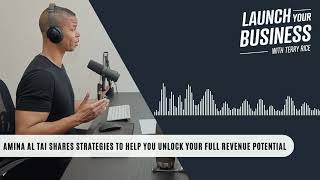
Terry Rice interviews holistic leadership coach Amina Altai on mindset, money beliefs, and sales. Altai shares strategies for pricing conversations and overcoming limiting beliefs that hold entrepreneurs back from their full revenue potential.
I love to talk about money because it is about mindset on both sides. So if you're in a sales conversation, it's about your money mindset and it's also about the person that you are selling their money mindset. So for us, we need to believe wholeheartedly in our value and our transformation that we're bringing to the table. So if there's even a glimmer of a doubt for you about the transformation that you're giving and if you can really serve and support these people, then we need to really look at that. So examining, okay, what are my limiting beliefs about my value and the value that I can contribute to these people? Am I fully showing up in this? Are there ways that I feel like I'm not showing up fully for it? Really digging deep there to understand maybe the story that we're in, but really owning the worthiness and the value.
If you're stuck in any aspect of your business, chances are it has something to do with your mindset. And that's why today we're joined by Aminah Altai, an expert on leadership mindset and business coaching. This is the Launch your business podcast because we know starting a business is challenging, but it doesn't have to be confusing. Each week we'll give you the tactical advice and the necessary tools to scale your business without feeling burnt out. I'm Terry Rice, business development consultant and staff writer here at Entrepreneur Magazine. Let's dive in. I don't think that most people understand the critical role mindset plays in regards to entrepreneurship. And I'm saying it's because people often come to me for help on one thing or another. And when I start talking about mindset, they get impatient. It sounds too woo woo or they just want the nuts and bolts. But here's the thing. To be a success in business or really anything in life, you just need to apply three things. The right actions, the right tools, and the right mindset. But without the right actions, the tools are useless. Without the right tools, your actions aren't as efficient. And without the right mindset, you won't know what actions to take or the resilience to master using the related tools. Here's a quick example. Let's say you need help growing your email list. One action would be to create email content that provides value to your audience. One tool you can use to deploy your emails is convertkit. But if you have a limiting belief that makes you doubt your ability to create good content, or a fixed mindset that tricks you into believing you can't learn a new program, these actions and tools are useless. Your mindset also plays a big role in how much you charge for your services and even how much you think you should make per year. Which is why addressing your mindset is so critical to success. And that's why today we're joined by Amina Altai. She's an expert on leadership mindset and business coaching. And by the way, I know Amina personally. She is one of the most prepared and authentic people that I've ever come across. Today she'll talk about how you can develop a money mindset that allows you to charge your true value and better navigate sales calls. Increasing your endurance to push through extended challenges, removing upper limits that decrease your impact, and identifying as well as capitalizing on your zone of genius. Let's hop into it right now.
Amina, thanks so much for being here today.
Thank you for having me, Terry. It's great to be with you always.
Awesome. Awesome. So for those who don't know who you are, first of all, you are an entrepreneur expert. So I'm sure a lot of our audience does know who you are. But for those who don't, do you mind us introducing yourself?
Yeah, absolutely.
So I am Amina Altai. I call myself a holistic leadership and mindset coach. And I say holistic because I take a mind, body, and career approach to coaching. So looking at what's happening in our mindse, looking at the messages our bodies are sending us because we are one system, and then also looking at the.
Strategies and tactics we use in our work that set us up for success.
Or not so much. And I have gotten to coach the most amazing humans, from Olympic gold medalists.
To Fortune 500 leaders to brand new.
Founders and everybody in between. And it's the most fun work to get to do.
Awesome. I have a lot of questions for you, but I want to start with this one, which is more out of curiosity, but in your opinion, what's the difference between having a fixed mindset and just being kind of lazy?
That's such a great question. That's such a great question. Well, I think laziness, there's resistance there, right?
So it's like, well, why are we going? Why are we defaulting to laziness? Because there's something that we don't want to do. There's something that we don't want to look at.
It's the same with procrastination. Procrastination is a mindset challenge.
There's something in there that's intersecting our ability to get to the thing that.
We want to do.
Laziness and procrastination, I think kind of go hand in hand a little bit. And I think that they're absolutely related. There's potentially an underlying belief that we don't have the ability to solve that thing or move through that thing in.
The way that we want to. So we procrastinate or we put things.
Off or we default into laziness because there's an underlying belief of maybe that.
Thing can't happen for us.
Got it, Got it. So they're separate but related based on what you're saying?
Yeah, no one's ever asked me that question before. I love it.
Cool. Cool. Well, hopefully the other questions are good too. Just in your experience, what mindset skills are needed for someone to thrive in the new normal? Whether it be changing jobs, pursuing entrepreneurship, like, what do you think is essential to them being successful?
I think what is really important for.
Us in the next normal is endurance.
So, so many of us talk about.
Resilience, and resilience is about, like, bouncing.
Up and bouncing forward.
Endurance is how do we keep the.
Pace for the long haul, because we don't know how long we're going to have to keep this pace. Right?
And so for us to really rise to the top, for us to get ahead, we need endurance. So endurance, I have a five step process around it where I talk about managing our thought load, understanding the context that we're in, pacing and replenishing, having the right cheering squad. Like, there's all of these aspects that help us cultivate endurance. But I would say of the five pieces, the pacing and replenishing is the biggest part because we all need to take a beat and pause and refuel.
So that we can be filled as.
We pour and give to the world as well.
Your point about endurance is meaningful because when schools first shut down back in, I think it was like March 17th of 2020, we were told they would be closed till April 20th. And my wife and I were like, this is insane. You know, what are we gonna do? How are we gonna live, you know, like this for a month? And they just kept on going and going and going and going.
So, yeah, you can lean into it.
For that first month. But to your point, if you don't have that endurance to say, like, we're still doing this and I don't know when it's gonna end, you're in trouble. So that's, that's definitely necessary. You said something else about women, unfortunately, leaving the workforce. And just today, one of my former colleagues from Adobe messaged me saying, terri, do you know of any jobs, you know, in this kind of area? She works at a very large company and she's like, they're not being flexible enough with my work. My new work schedule based on, you know, being, being home for a while. And it's, it's annoying that people have to go through that to prove, oh, you got to be in the office because I got to see you. It's like people get used to having that work life balance, however you want to phrase it. And to take that alone away just for optics, you know, like, is ridiculous. So that's why I think a lot of people, to your point, are going to pursue entrepreneurship, because they're like, I'm an expert, you know, I know how to do this stuff. But what I found is, because that's what I do, I help knowledge based entrepreneurs grow their brand and revenue. What I found is often you're an internal expert, but when it comes to growing your business, that's where you have troubles, particularly when it comes to pricing. So imagine you're consulting my friend and she has her first client on the phone and she's hesitant to talk about pricing or she's getting pushback. What advice would you give entrepreneurs in those conversations? To leverage the correct mindset, to just bid their true value and get what they deserve?
Yeah. So you know me and you know I love to talk about money because it is about mindset on both sides. So if you're in a sales conversation, it's about your money mindset and it's also about the person that you are selling their money mindset. So for us, we need to believe wholeheartedly in our value and our transformation that we're bringing to the table. So if there's even a glimmer of a doubt for you about the transformation that you're giving, and if you can really serve and support these people, then we need to really look at that. So examining, okay, what are my limiting beliefs about my value and the value that I can contribute to these people, Am I fully showing up in this? Are there ways that I feel like I'm not showing up fully for it? Really digging deep there to understand maybe the story that we're in, but really owning the worthiness and the value. And for a lot of us, imposter syndrome comes up a lot. I don't know if you saw that Harvard Business Review article that was like, we need to stop calling it imposter syndrome because it's basically all these Systems that were designed for certain people to thrive and others to not. So some of us question our worthiness and our value more than others. So really own the worthiness and the value by looking at any limiting beliefs behind it. And then when you're with that person and you're having a sales conversation, it's an opportunity for you to understand where their limiting beliefs are around their money. Because them not putting the money down is about what they're willing to invest for themselves and for their own growth. And if they feel like they have permission to do that. So you need to meet yourself there before you can meet your client there. So you need to do your own limiting beliefs work, but you can coach them through their fears, uncertainties and doubts. You can say as you think about investing in this price that I just shared with you, what fear has come up for you? What uncertainties do you have about my program? Are there any doubts? What do you want to get out of this? And let's talk through if you're going to be able to get it. You know, let me show you what I'm able to actually give you and it becomes a really, really insightful conversation. I find that the coaching actually starts in the sales conversation.
So you brought up a really interesting.
Point where you have to address their limiting belief, not yours. And I was listening to this guy, Darren Hardy, he has this daily email that I check out and he was saying, imagine like someone tells you, like there's this cave full of gold coins, like this piled up of gold coins everywhere. And they say, hey, you can either.
Stuff your pockets full of them or.
You can go get a wheelbarrow too. He's like, that person thinks to themselves.
Well, how much is the wheelbarrow?
They have a limiting belief or they're worried about like spending 30 bucks in a wheelbarrow when there's like piles and piles and piles of gold there. So it's like just, just in that moment, the mindset is revealed. You know, what they, what they cherish and what they don't.
Right. And it also is about commitment to growth too, because I don't know if you felt this way, but I never asked my clients to invest in something that I haven't invested in. So I have made like six figure investments in coaching before just to give you an idea. So I've never asked anyone to do anything that I haven't done. But when people come into the session and they're like, oh, that's not possible. I've seen people make everything happen if they really want something bad enough. And I've been that way myself too. It's like, okay, I really want this coaching program. That money's not in my account now. How am I going to make it happen so I can say yes to this? So it's really about, are we really connected to this service and committed to our own growth? Because when we are, we can really make the money happen. The money's a technicality.
I'm glad to hear you say you.
Invested in yourself because there's far too many consultants, coaches, whatever you want to say, gurus who want someone to invest in them, but they won't invest in themselves. They'll see, like there's a mindset program for 500 bucks. Oh my God. What 500 bucks? It's like if you're confident in yourself and you know that you need support in order to grow as a professional, you should probably pay that money. You know, I paid $20,000 for a 10 second video if it would help me grow my business year over year. So it's good to hear that you know, you, you also understand this.
Okay, we're going to take a quick break here, but when we come back, Aman is going to cover how you can remove limiting beliefs that decrease your impact and how to capitalize on your zone of genius. Just get Started if you've ever looked for tips on launching a business, just get started seems to come up a lot. And while that's vaguely motivational, it does not provide any real direction. Because the next logical question for anyone would be, well, how do I get started? What specifically should I do? Well, if you're looking to quickly start a business without the confusion, risk and pressure of doing something entirely new, I've got a solution for you. It's called the Solopreneur's Fast Track, a step by step process on how to start a business using the skills you already have and actually enjoy using. So let's say your favorite part of a previous job was email marketing. You'll learn how to start a business offering other companies advice on how they can improve their email marketing. Or maybe you are really good at integrating complicated tech tools. You can help other organizations do the same thing without the need to bring on a full time hire. So the main point here is that everything you need to start a business is already within you. You don't need a cool website or fancy tools. And by completing the course, you'll also discover a simpler approach for attracting clients without using complicated funnels or cheesy sales tactics. You can Finish it over a weekend and start making money in as little as 30 days. You'll gain the clarity and confidence you need to start your business. And receive a one page business plan so you can immediately apply what you've learned. Get started today and receive a 20% discount by heading to Terryrice Co. Fast. That's Terryrice Co. Fast. We're back and we're going to keep things rolling with Amina. And like she said before the break, she has invested a lot into her personal development. Now, I'm not asking you to spend $100,000 like she did, but I did ask her for book recommendations for you to consider if you also want to develop a high performance mindset. And here's her response.
You know, it's so funny that you asked me this because I actually had a dream about one of those books last night. Total mindset nerd. So the book that I had a dream about was the Big Leap by Gay Hendricks. And this is one of my all time favorite books. So he talks about zones of genius and he talks about upper lim. So Gay Hendricks is a psychologist and a coach and a lecturer and this body of work is incredible. So he believes that we have four zones that we operate in and everybody has a zone of genius. And I love this so much because he democratizes genius for a lot of us. We think that genius is for the select few, that only certain people have it. But the reality is we each have our own unique form of it and we get to get on the court with it in our lives. Right? And when we think about teams and neurodiversity, we each have different gifts and when we come together, it creates this really cool whole. So. So I love that book so much because it talks about zones of genius, but he also talks about upper limits. And upper limits, as you know, is something that I talk about with the mindset coaching. So an upper limit is a false ceiling that's held in place by a negative belief system. And for a lot of us, that shows up as a ceiling around money. A ceiling around our growth and what we think is possible there. A ceiling around how big we think our businesses can be around titles that we can get. It's a ceiling and we don't know why it's there. And I'll give you an example. One of my clients, we were doing the money mindset work and she was an entrepreneur. She's given me permission to share the.
Story and she was doing really well in her business.
But for the last five years she'd always paid herself $100,000. And I had said to her, I was like, well, you know, your experience has grown. What you're contributing to the world, and the business has grown. You're always giving more. Like, why aren't you paying yourself more? And she's like, no, no, no, I can't. All the extra has to be reinvested. Also, anybody that takes more than $100,000 from their business is greedy. And I was like, ooh, there's a limiting belief. And then we pulled back the layers. It was basically something that she'd learned from her entrepreneurial father. And we shifted into a new paradigm of this is a different day, and you're doing different work, and we value it differently. And what do you want that number to be?
This woman, Dori Clark, who's an author and an educator at Duke, she says, you know, 20% of your time should be spent just growing as a professional, just learning new things. And it's clear that you're at 20% or more. But you produce a lot of great content, too. And again, I'm looking at your Instagram over here, and I saw that you have a Passion and Purpose guide. Can you unpack what that is, what's inside of it?
Yeah. So we were just talking about talented genius with the big leap. And one of my favorite things to do is really help people find their genius and to build their work around it. So the Passion and Purpose worksheet is essentially my framework on that, where we look at your gifts, what you value in this world, the things that you want to impact, and what you need to bring things to life. Because when we look at. Look at it, when we look at our work through that lens, it's really holistic, and we can start to build it in a way that's integrous to us, and in a way that we can do the work for the long haul and not just a season. Because if we look at it in a one dimensional way, it really is work just for a season.
So I want to let you go soon, but I do have one more question. Mindset is like a buzzword these days. People think it's a new thing. Like, oh, did you hear about this thing?
It's like, no, mindset's not new.
Neither is meditation. Neither is yoga, for that matter. But what are some misconceptions that maybe you've heard of in regards to mindset that you can debunk for us?
Ooh, misconceptions. You know, I think one thing that.
I notice a lot when I'm teaching.
These tools is sometimes people think that we're all or nothing. Like we're either entirely growth mindset or we're entirely fixed mindset, or we're lost in a sea of limiting beliefs or we're totally expanded. And and the reality is it's not an all or nothing binary proposition. There are moments in our lives where we might be in limiting beliefs and fixed mindset and there are moments where we're in the more expanded mindset and every new level of becoming requires something different of us. And so sometimes those limiting beliefs, the fixed mindset creeps back in and it's an opportunity to relook at it. And I think also it's interesting, I get this question a lot too of coaches rumbling with this why would coaches want a program like this? And I am always being coached as a coach because every human in the world has blind spots. And if we didn't, we would be like God, Goddess, the universe, right? Everybody has blind spots. And so for each new level for us, if we want to expand to that new place, we need to look at mindset and we need to stay in the work. It's not, you know, just a one and done.
Amana shared a ton of guidance, but here's one thing that stood out to me in particular. Be confident in the value that you're providing. If you're not confident, your prospects won't be either. And this confidence is important. It impacts the opportunities that you'll pursue, how much you'll charge, and how you present yourself. If you need more confidence in regards to your service offering, Check out episode 22 where I walk through how to create your perfect offer. And I'm sure you want to learn more from Amina too. Start by heading to our website aminaltai.com and I'll spell that it's a M I n a a l t a I.com and follow her on social media @aminaltai. Again, that's a M I n a a L T A I. And by the way, she just launched a podcast called I'm gonna change your life. Get it where she serves up bite sized lessons and inspiration on career, entrepreneurship, ethical wealth building and well being with some of the most inspiring teachers and visionaries from around the world. So do check that out as well. Thanks for listening and I'll see you next time. Apply what you've learned on today's show. You'll find the show notes and more resources at TerryRice co. Podcast. Again, that's Terryrice Co Podcast and The best way to support this podcast is by subscribing, telling a friend, and leaving a review. Also, you can get more tips by following me on Instagram terryrice or follow me on LinkedIn. This episode was produced by Josh Wilcox of Brooklyn Podcasting Studio and edited by Dan Lardy. Special thanks to my wife, Dominique, for keeping our kids relatively quiet as I recorded. Thanks again for listening. I'll see you next time.
Sam.
More from Terry







When you want to quit, don’t. #FitnessOver40 #MindsetShift #TiredIsNotAnExcuse #PersonalGrowth




You’re gonna want to give up. Don’t. #mindsetshift #motivationalquotes #motivation #dontgiveup