Amy Porterfield Interview: How To Turn Your Ideas Into Revenue
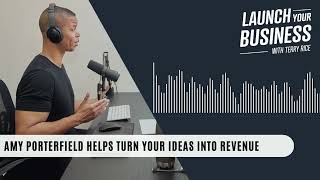
Amy Porterfield talks with Terry Rice about leaving corporate work to start a business. She covers pricing mistakes, how to find your first customers, and why two weeks notice matters more than you think.
The worst day as an entrepreneur is still better than the best day in your 9 to 5 job. Meaning you don't even understand how good it can be when you call the shots, when you're the boss, when you're actually running the show and being as creative as you want to be. So if you feel unhappy in your 9 to 5 job, get really, really honest with yourself and know that there are possibilities and opportunities out there that will blow your mind. But it will absolutely take you putting as much courage as you can to take that leap.
If you're making or made the leap from corporate to entrepreneur and need a step by step guide for how to turn your idea into revenue, stick around. Today we're joined by Amy Porterfield, a podcast host, speaker and educator who's helped millions of people generate revenue on their own terms. And today she'll teach you how to do the same. This is the Launch your business podcast because we know starting a business is challenging, but it doesn't have to be confusing. Each week we'll give you the tactical advice and the necessary tools to scale your business without feeling burnt out. I'm Terry Rice, business development consultant and staff writer here at Entrepreneur Magazine. Let's dive in. Don't quit your day job. I'm sure you've heard this before, just.
Like the 48 million people who decided.
To quit during the Great Resignation. So clearly they did not take that.
Advice, and I'm guessing you didn't either.
But I don't think it's necessarily bad advice, it's just incomplete. So how about we change it? Don't quit your day job until you have a plan to make money on your own terms. And that is exactly what Amy Porterfield shares in her new book, Two Weeks Notice. She helps you find the courage to quit and make more money. But after reading it, I discovered it was not just a valuable guide for new entrepreneurs, it also served as a guide for existing entrepreneurs on how to maximize their revenue while also having time.
For the people and experiences that matter most.
And by the way, if you're not familiar with Amy, she's the host of the Online Marketing Made Easy podcast. She's also a speaker and trainer who.
Shares profitable strategies for building a highly.
Engaged email list, creating online training courses, and using online marketing strategies to sell with ease. And today we're going to talk about.
How you can develop the courage to.
Pursue entrepreneurship even if you're not confident. Common mistakes to avoid as you make the leap to entrepreneurship. Three revenue generating ideas that allow you to make money faster and how to quickly determine your pricing model. Let's jump into it right now.
Amy, thank you so much for being here today.
Hey, I'm so glad to be here. Thanks for having me.
Awesome. And for those people who may not know who you are just yet, do you mind introducing yourself?
I always say that I'm an ex corporate girl turned accidental entrepreneur. So from graduating college all the way up till about 13 years ago, I always had a corporate job, climbing the corporate ladder, and loved being able to work really hard and get all the rewards and accolades. And I was really good in corporate. However, I got to a point that I got a little taste of what it would look like to have my own business. And in that moment, I thought, I need to explore this. I don't know what these people are doing to have more freedom and more time, but I. I want it. And so I started to explore starting my own business. And about 13 years ago, I left my last corporate job, which was with Tony Robbins. And now I teach people how to build businesses online and specifically how to grow email list and do webinars and create digital courses.
I love your focus on growing an email list because I used to work at Facebook, so a lot of people think, oh, social media, social media. And I always say the point of social media is to get people off of social media and onto your email list.
Thank you. Amen.
I that focus. But going back to my days at Facebook and before that I was at Adobe, and here's a problem that persists there. There are some very bright people who maybe want to go off and do their own thing as an entrepreneur, but we have what are called the golden handcuffs, where you're getting paid so much money, you're like, gosh, you know, I kind of built a lifestyle around this current paycheck I have, and they feel like they'll be starting from scratch should they leave. So I know you talk about this in your book, but can you just go into how we can find the courage, maybe not necessarily that, the confidence to quit our 9 to 5 and pursue entrepreneurship?
Yes. Okay. First, let's talk about the difference between courage and confidence. So I always say that confidence is something that comes when you start to see a track record, when you start putting yourself out there, trying new things online in the context of building your own business and starting to make some money. And you're like, okay, this is working. Maybe slower than I want, but it's working. So you start to feel a little confident and you keep moving forward. So courage happens when you don't have a track record yet. You have no proof this is going to work. You're going to take a leap of faith. You're going to have courage to move forward because you know you want it bad enough. And so we all have to start with courage over confidence, because courage will absolutely be there before confidence ever will. So that's the first distinction that I want people to be aware of. And then also these golden handcuffs. Ooh, they are very deceiving, for sure. And I could likely say that I had them for a while. I started thinking about starting my own business at least a good year before I actually took the leap. But first of all, I got to work with Tony Robbins. He's amazing. It was an amazing experience. I got to travel the world and work on the content that he did on stage. Like, it was really cool. And I got paid well and treated well. And so because of all of that, I could absolutely say, look, I want more freedom. I hit the glass ceiling, and I don't like that. I never see my husband because I'm always on the road, but I get paid well, and this is the kind of good job. So you have to start asking yourself, what ultimately do you want? And you have to get really honest with yourself. No matter how much money you're making, no matter how much security you're feeling, what do you ultimately want? And is that 9 to 5 job going to allow you to have the lifestyle that you truly want? And usually the answer is, if you're thinking of this, the answer is usually no.
I love that distinction between courage and confidence because I often say, you know, confidence comes from past experiences. So if you want to be more confident, write down 10 difficult things you've done in your life. And that's going to boost your confidence because, you know you're ready for more challenges. But if someone's like, I don't have that list, I'm kind of out of ideas. So. So thank you for that. I'm going to replace courage with. With competence now going forward, if I come in that situation. But on my end, the reason why that I left the corporate world is because I never saw my daughter, who was a newborn at the time, and I did not want her calling me Terri. Right? That was the main goal, was to be there for her and be more present. But. But I made a lot of mistakes when I first left the corporate world. First of all, I didn't realize how to actually get clients. I had referrals coming in, but I did not know how to convert A cold lead into an actual client. So do you mind just discussing a few other common mistakes that people make when they make the move from corporate to entrepreneur?
I think one of the big mistakes is that they feel as though they have to have it all figured out. So some people won't leave their 9 to 5 job till they have like a fully fleshed out business plan where. Which I do not think is necessary. And I think it just slows people down or gives them an excuse not to take the leap. And so not having it all figured out is absolutely okay in the beginning. I always look at it as two phases. Phase one is how are you going to make money in the meantime until you build the type of business that you're making money the way you want to. So for me, I did social media for small businesses. When I first started out, I kind of hated it. I had a lot of clients. I didn't know how to set boundaries. I was saying yes to everything. But I knew it was a means to an end. And the end for me was starting a business where I got to teach online marketing and help people build these businesses. But I needed a little time in between. And so instead of staying at my job longer than I wanted to, I just started making money doing something I was good at, knowing I'm going to transition into ultimately what I want. So take away that pressure of you have to do it exactly how you think it should be done right out of the gate. Absolutely not true. I think another mistake I see people make is that they don't try to actually make money soon enough. Meaning you don't need to blog for an entire year. You don't need to have a beautiful website all figured out. You don't even need business cards in order to start making money online. It comes down to what can you do in the meantime till you get to where you really want to go. There's offers you can put together that are very simple that will make money. Like, let me give you an example. You worked at Facebook and I taught Facebook probably around the same time. And during that time, I would audit people's Facebook pages. I would give them a 30 minute video of what they could do better. They paid me $300 and this brought in enough money to pay the bills while I got better at building the business I really wanted. It's those kinds of things that make a huge difference.
Yeah, I agree. And I think there's two things. One is planning is a form of procrastination, right? Oh, I'm trying to Figure out my business plan. I'm not sure what color blue to have on my website, so on, so forth. I'm like, just, just do something to your point. Also just generating revenue. I see some people spending a lot of money and time, unfortunately on different funnels, websites, tools and everything. And I'm like, have you validated your business idea by just trying to sell this even once, just this one time, like a $19 workshop. And unfortunately the answer is no sometimes. And that's a challenge. But in your book, you help people work through the whole once they get this courage to actually come together with a business idea. And I love the term you use. You called it a post it. So give me some background as post it party. What happens there? What's the, what's the flow like?
So in my business, post it notes are a big deal actually here I am, have postage right near, always near me. And they're a great way to brainstorm ideas. And so I use them for so many different things. But specifically when you start to think about your business idea, like what am I going to create or what am I going to sell or what am I going to do? In general, I think giving yourself a moment of time or where every idea that's in your head comes out of your head and onto paper, there's scientific, scientifically proven, writing it down and actually physically putting it somewhere is going to allow it to sink in even more. So what I tell my students is you could set the timer for 10, 15 minutes, put on some good music, every idea you have about the kind of business you want to create, what you want to sell, the kind of content you're going to create, who you want to work with. All of that comes out in the post it notes. And you're literally just putting them on a wall in front of you. And from there you start to see themes and things come together and you really gravitate toward what really lights you up. But it doesn't start until those ideas get out of your head and onto paper. So I'm all for a post. Aparty.
Yeah, I love it. I mean it's. The approach I take is similar where we first focus on divergent thinking. Like, okay, here's all these ideas out there. We can do X, we can do Y, we can do Z. Then after a while it's like, okay, well tether your thoughts to reality, what really makes sense. And then you start doing convergent thinking where you're like, based on what I want to do, my resources xyz like here's what I can do going forward. But so many people, unfortunately disqualify ideas before they even get them out their head. They're like, oh, that sounds stupid. Good. Get the stupid ones out first. Then there's smart ones left behind. But you want to make sure you're not limiting yourself.
Yeah, I think that's so smart because you're right, people will limit themselves. Like, oh, that's crazy. I could never do that. That's so over my head. But if you're like, no, that's the point of the first part of the strategy here or the exercise. It's so smart. I just don't want people to think too small. So I love your way of doing it.
Yeah, and I, and I also. You said you were doing audits for people in regards to, you know, their social media. That's how I got aligned with working at Entrepreneur Media, actually. I noticed they had a website where they were selling services and I sent them a video saying, hey, if you change these three things, I think you'll improve your conversion rate. And that video got circulated around Entrepreneur and eventually they're like, hey, can you come in and talk to us about some stuff we're doing with marketing? So I love the idea, I love the idea of doing this even proactively if you're not getting paid, because that's how you prove your value in advance. And even with the audits. Right. So your service provider. I think every service provider should provide audits because that can be the first step in regards to a larger contract. And in fact, that's what McKinsey does. They have the wedge strategy where they'll first sell you an audit for a relatively low price and, and then say, hey, if you want help implementing all this stuff, it's going to cost you a bajillion bucks.
Okay, there's. Right there, there's a business idea starting with audits, moving into something bigger. I love that. And they're. When you're good at what you do, you know, you could do audits in your sleep when it's around content you're really good at. So it's not something that's too taxing. Yeah, that's a great idea.
We're going to take a quick break.
Here, but Amy has lots more to.
Share, starting with three revenue generating ideas.
That allow you to make money faster. So stick around for that.
Just get started. If you've ever looked for tips on launching a business, just get started. Seems to come up a lot. And while that's vaguely motivational it does not provide any real direction because the next logical question for anyone would be, well, how do I get started? What specifically should I do? Well, if you're looking to quickly start a business without the confusion, risk and pressure of doing something entirely new, I've.
Got a solution for you.
It's called the solopreneur's Fast Track, A step by step process on how to start a business using the skills you already have and actually enjoy using. So let's say your favorite part of a previous job was email marketing. You'll learn how to start a business offering other companies advice on how they can improve their email marketing. Or maybe you are really good at integrating complicated tech tools. You can help other organizations do the same thing without the need to bring on a full time hire. So the main point here is that everything you need to start a business is already within you. You don't need a cool website or fancy tools. And by completing the course, you'll also discover a simpler approach for attracting clients without using complicated funnels or cheesy sales tactics. You can finish it over a weekend and start making money in as little as 30 days. You'll gain the clarity and confidence you need to start your business and receive a one page business plan so you can immediately apply what you've learned. Get started today and receive a 20% discount by heading to terryrice co. Fast. That's terryrice co fast.
You have plenty of great ideas in regards to generating revenue in your book. Again it's called two Weeks Notice if I have not brought that up already. So can you just share a few of your revenue generating strategies that you would recommend?
So when you're thinking about starting your own business, there's so many different things you can do from online to physical products to a brick and mortar store and all of that. But some of the easier ways to get started, number one is you can do coaching and consulting. So you take what you're good at or what you love to teach and you can do this one on one or in a group setting. And I think this is a great way just to get started. You don't have to create anything elaborate. It's easy to sell online. You can get two or three clients like that, especially if you start to create content to attract them. So consulting and group coaching, great way to go, whether one on one or group. The other way that I've seen work really well is with a digital course. And this doesn't need to be too elaborate, but let's say you've gotten Results for yourself or for somebody else, whether in your personal life or business life, wherever you want to go with your business, you can put that into a course. So now you can teach. Instead of one to one, one to many. And if you're looking to scale a business pretty quickly, digital courses are absolutely a great way to start. Now, the third way is one of my favorite ways, and it's a workshop. So a workshop is like an hour long training based on just one area of your expertise. You can charge 47 bucks for it, 97 bucks. You can do it live and then record it and then sell it afterwards. So sell it live and then sell it recorded. But it's just one hour of you teaching something and then maybe doing some Q and A. That's something you could create fairly quickly and start making money with right away.
I love the workshop idea especially, I mean, I love all the ideas. But with the workshop idea, pretend no one buys it. You're like, okay, maybe that wasn't a good idea. Right?
Exactly.
You've pre qualified your idea before. You built out this course or bought a website and all this stuff. You're like, let's pivot a little bit and do some research, some audience research. But I like the approach of having a course and then using that as the content for a group coaching program. Therefore, everyone has access to the videos and you show up once or twice a week, maybe once or twice a month, and answer questions. But that's what I did in 2020. I had all my kids home for 18 months. They weren't in school. So I'm going nuts. And I'm like, I cannot do one on one work anymore. So I stopped working for two months, recorded an online course and started a group coaching program where I said, hey, look, you guys go watch these videos. I'll see you Tuesday and Thursday at 3 o'. Clock. Any questions, let me know. And my revenue doubled as a result of that. So I love the model you're putting out there.
Ever. Yes, that's what I'm talking about. And you just went for it and you made it work. And it's not something that you need to take six months to get up and running. I love that story.
Thank you, thank you, appreciate it. And so I'm going to ask you a difficult question that comes up all the time for me and I'm sure for you as well. How do you price your services?
This is a big one. So the first thing that I tell my students is, let's say you want to create your consulting or coaching. And you think, well, I have no idea what I'm going to charge. Well, the first thing, usually when you're going to do one on one or one to many, like coaching, group coaching, I want you to think about charging as a package versus hourly. I think you really can make a bet. Bigger bang for your buck. If you say, okay, you get three months of coaching or six months of coaching for this price, maybe they can pay monthly, but it's still one price. And I think that usually serves the service provider better than these hour one off kind of situations that you're constantly trying to fill. It'd be great if someone's locked in for three months or six months. So something to think about in terms of pricing. When we're thinking about exactly what to charge, what I usually like to do is, number one, I do a cursory check in what my competitors are doing, but only minimally, meaning I'm not going down the rabbit hole. I'm not buying their products, I'm not pouring over their sales page. I'm not comparing myself to everything that they're doing versus what I'm doing. And you'll never measure up. That's human nature. So instead I just take a quick look at what are some of my competitors charging, what are they offering? Then I pull back pretty quickly. And then from there I do what I call course calls. But you don't have to create a course to do this. I get on the phone with some of my potential students and I'll say, what have you purchased before? How much have you paid for this? What would you be willing to invest in and why? I start really getting into the customer's head and those are the conversations that mean the world to me. A little tweak, though, what you don't want to do is say, I'm going to create something for $500. Would you buy it? They're going to say yes. They just want to be nice. So don't ask them specifically how much they would pay for your thing. Ask them about their experiences that they've already had.
I love the research you're doing because what I find often is audience research can be boring. So everyone's like, oh, I'm going to skip that. I'm going to do the fun part. I'm going to start making reels and dancing. And I'm like, you don't even know what song to dance to. Like, if you're not doing this research on your audience. So I think if you can embrace the parts that maybe aren't as fascinating, aren't as exciting, aren't as fun or whatever. You'll have fun later. But when I see people try to skip that part and accelerate past it, that's how I can tell that they're not going to be successful. Because they have not validated their idea by doing that boring stuff that's necessary.
So true. I've had the same experience.
I want to take a step back and I'll let you think about the answer to this one. Because what happens often when we quit a nine to five, we feel like everything we've done in the past is thrown out the window. Gosh, I was an accountant for 15 years. Now that means nothing. I worked at Panasonic for this long. Now that means nothing. But can you think of some jobs you've had in the past which I know is very diverse and just one or two transferable skills you picked up? And I'll go first on my end. I used to work in a mail room at an office, which is not fun. But I realized that some people treated me with more respect than others. And I'm like, that's the person I want to be. That's how I want to behave. Is no matter what station someone's at, I always want to treat them with respect. I also used to work at bars when I was in college, so I realized I became very good at dealing with difficult people who maybe had a little bit too much to drink. And I could use that same skill to just be a more effective communicator when my clients, this is back when I'm at Adobe or Facebook, were a bit upset. So I'll let you think about that for a moment. But what are some transferable skills that you might have picked up as well?
I love this question because first of all, when you are thinking about transitioning from a 9 to 5 job and starting your own thing, you must, must, must look at all the skills and insights and knowledge that you've acquired and absolutely use that in the business that you're creating. Never discount what you've done before. It's gold and so important so really quickly. In college I worked for something called the Annual Fund where we would call up alumni and ask them for. And I learned the art of a really good script and I also learned the art of taking a no and moving on. So I got tons and tons of no's and I think it made me so much stronger and not afraid to ask for what I wanted. So that was the first one. I work for Harley Davidson at the dealership levels, and these people would tattoo the logo on their body. I learned what it looked like to build community, to get people to rally behind a message and a feeling and this nostalgia of something like that. And I learned what it took to move people toward a movement. And so that was incredibly powerful. I used some of those skills in my communities that I have now and then, oh, gosh. With Tony Robbins, I learned a million things that I use in my business. But I think the number one thing I'm known for, creating really valuable content. And what I learned working with Tony Robbins is content should educate, inspire, and entertain. And learning those three different things and infusing them in all I do, it's made a huge difference. So I wouldn't trade any of the jobs I've had in the past, because I know it's made me a better entrepreneur.
Yeah. Yeah, that's a great perspective, and thanks for those examples. One thing I'll share. When I was in college, I had a telemarketing job where I was selling home remortgage offense offers. So I'm trying to get someone to refinance their home. They're sitting on their couch watching, like, Married with Children, and I'm like, hey, by the way, you don't know me and I don't know you, but how do you feel about xyz? So I learned to look forward to no's because statistically, if you get like, 95 no's, you're due for a yes eventually. And as a result, it just built my confidence going forward. But one thing that I do want to go back and say, like, you know, our mistakes make us right. We learn from them. We pivot. We use it as data to improve going forward. So I'm not saying, you know, let's reverse the past, but is there something a lesson you learned that you just wish you learned a bit earlier?
Oh, so many lessons I wish I learned earlier. You know, a lesson that I'm even learning now today is the power of networking and really giving more than you're ever going to ask to receive. And now that I'm marketing this book and I didn't realize there's so many favors you have to ask when you market a book. Will you have me on your podcast? Can I come on your stage? Will you talk about my book here? And I'm not used to asking all these favors. And what I realized is I'm an introvert, and I haven't put a lot of focus on networking and building relationships. Sure, I have beautiful relationships. I've been in this industry a long time, but I don't know if I've ever been intentional. Now I'm seeing how important it is, because what I don't feel good about is calling someone up that I've never given value to and saying, can you do me a favor? So I think anyone listening now, there's going to be a time where you will be your own boss, you have built your own business business, and you're going to want to ask for favors. And my best advice I can give you now is cultivate those relationships with lots of value and ask for nothing in return. When you do not need it, it will all. You will always reap those benefits. But it's been a little bit interesting, like, oh, that's one area I probably could have been better at. But now I know.
I feel the same way to an extent, because I don't like asking for favors. But I imagine you have a million people asking you for them as well. And I was talking to Jason Pfeiffer, the editor in chief of Entrepreneur magazine, and he knew he had a book coming out. And at one point, NASDAQ asked him to do some event. It was during the pandemic. Maybe 20 people showed up for some zoom call. But he knew that if he planted that seed, perhaps when his book came out, they would put him on the NASDAQ billboard in Times Square. So over the next two years, they would ask him for favors here and there, and he gladly did it because he wanted to build up this favor, essentially, which was getting that billboard.
And it works okay.
That's the stuff I love. He gave. Not being guaranteed that he'd ever get on the billboard or he'd ever even maybe need the billboard. But it was in the back of his mind. And I don't think there's anything wrong with knowing one day I might need a favor. So let me show up as my very best self for these people. I love that.
Another thing that I do is whenever I see someone just got a new job on LinkedIn, I always message them and say, hey, congrats, you know, you totally deserve it. Best of luck. Because maybe, I know, maybe five years later, I might need a favor. I want the last message for them that they saw for me was, congrats.
So you're a really good networker. You're thinking of these things. Like, I need to think of these things in advance.
Well, I don't get out much, so I have to be as strategic as possible. But it's these little tiny tipping points that I think people, especially early on in their entrepreneurial career, don't think about. Because there's sometimes a scarcity mindset where it's like, what can I take? Not what can I create? But if we can follow your advice and you know, my example, you'll get much more going forward. Because when you are the gift, you receive the gift, but you have to be very strategic and not just wait for the time where you can ask for something from somebody else.
Absolutely. Totally agree.
So you talk about this to an extent in the book because you're saying, you know, right before you left your job with Tony Robbins, you saw all these experts talking about their definition of success, and there was a common denominator there. But what I'd love for you to do is to share your operational definition of success as an entrepreneur.
So my definition of success as an entrepreneur is living a life of complete freedom. What that means is I work when I want, where I want, how I want to work, and with who I want to work with. And equally in my personal life, I do the things I want to do, spend time with the people I want to spend time with. It's the ultimate freedom. And what I realized when I was in a 9 to 5 job is I absolutely was not free in that moment sense. I was on someone else's time and someone else's dime. And that's when I knew as much as I get paid well, I like my job. I wanted something different for my life and for my family. And that's when I got the courage to take the leap. So for me, the whole instigator was more freedom.
So let's pretend this. Let's pretend one of your friends from high school reaches out to you and they say, hey, Amy, I know we haven't talked in a while, but I have a problem. I've been working in finance for the last X years and I'm not miserable, but I feel like there's something more that I could and should be doing, but I'm afraid to take this leap. You know, I got three kids, we have a mortgage, you know, we like to go to France on the holidays or whatever. What advice would you give them in regards to putting in their two weeks notice?
So the first thing I would tell them is from my own personal experience, that the worst day as an entrepreneur and I've had my own challenges over the last 13 years, so. So I've had some hard days. The worst day of as an entrepreneur is still better. Than the best day in your 9 to 5 job. Meaning you don't even understand how good it can be when you call the shots, when you're the boss, when you're actually running the show and being as creative as you want to be. So if you feel unhappy in your 9 to 5 job, get really, really honest with yourself and know that there are possibilities and opportunities out there that will blow your mind. But it will absolutely take you putting together as much courage as you can to take that leap. And the last thing I would say is you don't need to do it tomorrow. I'm a big fan of the side hustle. Starting a side hustle, getting something going, getting your plan B, that will eventually be plan A over time. I started with a side hustle. So many of my students do, so. But it's action. You've got to stop talking about it and get something going. And that's why a side hustle is less commitment than tomorrow. I'm leaving and going after this. So something to think about to take those baby steps that actually turn out to be really big steps down the road.
Yeah, that's perfect. I mean, the progression can be side hustle, solopreneur, entrepreneur, mogul, you know, like whatever, whatever you want to say, but, but I, I love the, the action and not just planning around it. All right, Amy, this is going to be a very open ended question, but why did you write the book? What. What motivated you to do so?
So I wrote two weeks notice because I know that there are people out there working nine to five jobs in cubicles and corner offices where wherever they might be, where they're okay, they're satisfied. Ish. But in their heart of hearts, they know there's something else out there for them. The thing is, they might not know exactly how to get there or what that other thing is. And when I started my own business, I wish I had a guidebook to say, okay, here's how you quit, here's how you can do it with dignity and respect and feel great about yourself. And here's how you actually get started. The bulk of my book is how to start an online business. The foundational pieces, like really strategic, what you need to do it was the book I wish I had. I would have made many fewer mistakes if I had it. So I wrote it. For those that have no idea, there's this whole other world out there waiting for you. It's just going to take a little courage to go after it.
One thing I'll say about the book, that I really appreciate is it's not just theory. You have templates saying hey, here's exactly what you can say in your email and your messaging. So a lot of authors kind of yada yada yada over that part. So I can tell you're an educator because you put that in there and realizing your audience will be lost and not know how to implement this information if you don't. So just kudos for that. I think it's amazing what you've done.
Thank you. We wanted to make it really actionable. So that's a huge compliment. I appreciate it.
Awesome. Well, thank you very much for your time. This has been amazing. I appreciate you. And again, the book is called Two Weeks Notice and this is going to be a valuable guide for anyone who's considering or has recently left their job. So thanks for creating it.
Thank you so much for having me.
And that is our show for today. And you can learn more from Amy.
By visiting her website.
It's Amy Porterfield.com I'll spell it for you. It's a M Y P O R T R F I L D Com.
There you go.
She has a ton of free resources.
There to help you build your business.
And your email list. So do check that out. And of course I highly suggest reading her new book Two Weeks Notice. She gives an amazing step by step process for moving from corporate to entrepreneur.
And let's do something fun here.
I'm going to give away a few copies to some of you out there. Listening, listening. Just share one of your favorite takeaways from this episode on Instagram and tag.
Me at It's Terryrice.
Thanks for listening and I'll see you next time. Apply what you've learned on today's show. You'll find the show notes and more resources at. Terryrice Co. Podcast. Again, that's Terryrice Co Podcast and the best way to support this podcast is by subscribing, telling a friend, and leaving a review. Also, you can get more tips by following me on Instagram at Terryrice or follow me on LinkedIn. This episode was produced by Josh Wilcox of Brooklyn Podcasting Studio and edited by Dan Lardy. Special thanks to my wife, Dominique, for keeping our kids relatively quiet as I recorded. Thanks again for listening. I'll see you next time.
Sa.
More from Terry







When you want to quit, don’t. #FitnessOver40 #MindsetShift #TiredIsNotAnExcuse #PersonalGrowth




You’re gonna want to give up. Don’t. #mindsetshift #motivationalquotes #motivation #dontgiveup