Anthony Trucks Interview: Shares The Guidance You Need To Make a Meaningful Shift In Your Life
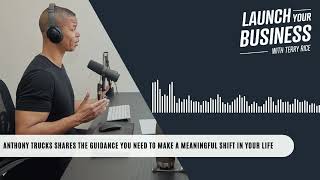
Anthony Trucks, who went from foster care to the NFL, talks with Terry Rice about the mindset shifts and identity work that drive real change. He discusses what he calls "dark work" as the foundation for success and how discipline and coaching can help you transform your life and business.
What I tell people is most people go from I want to the light, I want this, I'm gonna go to the light, try to get it. Those who are. Who are the most successful, whenever they go from, I want this, let me go dark. And they do, they tuck away, they learn, they prepare, whatever. Then they go to the light. And so when that happens, they have more energy. And so they will outshine the other person and they'll outlast the other person, whether it's from just sheer tenacity knowing you didn't work, or just skillset. And a lot of people are missing out on the beauty of that moment, that feeling, because we don't like the discomfort of the preparation. But when you can have a love for that process, when you actually love the process, you are the one that comes on the backside with vastly more. Like they say, the man who loves walking will be farther than the person that loves the destination.
If you're feeling stuck or stagnant in your business, sometimes the answer is not a new marketing plan, fancy tool, or logo. Sometimes the thing that needs to change is you. Today's guest, Anthony Trucks, has been forced to transform himself multiple times, and he's been through a lot. He's gone from a kid in the foster care system to the NFL and beyond. And today he's sharing the guidance you need to make a meaningful shift in your life. This is the Launch youh Business Podcast, because we know starting a business is challenging, but it doesn't have to be confusing. Each week, we'll give you the tactical advice and the necessary tools to scale your business without feeling burnt out. I'm Terry Rice, business development consultant and staff writer here at Entrepreneur Magazine. Let's dive in. Hey, look, we all know how important your personal brand is for your business. And I know you've heard this before, but it is the key to getting prospects to know like and trust you before you even talk to them. But here's the problem with that. Anyone can manipulate their personal brand to make it seem like they're someone they aren't. And I'm sure you've heard about that before, too. You know, the influencers who rent cars, pretend to be successful, then ask you to pay them a bunch of money so you can be as successful as they appear to be. And that is why character branding is far more important than personal branding. I'll explain the difference. Personal branding is the projected image of an individual's personality, skills, experience and behavior that defines their unique identity. In case you didn't realize it, yes, I did Google that. Your character is the sum of all qualities that make you who you are. Your values, your thoughts, your words, and your actions. Therefore, character branding and the associated perception people have of you is the byproduct of consistently being true to who you are. Personal brands can be quickly built and maintained by deliberate processes. Character branding takes time and must be consistently reinforced during impromptu moments and all those little moments in between. So anytime you've seen a celebrity, like, blow up at, I don't know, like, a cab driver or something, and you're like, I can't believe he did it. Well, that's his character. The personal brand is what you see on Instagram. Him getting angry at a cab driver is this character. So why are we even talking about this? Well, it has a lot to do with today's guest, Anthony Trucks. And I first saw Anthony when one of his Instagram ads popped up in my feedback. But it wasn't him that caught my attention. It was a University of Oregon football helmet that appeared in the background. And my wife played soccer at Oregon. So out of curiosity, I asked her if she knew him. She immediately started gushing about how nice a guy he was, how he went through some struggles, including having a child while in college, but still came out successful. And now he helps others push through their own challenges as well. So let's stop here for a moment. Part of Anthony's personal brand is focused on his time as a college and NFL football player. That's why the helmet was in the background. But his character, the stuff you can't make up, is what my wife remembers, and it's why people trust him to help them make meaningful shifts in their life. And here's one thing I really like about Anthony. As you may have noticed, there are a lot of experts out there who claim to have some magical solution that'll transform your life. Oftentimes, they might sound great, but they don't have the lived experience that makes them a credible source of inspiration and information. Or as my dad would say, they're all sizzle and no steak. That's not Anthony. His journey has taken him from foster care to the NFL and beyond, so he knows what it takes to achieve meaningful change. And I know a lot of you listening may be going through a shift of your own. Maybe you just started your business or. Or you're trying out a new approach. Either way, the life of an entrepreneur is not stagnant. So it's crucial for you to pick up the tools needed to successfully shift to the next phase. Today, Anthony And I will discuss why the secret to a better life is not a shift in mindset, but a shift in identity. How dark work can be the key to finally achieving the dream that made you want to become an entrepreneur in the first place. And the tools as well as the routines for you to leverage if you ever feel stuck or helpless. Anthony, thanks for being here today.
Thank you for having me.
You know, I ask this question to people every time they're on the show. Can you tell us about yourself? But you've done a lot in your career, in your life, so I'm going to have you unpack that. But everyone just get ready to be amazed.
Yeah. Yeah. So listen to this. I am a person at first. I'm a man of God. I'm a husband, I'm a father. And then I'm also beyond that. I'm a coach and a speaker and author, and I have a couple dogs. I'm a dog dad somewhere in there, too. But I guess myself as a human, I believe I'm a human that was, I'm going to say, gifted. A lot of crazy hardships as a kid that I didn't quite know were gifts back then because as life went on, I was able to utilize those moments to develop, I think, a thicker skin. And also, so we'll call it some nuances that are good, intangible character traits that I was able to redirect the energy and actually have some great things happen in life. So going from a crazy kid as a foster care, giving away to eventually playing in the NFL after I get a college scholarship, having a kid when I was in college and navigating the whole ups and downs of that, getting divorced, getting remarried, building a business. All the things that honestly, most people, they dream about doing. I actually do. But I do it from a place of never even having the dream like most people did. I just dream to have the baseline of, like, I want to be loved, want to be accepted. And now I've built something pretty cool. So the best thing that I can try to do with my life now is pass that on in some way to my kids, but also the rest of the world.
So what I'm hearing, though, is a mindset shift. And you yourself said the secret to getting what you want is having this mindset shift. And one of my other mentors said, hey, if you ever want to be successful at anything, write down what you have to do, become and sacrifice, right? So you're really big on that becoming part and just changing your identity. But how did you Come to this conclusion. Was it when you were younger, like, where did you learn how to just turn these bugs almost into a feature that just built your brand and helps you help other people as well?
I don't know if you. So I think there's a learning which is more of an awareness. Right. I think I was always doing it, to be quite honest thing most of us doing things. And at some point you become presently aware of what you were doing. And so when I go back through my life, I go, I was, I was doing this more than I realized I was doing it. It took me to a really adult rock bottom around shoot, I want to say maybe early 30s, 32, 33, where I'm like, I don't want to do this life thing anymore. And then I navigated and had some conversations and found all these little pockets where I had done some things and beat a bunch of odds to get to a great place in life. But I think for me, as I look at, we'll call it the whole journey of it all, it really was something where it wasn't unique to me. It was just the fact that I had these opportunities and actually saw the benefit at certain points in life where I go, well, because I played football, I understand how to compete, or I have intangibles, I understand how to be on time, or I have a certain way to communicate because you have to communicate with people in the football field or a coach, or you have to do media training. So these little nuanced pieces became beneficial. I just found a different play to later on apply them to life to get some cool things.
Let me follow up here because I know that one of your speaking topics is Make Shift Happen and I want to learn more about that. But why do you think some people stay stuck in a mindset that doesn't serve them? Because you just listening to you, I understand like you're saying, okay, here are the cards I was dealt. Now what's the best thing I can do out of this? And then you use we'll call it an exponential mindset to achieve that. But why do you think some people just stay stuck where they are?
So the thing is interesting is mindset, identity are actually different things. They're different, but in the same kind of area arena. So mindset's the way your mind operates in real time. How you function, how you process, how you think. Whereas identity is, it's actually for the most part an unconscious thing you do. For the most part, it's who you are when you aren't thinking about who you are. A lot of my life, I didn't realize I was building my identity and then operating from that place. Now what you would look at is go, oh, that guy, he has a strong mindset. But no, that was just how he. He identified as a person that wasn't going to miss this, was not going to, you know, miss an email, was. Wasn't going to back down, wasn't going to, you know, work anything less than. It's his best. And you call it a mindset. He goes, that's just Bob. That's just who I am. I become this person. And we have this really interesting part as humans, which is we have this crazy deep desire to be in alignment. No matter what it is, I want to be aligned to that. If I'm the guy that. That always does a backflip every day, I'm gonna do a backflip every day because that's who I am, right? So I identify. So much so that if I find myself a. To go to bed at night and I haven't done my backflip, I'll get out of bed to do my backflip. So I can continue to say I'm the guy that does a backflip every day. Right. So that nuance we don't pay attention to. We think it's just a mindset. No, it's beyond that. It's like you have now become the person you identify as this. And in motion, in flow. We describe your identity in flow as your mindset, but it's so much more.
Let me try to unpack this a bit more, because some of what you're talking about, I think intuitively you're. You're just built that way, right? It's your identity and it's your mindset. But I know your goal is to help other people make shift happen. So did you struggle with just kind of deconstructing how people can follow your.
Your.
Your lead?
Yeah. So there's two parts that the first part of is have a working model of it. I think if you have no working model, then you have no idea what buttons to push and knobs to turn, that kind of thing. So I was able to find through a bunch of research, there's, for the most part, six areas that our identity operates within. It's beliefs, thoughts and actions. And if you make them like a Venn diagram, the overlap between beliefs and thoughts is your mindset, which fits your actions and your thoughts, becomes your actual habits. We'll call it in between. Am I doing this thing Consistently. And beliefs and actions is an interesting thing. It's where actually your ego exists. So my beliefs of what I should do and do, I do it and is a positive part or the negative part, or the sense of the chip on your shoulder, how confident I am in what I've done. Because if I believe I'm supposed to get a workout and I don't do it that day, take the action. I go, oh, you suck. But if I do, I'll go, hey, look at me, world. You know, so that first dynamic's a piece of it. So I could take a look at myself and go, okay, based on how I'm living my life, what. What are my actions or my life like? Showing what is my, we'll call, expression of my identity, showing to the world. And I could find in certain areas that didn't have a belief, didn't have the right thoughts, My mindset was weak. I didn't have the good actions. I wasn't putting the right habits in place. I didn't have a good, strong ego for myself. And so what I do is I look at people and go, no matter what it is that someone's expressing, we can find it within that. And then if you look at the future for people, people all have dreams and aspirations. I don't believe that you could have a dream that's above your current identity. So how I identify it turns into things that I do. The things that I do create what I have. If I don't identify with the things that must be done to get my dream, I don't get the dream. And so what I like to look at is when people go, I want to have this new thing. Okay, great. Who do you have to become? What do you mean? Well, what are the things that that person does to have what that person has? Oh, they cold call and they do this. They work out every day. They prep their food. Cool. You're going to have to do that. Oh, I'm not the kind of guy that preps food and does that. Okay, cool. But then get rid of the dream because you can't have the dream because that's what it takes. And so when I look at the individuals that I work with, my goal is to get them to see the framing of who they are. Then get an idea of what the dream is, what the dream takes, and go, okay, how do we get you to shift to be more like that? Because when you are like this, as easy as your life flows now, it'll feel the same emotionally, but you'll have that thing you want most.
Let's keep double clicking on this because you've obviously put in a lot of deep work and research to get to this place. But sometimes when people give advice, it seems trite, like money can't buy happiness. Well, you've never been broke then. Because if you have bills to pay, you know what's going to make you happier? Money. Right. So what I want to do, just so the audience fully understands you, is what was your life like when you're doing all this research to become the person that you are now? This deep work that was involved in this understanding, identity and mindset?
Yeah, well, at first it was. It was a crappy experience of life because I had gone through this journey where I was, you know, divorced from ex wife, and I got, you know, I'm a single dad. I'm not in great shape. Business isn't doing very well. And what we typically do is we try to find ways to alleviate the pressure of our energy and our feeling. And we definitely want to relieve our self of blame because to have all that and then compound that it's your fault that sucks. Nobody wants to feel that way. And so I found myself in a situation where I'm like, well, my life sucks. But the only common denominator in all of this is me. I'm the one. I'm the common denominator in all my problems. So I go, okay, crap. Well, I guess that means that either I'm responsible or I'm allowing these things. So which one is it? And so the more I dug in, I go, well, some areas, I'm heavily responsible for it. In some areas, I'm just allowing it. Why am I allowing it? And so it taught me to kind of see, like, okay, there's a tie to all these sucky things in life. That is me. So it might be me. And if it's me, how is it me? Is this label or just a statement I love? I think it's got his name, Tim Murphy. And it goes. It's hard to see the label when you're inside the jar, right? The more you take a look at the label, the more you start finding out like, it's your identity. And so it wasn't. And that taught me, okay, now that I see this, and it's my identity, what is my identity and how does that work and what does it fit into?
Just get started. If you've ever looked for tips on launching a business, just get started seems to come up a lot. And while that's vaguely motivational, it does not provide any real direction. Because the next logical question for anyone would be, well, how do I get started? What specifically should I do? Well, if you're looking to quickly start a business without the confusion, risk and pressure of doing something entirely new, I've got a solution for you. It's called the Solopreneur's Fast Track. A step by step process on how to start a business using the skills you already have and actually enjoy using. So let's say your favorite part of a previous job was email marketing. You'll learn how to start a business offering other companies advice on how they can improve their email marketing. Or maybe you are really good at integrating complicated tech tools. You can help other organizations do the same thing without the need to bring on a full time hire. So the main point here is that everything you need to start a business is already within you. You don't need a cool website or fancy tools. And by completing the course, you'll also discover a simpler approach for attracting clients without using complicated funnels or cheesy sales tactics. You can finish it over a weekend and start making money in as little as 30 days. You'll gain the clarity and confidence you need to start your business and receive a one page business plan so you can immediately apply what you've learned. Get started today and receive a 20% discount by heading to terryrice co. Fast. That's terryrice co fast. One thing that you talk about is using dark work. And for me it is, I just love the term because like I love the whole like mama mentality and all this stuff. And so I'm not sure if that's aligned with your definition of dark work. But let me know like how you can, how I can say it better.
Here's the thing that I look at. So we talk about identity shift being my destination for people. You have this identity. I want to elevate my identity. I have this dream, right? Okay, well how do we get there if that's at the top of a hill? I have to get to the top of the hill somehow. There's a vehicle that'll take me there. The vehicle for me is the dark work experience. And here's why. At a neurological and psychological level, that's how our identity is in us. It's just how we think, how we process instinctually. But that was all. It's all created through different experiences. It's the only way to have it happen. You saw something, felt something, whatever it may be. If I for some reason see a dog and I got bit by a dog. And you didn't, you'd have a different response because of your experience, you're wired differently. And so I look at it and go, well, the only way to get me to that level is having experience. But most of us do it either on demand or when crap hits the fan. And then you find out what you're capable of, you rewire yourself a little bit. But all of this takes place in a moment in the dark because we need that moment in the light. And here's why. There'll be a situation that me and you run into at some point, a different areas in the roadways, but it's gonna be a moment that needs you in that moment to be clear, concise, and actually have this. I call it a Dominator's identity. An identity that's like, I'm not gonna lose this situation. I'm not gonna mess up. I'm gonna stay in alignment. I'm gonna do it. But that mentality comes from the work you did in the dark. It's why the mentality of it, of a Dominator, is, I've done too much work in the dark to lose in the light. Now, for me, it's like, am I gonna lose as a parent? Am I gonna lose as a husband? Am I gonna lose, you know, in a soccer game? Doesn't matter what. I'm gonna win because I wanna do the work, because. But the beautiful thing is it doesn't mean that I hate anybody. It's not a sad thing. It's not a bad thing. It taps into the part of us that has pure, powerful energy from a place of pride. When we've done the workouts and I've done the lifts and I've sacrificed and I haven't eaten the candy bar and I've read the books. When you come to this podcast, there's a sense of you. It's like, I'm not going to lose in a lot. I'm going to dominate this episode because I'm great, I've earned this. I've done the work. And so the realistic part is every part of who we are currently, it's all happened in the background where it was. It was dark, it was unsexy, it was sometimes ridiculed, misunderstood. But that work we did has created a person that everybody sees in the light, that your wife also respects and loves. So while she may not love the process, she loves the outcome without even knowing it.
It's funny, I think the same thing to myself when I'm working out, right? Because I do CrossFit like four or five times a week. And we're all supposed to keep track of our scores. They write them on the board xyz and I'll see grown men cheating and like, bro, there's no way you did 10 pull ups just now. Like, like, what do you do? What's, what's the point here? And that's the same thing that goes through my head. I'm like, look, sure I'm tempted to like cheat or half ass this or whatever, but like, this is the dark right now. But when I'm out in the light, when I'm on stage, like you and I are on stages, you know, talking at conferences, I'm like, that's why I'm doing this stuff. So just like you and me, you're. It's like, oh, these guys are dads. But they're actually kind of in shape, you know, how do I do that too? Well, you know, I'll show you again.
You can't hide it. That's the cool thing about dark workers. Really what it turns into. There's what the original quote was. Our team changed it for branding purposes. But here's what it used to be. It came from. I played football, I was 15 years old and it's off season where I sucked for two years and I came back in animal. I did all this stuff in the background. But here was the mentality, I've done too much work in the dark for you to take what is mine in the light. That was the original and it'll still be in my soul as the original. Because you just talked about a moment. The guy did CrossFit. I promise you this. If it's me and that dude and he's cheating in CrossFit, when it comes time to compete, there is no way on God's green earth. If I know you cut corners, you're beating me. Doesn't matter what you do, I will take my. And eventually you physically won't because you cut corners. But the idea is like, people want to have that bright, that light. But some, we're all in the light. But some just shine brighter. And the ones that the Kobe's and the Serenas and these, these individuals have done the stuff that you never will see, you'll never know. But that's the sole reason why they're shining so brightly. They go, oh, they're magical. No, you have no idea how much they died in the dark to be able to shine the light.
I can't remember the exact like, like way it happened. But I think it was like Kevin Hart who saw like Jimmy Fallon practicing before he went on his show. And he's like, Jimmy Fallon has to practice to be Jimmy Fallon. But yeah, like that's that dark work. Even though this person expert and has done it for years, it's like there's still stuff you're doing to prepare for it.
Yeah, that's the fun part for me, man. That's why it's actually a brand I've built out. We were launching this a little bit later this year, but it's the core. I think what's cool is everybody can attest to having done that. Everybody can attest to a window of time where nobody saw. I got guys that plumbers talking about when they did the dark work under a house and nobody saw, which is beautiful because it's a human thing. And I think in our day, nowadays, most people, they want to be like, hey, look at me world on my social media. And they just all want to shine. But they don't realize that most of the people we admire that we know the most now there was for sure a pocket of 10, 15 years that no one knew their name, but they were doing the works. That when they did come to the light, there's just this power that is coming, a dark energy we'll call it, that's fueling them and how they show up, how they shine, their charisma, their intelligence, their knowledge, whatever it may be. But that is not accidental. And you don't get that without having done that work. What I tell people is most people go from I want to the light, I want this, I'm gonna go to the light, try to get it. Those who are, who are the most successful, whenever they go from I want this, let me go dark. And they do, they tuck away, they learn, they prepare, whatever, then they go to the light. And so when that happens, they have more energy. And so they will outshine the other person and they'll outlast the other person. Whether it's from just sheer tenacity knowing you didn't work or just skillset. And a lot of people are missing out on the beauty of that moment, that feeling that because they we don't like the discomfort of the preparation, people don't like the discomfor and turn everything off and get to that flow zone that you stated. But when you can have a love for that process, when you actually love the process, you are the one that comes on the backside with vastly more. Like they say the man who loves walking will be Farther than the person that love the destination. Like, you love the process. You'll get there. But most people aren't willing to go dark, or they see it as a negative thing.
You know, what's interesting is you don't have to be that bright to be successful. And I'll explain it this way. There are people I know from college who, back then, they just. Grades were horrible, always out partying, like, you know, tripping on their own shoelace. And I look at them now, 20 years later, and some of them are crushing it. Normally in, like, finance or sales was because they knew how to learn one thing really good, block out everything else and say, hey, look, I don't have all these natural gifts all these other people have, but I can focus on this one thing. And now they're living their life, right? So I think people don't realize that your talent, your skill will only take you so far. If you don't put in the work to your point, in the dark, it ain't going to work. And you'll be even more frustrated because you're like, wait, I'm smart, I'm talented. What's going on? You focus too much on the light, not nearly enough in the dark. You don't want to disappear for a few weeks or a few months and build yourself up. You want to stay in that limelight, and it ain't going to last too.
Long because it doesn't last long. And you can do it in pockets. Like, you ain't going to have a whole window like Jesus and disappear for, like, 40 years. Like, you're going to do all that. But there is, like, there's got to be times when you do tuck away, like, your workouts. Like, I. I don't do this intentionally, and I've realized more of why I don't. But, like, I don't feel my workouts. I don't feel the routines. That's my time. It's my private time. But you have to understand that the way that I can shine, the way I do, talking like this or on the stage, whatever it is, it's because of those moments. And. And in order for you to have this thing, you have to do those moments, you can't bypass, you can't shortcut it. It's an inevitability. But here's also the thing that people fear. I think the one that we'd always talk about is there's a huge level of faith that has to go into that, which means to do the dark work with no guarantees of a Light in the backside. People are usually fearful of doing it. They go, I don't want to put all this time and money and energy in if it's not going to turn out to something. And I go, yeah, but the only way to get it is to do that. You're not going to accidentally get that. So if you really want that, you can sit there and go, what if I do the work, doesn't pan out? Or go, I'm going to do the work. And hopefully it pans out. Because if you don't do the work, guarantee you don't get it. But if you do now, you have a shot.
You also said this. I'm going to read it verbatim. Success only happens when who you are to your core and your identity aligns with your life's vision. So how do we make that happen?
Yeah. So I think the simplest way is to go from a standpoint. A study done by UCLA called the Stranger Inside. What they did is they actually had individuals. They put some bowels in their brain, and there's an area of their brain which was like, stranger in love. What they did is they said, hey, who's this person? And it would be a picture of somebody new, and it was like, wife or kids, and like, love would light up in the brain. They eventually showed a picture of some stranger in the brain. In the brain. Stranger lit up in the brain. And then they said, tell us about your future self, and stranger lit up in the brain. It was interesting because people just didn't quite see themselves in the future. And so I go, well, how do I. How do I move towards my future identity if I can't see it, it's a stranger. And I go, well, there's always examples of people doing what it is that I do. And so what I found is a great way to figure out what to do and how to do is I go, well, who is in a certain area of their life expressing their identity in a way that I would like. Like. I like the way, like, the Rock works out, but I don't want to live his life. He's gone for seven months out of the year. Something crazy, right? Not what I want to do, but I like how he trains himself and prepares his mind. So, okay, cool. I want to take that. This is what it says. You could take expressions and then what happens? There'll be certain situations where you go, I want that thing. And if I know that that thing's something I want or want to be part of my identity in a moment where it's difficult. I gotta ask myself, what would that person do in this moment? And you will be triggered with a response. For example, if I want to be in great shape and I go, okay, it's five in the morning and I gotta get up and do the thing. Would the rock get up at 5 in the morning? Of course he would. There's your answer. All right, that's what I'm gonna do. And it starts with you simply just looking at areas and moving closer. And it's in the beginning going to feel incredibly awkward. It's going to be very difficult and hard. But the more you do it, little by little it starts to become this thing where you go from it's being hard to do to being hard not to do. And then the more you go past that line, it becomes who you are. And then it's an alignment thing you keep in place. So now we start looking at the life I want to have and the vision for my life. It's like, okay, this vision of my life means I'm in great shape. There's certain things that have to be tied to my life identity wise to do those things, to get in shape. What I eat, how I train. I want to be a phenomenal dad and I want to be present with my kids. Cool. What do you have to do to do that? Spend some time with them. Maybe it's a relationship with them. Stop being a punk. Like admit when you're fault, you know, whatever it is. So it's not just saying I want to put habits in. It's how can you get to a point where you just naturally flow and these things are what you do, then your life is what you want it to be. And it's not this checking boxes, all the stress. I got to be this guy. No, you just are that guy.
Now you make a really good point that, that I think people miss is you can be mentored by people who you never will meet. Right? So you're saying find someone, model their behavior, but live off the good part of them. Right? Because you might respect like Gary Vaynerchuk for one part of his personality or what he does the other part. You're like, eh, nothing I want to do. And even to your point about parenting, there's this one parent at my daughter's old daycare, really patient guy. I admired him how he was just so calm with his kids. And then one time this kid was freaking out and he's like, what's wrong? Is your blood sugar low? And I'm like, bro, I'm never gonna be that guy. Like, my kids, like tantruming. I'm not gonna ask about blood sugar because it's just not our approach. But you can live off the good part of people and just learn from that. And you don't have to reach out to people and saying, can you mentor me? Can you mentor me? No. Read their books, join their email list, listen to their podcasts, and then anyone could be your mentor. So.
Exactly.
I think that's something we don't realize enough. And they just shut down the opportunity to learn from someone just because they can't talk to them in real time.
Yeah. Or they think they're too far away from who I am to be that person. Like, I'm not going to be the rock and have teramont tequila and his crazy drink. I'm not going to do all that. You go like, oh, I can't be like him. Like, no, you don't have to be like that person. You just have to choose what you want to be like. And if there's an example within that human that you admire, you respect, now I have to be that part of it. And the cool thing is we all have multiple identities. You just express them different. Who I am with you is different with my clients, my kids, my wife. Right. But it's still Anthony. It's just a different expression of me. So when I look at the parts of my life that I would say, make up the vision for my life, I gotta say, how do I want to express myself in these areas?
Let's go back, though, because I think a lot of listeners can relate to this and they need your help here. At one point after college, you had this gym you were running, and that didn't work out too well. And your marriage was on the rocks and as well. What would you have said to yourself at your lowest point to pull you.
Out that I would have listened to? I wouldn't listen to nobody, man. I was shoot, you know, what would I have said to myself? It would have had to have been a purse that's gone down my pathway. And that person. Here's the biggest thing. When I got done with football and I was coming out, I think what I needed to have here would have been like, I am not football. I am vastly more. I wrote my book about this concept of a tree, like the fruit of the labor. The football fell off the tree and it rolled somewhere and it died. Right. So I felt like that rotting fruit, like, oh, I died this piece of fruit. But I didn't realize that I. And none of us have ever been the fruit. We've always been the tree. And when you don't take care of the tree, all the rest of the fruit dies. So when football died and that was fruit, when my marriage fell apart, I wasn't in good shape. Everything except my relationship with my friends were bad. Like I wasn't. Nothing was going right. I go, it's because I stopped taking care of the tree. You go back to the tree, give it all the nutrients it needs, the sun it needs, put in the right soil, the right environment. All of a sudden the fruits came back sweeter and more abundant. And so for me, I had to realize, like back in the day, the thing I would have said, aunt is like, ant, you are not football man. You are the kind of person that created that outcome for your life. So do it somewhere else.
That identity crisis, I think happens a lot with people, especially when they leave corporate and start their own business. So I think just that message alone, like, you're not the fruit, you're the tree. And if you can stick with that and make sure that you have a good foundation for your tree and, and you're clear on what that is, then, then you're in a good spot. But you mentioned your book. Can you tell us more about that and just even more broadly how you, how you help people through coaching and your other programs?
Yeah, yeah. So the book's identity shift. It's. It's a two part book. It's a, it's one book. It's not crazy long. But the first part is the concept. So what is it? How does it work? Someone gets a working model of it. The second half of the book is quite literally my process called the shift method of how you will tactically make an identity shift. It's a process to do the roots and fruits, uncover everything. There's workbooks that go with it. But my big thing is I need somebody to be able to step back one day and then take a look at their life and go, I don't know how to put myself back in the head space. I was a month ago, two months ago, six months ago. Because I look at myself and I go, man, who was Anthony back in six years ago? It's a different guy. Which tells me that I have elevated my identity. We have a 90 day window we work through, but my thing is to sit down with you and go, okay, what do you want? Who do you want to be? How are we going to put this together? And then we tactically make it action. We Infuse it into your life. We put you through the whole process. You're kept accountable at doing it.
I'm asking a lot of questions. You have a lot of brilliant responses. But is there, like, one question that almost nobody ever asks you? But they should, because the response will be so powerful and so helpful.
You know, I think about that, and I don't know. I've had people ask the same question. I go, I don't know what I would ask. Because a lot of stuff in my head I don't even know is in there. Until someone asks the question that comes flying out, like, oh, I didn't even know that was existed inside of my brain just now.
Well, let me ask you this. Are there days when your actions do not align with your mindset and your methods?
Oh, yeah.
Your motivations. And how do you get yourself out of that?
Yeah. Yeah. So the biggest thing I do is I am not disciplined to the emotion of things. I'm disciplined to an actual plan of all things that runs my life is a structure of what my days look like. And it includes everything from time with my family to time at work. But I noticed that what we do is we run off emotions. So when you're disciplined to an emotion, if you feel good, you do it. If you don't, you don't. If you don't do it, you feel worse for not doing it. So it's weird, vicious cycle. So I go, all right, what's the thing say today? Do I feel like doing it? I don't. All right, what do I get done? And then there's days where I don't do it and I feel crap about myself. But I go, all right, as opposed to making this last for six, seven, eight days. What's supposed to be done for my docket? What's on my schedule? And then I'm going to lean in the next day and do it. Here's the cool thing. Action ends suffering. The actions of doing something when you don't feel like doing it is what ends the suffering feeling. So, like, when I fall off track and I'm not in line with who I'm supposed to be or I say I am, I don't spend a month being out of whack the very next day or the next hour, I'm taking the action against the emotion I feel, and I'm disciplined on a plan. All of a sudden, I get out of my funk, I feel good about myself, and I rock and roll, and I'm back in the pocket before everybody else would Be. So for me, if I'm helping people in that area, it's like if you have the days you fall off, one, get a plan so you can be disciplined to the plan, not the emotion. And then when you fall off, it's an inevitability. Get back in the plan as fast as you can.
I love that. Be disciplined to the plan, not the emotion. And on my end, I'm very stoic, so I have no problem with that. And what I normally do is when something like falls apart, I think of the smallest positive action I can just do just to start the momentum going in a different direction. Right. That way you realize you have agency and you're not a victim to life. Right. You're still an active participant and you can advocate for yourself by doing something positive. I don't want to take up too much your time here, so I'm wondering if there's anything else you want to share before we part ways. And then also, where can people learn more about you?
Yeah, yeah, I got nothing crazy to share, man. This is, this is more than enough. I'm sure. I got, I got all the details that, that they could need. I'm sure just in this little conversation. If you do want to find out more, if you're like, hey, I like this, I want to hear more about it, go to Instagram at anthony trucks or anthonytrux.com simple way to come find me.
And that's our show for today. And there's lots to unpack here. But here's what really stood out to me. The need to get clear on your identity. Who are you to the core, outside of your job title or the more obvious descriptions it has to start there, then get clear on your goals.
Who do you want to be?
A successful entrepreneur, A sought after public speaker. This part is important because you can't make a shift if you're not sure what you want to become after. From there, find examples of people who are already living in the vision you made for your life. And here's the thing, you don't have to connect with them personally. Don't limit yourself. Just follow their actions. Read their newsletters, watch their videos, follow them on social media, and in time, you'll be able to reverse engineer the steps they took to succeed. But here's the cool thing, it goes further than that. You'll even be able to think like them to an extent and somewhat provide yourself with the same guidance they would give you in real time. And if you're looking for people to follow, of course I highly recommend Anthony Trucks. You can find him on Instagram, nthony trucks and his website anthonytrucks.com so be sure to check Anthony out. He's a good guy. Again, my wife would not say this 15 years later if he wasn't and I know he wants to help you get unstuck. Thanks again for listening and I'll catch up with you next time. Apply what you've learned on today's show. You'll find the show notes and more resources at TerryRice Co Podcast. Again, that's TerryRice Co Podcast and the best way to support this podcast is by subscribing, telling a friend and leaving a review. Also, you can get more tips by following me on Instagram @TerryRice or follow me on LinkedIn. This episode was produced by Josh Wilcox of Brooklyn Podcasting Studio and edited by Dan Lardy. Special thanks to my wife Dominique for keeping our kids relatively quiet as I recorded. Thanks again for listening. I'll see you next time.
More from Terry







When you want to quit, don’t. #FitnessOver40 #MindsetShift #TiredIsNotAnExcuse #PersonalGrowth




You’re gonna want to give up. Don’t. #mindsetshift #motivationalquotes #motivation #dontgiveup