Ashley Kirkwood Interview: Teaches You How to Build Your Brand and Revenue Through Public Speaking.
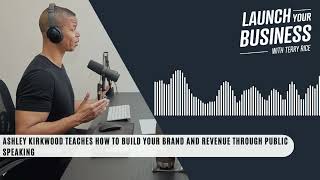
Ashley Kirkwood, a lawyer-turned-speaking coach, talks about turning public speaking into revenue. She covers how to land paid engagements, what to charge, and how fear holds entrepreneurs back from using their voice as a business tool.
Every entrepreneur is a speaker. It's just a matter of if you're using it powerfully and persuasively. There are some people who don't understand the power of their words and so they use them haphazardly. So I would say the number one benefit is persuasion. Every entrepreneur is in the business of persuasion and it's not a negative thing. It's just like I have this incredible, powerful, amazing service or product and I want to persuade you to use my product and service over the that of other people's or in addition to other products and services. The tool of persuasion is one that speakers that you can study and get great at through speaking.
Did you know that it's possible to get paid to generate leads for your own company? Stick around and we'll walk you through all the steps needed to make that happen. This is the launch your business podcast because we know starting a business is challenging, but it doesn't have to be confusing. Each week we'll give you the tactical advice and the necessary tools to scale your business without feeling burnt out. I'm Terry Rice, business development consultant and staff writer here at Entrepreneur Magazine. Let's dive in. As an entrepreneur, you need to keep an eye on how many leads you have coming in. That's pretty much an early indicator of how well your business is going to do over the next few months. And we talked about one way to get leads during episode 19, the easiest way to get leads. So you should definitely check that out if you have not already. But today we're going to cover another approach and I think you'll like this one because you're going to learn how you can get paid to generate leads for your own business. And the cool thing is some of those leads will turn into customers, so you get paid for that too. So how do you do that? Fortunately, today we're joined by Ashley Kirkwood who will walk you through all the steps necessary. After graduating top of her class at Northwestern Law and working for multiple Fortune 100 corporations, Ashley left her mid six figure salary to become a full time entrepreneur. Now Ashley runs both a law firm and a speaking business where she gives talks on stages around the world, delivering her signature message, the currency of confidence. And she shares how you can generate revenue as a speaker through her program, Speak youk Way to Cash. At Speak youk Way to Cash, they teach professionals like you to better package, pitch and sell their products and services. And that's what we're going to cover today. But look, I am not expecting you to become a full time speaker. But here's something you need to realize. You are a subject matter expert no matter what your business is. You have valuable information to share with people. And I'm assuming you're doing that to an extent on social media. But you're selling yourself short if you don't seriously consider leading speaking engagements on any given day. I'd rather speak to 20 people who are in my target audience for 30 minutes as opposed to 20,000 people seeing my post on social media for 30 seconds. That's why this is so important. And if you have a fear of public speaking, don't worry about it. We'll chat about how you can best navigate that as well. So sit back and get ready to take some notes. Ashley, thanks so much for joining me here today.
Thanks for having me. Excited to be here.
Awesome. And for those who aren't aware of you, do you mind introducing yourself?
Yes. So my name is Ashley Kirkwood. I run a company called Speak youk Way to Cash where we say we we lead a community of what we call cash leaps, which are entrepreneurs, experts and authors who are interested in growing revenue generating businesses in a way that only they can using their expertise. So we are essentially a sales coaching organization. I'm a lawyer by trade and I like to teach my clients how to sell like a lawyer, how to use persuasive techniques that also evidence based in order to help their clients see them as the perfect choice. The marketing tool that I use most is speaking. It's also the most powerful sales tool on the planet and we teach our clients how to leverage it as both.
So why is speaking the most powerful marketing tool on the planet?
Speaking is the most powerful marketing tool on the planet because movements are created with words and worlds are created with words. And so you know, I'm a Christian, but if you think about like the very beginning of the Bible, God literally uses words to create the world. But if we look at movements like the civil rights movements, justice movements, any large movement, it was created through oration. And so it's the most powerful marketing tool on the planet because when people speak with power, other people feel something. They feel excited, they can feel motivated and motivation spreads also all good things spread like the gospel, right? So it's like literally you can create evangelists for your business by utilizing words and inspiring people and helping them to see themselves as bigger than they saw themselves prior to meeting you. So I really think it's the best marketing tool and a really powerful sales tool because without it we wouldn't have a Single movement that we had that has made the world a better place.
Powerful reason. So I do want to get into how you started speaking, but I have a question. Right. So you're a lawyer by trade and training, and I've always wondered, when you're making those opening statements and closing statements, it's always so dramatic. Like, I will prove that. Xyz. Do they teach you how to be, like, almost like, dramatic or. Or improv or something like that in law school? Is that part of it? Like, how to become a powerful speaker in those moments?
Not always. So I thought that it was when I first went to law school. And so I knew I wanted to be a trial lawyer because I watched Law and Order. I watched a lot of videos where there are trial lawyers giving those powerfully persuasive openings and closing. And then I went into law school and I started going to regular trials and. And I'm like, wow, some of this stuff is boring. So I did not want to be boring, but in law school, I was on the mock trial team. Now, interestingly enough, in law school, almost everyone was not boring. So in law school, because it was for competition, everyone was persuasive and energetic. That is not the way every trial lawyer is. But the best trial lawyers are definitely engaging. They use evidence. They also use imagery. And the thing is, a jury doesn't want to be there. They are paid to be there, and even then, they don't want to be there. So. So it's one of the only things you can get called and like, hey, let me give you money to do something. And everyone's like, how do I get out of this? Like, there's not many other things where people are like, hey, can I pay you to do something? And everyone's like, please, any way I can get out of this, except for jury duty. So you have to be, if you want to be as impactful as possible, and you want to create advocates, which is what you're trying to create. You want your jurors not just to vote for your side, but to persuade their co jurors to vote for your side. So you want to create advocates, you want to create ambassadors in the jury. And that really only happens with really powerful evidence, first and foremost, but secondly, through the power of persuasive speaking and oration.
It's funny because I could have asked you, how do you become a good speaker? And I think you would have replied with the same thing. So assuming that the audience does not really care that much, having some kind of evidence to prove your case and then doing some storytelling around it. So what I'm hearing is you have these transferable skills as a lawyer that could obviously be used as a speaker. But I want to talk more about that. And we know that it's one of the best marketing channels in the world, but there are still people listening right now who are like, eh, I don't know about this. So do you mind just bullet pointing a few of the benefits of being a speaker if you're an entrepreneur?
Well, every entrepreneur is a speaker. It's just a matter of if you're using it powerfully and persuasively. It's persuasion. Every entrepreneur is in the business of persuasion. And it's not a negative thing. It's just like I have this incredible, powerful, amazing service or product and I want to persuade you to use my product and service over that of other people's or in addition to other products and services. The tool of persuasion is one that speakers that you can study and get great at through speaking. The second tool is the power to motivate. One of the things that I've learned as an entrepreneur is when my business was smaller, it was all about motivating myself. As my business has gotten bigger, it's all about motivating others, motivating my team, motivating my clients. And I spend a lot of time trying to motivate my clients. And speaking has been the number one way that I motivate my clients. I don't just give my clients motivational speeches. I give my internal team motivational speeches as well. And then the last way would be sales. Speaking is the sales tool. If you learn how to persuade and how to motivate, then you will then combine those two along with what we call evidence based selling, which is one of our trademarked frameworks for selling. You can combine all of that and actually use your voice to sell more services.
I get it. But pretend there's still people out there who are like, you know what? Eh, I don't know, this ain't for me. Or I have a fear of speaking in public. What would you say to them to help them get over that hesitation?
So I'll be, I'll be honest. We do not work with people who have a fear of speaking in public because the main thing that we do at Speaking Way to Cash is teach sales. So if you're afraid to speak in public, what I'd actually recommend is that you use writing as your marketing tool or you have to work with a coach who can get you over that fear. I wish I had a referral. Cause I would give it to you all. But I don't have a referral for it. But I always tell people to use what you have. So I like speaking. I'm not scared of speaking. So I use speaking. But also I looked at literally every single movement maker in the history of the world. Even the bad ones, right? Like, even if you look at the people who like, create cults and things like that, they utilize speaking. So, so imagine all the great movements, the civil rights movements, the Martin Luther Kings, the President of the United States, what do they have? Speechwriters. Why? Because speaking is the most powerful way to persuade. So if every king, every president, every movement maker has utilized this tool, there's no reason why I would come in and try to say, oh no, I'm literally smarter than every other leader for the past century. Like, it is the tool that you should be using. But if you're really scared of it, and that is a real thing, then I would still utilize storytelling. But maybe you write your stories out.
This is a good example for everyone listening of why you need to have a negative customer Persona. Meaning who do you just not mess with for one reason or another, right? And in your case, it's like, if that's your issue, like if we have to coach you through this fear, gosh, that's not what the program is about. And I am not the person to help you with that. And the more we can get clear in our negative Persona, the more we can attract the Persona that we actually want to work with. So I think that's. That's really bright. So what I'm going to do now though, is just ask you a very loaded question. How do we get more speaking engagements? How do we get paid speaking engagements? We've never done this before. Like, what is step one through 28 in order to do that?
Well, all of the steps are probably. I. Like, I literally probably have step one through 28 in the speak you ready to cash book. It's literally 244 pages. So when you state it like that, I was like, there's like 200 pages on this in the speaking ready cash book. If I had to condense it, I would use the paid methodology, which is our proprietary framework. So number one is your press and positioning. So I highly recommend if you're gonna go after corporate engagements, you get third party verifiable data that you are who you say you are. Companies are big on googling you after you pitch them. So I would highly recommend that you look at your press and make sure that you're writing LinkedIn articles that could work like, that could be owned media. You could do that or also pitch during, like, if you're a woman speaker, Women's History Month is a great time to go on news stations and talk about what you do. We've done. If you are a minority speaker, there may be a particular heritage month that you really lean into and talk about what you do. If you don't fit into any of those buckets, then you just pitch based on what is in the news cycle. Right now, can you do some newsjacking? So right now there's a lot about Rihanna's super bowl commercial. Is there anything you can opine on for that? If you talk about branding, but get you some press, third party verifiable data. So when they put you in Google, stuff comes up that aligns with what you say you do. You don't want stuff coming up that does not align. So that would be the first step after that, after the press, would be the positioning. So one of the things that you have to position yourself as is a professional speaker, which is very different than someone who just speaks generally. So you want to make sure when you're communicating online, when you're talking to clients, you're using verbiage like, I can't wait to serve my next client with this speech. I am so excited to go out and serve this. Like, the client word is important. Talk about your rate. Like, okay, guys, 2023 rates are coming because they know there's a rate of fix with you speaking like, I'm so excited from this gift from my client. We went in and were able to serve them in these ways and we're going to deepen the client relationship with additional packages. All those words signal that you are positioned as someone who gets paid to do this. And it's not something that you just do, you know, for fun, even though it may be fun. So after the press and positioning, I would say you have to assemble your offer. And this was where I made a mistake. Early on, I only had one keynote speech. So when clients would say they want a speech, I would just be like, okay, great, that's you want me to talk about. I'll just make a speech on that. That's the wrong way to do it. I highly recommend that you assemble an offer that includes a breadth of services. So you may have speaking, you may have consulting, you may have a book like I do. You can bundle all of those things into a package and Have a few preset packages that you can put clients into that are not just based on whatever the client wants, but that are based on your framework. That way you're not on a hamster wheel or of creating 50, 60, 70, 80, 90, 100 new talks. So you want to have some standardization with that framework, which is just your formula for success on a topic that you can infuse into consulting, infuse into a book, infuse into coaching, and it all works together really nicely and seamlessly after you assemble your offer. Now comes the fun part. This is my favorite part. Sales. Okay, but we don't call it sales, we call it inviting. So we have something that we've created called the invite method. Because who doesn't want to be invited to a great party? So you're going to invite clients to work with you after choosing your target. So you're going to decide who's my target, and then you're going to go to where they're at and you can invite them to work with you in a variety of different ways. And we have six or seven different sales strategies that we use. One of them is events. So we will go and speak at an event for free, but it's in front of all of our ideal clients. So you can do that if you know your ideal clients will be in the room. You should not do that if you don't know if your ideal clients will be in the room. Secondly, you can actually host your own event for your client via LinkedIn, via Zoom. You can send out emails saying, hey, I'm going to host an event for all the HR directors in an industry. Come to this event and I'll share my framework with you at no cost. And at the end, your call to action is book a call with our firm to see if we're a good fit for deepening your services. Then you have the invite method, right? And then you can also invite people to work with you via LinkedIn, via cold emailing. All of those are strategies that have worked for us and our clients. There's a lot more to sales, but basically you're going to need a sales engine. Do not think you're just going to put a post out. That's what I call passive selling, and be like, oh, I'm a paid speaker. Hope you know someone, that's great. And you don't ask them to take any call to action. You want to be involved with active selling, not passive selling. Then there is the D portion of the paid methodology, which is delivery. This is where a lot of people mess up. You do not want to sell better than you deliver and you do not want to deliver better than you sell. You really need a balance here. So with delivery you want to be able to deliver a great talk, be interesting, be engaging, make sure the client is having a great time. Know what the client considers a win before you actually start servicing them. That way you can get them the win that they're looking for and you need great customer service. So I like to say it's kind of like D squared. Great delivery of the actual service and then also great customer service on the back end. So if you do those things, you should be able to land paid speaking engagement. The prospecting, pitching and selling piece is that I portion under the invite method. That's really going to help you to get your name out there and directly go after the clients who have budgets.
I'm so glad I have your book because I was scrambling to take notes and there's just so much information that was super valuable that I just couldn't write it down. So again, the book is called Speak youk Way to how to start at the top of the speaking Market instead of working your way up from the bottom. And on the on my website I'll have like some show notes about what you discussed just now, but just that alone would have saved me so much time and frustration when I first started speaking because I didn't have any of these tools in place. We're going to take a quick break here, but when we come back, Ashley will share more tactics on how you can get paid to speak. Just get started. If you've ever looked for tips on launching a business, just get started seems to come up a lot. And while that's vaguely motivational, it does not provide any real direction because the next logical question for anyone would be, well, how do I get started? What specifically should I do? Well, if you're looking to quickly start a business without the confusion, risk and pressure of doing something entirely new, I've got a solution for you. It's called the solopreneur's Fast Track. A step by step process on how to start a business using the skills you already have and actually enjoy using. So let's say your favorite part of a previous job was email marketing. You'll learn how to start a business offering other companies advice on how they can improve their email marketing. Or maybe you are really good at integrating complicated tech tools. You can help other organizations do the same thing without the need to bring on a full time hire. So the main Point here is that everything you need to start a business is already within you. You don't need a cool website or fancy tools. And by completing the course, you'll also discover a simpler approach for attracting clients with without using complicated funnels or cheesy sales tactics, you can finish it over a weekend and start making money in as little as 30 days. You'll gain the clarity and confidence you need to start your business and receive a one page business plan so you can immediately apply what you've learned. Get started today and receive a 20% discount by heading to terryrice co. Fast. That's terryrice co. Fast. And I know this is a tough question to answer, but how much should we charge when we're just starting out? And then how much should we charge as we get some more reps under our belt as well?
Yeah, no, that's actually a good question. And there was a company called Speaker Flow that just released, literally just released a state of the industry report that I was going over yesterday with some of our clients. And I've always said, because I had the industry data from a few years ago, but this is 2023 data, which is really interesting and I'll make sure I send it to you as well. But the, the industry report actually noted that the average speaker in 2022 was charging around $7,500 still, which is interesting because that's the same number that I saw two years ago when the industry report came out from another agency or organization or the Most common was $7,500. The average is 8,000, but went up $500. It went up $500. And then the highest reported keynote speaking fee from the study that they did of individuals is $32,000. So that just gives you an idea of what the industry is doing. I think that because there may be people out there who are like these prices are just out of the air. Well, at least you know, if you come in at 8k your average, if you come in under that, you're probably below average. And if you come in over that, you're above average. Now what I personally tell my clients, it's always start at $15,000 because it gives you room to negotiate up or down. So what I typically like to do is like, hey, our speaking fee typically now my keynoting fee is a lot higher because of the value of my time now. So the way that you, because I don't, I don't do as much just one on one speaking right now because we have a sales agency and sales firm so we're really, we're coaching a lot of speakers and so I focus a lot of my energy on that. But the way that you want to set your price originally is make sure you have room to negotiate. It's not like going to the store and buying a bag of chips or groceries where you just get it off the shelf. It's the price. They put it in their cart and they buy it. Typically companies are very used to negotiation. So you want to make sure that when you give your initial rate, you give a rate that allows you some room to negotiate. But you also want to parse out what you're going to give them such that if you lower your rate, you also lower your service. So you don't just say like, oh, it's going to be 15,000. They're like, oh, all I got is five. You're like, okay, don't do that because they'll never take you seriously again. So it needs to be like, okay, well, $15,000 includes a keynote speaking fee, a workbook for your attendees and a follow up consultation with you. You. So if they say they only have five, you're like, okay, well I can include the keynote speaking fee for no more than 45 minutes. We won't be able to do a workbook, we won't be able to do a follow up consult, but I can give a follow up survey and make sure I share the results with you via email.
What you just said is brilliant because on mine I just now started doing that. I would say, okay, I'll do a keynote for this amount, but I can also do roundtables with some of the attendees for X amount if you want to have some kind of bonus. I'm available for dinner if you want to do a VIP dinner as well and then xyz. And my goal is to give them something to say no to besides everything. But if you just.
Right, exactly.
If you just pitch the keynote, it's like the only thing they have to say no to is everything. So yeah, I think it's brilliant the way you're baking these, these bundles in almost exactly.
And give them a menu, you know, and there's two ways. So we do menu style. So we'll give them everything parsed out into what it costs, similar to what you said. And they can, you know, they can pick and choose and I'm fine with that. But there's another speaker, I forget her name. I think it may be Lori, but she was on the Speaker Ready Cash podcast and she shared something that was really good she always gives three packages and her middle package is the one she wants them to choose. But if they choose the highest tier package, she's not mad about that either. And so just giving them the power to choose is really, really critical. And we were just being trained at Ritz Carlton and they do something very similar with customer service. So they never say no, but they'll say, oh, you know, like if you want to check out late, they'll say, oh, that's wonderful. So what we can do is either A or B, which would you prefer? And it does just give you that feeling of power. Like, okay, great. This is good. They're giving me options.
If I was there, I would say I want what I just said. But that's. I've lived in Brooklyn too long, so that's probably why. But. But no, I love that, that approach because again, I've done that before too. I have one package that's so expensive, I'm like, I hope they don't say yes to this. Like, I would do it if they want me to, but I'm really hoping they pass on this. You keep on saying we and these programs in xyz. So can you just tell us more about Speak youk Way to Cash? Because we've hinted at what you get out of it, but can you just unpack that for us?
Absolutely. So at Speak youk Ready Cash, we have a few different stairs to success. And that's kind of what we call it because regardless of where you're starting at, we want to make sure that we have accessible options for everyone. There are some people who have never been paid to speak. This is the first time they're even thinking about being paid to speak. Speak. And so the first stair to success, we call those folks our self starters. And these individuals are taking part in our free online courses or challenges or events, maybe reading the book or listening to the Speak youk Way to Cash podcast. So everything on the first day is a free or lower cost option to really help you to start exploring. That's why it's like you're like. If you're like a self starter. So like explore whether or not it's even for you. So if you're on that stair, you're like, I don't even know if I ever want to speak, but I'm going, I'm curious, you know. So the curiosity stair would be that self starter stair. And then after that we have events. So these are the people who are like our explorers. They are ready to explore whether it's a good fit for them. And they come to one of our live events where we really go deep on some of these principles that we're talking about on the podcast. We go deep into our frameworks and it's just great for community. So it's a whole lot of speakers in the building, a whole lot of entrepreneurs in the building who may or may not consider themselves keynoters. Most of our audience considers themselves trainers. So they're not going to do the theatric because I speak, I'm going to give the drama. So they're not going to do all the theatrics that I'm going to do on stage. They literally are just like, I want to take my expertise, package it into a product and sell it to a corporation. So that is the vast majority of people in the speaking Ready Cash community. Those are the vast majority of our cash leads and they meet together and we all come together in person at live events. And then the third state of success would be one of our masterminds, which are for people who are committed. They are not trying to explore, they are not curious or dabbling. They are committed to growing their thought leadership business with speaking, consulting or coaching as a service. And we really help them to sell that service, package it up and license their brilliant. So I use some of my legal background, we give them licensing, training and contract templates and access to incredible experts like yourself and so many others and they're able to really start growing that business. And if you're in our mastermind, we kind of call it your business home. So we don't want you to leave, really. Like we want you to be there forever. You know, if you love it, we love it and we'll always be there for you. And so we really are in community together for the long haul and we're building our businesses side by side and we're providing Speaking Ready Cash is providing the best possible resources on the planet to help you grow and sell more services at that level.
I'm glad you mentioned that since I am a coach for your program. So yeah, best possible resources available. But let's go back to something you said in regards to being a speaker. And some people are very emotional. Emotional, some people aren't. And full disclosure, I obviously spoke at your event in Chicago a few months back and as I was getting mic'd up, the person said, what kind of speaker are you? Are you like a fire breathing preacher or are you more of an Obama? I'm like, give me the Obama, like give me the whatever that is.
Obama package, please.
Yeah, Because I'm very stoic. I'm very blunt. You'll get like, you know, some dry humor, but I'm not, like, you know, overly animated. So what I'm asking you is because other people out there listening right now might feel the same way. They're like, I want to speak, but I don't want to perform. Is there a disadvantage to being the person who's just delivering straight knowledge? Even if it is, you know, using, you know, evidence based, you know, selling and. And, you know, storytelling? Is there an advantage either way of being one type of speaker? Do you think some get rewarded more than others, or does it matter?
So it dep. I feel like as long as you're true to yourself, the audience will be. Will be fine with you as long as you've considered them. So one of the reasons why I like performing isn't because I personally like to perform, but it's because I know that it'll keep the audience awake and engaged. So I go back to that jury trial days where I was giving my opening statement or doing a cross examination, and there were several other lawyers. When we were in a trial in Wisconsin, there were several other lawyers up, and there was a woman who was literally knocked out sleep. Okay. Knocked out sleep. And when I got up, she'd be like, oh, okay, she's back. We're gonna. I'm gonna stay awake for this one. Because they didn't know what I was gonna say. They didn't know what I was gonna do. And so when I noticed that, even the partner on the case noticed that, he was like, ashley, we're giving you all the rest of the cross examination because if they're awake, they can hear you. If they're awake, you can impact them. If they're engaged, you can change their mind and their heart, but if they're asleep, you can't. So sometimes I like to ask my clients, what does your vision require? I know that my vision requires me to perform, so I'm actually. This is funny. I am actually starting improv classes next week. Oh, no. Yeah, next week. That's March. So I start improv classes and comedy classes in March. Because another thing I know is when people's hearts are really hardened or they're all skeptical and angry, they can't hear you either. And so I really think through, from the audience's perspective, what do they need to hear my message? Now, that said, everyone has a different style. I have an incredible coach and mentor who is not gonna get up there and perform however, he. Well, I guess he performs in his own way, but he also. He uses humor. You know what I mean? And so he uses humor. A bit of that dry humor he sometimes will do, like. And it's like, it's incredibly interesting, it's engaging, and it is a performance just in his own way. So I think some of it is personality, some of it is style. I am a. I could be a little dramatic. So, like, for me, I'm kinda like, I'll just lean into the drama. But other people have different styles. And it all works. It all works. Now, storytelling universally is something that you need to have in your speeches because they'll remember it better. So you will remember a story more than you remember a stat. I think it's almost like three times as much. So you have to. You do. You should use some stories. The way you tell your stories can be different. Think about Kevin Hart versus Dave Chappelle versus Katt Williams. Like, they're all performers, but just very different styles. And then Trevor Noah. Look at Trevor Noah. Like, he's a totally different style than a Cat Wilkins or a Kevin Hart, but still very impactful, still has a wide audience. So I don't think that my personality type is required. But all of them, all of us, every performer, every person who gets up on stage, the people who are really good do use story. They try to incorporate humor, and they think about the engagement of the audience.
I want to be conscious of your time here, but I do have one question that I like to ask everyone who appears on the show, and it's this. What is one lesson about entrepreneurship that you wish you learned earlier?
I wish I learned earlier that your team is not there to make you money. You are there to work for your team. So that is the lesson I wish I would have learned earlier. I think I originally saw, like, team members as, like, this thing that I needed in order to grow versus looking at my team as my responsibility, as a part of, like, my greater calling and mission. And I work for my team. Like, I try to become a better person for my team. I want to encourage and help my team grow. Like they are everything to this business. And I wish I would have known that earlier because I would have hired earlier. I would have cultivated them earlier. I would have. You know, we have a different team now than we had in the very beginning. One thing I'm really proud of, though, is that my first ever hire still does contract work for us whenever we need it. So thankfully, I wasn't. No, not my husband.
Okay.
Just Making sure he actually required me to get a few hires under my belt before he would even say yes. So not my husband, but we have been, you know, really blessed to work with some incredible team members. I've grown this business. I had a law firm that was run by really great lawyers. And I just would have started reading personal development books even earlier at the same time as I was reading sales and marketing books. Because all of it really matters. And once your business does, once you're running a business over the seven figure market, at least for me, that was the biggest change, was it went from me getting all this knowledge about sales and marketing, which I still get some. I still still invest in that, but it became a lot more about how do I motivate them to sell more, how do I teach them to market more, how do I make sure they're growing and developing and I'm the leader that they need.
I've never heard anyone give an answer even remotely similar to that. Normally it's like, oh, I wish I had more confidence in myself or I wish I had charged more. But yeah, this is great because this is the information that people need outside of everything else they're already hearing. So I'm glad you shared that. And again, I know your time is short. You have a huge event going on tomorrow. But first of all, I'd like to say thank you. And then second of all, where can we learn more about you?
Absolutely. Well, you can learn more about me at speakyourway to cash.com we also have a free Facebook group for anyone who's just curious about whether or not speaking can be used to make more sales in their business. And that is called Speak youk Way to Cash. The group for speakers, entrepreneurs and authors. And that's a free community on Facebook.
Awesome. Thanks, Ashley. It's been great.
Thank you.
And that's our show for today. And like I said, this is one of my favorite ways to get leads while also learning from your audience. Because when you speak live, people ask you questions, questions become content, and that can help you improve your offering. And of course, you get paid for it. And full disclosure here. I recently spoke at one of Ashley's events in Chicago. And within a week, I made $8,000 from people that heard me speak on her stage. So this stuff works and will work for you too. But I know some of you may be a bit hesitant. So here's my advice. Start small. Pitch small venues and do it online. If you're a bit hesitant to speak publicly, it may be a bit rocky at first, but you'll eventually get better. And if you want more guidance from ashley, head to speakyourwaytocash.com and you can also find her on social media at TheAshleyNicole Show. Thanks for listening and I'll see you next time. Apply what you've learned on today's show. You'll find the show notes and more resources at. Terryrice Co. Podcast. Again, that's Terryrice Co Podcast, and the best way to support this podcast is by subscribing, telling a friend, and leaving a review. Also, you can get more tips by following me on Instagram terryrice or follow me on LinkedIn. This episode was produced by Josh Wilcox of Brooklyn Podcasting Studio and edited by Dan Lardy. Special thanks to my wife, Dominique, for keeping our kids relatively quiet as I recorded. Thanks again for listening. I'll see you next time.
More from Terry







When you want to quit, don’t. #FitnessOver40 #MindsetShift #TiredIsNotAnExcuse #PersonalGrowth




You’re gonna want to give up. Don’t. #mindsetshift #motivationalquotes #motivation #dontgiveup