Authority Marketing Webinar | Entrepreneur Magazine
This is a YouTube video titled "Authority Marketing Webinar | Entrepreneur Magazine" recorded in September 2021. It features a webinar hosted by Dan Bova, editorial director of Entrepreneur.com, with Terry Rice as the main speaker. Terry Rice, a business development consultant and contributor to Entrepreneur, leads the session focused on authority marketing strategies for entrepreneurs, covering personal branding, content marketing, speaking engagements, and lead generation. The webinar includes interactive elements with audience participation and practical advice for building a personal brand and growing business revenue.
Broadcast is now starting. All attendees are in listen only mode.
Hey everyone, I'm Dan Bova, editorial director of entrepreneur.com and thank you for joining us for today's webinar. Propel yourself to the top. As an industry leader, trying to attract the attention of high value clients and fulfilling projects is tough. When you find yourself lumped together with every other service provider who also claims to be an expert, it's demoralizing. You settle for lower rates, you take on uninspiring projects. It sucks. Well, today's expert, Terry Rice is here to rescue you from all of that by teaching you the ins and outs of authority marketing, which is a multifaceted approach to growing your brand and your revenue. Terry Rice is a business development consultant. He is a contributor to Entrepreneur and adjunct instructor at NYU and and having worked with him over the past couple years, I can also add he's a really nice guy, so don't be shy about hitting him up with questions in the Questions tab and he'll get to them at the end of the webinar. So let's get to it.
Welcome Terry, Dan, thank you for that. I appreciate it. So everyone, I'm looking forward to chatting with you today and I want to start by saying thanks because I know there's a lot of webinars going on these days and a lot of you are busy, I'm sure, right? So I'm glad you're here, you're present and I know a lot of you are probably parents just like I am or you have other responsibilities. So I'm glad that you're doing this and that as opposed to this or that because these days too many of our compromising and not taking the time to advance themselves in their business because of that. So thank you, I do appreciate your time and let's go ahead and get started here. So the first thing I'm actually going to do is pop a link in for you to access the deck and any other content that I go over today, any resources I mentioned, so you can grab that whenever you see fit. But I'll give you more of my background. Dan did a great job actually. So I should just have him follow me around all day and make me feel proud of myself. He did a good job of that. But outside of being contributor to Entrepreneur, I'm also a business development consultant and what that involves normally is helping entrepreneurs, knowledge based entrepreneurs, grow their brand and their revenue. And that's exactly what we're going to do today. Outside of that, I'm an advisor at Amazon as well as nyu. So again, working deep with entrepreneurs. And then before that, I was a lot like a lot of you might have been, right? Working corporate. I worked at Facebook as a client solutions manager, and I also worked at Adobe as a search engine marketing consultant. So that's me. That's my background. I also want to mention that I have three kids under 6 years old, so that's a lot of fun. But they also make a lot of noise, so you might hear them in the background. As a heads up, they live here. But again, we're all, you know, doing the best we can given the circumstances we have these days. So I appreciate your patience with that in advance, but let's go a little bit deeper into my background. And I'm saying this because I think it's relevant. It's this. It's my personal philosophy and is to be purpose driven, prepared, impatient. And the reason why I have this. This philosophy. Philosophy established is because at my best, this is who I am.
Right?
So the. Your personal philosophy are the thoughts and words that guide your actions. And we think about building your personal brand and getting this authority marketing. This is the best approach too, right? You want to be purpose driven, right? You want to actually want to help the audience that you're. That you're targeted your product or services for and then prepared. That's what we're doing right now, right? Learning the tactics, the routines, the best practices for how to present yourself in a way that you will attract them and let them know that you authentically do want to help them.
Right?
And patient. You don't want to try to blow up quickly, right? Because then you project lack and scarcity. We don't want to do that either.
Right?
That's my personal philosophy. I recommend you all consider creating one as well, because again, it's a great way to ground your thoughts with your words and your actions. But in the chat window. Yes or no, have you heard of the. Of authority marketing before? Yes or no, have you heard of authority marketing? Let's see what we got here. No, no, no, no. Yes, Maybe. Okay. Appreciate your honesty. Marcus says no. Siobhan, no. Okay, cool. Awesome. So right off the bat, you're all gonna learn something new today, right? So these are the seven pillars of authority marketing, right? And the reason why this is so important is because instead of using paid ads or cold outreach, what you can do is let your expertise attract your audience to you.
Right?
And we're gonna walk through these steps today. The first one is your branding and omnipresence, right? How do you present yourself and how do you have this always on appearance. Next is content marketing. How do you create content that provides value to your audience in exchange for their attention? Then we go to PR and media, right? Once you're recognized as this knowledge based expert, right, who has all this information to share, you'll get these opportunities. I'm going to tell you exactly how to do it. Speaking is a great way to grow your authority too, right? You have this captive audience and you're sharing your thoughts on it, on your topic, you, you're sharing your viewpoint on the industry, so on and so forth. So we'll go into how to do that. Events is more or less a subspec, a subset of speaking, referral marketing. That's when you're, you know, you're doing so well that other people want to share your expertise with their audience and then lead generation. Super important, right? Because we don't want to just do personal branding because there's no closed loop, right? So by trade and training, I'm a digital marketer, so I'm always looking for that, that response I'm getting from any efforts that I put out. So we want to make sure you're generating revenue from this as well. All right, so here's the agenda. The first thing we will talk about is personal branding. And this is how you want people to think about you, right? When they hear your name, what are two or three things they think about? You and then building authority. How do you show that you're an expert in your industry, right? Through creating content, through speaking, through your writing, so on and so forth after that, generating leads and revenue, right? We're not just doing this for fun, right? We're not just trying to chase likes and followers on Instagram. We want to make sure there's an outcome to what we're doing. And as you might have guessed, homework and next steps. So we brought this up earlier, but I'm an educator, right? I teach at nyu. I teach at General Assembly. So when I do webinars like this, I'm not just doing it to inspire you. I want you to take action and I will show you exactly what actions you should take next. Right now, to reiterate, you can access the deck and any additional materials that I reference right here on my website. It's just TerryRice Co and then backslash216, today's date. And I'm also going to ask you to connect with me on LinkedIn, right? There's a direct link to my LinkedIn and the landing page I just gave you in the chat window. And here's a big reason why I want you to do that right now. You're among your peers, right? Other people that are going through the same challenges as you, right? They're entrepreneurs, they're trying to get their business off the ground or they're dealing with some challenges during COVID And you know what it's like, right? When you're lonely, not everyone can really understand you. So what I'm going to ask you to do is right after this session, I want you to respond to this post that I'm going to put on my LinkedIn with what you do, who you do it for, and your biggest takeaway. And this way you can all keep in touch with each other after the session. So I'll put that up right after our session today. So please do follow me on LinkedIn, connect with me and I'll put that up right after we sign off. All right, cool. So let's go ahead and keep it moving here and we're going to start with your branding and your omnipresence.
Right?
What do we mean by that before we actually hop into this part again, yes or no, do you have a personal branding statement? Do you have that established, a personal branding statement for yourself? Let's see who has this personal branding statement? Not yet. Anna, you do. Awesome. Who else? Not yet. Not yet. Crystal? Not yet. Not yet. Esha.
Not yet.
All right, well, Marcus, you do cool as kinda Oscar, I dig that. I'd love to see yours. I want to see your kinda, your kind of personal branding statement. This is going to be your first homework assignment, so please do pay attention here. But again, your personal brand is more or less how you promote yourself. It's the combination of skills, experience and personality. Super important personality that you want the world to see, right? So your personal branding is what you try to imprint on people. Your personal brand is how they're decoding it. So if you don't encode it in a way that they decode it the way you want them to, there's. There's a misalignment there, and I'm going to show you how to avoid that. Now, the next step from thinking about your personal brand is your personal branding statement. And it's more or less a catchphrase that says something of what makes, what makes you unique and, and gives people a quick glance in regards to what you do and who you do it for. It is not an elevator pitch, because we all know those are long. They're kind of boring. And someone's like, making eye contact with you for 30 minutes, talking, 30 seconds, talking without taking a break.
Right.
These are not elevator pitches. These are personal to you. And it's just enough for someone to decide if they want to continue the conversation or learn more about you.
Okay?
Now, I was first exposed to personal brand statements when I worked at Mediacom, this agency here in New York. Yes or no? Have you heard of Mediacom? It's a WPP company. Mediacom. See, looks like a few of you have. All right, so it's a larger agency here in New York under Group M. And we all had to have our own personal branding statement. And mine was this turning data into insights and insights into action. But I was like, why do we have to do this? Why do we need a personal branding statement? And my manager told us, look, one reason that we grow the company is by having people like you speak at conferences, on podcast, write for various magazines, so on and so forth. So you need to be a personal brand, even if you do work here internally. So the content I'm going through today, if you're a solopreneur, that's great. It's going to be applicable. But if you manage a team of people as well, and it's still applicable.
Right?
Because growing their personal brands will grow your business at the same time. Now, let me show you examples of a few other personal branding statements here. This is my friend, Jake Savage, and he is a persuasive communication coach. And what he does is he helps nonprofits win bigger donations easier.
Right?
So here's his personal branding statement. I'll help your nonprofit leverage best practices from corporate sales teams to maximize your fundraising. Because up until last year, he worked in corporate sales. So he's saying, I'll give you those best practices and apply them to fundraising. That's his personal brand. He used to do corporate sales. Now he's helping these nonprofits do fundraising.
Right.
Another one. This is my friend, Celia Arias.
All right?
And she's more or less an outsourced coo. So her says, I teach entrepreneurs to create impact and increase revenue by leveraging easy to learn operations processes.
Right.
Super clear who she helps and how she helps them. One more for you. This is my friend, Amina Altai, and she's a holistic business coach. Hers is make work a place you freaking love, feel good and get paid. And you might say, hey, Terry, isn't that gonna, like, put some people off for saying freaking love in her personal branding statement? Yeah, that's her point. Because if you get turned off by that. She does not want to work with you. And she's an awesome person, but she swears a lot. She says, hey, if we can't swear, we can't be friends. So by design, your personal brand should attract some people and turn some of them off.
Right?
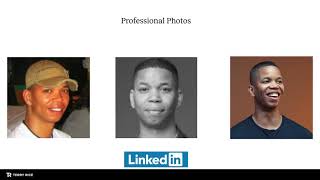
It's totally fine. But the basic components are as follows. I help this audience achieve this goal so they can achieve this outcome. That's what I'm going to ask all of you to do for homework, right? Write that personal branding statement. And maybe that's what you have on your Instagram or on your LinkedIn or when you first introduce yourself, that's what you say. It's going to be your tagline, so make sure you have one. That's the first step in establishing your personal brand and being able to leverage authority marketing. All right, so we're going to keep it moving here, and we're going to stay with LinkedIn for a minute. Make sure that you have some professional photos. All right, I'm going to be honest here and show you. This is what my LinkedIn photo was forever on my profile. And I think we've all been guilty of this. Like that one time you're out at some bar and you thought you looked okay because you had a dumb hat on and some earrings. And, you know, when I was in my 20s or I think early 30s in this case, that was fine because I wasn't worried about building my personal brand. But once I started my own company, that wouldn't cut it anymore.
Right?
Doesn't look too approachable. So then I changed it to this. I got some, like, free headshot at a conference I went to. In this one, I looked slightly less. I don't know, juvenile, I would say, but sort of still not like the strong personal brand that I knew I could have if I just worked with a professional photographer. And that's how we have this. Right? I'm looking at something aspirationally and looking happy. Now, when I reach out to people with this picture on my LinkedIn, I get much more response. Same as Instagram, Right? Because it's the way you present yourself.
Right.
And that's how you leverage authority marketing. Whenever you get asked to do a talk somewhere or appear in a podcast, they're going to say, well, oh, can you give me your headshot in your bio?
Right.
If the. The headshot you have is the one on the left where you like cropping people out. Yeah, not the best impression. Right again, so these are the little things you want to do to build that brand. Now, I know it's challenging during COVID you're like, terry, you know, how am I going to get a photographer? I'm not saying you necessarily need to do that right now. Just grab your phone, get against a white wall and do that instead. Right, Just a clean white wall or background. Take a photo. Anything's better than me on the left right now. If you want, and I highly recommend this, you could take it a step further. If you really want to up the game, do this. Get a logo to go with your personal brand. I'm going to ask again, yes or no, does anyone have a logo that goes with their personal brand? And it's funny, I was talking to Jason Pfeiffer, who's the editor in chief of Entrepreneur magazine about this yesterday. He's like, you know, when LeBron James came out and first had a logo, people thought it was ridiculous that an individual like him would have his own logo for his name. But now it's very commonplace. Right, so again, yes or no, does anyone here have a logo just yet? Oh, you do have one. Awesome. My, that's great. Laura, she do too. Manuel. I dig it. Yeah. So a lot of you do sort of. I love the sort of responses here. And I, and I. For those of you that are saying sort of and things like that, please share these with me afterwards. I'll put my, I'll put the link to my, my LinkedIn back in here now, because I want to see what you're. You're talking about. But, you know, a logo is not that hard to create on your own, should you choose to. You can just use Canva, which is obviously an amazing tool. And there's this other company that I've used before, it's called Taylor Brands, and they use AI essentially to create your logo. You would say, what kind of service do you have? Who's your target audience? What do you do? What are your initials? So and so forth? What's your tagline? So really, there's no reason not to have a logo. You could be done in about an hour or so, probably less. All right, so again, that's going to increase your branding just by having that. Here's another question that I think a lot of us need to consider a bit more. What are you the enemy of? What is your brand the enemy of? And this is kind of going along with Donald Miller's whole story. Brand Principles, yes or no? Have you heard of Donald Miller and his story, Brand Principles before? How we have this, this arc where it's like there's this character who has a problem and they meet a guide. That guide, by the way, is you.
Right?
You're the expert, Right. Who gives them a plan and then calls them to action that ends in a success and helps them avoid failure. What I want to do is help you amplify that. Amplify that? Instead of just being a guide, what if you're the enemy of that failure they're trying to avoid? I hate when people do this. That's why I want to help you avoid it.
Right.
You're a financial planner. I hate when people waste money or pay more in taxes than they have to. Just really infuriates me. That's why I want to help you avoid it.
Right.
Or you have an app that helps people maybe keep track of whose turn it is to clean the apartment.
Right.
I hate when couples fight over the most ridiculous things like whose turn is it to wash the dishes? That's why I have this app that helps you avoid it. Because if you express how much you hate whatever this, this, this, this failure that they might have this, this doomsday scenario, then the enemy of my enemy is my friend.
Right?
So now you're more than just a guide. You're a friend with a plan. So I want you all just to reflect on that based on your audience and what you do. What are you the enemy of? And that's how you'll just amplify the impact your personal brain has by you just going out there and crusading against this enemy and that you have in common with your target audience.
Right?
So please do reflect on that.
All right, cool.
So going a bit further here, first homework is going to be to write your personal branding statement. Now, I'd also consider strongly if you need to update your picture, do that. If you want to create a logo, that'd be great, too. And then lastly, just reflect on what are you the enemy of?
Right.
Super important. What are you the enemy of? Now, let's get into the meat of this. And by that I mean, how do you create content? Because when we talk about authority, marketing, it has to be based on your expertise, Right? It's not all personal branding. It's not all logos and pictures. So how do we consistently create content that shows our expertise? Right, so yes or no in the chat window again, do you post on LinkedIn once a week? At least once a week. Yes or no, do you post on LinkedIn at least once a week?
See what we got here.
No. Terry saying no. Cynthia, no. Who said yes? Siobhan said yes.
Cool.
Insta. Yes, I hear you. What else? Use Instagram. Got it, got it, got it. One time per month. Hey, it's a start. I hear you. It's all good. Now, the reason why I said LinkedIn is because 80% of B2B leads from social come from LinkedIn, so there's a good chance that's a platform for you to be on. That said, I know some people, for one reason or another, their audience is more active on Instagram. So, fine, go with it. Maybe it's Pinterest too. But the reason why I said LinkedIn and once a week is because only 1% of LinkedIn users post at least once a week. And those 1% split about 9 billion impressions every week, which is about 3,000 impressions per person, which is a lot. So the reason why people often don't post content is because they don't know what to talk about. And I want to help you alleviate that challenge right now by giving you tips on how to create content. So to establish a personal brand and your authority, you need to be consistent in how you express yourself. And so creating this content consistently is the best way to do that.
All right?
Now, the most basic. The most basic content marketing strategy is this. You think of 10 questions that your audience has, and you're the experts on your audience. You know it far better than I ever will.
Right?
So for me, I teach coaches and consultants, a question might be, how much should I charge? How do I get more clients? How do I deal with rude clients, so on, so forth. I would write the answers to those questions in the form of content.
Right?
Now, how do I do that? I can post on social media, my website can be my newsletter, whatever it is. But on your end, that's what you can do too, right? If you're saying, terri, I would post more than once a month, but I don't know what to write. Here you go. You can now post once a week for the next 10 weeks. Now you have two and a half months worth of content just by answering the questions that your audience has. How does this feel when I say this? Right. Questions create content. Is this something you can do? Do you feel comfortable answering these questions with your content? Again, the top 10 questions, your audience might have your answer to it, and maybe sharing some of your experience on how you've dealt with this before.
Right. Cool. Great.
Emma's saying, very helpful. Great idea. Appreciate that.
Yeah.
Awesome. Cool. And Daniel, I see your question. I'm gonna grab all those at the end. So please do keep them coming. All right, so please do this right. I'm eliminating. I'm eliminating one problem, but here's the other. Here's the other. And this is big because if I don't bring this up now, everything I say for the next 40 minutes won't matter whatsoever. One of the biggest reasons why people don't leverage authority marketing to grow their business is fear of other people's opinion. You know, 10 questions your audience has, but you're concerned about how people might respond when you post it. What if I don't get any likes? What if I don't get any comments? What if I don't sound smart enough, so on, so forth. So all these what ifs, what ifs, what ifs result in stagnation and you not sharing your zone of genius with your audience. So what I need you to commit to today is to just move past that, right? Move past that because you have valuable information to share.
And.
And by you shepherding it and not releasing it, you're actually hurting yourself and the people that could benefit from that information. So don't hold back if that's what your challenge is.
Right?
We all have that imposter syndrome, that fear of other people's opinion. We have to push past that now, right? So along those lines, you know, being expert is a prereq. You're all experts. We know that, but there's a lot of other experts out there. So how do you build your personal brand? You also display your personality. That's an aspect of it. And if you think about Vin Diesel and the Rock at a surface level, they're very similar, right? They're both action movie stars, they're both, like, racially ambiguous, and they're both wearing black tank tops in this picture.
Right?
But there's a big difference in regards to how they're perceived, Right? When you think of the Rock, you think, you know, family man, likes tequila, talks about working out a lot, so on, so forth. You know, even though, you know, Vin Diesel might have those attributes too, he doesn't really express it as much. And there's nothing wrong with being one or the other, because for this slide, I was going to look up their net worth and see how much the Rock benefited from his. His personal brand. The Rock's worth about 275 million. Vin Diesel's worth 225 million. So he's not broke. Even though the Rock might have a bigger brand in some people's eyes, Vin Diesel's doing okay. So you don't have to choose between being Vin Diesel and the Rock, it's up to you. Whatever makes sense. But again, having this defined personal brand is beneficial for you. Let's go deeper into brands now. Louis Vuitton. I noticed Louis Vuitton was selling a kite for $10,000. And I was like, damn, that's a lot of money for a kite. But again, when you're showing your personal brand, you can just share experiences from your life and then sometimes tie those back to a business outcome. And that's when it really gets interesting. Because you're creating content, you're telling a story around content that shows your personality but still provides value to your audience in regards to their business. In this case. And here's what I wrote about that kite on LinkedIn. I said, it's 2020. In Louis Vuitton, selling a kite for $10,000, it's 2020, and many consultants are afraid to charge more than $10,000 for their services. I said, it's not the economy, it's your mindset. And if you don't make changes, 2021 is not looking any better.
Right?
End of the day, this is a post about a kite. But take a look down here, lower left hand corner. It's got 33,000 views on LinkedIn. 33,000 views. Now, if you are paying for this content as a digital marketer, the cost for 1000 views on a channel like LinkedIn would be around 10 bucks. So I got around $300 worth of branding and marketing for nothing. I paid nothing whatsoever for this. That's the power of creating valuable content that sparks interest in your audience, right? But it can't just be all that how to stuff, right? So I want to show you how to move beyond this basic how to content and instead cross over to having more personalized content. Now, one thing I didn't mention that I want to mention now is take screenshots of anything that stands out to you and I would love for you to share them back with me on social media. You have all my socials on that landing page, but I'll put my, my Instagram in there right now. It's just, it's Terry Rice. So pretty basic. This is one you're going to want to take screenshots of. So here we go. This is a content marketing matrix. And this will help you consistently post content that that's aligned with your personal brand. But you have to follow the process.
Okay?
And the process is this. On the left hand side, we have mediums. Could be an image, could be a video, could Be a text, the first column or second. Technically we have your area of expertise. Whatever you're an expert at financial management. It could be digital marketing. Whatever it is, whatever your company does, you're going to post content about that and use these various mediums. The next one can be industry updates. What's going on in your industry? Show that you're staying on top of these things and then sharing your opinion with your target audience. Now, one of the best ways to do this is to set up Google Alerts for terms that are relevant to your target audience. Yes or no in the chat window. Have you heard of Google Alerts before? Google Alerts? And as per the name, what you do is you just put in certain terms like, like workforce management, and Google will automatically send you any relevant updates that occur.
Right?
So now you don't have to proactively seek out these updates. You can just get an email that says, oh wow, Salesforce is thinking about acquiring Slack in order to compete with Microsoft Teams. This is really going to shake things up in the workplace productivity space. Interested to see how that pans out? That literally could be your post. And that's a true story, by the way. That could literally be literally be your post and then say, hey, what are your thoughts on this? That's a LinkedIn post. Or you write an article about it. But again, you weren't actively looking for this information. You set yourself up for success by setting up these Google Alerts. Remember what I said earlier? Purpose driven, prepared. You're prepared by having these Google Alerts set up right now. What you're going to do next is this. You're going to just think of content that would apply to all of these different cells here. Don't actually write a post or an article yet. Just think of content ideas. So if you look at me, I can say a video showing mental and physical health, which is one of my hobbies, or something I'm passionate about. I had a video of me exercising in the snow. Another one under personality on the right hand column could show a picture of me doing like a spartan race. All right, so the right, the two right columns, that's totally up to you. Whatever makes you unique that you care about. Maybe it's a nonprofit, maybe it's meditation, maybe it's your family, maybe it's your funny right. Whatever it is, the two columns on the right are completely up to you. However you want to express yourself, that's how you grow your personal brand. It's not just updates and industry related content. It's you Talking about your personal. Your personal life and your interests right now. Oh, and cool. Glad you did it. Right, so. So the one in the lower right hand corner says, my kids making noise on while I'm on calls under personality and text based. The reason why I had this down is because during early Covid, if that's a time period we can reference, I was constantly apologizing for how much noise my kids made while I was on calls just like this.
Right?
And actually, yes, you know, in the chat window, have you heard my kids yelling yet? They're all under six years old. There's three of them running around here. So if you say no, you're either very polite or my wife is doing an amazing job as usual. Well, okay, cool. Not yet. I like that. Not yet. You know it's coming though, right? Yeah, give it some time. They will. So after a while, like, my clients kept on saying, like, don't worry about it. It's okay. We don't care. We care about you and what you have to say. You know, don't worry about the noise your kids are making. And that itself gave me an idea for a post, which was this one. I said, people don't care about your kids. Here's how I found out. When I kept on apologizing for the noise, the common theme was, again, we don't care. It's okay, don't worry about it. But I went on to say. I went on to say this, but if half of you is worried about the noise your kids are making the other room and the other half is trying to provide value, like I am right now, you will not be fully present for anyone, Right? Not your business life or your personal life.
Right?
So just say in the beginning and then deliver value. That's it. I said, if we're all in this together, we all have to understand that we all have our own constraints. So this post really didn't have anything to do with my work.
Right?
But again, it got like 30,000 views on LinkedIn in this case, and people reached out to me because of that. Like, I like the fact that you're an expert, but you also understand what it's like to be working under these constraints during COVID Again, that's why you can't just have all this how to stuff, right? And as a result of this, people have said, can you come on this podcast and talk about what it's like to be a parent who's also under these constraints, being an entrepreneur and trying to grow a business when you have kids at Home. We'd love to have you speak there. So, yeah, I can get on there and talk about that. But they're gonna say, well, what. How can people follow along with you? You know, what do you do? Then I get to say what I do.
Right?
So I'm growing my brand and my revenue through the authority. I have to talk about this type of stuff on podcast, on webinars, so and so forth. I'll give you another example here. Some of you I know might be going through it right now. And by that I mean maybe you unfortunately got laid off during COVID and I feel for you, right? I do, because I've been there before. In 2009, I got laid off and I actually had $7 left to my name. My electricity got turned off. It was rough. It was really bad. So I know what it's like. And within five months, I actually got a job working at Adobe, and I was making like six figures, which is great. That was actually a raise from where I got laid off from. So when I say some sappy story about, hey, you can do it, it's going to be okay, I'm saying it no, because I have been through it, and it was okay. But if you let the process that you're going through right now break you and who you are, you won't come out the same on the other end.
Right?
So I know it's challenging. I know it's been there, right? But the value that you have to provide has not changed whatsoever.
Right?
The circumstances have. But the value that you have to provide is not. I can say that authentically because I've had $7 and no electricity. So I wrote about this for Entrepreneur Magazine, and I also shared it on social media. Now, this is an example of repurposing content. You write an article and then you share it on social media. And again, we're not chasing likes, we're not chasing, you know, followers. But this got like 70,000 views and over a thousand people, you know, chiming in, saying they like it, and comments.
Right?
Again, didn't pay anything for this. But you know what? You know what's coming next. People reached out to me and said, hey, can you talk about this on my podcast? Can we do an Instagram live about this? Can you be on my webinar? So and so forth, right? So again, it's not just the how to stuff now on your end, this is something that you might not be aware of. Yes or no in the chat window. Have you heard of the Entrepreneur Leadership Network? Yes or no? Have you heard of the Entrepreneur Leadership Network? Tim says yes. Robin? No. No. Justin.
Eric.
Yes. Jamin? Yes. Cool. I'm all. No.
All right.
So the Entrepreneurial Leadership Network is this platform where you can actually write for Entrepreneurial magazine, just like I do. And then from there, you can express your thoughts, your zone of genius, your experiences, so on, so forth to the Entrepreneur Network. Right now, the benefit of this is they want you to write about yourself, not other people. So just like I did, you can write about your experience getting laid off.
Right.
Or anything else that comes to mind. So on my end, I think this is something to consider. Writing in general, right? If you want to do it for entrepreneur, cool, go for it. I think it's a great platform because it gives you that street cred. But writing in general and expressing your viewpoint, you know, your thoughts, your experience, as opposed to how to stuff, is a very valuable way to build your brand right now. Going a bit further here, actually, I want to bring up the point that if you, when you go to this, you'll notice I'm on the landing page for that program. I'm not a paid sponsor for it. I'm just. I happen to be on there because I enjoy the writing for it, but I want to bring that up just to clear that for anyone who's wondering. But again, if you write for the platform, you can write about your experience. What did I write about? Posting 90times on LinkedIn in 90 days and the benefits I had from it. So when I'm talking to you about why you should post content on LinkedIn, I know the benefit because I've done it before, and I can share that experience with the entrepreneur community as a contributor, you could do the same thing. Run an experiment on yourself, share the expertise that you. That you've developed as a result.
Right?
So again, your homework now is to next complete your content marketing matrix and start creating content as well.
All right?
We want to make sure we push past the just the planning phase to the creation phase. Next up, speaking, right? Like I'm doing now. Speaking is one of the clearest paths to establishing your authority. And what you want to do is this. Again, another great time to take a screenshot here. Develop a compelling and relevant speaking topic for your target audience. You know that better than I do, right? Whatever makes sense for your audience. Develop a speaking topic. If you're stuck, you can look and see what conferences your audience might be attending and what, what topics are being presented there, right? What gets someone on stage at, like, the National Marketers Association Conference, whatever it may be, right? If you're stuck, that's what you do. You reverse engineer success and say, okay, can I make something similar to that as a compelling topic? Next up, align with organizations who already have access to your audience and offer to deliver that presentation. This takes the all the friction out of getting people in front of you. You're going to reach out to some organization who already has access to your audience. Maybe it's some kind of industry organization, maybe it's an app or a tool. Reach out to them and say, I would love to deliver this content for you. What do you say? And then provide a reason for attendees to follow up with you afterwards. Hey, if you want a copy of the deck, go to my website. Hey, if you want to download this guide, go to my website, whatever it is. But make sure you're closing the loop. Close the loop. We're not just doing personal branding here, right? We're combining personal branding with direct marketing or direct response marketing, right? So here's an example. The topic might be digital marketing for entrepreneurs. The organization might be the Brooklyn Chamber of Commerce, right? You're going to reach out to the Brooklyn Chamber of Commerce and say, I know you have a lot of entrepreneurs in your network. I would love to do this talk, digital marketing for entrepreneurs. What do you say? Well, hell, that sounds perfect actually. Sure, sign me up. Right? Let's do this. And then the reason to follow up, maybe you created some one page digital marketing plan they can download and fill out to, to start their planning, right? Really easy. So the next thing is this. Be prepared. Prepared to absorb the attention you're about to receive. Because that's where I see people fail a lot, right? They'll do a talk and they're not prepared to absorb the attention they're going to receive from the audience, right? Oh, I don't have business cards. Oh, I don't have a landing page set up. Oh, I don't have my services well defined, whatever it is. So this is more or less a checklist that I go through every time I speak. Do I have a custom landing page for someone to access the deck? Are there more resources? Do I have a lead magnet? Some kind of valuable information we exchange for someone's email address? You want to have a call to action as well. And then lastly, automating your next steps. Okay, so let me ask you a question, yes or no. Do you have an automated email that goes out like once someone signs up on your website? Is there some kind of automation behind that where they get three or four emails outside of your traditional newsletter. Kathy does. Awesome. Crystal. Not yet.
I hear you.
You're on it. Jim does. I dig that. Jim. Good job.
Maya.
Not yet. What else? Not automated. Chris. All right, Chris, so you're the perfect audience. You're exactly where I was for far too long, especially as a digital marketer by trade, not having this process automated. And I'll give you an example of how mine is set up. So one piece of content I have is called the one page business plan for coaches and consultants. And I'll go through the whole automation process afterwards. But you need to have some kind of valuable information you could share with your audience and also ask for their contact information. You should have some that's not gated whatsoever. The majority of content shouldn't be gated. You should have so much free and readily available content available that people want to go to your website and learn more about you in the first place. But on the other side, it does help you to have some kind of lead magnet so you can do some kind of email automation. So I did a presentation for this company called Honeybook last week, actually last week. And I said, hey, if you want to get this one page business plan, go to my website. It's going to be awesome. So and so forth. And this one person got it and liked it so much they shared it with their boss. But then their boss sent me an email about a mistake that I made and I'm going to share that with you right now. Said, hey, Terry, hope you're well. My web developer sent me to your site bragging on a session you did today. Her exact word was fire. You know, I really like this business plan. It's a great resource. But I noticed a small typo in your autoresponder and she called it out. Then she said, hey, continue. Blessings and success. Yours in health, right? So what I'm saying here is you can even kind of mess up once in a while. And if people can see through the value, they'll still appreciate it and in this case give you a heads up. So if you're stuck not releasing content, not posting something because you're like, oh, it's not perfect. Perfection is the enemy of progress, right? Just let it go, right? You can fix it later, but you'll have nothing to fix if you never launch it, right? And this is the power of having people that are aware of who you are and can share, spread the word about you, right? This is it right here. You know, you can do one to one outreach. Obviously, I know A lot of you have been there before, but it's time consuming. It's, you know, it's a passive or cold audience and you have no credibility. You can also do one to many, right? That's when you're doing speaking gigs or you know, social media or your newsletter, so and so forth. It scales your time better. There's a slightly more captive audience, but at the end of the day it's like the credibility is not quite where it could be until you move to many, to many marketing, many to many. That's where you have these loyal fans that'll tell people about how great you are, share their experience and then they come to you saying, oh, you know, Chris told me about that, Kelly told me about that, so on and so forth. My web developer told me your presentation was awesome. I'd love to talk to you now. That should be your goal. That's the power of having that authority though, right? And now here's where it gets interesting. If you work internally, right? Or if you have, if you manage a team, it benefits you for them all to have their own personal brand too, because then they can attract prospects to your company and then from there eventually move them onto a lead as well as a client if it's a good fit, right? So let me show you how this looks. Because often when companies create content, someone internally is doing it, but they're not a knowledge based expert, right? So there's a disconnect. This is the benefit of having your internal experts create content, right? First of all, they're gonna feel recognized. Well, you know, thanks for letting me post in the company blog. Thanks for letting me speak at that conference, so and so forth, right. And there's less of a burden to have someone who's not an expert try to sound like they are, right? And then the content's gonna be more valuable with a practitioner. Someone's going through this stuff on a daily basis, right? Cause you know how to write from their perspective better, right? And it's going to be much more authentic because if someone sees your content like that woman did, the developer, and then tells your boss about their boss about them, those leads, those internal referrals, this is as per Salesforce, convert it 15%, which is higher than any other channel. So this is actually a more effective way to grow your business, right? It's more effective than just going ahead and trying to post content in and ads without having your experts do it. So you're gonna have a higher morale, better conversion rate and increased brand authority. Super important there.
All Right.
So you might have noticed that I have some branded content, right? I have these branded slides and these. These graphics. It helps to do this stuff, too. It helps to do stuff, too. It gives you more authority. And this guy, Scott, Scott Atkin actually is the one who did it for me. So if you're curious about Scott, you can reach out to him here. But he. Here's how I met Scott. I met Scott by doing a webinar for General assembly, and he attended. So when you're speaking, you're growing your network as well, and you're finding more business partners just like Scott. And he's an amazing guy, so I'm lucky that I met him.
Right?
That's the benefit of growing your brand. You expand your network. And hell, that's kind of hard to do these days, right? That's the power of having this authority to do these, these talks, right? So when you talk, you get known as a speaker, and then you just keep on getting more speaking opportunities, which is great. But it's interesting. I met this woman, Sandra Garcia, and we teamed up together to do some talks for Google. She's a Google digital coach. And during one of the presentations, she did something that was very bright but also very obvious. Once I saw her do it, she just said, hey, do you know if there's any other organizations that might want to have me speak for them? And I was like, wow, we can do that. I never actually thought of it. But again, when you ask someone, the answer is either going to be yes or no. But if you don't ask, the answer is definitely no. Right? So I just thought it was so bright that she did that. But when you're presenting yourself as authority, you don't sound desperate or salesy when you ask that question. You're just saying, hey, do you know anyone else who could use my help?
Right?
That's it. So the benefits of speaking are you're going to grow your authority. You can find new business partners. Hey, if you're a company, right, and you have a team of people, you can attract new hires. Everyone wants to work at that cool company where the people are on stage, or webinars and thought opinion leaders. And then you can also get more paid speaking, get more speaking opportunities, such as podcasts, conferences, you're quoted, and magazines, stuff like that. And then you can generate leads and revenue. Super awesome. So your homework, it doesn't stop, right? This guy keeps on going with the homework. You're going to outline your speaking topics. Just create the outline, right? The description of it and the key takeaways. And then once someone says yes, we'd like to have you come speak, then you build the deck. So you don't have to build the deck until you get a yes on it, if you don't want to. Just bringing it up from past experience. All right, how does this feel so far in regards to how we're walking through this? Does it seem confusing? Does it seem obvious? Is it clear? How is this landing with you? I want to make sure that we're making some impact here. We are walking through everything, right? Awesome, exciting, freaking amazing. Cool. Haven't heard the F word in a while, so that's cool. I appreciate it.
Great.
Awesome. Yeah, I mean, that's my goal, is to show you that, hell, you can do this, right? It might seem challenging, but doesn't have to be confusing. Generating leads and revenue. Let's talk about this now.
All right.
Again, we're not doing this just for personal branding. Look how many followers I have on Instagram. Like, that doesn't pay your bills, right? So let me walk through this process. And it might seem complicated, but you're going to need to push through this process one way or another.
Right?
And I'll walk through what I mean, on the landing page, after you download that one page business plan, this is what you'll see. I'll say, hey, it's on the way. But by the way, here's some more ways you can work with me. You can download. Sorry, you can join my, my group coaching program where I'll train you how to grow your consulting business. Over the course of 12 weeks, you can sign up for my, my online course, which is aligned with the same content, starting a consulting business. And you can also book a power hour where I'll consult you for an hour on how to grow your business. All this stuff goes on the thank you page after they download your lead magnet. Now, here's where we can start automating our authority. And for those of you that are time constrained, this is super important. All right, a few tools I'm going to walk through real quickly. So we're on my website, which is built by Squarespace. You fill out your form there, you get your business plan sent to you by ConvertKit, right, this email marketing platform. And then over the course of the next two weeks, you get four more emails encouraging you to take another action. Now, HubSpot is my CRM, my customer relationship management platform. And these, this, these tools are all free so far. Well, Squarespace, no, but actually, no, they do have a Free version. I'll take that back. HubSpot is a great free version you can use to manage all your leads, your pipeline, so on, so forth. But you're too busy to just keep all this stuff in your head. So you can use that as well to keep track of your leads in your pipeline. If you need help with this, let me know. I created this walkthrough that you can do. It'll take you like an hour or two. I'll show you how to use the free version of HubSpot. Next up, Zapier is a tool you can use to connect all these platforms should you need to. And this is a free platform as well, unless you need to upgrade. Webinar Jam is what I use to have these on demand webinars, seeing how I can help people and it'll pop up during the webinar. Click here. If you want to buy my course, for example, and my course is hosted on Teachable, right? Another platform that you can leverage to grow your brand. And this time we're doing passive revenue, right? So if you do buy my online course through Teachable, you could then attend office hours through Zoom, right? So another product, we're up to like six or seven now, right? I know it sounds complicated, but for me to put all this together, I had to update it recently. It took me 12 hours. I did it while my daughter was on winter break because actually, when she's not in school, I have more time because when she is in school, I sit with her every day from 8:30 to 12:30 proctoring her while she's in kindergarten. So during her winter break, I literally spent 12 hours putting all this stuff together to update my funnels. So again, if you attend office hours, that takes place through Zoom, but then I also post it on YouTube so other people can see it. Now follow my logic here. I post it on YouTube so other people can see it. And at the end, after I answer all these questions, I'm like, hey, if you want to join next time, sign up for my course. So what I'm doing is I'm using the content to attract more people to the course. And then once they buy the course, they become part of the content by asking me questions. See how it loops around like that. And then I'll have the same thing on Instagram. I'll say, hey, did you miss it? Here's the questions that I talked about. If you want to be there next time, join the course.
Right?
How does this feel? Right. So again, I'm just using my experience to Create content, but the content leads to something they can actually purchase. So I'm not exhausting myself saying, what should I say today? What else should I do? So and so forth. I'm just leveraging me answering questions, me looking like an expert to create content and saying, if you want to ask me questions too, join this course, right? So you get to a point where even your mess ups become content. Check this out. I said, hey, someone called me out on having a typo. I said, perfection is the enemy of progress though. And if you provide value, people still overlook those mistakes, right? But they'll never get a chance if you don't share it. So my mess up, I'm not hiding it, I'm putting it out there as an Instagram story at the end. And then I'm saying, oh, also, I fixed the typo. If you want to download this thing, here you go. See how simple that is? So even when you mess up, it becomes content and you build your authority. Why? Because you're confident enough to say, hey, yeah, sure, I messed up is what it is, you know, and I'm owning up to it because I'm not perfect, you're not perfect, but let's all try.
To get better together, right?
Let's move forward. Like this question somebody might be asking is like, does this actually work? Does this work? Are you making money from this? Or are you just, you know, getting likes and stuff like that? You know, how do we know this is actually working, right? So let me show you something. This is my Google Analytics for my thank you page for that business plan, right? When someone hits the thank you page, it gets recorded in Google Analytics. And right now we're seeing that. I got 105. In this case, 60 came from social, 36 were direct. But some of those direct were actually a function of them going directly to the site because I mentioned it, and then some through organic and, and email. All right, I got 105 people to download this business plan, right? That means they submitted their email address. How long do you think it took me to get 105 downloads? Just take a guess in the chat here, how long do you think it took me to get 105 downloads? Total of 105. Me, solopreneur, three kids, all under six. No paid ads whatsoever. One week, two days? Five minutes? I wish. Three days. What else? A month, three days? An hour? Alexander? I wish. Yeah, no, it took me one day. In one day I brought in 105 of these leads. Okay, 105. No paid ads whatsoever, right? No Partners. In this case, just me posting on LinkedIn saying, hey, what do you think of this thing? And if you want to ask the question, did you get anything from it? Yes, I did. Right. Otherwise it wouldn't be a good story to tell. So, yes, there were thousands of dollars worth of revenue generated from this. So think to yourself, hell, what could you do with 105 leads? I don't know your average order value, I don't know your conversion rate.
Right.
But if you had 105 leads, what does that mean to you? And the fact you can do it without paying a dollar. Oh, it's pretty cool to me. And I'll show you the exact posts, I just said, hey, I got this business plan, does anyone want it? And I'm being overt about it. But if you look, even this Post got what, 12,000 views for $0 on LinkedIn, right? That's it. Because when you create content consistently enough that does provide value outside of you selling stuff, people are okay with you promoting yourself. On occasion, I always say use the 8020 rule, one out of every five posts, you can promote yourself. It's fine. So here's the thing. How can you get away with that? Because of stuff like this. Me saying, hey, is anyone else working like this? Does anyone else have a 2 year old on their shoulders while you're trying to work and you're struggling just to get an email out and your kids like banging on you saying, dad, I want to do this, dad, I want to do that. But by authentically telling your story and even the challenges that you're going through, that's how you have the permission to say, hey, look, here's part of my life and here's how I generate revenue. And you're much more approachable, right? And people can just understand who you are much better. And here's the actual post. I said, hey, is anyone else working like this? Yes, it's challenging, but when I get frustrated, I think about the impact I want to have on those around me. My goal is to help people find success and fulfillment, no matter how they define it, on their own terms. But to do so, they have to push through some challenges. But I can't effectively help people if I cannot, if I cannot relate to their challenges as well.
Right?
So in my case, I said, I can say, you know, I know it's tough. I've been there before and I figured out a solution. I want to help you as well. But you have to learn it, live it before you teach it.
Right?
So that's what I'm showing here, right? And again, we're not chasing likes, we're chasing impact. But these kind of posts are what show your personality and help you build your authority as well. So homework and next steps, right? All this stuff, we talked about it already. Creating that content, automating the lead nurturing process. I don't want to spend too much time on this, but I do want to give you a challenge. And if you, if you accept this challenge, you're going to grow your authority, your brand and your revenue in a very short period of time. It's this. Conduct and compile industry research, right? Something that's relevant to your industry, you're going to do that research, right? And what you can do is reach out to 50 people or organizations who have this knowledge. So let's say I'm a financial consultant. I can reach out to people who work for various magazines and write in the financial column, or maybe there are teachers at, you know, universities, prestigious universities in the finance department. And I could say, I want to do this research. You know, what's the top 20, 21 saving tip you would give people or mistakes to avoid? You're going to let them know you want to survey them and then compile all that information into a PDF, a blog, some kind of speaking topic. Then share across all channels. But beyond that, pitch that to media outlets, conferences, you know, and share directly with your prospects. Hey, I see you're going through this challenge. You know what, it's not just my opinion. I surveyed 50 people who are thought opinion leaders. Here's what they said. I would love to share that with you.
Right.
This is how you get press, right? Because you've done all this work to do this research and now you're presenting it to a larger audience. But you're the one who did all that, that I call it lonely work to get this information. Does this make sense, what I'm saying? Like, you're just doing all this grunt work, right? It's hard, it's not easy whatsoever. But through all that effort, you get rewarded with the attention you get by sharing that with a larger audience. And then beyond that, you get to piggyback off the authority of all these other people that you've interviewed.
Right.
And one of my clients, actually, she did this herself and she has a TED Talk to discuss the results that she came up with as a result of that. Her name is Lindsay Howell, if you want to find her on, on LinkedIn.
Right?
So that's your extra credit. And if you do this, please do Reach out and let me know because I'd love to support you as you're doing it.
Cool.
All right, so again, to access the deck, you can go here to terryrice, co backslash216 momentarily. I'm going to post that. That question for everyone. Just asking you, you know, your biggest takeaway as well as what you do and who you do it for. But most importantly, I want us all to keep in touch and just keep supporting each other. So please do so. But I have some time here to grab some questions, so. Oh, thanks, Mark. I appreciate it. And yes, it will be recorded, so thanks for asking that too. It's always a good question. That means you actually enjoyed it if you're asking if it's recorded.
Right.
All right, so let me pop out these questions a bit more.
Here we go.
Homework slide. Oh, yeah. So to get a copy of the deck, let me put it in here again. You'll get all the slides. You can get it right now. The content marketing matrix, that's in the deck too. Can I explain a personal brand versus company? Yeah. So one thing I'm doing right now is I'm actually training this consulting company based in Canada on how their internal experts can create content across various channels to leverage what I was saying before, just attracting prospects. So your company overall has a brand.
Right.
But it's really made up of individuals, and each individual should be allowed to express their personal brand outside of what the company says they stand for, so long as it's not counter to what the company stands for and is not abrasive. So if it's written content like a blog or an article, maybe you have that go through someone who's like in the communications department or pr, maybe, but their social media, they should be empowered to just share content that is aligned with their personality as obviously as it applies to their job too. But it's their personal brand that they're just free to express. Because, hell, you want your employees to have a brand because you want them to get on stages, on podcasts, on webinars, so and so forth, because it grows the brand overall as well. Thank you so much. Is it helpful? Cool. Yeah. What about reposting other people's content with a comment? Okay, cool. Alexandra, let's dig in here. If you repost someone else's content on a channel like LinkedIn, I think that's what you're asking. Don't just directly repost it because you get less reach if you repost. If you, if you share a post on Instagram, on LinkedIn what I would do is summarize it in your own post and then say, hey, the link to the original post is in the comments because if you have a, if you, if you share their post, you'll get less reach for it. So yes, give them credit, summarize it and say if you want the link to the original one, it's in the comments section. And the reason why you do that is because if you have an actual link, external link, I should say in your post, it decreases your reach. So be aware of that. How much are the courses? Oh, thanks for asking. The course, how much? I think it's like 297. But there's a coupon actually on the landing page that I gave you. If you again, I'll put the website in here again you get 30% off as someone who attended this webinar, so hope to see you there because office hours are tomorrow. So if you join the course today, you can join office hours tomorrow where I'll answer your questions live about growing your consulting business or what to write about for entrepreneur as well. If you want to do that.
Well.
Where do we turn in the homework? Kari, let me know what you come up with. You got my LinkedIn. So yeah, let me know. Quick question. Can I talk about promoting yourself versus your company on LinkedIn? How do you make the distinction? Yeah, so you want to split your posts. Some are going to be strictly personal. Here's why I enjoy doing customer service for SaaS companies. Another one could be like, I'm so glad to be on the team at this company. In our recent case study we talked about this and you know what? The biggest thing was this comment I got from my client. So hell, everyone at your company should be sharing the impact of case studies. I'm so glad I was on this team. I'm so glad I was on that company. But also talk about things that are native to you too. One reason I like doing this is because I used to have the job my clients have and I know what it's like so and so forth, right? Or I read this book that really helped me think more clearly about how I can help people. Whatever it is, right? So split the two. But grow your own brand too. Because you're. Your company is essentially the aggregate of the brands that everyone works for. That works for you.
Right?
So so long as you're all aligned on how to represent yourselves within some constraints. Not, not rigid, right? But saying, hey, we don't talk about this, you know, you, you should be fine and letting this kind of go and just trusting people to create their own content because that's. That's what your company is, right? Really helpful.
Cool.
Awesome. Very insightful. Awesome. Will this work for digital marketing?
Yeah, man.
Alexander, I used to be a digital marketer. Yes, please do this. Please do this. Instead of screaming about ROI and ROAS and LTV and all this stuff, just say, hey, you know, like, here are ways that you can. I know restaurants are going through it right now and you're having trouble, you know, monetizing your business because you're spending so much money paying Seamless for their app. What you should all do is really consider bringing someone in house to fix the UX on your website. Create your own internal app. You'll save so much money on seamless fees, it'll actually pay for that person's expertise in the first month. And after that, it's all profit. Right now, no one's ordering from you directly because you're making it too hard. Right. That's the story I would tell.
Right.
So that's what I would do. Can I repost the link? Sure, if you need me to.
Yeah.
There it is again. You have a body shop and you want to bring in more clients. Yeah. No, I dig this. I mean, even little things like, hell, I mean, my wife, she bought a new car early 2019. Early 2020, and she only drove a thousand miles on it, which is horrible. But even talking about that, like, hey, even if you haven't been driving your car, you still need to get it maintained. You can't just have it sitting there. And here's why you think it's sitting there, being preserved, actually, it's kind of rotting because cars need to be driven, you know, that could be part of your story.
Right?
I went to Toastmasters for a year and I love to communicate effectively. Is this something that aligns with supporting people when presenting? I'd say so, yeah. I mean, I think people, even if you're a good presenter, I'm not saying you, but anyone. It's. It's totally different when you're talking to a computer screen. Right. So I think there's more of a need even than before, at least a different need for people to get coaching on how to communicate effectively through a webinar. What's the best way to increase sharing of your offering by key members of your industry? When starting out in word of mouth, what I would say is maybe quote them in your post or your content.
Right.
It could be an article, it could be a post and reach out to them and say, hey Kelly, you know, I see what you're doing over at Panasonic and I think it's amazing. I just want you to know that I shouted you out in this post. You know, if you care to take a look at it, that'd be great. But I think it's awesome what you're doing. Reach out to them with that. A genuine compliment, a genuine question. Maybe download their lead magnet and say, oh, this lead magnet was amazing. Thanks so much for this guide. You gave me so much information because that's when I stop and pay attention when someone proves they actually did some research on on me. Even saying thanks for this webinar was cool. Like, but if someone's like, oh, I saw your profile and you're very impressive, like that doesn't mean anything, right? So that's what I would do. Really blown away, cool new demand, sweet. Appreciate that fantastic content. I appreciate that too. How much is a one on one with me? You could just buy the course for 300 bucks and you can have a one on or a one on many every week. But that information is on my website because it varies a bit. It is recorded. You're good man. Glad for asking. Can't wait to enroll in your course. Oh, that's awesome. Looking forward to see you tomorrow. Hopefully you're going to connect. Can't find the deck on your website. It's. There's a link to it. It's a. It's a link to my Google Drive. But Steve, you can't find it. Please do reach out to me. Happy to send it to you. What about event planner reimagining business virtually? Oh yeah, so same thing I just said. You know, if you're an event planner, how do you shift to a virtual experience and make it impactful? Companies need that stuff, right? Like even this company convene. They used to be like this. It is a spot where you can like rent a room or like a banquet hall for, you know, whatever occasion. They're actually now creating a competitor to zoom where it's like more of like a boutique way of hosting meetings, so and so forth. So that's a whole new industry. And for you to enter that I think makes sense because what's the worst thing that can happen when you're planning an event remotely? Something happens, right? You're there to help make sure it doesn't, right? You're like, hey, let's check your lighting, let's check your wi fi, whatever it is, so and so forth. Hey, in advance, how about you buy a WI fi booster, buy a ethernet cord, whatever it is, you're that expert. Buy a selfie light. Hell, you know, whatever makes sense. That's what you're going to say. Very considerate. Cool thoughts on Clubhouse. I want to stop sharing my screen so you can actually see me. And I know we have to leave soon, but I actually like this part. Um, so I'm gonna stop sharing, I think.
Yeah. All right.
So you should just be able to see me right now, I think. If not, whatever, you know what I look like. Okay, so clubhouse, great platform, right? You go there. It's audio only. I think it's amazing. What I don't want you or anyone else to do is chase fame on it, because some people are like, oh, it's a new platform. If I get on it right now, I could become an influencer. Awesome. You're going to exhaust yourself seeming. Instead of being. Seeming like someone who provides value to an audience instead of being someone who provides value to an audience.
Right?
So on my end, I actually did a clubhouse room. There's like 10 people. 10 people there, and we had a great conversation, right? It was genuine. Everyone got to come on stage, and I'm like, hell, this is like hanging out, right? Because think about when you went to conferences years ago or months ago, whatever it was, you normally got more value from, like, the breakout rooms, right? Or like those conversations in the snack line or whatever. Not from being in this huge, huge room where there's one person's the center of attention. So I think really, the way to win on Clubhouse, if you don't exhaust yourself trying to become an influencer, is to go in those smaller rooms and not let your ego get in the way of the impact you can have. So for me, that's what makes sense. And it's a lot of fun, too, because I don't get out much. So those are my thoughts. All right, what else do we have here? I'm not seeing anything else, so.
Probably.
Hear some Brooklyn in the background. Have to run. You have to run, too. All right, cool. All right, well, I'm not seeing any other questions, so if you do have any, please do reach out. But I know my wife has a job too, and she needs to work because hers is just as important as mine. She's probably more important. That's how we get our health insurance. So I'm gonna go. But honestly, this is great, guys. So I appreciate your time. I appreciate your questions. If you have more, you know where to reach me. But I would say some of you. You know, this might feel challenging, like I said before, where you're like, oh, I'm afraid of someone else's opinion. That fear of other people's opinion is actually rooted, like in the caveman days, right? Or cave people days, I should say, because back then, if you were on the outs with your tribe, you would not get food.
Right.
They would not share resources with you. So it's in our DNA to really want to be accepted by people. And as a result of that, fast forward to now, we don't want to post content on social media for the fear of being ostracized.
Right.
Other people's opinions.
Right.
But we're not running from, like saber tooth tires anymore. And hopefully we all have enough food.
Right?
So you don't have to worry about that anymore.
Right?
But again, if you don't do that, if you don't express your zone of genius to an audience who's waiting to hear it, you're hurting them and you're hurting themselves yourself.
Right?
So please do keep that in mind. And again, thanks for your time. Again, looking forward to see you on social media. Email me whatever it is, but take care. Thank you.
More from Terry







When you want to quit, don’t. #FitnessOver40 #MindsetShift #TiredIsNotAnExcuse #PersonalGrowth




You’re gonna want to give up. Don’t. #mindsetshift #motivationalquotes #motivation #dontgiveup