Brian Cristiano Interview: Sales Tips for Introverts and How to Avoid Getting Ghosted
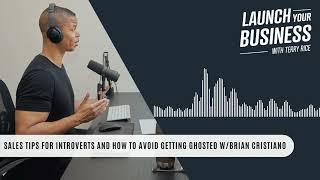
Brian Cristiano, CEO of Bold Worldwide, talks with Terry Rice about sales strategies for introverts, how to handle sales calls without fear, and ways to speed up the sales process. They cover building a personal brand to grow your business and why prospects ghost you.
They're just like you and I. They've got problems, they've got challenges, and they're looking for good people and good companies to partner with and to work with to help them get to the next level. And if you can really connect with them and you have a framework and a script and you understand what the right questions to ask are and when to ask them and how to do it simply and quickly, you can get Fortune 500 executive on the phone and you can get a deal.
Today we're joined by Brian Cristiano. And if you have questions about how to get better at sales, here he has answers. As the CEO of Bold Worldwide, he's landed deals with PepsiCo, UFC Gym, OrangeTheory and more. Today he's gonna share how you can also win big deals and avoid getting ghosted. This is the launch your business podcast because we know starting a business is challenging, but it doesn't have to be confusing. Each week we'll give you the tactical advice and the necessary tools to scale your business without feeling burnt out. I'm Terry Rice, business development consultant and staff writer here at Entrepreneur Magazine. Let's dive in. Today's episode is brought to you by chatterboss, a company that provides entrepreneurs with top notch executive assistance so you can make more money, save time and avoid burnout. Get started today and save $50 off your first month by heading to chatterboss.com launch that's chatterboss.com launch. As an entrepreneur, you often end up wearing many hats and sometimes you don't feel like wearing all of them. I see this happen all the time when it comes to sales. I'll share one of my experiences, which was embarrassing, but it's also going to highlight why this episode is so important. One time I was talking to a prospect about my consulting services and she eventually asked for my rate. I told her and then she said, hey, can you repeat that? You broke up a little bit. And for some reason I told her a lower rate. To this day, I have no clue why, but I'm pretty sure she did it on purpose. So kudos to her. I'm bringing this up because if you're not confident in regards to how you present your services and your rates, anything can throw you off your game. Even a fake, bad connection. So that's why today we're chatting with Brian Cristiano.
You know, I'm Brian Cristiano, founder CEO of Bold Worldwide, the strategy and marketing consulting firm in Manhattan. Also Bold CEO brand which I advise, invest and train up other business owners to grow and scale their businesses.
He's the CEO of Bold Worldwide, which is an advertising and consulting agency that's helped transform many prominent brands, including Jennifer Lopez, Alex Rodriguez, and the New York Mets. But what's even more impressive about Brian is that he began his career without any connections or money. At 16 years old, Brian picked up a video camera, taught himself how to film, and produced a skate video, which he sold for over $40,000. Today, he helps other people develop the skills needed to thrive in business and their personal life. So today we're going to chat about winning bigger deals, accelerating your sales cycle, getting over your fear of sales calls, and how to avoid getting ghosted. Let's hop into it right now. Hey, man, I'm glad you're here today, and we've obviously been connected for a while. I love your work, but I realized that I never asked you why you do it. And I know you've heard this before, people don't buy what you do. They buy why you do it. So what is your why? Oh, man.
I want to touch as many other businesses as I can. What I've realized is one of my biggest strengths over these last couple of years is I have the ability to take other leaders and make them better leaders. And if I can impact other leaders, meaning business owners, they have employees, they have families, they touch so many more people. So instead of me being focused in on, you know, how do I do something one time transactional, how do I create impact with other leaders who can create more impact? And so that, to me, is my why. It's exciting because I get to see that, you know, helping one other person become a better leader and grow their business impacts potentially hundreds or thousands of people.
That's cool, because I've actually never thought about it like that before, where it's like, if you find this one person who is already impacting an audience and then help them do it better, then your efforts are essentially multiplied from there. So that's. That's brilliant. But how do you think having a personal brand has helped you make a pivot from primarily focusing on your agency before, but now you're going into consulting, advising, and this training program that you have.
Yeah, that's a great question, Terry. I think that having a strong personal brand and deciding to make a pivot, like, really getting clear on what my why is and where my impact is and what I want to do, which really is help other leaders be better leaders, having that personal brand allowed me to make that change, make that pivot very quickly, because I Already had a built in audience. So it wasn't a matter of starting from scratch. It was just a matter of retelling my story and clarifying what it is that I want and what it is the impact that I want to create. And so it allowed me to already have people that were on board with a similar vision before. It wasn't a total change, it was just a redirection. And so having that personal brand as a backing really allowed me to catapult it faster than I would have had I tried to start from scratch.
I imagine a lot of people that approach, you are essentially starting from scratch, or at least it feels like it. You know, they just left their job and they're doing something new with entrepreneurship and they see you as this guy that can help them get better at sales. And I do want to get more into that, specifically in a moment. But normally when I hear sales, that means someone wants to grow their business. So when it comes to growing a business, what is one question people should be asking, but they just rarely do, if ever?
Oh, the question no one asks when it comes to scaling any business, but especially advertising or creative firms, is should I scale? I think everyone needs to really ask that. Because you can have a hundred million dollar business where you never see your family, you have absolutely no creative freedom, you're working a hundred hours a week and your margins are 2%. That's plausible. And that's quite frankly a lot of businesses of that size, especially in the advertising world. And no one ever steps back to say, hey, what do I actually want out of my business? What lifestyle do I want my business to provide for me? And Maybe that is $100 million business because there's nothing wrong with that. Maybe that is a billion dollar behemoth, or maybe that's a million dollar company with a good margin, with a flexibility and a good team where you can spend more time with your family. Most people don't ask that. They just simply go, how do I grow? Why do you want to grow?
Okay, we're going to take a quick break and when we come back, Brian's going to pass along some great tips on how to navigate sales calls and and speed up the process of getting a yes, let's take a quick moment here to talk about Chatterboss. Chatterboss is a company that helps entrepreneurs make more money, save time and avoid burnout by providing top notch executive assistance. And I gotta tell you, I've been using the service for the past several months now, and I have no idea how I got by without them before. My assistant Megan handles everything from prepping my newsletter, designing social media posts, sending out invoices, and even finding local activities for my four kids. But here's one of the most important things. She's not just an order taker, she's also a thought partner who presents new ideas and even challenges some of my bad ones. But here's what makes chatterboss as a company so unique. You have one assistant who can handle your entire remote team. This includes other specialists within the ChatterBoss network as well as independent experts that can be found elsewhere. But either way, you have one point of contact with who knows you your business and can anticipate your needs while you're focusing on other high impact activities. Get started today and save $50 off your first month by heading to chatterboss.com launch that's chatterboss.com launch we're back with Brian Cristiano. He's the founder of a multimillion dollar marketing agency and trains other business leaders as well. We're focusing on sales, but it's impossible to ignore how much your personal brand contributes to your success. It increases the trust that people have in you and they can more easily spread the word about you and your business. Brian also brought up a really great point that most of us probably don't think about. How large of a business would you like to build? What are you looking to get out of your business? Is it money and prestige or are you more concerned with your overall lifestyle? Of course there's room for trade offs, but keep that in mind as you look towards the future. So let's get back to Brian and I asked him about something that just frustrates me and I'm sure a lot of you can relate to it as well. Whenever I'm pursuing a major partnership or even a speaking engagement, it just seems to take forever to get the deal signed. And then during the interim, I always try to find ways to check in without seeming like a pest. But Brian's the pro here, so I asked him why does a sales process have to take so long and how can we speed it up?
Anyone with a really long sales cycle needs to consider two things. Number one, if you really do have a long sales cycle, you need to give value and create and build a long term relationship, right? Which is how do you really help them even if you're not actually trading commerce, can you point them in the right direction? Can you give them a resource? Can you connect them with somebody? Can you find an employee for them? Even if it's completely unrelated to what you do. I've always found that when you help someone out in one way, shape or form, that relationship bond becomes strong because most people in sales simply just go, hey, just following up, it's been three months, it's been six months. Did you get my proposal? Did you get my email from last week? And that's all anybody does. It's surface level. But people that go deeper and say, hey, how do, how can I help you? I know you're not ready yet, but how can I actually help you? What do you need in your business, your life? Maybe I can help you and maybe you can't, but if you can and you do, you're going to build a long term relationship. And number two, really question, does the sales cycle actually need to be that long? I think the problem for a lot of people with a long sales cycle is they're trying to sell an entirely large, complex package. Here's this big complex solution, like for example, a marketing, you know, marketing agency. We're going to be your full service marketing agency. Well, yeah, to close a deal that's a full service marketing agency can take a long time because there's a million variables, there's a lot of decision makers, a lot of change has to happen. There's a lot of risk, or at least perceived risk on the prospective client's part. And so you need to ask yourself, is there something that I can sell? I call it a wedge. Is there something that I can sell? That's a small step, a small engagement prior to the full engagement. Because if you can, not only are you, are you actually adding value, but you're getting paid for that value before this long sales cycle even needs to take place. And oftentimes when you do that, the sales cycle shortens because you're already doing business together.
Okay? So the first step is to see how you can help during the interim. And that could be something that has nothing to do with what you offer. It's just providing value and building a relationship. And the next step is selling a smaller solution, which can lead to a bigger one. But you mentioned the wedge strategy. Can you unpack that a bit? What does that mean on a tactical level?
Here's the thing. You know, when we're talking about a wedge strategy from a sales perspective, you got to think about this, right? Most people that try to sell, especially in B2B or service type businesses or consulting businesses, they try to go in, you know, they try to take like an ax and go up to a tree and they're like, okay, the ax is like everything I've got. It's my full proposal. It's all the stuff that I can do. Everything that the prospect asks for, every possible scenario. I spent tons of time putting the proposal together in the perfect possible way. And then they take that swing to the tree with the axe. One big swing. You're not going to chop down the tree. And that's what oftentimes happens and turns into long sales cycles, because these big proposals, these complex plans, it just takes so much brain power and so many people to approve something like that. And so instead of going in and trying to swing the ax with one big foul swoop, look at a wedge. And this is actually true. Most people don't know this. The actually the fastest way to cut down a really big tree is you cut a little notch in it and then you put a wedge in there and you hammer the wedge in a few times and then the tree just falls over. And it's the same thing from a sales perspective is, what is that wedge? What's the thing that we can actually sell? Might be strategy, it might be consulting. It might be some small piece of your process or some small piece of your SaaS solution or your product that was like an initial step just to get them in, to show them that, hey, listen, we understand where you are, we know where you want to go. This is the first step. And it's not a big commitment. Because if it's not a big commitment, it's simple, it's a no brainer and actually has impact. Well, obviously they're going to move forward with it. And then once you get that wedge in, guess what happens? You hit it a few times, you knock the tree over, and you close the deal.
I'm going to do something a little different here for a moment. I'm going to shift from being a podcast host and go back to being an educator, because I want to share a framework I've developed that goes along with Brian's wedge strategy. If you want to generate revenue with no startup cost, based on the skills and experience you already have, you should consider my action model. And action is an acronym for the process that I'm going to get into shortly. But the cool part about this model is it works for you whether you're a service provider or just want to generate extra revenue outside of your core business. Okay, so here it is. The A stands for audits. And although that might sound scary if we're talking about your taxes, audits are very useful for companies because they can reveal blind spots and areas of opportunity. So you're an expert at something and you most likely already have a process for making sure your various job related tasks get done in an efficient manner. For example, if you're an email marketing expert, you know you needed a good eye catching subject line, good content, and a call to action that encourages readers to do something. You could turn your process into an audit and then sell it as a service to other companies that want to improve their email marketing performance. And just like Brian's wedge strategy, you can use that initial offering to land other opportunities. The C stands for Consulting. Sticking with the same example, an email marketing expert, you could also consult companies on how to create an email marketing strategy that aligns with their overall business goals. You can still leverage the same process outlined in your audit, but you'll offer more bespoke input and provide industry specific examples of success. The T stands for Training. Although it may seem similar to consulting, training involves helping people develop the skills to successfully execute strategies, not just developing these strategies on behalf of the company. So in this example, you may teach a company staff different techniques of writing emails. This can be done during a series of workshops or one on one training. The I stands for Implementation. Getting even more hands on implementation involves assisting with the integration of new tools, processes and resources. So in this case it could be anything from sourcing freelance email marketers to setting up a new email marketing platform. The O stands for ongoing retainers. With an ongoing retainer, your job is to provide ongoing services aligned with your area of expertise in the organization's area of needs. This could include anything from reviewing all outgoing emails to helping a writer who can't figure out an email subject line. So you may not have specific deliverables each month, but you're there when they need you. Lastly, the N stands for new opportunities. This is the most flexible part of the model because it's all based on the organization and the relationship you can develop. It involves actively seeking new ways to partner with companies in order to create a lasting, mutually beneficial relationship. This could be anything from hosting a podcast to creating an editorial content on their behalf. So there you have it, a clear plan to take action and monetize your knowledge. We're going to take a quick break now, but when we come back, Brian's going to pass along advice on how to get started even if you have absolutely no experience with sales, and how any of us can avoid getting ghosted by prospects. Just get started. If you've ever looked for tips on launching a business, just get started seems to come up a lot. And while that's vaguely motivational, it does not provide any real direction. Because the next logical question for anyone would be, well, how do I get started? What specifically should I do? Well, if you're looking to quickly start a business without the confusion, risk and pressure of doing something entirely new, I've got a solution for you. It's called the Solopreneur's Fast Track. A step by step process on how to start a business using the skills you already have and actually enjoy using. So let's say your favorite part of a previous job was email marketing. You'll learn how to start a business offering other companies advice on how they can improve improve their email marketing. Or maybe you are really good at integrating complicated tech tools. You can help other organizations do the same thing without the need to bring on a full time hire. So the main point here is that everything you need to start a business is already within you. You don't need a cool website or fancy tools. And by completing the course, you'll also discover a simpler approach for attracting clients without using complicated funnels or cheesy sales tactics. You can finish it over a weekend and start making money in as little as 30 days. You'll gain the clarity and confidence you need to start your business and receive a one page business plan so you can immediately apply what you've learned. Get started today and receive a 20% discount by heading to terryrice co. Fast. That's terryrice co fast. We're back and Brian has passed along great advice on how we can make the sales process go faster and, and how we can leverage his wedge strategy to win bigger deals. But I still want to go deeper on something that frustrates all of us. How do we avoid getting ghosted? Let's hear what Brian has to say.
I see this happen all the time and that's one of the other biggest challenges that come up for people is, you know, I get ghosted. The client's excited, the prospects excited, they want to move forward. We hit all of their pain points, we solved all their problems, we presented the proposal, they were excited about it. And then crickets. First of all, why does that happen? That often happens because the solution that you're proposing is complex and so it takes too much brainpower, too many people to now make a decision because it's not just based on what's the price per the value they're looking at. This is going to take a lot of time. Is it really worth the effort for me to move Things around. Is my personal job at risk if we're going to implement this big solution? There's a lot of psychology that happens when you present a proposal, even if the prospect likes it. And so they don't want to hurt your feelings oftentimes, so they just won't respond, which is worse. But they think they're trying to help you out. And so what you do in that scenario, and I'll give you exact tactic that you can use, is you follow up and you. And instead of saying, hey, how's it going? Have you looked at it? Have you had enough time? Because that sounds desperate. You need to take command and take control of the situation. And what you do is this is you figure out, okay, based on what we actually proposed and based on what the outcome is for the client, when would this actually have to kick off? Is it a month from now? A day from now? Last week? Figure out that actual timeline, because timeline is important. And when you could put a pin in a timeline, then you can create urgency around it. And this is when you reach back out and you say, listen, I was looking at everything that we proposed and I realized that what you want, the outcome that you want to correct this problem that we're trying to solve for, we actually need to get this going in a couple of weeks. And so I put the team on hold for you because I know that this is important to you. Should I keep them on hold for the next couple of weeks or should I move them onto another project? I'm telling you, I've had hundreds of people have, you know, send this kind of a message out and almost, almost 100% hit rate, they will get a response and you'll at least now understand where the prospect really stands. Are they blowing you off? Do they really want to move forward? Do they have some sort of problem with your proposal? They will respond because nobody, you know, if they're a decent person, is going to leave you hanging when you put the team on hold and you need to figure out what's going on in the next couple of weeks.
Yeah, I love that part. And if they're not a decent person, you've just saved yourself a big headache by not working with them. But let's go deeper on a personal level, and you don't have to give me names, but can you give me an example of someone who was just horrible at sales and how you helped them get through it?
Absolutely. Actually, an employee of mine, Alex, who's worked with me for years now in multiple of my companies. And when he first came on board, he was here to do outbound sales, and he had no idea what he signed up for. And I sat him down and said, okay, here's the process. Here's what you're going to do. You're going to make 150 outbound calls every single day. And he was like, wait, what? And he has told me since that he went back to his wife that day and said, hey, honey, we're probably going to have to move out of New York. I don't know if I can keep up with this pace. And the kicker was I was having to reach out to Fortune 500 executives. And he was like, I don't even know how to talk to people like that. And here's the thing, in the first handful of calls, and he would connect with people and he would totally fumble on it. But then what I started to get him to see, really, is they're just like you and I. There's no difference. Just because they have a bigger paycheck, just because they work at a bigger company with more zeros and more employees, they're just like you and I. They've got problems, they've got challenges, and they're looking for good people and good companies to partner with and to work with to help them get to the next level. And if you can really connect with them and you have a framework and a script and you understand what. What the right questions to ask are and when to ask them and how to do it simply and quickly, you can get Fortune 500 executive on the phone and you can get a deal. And when Alex, after a couple of weeks of training, he got in front of the CMO of Carnival Cruise Lines, and he actually turned it into an opportunity. And he was like, I can't believe it. It worked. But it was because he followed the process and he changed his mindset to, instead of putting these people up on a pedestal, understand he's just there to connect them with, with, with, with our company and help them move forward and solve problems that they have. Because they all have problems regardless of their size. And typically, the bigger they are, the more problems they have.
So lots of takeaways from this example. And the one thing I'm hearing is you. You can't skip the part where maybe you're not as good as you could be. I'll just say it that way. It's probably the nicest way to say it. You just need to get the reps in. And I took a similar approach years ago when I did channel sales, marketing for a computer manufacturer. So I was calling wholesalers that sold our product, our computers. But when I first started, I always called the smaller accounts because if I figured if I messed up, there wasn't as much to lose. But you clearly had Alex take a bolder approach, as per the name of your company. And you also referenced the need to get over this intimidation factor of reaching out to people. Now, I clearly took the easy way out, but is this something you're also seeing and how can we get over this intimidation?
I think the biggest thing that I've seen after working with so many people in this kind of regard, different than when I was really managing the agency, is a lot of people lack confidence in their business. And I'm talking people that have million dollar companies, $10 million companies, $80 million companies. Because the scope of the people that we're training is wide and they lack confidence. They might not seem so on the outside, but when you really start to break it down, you realize that they're putting their prospects up on a pedestal because they lack their own confidence. They're afraid that they don't know enough. They're afraid that they can't answer every single question. And what I found that really solves that is getting people to understand. It's not about having the answer to every question. It's about understanding what are the most powerful questions that you can ask that gets your prospect to come on board and see from your perspective what you see about them. Because it's like you have a good friend or a spouse or something, and you're trying to get them to see this problem that you see this thing that they're doing. But like, if you just tell them, like, hey, you're doing this thing and it's stupid, they're like, shut up. Like, they're not going to listen to you. And a prospect is exactly the same. But how do you actually get somebody to see what you see? You ask them questions, hey, how's this working for you? What are you doing about this? You know, what's your outcome that you want? Where are you going? Where do you want to be? Where are you today? And asking those on a much deeper level than I'm giving examples here right now, to where all of a sudden that person starts to connect the dots for themselves and says, wow, I need to change. And then you're there assuming that you can help to help them solve it. You're there in that moment of need. You just got them to take the wool off of their eyes and to see it finally, the problem for what it actually is that you could see that is powerful and that builds confidence. And it doesn't require to have every answer. It just requires understanding what are the most powerful questions that you can ask.
I know asking questions might sound like a strange way to establish your expertise, but let's think about it this way. Imagine you go to the doctor and you tell her you're under the weather. How would you feel if she just handed you a prescription? You'd be confused, right? You expect experts to ask questions, not just blurt out a solution that may not fit your needs. But that's exactly what's going to happen if you get on a sales call and just start pitching. And here's where it gets tricky. If you don't ask enough questions, you might only solve the problems they're aware of and express. However, those problems might be a symptom of a bigger issue. And if you can't correct that issue, they'll continue to run into problems down the road. That's why it's so important to keep probing. And here's the best part about asking questions. You don't need to have all the answers in that moment. You just need to reveal blind spots and opportunities that can lead to an amazing transformation. And like Brian said, no matter what their title is, they're people just like you and me. They've got problems and they're looking for good people. That's you to fix them. And if you want to learn more from Brian, stop by his website. It's Bold CEO and you can also find him on socials. Old CEO, thanks for joining. If you enjoyed this episode, please reach out to him, reach out to me, and I'll see you next time. Apply what you've learned on today's show. You'll find the show notes and more resources at TerryRice co. Again, that's TerryRice co podcast. And the best way to support this podcast is by subscribing, telling a friend, and leaving a review. Also, you can get more tips by following me on Instagram at Terry Rice or follow me on LinkedIn. This episode was produced by Josh Wilcox of Brooklyn Podcasting Studio and edited by Dan Lardy. Special thanks to my wife, Dominique, for keeping our kids relatively quiet as I recorded. Thanks again for listening. I'll see you next time.
More from Terry







When you want to quit, don’t. #FitnessOver40 #MindsetShift #TiredIsNotAnExcuse #PersonalGrowth




You’re gonna want to give up. Don’t. #mindsetshift #motivationalquotes #motivation #dontgiveup