Darius Episode Interview: Growing Your Business Without Losing Yourself
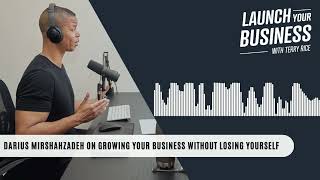
Terry Rice from Entrepreneur Magazine talks with serial entrepreneur Darius Murshazadeh about keeping your values intact while growing a business. They cover how to find your core values, make them operational, and use mindfulness and gratitude to stay grounded.
I was like, this is just, something's wrong here. And I realized, you know, this isn't because they don't want to have core value driven organizations. It's because we're never taught that we're supposed to know our core values. We're never taught, how do you know your core values? We're just taught that we're supposed to have them in our business. I remember in year one, I said, well, how do you make these things come to life? And I got like 25 different answers from 25 different people. And then here I was at year three of this program and like, nobody knows their values. And I was like, man, something's broken here.
On today's show, we're joined by serial entrepreneur, author and podcast host, Darius Murshazadeh. We'll explore balancing business growth with personal relationships and why your core values are crucial to your success. This is the launch your business podcast because we know starting a business is challenging, but it doesn't have to be confusing. Each week we'll give you the tactical advice and the necessary tools to scale your business without feeling burnt out. I am Terry Rice, business development consultant and staff writer here at Entrepreneur Magazine. Let's dive in. Today's guest, Darius Murshazadeh is a dad, husband, twin brother and son who was born and raised in California and now lives in Austin, Texas. He's a serial entrepreneur, author, podcaster, conscious capitalist, speaker, and business coach. Darius passion is to make the world a better place using his talents and engagement. And if you want some stats around that, here we go. He was ranked number nine in Glassdoor's top ranked CEOs in America. As CEO of TMS, Darius is also an Inc. 5000 CEO ranking number 40 in the entire country. And beyond that, Darius is the best selling author of his book the Core Value Equation and is also the host of the podcast the Greatness Machine. Re interviews some of the most interesting and accomplished people who are living their passions to create greatness in the world. Today we're going to talk about how to grow your business without neglecting your family or personal relationships. How he created core values that were memorable and how those values transform his company culture twice. And how getting everything he ever wanted led to unhappiness and anxiety and eventually a gratitude practice. Let's hop into it right now. Darius. How's it going today, Terry?
It's going, man. Having a great day. How about yourself?
I'm doing well and it's getting even better now that I'm talking to you. Because. Because I want to dive into core values and how important that is for any entrepreneur. But as I was prepping for this call, I realized I never actually documented my core values. So I want to speak to you about that as well. But first, do you mind introducing yourself?
Yeah. My name is Darius Meshazadeh. I'm a serial entrepreneur, author of the book the Core Value Equation. Been on the operating side, grew a very large business to $200 million a year in revenue and, and exited that company called. It's called the Money Source. I exited that company in 2020. I've been doing some management consulting since then. And right now I'm starting my new private equity business. And I guess what got us together is I'm the host of the podcast the Greatness Machine, which is a top business podcast out there that I've been doing for a couple years and having fun doing that as well.
Awesome. So let's get into it. First question is, what are your core values? And I know you have this process of using design thinking to help us discover our core values, too, so I'd love to hear more about that as well.
So you asked about my personal core values or my business core values.
That's a good distinction. And actually, you know what, let's take a step back. Why is it so important for entrepreneurs to be clear on their. Their core values? And then let's learn about your personal ones afterwards.
Yeah. So it's a funny story. So the definition of core values, if you look it up, if you like, Google it, or look in, like, the Webster's Dictionary, which, which I don't even know if people still do that anymore, but it's like dictionary.com Darius, come on, get with it. It's the fundamental beliefs of a person or an organization. So the fundamental, the most important beliefs of a person or an organization. And I have a friend, a great friend, Summer Thoman, she says that businesses don't have core values. People have core values. And so I think that it's really as simple as that is you're. Your beliefs, right, tend to have an effect on your actions. Like, you're not going to believe, have a belief system and then go against that with your behavior. Very like you may. And you'll feel like shit when you do it, you know, and so there's friction when that happens. Right. People feel bad when that happens. So what tends to happen is that people have a belief system, and then their actions tend to mirror those that belief system, and then those actions create, you know, results like things happen because you. So I have a belief, you know, I make a decision based on that belief. I then go do an action and that action creates a result. And then those results, you know, accumulate into what we call our lives, right? Or in the business, our business life. Right? So my belief is that, you know, what drives those beliefs is your values, right? And if you're unclear on them, then you may not like the results. And if you don't like the results, then you got a problem, right? So for me, foundationally, if I can get clear on what my values are, and then if I can get in an organization, in a business, if that's a. If that's a organization of people coming together, if I can make sure that they understand and that their beliefs align to those beliefs, I now find it foundationally have people making decisions based off of a shared set of beliefs. And if they're making decisions based off of a shared set of beliefs, then their actions will be aligned. And if their actions are aligned, then the results should be at least some semblance of what I want. And so, you know, if I want good results or I want results that align to my values, then I need to get clear on what my values are. And I got to get people to show up to both as clients and, or as team members and as a leader that align to that. So that's really what my book, the Core Value Equation was about. How do you operationalize values in a business so that that happens and then going the other direction, to answer your question from a personal perspective, it's like, well, yeah, it's not like you just have this great core value driven business life. If you're an entrepreneur, you're a leader or you're a business executive or whatever it is that you're doing in business, and then you go home and everything's in disarray, that will have an effect on your business life. So, you know, I just look at it from like a human optimization standpoint, or I'm like, hey, I want to live a really awesome life. And I want. And I've found that when my business or my life is out of alignment with my value set, that I tend to not like the results. And when they're really aligned with it, I tend to really like the results. So, like, I'm gonna go double down on the thing I like.
Did you know that over half of all businesses have reported a cyber attack and that it takes an average of 287 days for businesses to recover? Those are the kind of stats that can Keep a business owner up at night. So is it possible to help protect your company from something so ubiquitous and persistent as cyber threats? It is with Comcast Business. Their Internet and security has what you need to help protect your business online. Including Security Edge for every connected device on your network. To help keep your data secure, your customers data too. You can rest easier knowing you have Security Edge as a line of defense against cyber threats. It comes with a customizable, easy to use app that monitors your network for threats in real time. Security Edge helps block botnet, malware and phishing attacks. For small businesses. It's a love security every business should have on their side. Because whether you're a new or established company, Comcast Business offers a flexible array of products and services that can grow as you grow. And it's all from the company. Powered by the next generation 10G network advanced cybersecurity for small businesses. It's not just possible, it's happening. Comcast Business powering possibilities Restrictions apply Call for details that deep work to understand your core values. I think a lot of entrepreneurs avoid because it's hard and there's no like easy way to do it. But you have a process that you, you talk about. I believe in your book where we're essentially using design thinking which I love to come up with our core values. Do you mind giving us the, the highlights of that?
Yeah, so, so the reality is and I go I, I geeked out on this for like a decade. So, so, so I, I was in the situation where I, I got accepted to this program at MIT called Birthing and Giants which is 40 entre, 60 entrepreneurs from under the age of 40 who had super high growth businesses. And the first thing we learned was hey, you gotta have core values in your business. And I mean there's some like insane people that have graduated from this program. And so I'm surrounded by all these amazing entrepreneurs who were all told that we need to have core values in our business. And on the night of graduation we, there's these two guys, one of which is the mayor of Vancouver right now. His name is Ken Sim. He's a good buddy of mine. The other was his partner John De Hart. And we're at graduation, we finished the class. Now mind you, first thing we learn is hey, your business has mission, vision, values. And then you got to build your one page strategic plan. You got to do, you know, you set your goals for the year and you got to set your goals for your three years. So your goals are your five year and then your Team members have to have their KPIs. And then there has to be your different value proposition. You're doing all this work, one of which is your core values. And I'm. And so two things happened. Number one is about six months before that I had rolled out the core values of my company. Now mind you, I'm probably two years into the program. I finally roll them out. I got 150 employees. I'm like 27 years old. I have no idea what I'm doing. But I knew I had of core values and so I roll them out of my business. And, and it was a pretty good sized office. I had a 17,000 square foot office in downtown San Francisco. And but I didn't have a big enough like conference space to hold 150 people. So I did it like over. This is like pre zoom, right? This is like 2006. So I did it over, over conference call, right? And so everyone kind of dials in at their desk and, and I go, hey guys, welcome. I'm going to read your core values for the company. And we had six values. There are 76 words. I couldn't remember them. If you put a gun to my head right now, I couldn't even remember one of them. And, but, and so I, but I read through all six of the values, all 76 words. And in the middle of it one of the girls had for who was a salesperson. I'm pretty sure I recognize her voice but, but I wasn't 100% sure. She forgot to mute her phone. And it was one of these things where she made a side comment to her friend, but she did it in front of the whole company and she's like, this is such bullshit.
Saw that coming.
I mean I had poured my heart and soul into these values. And the thing was the company had tons of problems at this time. We were having tons of growing pains. It was like a bunch of 20 year olds running around trying to build this high growth business. And we were having a ton of problems. And she was right, it was bullshit. They were very aspirational values. Now the intentions were there. I really did want to build a company that reflected those values. But like, but what I said we were and what we really were were two different things. And so I had already had this bad experience. Now fast forward to six months later, I'm in MIT year three, graduating and we're doing this exercise at graduation night. And Ken and John, who had this core value driven company called Nurse Next Door, really popular franchise business where they Help do in home healthcare for people. And they said, hey, okay, we, you know, we all have core values in our business. I want you all to stand up if your company has core values. So 60 of us stand up in the room. We're at the Endicott House at mit. We just graduated from our program. We're all happy. And it says, stay standing. If you can say your core values off the top of your head, half the room sits down. And I'm in that half. And I was like, for. I'm pretty competitive person. So I was like, fuck. So, like, fuck. I was so mad at myself, you know, like, half the room sat down. So then. But something was interesting. Like, half the room sat down. I'm like, this is a room full of people I totally admire who have these great businesses. I'm telling you, some of them are household names. And so I was like, what the hell? Like, we all learn we have to have values. Half of us don't know our own values. We're the CEOs, our own companies, and we don't know our own values. So my brain was like, what? So then it continued, though. He said, stay standing if your employees know your core values. Half the remaining half sits down. And I was just like, this is crazy. And then he said, stay standing if your customers know your values. The whole room sits down. And I was just like. I just had this cognitive dissonance. I was like, this doesn't make sense. We all know we need to have values. Half the room doesn't know them. Three quarters of the room and their teams don't know them. And all the room's customers don't know him. I was like, this is just. Something's wrong here. And I realized, you know, this isn't because they don't want to have core value driven organizations. It's because we're never taught that we're supposed to know our core values. We're never taught, how do you know your core values? We're just taught that we're supposed to have them, you know, in our business. And there's. I remember in year one, I said, well, how do you make these things come to life? And I got like 25 different answers from 25 different people. And then here I was at year three of this program and, like, nobody knows their values. And I was like, man, something's broken here. And so the next morning after graduation, I was sitting in this diner in Cambridge, and I was like, you know, of course I don't know my core values. There's 76 words. How the hell would I know them? You know, like, let alone my team, like, why would I know them? Why would anyone know them? And so I was like, you know, I think, what do we really stand for? It's like. And if you're a listener, as an entrepreneur, you know what you stand for. You know, what are the, like, the four, five, six most important things that matter to you and, you know, core values of core value. You want to know how you know, Terry?
I would love to know. Yeah.
Yeah. I like asking host questions. Me. I'm always the one asking questions. So if it's something you're willing to lose money over for it to remain true, that's how you know if it's a value. It's the opposite of something you hate. So if you're a person where, like, if someone's, like, looking at their phone while you're, like, talking to them, and it just drives you fucking insane, you probably have a. Like. Like a. They're why they're being disrespectful. The inverse of that is respect. Respect's probably one of your values, right? So it's things that the opposite of things that drive you crazy is usually a value or something you want to lose money over. And so. But we all kind of know what we stand for. Like, let me.
Let me jump in, because I can. I can answer what one of my core values is now, after you said it that way. So something I'm really willing to lose money over is integrity. Because people often reach out to me just because I write for Entrepreneur magazine, saying, hey, I'll give you this much money if you write an article about me, which I can't do. It's a violation of my writer's agreement. So I've been tested in hundreds of thousands of ways to. To let go of my integrity, but I won't do it. So. So thanks for that. That was. That was enlightening.
Yeah. So. So you know that for you, you're not for sale. Like, integrity matters to you. Like, if you say you're gonna do something or you agree to something, you're gonna agree to it. Right? So, yeah, so that's a great example. Right? So that next morning, I'm sitting in Cambridge, and I was like, dude, we stand for four things. Now, mind you, at this point, my business, this is like, in 08, the great financial crisis was just starting. The business was a subprime mortgage lender, which, for people that were alive then will know that those were, like, dirty words. Like, this Is like, if you ever watch the movie the Big Short, we were the guys that screwed the system up. And so it was like my business got decimated. But I knew we stood for four things. We worked our asses off. We had learned that you gotta do the right thing. You know, like, even. Even when it's not. Sometimes it's obvious. Like, if I. If I offer you money, it's obvious. Sometimes it's less obvious, like, like, hey, there's a loan program that Lehman Brothers offers that you're offering. And you're like, oh, this is kind of a creative program, you know, and then you realize it's like, hey, it's like there's downstream effects of giving. You should be thoughtful about the product. Even you should be inquisitive and curious about the products. Don't just take them at face value, right? So I was like, look, we care about doing the right thing. You know, we care about working hard. We care about doing the right thing. We care about people that think outside the box. I don't want just people like telling me that this is the way we always did it, right? And, you know, and I care about customers having a great experience. And so I was like, well, well, this have to. If I design these in a way that are memorable, then I'll remember them. So I was like, work hard. Do work. You know, do the right thing. Live Zen. Think outside the box. Break the box. Give great customer service. Wow. Everyone do work lives in break the box. Wow, everyone. And I wrote those. Those values 15 years ago. I will never forget them. Right? And I went back and I rolled them out in the company, and I noticed a very big change in the company. People a remember the values because they were designed differently. Now, under that DO work was 4 to 6 Census that described what that meant. Why? Because I knew that they would get weaponized against me at some point. And I wanted to say, that's not what do work means. This is what it means. I was. And here's the 46 census. So really it's around designing values so that they can be used effectively to create good outcomes in the business. And really the book is about how do you do that in a really practical way. And it just came through really through pain and. And through figuring it out. And then afterwards, me rolling it out at scale and seeing it work. And so what ended up happening was, you know, that business ended up failing. Fast forward to 2013. I started the Money Source, very small business. When I got there, it was me and 13 other people. We were a startup within another, a business, essentially. And the business took off. We grew to 300 people in about 18 months, and then we grew to a thousand people by the third year. And I was CEO of the company, one of the owners of that company. And I noticed something at about 150, 200 employees. I was like, man, I don't have all the systems and policies and procedures and all the things that you think you would have at that point in your business size. Why? Because the business had been around for 18 months. Like, you didn't have time to build it, right? Or nor did I have the expertise to build it at that point. But the business was running great. Like, we didn't have any growing pains. My customers loved us. My team members loved us. Like, I got voted 9th highest rated CEO in America on Glassdoor.com that year, right? So all these amazing things were happening in the. And that was an employee choice award. My employees voted me that. Right? So my employees were. It was the opposite of my experience when the girl said, my core values were Bullshit. My employees. And I was. And I was. And I was. I'm Sorry, I was 300 employees and I was double the size I was when that happened. So I was twice as big. I got there twice as fast, and I had the opposite of outcomes. And I was like, I was at a team build. And I had. What I had done was I had built all these systems around building good core values, rolling them out properly, building a good culture around them, and I had implemented them effectively because I figured out how to do that, which is what the book. The book's really the cheat sheet on how do you do that. But I had already done it myself.
And I think one benefit of getting clear on your values is so many of our listeners right now, they want to build their personal brand and they're not sure how to do it. But if you know your values are X, Y and Z, you can express that through your content. And even if you don't have employees, you're at least attracting the right people to you who appreciate and respect those values. So there's not like a value issue when you're working together. So thanks for that. But let's go deeper on that topic of personal branding, because I saw one of your posts on Instagram where you're celebrating your 45th birthday recently, so happy birthday on that one.
Oh, thank you.
And you ran through some lessons that you learned, and I just want to bring a few of those up and just get your thoughts on why you want to include this as one of your lessons. But the first one is you mentioned as an achiever, you're almost never grateful for what you have. And I think a lot of us can relate to that, because if you don't solve for that, you go through this process called hedonistic adaptation, meaning no matter what you have, you're not going to be happy because you adapt to it and you just want more. So how did you push through that, where you are now more grateful?
Yeah. You know, honestly, we could do a three hour podcast on that. It was a huge process. Right. And there was a ton of different things involved. One of the things, honestly, I hit rock bottom. I had had an exit I had, you know, from an outsider looking in. They would be like, how's this person? Like? Like, I have what an average person would look at and be like, that person should be the most happiest person on earth. And I realized, you know, man, I can escape, like, where I live, but I can't escape me, you know, and. And it was really just starting to realize that, hey, I need a change if I want to have a good life, you know, And I. And I'm a personal growth athlete, so I'm always trying new stuff. I mean, you name it, I've probably tried it. But I was on the hedonistic treadmill. And so for me, it took me being in Oaxaca, being able, like, plenty of money, plenty of time, plenty of income, like, I had a great family. And I'm sitting here anxious, and I was like, you know, if I'm not happy with this, I'm never gonna be happy with anything. And I just started doing a lot of work. One of the books I read was the Miracle Morning by Hal Elrod, who's a. Who's a friend of mine, actually, and a great book, and he has gratitude practice. And I had never truly. I didn't understand gratitude because I was always looking at what other people had and comparing myself, even though I knew I shouldn't do that. But I basically came to terms with the fact that, like, hey, man, what if I'm not the one in control of my life? What if there's a higher power that has me here for a bigger reason? And what if I quit trying to try? What if I just show up and be. And the minute I started doing that, I don't know, things just look better. I could look at a door frame and be like, man, that's really constructed well and be grateful for it. And it's a journey, man.
You may be familiar with Fiverr, the talent marketplace that connects freelancers to companies all over the world. What you may not know is that Fiverr has a business friendly offering called Fiverr Pro. Gain access to the very best freelancers for your projects through Fiverr Pro's curated catalog of exceptional talented. Streamline your workflow with their user friendly dashboard where you can organize projects, track progress, save talent lists and collaborate effortlessly with your entire team. Designed to handle projects of any size, Fiverr Pro is the ultimate freelance solution for your business. And the best part? There are no hidden membership or subscription fees. To get started, find help with your next project by heading to pro fiverr.com that's P R-O5.F I V E R R.com so another thing you mentioned in that post is that you used to constantly live in the future, which I think is pretty common with entrepreneurs because especially when you're brand new, you're like, I can't wait till I have this. I can't wait till I have that. But often that wandering mind is what causes you to be unhappy. There's a study from Harvard that showed at any given moment, 47% of us are not paying attention and that causes us to be unhappy. So on your end, how did you start learning to just be more present and experience things as they come along as opposed to looking forward to something else all the time?
Yeah, it's practices, mindfulness. A lot of it's around. I've really spent a lot of time doing meditative practice, so I view mindfulness and awareness as a muscle and you got to work on it and build it and practice it. So are you aware right now or are you thinking of the future that may or may not come? You know, the future that you're imagining probably isn't going to come, by the way, at least in the way you think it will. Or are you dwelling on the past that's already happened. There's a great book by Ed Milette called the Power One more where he talks about, like when we think, when we, when we hang on to the problems of the past, where really it's like carrying around suitcases filled with cement, right? And when we. And when, and then the other thing you talked about was, you know, who's living in your emotional house? So just have, taking ownership of that. Who do you let live in your emotional house? Is it happiness, friendship, joy, gratitude? Or is it, you know, envy? Is it greed? Is it, you know, hedonistic fun? Is it, you know, and listen, I love hedonistic shit don't get me wrong, but, but I know what it is and I, and I, and I take it for what it's worth. But am I envious and greedy? Am I, you know, hoping bad things happen to people because I want to be better than them? Am I, you know, all these negative things? Am I fear? Am I living a life of fear? Am I living a life of anxiety? Am I living a life of misery because I don't have what I want? You know, as there's a term that Dr. Joe Dispenza talks about is living in the lack. Are you living in the lack? What are you lacking in your life? Or are you realizing that you have everything you need? For me, it's around realizing, you know, as you get older, you kind of start to realize that hey, all you have is right now. And for me it's what type of life do I want to live right now? That's what I have control over. And really being hyper focused on that. And so this all kind of happened last year. I really, I got everything I thought I wanted. By the way, when if you had asked 20 year old me like, hey, why don't you do X, Y and Z, you'll be great. All those things happened and I still wasn't. I was the same person. And when that, when it took me getting everything I wanted and not being happy to realize that it's all bullshit.
Darius, this has been great and I do appreciate your time and I know there's some stories you couldn't get into. So where can we learn more about you and if you tell us more about your book as well, that would be amazing.
Yeah, you go to the real Darius.com so therealdarius.com that's, that's really like a great place kind of all things. Darius. Instagram whomp darius.com w h o m p darius.com LinkedIn I'm on there a lot. So those are the places. Follow me and if you want to connect with me, just shoot me a dm. And I usually respond, but yeah, those, that's, that's kind of where I'm. You get all my thought leadership stuff or, or the greatness machine. Like that's. The podcast is a great place too.
So awesome. Darius, thanks so much for this. I appreciate it.
Yeah, Terry, likewise.
And that's our show for today. You can learn more about Darius by visiting his website, therealdarius.com where you'll also find links to his books and podcasts. And look, do me a favor. If you found value in this episode. Help us reach even more people by subscribing and leaving a review. Thanks for listening and I'll catch up with you next time. Apply what you've learned on today's show. You'll find the show notes and more resources at Terryrice Co. Podcast. Again, that's Terryrice Co Podcast, and the best way to support this podcast is by subscribing, telling a friend, and leaving a review. Also, you can get more tips by following me on Instagram @TerryRice or follow me on LinkedIn. This episode was produced by Josh Wilcox of Brooklyn Podcasting Studio and edited by Dan Lardy. Special thanks to my wife, Dominique, for keeping our kids relatively quiet as I recorded. Thanks again for listening. I'll see you next time.
More from Terry







When you want to quit, don’t. #FitnessOver40 #MindsetShift #TiredIsNotAnExcuse #PersonalGrowth




You’re gonna want to give up. Don’t. #mindsetshift #motivationalquotes #motivation #dontgiveup