Darrell Vesterfelt Interview: The Benefit of Starting From the Bottom
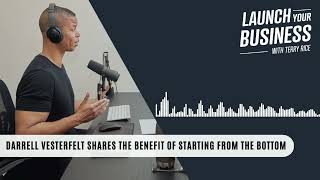
Darrell Vesterfelt talks with Terry Rice about building businesses from nothing and why starting poor taught him resilience. He shares stories from his childhood struggles and what that foundation meant for his later ventures.
I think there's something to be said about being unhappy. And I don't think people will actually change until they realize that they are not where they want to be, they don't have what they want, and that pain has to become bigger than the pain of change. And I'm okay with it.
On today's show, you'll learn why starting from the bottom isn't just a challenge, it's a huge advantage, shaping resilience and fostering growth. Today, we'll dive into practical frameworks that turn discomfort into progr. This is the launch your business podcast because we know starting a business is challenging, but it doesn't have to be confusing. Each week we'll give you the tactical advice and the necessary tools to scale your business without feeling burnt out. I'm Terry Rice, business development consultant and staff writer here at Entrepreneur magazine. Let's dive in. Hey, before we officially start today's show, I want to let you know how I can personally help you land more high paying clients by building an irresistible offer. It's called the Revenue Accelerator, a live workshop where I'll teach you how to multiply your revenue potential and spend less time working with premium price services. And as a listener, you'll save $50 by using the promo code. Launch space is limited and you can learn more by visiting TerryRice Co convert. That's TerryRice Co convert. And now let's hop into the show. I grew up in Webster, New York, which is a suburb of Rochester, New York. And if you don't know where that is, you're not alone. Rochester is a relatively small city and Webster is an even smaller suburb. And I'd say it was just a few notches above middle class. It wasn't Bel Air, but for some reason, my high school had two Olympic sized swimming pools and a hockey rink. And here's where things got interesting. My dad worked at a tech company and made good money. But when my parents got divorced, that money had to support two separate households, which meant there was less to go around. This was around the same time that every tween was jockeying to build their social status. And the clothes you wore seemed like the most important thing in the world. And even though my family didn't have as much money as some of my friends, I always had the best clothes. How? Well, I started working when I was 12 years old. There was a service in my town called get this rent a kid where you could essentially rent a kid to do chores around your house. And I got a job working for Marilyn Johnson. She Must have been around 70 at the time because I know her mom was there and she was 90. I would do yard work and help support her small business, which included painting, arts and crafts that she would sell. At times. I was making over $100 per week, which was more than enough for a 12 year old. And I remember one time I was watching one of Tupac's first videos and he was wearing these white Filas that I absolutely had to have. I did some research, which was actually harder back then, and discovered that they cost $60. Ms. Johnson paid me $5 an hour, which meant that I only had to work 12 hours to get those shoes. So I took a week off from playing after school, made 60 bucks and showed up the following Monday with the coolest shoes in school. And it just seemed so simple to me back then. If you have a goal and sacrifice to make it happen, you can achieve meaningful results, including getting some new Filas. And that's pretty much what I've been doing since I've been 12 years old. And that's why I'm looking forward to sharing the conversation I had with our guest, Darrell Vesterfeldt. And not that we're competing, but Daryl faced challenges during his childhood as well as he grew up in a trailer home and didn't have any real role models in regards to chasing your dreams or living up to your potential. But instead of giving up, Darrell forged his own path. And as you'll learn, that path led to him founding several multi million dollar companies. He's also one of the most intelligent, thoughtful, altruistic people I know. So I know you're going to learn a lot from him. Today we'll cover how starting from the bottom can be an advantage, practical frameworks to grow from uncomfortable situations, and why feedback from people you care about is one of your most valuable tools. Let's hop into it right now. Let's, let's dive into this because I know you very well and that's why I'm excited to have you on the show. But can you just introduce yourself for our listeners here?
Yeah. I don't ever know what to say in these moments. I feel like what I want to say is I'm just a guy who's done some things and I'm a kid from a trailer house who's built a couple companies and that's the long and short of it. But I'm the founder of a company called Mount Haley. It is a private equity firm that invests in and incubates creator led businesses. So there Are a few businesses part of that? And I've been doing the creator business thing since before the term creator ever existed. So I've been in this space helping people get their messages out through web and marketing and social media for, for a long time. And now there's quite a few different businesses that are connected to that.
So. Daryl, one thing I appreciate about you is you're very humble. So for anyone who didn't catch that Darrell grew up in a trailer home, Was it double wild wide or single wide?
Single wide, baby.
A single wide trailer home. And now he has all these businesses and helping all these entrepreneurs. So I just want to pause to re. Acknowledge that because you, you kind of glaze over that at times.
Yeah, I do glaze over it. It's. It's actually the, the company that I own called Mount Haley is an homage to where I came from. It was Mount Haley Township in middle Michigan. And the, the kind of median income was near the poverty line. There were. Our house is not the only trailer house in the area. It's very rural, and it was not the most privileged place to be. To be from. But my people, my family, my dad, my grandparents, my whole family, it's about kind of pulling yourself up from the bootstraps in maybe a term that people understand. And that way I'm very fortunate to stand on the shoulder of men and women who have come before me. But yeah, from a trailer house. And I don't want to ever forget that because to me, oftentimes the things that we might think are disadvantages, like where I came from or the fact that my dad didn't have a business to hand down to me, or those other things actually can be an advantage if we choose to view them in that light, versus a disadvantage.
Let's double click on that because. And I'm glad you gave that backstory because you've often said that starting from the bottom can be an advantage. And without knowing that, some people might think that sounds kind of trite coming from. From someone else. So can you give us another example of how a perceived disadvantage can become an advantage?
Yeah, I think it's. It's something I think about and I kind of, in my own vernacular, use the term the myth of success. And I think what people think it takes to be successful is actually different than what it actually takes to be successful. The bottom line thing that it takes to be successful is this ability to just not quit and give up. And so for me, coming from a place like that, obviously, I know there are a lot of people that I know that have come from harder places than me, whether they have different types of disadvantages, whether it be race or parents or all kinds of different things, my unique set of disadvantages is different than other people's unique set of disadvantages. But those things, what you have to overcome is, I think, actually what sets you up for success versus what I think people often think is what's handed to me. So the ability to understand resilience, the ability to understand the stick with itness, the ability to understand that you have to make something work when you don't have all of the answers or you don't have all the things that you need or you don't have a know how. There's a lot of advantages that I've gained coming from a place of not knowing. And so it's. It's something I think about a lot because I hear a lot of successful people talk about how to become successful, and then I look and hear their stories, and they're telling you something different than what they actually did to get there. And I think what it takes to get there is this ability to overcome things, this ability to push through things, this ability to have grit and tenacity and resilience. And coming from a place of disadvantage, you just learn how to have those things or you are destroyed. And so I think whatever the disadvantage might be is really key.
Let's dig in here, though, because this challenge that you faced, right, for any of us, it can make us stronger, or we can go the other way, right? Become bitter and things don't go so well. How do we make that decision? I mean, obviously, no one wants to say, oh, I want to be angry forever. But how, like, what goes through your mind when you're faced with a challenge that makes you say, okay, let me try to make the best out of this, as opposed to saying, okay, I'm going to complain about this. And how can others take the same approach?
Well, I think there. Like, I think there is a. I think there's something to be said about being unhappy. And I don't think people will actually change until they realize that they are not where they want to be, they don't have what they want, and that pain has to become bigger than the pain of change, and I'm okay with it. So for whatever reason, early on, I was just not okay with where I was at. I was not okay with the status quo. I was not okay with the idea that I would go to high school and then I would go get a trade and Then I would work really hard in a blue collar job and at 45 to 55, my body would shut down. On some level, I was just not okay with that. And so the pain of not being okay with that drove me to explore and to think and to, to try to change my environment. So I think the reality is like, you've got to be okay with discomfort. You gotta kind of become friendly with it a little bit. So one of the mindset frameworks I use often is I didn't know I needed to learn this or this is here to teach me something. And so I'm now looking for it. So if I can sit in the discomfort of something, you know, I'm not, I'm not of the mindset that bad things happen to us for a reason. But what can I learn in the midst of what's going on here or what can I learn? Because this is happening. And so that's a framework now. So I sit in the discomfort and now I look at this discomfort and I say, what can I learn from this?
Without an electronic payment system, we're not modern enough. It makes it more simple and easy for people. Every transaction that we process electronically is very secure. We work with top tier companies to ensure that everything online and in store is the utmost secure for all of our customers. Data and processing information.
We that's Kristin Somers, co founder of Tula House, a botanical experience and plant shop based in Brooklyn, New York. For Kristin, customer experience is important to her business's success. Being able to promise customers that their transaction data is secure and make the checkout experience seamless is a big reason customers keep coming back and how you build loyalty.
As far as our customers, loyalty and trust is everything. If we can't promise them that their data is safe, then they won't come here, they won't shop with us. So that's very high priority.
Hear more from Tula House co founder Christian Summers and our series Securing youg Success at entrepreneur.com ComcastBusiness Securing youg Success, a series that highlights small business success stories and the importance of connectivity within entrepreneurship, is sponsored by Comcast Business. Comcast Business Powering Possibilities. There's another quote you shared recently and I'll try not to mess it up if I do. Correct me, but I believe, I believe it was until you make the unconscious conscious, it will direct your life and you will call it fate.
Yeah.
Is that close?
That's close. Yeah, that is. Carl Jung said that and that is a huge quote. Jerry Colonna is an executive coach and I saw the quote again in his book reboot, but that to me is exactly what we're talking about here. So make the unconscious conscious, and if you don't, it'll rule your life and you'll just call it fate. And I have so many people and probably so many areas in my life where that still is the case. But just pull it from unconscious into the conscious and all of a sudden now it's not fate anymore. Like, you have control, you have the ability to make decisions, you have the ability to decide. You have the ability to see how the scales are tilting one way or the other.
Let's. Let's stick with that too. So to whatever degree you feel comfortable, can you share a moment in your professional life, let's say, when things weren't going too well and you really had to confront the situation head on to correct it, and even how you corrected the situation?
That's a good question. I was becoming very uncomfortable with a job that I had. And the job was a dream job from the outside looking in. I was the director of growth at a fast paced growing startup. We were doing really good. I had a great track record of success there. I had stock options that were vesting. I got paid really well. I got treated really well. There were profit shares. It was an incredible job. And the scale was slowly tipping that something wasn't right for me. And it was a really hard decision to decide to leave that company because I had close, connected relationships there. I had the ability to earn what now would have equaled to millions of dollars in stock options if I would have stayed. But at some point it was an uncomfortable decision to say, like, if I stay here, I might be losing part of myself. I might be losing part of who I want to become or maybe who I was made to become, I don't know. But it was really uncomfortable. And so having the conversation with the people there who I cared deeply for, who thought I was going to be there for years, having uncomfortable conversations about, I have goals for my own personal wealth development and personal goals. And it seemed from the outside looking in that I was acting in kind of the opposite way of those potential goals, it was really uncomfortable. Some people's feelings were hurt. I definitely took a step back in lifestyle for a period of time. I definitely, when that company raised a secondary round, kind of took a deep breath because I knew that I knew what my equity could have been worth had I stayed longer. But all of it was kind of this tipping scale where it was like I had to confront it head on because if I didn't, I don't know what would have happened. I don't know if I would have hit burnout or I would have flamed out or sometimes these things go out sideways where there's other failures that happen in other areas of your life, whether it's personal relationships or other things like that. So that was a hard thing. It was a hard thing to deal with, a hard thing to process through, a hard thing to do when everybody thought I wasn't making the right decision. A hard thing to do when people I cared about were upset with me. And it's now led to me being in a place where I now have what I have and I've built what I've built. But the risk was as equal on the other side that none of this stuff would have worked out either.
Let's try this. Right, so we're doing some storytelling here. If your life was a book, what would this chapter be called? And why?
Holding your breath? Because I think I'm searching deeper than I have before and I've like to go down further. I'm holding my breath more than I have before and it's really uncomfortable. But I'm looking for something that I've never had before. And it feels like the metaphor I have is like I'm snorkeling and I want to see something that I haven't seen yet. And so I'm holding my breath a little bit more and I'm telling you, Terri, like the things that I wanted to see, I'm starting to see. But it also feels like I'm holding my breath from time to time. And so that feels like the chapter I'm currently in is holding your breath. And it's kind of waiting to see if the things that I want to see are real. Waiting to see if the things that I hope are true are real. And it's been a, a season of taking backward steps to see if there's more forward, like taking a step back to see if I can see it a little bit differently, diving a little bit deeper, holding my breath a little bit longer. And it's, it's been a fun season and challenging, Very, very challenging.
I'm going to tell a story and then ask a follow up question in regards to holding your breath. So when I first started my career as an entrepreneur, things are going okay enough, right? Like not like not great, not horrible. But about two and a half years in, I got a call from my old company, Adobe, that I had worked at like 10 years before and they're like, hey, we have this new position. We think you'd be great for it. You know, would you consider coming back? And I paused. I was kind of thinking about it because I was like, wow, you mean I can just be done with all this shit, like, begging people to, like, you know, hire me and hoping they pay their invoice and all this stuff and there's all this stock and, like, a better salary than I had before? And the only reason why I turned it down was I was journaling a lot. And one thing at the top of my gratitude list was autonomy. And I knew if I took that job at Adobe, which is a wonderful company, I would lose my autonomy. So that's how I kept on, like, diving deeper and not feeling like I have to, like, Surface and using your analogy. So are there times when you feel like, man, this is. I've been down here for a while and there's other things I could be doing. Are there times when you feel like kind of giving up on this journey? And if so, what keeps you motivated to stick with it?
All of the time, man. All of the time. Every day. At some level, I think it's normal. Part of the process and. And going back to this idea of, like, constantly learning, like, finding out what's coming up for you and asking, like, what is there to teach you is a huge part of this process for me. All the time, man. All of the time, I feel like quitting. I think there's a myth of leadership where we feel like we don't know what we're doing. We feel like we're struggling, we feel like we want to give up, and we think we're the only one. And the reality is everybody feels that way on some level. And I, for a long time, thought I was the only one who didn't know what I was doing. I thought I was the only one who felt like giving up all the time. And I was like, what's wrong with me? And then the more I talk about it, the more I realize that everybody has those feelings on a regular basis. So what keeps me grounded is a couple of things. One is exactly what you said. I have a vision for my life that I'm unwilling to waver from, right? So I know my core values. I know what I'm trying to build, and I know if I go do this easier thing, I'm not going to get that vision. And. And there's a Bible verse that says, without vision, the people will perish. And I think that is so key. If you Lose sight of what you want or where you're going. It's so easy to get turned upside down, backwards, make a wrong turn. And guess what? I made a lot of wrong turns. And that's also informative to be like, nope, that wasn't right. That does not feel right. I've lost my autonomy. I've got to take two steps backwards to kind of get back on path. That happens all the time, too. So the vision is really key. And then relationships that will hold me accountable to the vision that I've stated out loud. So people who love me enough to tell me that I'm off course or I'm out of line. And it is a hard thing to do to find friends who will be honest with you. But when you have a friend like that, you never fucking let go, man. Because that, to me, is like a friend who is willing to be honest with you and hold you accountable is few and far between. Because it is uncomfortable to call somebody out. It is uncomfortable to hold a mirror up to somebody. And if somebody has the courage to do that, they love you very, very much. And so that, to me is really key, is knowing that vision, clarifying that vision, and having people around you who will hold you accountable to doing it.
And I think the only thing I would add to that is when they give you feedback, be cool about it, because otherwise, if you whine, they're just not going to. You lose that tool. Right?
So just like, accepting feedback, absorbing feedback is a skill, and there are levels to that skill, man. So, like, just being able to receive feedback is hard. In general, being able to receive feedback that's delivered poorly is another skill altogether. And I want to, like, I. That's what I'm working on in myself right now, is it's really easy to have a friend sit you down and be like, hey, man, I really care about you. I really think you should do this or consider this. It's really not great to have somebody be like, you're a. You're a jerk. I can't believe you did this. And to be able to sit instead of getting defensive, to just learn, be like, are they right? Could I have done this differently? Even though it was, like, delivered poorly or said wrongly, or if 99% of what they said was wrong, but 1% of what they said was good. It's this concept I call meat and bones. And it's like, no grown adult is mad that there's a bone in their steak because they know that it adds flavor and character to that meat. It's like, I just as an adult have the ability to not chip my teeth on that bone because I have the tools to work around it, right? I can like use a knife to cut around it, eat the good stuff and leave the bones on the table, eat the meat and leave the bones. And so that's a whole other skill set to learn in your life is if this is given poorly, if there's 99% bone and there's still one bite of meat to take a bite of that meat. And that is a whole skill that makes it's a superpower, I think in resiliency is learning to take feedback, learning to take feedback when it's not given well, and then third, seeking out feedback when it's not given. And so constantly asking people, what do you think about what I'm doing here? And Terry, you're a super. You're a superman at that. You ask people that all the time. I'll get a Google Doc from you and you'll be like, what do you think about this idea? I'd love your feedback here. And that is a huge superpower to have. And it is a sign of somebody who's built a level of resilience and it's a sign of this kind of person who wants change and growth in their life.
If you're listening to this podcast, you're probably like me, an entrepreneur at heart, a doer with big ideas who wants to make an impact. And while technology is key to making these things happen, Comcast Business understands you probably don't have the time to be a technology specialist. So is it possible a technology partner can free you to focus on what you do best? It is with Comcast Business. They have the largest, fastest reliable network for small businesses, plus an impressive 99.9% network reliability that's ultra reliable and just what a business needs to stay up and running and ready to succeed. Plus, there's gig speed WI fi to power you, you, your employees and all the devices that help get the work done. For cybersecurity, they've got you covered to help protect against attacks and go ahead, add new employees, open a new location. These solutions can grow as your business grows. It's the tech flexibility you need to expand. With all this, it's no wonder Comcast Business powers more businesses than any other provider. All on the next generation 10G network. So bring your big ideas and even bigger dreams with Comcast Business. It's not just possible, it's happening. Comcast Business powering possibilities. So let's, let's Talk more about your, your vision here. It's five years from now. What is something you want to accomplish by then? Just an example and I'll give one of mine and what is the emotion behind it as well. So I'll give you my example. My example is leading some kind of almost like Tony Robbins like professional development event for entrepreneurs and business professionals to help them level up, have a more meaningful life, just be healthier, have better relationships. And the emotional have behind that is gratitude for the ability to use my platform to help other people use their platform to help other people. Right. So now we just have this, this ripple effect that, that started from this, you know, apartment here in Brooklyn. And that's the experience and the emotion I want behind it. So your turn. What's something that would.
This is great for that with you. The thing for me is it's actually a place that I want to develop and I have a vision for a home and office and retreat center in the woods that I want to develop because I want to be able to invite people into a place of peace. So that, that idea that the work that I'm currently doing will just continue, the people I'm currently developing relationships with will continue. But there's a place that I'm actually wanting to purchase and develop and build an office and a retreat center style thing because to me, I want that peace. I want that kind of solitude. I want woods to be surrounding it. So when I close my eyes, I can see it very clearly. It's not work related per se, it is like location and destination. But I know that behind that is this level of peace and calm. And I'm really searching to have that because, you know, in the last five years I've moved from New York to Nashville, Nashville to Minnesota. I have left a company, launched a company, launched another company, started two more companies. I've acquired and sold businesses and there's a lot that's happened in five years. Started a relationship and had a kid and there's a lot happening. Right. So. So what I'm looking for is peace and calm and serenity a little bit surrounding the fast pace of my life. And so it's not stopping anything that I'm doing, but finding the calm in the midst of it. And that place that I want to buy and develop is kind of a physical representation of that feeling I want to have.
I'm digging it. I want to see me there too. I think we got some, some overlap.
I think so.
So, so that would be amazing. But Gerald, I don't want to take up too much of your time today, but I just after hearing you you, I know a lot of our listeners are going to want to learn more from you and learn more about you. So what's the best way for them to do that?
Darrelounthaly.com d a r r e l l at Mount Haley m o U N T H a l e y.com shoot me an email. I'd love to talk to you.
Awesome. Cool. Darrell has been amazing. Thank you.
Yep. Thanks Terry.
And that's our show for today. You can learn more about daryl by visiting darrelbesterfelt.com I'm going to spell that for you. That's Darrell. D A R R E E L L V E S T E R f e l t.com and if you got value from this episode, help us spread the word by sharing on social and leaving a review. Thanks again for listening and I'll catch up with you next time. Apply what you've learned on today's show. You'll find the show notes and more resources at TerryRice co. Podcast. Again, that's TerryRice co podcast and the best way to support this podcast is by subscribing, telling a friend, and leaving a review. Also, you can get more tips by following me on Instagram terryrice or follow me on LinkedIn. This episode was produced by Josh Wilcox of Brooklyn Podcasting Studio and edited by Dan Lardy. Special thanks to my wife, Dominique, for keeping our kids relatively quiet as I record it. Thanks again for listening. I'll see you next time.
More from Terry







When you want to quit, don’t. #FitnessOver40 #MindsetShift #TiredIsNotAnExcuse #PersonalGrowth




You’re gonna want to give up. Don’t. #mindsetshift #motivationalquotes #motivation #dontgiveup