Dorie Clark discuses how to write for high quality publications and websites
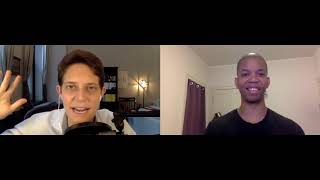
Dorie Clark talks about writing for top publications and creating content fast. She covers how to overcome writer's block, why quality content helps your career, and strategies from her Rapid Content Creation Masterclass.
Welcome, everybody. Today we are talking to Dori Clark, who's one of my favorite authors, if you've been following me at all. You know, I quote her all the time. She's written three books, Reinventing youg, Entrepreneurial youl and Standout. And she has another book coming out that we might get some little hints about today if we're nice. But today we want to talk about today is her Rapid Content Creation course. So, Dori, if you can just give us a quick overview. What's this course about? Who does it help? What's the impact from?
Yeah. Thank you so much, Terry. So the Rapid Content Creation Masterclass is a course that is intended for folks who know that it is a good idea for them to be getting their ideas out into the world more. They want to be blogging, they want to be writing articles, they want to be creating content. But, you know, the truth is, it's not necessarily that easy. Right? And a lot of people have tried it, but they will maybe do a blog post or two and then feel like, oh, I don't know what to write about, or, gosh, you know, why is this taking me 20 hours to do a post? Or I was able to do it once, but the idea of doing it again and again seems horrifying. I want to reach those people with the course because what I've discovered is that we all know it's important to share our ideas. That's how they get known. That's how you make change in the world. That's how you're able to promote your business. That's how you're able to get clients and all the good things that we want. But you need to make it easier for people to be able to do it. If it feels impossible to be writing and creating content, then obviously folks aren't going to do it. And I have spent the past decade developing strategies to make it much easier for people to have a systematic way to create content so that it just feels like a much lighter lift and a much more fun process to be able to create the content they know they should.
Awesome. Again, I think a lot of people will benefit from this course. But let me ask you a question. So here's where I get stuck. When I'm creating content, I already know how it's going to end. So I'm bored when I'm writing it. My question for you is, what are some other common challenges people have that prohibits them from writing?
Well, I think some of the big ones that I hear from people, as I was alluding to before. Sometimes people just are not sure what they want to even say, right? They say, oh, well, you know, I feel. I feel like everything that I've. That I want to write has been said before. Or, well, I could write things, but I don't know if it's interesting or. I don't even know what people would care about, though. You know, there's sort of the topic questions and another piece that comes up a lot is just not necessarily knowing how to. How. Knowing what the way in is, right? It turns out that for the vast majority of blogs and articles, unless you want to get very postmodern and experimental, there's a pattern, right? There is literally a structure of how you write a good article for the web, for a business or other kind of professional publication. And once you know that structure, it's really easy for most reasonably intelligent people to follow that structure. It becomes like writing a sonnet or something, right? If you know the structure, you know how to put things in it. You don't have to be constantly innovating and saying, oh my gosh, how would I possibly say this? It becomes much faster to do it and therefore a lot more fun because you know the grammar intuitively.
You know, you brought up a good point about people saying, oh, this has already been said before. And Gary Vaynerchuk, in his book Crushing it, he said, you know what, every story has been told before, but it hasn't been told by you. Your experiences, your nuances, your twist on it. So I think it's a great way for people to feel more comfortable with the ideas they're expressing. But I think even coming up with an idea is challenging sometimes. So on my end, the way I come with good ideas normally is when I'm washing the dishes or when I'm on the rower at the gym. So it's like when I'm doing something that occupies my time enough to really concentrate on and lets my mind wander, that's when all these ideas come up. But do you have advice for anyone who doesn't want to wash dishes or row how they can kind of get these ideas to come up?
Well, you're actually pointing to something that is definitely a common creativity tool. Terry There's a researcher named A.P. dijksterhaus, a Dutch researcher who has studied creativity. And one of the things that he discovered is that often some of the most creatively fertile times we have are when we're doing exactly what you're talking. Things that basically occupy your body in kind of rote activities that you don't have to think about, but your mind is free to wander. That is a powerful combination. And so actually, besides rowing, besides washing dishes, exercising, showering, those are big ones. Driving, because part of your mind is occupied, but part of it isn't. So you can often make really creative connections. But besides that, what I actually recommend in the Rapid Content Creation Masterclass is a few other possibilities. One is literally just making note of the questions that people ask you frequently. Like if you're, if you're at cocktail parties, if you're meeting people, if people send you emails or you know you're meeting somebody for the first time, they will often ask you typical questions about your company, about your field, about your industry. Make note of them. If you're giving us, you know, a presentation for your company or a presentation at a conference, there will be a sort of standard frequently asked questions list that people are curious about. Write it down and then write blog posts about it. That's a great source of topics. Another one, if you're looking to travel even further afield, is to go to the website Quora Q U O R A and you can see what questions people are asking. If you're a marketing specialist, we'll just see all the questions that people ask about marketing or whatever your field is, and then write content essentially in answer to those questions.
Yeah, one of my favorite pieces of advice is questions create content. So if you know your audience well enough, you'll know what questions they have. And then you have content that answers that. Right. So it's pretty easy. You don't want to write content that no one's curious about, so you're just kind of reversing that. And you made a good point about just asking people questions and listening. And for me, sometimes when I'm in those situations, I just drift off because I'm either I'm thinking about the next thing I want to say or I'm eyeing the snack bar, so on and so forth. So one thing I've done to kind of lock in those moments is I'll wiggle my toes to remind myself to like, be present and lock in. So my question for you is, when you're in those moments when you know someone's giving us good advice and, you know, good information, how do you, like, mentally bookmark that? And along those lines, are there apps or tools that you use to just have these quick notes written down somewhere?
Well, actually, the simplest one. I mean, I've been using this for years, Terry. I mean, you know, pretty much everybody carries a smartphone these days. So I like to use oftentimes either the voice memo function of the smartphone or just the notes function. And so literally, if an idea occurs to me, I do this all the time. Literally, I will do it multiple times a day where I'm walking somewhere, I will veer over to the edge of the sidewalk, stop and write something down because I don't want to lose it and it doesn't have to be complete. But if you whip out your phone and for 30 seconds you say, oh, I want to write a piece about four key ways that leaders can abcd. And my first example is going to be from the meeting that I just had with Terry where he said 1, 2, 3 and 4. And I'll cite that and okay, great. Now you have an article idea and you have your initial bullet point that's already part of the way there. If you get two or three more bullet points, boom, you are done with your article. Which is, which is pretty powerful.
Well, first of all, thank you for pulling over when you have to take notes on the sidewalk. I appreciate that. Every other New Yorker does as well. And that's how you tell the tourists.
That's right. They're the ones that just stop in the middle.
Yeah, yeah. With like, you know, three abreast, right in a stroller. So you made a point that Jason Pfeiffer, the editor in chief of Entrepreneur magazine brought up. He's like, when I'm writing an article, I have always like mini post its in my head from things I've thought about before and then I just put them down on the table. And that's how I write, more or less. He's like, I don't like being, you know, bothered literally when I'm doing that because, you know, I have all these thoughts and it's like they're ready to come to fruition. How do you get in the zone to write? Are there certain times of day? Are there certain, is there music? Is it? And yeah, like, what's going on that gets you in that zone to create this content?
Well, I think there's a couple of pieces here. The first one is that I try not to be too precious about it actually, because I think that in some ways, while it is true that, you know, to a certain extent you need to be in the zone, I think an excuse that a lot of people make is, oh, well, it needs, you know, it needs to be the, you know, whatever the waxing gibbous moon and I need candles and I need, you know, all the, all the writing ingredients and it never happens that way. And so they don't write. The best way to write is to write. And so if I'm working on an article, I mean, I'm not necessarily the kind of person that can do it. If I have, you know, this 15 minute interstitial block, I usually need a little bit more time to focus on it. And so I like to work on articles in blocks of no shorter than one hour. Otherwise I just kind of get distracted. But, you know, some, some people do. I mean, Adam Grant, for instance, I interviewed him once, the Wharton professor, and he talked about how certainly if he, if he has already started on an article, if he has a spare 5 minutes, 10 minutes, he can just dive in and continue working on it, which I think is a great strategy. But I think that when it comes to just sort of being in the zone and getting it done, what it looks like for me is that I will actually mark out time on my calendar. I will put an hour in, say, okay, I'm going to work on this blog post. But the trick is if you are starting from a blank page, it is very hard. It is a lot of pressure to do that. And so that ties into what we were talking about before Terry, which is if you keep your idea list, if you keep your story list active from the voice memos or from the notes in the phone or what have you. So that you're starting with a premise already, you may already have one or two bullet points figured out, it becomes so much easier to sit down because at that point I can say, oh, right, okay, the premise of my story is the four leadership tips. And I'm going to start by telling the story about Terry. So click, click, click, click. You know, it's not like, oh my God, what do I write? Is it going to be good enough? Is it going to be perfect? You just start telling the story about the thing with Terry that one time and you already are a third done with your piece and it becomes a lot easier to slot in the other material.
Yeah. So that preparation in advance, you can't just sit down and say, okay, time to be creative, because that has to be front loaded, more or less. So you said like you're sitting down for an hour and to write like let's say a thousand word article, roughly how long would that take you? And is this a formula that we're getting in this course as well?
How long would it take me? Probably an hour is the answer. I mean, you know, over time you get way faster. And I'm at the Point where for most, for most blogs, I would say, I mean, almost all of them, honestly, I can do them between 60 and 90 minutes. Now, people might say, oh God, I could never do that because it takes me 20 hours. But the truth is I had a client that I worked with who it used to take her. I had her map it out, you know, chart her time. Used to take her about 12 hours to write an article. And after we did one intervention, essentially like one session together, she immediately cut it in half. And her next blog took her six hours to write. And you know, that that's the sort of thinking. I mean, you know, obviously asterisk, everyone's, you know, everyone's experiences will vary. But the whole premise of the Rapid Content Creation Masterclass is to teach you to write in a way that is dramatically faster and easier. And this is not like, oh, you can write faster because you're writing shit. That's not the point. The point is to write high quality material fast. Because if you feel like every single time you have to like invent the formula, then of course it's going to take much longer. The point is there is a structure and it is inherent to almost all high quality business or business Y type articles. You know what I mean? It could be your field is health or whatever, but if you know, sort of nonfiction, professional articles. And so by laying that out and explaining it, it enables people to come in much faster and understand, oh, this is how I can graft my ideas onto it. And so in the course, we have a live hot seat example, you know, that we've recorded that people can see where I actually walk. You know, it's a real example where I walk someone through coming up with ideas and ideating and outlining the piece so that they can see in real time how it is done quickly.
You know, I think your point about it taking forever. Sometimes people have a fear of completion, right? Because they wanted to be perfect. And I always say, like, if it's not that good, not that many people are gonna read it because the, because algorithms, because of SEO, because no one's sharing it. So it's like, just get it out there, you know, and be on your merry way. But for anyone who like, you know, was kind of on the fence, like saying, like, you know, like from a mindset standpoint, like, I'm afraid to like, you know, express myself and, you know, I don't want to get judged and all this stuff, like, what advice would you give them to just kind of get over that hump?
Yeah, well, so one of the blessings that I had, you know, it's sort of a retrospective blessing because I got laid off. So it didn't feel like a blessing at the time. But I started my career as a professional journalist. And one of the best lessons of journalism, it's not necessarily like, oh, you have to be, you know, such an amazing writer. I mean, over time, you actually do become an amazing writer simply because you are, you are doing so much of it. You are flexing the muscle in the same way that you or I or any of us can do with practice. But I think the best lesson of being a journalist as compared to other kinds of writing, is that there is always a deadline and that deadline does not shift for you. It's very much like a neither rain nor sleet nor snow situation. And you have to turn in the copy when it's due. And so I think that we all need to adopt that mindset and that mentality to a certain extent. Because it's true. You could take a 700 word article and you could sit on it for 18 months if you wanted, because, oh, well, this and this and this, and you keep tweaking it, but that's not doing anybody any good. You need to get it out there. As long as it is good enough, as long as it is not libelous in some way, then release the article. I mean, what I would say is, if you really are not sure, if you really feel like, oh, gosh, I don't have the right critical judgment, find a friend, you know, this may or may not be a close family member or whatever, because that can be a little awkward sometimes. But find a professional colleague that you trust and say, hey, what do you think of this? Do you feel like this is okay? Do you feel like this is good enough to share? And if they say yes, you need to commit in advance that you will listen to that person and do it. I look back at stuff that I wrote 10 years ago, I look back at stuff that I wrote five years ago, and I feel like, you know, I'm so much better than that now. Like, oh, that, you know, that wasn't that great. You know what? Literally everything you do, you will look back and feel that way because you are getting better. But you will never get better if you do not put it out in the beginning. You need to, you need to do that because it's part of the process. So the question is not, is it perfect? It will not be. I guarantee you my stuff is not perfect. What you need to just say is, is it good enough and then go for it.
Yeah. I think the way I say it is, normally you can't skip the part where you suck.
Well put. Well put.
Not as eloquent as you, but that's, you know, you have to get these reps in. You know, it's like, it's like if you're an athlete, you have to practice, then you get better at and you know.
Yeah, well, I know you're a big athlete, Terry, so that's right on.
Well, that's when I get my flow state, so I have to, you know, that exercise. But just thinking about the. From a lens of, let's say, return on effort, more or less, what are some of the benefits of having all this content out there that your audience is seeing?
Well, I would say that there are two chief benefits. The first one is if you have people who are already in the pipeline that are interested, interested in hiring you for a job, interested if you're an entrepreneur in becoming a client of yours. They obviously, I mean, what are they going to do? Right? Duh. They're going to Google you, obviously. And so you want there to be stuff that they can find that is not just random stuff, that is not just your website with a couple of nice pictures, but actually shows them in depth. Oh, this is how the person thinks. This is what they're interested in. This is where they have expertise. If you can create a body of work such that someone who is already thinking of doing business with you is able to look at it and say, oh, he seems really smart. Geez. Okay. Yeah. You know, because the more information a buyer has, the more they feel it is a safe choice to work with you, it is de risking what is actually a fairly risky decision to give you money. So if you can give them additional certainty through your content, that will help you close more sales. The other aspect of creating content is of course, right? You want your ideas and your reputation to reach people who don't know you already. So, you know, in the short term, it's like, okay, this person's already thinking about working with you. Well, you know, you can, you can send them an article or something or they can Google you because they already. They're already thinking about Terry Rice. But over time, as you build more and more of a body of work, what happens is that people will discover Terry Rice. They will just, oh, this is, this is a fantastic article. Who wrote that? Terry Rice wrote that. Well, I just remember last month I was reading another fantastic, brilliant article, and that was by Terry Rice too. And over time, they begin to say, with more and more repetitions, who is this Terry Rice? I must check him out. I must get to know him. And that is how you get the holy grail of business, of entrepreneurship, which is unsolicited inbound inquiries. What every business person wants, what every professional, I think, wants when it comes to job offers. Somebody coming to you that you didn't even see on your horizon, you weren't thinking about it, you weren't seeking it out. They come to you because they found you and they said, hey, you seem amazing. Let's talk. I would like to give you this job. I would like to give you this contract. That's what we want. But it cannot happen unless you make yourself discoverable. And you make yourself discoverable by creating high quality content and a reasonable volume of high quality content so that they can find you.
Yeah, you make a great point. I mean, it's much easier to convert someone if they reach out to you and say, I saw you wrote this article. I was wondering, do you give a presentation on that as well? You know, what's your rate? It's higher now, right? Because they've frightfully reached out to you. So for anyone who's just kind of thinking like, is this right for me? You know, should I not do it? Can you just give us a little more of, like the, you know, the flow of the course and what they can expect on the other side?
Yeah, absolutely. So the Rapid Content Creation Masterclass, it is in terms of actually what it entails. It is a recorded video course. It's about three hours of content, so it is tight. If you want to invest three hours in making yourself a better writer, a better, faster writer for the rest of your life, that is what the goal and the premise of the course is. Over 300 people have taken this course and there are. You can check out all of the testimonials from people around the world, but the goal is really to ensure that you are able to share your ideas and that it becomes a fun process, a gratifying process, not painful and arduous process that a lot of people think of it as being. We all know it is important to get our ideas out there, but frankly, the truth is very few people actually do it. If you want to set yourself apart and become one of the folks who do, who actually take action, this is a pretty, A pretty tight ROI way to do it. You take this three hour course. There's, you know, there's handouts, there's exercises, et cetera, to help teach you the process and then it's something that you can leverage for the rest of your life.
Sounds amazing to me, so thank you for that. I'm already thinking of some content ideas based on what you said earlier, so I'm going to get going on that shortly. But Dori, this has been amazing, so thank you very much for sharing that with us Again. I am looking forward to checking out this book when it comes out, but you dropped some really good some tips here for our audience. And again, the next step would be to check out that course and as well. So thank you.
I appreciate it. Terry, thank you so much.
Take care.
More from Terry







When you want to quit, don’t. #FitnessOver40 #MindsetShift #TiredIsNotAnExcuse #PersonalGrowth




You’re gonna want to give up. Don’t. #mindsetshift #motivationalquotes #motivation #dontgiveup