Entrepreneurial Success Secrets: Insider Strategies from Top Business Minds
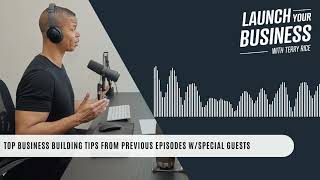
Terry Rice, a business development consultant at Entrepreneur Magazine, shares strategies from his podcast guests on building a business. He covers validation of ideas, sales confidence, authentic storytelling, and why systems matter more than most founders think.
Today, I'm sharing the top business building tips from previous episodes of Launch youh Business. So get ready to take some notes and make more money. This is the Launch youh Business podcast because we know starting a business is challenging, but it doesn't have to be confusing. Each week we'll give you the tactical advice and the necessary tools to scale your business without feeling burnt out. I'm Terry Rice, business development consultant and staff writer here at Entrepreneur Magazine. Let's dive in. Here's one of the biggest benefits of hosting a podcast. You basically get free consulting from the top minds in your industry. Seriously? Some of my guests charge thousands of dollars per hour for consulting, and I get to chat with them for free. And by extension, you also get to learn from them for free. So today I'm gonna share some of the top takeaways from previous episodes and if you've been listening for a while. First of all, thank you. I genuinely appreciate your support, feedback, and suggestions. So please do keep them coming. Okay, so let's go ahead and hop into it. And our first lesson comes from Nir Eyal, a Wall Street Journal bestselling author who's going to teach you how to become indistractable.
What we find is that high performers, they use these internal triggers, the uncomfortable states, to drive them towards traction. Like rocket fuel, they use the boredom, the insecurity, the fear, the stress, the anxiety, they use it like rocket fuel. Whereas low performers, when they feel that discomfort, the boredom, the anxiety, the stress, they escape it. They escape it with email, they escape it with checking the news for the hundredth time, they escape it with a drink, they escape it with a television. They escape it with distraction. Distraction is. Is a desire to escape discomfort. Which is why we have to admit that time management is pain management. Time management is pain management. By the way, I would also add money management is pain management, weight management is pain management. It is all about our ability to manage discomfort. So step number one is mastering those internal triggers or they will become your masters.
This one hit hard. And my favorite part was his point around distractions being used to escape discomfort. And I've caught myself doing that on more than one occasion ever since I heard near mention it. Fortunately, he also shares tips on how to avoid those distractions in the full episode. And why is this so important? Well, you can't run a business if you can't focus on impact. You'll always get thrown off by shiny objects, interruptions, or just a desire to escape some of the boring stuff you need to push through and in order to find success. So if you ever find yourself losing focus, I highly recommend listening to the full episode and checking out his book, Indistractable. Next up, we have author and podcast host Pat Flynn. And during this episode, he shared an extremely valuable methodology that will help you determine if you have a viable business idea.
So the Will It Fly methodology, Terry, is the way that one can help confirm whether or not a business idea that you have is actually worth pursuing. You know, I know a lot of people who want to start a business. They try to keep it secret and they kind of build the whole thing. They spend a lot of money, maybe even their life savings, and they spend all this time only to launch it and have it fall flat or have it realize that, okay, well, there was something already better than that out there, or what have you. So it's really important to do this process. And it starts with, number one, understanding who is it that you're serving first, Right? What are their problems, Pains, needs, desires. And once you kind of understand what they're going through, then even before having conversations with them, you can kind of find what I like to call the market map, meaning in this market, in the space that you're getting into, much like how you would if you were traveling somewhere, you'd want to see a map so you can figure out the lay of the land, what's there, what landmarks are there, who's there already, and where might you be able to land your plane in a way that still continues to serve that area, yet not either be too competitive with somebody or just kind of a rehashing of what somebody else is already doing? And this is why it's a huge advantage if you're just starting out now. Because if you're just starting out now, you might think, oh, I'm too late, or I'm too small, or this is going to be hard. Well, it's going to be hard, but you can make it easier because you're smaller, you have more of an opportunity to connect and see things from a bird's eye perspective before you land. So this is what we're trying to do. We're creating essentially litmus tests or trying to get little green lights to move on to the next step, to move on to the next step and take an iterative approach so that when we. When we get to a red light, if you will, we can go, okay, something didn't work out between the last green light and this red light. What is it? Does this mean I need to walk away? Or does this mean maybe my messaging was incorrect or what?
I highly recommend listening to this episode even if you think you have an amazing business idea or have started to see some traction already. And here's why. You'd be surprised at how seemingly small tweaks can make a big difference in how your product or service is received by the market. And you may not know what tweaks to make unless you've gone through Pat's Market Map exercise. So do yourself a favor and stop to work on your business as opposed to working in your business. You'll get much better results in the long run. Next, we're going to hear from Dori Clark. She's one of my favorite authors and I largely credit her for saving my business early on. I was all over the place until I read her books Reinventing youg and Entrepreneurial youl. In our conversation, she shares why Practicing strategic patience can be a huge advantage for your business.
97% of senior leaders said strategic thinking is key to their success and 90s you're exactly right, 96% said they just don't have time to do it. Which obviously strikes almost all of us on the surface as being pretty problematic. So if almost everyone thinks something's important, if almost no one is doing it, first of all, congratulations. Because if you do, it means you have a massive competitive advantage over other people. This is really if we're talking about a growth edge for you and your business. Actually carving out time and getting good at strategic thinking and long term thinking is one of the very best investments you can make in your business. So a point that I like to make in the long game, it's not that it takes huge amounts of time. Like let's be clear, I don't have time for strategic thinking does not mean oh wow, I wish I could take a year off and go meditate because then after the ashram I would be enlightened. No one has time for that. That is not what we mean. It's just a little time, right? We need just enough distance and breathing room so that we actually can ask ourselves the right questions, including should I actually be doing this task? Am I doing the right things to get me to the goals that I want to reach? Is there perhaps a more efficient way to try this? Could I try some something else? Could I outsource this? Could I delegate it? Does it need to be done? If we ask ourselves questions periodically, we can actually get where we want to go a heck of a lot faster. But most of us are so overbooked and over scheduled we never Even have a breath to do that.
It's amazing how you can increase the impact of your work and the amount of money you're making just by stopping to think about what you're doing and what else you should be doing. So a great weekly exercise is the start, stop, continue, change audit. Meaning what work related activities should you start, stop, continue, or change? Run through this list once a week and you'll be well on your way to winning the long game. Now we're going to hear from my buddy, Jason Pfeiffer. He's the editor in chief of Entrepreneur magazine and just one of the brightest and most sincere guys I know. During our interview, he shared how you can better respond to change and setbacks.
I think the first thing that you can do is recognize your own reaction to change, which is almost certainly going to be that you are going to recognize loss. The biggest first problem we run into is that loss is so much easier to see than gain. When something changes, you know what is being changed. You say, I was familiar with doing this thing and therefore I change has come along and I've lost that. And then you extrapolate the loss. You say, well, because this changed, that must change. Because that changes, this other thing is going to change. And soon enough you have worked yourself into a panic because you believe that every single thing that you know is now a total loss and you are starting at zero. So instead, we need to take a step back. We need to start asking ourselves some more leading questions, right? We need to look at change. We need to say, what is this new thing providing us that we didn't have before? What new skills can I learn or what new opportunities can I have because of this that I didn't have before? When you start to reframe it that way, don't focus on the loss. Don't obsess over the loss. Obsess over the possible gain.
Obsess over the possible gain as opposed to what you've lost. If you can just keep that thought in mind, you'll never look at change the same way again. And I'll give you a quick example. One time I spent four hours recording videos only to discover that my microphone was not turned on. Now that obviously sucks, but what's done is done. So here's what I thought to myself. Well, I just got four hours of extra practice, so the final videos will come out even better. It's that simple. Just a quick reframe and you can turn a setback into an opportunity. And speaking of setbacks, this is pretty Common if you're responsible for doing sales at your company. And that's why I brought on Brian Cristiano, the CEO of Bold Worldwide Agency and a pro when it comes to sales. So if you need a boost of confidence before your next sales call, you're in luck.
A lot of people lack confidence in their business. They're putting their prospects up on a pedestal because they lack their own confidence. They're afraid that they don't know enough. They're afraid that they can't answer every single question. And what I found that really solves that is getting people to understand. It's not about having the answer to every question. It's about understanding what are the most powerful questions that you can ask that gets your prospect to come on board and see from your perspective what you see about them. How do you actually get somebody to see what you see? You ask them questions, hey, how's this working for you? What are you doing about this? You know, what's your outcome that you want? Where are you going? Where do you want to be? Where are you today? And asking those on a much deeper level than I'm giving examples here right now, to where all of a sudden that person starts to connect the dots for themselves and says, wow, I need to change. And then you're there assuming that you can help to help them solve it. You're there in that moment of need. You just got them to take the wool off of their eyes and to see it. Finally, the problem for what it actually is that you could see that is powerful and that builds confidence. And it doesn't require to have every answer. It just requires understanding what are the most powerful questions that you can ask.
I love the way he frames it here because it reduces the anxiety and feeling like you have to have all the answers. Remember, you don't need to have all the answers. You just need to ask powerful questions that reveal blind spots and opportunities. This shows that you're thinking from the prospect's perspective and shows that you're a thought partner as opposed to just a vendor. Now, of course, you eventually have to do some work, but this shows that you understand the full scope of their challenges. Just get started. If you've ever looked for tips on launching a business, just get started seems to come up a lot. And while that's vaguely motivational, it does not provide any real direction. Because the next logical question for anyone would be, well, how do I get started? What specifically should I do? Well, if you're looking to quickly start a business without the confusion, risk and pressure of doing something entirely new. I've got a solution for you. It's called the Solopreneur's Fast Track. A step by step process on how to start a business using the skills you already have and actually enjoy using. So let's say your favorite part of a previous job was email marketing. You'll learn how to start a business offering other companies advice on how they can improve their email marketing. Or maybe you are really good at integrating complicated tech tools. You can help other organizations do the same thing without the need to bring on a full time hire. So the main point here is that everything you need to start a business is already within you. You don't need a cool website or fancy tools. And by completing the course, you'll also discover a simpler approach for attracting clients without using complicated funnels or cheesy sales tactics. You can finish it over a weekend and start making money in as little as 30 days. You'll gain the clarity and confidence you need to start your business and and receive a one page business plan so you can immediately apply what you've learned. Get started today and receive a 20% discount by heading to terryrice co. Fast. That's terryrice co fast. Here's another way to make sales calls go easier. Prove you know how to help people before they even get on the call. In this next clip, Justin Welsh, a creator and seven figure solopreneur, is going to share one way to do that.
I would say the biggest thing I see that keeps people from starting on this journey is the idea that they don't have monetizable knowledge. And I would say to everybody, don't think of yourself as becoming a quote unquote expert. Like there's not usually a certification for being an expert in what you do. Think about what you do as a journey. And the question that everybody should ask themselves if they want to monetize their knowledge is what where was I two to three years ago and what do I wish I knew two to three years ago that I know now? If you can answer that question, the only thing that's stopping you is finding the you from two to three years ago out on social media and they will need that same knowledge that you have today. So don't worry about being the best, the greatest, the smartest. Just look at it as a linear journey and find those people that are one rung below you on the ladder. Go help them. That would be like my biggest piece of advice if you want to get started in this journey.
If you're not Already Following Justin on LinkedIn, I highly recommend doing so. This will allow you to experience the process he described and help you share more valuable content going forward as well. And remember, you don't need a bunch of fancy awards or certifications to be considered an expert. Just focus on providing valuable information that helps your audience continue along their journey. Now, at this point, you might be thinking, hey, Terry, all this stuff sounds great, but I'm not even sure what I'm passionate about. If so, you're in luck because you're about to hear from serial entrepreneur and bestselling author Lauren Mallion.
People are able to figure out what they're passionate about by continuing to do that deep work. Like, if you had a hundred clients lined up, unless you say, like, oh, my God, that'd be nirvana. That'd be the jackpot. I've been waiting for that day. Then that's not what's gonna light you up. That's clearly not what you're passionate about, even if you think you're good at it, right? I give the example all the time when I'm working with folks on branding. I'm a wonderful cook. I'm a really great cook. I'm not like a chef. It doesn't make me look beautiful all the time, but it tastes really darn good. But I don't want to cook that. I want to cook for my family. Not bad enough that I want to make Thanksgiving meals and have a catering service to supply food for other families. Even if you would pay me money to do it, even if you pay me tons of money to do it, I wouldn't want to do it. Right? And that's where we're able to figure out where we're passionate. You know, if you had a whole bunch of clients, if you could make a lot of money doing this, would you continue? Would you want to? Would that light you up? Would that motivate you? If not, that's not what you're passionate about. And when life affords us the opportunity to chase our passions while achieving success in doing something that is enjoyable for us, then we get to that point where the timelines don't matter because you're really being yourself. You're being your authentic self. And that's when you can actually really say, I get paid to do what I love. And that's not exactly what I ever was. Never my explicit goal. But I can tell you, to be here now, to be able to say that is, it's life changing, it's life affirming, and it's life changing.
This lesson is extremely important because you could be very good at something but still not want to build a business around it. And that's okay. It's good to realize before you start or you're too far along, so stop to think about your business idea. Is this something you enjoy doing? If you got a bunch of new clients or customers right now, would that make you happy or stressed? If it's the latter, you should probably rethink your business idea and you can start by implementing the Will it Fly? Methodology that Pat Flynn discussed in episode one. But let's be clear here. Even if you love your job, you're still doing work. It's not like you're sitting at your desk giggling all day and collecting checks. So how can you structure your day in a way that allows you to get work done while also focusing on the people and opportunities that matter most? Entrepreneur and podcast host Jackie Hermes shares her process.
I don't really, I don't hold myself to like a strict schedule. It's not I'm not getting up at 5am and working out and da da da da da, you know, throughout the entire day and running myself ragged. I'll wake up at maybe 6:30 or 7 and if I have something really important that I need to get done that day, I will just turn over and start working on that immediately. I like to eat the frog and get the most important thing done before I do anything else. Like I'll be sitting at my desk in my room in my pajamas because I want to get it done and it makes me feel so much better about the rest of the day. I think being flexible with yourself and giving yourself grace to do all of the things that you need to do on your timeline just makes so much more sense than trying to be, at least for me, than trying to be really strict about it. And then like when I am flexible like this, I get to spend time with my kids. You know, like if they're out there eating lunch or whatever and I'm not at a meeting, I can go and hang out with them for 15, 20 minutes, have conversations with them, see what they're up to, coordinate their play dates or, or whatever. Because I'm not like chaining myself to my desk constantly.
Jackie is describing the time, lifestyle, and financial freedom that so many of us crave. And it's certainly possible. You just need to be disciplined and focused. But no matter how well you plan, you're still going to run into unexpected challenges. And I can't tell you how many times I've had big plans for the week, only to be thrown off by one of my kids getting sick or something along those lines. And that's why I'm glad I had my friend Patrice Pulzer join. She's a storytelling video coach and a mom of three, and during our chat she shared how you can use your not so glamorous moments as an opportunity to build a deeper connection with your audience.
Your struggles, hard moments and failures are the foundation for real connection. And I cannot tell you how many founders miss it. They just miss an opportunity to connect because they are so focused on showing just like the shiny social media highlights or the award reel or the accolade reel, or the fancy job that they used to have. Again, no one cares. Like I. You know, you have to think about. You think about when someone goes to the about page. When someone goes to the about page of your website, they've already know about you. They've heard about you through social, through a newsletter or referral. They actually want to go deeper with you. So it's an opportunity connect. So if you're not showcasing a struggle or showing sharing something deeper, you're missing it.
It's so weird how well this works. And I'll give you an example. One time I shared a story about how I messed up during a speaking engagement. Long story short, there was a woman in the audience who had a kid with her. The kid might have been two or three years old. And as you may have guessed, the kid was making a lot of noise. And as a fellow parent, I just ignored it because that's how kids are. I mean, heck, my own kids don't want to hear me speak for more than a minute. So I get it. But unfortunately, she got up and left. And that's where I messed up. Because instead of ignoring the noise, I should have said, I'm glad you chose to attend this event and watch your kid as opposed to attending the event or watching your kid. So I messed up. And in my posts, I mentioned how it showed more empathy and connection with people in the audience going forward. But here's what happened. I booked two speaking gigs from that post. The same post where I mentioned how I messed up encouraged two organizations to book me to speak at their events. So there's a perfect example of how sharing more vulnerable, authentic stories can help you. And in the interest of being vulnerable and authentic, I was a mess. When I first started my business. I had no processes set up, nothing was organized, and it was extremely challenging for me to measure and improve the impact of my work now. Back then, Troy and Rashad of Earn your Leisure were not sharing business content yet. But fortunately they are now. And in case you're not familiar with them, the Earn your Leisure show has amassed over 50 million downloads and is consistently ranked in the top 20 business podcasts in the United States. I asked Troy a simple but impactful question. What is something you wish you learned earlier in your entrepreneurial journey? I guess I wish I would have.
Learned how important systems are, you know, as you're going through this journey. I come from a 9 to 5 background, right, like I was teaching. So the entrepreneurial journey was, was very new for me, but it's something that I was willing to learn and I was excited and eager to learn about. But having systems in place while you're on that journey, it just makes things very streamlined. So it doesn't feel like everything is out of order. It makes everything more organized. And that helps, that helps business. It makes things function a lot better. Um, it makes your life a lot better for sure. But it's a learning process. Like, I wouldn't change it, I just would. I would have known it, you know, because as, as we go through these things and we go through challenges and, you know, things feel like they're chaotic, you figure out who you are in those, in those times and you figure out who your partners are and who your friends are and who your business, you know, the businessmen and women that you're going to be working with are. And so it's something that you can't discount. It's definitely something that's valuable to go through. But if I had to go back, I could imagine how further we could have been. Not that we're not now, but if we had some of these systems in place in the early beginning stages of it, I think the trajectory would have been incredible. But I'm happy where we're at now too.
I love this suggestion from Troy, and here's why. It's all about mastering the fundamentals by having a dedicated process in place. And in many ways, this is more important than having ambition or lofty goals. As James Clear stated, you do not rise to the level of your goals, you fall to the level of your systems. And one of the most important systems you can set up is a customer relationship management system. This is how you'll track all the interactions with prospects, customers, and you can even assign yourself various tasks. If you're looking for a system to manage your projects, social media, content and more check out notion, it's extremely flexible and easy to use and fortunately free so you can stay organized without breaking the bank. And there you have it, a few of my top takeaways from the Launch youh Business podcast. You can listen to all past episodes by heading to TerryRice co. Podcast again. That's Terryrice Co Podcast. Thanks so much for listening and let me know what topics you'd like to learn more about on future shows. You can message me on social media at Terryrice. Thanks again for listening and I'll catch up with you next time. Apply what you've learned on today's show. You'll find the show notes and more resources at TerryRice Co podcast again. That's TerryRice Co podcast and the best way to support this podcast is by subscribing, telling a friend, and leaving a review. Also, you can get more tips by following me on Instagram terryrice, or follow me on LinkedIn. This episode was produced by Josh Wilcox of Brooklyn Podcasting Studio and edited by Dan Lardy. Special thanks to my wife, Dominique for keeping our kids relatively quiet as I recorded. Thanks again for listening. I'll see you next time.
More from Terry







When you want to quit, don’t. #FitnessOver40 #MindsetShift #TiredIsNotAnExcuse #PersonalGrowth




You’re gonna want to give up. Don’t. #mindsetshift #motivationalquotes #motivation #dontgiveup