Hala Taha Interview: The Blueprint for Monetizing Your Personal Brand
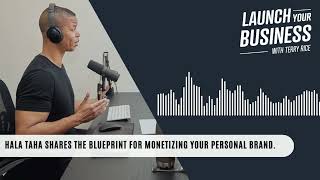
Hala Taha, host of Young and Profiting podcast and CEO of YAP Media, talks through her path from corporate jobs to building a podcast empire. She covers LinkedIn growth strategy, how she monetizes the show, launching a social media agency, and keeping personal life intact while scaling a business.
For the first time ever in my corporate career, I felt like I was stagnant. I hadn't gotten promoted in two years. I felt like I was being looked over. And I realized that I had this big opportunity and I could start a social media agency. So by month one, I think we were making like $2,000 a month. By month two, I landed a billionaire client who started paying me $30,000 a month to run all his social and podcasts.
If you're looking to build a personal brand that doesn't just look good online, but actually puts money in your pocket, then stick around. Hala Taha, host of the Young and Profiting podcast, is here to give you the blueprint for monetizing your personal brand. This is the launch your business podcast because we know starting a business is challenging, but it doesn't have to be confusing. Each week we'll give you the tactical advice and the necessary tools to scale your business without feeling burnt out. Terry I'm Terry Rice, business development consultant and staff writer here at Entrepreneur Magazine. Let's dive in. A friend of mine has over 100,000 followers on Instagram. And on the outside, it looks like things are going pretty well. But behind the curtain, to be honest, she often struggles to pay her rent. And look, you'd be surprised at how often this happens. I can guarantee some of the entrepreneurs you follow and might even be jealous of aren't doing nearly as well as you might think. And I don't know, maybe some people are just so caught up with their image that they neglect to make an actual impact that would allow them to pay their bills. Fortunately, there's a very easy way to avoid that. Solve a problem first and then get loud about it by building your personal brand. That's why today we're joined by Hala Tala, host of the Young and Profiting podcast. Today we'll discuss how she went from recording podcast episodes in her mom's basement to to now having one of the top business podcasts across all platforms. How a powerful presence on LinkedIn gave her a way to break into a saturated market, why waiting to monetize can actually be a successful strategy, and how to monetize your podcast without sponsorships. Let's get into it right now. So, first of all, welcome to the show.
Thank you for having me. Very excited to be here.
Yeah, I know this is our third attempt at connecting, so I'm glad we're making it happen right now, but I'm a huge fan, obviously. But for those who maybe don't know who you are yet. Do you mind introducing yourself?
Of course. My name is Hala. I'm the host of Young and Profiting podcasts. We are a top 10 business podcasts on Apple and across all apps. I'm also the CEO and founder of YAP Media. It's an award winning social media and podcast agency. And I'm also the CEO and founder of the YAP Media Podcast network, which is the number one business and self improvement podcast network.
So you've done a lot and I think it can be almost intimidating for people to hear that and think, oh gosh, you know, how can I get started, you know, in entrepreneurship or podcasting? But I know before that you worked at Disney, if I'm not incorrect. So I'm wondering what was going through your mind when you left Disney and said, you know what, I'm going to leave the happiest place on earth and pursue entrepreneurship, which can be one of the most challenging jobs on earth. So what was going through your mind when you made that decision?
Yeah, so I actually started young and profiting as a side hustle. I was working in corporate and I worked at HP and then later Disney streaming services in marketing. And then at some point in my corporate journey, I just felt unfulfilled. I felt like I really wanted to get back on the mic. I really wanted to pursue my dreams from a former life of being an on air personality and being in radio. And I saw that podcasting was finally sort of accessible. But it was something that I felt like I could achieve on my own and I had the right skills. So I did it as a side hustle and I never thought it would really amount to any sort of money. I thought I was going to stay in corporate, become a cmo and I really enjoyed corporate and was really good at it. But YAP kind of just took off and I realized that I was super passionate about it and ended up pivoting and starting my social agency, which was the first way that I actually monetized the brand.
Let's go back to Young and profiting because obviously the podcast is a huge hit. You're making a huge impact on people. But why do you think it's just caught on so much? I want you to brag about how awesome you are in the.
Sure, sure. Well, I think that I started really uniquely, right? So I'm the biggest podcaster on LinkedIn and when I wanted to promote my podcast, I didn't think about Instagram, I didn't think about YouTube. I put all my chips on LinkedIn. Because I realized that the people who wanted to level up their life, the people who would, who were interested in entrepreneurship and self improvement, they're mostly on LinkedIn. And I saw this big gap because really big podcasters like Jay Shetty and Joe Rogan, they weren't on LinkedIn. And so I decided that, you know what, I'm going to really just focus on this platform. I'm going to dominate this platform. And I became a LinkedIn influencer before my podcast actually blew up. Two years into my podcast is when I really became like a mainstream podcast and started monetizing and getting sponsorships and ranking on the charts and things like that. But I was known for my podcast on LinkedIn and everybody was watching my micro content and my audiograms at the time and things like that. And people knew me as the number one podcaster. So I think what made me magnetic is because I was sort of the underdog and I was on LinkedIn, like in my, like, mom's basement, recording podcasts and getting my fans one by one. And actually people, super fans who were really, really into the show would reach out to me and ask me if they could help me. And so what happened was, is that I had 20 volunteers for two years who worked for free for me to grow the show. And so I would teach them everything. I would teach them how to audio edit, I would teach them how to video edit, I would teach them how to make the graphics, how to post for me on social media, how to, you know, create all the different content that goes along with the podcast. And as a result, I had 20 super fans and core team members that were spreading the word about young and profiting podcasts. And I have to say, like, to answer your exact question, I just think that it was magnetic and I was just trying to be of service. And because my goal actually wasn't to monetize the show, I. I literally would tell people that it's impossible to create a business out of podcasts. And now I literally have a business from my podcast. And for two years I was like, podcasting is just to be of service. It's just a network. You're never going to make money off your podcast. I used to say that because I truly believed it. And I think people really liked the fact that I was just trying to be of service and provide value and not trying to monetize anything. And I think that really made the brand magnetic.
I love the grassroots support that you got for building your podcast because so many people want to have a big brand they want to have a bunch of downloads and all this stuff. But just seeing behind the scenes what had to happen for you to get where you are, I think is very beneficial. I can appreciate that strategic patience that you leveraged in the altruism as well.
Yeah. And I think what also made people want to work for free for me is because I was working so hard. You know what I mean? I was working a day job. I'd wake up early in the morning, work on my podcast. I'd stay up till 10pm, 12, 11pm working on my podcast every single night. So they saw how I, how much I was into it, how much I was so passionate about it. And that made them feel really passionate about the mission as well. Because we were helping people level up their lives. We were getting messages from fans about how, you know, people, you know, totally transition their life, totally helped improve their life and that motivated us to keep going even when we weren't making any money.
So let's, let's, let's go deeper here. So I understand you put in a lot of hard work and deservingly you have this huge brand now. But what surprised you the most about building the podcast? Was it production? Was it booking guests, was it promoting it? What stood out to you?
Well, I think the biggest mistake that people make is that they don't actually focus on their marketing. So when I started young and profiting podcasts, I feel like the reason why I've become like a top podcast when there's millions of podcasts out there competing is because I'm really good at marketing. I'm not the best podcast host, I'm not the best interviewer.
I would not agree with that.
But we'll, I mean, I'm great, I'm great now. I'm like 400 episodes in, you know, like, of course I'm good now, but when I first started, I wasn't that great at podcasting yet, but I was really good at marketing. I was really good at social media and video and copywriting and research and all the behind the scenes things that you need to be good at for podcasting. And I really focus on the marketing aspect even more than the content and the production, I would say. Or it was like 50, 50 balanced, right? I really cared about both. And a lot of people are really only good at one or the other. And I feel like I put equal amounts of effort towards both. And the other thing that I did was that I realized that I needed to get leverage from something. So like I mentioned, I, I focus all my chips on LinkedIn. I knew that I had to pull an audience from another platform if I wanted people to listen to my podcast. Podcasts have a really big problem with discoverability, right? A lot of people can't discover new podcasts. And at the time, it was a boys club from 10 years ago who were dominating Apple, right? And so I had to think creatively in terms of how I could circumvent the fact that I was competing against people who had been growing audiences for 10 years before me. And so my area that I thought that I could concentrate on was LinkedIn. And I figured out how to create a brand on LinkedIn, become an influencer, and then pull those people from LinkedIn to listen to my podcast. And then what I did is once I grew my LinkedIn audience, I would trade that audience for a podcast audience. And then I got on the COVID of Podcast magazine in January of 2021, I believe. And then I got an interview with Matthew McConaughey, who. Which is like a huge fish to catch, you know, and that really kind of skyrocketed everything. And then all of a sudden, I became a top podcaster. And then I really started to monetize and so on. So I had a social media background. I was producing my own, you know, number one podcast. And all this, I had a volunteer team, the guests that would come on my podcast, all of these famous CEOs, celebrities, authors. @ the end of the interview, so many times they would say to me, hala, who does your marketing? How did you blow up on LinkedIn? Hala, how did you grow this podcast? I have a podcast. Could you do that for me? Hala, I really want to grow on LinkedIn. Do you think you could help me? And my answer would always be no. I'm so sorry. I have a corporate job, and I had a really cushy corporate job, and I was like, I'm really busy. I've got my podcast, got my job. Like, I don't offer services. I'm so sorry. But once the pandemic happened and I had no commute anymore to work because I was working from home, I also was pretty unhappy in my job. For the first time ever in my corporate career, I felt like I was stagnant. I hadn't got promoted in two years. I felt like I was being looked over. I felt like, you know, I didn't really like Disney's company culture, to be honest. And I realized that I had this big opportunity and I could start a social media agency. So by month one, I think we were making like $2,000 a month. By month two, I landed a billionaire client who started paying me $30,000 a month to run all his social and podcasts. Then I landed Kara Golden. She paid us another $30,000 a month. And then I kept landing like the CEO of 1-800-got- junk and Heather Monahan and all these huge LinkedIn and podcast influencers, authors, CEOs. And before I knew it, I had, you know, 60 people around the world working for me and an award winning social media and podcast agency. And essentially I converted my volunteers into a paid team. And it happened so organically. And I think the reason why it happened so organically is because I had so much social proof and I waited so long to monetize. It was like two years in and I had built up all this social proof, all this experience had trained up my team so well. And then it was like we turned on and it was just like leads coming left and right. I've never done any paid ads and we made $5 million in our first two years as a company.
So I'm looking forward to playing this because I was not taking notes just now, but, but anyone who wants to build a podcast or a brand can take notes here. I mean, you have this blueprint here for success, which I, which I appreciate you sharing.
Yeah. And the other thing to think about is I, I grew it with no money at first. So the first two years it was like trade, scrappy, sending, email, shooting my shot. Right. I had no money other than my, I wasn't, I was investing in my podcast, but I didn't have like a ton of money like I do now in terms of, with my social agency that's generating all this money all the time. Once I had my social media agency, all of a sudden I had all this power because now I had all this extra income and I could actually invest in the growth of my podcast. And I'm not the type of person to join an industry and just be surface level. Right. There's a lot of podcasters who only know how to podcast. They don't understand how to monetize, they don't understand how to do media buying and grow it. They don't understand the players involved. They don't actually understand the podcast ecosystem. They call me the podcast princess for a reason. It's because I've like totally figured out the whole industry. And so once I started to make money, I actually started doing media buying for my podcast. So all these trades that I was talking to you about, I started to make relationships with the different podcast players, and I started to realize that the same sponsorship placements that they were putting me on is something that you can actually pay for. And so you can get banner ads in these podcast apps, you can get notifications going to users when people sign up, and onboarding, you can have them automatically subscribe to your show. And so there's lots of little things that you can actually pay for to grow your podcast. And because I had done all these sponsorships and been this, like, scrappy podcaster girl on LinkedIn, these players really liked me. And I then became a conduit for them to sell those types of spots to independent podcasters. So I started selling those spots to other podcasters, making a little cut, then taking that money and spending it on my show to get more promotion. Even though I wasn't getting, like, necessarily sponsored, I basically poured the gasoline on that strategy with my own funds, Right? So that's really how I became a big podcaster, because all the really large podcasters, they're spending money on their show, they're buying commercials on other top podcasts, they're buying ad placement spots on these podcast players. And that takes investment. It's very rare right now for a podcaster to be topping the charts without actually investing in media buying.
Okay, we're going to take a real quick break here. As an entrepreneur, you're good at solving other people's problems, but what about the problems that arise within your own business? Maybe you're not getting enough leads or you're having trouble increasing your rates. Maybe you're stuck working around the clock and still not making enough money. These are all symptoms of a larger problem. And unfortunately, you can't fix problems you're unaware of. And that means no matter how hard or how smart you work, you'll never reach your full revenue potential. So let's fix that. I've created the Revenue Roadblock Checklist, a visual and tactical solution to help you identify and eliminate revenue roadblocks. So if you're feeling stuck or stagnant in your business, this is your chance to finally break through to the next level. Grab your free checklist by heading to TerryRice Co money. That's Terryrice Co Backslash Money. Let's. Let's dive deeper on that, right? Because I think that's the issue some people have when trying to launch a podcast. They're like, step one, buy a really expected expensive mic. Step two, success. Right? And obviously, that's not how it goes. So what kind of budget do you need Even like a, you know, ballpark figure to make an impact to you by advertising your, your podcast.
I don't want to scare anyone because I still think there's an opportunity for scrappy people who are like me back in the day, who are just willing to be innovative and think creatively. Right. But what I would say is if you do have the money, you can basically fast track your success as a podcaster. And I would say anywhere from 3,000 to $10,000 a month would be a good starting point to invest in your podcast. And for a lot of people, that's unattainable. But if you think about your podcast as a way to monetize outside side of sponsorships at first, like for instance, the guests that come on your show. If your perfect client was your guest and you thought about inviting your perfect client on your show, what you're doing is you're networking, you're building trust and credibility, you're elevating your brand and your niche. And you can start to monetize in the way that I did at first, which was to have some sort of service. It could also be a product. But interviewing your potential clients, that is a great way to monetize your podcast. Outside of having a lot of downloads and then eventually getting sponsorships. Once you start to monetize what you're doing, then you can invest in the growth of your podcast and then monetize through sponsorships. And then now you have two revenue generating streams from your podcast. So I monetize in two ways. My guests become my agency clients and I literally do no paid ads. It's just totally referral and from my podcast and I never have to look, I'm always like, I, I'm always unable to take on new clients. Like, it fills me up, right? And then I get sponsorships and I make, I make money on my podcast that way as well.
Let's, let's keep on going with, with the money route, right. Do you have other examples of how you can monetize a podcast outside of sponsorships?
Yeah, this is such a great question. And this is like my new specialty. Basically. This is where I'm focusing everything on it. So when podcasting first started, it was actually audio only. That's what people associated with podcasts. But what people don't realize is that podcasts have always been evolving. The way that people came up with the word podcast is that it was ipod and broadcasting ipods are obsolete. Nobody even uses an ipod anymore. But we still call it podcasts, right? Podcasts are no Longer audio. It's like now most podcast content is being consumed outside of audio apps. So they're visual, they're multichannel. So YouTube, social media people are playing, like myself, I'm pioneering this way. So I play all my podcasts on LinkedIn Live, for example, and I've got so many views and impressions just off LinkedIn Live. And so now people need to think about podcasters as the new influencer marketing. We are influencers, social media influencers that have another channel. Podcasting and podcasting channels all have a unique purpose. So the audio portion of the podcast channel is really about education and entertainment. Most people who are listening to podcasts, they really want to be entertained and educated and they are multitasking. 94% of all people who listen to podcasts are multitasking. They're unable to stop and go to a website and click. And a lot of advertisers are finding that they have very low direct conversion when it comes to revenue off podcasts. But brand mentions, brand retention, intent to purchase increases heavily when people listen to podcasts. So it's really good to get people primed to buy your product. But to actually get people to buy, you need to have a multichannel approach. And that's why it's really important to book podcasts for simulcast so that they can promote your product on their YouTube channel. Get social media advertisements from your podcaster so they can promote on social. Because people are more primed to click a link when you, when they're already in the mode of taking action on social media and on their computer and on their phone. And they're not multitasking. They're focused on whatever you're delivering. So it's really about this new way, 360 degree campaigns is what I call them for you, for people to advertise on podcasts again.
I'm glad that I have this recorded so I can take notes and play it back. When I play it back later, I know there are people who are, who are listening right now are like, how can I learn more from her about podcasting? Do you have any kind of program or like assets you can, you can share?
So I don't have a podcast course. I have a LinkedIn course. So I just launched a new arm of my business four or five months ago called Yap Academy. And our first program is the LinkedIn Secrets Masterclass. So hundreds of people have taken it already. It has rave reviews. It's a two day live workshop with me. There's also an on demand version and we're Going to have a class in early June, so if you guys want to check that out, you can go to YAP Media IO course. And that is like, I teach you everything I learned about LinkedIn in five years running the number one LinkedIn marketing agency. And I'm one of the top influencers, and I teach you all that in just two days. So it's an incredible program. And then phase two is going to be a podcast course.
Got it. Got it. What I enjoy about you and your work is like, you're not just doing it, you're showing people behind the scenes. Like, this is step by step by step how I've done it. So they can reverse engineer what you've done. Not saying it's easy, but you're making it very clear. So, yeah, it's hard to be an expert and someone who can actually be an educator as well, but you're doing a great job of doing both.
Thank you so much. And I think really the key is that, like you said, I'm not surface level. Everything that I do like LinkedIn, I know everything about LinkedIn, the algorithm, all the engagement hacks that you have to do, the copywriting, what works in terms of the graphics, the assets, the features. I know everything about it because I want to be a true expert. I don't do anything sort of half ass. Same thing with podcasting. I learned everything about it. There's nothing you could ask me about podcasting that I don't really know the answer to. Right. So I love teaching about it and I hope it helps people's lives.
You, you get interviewed all the time and you know for good reason. But what is one question that almost nobody asks you? But they should because your response will be so helpful?
I don't know. I get asked so many questions. Nobody really asked me much about my personal life. I'll say I get a lot of questions about LinkedIn, podcasting, entrepreneurship. And I don't know if people, a lot of people don't necessarily ask about my personal life. And I feel like I have a lot of good life lessons under my belt. I have a. I've had a roller coaster of a life.
Well, if you want to share one, one life lesson that feels comfortable sharing, we're all ears for it.
So I would say that when I was starting my company, I was so heads down, I was working like 18 hours a day for four or five years. Like, literally, I didn't go out, I didn't go on vacation, I didn't really see my friends. I was missing events. And I was. And it's hard because I'm thankful that I did that, because I don't think I'd be where I am today if I didn't do that. But I'm also upset with my younger self for not realizing how important relationships are and how not everything is about making money and being young and profiting. Right. Profiting is all things in life, not just making money. And so now I'm lucky, where I have a much more balanced life. I really prioritize my relationships. I really try to shut down my computer on Saturday and Sundays and live my life and be more healthy. And I feel like there's a couple lessons in here. A, when you really want something, you do need to sacrifice. And I think I sacrificed. But if you can maybe try to increase your timeline a bit, do a little slower so that you can also make sure that you have time for your relationships and you don't drop the ball there. Because there was a period in my life, the happiest period in my life, where my company blew up, my podcast blew up. Everything was going so well career wise. But my relationships were the exact opposite. I lost my partner of 10 years. We ended our relationship, my three best friends, like, kind of our relationship severed. I stopped being best friends with them. Like, my family is always there for me. They have more grace. Like, your family will have more grace for you in these situations. But like, anybody who wasn't family sort of was like, screw, holla. She, all she cares about is yap, you know, and now I'm good, I have lots of friends and everything is fine now. But it's because I, I, I'm prioritizing that. And I think it's important when you're trying to be successful to prioritize relationships as much as your career.
I, I want to extend some grace. I mean, first of all, thank you for that. And, and I know we have to hop off here, but I sometimes think the reason why people aren't supporting you as much is because they're a little jealous. To be honest, it's sometimes painful to just retain these relationships when you're just growing apart so much and you're just better off saying, okay, this is not going to work anymore, but let's just end it now so we can at least reflect on the good times and remember that a lot of people here are listening to you. They're learning a lot. I'm sure they're taking notes right now. But where can they learn more about you and more information about how you can help them.
Yeah, of course. Thank you so much. Well, first of all, I would love it if you guys listen to Young and profiting podcasts. It's the top 10 business podcasts. Like I mentioned. I've interviewed people like Alex Hormozzi, Robert Cialdini, Seth Godin, all the greats. Right. All the greats in the self improvement space. Grant Cardone. So I love my podcast. It's my baby. I work really hard at it. You guys are going to love this show. If you love Terry's show and if you want to learn more about LinkedIn, my LinkedIn Secrets Masterclass, you can go to Yap Media IO course. And Terri, if you want, I'll make a special code for all of your listeners. They can get 30% off if they use the word Terry as promo code. Would you like that?
I would love that, yeah.
Cool. So let's do that. I'll set that up on my Shopify account. And yeah, you can go to youngandprofiting.com yap media IO I'm also on YouTube, Instagram @yap with Hala and of course you can find me on LinkedIn.
Awesome. Thanks so much. It's been great. I appreciate it.
Thank you so much. This is so much fun, Terry. Thank you.
And that's our show for today. You can learn more about HALA by visiting her website, Yap Media IO. That's Yap Media IO and you can also follow her on Instagram at Yapwithhala and of course give her a follow on LinkedIn as well. Thanks for listening and I'll catch up with you next time. Apply what you've learned on today's show. You'll find the show notes and more resources at TerryRice co. Podcast. Again, that's TerryRice co podcast. And the best way to support this podcast is by subscribing, telling a friend and leaving a review. Also, you can get more tips by following me on Instagram, terryrice or follow me on LinkedIn. This episode was produced by Josh Wilcox of Brooklyn Podcasting Studio and edited by Dan Lardy. Special thanks to my wife Dominique for keeping our kids relatively quiet as I recorded. Thanks again for listening. I'll see you next time.
More from Terry







When you want to quit, don’t. #FitnessOver40 #MindsetShift #TiredIsNotAnExcuse #PersonalGrowth




You’re gonna want to give up. Don’t. #mindsetshift #motivationalquotes #motivation #dontgiveup