Healthy ways to use Tech and Social Media
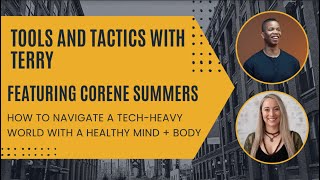
Terry Rice and Corrine Summers, a meditation and mindfulness coach, discuss managing technology use and social media without burning out. They cover setting boundaries, overcoming distractions, and addressing imposter syndrome for entrepreneurs and leaders trying to stay focused and healthy.
The theme for today is, you know, how do we manage technology in a world where it's necessary but also a huge distraction? And, and that happens to me quite often because I have four kids, as you know, and there's times when we're out playing and I want to document it for a few reasons. One is just for posterity, right. You know, when I have these pictures when they get older. Another is I want to put it on Instagram so I look like that guy who's like this entrepreneur who also takes care of his kids. But it's like, when are you, when are you fully present and when are you actually documenting and not necessarily being as present as you could? So there's this trade off here. And I always thought that like, when I would go to conferences or concerts sometimes and there's people watching the whole thing like this and I'm like, are you really getting the most out of this by watching it through your phone just to record it, like. And there's been studies that show that you actually enjoy it more and actually remember it better when you don't record your content. But Kareem, let's go ahead and get started. I'm going to have you introduce yourself. And I've already framed it again. Our goal here is to understand how to balance technology with work and just wellness. But just for context, can you go ahead and introduce yourself, please?
Yeah, absolutely. And thanks again, Terri, for having me. It's great to chat with you as always. My name is Corrine Summers. I'm a meditation and mindfulness coach. I'm also a Reiki master and I specifically, specifically work in the corporate space as well as with what I call conscious entrepreneurs. So conscious leaders overall and helping folks manage their mindset and find, you know, I've gone really deep into all of these esoteric tools and ancient wisdom and I like putting them into plain English to help people in the modern world, you know, meet them where they are and use them to empower themselves and as our title says, become the CEO of their own brain, their body, their business and their life.
Yeah, I love that. And what I want to do is just kind of pre qualify. You're a good person to talk about this, meaning perspective. Right? Because sometimes people who talk about your area of expertise, it's all this woo woo stuff. And it's like, how do you really know what I'm going through when you're like meditating and drinking special tea all the time? But can you just tell us your backstory in corporate and how that led you to becoming who you are now.
Yes. And I agree it's hard sometimes there's this gap. And really I like to bust the myth of meditation and what it is and what mindfulness is because it is not clearing or silencing your mind. That is so almost impossible in today's world because of how overstimulated we are because of the new frontier with technology and just the way we live our modern lives. So people shouldn't be beating themselves up. You know, when you're meditating, part of the process is battling those thoughts. Getting distracted, that's part of the journey. And you know, unless you're a monk or a yogi that's living in an ashram, completely separated from society, it's, you're not going to be able to build the environment that you can be in this still silent space all of the time. So to me, it's more about managing our modern lives and using these tools to find as much peace and state of flow, ease of being as we can, but also not putting ourselves on this. Like we have to completely be silent in our head or not think any thoughts in order to be meditating. Right. Have you, have you experienced that?
Well, let's first ask the audience. Yes or no, have you meditated? Have you ever tried meditation? We'll just say that, right?
Yeah.
I mean, the way that I've been taught is it's the, it's the intent initially. Like, I want to focus, right? So maybe it's on my breathing or just like, you know, certain words that I'm reflecting on. But when you feel your mind drift, that's when you really benefit because you're pulling yourself back to the present moment. But if you get upset because you, you know, you lost your focus, like, oh, I'm messing up. No, that's how it goes. I mean, it's like, it's like any kind of exercise. And, and I think another thing is people think that it's like this woo woo thing that, you know, is so esoteric that it's not accessible to everyone. No, it is, but it takes time. You know, it takes a few weeks. And if you do this meditation and you're a business owner, it's beneficial because you think more strategically and you can pay attention longer so you get better outcomes. So there's, you know, people are like, it can't be that simple. But it really is, so long as you actually commit to it.
Yeah, I completely agree. It definitely takes practice and consistency. But there are also a lot of ways to meditate in real life. And this is what I learned. You'd asked me about my journey. I worked in financial services and wealth management, and I did a lot of. I also had a role as a manager. I went into management and compliance and training and development. It was an intense corporate career. I was also dealing with some health issues at the time. And I had taken this trip in 2011, 2012 to Nepal, India, Tibet, Sri Lanka. I spent about four months traveling, and it was there that I was introduced to meditation and a practice called Ayurveda, another one of Indian's ancient holistic health systems. And I was introduced to all of these different ideas and ways of. Of living and of being and of what I call health maintenance. Maintaining the purity of your mind and body and preventing getting sick. You know, taking advantage of maximizing your energy and your vitality. And I didn't know at the time when I was first learning all these things that I would really need these tools when I got really sick with my autoimmune disease later and was simultaneously going through a lot of stress in my corporate career. So I really relied on these practices. They helped me so much at this point. They helped me put 90% of my symptoms into remission from my chronic illness. And I became so passionate about teaching them and sharing what I learned with others. That was what had prompted me to start my business in 2016. So that was when I left corporate. I got some yoga, meditation, and coaching certifications along the way, and then took the leap into sharing this information full time. And I think it was a natural fit for me to work with leaders in the corporate space. I'm also partnered with a corporate wellness app called the Wellness Coach. Everyone should download it and join me for live classes. We also do a lot of on demand stuff. I'm about to release a burnout journey, helping you prevent burnout before it starts. But that's where I feel I really thrive, because I've been there. And it was those tools that helped me thrive when I was in the corporate space and then also simultaneously start a business and go through managing an autoimmune illness. You know, when I look back, I'm like, wow, I really did a lot. And it was because of these practices that I was able to make it work.
Yeah. And the reason why I wanted you to share that, so thank you for that. But it's just the authenticity. And again, I'm not knocking anyone, but sometimes you see people in your field who are like, they're like 23 years old. It's like, let me help you live a stress free life. I'm like, the reason why you don't have stress is you're 23. Like, you don't have like grown four problems yet, unlike a lot of other people. But I always say you have to learn it, live it, then teach it. So on your end, you've gone through that, you've lived it, and as a result, you can be more empathetic to the people that you're helping. I want to sidebar for a second. I love the fact that you have a corporate partner because often as solopreneurs, we're just going at it on our own. But if you can take that system you have and then sell it to a corporation or partner with them, it scales much better. So it doesn't matter if you're a life coach, like an email marketing consultant, whatever it is. When I work with people, I'm always trying to figure out how to 10x things, right? You know, what's our profit multiplier. And if you just stay in that one little bubble, you know, you're never going to meet your, your revenue potential. So I'm glad you're doing that already. But one thing you, you mentioned before we talked is you help people become the CEO of their body. So I'd love for you to do is just give us an operational definition of what that means and how to do it. But before you do, I want to say hi to Jeanette, Jill from Chicago, Joe is still living there, and Adi as well. So. Hey guys. So thanks for, thanks for joining. Well, Hoffman Estates, not Chicago. Chicago, but right.
Skip that part.
So how do we become the CEO of our body? Let's just go right to that.
All right, well, first I want you to think for a second. I want everybody to just think for a second what you feel like when you watch a really scary movie or a movie with a lot of violence or something that maybe is like really intense. Just think for a moment what goes through your physical body, what goes through your mind. And then same like when you watch a movie that's really sad or a movie that's really happy. Terry, any, any thoughts, any feedback? Do you watch tv?
Yeah, I don't watch sad stuff. I don't need it. There's enough real sad stuff that I'm aware of in my life, so no, I just pass on that scary stuff. Not doing that either, so that wouldn't happen. But I see where you're going. Like there's a reaction and you have control over it. Should you choose to. Besides turning the channel. Am I correct in that assumption?
Yeah. What we have control over is what we're taking in. So this is something a lot of people live on autopilot completely. And this is something that I've seen happen a lot with my corporate clients and my entrepreneur clients, especially since the pandemic. When the pandemic started, a lot of allowances were made or maybe certain habits or routines slipped or things changed because we were in an. We've been in a state of emergency, and everyone thought, this is only going to last for a certain period of time. And now what I've seen happen is everyone's gotten, you know, kind of a little bit off track with paying attention to what they're taking in from the senses and what they're surrounding themselves with. And too often, we give up control of our lives, how we feel, what kind of action we're taking. 90% of the action we take, and how we show up in life and in our business and in our relationships comes from the subconscious. The subconscious is always being programmed by whatever we're surrounding ourselves with. So if you're letting yourself take in, you know, a ton of, you know, if you just got in the habit of watching, detaching from the drama and the chaos of the world through, you know, television or things like that, or consuming too much news or getting off track in social media, it's just like a reminder that everything that we're taking in from the. From a sensory perspective, through sight, through sound, etc. That we're. It is impacting our thoughts and our emotions, which then impacts everything else. It's a giant ripple effect. You know, everything from what we eat to, you know, the air that we're breathing, you know, where we are throughout our day, the conversations we're having and the people we're surrounding ourselves with, the podcasts we listen to, the people we follow and engage with on social media, all of that is what is constantly feeding our subconscious, which, then again, it impacts our thoughts, our emotions, and how we step up, show up, or take action. So just something to kind of consider and think about as we're consuming and we're surrounding. You know, there's only so much that we can control. So it's just paying attention to the things in your sphere that you do have control over. For instance, who you're following in your social circles, what information you're allowing to permeate your sphere of influence.
Yeah, it's funny you bring that up because a friend of mine was traveling in Europe all summer. And normally I like her content on Instagram. It's like, it's useful stuff. It's like, here's how you run a business. Here's the challenges of being, you know, a parent or whatever. But when she was in Europe, like, it was just like, oh, we're at this. Oh, we're at that. And I was just like, I'm not. And I didn't want to see it anymore. Like, I was just done. So I just. I just kind of paused following her because I'm always very conscious of how I feel when I'm taking in information. And if I get to the point where I'm like, this doesn't feel good, like, I'm just aware of it, I just stop. And especially with the news, because, you know, one of my favorite quotes is, you know, you have a moral and civic duty to be aware of the world around you, but you don't have to be on duty 24 7, because that's how you just get sucked in these cycles. Right? And it's. It's not productive. And there's literally teams of data scientists whose job is to keep you glued to the screen with sensationalized content. Their job is not to make you happy. Their job's to keep you engaged. Right. And fear different things. Yeah, yeah, yeah. So it's like, it's. It's. It's two. It's. These are separate but related. Right. Or separate completely sometimes. So, yeah, I think this, that it starts with that, that awareness. But just how can we. Sorry, I was gonna say a lot of.
And a lot of people here may already be doing a lot of that. You know, you're probably following people that inspire you and motivate you and lift you up and empower you in, you know, whether you're an entrepreneur, conscious leader, wherever you are in your life. I know a lot of the people that are in this aud probably already doing a lot of that. But to take it up a notch, you know, really consider who, who, who you want to have influence, knowing that we're basically a constant program of what we're taking in, really considering what are you activating in your actions and with what you're aligning yourself to every day. What was the question you're going to ask, Terry?
I'm going to share something because here's a challenge a lot of us have as entrepreneurs, as business owners, whatever it may be, we literally have to be on social media. Like we. That's how you generate revenue. When you post something that sounds smart. People say, hey, give me more, and that's how you make money. But. And part of that's feeding the algorithm by engaging in comments, right? So the other day I put up this post saying, hey, everyone, I have this new way of growing my email list by just having really great deliverables for my content. And the open rate's gone up, the click rate's gone up. It's amazing. You want to sign up for it? There's a QR code right there for you to do it. But this one guy was arguing with me. He's like, oh, your data doesn't seem true. I redrew this chart to show what it really looks like. I'm like, bro, how do you redraw a chart based on data you're making up? What are you doing? So we're going back and forth because I can't let someone call me a liar on my own post because it's like people trust me to give them information even if I am failing eventually. He's like, oh, you're right, I'm sorry. And at the end, I was like, this was exhausting and stupid. Like, no one won anything. And it's like, what was the point of this? You know? So it's like, how do you detach from that stuff, right? You know, it's like, okay, you have to be on the platform for one reason or another. You somewhat can't let someone call you a liar and let it slide. Maybe there's a teachable moment like, but where's the separation between you going in on this person because they're making up charts and you saying, you know what, forget it. I'm gonna go play with my kids. Like, how does, how do we find that, that, that separation or that balance?
It's difficult. Absolutely. For sure. You know, we're comparison and getting, you know, worrying too much about what other people are thinking about us, what, you know, what we're, what we're about, what we're posting. These are really common, common things and can get us into a trap, a really quick trap, especially with comparing ourselves to others that we see in the online space. But in general, I think it's a, first of all, just a decision to detach. And congratulations, because if you have haters on the Internet, that means that you have a officially made it so you should pat yourself on the back. If you have people commenting those kinds of things, it means you're, you're, you're getting, you know, you're getting attention, you're putting out good information. I know well, let me, let me.
Jump in real quick because, like, you're.
One of my favorite people to follow. Like, you always have amazing, incredible posts.
I'm at that weird part where it's like, people like, know who I am, but I'm not like a quadrillion millionaire either. Like, I don't. I'm not like, oh, f you, I'm on my yacht right now. I'm like, no, I'm going to pick my kids up from school. I'm still like, you know, a regular dude in Brooklyn. I just have a little bit of a brand. So it's. I gotta send her decline because right now I'm just like, I'm like middle class. Like, middle class.
Oh my gosh. I don't see it that way at all. But yeah, I don't know. I think. I think it's a decision to detach and not. And no, it's. It's not. It's, you know, not our business what other people think of us. Part of it is truly that just deciding. I'm just not going to entertain these people. I'm not going to give them the attention that they want for posting something like that. You know, it sounds like you actually had a good resolution in your conversation with this guy. So that one's a personal choice, but I'm a big believer in just having parameters set for yourself. And then. So one thing you touched on before was being tuned in. I know you're very tuned into how you feel about things. So one is asking yourself, how does this make me feel? And is this worth my time and energy? We do not ask ourselves those questions enough. How does this make me feel? Does it make me feel good? Does it make me feel bad? If something's making you feel bad, don't engage in it. If something's making you feel good, engage in more of it. Right? Especially in terms of our online, online behavior. Something's leaving you feeling icky. That's not where we want to be spending our time and energy. It's just going to drain us. We only have so much time and energy in the day and only so much extra time and energy you can create through practices like meditation, fitness, eating, you know, a good diet that supports you, et cetera. So you be think of it as precious. That time is limited and only you can protect your own peace. You're the only one. Only you can protect your peace. We are the only ones that can build that armor of peace around ourselves and protect ourselves from stuff that's coming in from the outside. So only you can then ask yourself that question and sometimes the answer might be, yeah, you know what, this one might impact my reputation. I'm going to take this one, I'm going to reply, I'm going to be polite and respectful. I'll see where it goes. Or you might say, no, that person, waste of time and energy. Know and have the confidence that you put out. You're consistent, you're an, you know, amazing speaker and writer and thought leader. And just know that everyone that follows you and is on board with you is going to be able to see right through that guy, that he's just trying to stir up stuff and respect maybe that you haven't, you know, I think it's, it's absolutely a mindset and whatever you decide can be the right thing. Just go with your gut, tune in, go with your gut. Try not to think about what other people will think. And set parameters for yourself for your online activity. It's too easy these days. Like you said, especially as a business owner or an entrepreneur, you have to be online, you have to have a presence and there's so much stress and pressure there and you can get burned out and overwhelmed very quickly, especially if you're scrolling before you post or letting yourself get down those rabbit holes. So having some parameters like post before you scroll and look at other people's stuff. Do your own thought leadership for the day. First, set time limits. So having boundaries and actual time limits. How much time am I going to allow myself to spend on social media or online per day and sticking to it. I try to use certain times throughout the day. I actually time block all of my technology like email, text messages, social media. I am not a quick responder. I am not. But everyone that is in my network knows they may take, they may not get a response from me right away. It takes, it's taken a little bit of like training of my network, my clients and my audience. But when I explain it, people respect it, that, okay, this is the only way I as an entrepreneur get things done and can work on big recording projects for wellness coach or launching a new program or finding a new corporate partnership, building new material. You know, I need time blocked to have silence and be able to be really focused on those activities or they don't get done. If I'm checking my email, checking my phone, letting all my notifications control me, then they're in control. I'm not in control. So I like having, I use the Focus. I love Apple's new Focus features. I have those all set up I turn my phone on airplane mode or turn it off and put it in another room all the time. I, I keep notifications off, take, take down my screens. How many screens does everybody have up right now?
Yeah, answer that question. I got, I got, I mean, in front of you, there's four. I'm counting phones and stuff. But.
Oh no, I actually was talking about how many windows up actually on your screen.
So then that's even worse.
You probably have 400 things in front of you.
Yeah. A lot going on. Yeah.
Easily at your access, at your fingertips. Right?
Yeah. But you bring up a good point. With the whole pings, dings and rings being a distraction. And on my end, right. It's challenging because I have four kids, so I have to like, have my phone on. I can't just stay like, all right, airplane mode, like good luck kids. But, but I think there's still the ability to lock in on, on the current moment. And you said a few things. One is, you know, schedule your social media, schedule your, your email as well. And what I do is I literally schedule my, my day around my workouts because I, I go to CrossFit and the class that I go to is at 9O'. Clock, so we're done by 10, I'm home by 10, 15, I'm ready by 11. But I don't take any meetings before 11 because if I do, I have to miss class. And the whole time during the meeting I'm like, great, I'm doing this stupid meeting instead of being in class right now. So people got used to it. But it's just like you, to your point, you have to train people how to do it. Otherwise it's so hard to let that other stuff invade on your white space or whatever you're doing to maintain your mental or physical health. You have to train people and, and even that, like with the email.
Boundaries, right. It's just, it's setting, setting boundaries I think, for your own routines and energy, which is going to be unique for everybody based on what your home environment is like. If you have a spouse, if you're, you know, single, if you have a spouse, if you have kids, what other family members might live with you, if you work from home or you work in an office. All of these factors are going, going, going to go into what your unique schedule looks like. But I think the important thing is having one having some boundaries and some, some routines that you stick to within that so that you don't lose control and so that your tech or your, those things don't don't start to become the CEO of you. Right.
Yeah. And I think really what we're getting to is the point for discipline, right? Because you can't always turn off the notifications. You can't always, you know, be removed from these temptations. But it's discipline. And there's this quote, I believe it's by Jim Rohn, where it's like, you know, you're going to suffer regardless. You can suffer the pain of discipline or the pain of regret because you're having these negative consequences. But the difference is discipline weighs ounces and regret weighs tons. So, yeah, it is tough. Like, you know, when you're in front of your computer, you're like, okay, I'm going to turn off my phone, I'm going to turn it down, or whatever it is I'm going to lock in. It's hard, you know, it's painful. It might be embarrassingly painful. Like, why am I so addicted to my phone? But that's part of it, right? And then it's at least the outcome is, you know, you're doing better with your career, your health, whatever it is. But people practice way too much pain avoidance, in my opinion. And it's like, you're gonna suffer regardless, but you can choose how you suffer, and one gives you a much better outcome. So just like, suck it up and push think instead.
Like, I always want to put it, like, how do we make this empowering, though, instead? Because I know people struggle with this. And I mean, everyone I work with, they're like, I'm addicted to my phone. Like, they come up to me. We actually my Alex Terranova, one of my closest friends, and we host my podcast together, the Frequency Shifter Show. This has actually come up a couple times where we, like, really have this conversation about technology, how it's changing and impacting us biologically and energetically and all of this. And just like, we're like, we're addicted. It's very difficult. We're addicted to that dopamine rush. And it can be difficult. But what do you want more? I guess, you know, especially knowing we're speaking to a lot of people who have big goals and big dreams. Motivate yourself by the thing that you really want to create, right? To keep you from the distract from the distractions. Like, for me, that's a really big motivator. I can resist the temptation to check my phone when I know I'm working on something that is really aligned with the dream life I'm creating. Right.
It's interesting how we have the same desired outcome, but present it in a different way. Because I'm like, hey, suck it up. You know, just push through. Like, well, let's, let's kind of be nice about this. There's another way. I mean, I get, there's, there's empower.
Ourselves, like, suck it up too. You have to suck it up to some degree, right? It is some degree. But I don't know, we're, we're more intrinsically motivated if we can find like a carrot at the end, right? If you can find something that you can, you know, if you're, if you're letting, if you're instead shifting into imagining, Take a moment to close your eyes and use visualization. Tap into imagining your future, your most positive future. If you're, if you're consistently doing that and you're consistently mentally aligned with what you want to create, all of those things kind of fall into place. And then those decisions also become easier. You, you know that billionaires, like the top income earners around the world, top political leaders, you know, other executives, athletes, celebrities, they say no to about 80 to 90% of their opportunities. Warren Buffett was quoted saying this. About 80 to 90%. I can't remember which one. But that is a lot of things to say no to. I mean, obviously we don't always have that flexibility or freedom to say no to that many things, but it's something that's interesting to think about. What would my life look like? You know, I mean, Elon Musk, right? He's the most, he's disciplined. That guy is laser focused on what he wants to create. And he is changing the world. He probably doesn't sit and scroll TikTok videos for long periods of times or write things like that, which. Right. So it's thinking about what do I really want to create and letting that drive you.
Yeah, I feel like he's distracted sometimes just based on news, but whatever. Well, I'll give you that. He's disciplined. But either way. Yeah, yeah, yeah. There's like this little asterisk there, but yeah, I mean, I think your point about having a vision is bright and like, like Michael Jordan was saying, like, why would I ever imagine missing a shot I never took? You know, it makes no sense to me. Like, why would I do that? Why, why wouldn't. Why? I'm practicing right now, so I would imagine, you know, missing a shot. And that's the way I approach things too. Like, I never imagined I'm going to hear no from a big proposal or whatever. I'M doing because, like, I wouldn't have applied for it if I didn't think it was going to work. And when I hear that no, I'm like, initially just, like, surprised. I'm like, oh, that didn't work. And then I move on. Right? So I think it's, it's, it's that too. And if you have this vision for your life, then, and you want to achieve that vision more than you want to avoid or more than you want to avoid the discomfort, you have all the motivation you need to move forward. And what you can do is what's called goal setting to the now. There's a book called the One thing where they talk about this and goal setting to the now is when you sit down and say, okay, what's the one thing that I can do? That by completing it, everything else becomes easier or unnecessary. And you can do this on a quarterly basis. And they're going to say, okay, what's the one thing I can do this quarter, this month, this week, today, right now? And anytime you find yourself not doing that one thing, maybe you're scrolling social media or answering too many emails, that's a trigger to stop and do something else. So I think that's a really good approach for all of us to have, like that goal setting to the now, like this present moment, which is the only moment we have. What's the best way to use it? And it's probably not stalking your friend from high school on social media. So go do something more effective.
That reminds me, too, I want one of the other kind of like workflow success tips or mindfulness tips is something called eating the frog, which is doing your most difficult or the thing that's stressing you out the most or that would make the biggest impact in your day or in your business, doing that thing first thing in the morning. So letting your first activity out the gate, your first action of the day, because nobody wants to eat a frog, right? Nobody usually wants to do their most difficult thing or their hardest thing. The, you know, talk to them, you know, deliver their biggest pitch or proposal or, you know, we have a lot of ways of just distracting ourselves from actually doing our biggest work. And so that is one of the most powerful things that you can actually do is to decide what's the most important, what's going to move the bottom line the most. And doing that thing first because it has a physical and a mental impact as well. It frees up all this tension from your body physically and frees up your mental space and Energy, like I said, the subconscious is kind of always running on the back end. So if you know you have a big thing to do or accomplish or a deadline coming up or a big client to get back to, the longer you go without doing that thing, the more of your energy. You're just kind of flushing right down the toilet because you're kind of, you're always. It's like having a burner just on all the time. It's like always going to be kind of eating you away. So take your power back. Do that thing first, you know, just like you said, decide. I love that technique of kind of deciding for the quarter and then breaking it down and do your daily biggest thing first. It's had a huge impact in my life. I don't do it every day, but the days that I do, I feel like a rock star.
I want to make this accessible to people who maybe have a different chronotype. Right. Because for me, I'm a lion. I do my best work between like 4:30am and 11. But some people, they do their best work later on in the day, like in the afternoon. Like those are the people who are like, oh, let's have a meeting first thing in the morning. I'm like, no, like. But that's, that's when they're kind of still waking up. So what I might be hearing is whenever you are going to sit down and do work, like work work, do the most difficult thing first. But maybe it doesn't have to be first thing in the morning. If that's not the way. Is that the morning? I don't know.
I don't know about, I don't know a lot about the chronotypes.
Yeah, I. So like, it's, it just kind of depends on how you're wired. Like, you know, some people, they like doing stuff late at night, like work late at night. Me? No. Like, I'm, I'm. Hell no. Like, just, no. But first thing in the morning, I'm on it by five. I can't do smart stuff, right. I just can't. But some people do, love, that's when they kind of like build up energy throughout the day. So what I'm saying is if you're one of those people who works well at night, then maybe you can just say, okay, when I am going to do critical thinking work or whatever it is, do the hardest thing first and then move forward. But if I wake up and I'm kind of coasting because, like, I think that's what bears do. In that case like, maybe you should do, like, admin stuff. So that's. I mean, you know, the pro here. I'm just, like, bringing up something like, Googled, like, literally three weeks ago. But. But if someone feels like they're not. They're not good at doing things first thing in the morning, like, maybe that's another approach as well. So throwing that out there.
Yeah. I think the bottom line there is, you know, to become the CEO of your own body, brain and body. Know your own energy and know your own routines and what works for you. You know, we do try to put ourselves in the, like, you know, you don't have to do what Terry does, what I do, what your spouse does, what your best friend does, what your neighbor does, you know, and we don't even have to do the same thing every day. Part of it is being able to tune in and know, okay, what's the most important thing? You know, what do I need? What do I need today versus, you know, like you said, when something comes up with your kids, you may have to shift. And that's going to be based on your unique priorities in your life, your unique goals. And then these other things just kind of like fall into place as they can. Right. May not be possible to eat the frog every day, and it may not be at the same time every day, but understanding this is going to help me a lot. If I get these bigger projects off my plate first, it's going to free up all this mental space.
Yeah. I mean, some days I'm lucky if I can eat, but, you know, that's how it goes in general.
I mean, some days just go right down the drain and you just can't stop it. And that's all right. That's all right, too. Every once in a while, we've got to have those days, too.
Yeah. But going back to another point we want to talk about, which is imposter syndrome. I think this is important because on my end, people ask me all the time, like, how'd you get a job writing for Entrepreneur magazine? And the, The. The. The answer is not one that can be easily replicated, because the way that I got involved with Entrepreneur is I was taking my daughter to a gymnastics class here in Brooklyn, like a free class. And I met the. The editor in chief, Jason Pfeiffer, there because his son. Fan is the same age as my daughter Lena. That's how I met him. So I'm like, how did I start writing for Entrepreneur? Being a dad, you know, and going to gymnastics. So for a while, I Felt like an imposter. I'm like, why the hell am I right? Why am I writing books and articles, you know, when I don't have any formal training in this and stuff? And like, really the, the way that I got this was looking for a free class, right? So I, I know what it's like to, to be in a position of, of, you know, just prestige or power or authority and feel like, oh, crap, am I, am I that guy? Am I supposed to be here? So how can we just dismantle this feeling of imposter syndrome? Because what I've noticed is if you feel that internally, it gets reflected externally, and that's when you really do start messing up, because people are like a little, like, standoffish because you're projecting this uncertainty. So how can, how can we solve for this?
Yeah, absolutely. A lot of it is about managing your. Managing your own. Your own energy and building using tools like meditation and mindfulness, of course, to build your confidence and build inner strength and confidence that you've gotten to where you are for a reason. I think it can help to look back at how far you've come, at everything that you've accomplished. I'm a big believer that everybody should have what I call a to do list. You know, we all have a to do list. But do you have a to do list where you have somewhere documented that you can reflect back on as kind of your own self empowerment, like pep, sort of pep talk, how far you've come, everything from, you know, when you were a child to where you've come as an adult. I know that all of you are in a place right now that at one point in your life, you wish you could be right. We're constantly growing and setting new goals that were. That we're reaching for. And it is normal that when we get to that new space, when we step into that new goal, that we feel a little weird and feel a little awkward. I think some level there is a more ser. There is like they've actually made some level of imposter syndrome, now defined as actually a mental illness of people that are really, really struggling in. And it's stopping you completely from showing up. So if you're ever dealing with something like that, do encourage you to get a coach, talk to a counselor, their therapist, and go deeper. But generally on a widespread scale, we all suffer from imposter syndrome and deal with some level of it at some point. And again, I think because we, our bodies are so incredible, our brains and bodies are so incredible at creating Memory and building memory of experiences getting safe and comfy in a certain space. And it's natural that then when we grow, when we get to that next plateau, when you step into that next plateau, it's unfamiliar. It feels a little weird. It's your first time being there. But part of it is trust in yourself. Building trust in yourself and having faith that you deserve to be, that you are worthy. Right? Part of that is self love and self worth, faith and trust. I'm worthy. I deserve to be here. I am worthy of good things. I'm worthy of opportunities coming my way. And then when they happen, knowing this is gonna be a little weird. Enjoy the journey. It's gonna. I might mess up. I probably will. You know, when I started speaking, oh, my gosh, I was so nervous all the time. And I would. I, you know, anytime I stumbled over my words, I mean, I even stumbled over my words today. It happens, right? Like, part of it is just knowing that those mistakes are also part of the journey and being present with yourself, knowing everyone else is experiencing the same thing. We're all going through the same thing. So don't be so hard on yourself. That's just one message. Don't be so hard on yourself. I promise, wherever you are, if you're feeling this, if you're struggling from this, you deserve to be where you're meant to be. You would not have that opportunity. Someone would not have offered it to you if they didn't see something in you. You know, I actually felt that way. Terri, when you reached out to me and asked me to come and speak and write for Entrepreneur, I was like, wow, me. You know, that was also an area where I experienced some imposter syndrome at first. When I first coached for the Wellness Coach app, when, you know, pretty much any new partnership I've taken on, it always feels a little scary at first. And I think recognizing this is me stepping up into my next level of success. This is me stepping into my destiny and what I'm meant to achieve and accomplish. It doesn't have to be perfect. It doesn't have to flow smooth. So let some of the pressure off. And then also actively, one way, you can kind of help yourself, ask for support. We take too much of this on ourselves, and we don't allow ourselves to get vulnerable and talk about this. Meanwhile, everyone is experiencing the exact same thing. So talking about it too, I think, normalizes it, and then we can all share ideas for how do you overcome this? How do you deal with imposter syndrome? What are some of your techniques.
Mine is so straight to the point. I think to myself, am I trying to rip people off? No. Okay, we'll go then. And I mean, but I'm very binary. So that's why, like, I'm not the guy to lead that talk, because I'm just very pragmatic. I'm like, am I trying to hurt people, lie to people, or pretend to be someone I'm not? No. Okay, go. Just go.
I love that. That's way, way less long winded. And it's to the point, right? Hey, that's a good question. A good question to ask yourself. Am I ripping anybody off? No. But even looking at your own experience, you obviously, you took steps and took action in your life that allowed you to be in a position to step into that role. So I don't believe that we celebrate ourselves enough or on ourselves enough. You know, in America especially, I realized this the more traveling I did internationally. We have. We are so hard on ourselves. We have a culture of being hard on ourselves and holding ourselves to really high standards and always trying to achieve, achieve, achieve, achieve. Do the next thing, do the next thing, do the next thing. And sometimes we push too hard. If you are just trying to push, push, push, push, push. That's when burnout happens. That's when people get completely worn out and lose motivation for their goals and get off, get completely off track. If you're actually trying to push, push, push, do too much. So sometimes just taking a big breath, relaxing, doing something that you enjoy, especially before you do the thing that's giving you imposter syndrome, play with your kids, do something that makes you laugh, that makes you smile, that brings you joy, that lifts you up, get in your power space, Whatever that is, whatever activity gets you in your power space and makes you feel the most at ease, happy or laugh, you know, smiling, happy, joyful and free. Powerful, right? So think about, what are those activities for you? How can you get yourself into that space before you have to show up? Whether that's showing up online, in social media, giving a presentation, delivering a speech, anything of the sort of, yeah, yeah.
No, I love that. And I think going back to what you're saying before was like front loading confidence. By remembering all the difficult things you've done in the past as well is a good way to eliminate that. And, and another thing, I think to myself, like, to be where I'm at with opportunities, like, I would have had to, like, fool a lot of really smart people to get where I'm at right now. If I Was, you know, full of whatever. So that helps too, like just that validation of past experiences. But, you know, one thing that you, you also help people with is just like, literally like become the CEO of their body. And with, you know, everyone being, you know, or so many people being at home and working from like their couch or the kitchen table, there's this new thing called pandemic posture, which is a result of, is like being hunched in these chairs that aren't necessarily ergonomically designed and, you know, maybe not even walking as much because you're not going from one meeting to another. So. So one thing that you help people alleviate, I think this is going to be a really good takeaway is technic, right? So we're always looking down at our screens and whatnot. So we got a couple minutes here. How can we alleviate technic. Well, first of all, what is it? How can we alleviate it?
I know, yes, that's what I've been calling it, tech neck. Because the more we use technology, the more we're like this. I have some chiropractor friends that have said that the human spine is actually like, there's all these studies now, and it's actually starting to come curve differently since we've been on technology, especially in the younger generations, because they're starting out on these phones as like young kids as their spines are still, still forming, kind of crazy stuff. So just checking in with your posture, rolling the shoulders, this is something you can do super easily, is just rolling, knowing proper posture is rolling the shoulders up and back and then slightly forward. And you always want to think head over heart, heart over hip. So if you can align your, you know, your. I don't know all the exact ergonomics, but I know that your hands, your keyboard is supposed to be slightly below the elbows. But generally just checking in with yourself throughout the day to create the proper posture and then proper breath, this is even more important. Because of this tech neck and pandemic posture, we're really limiting our breath capacity, which impacts everything else. Our ability to detox and release, you know, toxins, carbon dioxide, and our ability to draw in more oxygen, heal our bodies, all that good stuff on the, on the inside keep, you know, bring new blood flow and energy, oxygen to the brain. So by just sitting up taller and then checking in with your breath really quick, put a hand on your heart and a hand on your belly and you want to breathe in a way that your chest and upper body muscles are mostly still and your shoulders are relaxed away from your ears and Then your bottom hand should be moving like you're blowing up your belly like a big balloon. And then deflating it, inflating it, deflating it, inflating it, deflating it. Breathing in and out through the nose. In and out through the nose. Do you feel. What is that? What'd you say?
I think I actually have it. Yeah.
It can feel really awkward especially we're told our whole lives that we're supposed to suck our stomachs in. And then when we were sitting, you know, with, when we're, you know, this pandemic posture, we're also sucking our stomachs in, not using the full capacity of the breath. The lower part of our diaphragm is the most oxygen rich part of the lungs and it's basically being cut off by our posture. So that's one really simple thing that you can do to immediately prove your health and wellbeing. And then I'm just going to send everybody to the Wellness Coach app because we have so much on demand content for tech neck in there. There are all kinds of stretching practices, head and neck massages, where even getting into the here, this is a great way to release tension headaches and tmj. So these are other tech problems that we're experiencing. More headaches, more TMJ and jaw pain. So little moments of self massage in the neck as well and simple head roll. Sounds like pop rocks most of the time. Yeah. But those are just a few little things that you can do throughout the day to release that. It has a huge impact on your ability to focus and think clearly. And I'm all stuck in tense and tight in here.
I'm glad you brought that up. And we're going to wrap things up just for everyone's time. But it's like everyone's always trying to find the next hack. Oh, I'm going to take this supplement. I'm going to take this. Oh, what about this nootropic? It's like have you tried breathing?
Have you tried the basics and sleep?
Yeah. Master the fundamentals. Then like the impact of all the other stuff. You want to try it? Cool, go with it. But like there'll be a multiplier effect on that as opposed to like ignoring like the most basic stuff you can do in addition to whatever, everything we've talked about today as well. So, so thank you for that. And one more time, where can we find you? Where can we learn more about you?
Yes, thank you. Artisan pharmacy.com, which you can see spelled in my name. It's Artisan and then pharmacy like a farm F A R M a c y artisanpharmacy.com Feel free to reach out to me. If find me on LinkedIn, send me a message. I would love to just connect if you have any questions or anything like that. If you want to hop on an intro call, I do have, you know, my program for entrepreneur conscious entrepreneurs, my business academy for entrepreneur entrepreneurs and do certifications in Reiki and meditation coaching as well. So definitely reach out to me for that. And thanks again for having me today. Terry.
Awesome. Thank you. And thank you everybody else for tuning in. We will see you here next week.
More from Terry







When you want to quit, don’t. #FitnessOver40 #MindsetShift #TiredIsNotAnExcuse #PersonalGrowth




You’re gonna want to give up. Don’t. #mindsetshift #motivationalquotes #motivation #dontgiveup