How Entrepreneurs Can Grow Their Personal Brand and Actually Make Money From It
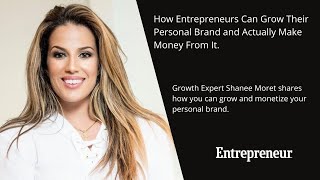
Terry Rice talks with Shanae Marais, founder of Growth Academy, about building a personal brand that actually pays. They cover consistency, knowing your why, and which platforms like LinkedIn and Clubhouse actually move the needle for entrepreneurs.
These days, as an entrepreneur, growing your personal brand is almost a prerequisite. But how do you do that without spending so much time building your personal brand that you don't have time to build your business? That's exactly what we're going to talk about today. And we're joined by Shanae Marais. She's a growth expert and the founder of the Growth Academy, which is an accelerator that helps entrepreneurs grow their brand and revenue. She's going to pass along some valuable tips today while also giving guidance on how to avoid common pitfalls that waste your time, energy and talent. Let's go ahead and jump into it right now.
Yeah, my name is Shanae Marae. I'm the founder of Growth Academy and I really, I mean, three years ago.
I just, I had no presence.
No presence.
I was a freelance writer and I just kind of, through networking and content, built my brand kind of accidentally like an accidental entrepreneur. And so I'm here now. Terry, thank you so much.
So what type of content do you enjoy creating?
I like creating content that helps people. And I think that that's where a lot of people that are getting in the content game. They miss a mark. They see their, they see people as one dimensional. So they only see people through being able to serve them through their service or product in their content. Right. So it has to be business related. The way they see it, it has to be, you know, about their product, their offer, whatever. I like to serve people in different ways because like who you are right now is different than who you are at 8pm, right. Maybe you're in dad mode at 8pm different than who you are at 6am tomorrow morning. And so I feel like a lot of entrepreneurs, they miss that. They fail to recognize that the person that they're trying to sell to is a holistic person, that they feel different things that they need to be inspired and that they don't need to just be sold to over and over again. And so I like to create content for people holistically. So part of that will be educating them about what I do. The other part of that may just be inspiring them or telling them a story when they need it.
Let me jump in here real quick. I'm actually in dad mode at 6am and 8pm that's why it's so important to create content. Because once you do, it's almost like it's out there working for you throughout the day, getting in front of the right people, educating them about what you do. And when they reach out, they feel like they Already know you. So let's keep on going here and get some more great tips from Shanae, one of my friends. Today on LinkedIn, she posted, here's how you do marketing. First step, actually care about your audience. And I was like, it's sad that we're at a point where we should suggest that as a starting point, actually care.
Yeah. And actually, like, understand who they are. I feel like a lot of people fail in that regard, too. I'll sit down with clients sometimes and they'll be like, oh, my avatar is so and so, so and so and so and so. And then when we look at the data, like, the people that are paying them the most with the least resistance have nothing to do with who they think their avatar is. And it's like people get so tied to what they think rather than just looking at what the numbers are, because at the end of the day, the numbers aren't gonna lie. So if your engagement is low, right. People say, oh, my content's the best, but my engagement's low. Well, if your engagement's low continually, it's not gonna. It's not improving over, like 90 days. Your content's not good. People are not vibing with it the way you think that they should be. But it's kind of like you have to see yourself as an artist. The beauty of the content, the purpose of the content is in the eye of the. The beholder. You can't say your stuff is valuable. It's the experience that the other person has to undergo that will deem it valuable or not.
Okay, Shanae makes a really good point here. Once you're clear on your goals, it's so easy to say what content is good or bad. It becomes very binary. If your key performance indicator from a post was to get leads and you didn't get any leads, that wasn't good content, no matter how you feel about it. So you can make these tweaks to keep on optimizing towards your goals, but you have to have that established first and get your ego out of the way. Okay, let's talk about followers. And for background, I used to work at Facebook and would drive me crazy whenever any of my clients wanted to get more followers for their page. I would say, look, likes aren't customers. Just because someone likes your page doesn't mean they're going to buy anything. And by the way, some people that buy stuff don't like your page. For example, I buy a lot of Nike gear. I don't like their page. I'm not curious What Nike's doing right now, I just wear the stuff, which Nay's going to make a really good point in regards to why you do want to get more followers for your profile and how you can make a lot of money as a result of it as well.
What executives also need to understand is that, and entrepreneurs is that a lot of the book deals, like the big five, someone from IBM called me the other week, she can't get a book deal with the major five publishers because she doesn't have 100,000 followers on LinkedIn. And they just told her that point blank. So whether you're want, want to become an entrepreneur, leave corporate and become an entrepreneur, or whether you want to just stay in corporate to get on bigger stages and stuff like that, I feel like people are really undervaluing the fact that a following does matter to a certain regard because at the end of the day, if you have an engaged audience, they could do, they could do, they could run numbers. They're not gonna have to market you as much, they're not gonna have to spend money to market you as much. And you have book sales waiting right there in your audience. And so community is really where I see social, the value of social media.
All right, so by now we all know growing a personal brand is important, but how long does it take to actually see the impact? How many times do you have to post? How long do you have to post in order for this to happen? Sinead has some great data on that and she's going to share that with us right now. And I want to go deeper there because in 2020, I think that's when a lot of people realized I should probably have a personal brand. And everyone's jumping on channels like LinkedIn and Clubhouse, which I do want to get to momentarily in this rush to build a personal brand. But unfortunately, in that rush, they're projecting lack and they're projecting scarcity. And I want to say it was you who said, like the average person who does well on LinkedIn, I think you said they had to post 142 times. Am I getting close to a stat you brought up? And if so, can you expand on it and correct me?
Yeah, yeah. So there was. It wasn't even my data. This data analyst, random guy on LinkedIn, he. And I forget his name, but I'll get it for you for reference in the article. Like, he did this data breakdown of the top LinkedIn influencers and he broke down, on average how many times we had to post to get our first breakthrough. So Our first major acceleration and growth, like the tipping point. And he found that only like two of them were pretty early, were like within like the 50 post range, but that most of them were at about 150 posts. And then what he found, like the mega ones, like ones like me that have grown really fast, it was just a matter of consistency and like really doubling down on what works. So it took me, I think on the, on the chart, 140something times to get my first win. And so the whole point of his article was like, they're not lucky, you know, they just were consistent and they didn't give up. And it was amazing that the data supported that. It was awesome.
So some of you might be thinking, wow, I have to post 50 to 150 times to get my big break. That sounds like a lot. Well, let me give you my perspective on that. When I was in college, I did telemarketing and I had to call 100 people just to get one yes. And when they said no, they said a bit more than no. So from my perspective, if I can just get on my phone 150 times and say some smart sounding stuff, that sounds like a pretty good deal to me. But I know it's challenging pushing through and fortunately Sinead's gonna share her experience and how she pushed through those challenges.
As well from the get go. Like, I was immensely curious. Like in the beginning I had no idea why people were even watching my stuff. And so to find out, I started messaging them. Like the, in the beginning I was like doing videos on like this broken Android phone. The sound was terrible. I was so nervous in some of those videos that my hands would shake like this. So like the video is like shaky, right? It's not clear. And, and I was sharing things, but I was like, why is this? Because I kept seeing that the other people that were starting to post on LinkedIn at the time, people would support their first post, their second post, but by like their third, fourth, fifth post, that support was kind of waning and like they would decline. Like their engagement with mine. I thought, keep going up. So I was already looking at the numbers from early, early. And then I was like, why? So I just started messaging people that like my stuff. And I was like, hey, what do you like about this video? What did you like? And I started getting everyone's feedback and then I just started doing more videos based on what they said.
The amount of like intentional growth you've accomplished is impressive. By that I mean just doing the lonely work that no one Sees where you're actually dming some random person saying, hey, I know you don't know me, but you like my post. Why? That stuff takes time. That takes effort. So I just kind of want to deconstruct. What gave you the drive to do that? Your background, your experience. Like, what made you think, look, I got to double down on this, but I. If I really want to be successful, I got to go all in. Like, where does that drive come from?
Well, I saw that it was working. So before I started posting content, I would always have to get a client by chasing them. So I would have to cold message. I would have to cold call. I didn't really like that. Within two weeks of posting videos, I started to get, like, inbound messages. And I went from charging like, itty bitty, like hundred dollars, fifty dollars, two hundred fifty dollars for like, a blog post. I was a freelance writer at the time to then securing a $5,000 retainer clients within, like a month of content. So that's why I was, like, ferociously curious, because I saw that it was working, but I needed to know why, because I wanted to just make it work more. Right? And so I guess that came from obviously wanting freedom, like wanting to level up financially, wanting to provide a better life for my daughter. And I think that I could resonate with a lot of people that don't really take their business seriously until they have a child, because that was me. I didn't really do my business for me. I did it for my infant at the time.
So you'll notice I kept on digging until I got to Shanae's why. And her why was she wanted to be financially independent so she could support her daughter. So I highly encourage all of you to find your why as well. Why do you want to do this? Because you're going to have to put in some lonely work. But if you're very clear on the vision you have for your business and for your family, you have all the motivation needed to keep pushing forward. So now we're going to pivot to Clubhouse. I'm sure you've heard of that before. And now it's available on Android. There's more people on it than ever. But how do you stand out on Clubhouse without sounding like you're trying to stand out on Clubhouse? Shanae has some great tips for us on that as well. On year end, can you just talk about the opportunity that Club Clubhouse presents? But not in a way that some people are like, oh, it's finally my chance to be an influencer. It's like just chill, you know, you should probably work, focus on providing value. What opportunity do you think it presents to people, but where do you think they mess up in regards to achieving their potential outcomes?
So I think that the opportunity that Clubhouse presents is what you just said. I got to know you more intimately on Clubhouse.
Right, Right.
So people have seen my content on LinkedIn a million times, you know, whatever. They've seen videos they've seen, even live videos they've seen, you know, text posts, whatever. But it's completely different when you can the convenience of Clubhouse. So it's not you having to be on a zoom like we are now. Like, you could be like, getting your kids ready, but still like listening and learning. So it's that and it's the ability to really experience whether somebody knows what it is that they're talking about or not. Because if somebody's asked 20 questions in a row out of nowhere, you know, it's live. And all of the questions are a little bit different. You see how they can answer the questions, number one, but you also see their other skills. So how are they, you know, how do I tap in Brandon, Right. How do I tap in Courtney to help me? How do I manage a bot that comes onto the stage? How do I make the experience comfortable for everyone in the room to feel comfortable enough to raise their hand? And those are things that you can't really see in curated, more curated type of content, like on platforms like LinkedIn. And so I think the opportunity for Clubhouse for people that want to get on Clubhouse is to deepen the connection with whatever audience they already have. The second opportunity is that everyone on the platform has been invited. And there is this intentionality of business networking and positivity, very similar to why I originally got on LinkedIn, which is.
Why I love Clubhouse.
And that intentionality is powerful because people aren't really there to hang out. They're there even in the after darkrooms or whatever. They're still there to do business at the end of the day and to get better. And that's the power of Clubhouse. There's a lot of people in one place that they all want to get better. Better entrepreneurs, better executives, better business owners, whatever, and. And when you're around people that want to get better, magical things can happen.
This part's super important. Building your personal brand is not about you. It's about your audience and how you make them feel. If you keep that in mind, every time you create content, every time you post, you will be successful because your motives are aligned with helping people. And they will recognize that fundamentally, how does one establish a personal brand? And I know this is like one on one to you, but how did you do it? How can others do it? How can they, how can they stand out without seeming like they're trying to stand out, I guess is what I'm saying.
You got to make people feel something. And so that's the first place that I start. Like, when you think about Nike, what do you feel? You. It's not about the shoes, it's about, like achieving the impossible, right? When you think about Apple, what do you feel? Even though the hardware may be better on Microsoft or whatever, it's. You feel that on an, on a MacBook, you could achieve your dreams more or maybe write a better book or do a better video, whatever. And so everyone, like you feel something about everyone, whether you realize that or not. And so the intentionality behind building a personal brand, you have to start with, how do I want to make people feel like? What are the three emotions? So one of the things that I want to make people feel, I want to make people feel courageous because sometimes it takes courage to do something new in your life. I want to make people feel inspired, right? I want to make people feel like they can achieve their dreams for real, even if they started from nothing. And so when I create content, whether it's educational, whether it's more entertaining, whether whatever, when I show up, those are my intentions. If that content does not make them feel that, then I'm off brand. Then what am I doing? Like, why am I even doing this? And I feel like when people and all these workshops of building your personal brand, I feel like a lot of them focus way too much on themselves and they don't realize that your personal brand has very little to do with you. It's a strategy to grow your business, but at the end of the day, it's an experience. How does someone experience you? How does someone feel when they think about you? How does someone anticipate what you're going to do in the future? And I feel like they miss that mark. It's not just like a Canva template on your Instagram.
So a lot of you are trying to grow their personal brand in 2020, but some people, they're just trying to maintain. And I was very interested in one subset of that group, moms who are also entrepreneurs. So I wrote an article about that back in December, and guess what? Shanae is one of those people. She started Growth Academy in November of 2020, which has gone on to be wildly successful. She's going to explain more now. What is Growth Academy and what gave you the idea to start it again in the middle of a pandemic?
Yeah.
So Growth Academy, think of it like a school for entrepreneurs where you learn, like the skills that matter most. We focus on mindset, we focus on how to grow your network, how to build your online influence, how to increase the profitability of your business and how to ultimately grow your wealth. And the reason why I started, before that I was running an agency. So before that I was positioning CEOs on LinkedIn, but only if their companies were doing several millions of dollars a year. I never had anything for the solo entrepreneur or the solo business owner to like a, a done for you, done with you, or a done like a do it yourself kind of program. And so when the pandemic, like, you know, started to hit and people started to realize, how am I going to reach my audience online? There was a panic. And just, I guess naturally, because of my positioning on LinkedIn, I had half a million followers at the time. People started to like swarm my DMs, like, do you have a program? Do you have a program? Do you have BY like the 200th message, I was like, oh my gosh, I need to create something. Because the people that were reaching out to me, even if their businesses were starting to gain traction, maybe hit the six figure mark, they still didn't have the retainer that the other companies would be able to pay and they didn't have enough to say, hey, Sinead, do it for me. So that's why Growth Academy was really created out of demand. And I did it quickly.
And so we launched with the growth.
LinkedIn course and we've added programs along the way. And everyone. I think what really stands out about our program is that nobody wants to leave. It really is like a lifestyle. It's not like this thing that you join and then you take the course and leave. It's a true community. And people have started businesses. People have tripled the profits of their businesses. And we don't have a problem with getting testimonials. Our problem is we have so many testimonials that like, people have to reshare their latest win like every month. And so it's truly been amazing. But I listened to my network. That's another thing. Like I listened to my community. If I didn't, I would have ignored it and just continued with my agency.
And so I feel like you have.
To listen to the people that support you.
Okay. She has demonstrated one of the biggest, biggest advantages of having a personal brand. You have a large audience of people that know, like and trust you, and if you pick up on some of their problems instead of just talking at them, you might be able to create solutions for these problems which they'll readily accept. But you can't do that if you're chasing likes, right? So keep that in mind every time you post. You will be successful. If you do, it just might take you 50 to 150 times.
Sam.
More from Terry







When you want to quit, don’t. #FitnessOver40 #MindsetShift #TiredIsNotAnExcuse #PersonalGrowth




You’re gonna want to give up. Don’t. #mindsetshift #motivationalquotes #motivation #dontgiveup