How to consistently and authentically tell stories that attract your ideal audience w/ Anna Vatuone
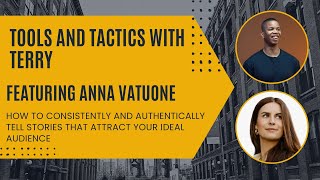
Terry Rice talks with personal brand strategist Anna Vatuone about using storytelling to build an authentic brand on social media. They cover how to find your ideal audience, handle criticism, and turn your story into income.
And we're just now getting started. I was asking in a very tough question, which is what do you do with someone if they, they want to build their business or their personal brand and they, they don't have like a good foundation for who they are? So there's like a lack of self awareness. And that actually is very relevant to our topic today, which is how do you tell authentic stories on social media in a way that builds your brand but also makes you money too? And how do you do that in a way where you're not over sharing and feeling uncomfortable, but not under sharing to the point where you feel like you're. People think you're robotic or you have no personality? And, and this is really top of mind for me because I've been talking to a lot of emerging entrepreneurs and they're like, you know, I don't have a unique offering for my service. You know, I do digital marketing or, you know, I do like kind of like industrial lighting, like whatever it is. Right. I'm making this up. But I always say like your, your personality is your unique differentiator. It shouldn't be your service offering to an extent, because if your service offering is super unique, you're going to confuse the heck out of everyone. So you should have a very clear offering, like here's what I do and here's the outcomes. And sure, there's 20 other people who can do it as well. But you want to work with me because of your personality. So that's why pulling those levers and knowing how to do it is so important. But let's go ahead and officially get started here again if you haven't been here before. My name is Terry Rice and I'm a business development consultant. And what that normally involves is helping solopreneurs or other emerging entrepreneurs build their brand and their revenue. So how much do you charge, how to get clients, how do you create content, how do you balance your life so you're not just working all the time and getting burnt out? That's what I do. Also the host of two podcasts, one for Entrepreneur magazine called launch your business, which is coming out in August, and another with general assembly and it's called now you know. So I'm gonna be sharing a lot of information that might be new to you, which is pretty cool. But today we're joined by Anna Batune. I got that right. Very close. Yeah, I've known Anna for too many years. And she also goes by Anna. Not Anna, but she just lets me ride with that too.
No, it's Anna. You're all good.
All right. I usually mess up one or the other, but go ahead and please introduce yourself.
Hi, everyone. I'm really happy to be here and I'm really happy to be talking about something that's really close to my heart, which is personal storytelling and using it as a way to help grow your business and build your personal brand. I'm a personal brand strategist. I work with people on helping them discover their purpose, really clarify their message and create content on social media. I have two courses that I run. The first one is called Personal Brand Accelerator. It's a three month course program that teaches you how to do these things. Set up your own website, clarify your message and create content consistently and authentically. And then I just started another one which is in session right now. It's a thought leadership circle. It's an eight week program that helps people get super consistent with content. And so I'm also the host of the Personal Branding podcast and I work with people one on one on this stuff too.
Awesome. And I don't know if you offer this service anymore, but for anyone who's wondering if you and is actually the one who built my website and I get compliments on it all the time, so thank you for that. I don't want to put you on the spot and say, can you help anyone else? But. But I do appreciate that because it gets a lot of great feedback.
Oh, I'm so happy to hear that. Yeah, it's a big part of your personal brand is the website and the visual identity and also the photos. Terry, whoever did your photos, I mean, that is really what seals the deal.
Yeah. Yeah. Well, shout out to Lindsay because she's the one who did them. So let's, let's get into it and talk about, you know, telling personal stories on social media, which for some people can be kind of scary. What is the advantage of telling more personal stories as opposed to like how to stuff or latest news when it comes to social media?
Yeah. I think that there's a time and place for all different styles of content. So the educational how to's still super important. Especially if you are wanting to really establish yourself as an expert. Best way to do that is just to share what you know consistently over time. Another way of really connecting with your audience and building your personal brand is through personal storytelling. And the reason a lot of people don't do it is because it's very hard and it's very vulnerable. And I think the biggest reason that it is difficult for People is because we want to, of course, be seen as an expert in our field. We want to be seen as someone who's credible and trustworthy and. And so personal storytelling is a window into who we are and what we've experienced. And that can feel a little bit scary putting yourself out there. But the advantage to it, ultimately is that you are building a connection, a deeper connection with your audience. And when you have that connection, there's a certain level of trust that you reach that you just can't reach otherwise, unless you are opening up and putting yourself out there and showing up in a really authentic way.
I like the point you make about connection because I was talking to Jason Pfeiffer, who's the editor in chief of Entrepreneur magazine, and he kept on drilling down to, like, what is the point of content? What is the point of us creating content? And he said, it's to build relationships. And then from there you can do other things once you have those relationships, but if you don't make that initial connection, it's going to fall flat. But one point we were talking about earlier is how do we even know what stories to share with people? So how can we take a moment in our life? Like right now, I'll give you a good example. I'm talking to you right now. You're hearing a motorcycle go by. Because I live in. I live in Brooklyn, right? I would go on social media and say, hey, you know what? It's the moment. The moment's never going to be perfect. Right? If you wait for the perfect moment, you'll never be able to have events like this or do any kind of content like this. So just go with it. I think people focus more on what you have to say as opposed to the background noise. So that's me taking a real. This is like in the moment right now, like. Like how I would take a story and. And make it relevant, but just for everyone else. I mean, how can we just break down a personal story that we have without just like, vomiting out personal information and actually making it relevant to our audience?
Totally. I'll give you an example. Right now, I am creating an email sequence for a small course that I'm launching. And I was sitting down with my assistant. We were talking about what I was going to draft in each sequence. And I said, okay, for every email there's an objective. There's a point that I want to drive home for that specific email. Now, the way that I'm going to figure out which story to tell is by starting with that. Like Outcome of what I want the email to drive home. What's the objective for that? And then I'm going to work backwards. What's a story that I can use from my life that will help support that objective? So that's one way of doing it. The other way of doing it is kind of asking yourself the question, what within me right now is trying to emerge, and that is less outcome driven and more process driven. It's like, how can I take a more creative approach to this? Really look at what's in my heart right now and go in introspective and just pull out what's waiting to come out. And those are the most authentic, raw, real stories that, that we like to see. That cuts through the noise that really grabs people's attention. And sometimes when I write that way, I actually work in the opposite direction. I pull that story out and then I figure out how I can intertwine or plug my services at the end of it. And sometimes it has nothing to do with my business, but that's really okay. It's just sharing a little bit of who I am.
I never thought about, like, actually saying, okay, my end goal is for someone to do xyz. Now, what's a personal story I can tell that relates to that? And Desiree, I see you saying hi real quick. Hey, good to see you as well. So one post I had weeks ago was on lead generation saying, here's how you can generate leads. But I started off by saying, here's how I messed up by doing cold calling. I spent like, I can't remember how many hours, like maybe like 40 hours cold calling people and got like two responses. One turned into a client. The other person was like, really freaking shady. And then I found another way to grow my business. But had I been more cognizant of this, what you're just telling us right now, I could have been doing this all the time thinking, what's my goal? Oh, teaching someone how to get leads. What's my goal? Teaching someone how to get their pricing and then from there telling a story around it. Because I've noticed that even with my. My content, because I. I use a tool called Shield analytics to see what's getting the most engagement on LinkedIn. And when it's me telling a story normally about how I messed up with something that gets the most engagement. And. And I feel like people think, oh, this guy's a pro, you know, he knows how to do it. I'm like, yeah, because I screwed up so much. So I'm I'm not. I'm helping you compress time and giving you more clarity. But I think it almost humanizes people when they admit, like, some of the things they messed up on, as opposed to acting like you've been winning since you were. You're born.
Totally. And I think people are really inundated right now with all this information and, and all of these people who are selling and just throwing information at us, and we're constantly seeing it on our timelines that when someone comes forth with, in humility and sharing a personal story in a raw moment that just is kind of humbling, it's really refreshing and it really levels it out so that people feel more like they can relate to you. And that's a really important, important thing to develop right now.
Yeah. Yeah. So I got a question for the audience. Think back over the last, we'll say, two weeks with your social media content. Have you shared a personal story? So maybe not going super, super deep, but it's any kind of personal story. Like today I was doing this one time, I was doing that so and so forth. And what I'm glad to see this month is a lot of people coming forward and talking about their challenges with mental health, with me being Mental Health Awareness Month. And that's. That's challenging, right? That's tough. Especially on a platform that, the one that I'm dominant on, which is LinkedIn, you feel like you're outing yourself and what might happen if my, you know, peers see this or potential clients. So I applaud anyone who's doing that and encourage anyone else who feels like it would be a good idea to do so as well. But what do you think outside of this? This one, like microcosm of an example holds other people back from sharing more personal stories.
When it comes to creating content, it's fear of rejection. It's also fear of criticism, fear of separation and not being seen as an expert. And one of the things I talk about is that it will happen. You will get criticism. You are going to get negative comments. People might turn away. There are a few that will. And that does happen. And it's not a matter of if, it's a matter of when. And it's also a little bit about understanding that the people that aren't going to resonate or don't jive with it or just don't like it are not going to be your people. They're not going to be an ideal client for you or an ideal customer. It's probably not going to be a Very fruitful business partnership. In the long run, you really want to be working with people who get you, who understand it, who share similar values. And by you sharing authentically and posting these, these pieces of content that are more close to home, you're kind of vetting them through your content. People who resonate with it are really going to love it and you're going to create a such a strong, tight knit community of people with that type of content at the forefront.
I'm going to ask you to share something if you feel comfortable. This might have been like six months ago, someone made a very negative comment about a video you had. Where. Let me know if this jogs your memory because maybe it happens a lot, I don't know. But you had like a response where like you, there was a video like someone was giving you negative comments but you actually turn that into content. Does this sound familiar whatsoever? If so, do you mind sharing that story?
I mean I, I pretty much get, I get negative stuff on, I post a lot on TikTok and I get negative comments on TikTok and a lot of times I will try to use negative comments as a way to start a new conversation. And I think it was, if it was about six months ago, it might have been, yeah, someone commented on like that I was showing too much skin in a video and I used it to start a conversation. And in the moment when I received the comment, what, Terry, what was the question you were asking me?
It was that one that you're talking about. How did you use that to tell a story around it? What was the impact?
I mean it increased my engagement tenfold because it's just like people want to weigh in on controversial like topics. And so if you are a creator who can withstand that pressure, it's actually a really great opportunity to start a conversation and get a lot of people talking. And I'm not necessarily saying you have to exploit yourself, but if you feel comfortable opening up that conversation, it can be really beneficial to hear from different voices and also learn and broaden your own perspective because you're learning from other people and different opinions.
Yeah, and I see Pearl's chiming in here. She's saying, I just did that this morning in regards to sharing and my email is going out tomorrow because I realize it's the truth and being real about it. So it's Pearl, last names I L A N I. So check out her post that you put up on LinkedIn today. Sounds like a good one. And then someone else is saying, no, I haven't the closest I have was on LinkedIn. Some people commented on an article that was 4 years old and I commented based on my experience and the kind of phrases that arose to push through that experience. So someone recalling something that happened in the past. One thing you brought up though, that I, I think it's almost remiss for people not to talk about this when they're talking about personal branding and telling personal stories is the negative feedback. And not even negative feedback with the unwanted advances, I think is the best way to say it. And it happens to women way more than men. And I just feel it's wrong for us to say build your brand, make video, go on TikTok and not realize like, you know, it's not like you should not do that. I'm not saying to, you know, remove yourself from this opportunity, but we have to at least acknowledge this and say like, are there any tips on how to like, deal with it? Do you name and shame? Do you block like or at least say, hey, look, I know this is part of it too and I understand it and it sucks, but we can't just gloss over that part. Otherwise it's inauthentic. Both of us, I would say.
Exactly. I think that's, it's. You're so right, Terry. It's like we have to address it, especially if you're super consistent with content or working to get to that point and it's only a matter of time before you receive criticism. And on a tactical level, what I do is I delete and block. I delete negative comments. I will not tolerate any negativity on my page. And as far as I'm concerned, it's my responsibility to manage what that looks like. And I also block anyone who I feel is not adding anything positive to the experience that people have when they're on my page. That's on a tactical level. On a more emotional and spiritual level, it's really, really easy to get caught up in receiving positive feedback. X amount of people liked it. X amount of people commented. People are agreeing with me. I feel so good. And getting your sense of like security from that positive feedback is super dangerous because as we all know, content and engagement is like the stock market. It goes up and it goes down. You're going to have weeks where it's really dry and no one's saying anything and weeks where it's super positive and weeks where it's really negative. Your I think our job as creators is to stay on a very even keeled like, you accept negative and positive feedback. As the same thing. And you stay super neutral. And you use the experience of creating as a way to experiment, to stay open and curious with what people are sharing with you and what you're learning along the way and treat it as just like, this is all just an experiment. This is fun. Let's see what we can create from this and what we can learn in the process.
You make a good distinction as a creator. You have to have this. This mindset. As a regular person posting on your personal profile, if you say something like, you know, it's meaningful, you'd expect your high school friends to chime in. But, like, as someone who's like, as a brand and they're on Instagram or LinkedIn and TikTok and that's their brand, people might not care about that stuff, but if you have an emotional attachment with the anticipated response, it's going to sting. And that happened to me. I was talking about a lesson I learned from my father. And I mentioned my dad passed away this year. It wasn't this year. It was like six years ago. And here's what he taught me. And no one gave a. I was like, yo, like, I gotta start it. Like, my dad died. But it's like, if you were, like, emotional, if you're like, oh, this one's really gonna stun him, and then no one, you know, reacts the way you want to, you're set up for success. So it's like the old saying, like, don't let a wind get to your head or a loss get to your heart. You have to be that way on social media. That said, I would say that the positive feedback you give lets you know what direction to keep on going to. But you can't be doing it just for that. You have to be okay if you get no feedback, negative feedback, mutual or whatever, and then go about your day.
I love that, too. I mean, yes, when you're receiving positive feedback, what that tells us is, like, it's a good indication of what style of content is working and then what's not working and then keep going in the direction of things that seem to be working. For sure.
Yeah. And I want to keep with the whole storytelling lane, but we also have to say, like, look, positive feedback is based on your goal. If your goal was to sell a course and you didn't, doesn't matter how many likes you got or how many people love your outfit in that video, that wasn't good feedback because your goal was a conversion, not a pat on the back. So I think some of These vanity metrics that we get sometimes from social media, again, it could be likes, it could be comments or whatever. It might feel good, it might look good, but it's like, yeah, like, that's not what your goal was. And I know people that have hundreds of thousands of followers on Tick Tock on Instagram, that are struggling to monetize it because they're, they're getting caught up in these, these, these other metrics that feel good, but they're not really, you know, hitting the point. So can we, can we sidebar and talk about that for a minute? I mean, how do you turn a personal story into money? Because I think that's, that's what we're all here for.
Totally. And unfortunately, it's like, I think when it comes to. Well, I wouldn't say unfortunately, but when it comes to personal storytelling, it's playing the long game. It's knowing that this is like, just like any relationship with anyone that you are building. Yeah. Building relationship with. It's like it takes time to feel that trust and to feel that connection and bond. And so, you know, people need to see you in their timeline over a period of time before they feel comfortable and confident to invest and make a decision and trust you to show them the way. And so I think what's really important when you're doing storytelling is to always have that call to action. Always bring your point home back to whatever it is that you are selling, whatever course it is, whatever offering you have. There's always a way to figure out a way to connect to the two so that it makes sense and making sure that those call to actions are super easily accessible, that you have the link in your bio, that you have the link at the bottom of the. At the bottom of your summary or at the bottom of a post, that it's just easy for people to take action.
I think one way to do that is let's pretend I'm telling a story. Like, hey, here's how I messed up trying to do Legion. I did xyz. It worked out for me, you know, the end. Even, like, at the very bottom, like. Want to hear how you can avoid more mistakes? Join my newsletter. I talk about the same stuff every week, but I think sometimes we're too. We feel too transactional when we ask. But there's no reason you can't ask every single post. Maybe you do it in the comments as opposed to an actual message, but you never know who wants to raise their hand and hop on your list if you. You don't do that. And I see Ryan's chiming in here, going back to, like, what we're saying about, you know, predicting the impact of your. Your posts. Trying to predict what is going to resonate on social media is at time like reading tea leaves. Yeah. You know, it's tough because I know we all Google what's the best time to post on Instagram? And, like, how do you write a good headline? And then you do it like nobody cares? Right. So it is what it is. But let's go back to again, like, sharing personal stories. And it's almost alluded to or alluding to it earlier, but how much is too much to share? Like, how can we draw that line? And I'll give you another example real quick. One of my friends and clients, she's like, you know what? I don't feel comfortable sharing some stuff on LinkedIn that I would share on Instagram. And I'm like, do whatever you want. I'm like, you can control your LinkedIn feed the same way you control the Instagram feed. Like, don't. Don't hold back. And then she, like, posted a picture of her sitting on a toilet. I'm like, maybe don't post that. That was a bad idea. Don't do that. Like that. I didn't know you were gonna do that. Right.
Yeah.
So I think maybe there is a line for everyone.
Yeah.
So how do we. How do we establish this for ourselves?
Unfortunately, it is so contextual, and it depends on who you are, and it's different for every person. And the only way to really know is to trust your intuition. If you feel anxiousness and you are uncomfortable when you're getting ready to post, it's a sign that maybe it's too much. And I've. I've been in situations where I've posted things or I've sent out newsletters that were far too vulnerable that I absolutely regretted sending, where I had a vulnerability hangover. And I thought, you know, Anna, that was too much for me. And now going forward after that experience, I'm a little bit more cautious and a little bit more mindful. But there's a difference between holding back because you feel uncomfortable and holding back because you don't want to challenge yourself. So kind of having to decide, is this. Is this something that will be difficult but challenging for me in a good way, or is this oversharing? And most of the time for people, it's, you want you kind of. Most people live in the camp of I need to challenge myself to share more versus I'm sharing too much. This is an overshare. But that threshold is different for everyone. So it depends how comfortable you are.
I agree. And I think to even like double click on this topic, you can be over sharing stuff that's just not interesting. Like if I'm like walking down the street, I'm like, wow, there's a new restaurant in my town, I like Italian food. And like that's it. Like how does this have to do with anything? Like I don't care. And you can do that on like certain channels like Instagram, like, oh look, a new restaurant. But if you're again like on, on LinkedIn or even like a tick tock, it's like, dude, why, you know, why, why are you doing this? So I think what people do sometimes is they'll over share without impact. So it's like, oh, my daughter's first birthday is this weekend. It's like your friends care, some of your co workers care, but no one else cares. But if you can say, wow, you know, who would have thought a year ago I would have grown so much as an individual and learned about know, time management and organization and empathy, like, that's interesting. But if you're just like, hey, look at me and my kids. One, you're, you're, it's not that you overshare, it's just like a boring thing to share. And I think there's a distinction we have to make there because you can share something very deeply personal and be vulnerable. But at the end if the audience is like, okay, what do I do next? It's like it was a wasted moment, I would say, or opportunity. And I think that's what we have to be aware of is like what's in it for the audience whenever it's about us because otherwise we're just talking and it's a monologue, it's not a dialogue because you've never, you haven't given them something to latch onto and respond with.
You know, I think for that, I mean the best way to determine if it's a good piece of content to share is if you find it really exciting, share it. If you don't find it exciting and you don't think it's interesting, don't share it. If you're just sharing for the sake of sharing, because you just want to throw something out there but you're not excited about it, you don't feel that excitement in your body, don't share it. But what I found is that if I'm excited about something, if It's a product, an idea, a conversation, or a moment. Chances are, because my audience holds similar values as I do and thinks a lot of times the same way I do, if I find it interesting, they're going to find it interesting. So it's about having that connection to your content and those experiences. Experiences and being. Using that energy of excitement to propel you forward and post something that feels good and authentic to you.
I dig that. And by the way, so we see Sierra chiming in saying, hey, that was good. So glad you're glad you're digging that. Questions, please do pop them in here. We'd love to answer them. We're going to keep going here, but it's not. It's not a monologue or dialogue. You can ask questions as well, and we're happy to answer them. But one thing I saw that you did recently on Instagram was, like, you had the serialized storytelling, which spans several days from what I can tell. And I'll let you give the details, but I think it was a brave thing to do because you're like, here's part one of the story. Then it's like, come back tomorrow. Here's part two. Come back tomorrow. And I don't think I was the intended audience for that story, and I'll let you explain why, but I was like, what's gonna happen next? So I think you did a great job, but do you mind just explaining what I'm talking about first of all, and where the idea came from, as well as the impact of it as well?
So I'm dating right now, and I had this experience happen to me with this guy that I've been dating, and it just was super on my heart. At the very beginning of this live, I said, I asked the question, what within you is trying to emerge right now? And that was what was within me that was trying to emerge. And I was like, all right, I'm gonna play around with this and just see if I can turn this into something. I sat down to write, and I realized that the content needed more. Like, I couldn't do it in one post. It needed to be a series. And so I decided to do a part. 1, 2, 3, 4. And it kind of evolved as I started writing it. Like, I didn't really have a plan when I sat down. I will tell you that I totally had a vulnerability hangover after that. Like, it. I was like, I don't think I could share anything personal for, like, a few weeks after that. Like, that was too much. But I will say it Brought me so, so much closer to my community on Instagram. And I still have people submitting questions in my ask box asking me if there's going to be a part five asking me, what's up with you and that guy? Like, I want to know more. And it made me feel more connected to people. It made me feel like I'm actually creating real relationships with, with the people who follow me. And it was actually really special for me to be able to share that experience with them. And I received a ton of comments, a ton of feedback. Everyone has shared their opinion and it was difficult to receive a lot of different opinions, varied opinions, and it was hard to kind of stand my ground and stand firm in a decision that I had made without kind of faltering based on what other people were talking to me about. But I'm really, ultimately, I'm glad I did it. And it definitely, when I look at how it impacted my business and how it impacted my page and community again, I think it was strengthening that connection with people, make sharing something that is relatable and allowing them in on that journey with me.
So I think one reason why I'm excited about this is because we can all follow a similar framework. And like Matthew Bieber's chiming in here. So by the way, you should all consider following him as well. He has some really good content, very thoughtful. You can tell he's not just like thinking the day of what should I write? But he's saying in regards to your, your comment about being excited about your right. He's like, oh, wow. I have not been excited about anything I've written lately. So thanks for being vulnerable even here. Anna just put into words the reason I can't push the post button. So thank you. So Matthew, what I would say is maybe borrow another idea from, from Anna and just tell a story like, hey, here's my career in five story arcs. You know, my first job was this. Here's what I learned. Stay tuned for number two to see what happened at my first internship than 3, 4, 5. Like, you know how math goes, right? But let's talk about the game within the game. And by that I mean what's the opportunity within the opportunity? If I'm Matthew and I'm doing that, I would say want to make sure you hear part two, hit the bell in my profile to make sure you get notified and follow me as well. So that way it's almost like a conversion ask because you're picking up more followers and people that know automatically when you're Going to post. So I'm gonna steal that idea. I don't know what I'm gonna talk about yet, but I. I will because it just makes sense. And. And again, like, I wasn't that into your story. Like, not. Not that I don't care about you, but it's like, I don't care about, like, a dating story, but this is actually interesting. Like, you know what I mean? It's like when you're watching, like when I'm watching the cooking channel, I'm like, I'm not gonna cook any of this stuff.
I was like, yeah.
Really? Wow. Wait, you know what I mean? So totally. That's how good the storytelling was, I guess, is what I'm trying to say. Where I normally wouldn't be involved with that content. And I was. So I would encourage you all to look up Anna's Instagram to see if you can watch those. Those that series, because it was pretty cool.
Thank you for sharing that. And you know, I want to say too just popped up in my head. I've had a better luck with storytelling for business by just asking myself, what is on my heart? What do I actually feel excited about? Kind of what we're talking about earlier than I have sitting down to write something specifically for my business. So I think, like, when we are excited about something, people feel that through our content, they feel that through our videos and through our written word. And that's really what captures people's attention. It may be maybe those that series, Terry, caught your attention because you can feel my emotion because it was so real for me in the moment that maybe that was coming through. And so I think it's a good way to kind of help us as creators gauge which what content is interesting and the best to be sharing right now for us.
Yeah, I was gonna like DM you and just ask for the ending already. I'm like, I don't know if that's like, not allowed or not, but I'm like, just tell me how it's gonna go. But Pearl saying, hey, I love that, Anna, especially with you standing graciously in your own boundaries. So thank you for that. Is anyone else getting ideas for personal stories right now? Just say yes or no in the comments. Hopefully you say yes because it's like I have gears turning already. And one thing that I think a lot of people think about early in their career as an entrepreneur is there's a temptation to go back to a 9 to 5. And I remember two years into my career as an entrepreneur, my old company Adobe came to me with a job offer saying, hey, Terry, we'd love for you to come back. This is like six years after I left. You know, here's this great role, blah, blah. And like, in my head I kept on thinking, gosh, I can just get paid a bunch of money and I have to like, scrap to get clients anymore and have all this doubt. And I almost went further in the interview process, but I realized that I. In my journal, my daily journal, I always write down my gratitude list. And one thing I was very grateful for was autonomy. And I was like, if I go back to there, I won't have that autonomy. So really the story can be like, here's what almost happened to me. That's why it's so important for all of us to journal our thoughts. Do I have a gratitude list? Otherwise, you're not grounded in anything. And you can easily be influenced or impacted by people or situations. But if you do have this true north or whatever you want to call it, to ground you, then you're more secure in who you are. So thanks for that idea. I'll tell that story eventually. But yeah, I thought it was pretty cool.
I love that so much. And I actually encourage all of my students and clients to pick up a daily writing practice. If anyone is looking for a book, a great book recommendation is called the Artist's Way by Julia Cameron. She has this concept she coined called morning pages. Morning pages is you wake up first thing, stream of consciousness. You just put it out, all that you're feeling out on the page, and it can be anything. Don't censor yourself, don't edit anything, just write for three pages. And the idea is that you just get everything that is up here and here out on the page. And it does ground you, it totally anchors you and it helps you stay connected to yourself and what's happening and what's emerging within you. And I use so many of those, those pages to help me create videos for TikTok, to help me create content for Instagram and for LinkedIn and stuff. So it really does help. And a daily writing practice is just a great habit to get into because you can use and repurpose that content for a lot of different channels.
Yeah, I was talking to one of my friends, Gigi o', Brien, and what she does is she leaves herself voice notes, but she does it, she does it. So like the, like with Google, you can just have it do like talk to, text or whatever so it'll actually be written out. And she has these things there. But Yeah, I think that's the thing is, and I talk about this a lot, like, when you're at your desk creating content, you shouldn't be creating content. You should be just documenting thoughts that came to you while you were living life. Otherwise, it's too hard. And I think with this process of you just kind of dumping things out in the morning, it's beneficial. I have thoughts like that when I'm back from dropping my kids off at school, and I capture them as well. But it's a function of mindfulness and being aware. Like, hey, this thing just happened. It's interesting. But then how can I make it interesting to other people, right? Because otherwise it's like, it's not a good look. So if you can, this is on the fly. If you can give us almost like a part one, part two, part three, part four. What's a template for how to tell a personal story in a way that it is still relevant to our target audience?
Boom. Love it. Okay, so four parts. Number one, we need a hook. First sentence has to grab attention, has to be riveting, because the goal of the first sentence is to get people to read the second sentence, right? And so has to have a hook. The second thing we need is the problem. What is it? What is the problem? Like, what are you experiencing in your life that is. Is actually. I'm sorry. Before there's the problem, we need to have the context. So set the stage. Tell us what's happening, who's involved, where are you, and then we have the problem. Or you could call it the pivot. And that is what happened in your life that caused you to change directions. Your back was so far up against the wall that you had to make a decision to go somewhere else. So we need to feel that conflict. And then we have. After that pivot point is the end or the resolution. How did you solve the problem? How did you get what you wanted at the beginning of the story that you didn't have, and now how do you have it? How close that loop for us? So it's really simple, right? It's just like the context, the problem, the solution. And that hook at the very beginning is super, super important to make sure that you get people's attention. The very beginning.
Love that. And by the way, if you were not taking notes, every episode is on my YouTube channel, and my amazing virtual assistant takes show notes. So all this stuff will be written there, and you can easily follow along with it. So don't worry if you're not taking notes. It'll all be there for you on my YouTube channel. Go to my profile to get that link. But. But, yeah, I mean, I think again, kind of going back to what we were saying before, it humanizes you. Because if I see someone who's consistently winning at whatever that I want to do, I'm like, that's not my life. I've been messing up. I've had challenges. It seems like you're just, you know, perfect. I want to talk to someone who's gone through some challenges because they'll be able to better understand mine as opposed to just thinking like, okay, well, you don't know how to help me. So let's see. I'll grab some more comments here. Sierra saying, hey, it's so true. It's so much more exciting than working on the business plan. Diane's jumping in lately. It's all good. You get stuck at work. Well, I mean, you got to work. I hear you, but you'll get the replay. As I mentioned, a really good question also, outside of, outside of hashtags, what are some strategies that we can use to reach new audiences?
I encourage all of my clients and students to get on TikTok right now because it's so easy to reach a wide audience right now. It's like the organic growth that's available to people, new creators, is just like, it's astronomical. And it's not going to be like that for that much longer. So I would say one way that you can really repurpose your content and work smarter, not harder, be writing, you know, as you do for LinkedIn or Instagram or for your blog or newsletter and take that written word, those written stories and turn them into visual stories, turn them into videos that you can repurpose on TikTok. And that is a great way to reach a new audience right now. And what I'm finding in my mind model is that people are finding me first and foremost on TikTok, then they're going to my Instagram and then they're signing up for my newsletter. So that's kind of the funnel. And what a great feature that TikTok offers is, you know, they have the ability for you to plug YouTube and Instagram embedded in your TikTok bio. And no other social media platform does that. So it's a really great way to reach new people.
I want to get back to Tick Tock and I want to say something first. There's this creator's name's Quentin Michael Alums. I would check him out on, on LinkedIn or tick tock as well. But he has a great job of storytelling on TikTok where he asks you a question first. Now, are you afraid of public speaking? Here's how I got over it. You know, say like I was at this event one time and I was speaking and I was going back and forth and all of a sudden it hit me. Look, half the people here are on their cell phones not even paying attention and the other ones are rooting for me to do well. That's when I realized, look, just show up, be the best version of yourself. I mean, I'm making this up as I go along. But he does a really good job of like first saying like, here's why this is relevant to you. Have you ever had this problem? Here's how I solved it. Which is almost like giving him permission to tell a personal story because it's like when here I solved it or not, and then having some kind of call to action or sometimes just dropping the mic and walking away. But I think that goes back to a post I had a few days ago, which is assume nobody cares until you give them a reason to. Especially if you're telling a personal story. So why do I have permission to tell this personal story? You spoke about that earlier, having that hook, that was so important. But let's go back to TikTok because it is an interesting platform. I mean for me, like I was resistant for a while because I thought it was just people like dancing and pointing at shit. Totally. But now with first of all the time limit being extended to past one minute, I'm seeing a lot of knowledge based experts on their sharing information in, in bite sized ways. Almost like, like a nano learning approach and, and crushing it. And I, I, I've only put a few posts up, but I have like three and a half followers and they'll get like a thousand views. And I'm like, who's watching this stuff? Like I don't, yeah, no one knows who I am and I don't even engage in the platform. But it's like I wake up, it's like a thousand people saw it. So it's like, can you explain how that's helped you grow? And maybe even more so than Instagram or other channels.
Yeah, I mean Terry, I remembered when Tick Tock came out, I told my mom, I think this is going to be really important. I really want to get on it. And when I first got on TikTok I was just trying to do knowledge based content and just teach people how to build their personal brand. But I was like feeling super bored. I'm like, I don't really even want to create this. Like, this kind of sucks. And I. That was right around the time where I ended my lease in Oakland and started this solo road trip across the country. I just picked up and kind of took off. And I documented that experience on Tick Tock in a way that I had never done before. I just kind of threw out all of the rules out the window and was just like, I want to tell this story the way I want to tell it. And I just decided that it was going to have nothing to do with my business, that this was just going to be creative, creative and this was going to be self expression. And then something amazing happened. All of these videos that I was creating, some of them started to go viral. The first video that I posted that went viral was about loneliness. And it was extremely raw and very vulnerable. And I was shocked that it took off the way that it did. But that experience changed my perspective on storytelling and content creation moving forward. And I began to realize that it didn't sense make matter that I wasn't talking about my business at all. All that mattered was that I was being raw and real and authentic and people were still signing up for my course and still wanting to work with me as a result. Even though the content that I was sharing on TikTok had nothing to do with personal branding whatsoever. And it still doesn't, still brings people in. And I thought that was very, very interesting. And so the only reason I felt comfortable enough sharing that stuff on TikTok tick tock was because it was a completely new platform and my friends from high school weren't on it and my friends from college weren't on it. No one was following me. And so I felt like I could get away with it and just play around in my own, like, little world. And now that's not the same. It's. That case has changed. It's not the same anymore. But that's what kind of gave me that creative freedom. And it totally changed the way that I create. And now I just create for fun. And I still create for fun, even on Instagram. And it still helps and it still brings new people into the business, which is amazing, I think.
Yeah. When you don't have that pressure from whatever society, let's say this, on this new platform, you can do whatever you want. But I feel like when you're in your case, when you're an idealized version of what your audience wants to become, it's beneficial to show Your personal brand. And even if you are a knowledge based expert. Right. So when I'm on there, I'm just spitting facts, but I'm seeing in a way that's more practical, like, hey, you can do a bunch of stuff like this. It might work, I don't know, go try it out. Here's my approach. And it's like you can still put personality into it where it's like not just step one, step two, step three thing. And I see Ryan is chiming in here saying, you know, I love consuming TikTok. The prospect of posting freaks me out. By the way, I've never felt older than after rereading.
Yeah, Ryan should create.
Yeah, go for it. I mean, I'm 44 years old. I'm still, you know, doing my thing on there too. And again, I'm not like dancing and everything and like, you know, doing a bunch of random stuff because that would not be a good look.
But Terry, what you post is you, it's your brand. Like the way that you like to create is what we're talking about. That knowledge based stuff. And that feels real and comfortable and good for you. And that like that is exactly what would probably do super well on TikTok. I think what my problem was was that I wasn't doing that like I was to trying, trying to post in your style. But that didn't feel right for me because I was really wanting something else that I was too afraid to try because of. I was afraid of what people were going to think of me.
Well, Diane is saying I'm 59 and I'm leaning out of TikTok. All right, so maybe you're not going to get on TikTok, but just get off of Facebook at least besides Facebook. And, and that's the thing, when you're telling a personal story, it should reach your audience. So whatever channel they're on makes sense. Sense for you. So for me it's always going to be currently going to be LinkedIn primarily, then Instagram and then I'm doing some stuff on Twitter and TikTok. And that is what it is. But let's go back to again, like the storytelling part, you know, being authentic. And I think the best stories, like the, the audience is kind of rooting for you and they feel like they're, they're part of, you are part of the story. And there's this really cool framework called the Donald Miller Story Brand principle. And with that, what you're going to do is position your audience as the hero on the journey and you're this guide there to help them achieve their goal, give them a plan, call them the action and send them on their merry way. So if we can all just kind of think about that, like when you're telling a story too, like again, your audience is still the star. You're just telling your part of the story to make them, you know, give them context, but really it's still about them and circling back. So let me just grab another question here from Pearl Anna. I love how you use TikTok as a way to create raw in the open. I haven't thought of that before. Yeah, go for it. Especially if no followers go for it, you know? Yeah, honestly, do your thing.
Exactly. Try it, try it out. And you know what, Terri? I would even say, okay, I love storybrand. I read that. It was like one of the first books I read when I was getting into all of this work. And it really changed the way that I like set up my website and wrote the stuff, the copy for my sales pages and stuff. But what I've noticed too is that there is some cases where it can be about you and the story is about you and own it and lead by example and let people. It's like this whole idea of using I language versus you language. So if you use I language and say I experience this, this is okay. So an example would be like, I gave up alcohol about nine months ago and I've been talking a lot about that on my channels. And so if I'm talking about that, it's been a really positive experience and I want to open people's minds up about that. I could share a story that says I decided to give up alcohol because of this. Now using you language would look like. Here are three reasons why you should give up alcohol. People kind of embrace what they've discovered and reject what they feel like they're being told to do. So when you use eye language, it can feel way more vulnerable and very more like close to home. But it's a way more comfortable and non evasive way of sharing important ideas because you're letting people kind of just watch what you've experienced. And you lead by example. Right. But you're still like driving your point home and sharing your personal story. But at the end of it you can tie it back to how it could relate or help them.
I love the I language versus you language thing. And it's funny, I do it like in a not as charismatic way. So I'm giving advice to someone. I'll say some people I'M not saying you have this problem because they don't do this enough. Again, I'm not saying you. But some people, this is why they're messing up. And it's like, you're clearly talking about me. But. But, yeah, no, I. I dig that framework. I haven't thought about that from that. From that perspective before. We got a question from Zoe, though. Question is, do you guys think Facebook is relevant for business?
I don't really use Facebook anymore, but, you know, it's kind of personal preference. I just don't really like the platform that much. I mean, I don't think it's. I think it could be really great for business, though, if that's a platform that you really like and enjoy using. I think it could be good.
Yeah. I mean, I feel the same way. Like, I'll give you an example. So when we're trying to find the school that we're going to send my daughter to for kindergarten, there's like this Facebook for parents group here in Brooklyn, and there's this woman there giving good tips on how to help your kids transition to kindergarten, like, how to teach them about, you know, going to school and all sorts of stuff. But she was like a school selection consultant. So she just kept on dropping valuable information in this Facebook group. And as a result of that, we hired her, gave her 300 bucks. She was like, oh, yeah, go to that school across the street. What do you think? You know what I mean? So it depends if that's where your tribe is, if that's where your audience is. Yeah, you should be there. I mean, if you sell recyclable, I don't know, couch cushions, and there's like, a recycling, recyclable approach to Facebook group. You should probably be there as opposed to trying to find your audience on all these other channels, new hashtags and stuff. If they're there, go with it. Yeah, but I want to ask another question here. I know we're getting close to the top of the hour. What do you think? And I'll answer it first just to give my perspective. What do you think people get wrong about personal storytelling? Where are they. Where they get it wrong? And I think for me, where some people get it wrong is they're just telling personal stories as, like, as a flex and to get attention and not necessarily to serve anyone, including themselves. So when I see things like that, it's like, all right, well, that wasn't useful. You know, you're just like, you're saying it because. Because you heard personal stories work, but it's like, there is no goal to it. And it's like. And that's why I'm like, who's following you still? Could you keep on doing it, you know, the same stories over and over again? So I think it's just like. It almost goes back to what we were saying before. It's like. It's the story without, like, the sizzle without the meat. Something. Something's missing. I don't know what it is. I can't find a good, like, metaphor right now. But it's just like, okay. And, you know. So on your end, where do you think people get it wrong? To an extent.
I think there's a tendency people have to just recount events like X, Y, Z happened. Cool. Like, that's cool. Thank you for telling me. All those events where people go wrong is they don't connect it to the emotion. How did it feel when X happened and what was a result of that? Because you felt this way. And when you can really accurately convey how you felt in a situation, what happened, and you are able to create a mental movie in people's minds using rich language, what you're doing is you're transporting your audience back in time to when that experience happened, and they are feeling the emotions within themselves so that it's going deeper. It's being very calculated with how you're using your words, and it's bringing people into that feeling, into that emotion, and it's hard work to do that. But ultimately, these experiences that we have, while they're unique to each one of us universals, the feelings are universal. So connecting people to that emotion is really our end goal in storytelling. And we can do that through really, really beautiful, rich language that kind of helps people create that mental movie in their mind.
One reason why I like doing this show is I learn a lot. It's like I'm getting free consulting for an hour. So thank you for that, because I think some of the things you're talking about, I do intuitively, but not consistently. And not knowing how to do it constructively, not to have too many, at least in this statement, but I think sometimes we're just kind of like, we get lucky and we use this right combination. But what I'm hearing from you is like, templatize, then customize, and as a result of that, you'll be able to crank out valuable content that doesn't feel like you're just going through the motions. So thank you for that. I do want to grab a question here from Caroline. Caroline, I haven't seen you like six years. Good to see you here. So she was in my first class that I taught at General assembly leave, so hopefully it didn't go that bad for you, but said I came in late, but any Clubhouse insight? I love it to listen in, but I'm curious about your thoughts on its potential. So Clubhouse is obviously huge in 2020, and as of yet, you know, it's like, I don't know the numbers or the usage. I feel like it's still probably down. But what are your thoughts on. On Clubhouse in regards to potential for someone to tell stories or build their brand?
I don't know. I'm not really a fan of Clubhouse. I. I just, I tried it, spoke in a few rooms, did the things and it just, like, I didn't. It didn't click for me. And I think maybe because I'm more visual, I prefer like a platform like Tick Tock, where it is more stimulating in that way for me. But. So I can't really say. I don't know.
Yeah, I'll say this. I mean, I think one issue with Clubhouse is getting people there now to hear you speak. And I know it's like recorded now. I believe what I would consider, Caroline, is LinkedIn audio rooms, which are, which are new. But the benefit of that is here's my problem with Clubhouse, right? People can say all this BS in their profile, like, I've done this, I've done this. And it's like, it's so much harder to prove than if someone's on LinkedIn. Because on LinkedIn it's like, well, no, like, what are you talking about? Like, you. I don't see any of the stuff in your profile and you say, you know, you're you, you know, a keynote speaker. How come you don't have you keynote speaking anywhere? Like, where's. Where are those posts? Like, what's up with that? So I think with LinkedIn audio rooms, there's room for more authenticity. And you're not. Like, if you just go live, your friends or your connections will see that you're live because they're on the platform, or they might get a notification. But, like, it might be harder to get people to log back into Clubhouse. And that's. Maybe that's my own bias because I don't use it anymore. But for me, it's like, if there's another platform that already exists where your credibility has been established, both through your background, your written content, your video, it's like, maybe just go there instead. That would be My thought. Another question. Sorry, do you want to chime in more? Another question from Diane is, is it advisable to coach your personal stories in one? I don't, There might be a slight typo to throw me off. Is it advisable to put your personal stories in the subject you want to be known for? For instance, adding information related to your preferred subject into your stories? Okay, got it, got it, got it. Yeah, I think it does. It makes the stories more relatable. So the question is, should you put your, should you include your subject matter expertise in your personal stories? I think it makes sense, right? I mean, I'll give you another example. I, I was walking with my daughter to school and she did a, a presentation on Beyonce for school. And I, I, there's a picture of her, like, holding this Beyonce presentation, going to first grade. And I just felt old because she was asking me all these historic questions about Beyonce. I'm like, she's still alive. Like, what's your deal? But the story that I told was, you know, as a, as a 43 year old dad, you know, I feel kind of old, but as a 43 year old, you know, employee, I might be unemployable. And that's why I strongly feel that you should consider entrepreneurship if you're facing age discrimination. So to Diane's point, that was me. The context is my daughter and Beyonce, but the expertise there was saying, hey, if you're, you know, getting older and you're having challenges, maybe you should start your own business. So, yeah, no, I, I love that approach. Erica, saying, how do you get approved for LinkedIn Live Rooms? Erica, if you've not already activate LinkedIn Creator Mode on your platform, if you have done it already, then that means you don't have access. I want to say you should, but if you have done so already, you don't have access. It might be rolling out still. So good question there. Desiree says she has to go catch another call. All right, cool. Well, thanks for stopping by. Diane's giving me props on that post with my daughter and Beyonce, so. Yeah, thank you for that too. And I think what we've done today is to set a really good foundation for how you can do this. And a few key takeaways are. One is just get comfortable being uncomfortable, but don't let the response change who you are, your sense of self worth. Another is just think what's in it for my audience? How can I get them to stop scrolling and pay attention? And it's also okay to use that. I Language. Because then it's like, I'm not preaching to you. I'm just telling you how my life went. And if you want to do it too, you know, let's go for it and just test things out. And I. And I think one thing I always say is, like, most people are either rooting for you or ignoring you. So you don't have to love that. Yeah, don't worry about someone judging you. Like, if someone really has that time to be, you know, rude to you and say, this was stupid, which has happened to you before, too. I was like, really, dude? That was the best thing you could do with seven seconds? It's like, call me stupid. I. I don't pity them because that's their fault for being, you know, miserable. But it's like, I. I don't envy them either.
Exactly. Yeah. If that was. I mean, if there was anything I would hope people could take away from this, it would be try the I language out and really try to push yourself when it comes to sharing experiences from your life where you did learn something, where you found, like, a valuable idea. Aha. Moment. And want to share those pearls of wisdom with other people and definitely connecting back to how you felt in those experiences and using good language to create that scene for people and take them with you on that journey.
Yeah, I love that. And we got time for one more question here. Caroline's saying, you know, how do you both stay motivated to create more content on. On. On my end, I just like it. Uh, first of all, it's fun. I don't get out much either, so maybe that's why it's like me connecting to the world. But I think it's fun because there's never been a time in history where essentially everyone can be their own media brand. Right? And you can build up this, this. This brand it's going to carry with you for years to come. And you can still start now. It's not too late on any channel, even if it is saturated. So I'm like, well, hell, if I have an opportunity to get in front of thousands of people, you know, a day, a week, whatever it is, for free, I should. Right? Because I can help people, including myself and my family, by doing so, and it's just fun. So, again, I don't have a lot of hobbies. Like, I do CrossFit, and I play with my kids. That's it. Right? So. So my hobbies are creating content, and I enjoy it. And I think if. If motivation's a challenge, then I would say try to find a way to have it integrated into your life as opposed to interrupting it. And that way you won't have to get as motivated. But. And I'd love to hear your thoughts on that as well.
Honestly, that's exactly what I would say to anyone. I mean, I do it so much because it's integrated into my life and it's so habitual now. It's the same as brushing my teeth. It's just something that I do every day. But you can create that same feeling and that momentum just by the more you post. So you post something, someone's going to comment, it's going to give you an idea for another post, and so on and so forth. And so I would say if you can try to even just a lot, five to ten minutes a day, just to keep creating, writing, do something that really feels fuels that part of you, it's really helpful.
Cool. And Erica saying thank you for this information. She appreciates our videos and our content and just letting us know how to do storytelling. And I want to let you go because I know we're at the top of the call here, but where can people find you? Where can they learn more about you?
Yeah, definitely. Connect with me on Instagram and TikTok. I'm just Anavatoni a n n a the as in Victor a T u n e right here. And send me an email. You can find me at my website. It's just annabatoni.com and I look forward to seeing and meeting all of you. Thank you for coming. This was great.
Thanks everyone.
Great time with you.
I. I love the I language versus you language thing and it's funny. I. I do it like in a not as charismatic way. So I'm giving advice to someone. I'll say some people, I'm not saying you have this problem because they don't do this enough. Again, I'm not saying you, but some people, this is why they're messing up. And it's like you're clearly talking about me. But yeah, no, I dig that framework. I haven't thought about that from that perspective before. We got a question from Zoe, though. Question is, do you guys think Facebook is relevant for business?
I don't really use Facebook anymore, but it's great kind of personal preference. I just don't really like the platform that much. I mean, I don't think it's. I think it could be really great for business though. If that's a platform that you really like and enjoy using. I think it could be good.
Yeah. I mean I feel the same way. Like, I'll give an example. So when we were trying to find the. The school that we're going to send my daughter to for kindergarten, there's like, this Facebook for parents group here in Brooklyn, and there's this woman there giving good tips on how to help your kids transition to kindergarten, like, how to teach them about, you know, going to school and all sorts of stuff. But she was like a school selection consultant, so she just kept on dropping valuable information in this Facebook group, and as a result of that, we hired her, gave her 300 bucks, and she's like, oh, yeah, go to that school across the street. Correct. Thanks. You know what I mean? So it depends if that's where your tribe is, if that's where your audience is. Yeah, you should be there. I mean, if you sell recyclable, I don't know, couch cushions and there's like a recycling, recyclable upholstery Facebook group, you should probably be there as opposed to trying to find your audience on all these other channels. Do hashtags and stuff. They're there. Go with it.
Yeah.
But I want to ask another question here. I know we're getting close to the top of the hour. What do you think? And I'll answer it first just to give my perspective. What do you think people get wrong about personal storytelling? Where are they. Where they get it wrong? And I think for me, where some people get it wrong is they're just telling personal stories as, like. As a flex and to get attention and not necessarily to serve anyone, including themselves. So when I see things like that, it's like, all right, well, that wasn't useful. You know, you're just like. You're saying it because. Because you heard personal stories work, but it's like, there is no goal to it. And it's like. And that's why I'm like, who's following you still? Because you keep on doing it, you know, the same stories over and over again. So I think it's just like. It almost goes back to what we were saying before. It's like. It's the story without, like, sizzle without the meat. Something. Something's missing. I don't know what it is. I can't find a good, like, metaphor right now. But it's just like, okay. And, you know, so on your end, where do you think people get it wrong?
To an extent, I think there's a tendency people have to just recount events like X, Y, Z happened. Cool. Like, that's cool. Thank you. For telling me all those events where people go wrong is they don't connect it to the emotion how did it feel when X happened and what was a result of that because you felt this way and when you can really accurately convey how you felt in a situation what happened and you are able to create a mental movie in people's minds using rich language what you're doing is you're transporting your audience back in time to when that experience happened and they are feeling the emotions within themselves so that it's going deeper. It's being very calculated with how you're using your words and it's bringing people into that feeling, into that emotion and it's hard work to do that. But ultimately these experiences that we have while they're unique to each one of us universals, the feelings are universal so connecting people to that emotion is really our end goal in storytelling and we can do that through really, really beautiful rich language that kind of helps people create that mental.
More from Terry







When you want to quit, don’t. #FitnessOver40 #MindsetShift #TiredIsNotAnExcuse #PersonalGrowth




You’re gonna want to give up. Don’t. #mindsetshift #motivationalquotes #motivation #dontgiveup