How to Create a Video Founder Story that Makes You Rich with Patrice Poltzer
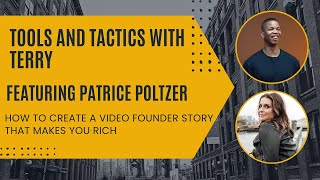
Terry Rice and Patrice Poltzer discuss how founder stories in video can attract clients and build your brand. Poltzer, a former media professional turned video coach, shares techniques for crafting compelling personal narratives and recording engaging content with just a smartphone.
Foreign. I'm glad to have you here. So, hi, everyone else as well. Most of you probably know because I'm hosting an event, but my name is Terry Rice and I'm a business development consultant. And that normally involves helping other entrepreneurs go their brand and revenue. Oh, Priscilla's from Rochester. Priscilla. I grew up in Rochester. Webster, if you know where that is. Like, outside of Rochester. But. But today we have Patrice here, and. And Patrisse is amazing because. And I'll let her introduce herself. But about four years ago, Patrice made a founder video for me, and I was kicking and screaming the whole time. She's like, oh, can you go over here? I'm like, no. Can you go over here? No. Can you smile, maybe? And she put up with me long enough to get it done. I remember I put the video up on a Thursday on LinkedIn, and I said, this video is probably too long for LinkedIn just to kind of, you know, kind of foreshadow a little bit. But by that Monday, the video had paid for itself in new clients. Like, that's how quickly the revenue came back from what I paid for Treece and what she put up with. So I've known the power of having a founder video for years as a result of that, and that's what we're going to talk about today. But not just how you can hire Patrice to do it, how you can do it yourself, even from your cell phone. And it can be as short as 60 seconds. So that's the goal for today. And I'm glad you're all here, but get your questions ready because Patrice loves questions. But, Patrice, can you go ahead and introduce yourself everybody as well?
Yeah, I should have charged you more for that video. Like, that is my takeaway. I didn't know it made it back by Monday. That was my first mistake. No, I'm really happy to be here. So I am a former media person. So I was at the Today show for many years. I was at cnn, Bloomberg tv. So I've spent a lot of my career telling other people's stories, and I decided to leave that world in 2016 to work in the business way. So now I work with brands, entrepreneurs, solopreneurs, and I have a team that makes video content. But in particular about two years ago, with the COVID and shutting down production, I had a pivot in my business, so I started adding programming and coaching experiences. And now almost specifically, I deal with founder story. I've been in this business a long time of storytelling, and I've seen it happen. Way too many times for it to just to be a fluke. I really believe that the founder story is the most valuable intellectual property that you have as a small business owner, as a solopreneur. It's the only IP that you have that like, you don't need a legal contract. It's your story. No one can take it from you. Yet it's so underutilized because I think people, like, when we're working for ourselves, you know, you're so client focused, customer focused, and that you, you tend to put yourself on the back burner. And so what happens is like, founder story, it seems, oh, that's not important. I'll do that another time. Or I'll do that next month, I'll do that later. But as we're seeing, like, with so much competition, like, how do you stand out? You know, you stand out by really leaning into who you are as a business person. And the founder story is just, it's so key. I'm very passionate about it. So I'm ready for all your questions. Go easy on me, Terry.
Well, I mean, let's warm up first, right? And I work with a lot of entrepreneurs and they're trying to find their unique differentiator, right? Like, what makes, you know, my service different, my product different. And it shouldn't be unique. It should be kind of basic and easy to understand. If your product or service is so unique that it's confusing, you're not going to have any customers. And that's why I often say, especially if you're a professional service provider like I am, often your personality is your unique differentiator, right? It's not like your process or whatever, your algorithm you're saying that you made up. And people can see through that too, by the way. So being able to build your personal brand is the best way to build your business brand as well. And the founder video can help you do that. But can you just more or less bullet point out what is a founder video? What does this consist of? How's it different from a brand video? What is a founder video?
Yeah, I mean, the founder story is not. Or your founder video, your founder story. You know, I think the really common way to think of it is, is like your about page, you know, on your website, or, you know, your highlight bucket on your Instagram page that says, you know, my story. It is, it's not just a story, it is the story. Like, to your point, you know, you know, you risk not. You don't do one, and you risk getting lost in a Sea of a million other business consultants. Right. Or a million other video coaches and video, you know, strategy coaches. But you craft one well and it like perfectly aligns with who you are and to your audience. I mean you can, you can really skyrocket your business quicker. And your founder story as a small business allows you to actually compete with bigger players. So it's, it's how you know that small business in the middle of nowhere can actually compete with, I mean, Nike is probably a bad example, but can compete with a much larger brand because they have nailed their story and they've created a community and I think. So when you say like, what is a founder story? It really is, it's a story of you. It's the story of how you started your business. It's the story of your journey. It's what you believe in. It's about you. But in like a weird, introverted, like, what's it like flip flop way, it's actually about if you're doing it properly, it's actually about your audience and it's about the community that you're trying to form with your business.
I think it's easy to mess this up by just talking about yourself and kind of like rereading your resume perhaps, right? Like I did this, I did that, now I'm doing this. Please hire me. So what are some common ways people mess up their founder story and make it about themselves as about as much posted about their audience?
Yeah, this is a really tough conundrum because if you think about it, it's like, okay, do your founder story. What's this? What's your founder story? It's a story about you and your business and how you start. So it is very, you know, you centric. But what people tend to do, I mean, think about, about pages, like when you go to an about page, how many about pages start off at the top? Wait, hold on, Terri. We're getting some things that something is wrong by a few people.
No, can you guys still see us, hear us?
Or is it just the last few messages have been something went wrong. So. Okay, well I will keep talking unless people say there's something wrong. But if you, if you go to about pages, like most of the time people will come right out of the gate with exactly what you said. Like, here's where I went to school, here are the cool companies I used to work work with, here's the brands that I used to work with. And so it becomes like this really like boring list of credentials. It's like you credentialize yourself. And that's boring, because if you think about it, when someone is going to your about page, more than likely they've already. They. They already know about you. So people want to know more about you. You know, think about those businesses where you're like, oh, my God, like, who started this product? Like, I just want to. You go. And you're like, so underwhelmed or you're frustrated. Like, your people want connection. So really, if you think about your founder story, you want to connect, you want to be relatable, and how the number one way to not connect and not be relatable is to just vomit all the brands that you used to work with or all the, you know, the Silicon Valley, you know, resume that you have. Like, you're not in. You're not impressing people. Maybe you're impressing people, but I don't actually. I'd argue no, but you're not. You're definitely not connecting. So don't miss that opportunity when you have someone's attention on your about page. Like, go. Go big. Like, go be interesting. Like, tell a story.
One way that I messed up initially is I was that guy who just bragged the whole time, okay. I went to the University at Buffalo, got an MBA, then worked at Adobe and Facebook. And I'm 6 4. And it's like, okay, cool, that's a story. But no one's going to connect with that. So what I've done now is I've humbled myself and I talked about the times when I messed up starting my business early on, how frustrating it was, moments that I missed out, in my opinion, in my kids, because I was there, but I wasn't fully present because I was always worried about things. And I want to help people avoid those challenges. So you said a few weeks ago, you want to find the villain in the story.
And.
And I think that's interesting because now we have this arc where it's not. You have not been winning your whole life. Can you explain what this means, the finding the villain in your story and why it's so important?
Yeah. So some of this is, like, it goes back to, you know, my. My journalism days. You know, it's. It's basic storytelling skills. So if you think about, you know, there's a quote that, you know, without Goliath, David was just a kid throwing rocks, Right? Like, you need a conflict. You need something, someone to cause friction and tension in order for it to be an interesting story. Okay. And so what you said so beautifully is. And I Think this backs into another thing is, like, you, relatability. People sometimes think, I don't have a story. Like, my backstory is boring. It's too basic. You know, I. But I always challenge that. Like, in order to have a compelling story or an inspiring story, you don't need to have, like, climb up a tree and save a bunch of cats and. Or, you know, been homeless and then turned your life around. I mean, those are epic stories. They're very rare. Okay? Like, most stories of founder stories are not that epic. That doesn't mean you don't have a story. So when you say what the villain is, what I often say to people is, you probably started your company or your business or your side hustle, wherever you may be, because you felt like a. You could do something better. Something was already missing in that industry, or you had an idea that was like, it could improve upon something that already existed. So try asking yourself, like, what can I make? Is that. Is that. It might be a concept. You know, it doesn't have to be a person. You know, maybe if you left your corporate job, it could quite literally be like a boss that was like a villain, right? That caused you to, like, live life on your own terms. But it could also be like, more ideology. Like, I worked with a woman who left her corporate job because she's like, I'm sick and tired of how corporate America treats women that are having children in this country. So she started a company based on this villain of, like, this is awful and like, I'm going to fix it. That's a really powerful hook. And also, it's an indicator that if you can pinpoint to a villain in your about page or in your founder story, it's a good indicator that you actually are telling a story and not just, like, listing a bunch of events or a bunch of features. Like, I'm tall and, you know, I went to, you know, this university. I worked at Google. Like, that's just a list. That's a list of things, not a story.
There's like, a lot of people that are feeling the University of Buffalo story, though. I see the comments.
I know. Thank you. Ask this out on, like, your alumni or something.
Yeah, right. Yeah. Degrees paying off. Let's go back to what you said in regards to the villain, though, because often people feel boring, right? Like, I didn't, you know, I didn't have a bad upbringing. And, you know, I went to, you know, maybe it's Buff State instead of University of Buffalo people here. But I think what's important is to say, like, I had some kind of tension or whatever it was. And what you can also do is be the enemy of your audience's enemy.
Yeah.
So for example, this guy, Dr. Jason Wesleyan, he's the founder of the Theragun, which is like a percussion muscle therapy device. So he, he started that company because he himself was a chiropractor. But he got into a very bad car accident and, and sorry, motorcycle accident and could not heal his pain. That's how he started the Theragun. And that's his story. Right. So no one can take that away from him, even those competitors. But he's the enemy of people who have chronic pain and cannot find relief from it. So in your story, as you were saying before, we can say I'm the enemy of women being undervalued in corporate America, this other woman I met, she's the enemy of boring baby food. You know what I mean? So it doesn't have to be like this huge. It is pretty big deal because we both have a bunch of kids between us. But if you can express that, then it's kind of like that hero's journey that Donald Miller talks about. Right. And, and I think that's the problem with our about pages or our founder videos. It's all about us. But it's not saying, look, you're here, gosh, I hear you. And this is what I do to help people like you so you can get here as opposed to saying, you know, again, vomiting out your resume.
Yeah. And I think people forget like, you know, especially if you're in like, I'm a service based. Right. So so much of service based industry is, it is, it's, it's. We're so integral in what we do that like you want to attract the people you should be attracting and you want to connect. So when I'm thinking about my about page or like who I'm I'm trying to attract, it's like I'm trying to think about the person that is coming to me, like, what the hell is in their world? Like what are their issues and what parts of my backstory actually would relate to them and how can I use that strategically? And because here's the other thing. Like this is why I think your founder story is the most valuable, powerful story you have. It's so versatile. You should be carving out different pieces of it depending on what you're trying to do. So yes, the About Founder page is sort of like the main hub, but, but really if you're trying to get press if you're trying to land podcasts, if you're trying to, like, you know, maybe do some brand collaborations with people that are bigger than you, different parts of your backstory might be better served to that. So that's why it's so important to even just map it out to begin with so you know what you're dealing with and how you can, like, mix and match it to, like, what you're trying to do in your business.
I love that part where you're saying, like, you know, just, you don't have to share the whole story every time. And you can pivot it, because when someone reaches out to me in regards to a paid speaking opportunity, I'll say, oh, I've done this and that and that. But someone yesterday reached out to me in regards to some kind of like, like, influencer video that dealt with the family, and I'm like, oh, I got a bunch of kids, you know, so it's like, that's the story which the other company wouldn't care about, but this one would. So you're not being inauthentic, you're just picking and choosing. But what I want to do now is, is this. I like taking notes, right? I like having key takeaways, and we can go deeper afterwards, but can we just bullet point out what a founder story is? What do you say? First, second, third, fourth, and that way we can all have a good, tangible takeaway and continue the conversation from there.
Okay. I mean, so there's a couple of ways to do that, but, like, just to kind of. I'll. I'll keep it to. I'll keep it to social. Like, so if you want to, let's say, like, go on LinkedIn or you want to, you know, maybe like, go on Instagram and you want to kind of quick, like, introduce yourself, first of all, you have to give yourself bumper rails. Also, what people don't realize in video, there is so much writing. All right? You know, I think sometimes people think like video. You just think of, like, the. By the way, I did not set the stream yard up properly for this, but I should have more lights. But, like, you think of the equipment and the gear. But really, 85% of great video making, great stuff. Founder video making is done in the writing. Okay? So in order, if you know that, then it's really encouraging because you can give yourself some, like, bumper rails even if you're not a great writer. Okay? So what I like to think of it is, so, okay, I actually wrote myself some notes on the side. So I don't. Forget it. Okay, so you definitely want to start off your founder story with some sort of hook. And for those of you who are in like, social media world, like, this is not new, right? And the first five seconds should make the viewer want to continue to watch. Okay. It could be something as simple as, like, 2016 was the best and worst year of my life. Oh, oh, oh, okay. All right. Like, I don't know you, but, like, you just hooked me in a little bit. You know, you could start off by saying, like a controversial statement. You know, no one over the age of 40 should have their belly button pierced. Oh, oh, okay. Like, if you're a product, you know, so think about, like, you know, there's different ways to hook your audience in. You can say, you know, a statement, a question. You can maybe ask like a provocative question that relates to your business. You can storytell, like, 2016 was the best and worst year of my life or one of my favorite ways called a pattern interrupt. So a pattern interrupt is, it's, it's, it's a really clever way of jarring someone's attention to actually divert their attention. So for example, if I was doing a founder video, I might go like this. I might actually start like this. And so this is. And someone's like, wait, what? I see half of her body and then I'm like, oh, hi. Like, it's sort of like jarring your attention. Like if you're a product, business, like, for example, this is another way. And I'm getting to the rest of it. But like, let's say, let's say, you know, I, this is a tripod, right? I could be like tinkering with this and looking down and being like, oh, yeah, you know what I mean? So it's, it's a, it's a, it's a, it's a very clever low lift way to hook someone into your video content that doesn't require a huge, big lift.
Okay, so let me jump in real quick. I, I agree with you. I think that's bright. But I was watching a video today, like a YouTube pre roll, and this like, grown ass man was holding up like an Iron Man USB plug. Like, and he's talking like, he's like, he's trying to distract me with the Iron man thing, even though it had nothing to do with his business.
And I'm like, well, that's not.
Yeah, I'm like, that's, that's, that's a stretch. You know, I get the pattern interrupting thought, but it's Like, I'm not going to, like, lower myself for it either.
So I thought that was goofy, but that's, like, manipulative. That's just, like, bad decision making.
Because, like, I watched it, though, so he got me. I was like, what's he doing with this thing?
Maybe some of. Yeah, okay, well, he influenced you a little bit, but yeah. So obviously you want to make it so it makes sense. Okay, so once you do your hook, then. Then another way to think about it is you want to give your audience. And we'll do it in C's alliteration. So four C's. Okay. First is context. You need to give your audience context to, like, you have to always assume no one knows who you are and always assume no one cares. And always assume that you're, like, asking permission for someone's attention. Okay? So when you go into the video like that or your story like that, it humbles you a bit and that prevents you from rambling off, like, your accomplishments, because no one cares about. No one cares about you. Right? Not yet. So context. Give yourself someone. Just a little setup, you know, introduce yourself. Like, you know, I'm going to share with you today why I decided to leave corporate America or quit my job or change my industry and insert the thing. And even though it was terrifying, I knew I had to do it. Okay, now I have a little bit of context to this person. And if I'm supposed to be in your orbit, I will. I will continue to watch because remind you, you're not. You're not trying to attract everyone. Okay, then the next. The next part of the. Of the horses is. I call it the complication. All right, so after you hook them, you give them some context. Then I always like to say, imagine. You want to imagine, like, the person on the video, like, nodding their head like, yes. Oh, my gosh. Like this person. Yes, this person gets it. So that might be. Explain the problem you want to solve. So I noticed this. This was wrong. This was wrong, and this was wrong. It was happening, you know, in the storytelling industry. And I knew there was a better way. Okay, so then you move on to the next part. And mind you, this is like, these are like quick. These are like 10, 15 seconds. Okay, then I call it. The next part is confession. All right, so this is the part now to then introduce yourself a little bit. Like, why is this issue important to you? And why did. And why did you want to do something about it? So maybe say something like, you know the reason. You know that these pain points made Me so passionate is because of this experience. This experience and this experience, this is where you can personalize your founder. Bit like to give you an example, just this morning, a woman reached out to me that I worked with, and she just got a huge piece of press in Denver. She was. She's a health coach and she's a doula. And she started her business because she experienced crazy, like crazy trauma as a black woman in the workforce. And so there was nowhere for her to turn. And so she started her business from these very, very personal, deep experiences. And she never talked about it because she felt like that wasn't what she was supposed to do. When she started confessed doing more confessing in her founder stories and saying, this issue is so important to me because of when I was treated like this, this, and when I was doing this, all of a sudden, like, her business, her business is like completely taken off. And so I'm just telling you that confessional part, like, that's important, right? And then the final C is I say to coach, okay, you want to leave a little tidbit of value at the end of your story that makes. Makes someone that wants to come back. So, okay, so you could say something like, even though this has been, you know, a challenging experience, you know, I know I'm doing what I'm purpose to do. And one tip I have for anyone nervous to start the business that you've always wanted to is insert, insert the thing of value. So that was a lot that I just like, regurgitated right there. But that's. That's a very simple way to think of it. Hook, hook, context complication, confessional. And then coach.
Yeah, I mean, I love that because like you said, they're guardrails and you have to figure out what to put in there. But sometimes just the structure of a story, we get wrong. Right? So one structure that I've used before was a situation complication. Question, answer. Situation is, hey, you want to start a new business 2022, but you're really confused about it. Complication is. And you know, your 9 to 5 is paying your bills, so that's a lot to give up. Question is, how do you, you know, live your dream of becoming an entrepreneur, yet still keep over your head? Answer is, start a side hustle, blah, blah. And if you need help, start a side hustle. Here you go. Right? So it's. It's not. It's similar. And I think the point is just have a structure where it's not like, I did this, then I did this, then I did that. Still winning. Talk to you later. Right? No one wants to hear that. And I love how brief you are because. And I think you can talk to this effectively. You have to be brutal in how you edit. And I hate that because I'm long winded by nature. My kids hate it too. Right. So when you're doing any kind of video, you have to leave out certain parts, but put enough in so people want to learn more about you. And the fact that you said you end with like, you know, some kind of tip, I think is beneficial. But how, how do you deal with that when someone's like trying to cram in too much and you're kind of pushing back on the store? Like what does that, how's that work for you?
Oh, no, it happens all the time. And here's a few things. 150 words is about one minute of video. The typical attention span to get to the one minute mark in a video is like less than 30%. So less than 30% of your audience will watch any one minute video that you post on your feet. That is scary. Like this is your audience too. So you got to figure like it's, the stats are probably less. So it's actually more like if you actually were to blast out whatever video you have, it is a negligible amount. So when I say like Even, even these one minute bumper rails, like if you can do this in 30 seconds, power to you. I just think that that's like for founder story, again, not to go all over here, but we're talking about a lot of different things. Like your about page and your founder story. You have liberty to go deeper. People probably have already discovered you, you can do like that 2 minute ish video because people probably want to know more about you. But when you're talking about like targeting different audiences. Yeah, like a minute of video that's too long. So that what we do, what I do a lot of teaching with my clients and my, yeah, my, my students is we have lots. We have pieces of video. So we have like a hero piece and that hero piece is like your website. But then we have four to five micro pieces that are like 30 seconds, 30 seconds max. And that is those are very, very like edited pieces that you literally say like two things and like that's all you need. So the answer there is don't cram too much because you should have different pieces of your founder story ready for the go when you want to deploy them.
I think the ability, or I know the ability to quickly tell a Story by video will be just crucial to any company success in the coming years. Because think about TikTok. I mean, you can do longer videos now there too, but it's like under a minute. Under a minute is. Is, you know, kind of the. The standard 30 seconds is better. And I look at people like Marie Folio. She does a really good job with that. If you go to, like, Facebook ads library, just write that down. You can look her up there and you'll see her stories. But it's. You just have to give enough information to make people want to see more, then do another video. It's like, hey, you talked about this thing, talk about everything later. But if you don't, if you can't get over this, this uncomfortable feeling of that wasn't enough, then you're not going to succeed. I'm just convinced of it.
I mean, think about even podcasts. I'm sorry, if I see podcasts at an hour, I'm. I never make it. Like, it is even amazing podcasts that I follow that I love the host. I never get to the hour mark. So it's like, unfortunately, it's not even attention span so much. It's because we are so bombarded to no fault. Like, everyone's vying for our attention and we're thrust in this world now. So it's not even that our attention spans can't handle it. It's just like as soon as we do something, we have five other dings and now everyone's working from home. It's like just the society and work is changed as a whole. And so I think, I think that's where the shorter video comes into play. It's like, don't. Don't make it harder for people. People have enough going on. Like, make it easy. Give them a little thing like, don't worry, I got a lot more coming and just piecemeal it out. It's also smarter because also it's less pressure on you. And also, then you're not droning on and on and on and on at a camera for like 10 minutes, you know, I mean, we're not in. Unless you're a YouTuber, like, vlogger. Like, that's a different animal. But most of us, for small businesses where we're trying to educate or, you know, inform clients or, like, be a thought leader. Like, that's, you know, you want to be, like, mindful of your space.
Yeah. People are asking, is it being recorded? That's always a good question. So, yes. If someone said, is this almost over? That's a bad question.
Oh, good.
Lil is over. Like, when's it done?
We're not being successful in people's attention spans. Oh, my God.
No, no, I dig it. Let's get more, like, hands on. So most people will be recording themselves with a camera phone, right? And even that, I know there's an art to it because you've taught me some things that are very beneficial. So just like, two or three tips on how to record yourself with a camera phone and not be boring and. Or, like, I am too stoic.
You're actually one of my favorite stories because it is true. I worked with Terry before, and I remember when he. He. I was. We were doing it, I was like, terry, my friend, I'm like, your energy level is, like, at a negative five. I need you saving it.
You never know when you need your energy. Why would I waste it?
I need you at a 1. Like, I need you at a 1 on a scale of 10. Like, here's the thing. The camera dulls everything. So. And that includes your energy. So I'm not saying that you need to be like, hey, is that, like, if that's not your personality? And I think, Terry, you're such a good example because you're so yourself on your videos, but you do have to push whatever. Whatever level of, like, if you feel like, oh, my God, I'm talking too loud, or, oh, that feels like it's a bit too much, it's probably perfect because you'll be surprised. Like, you think you're being animated or you think you're saying a point, and it comes across really flat. So I think number one is, yeah, you do have to up it a little bit on the video. Number two, I wanted to say. So I worked at the Today show for six years, and I cannot tell you how many times those anchors in the chair every single morning at the top, 1% in a bottleneck of their industry. You don't really go much higher if your goal is to, like, be on a morning show than, like, Good Morning America Today show. They would rehearse the opening hello line probably four or five times. And I'm talking. Hi, good morning. It's March 23rd, and welcome to the show. And we have a really good show. Like, they would repeat that at least four times there. So if you have these experts that are constantly, constantly honing in their craft. I just watched the Kenny G documentary. I mean, the man is like. He practices like, six hours a day still. Like, what? You're Kenny G. You don't need to. But his is like, yes, I do. That's why I'm this good. So my point is, like, if you think if you're not doing video that much and you're getting frustrated, it's because you're not doing it enough. And it doesn't need to be these, like, big productions, like, even. That's the beautiful thing about TikTok and Instagram. Like, you can just show up now, connect to your audience, and the more you do that, you're going to find out what's your vibe like in what is comfortable and what your audience likes to see. So I'd say, number one, energy higher than you're used to. Number two, you just have to, like, do it. That's such an annoying thing. But it's like anything in life, you just have to keep doing it and you will get better. And I'd say probably the other thing is, like, the reason there's so much bad content is because I think people look at other people in their industries and they have feel like you have to mimic or it's like, oh, I'm gonna do that. Like, that's working for that person. But if it's not, it'd be like, if it'd be like, if Terry, you tried to, like, be super bubbly, I would be so weirded out. Like, or you tried to be.
My kids would be weirded out. They'd say, what the hell is wrong with that?
I, I know. Like, I just feel like, you know, what works for other people. And that's the whole thing of, like, your founder story being like your unique ip. It's, it's, I feel it sounds cliche, but it's like really just kind of leaning into who you are. And I, I, that's so, that's so basic, this, that I hate that. Lean into who you are. That's not what I mean. But truly, like, don't everyone, like, everyone feels like they're being judged, but the problem is, is that everyone else is so worried about themselves that, like, if that's preventing you from being on camera, rest be assured, people are too worried about themselves to, to judge you properly. So that's a shame if that's why you're not going on video because of someone else's maybe perception or like a random stranger on the Internet.
Yeah, I mean, I always say, like, this. I mean, let's say someone looks at you and they do think it's silly or ridiculous. They're not going to, like, share it with their friends. They're going to keep scrolling and go about their miserable day. So don't let them hold you back from, you know, from doing content. And another thing that you taught me was to using your cell phone just to move around a little bit. Like different parts of like wherever you are, because that movement can distract from you and make it seem more interesting.
And also hold some. Hold something. I do it all the time. Like, you know, I did a bunch of Instagram lives last week. It was like every day. It was too much. I'm like, I'm gonna, I'm gonna pump the brakes a little bit. But what I, I mean, honestly, like, I, I, there were days where I like wasn't feeling it and I, I had to like hold something because when you hold something too, it kind of gives your hand something to do and it makes sense. So I'd be like, I'd even write notes in here and I'd open it up and it. So holding something also like kind of grounds yourself. And it's funny, I see that you're standing up, which is also a really good tip. Like usually if I'm presenting, I say.
When I clean the shelf behind me, if I move.
No, well, I, I thought, yeah, yeah. So usually I'd be high, but I'm not right now. But I also standing up, it's like those power poses, like the Amy Cuddy, right? It's the same thing with video. It's like holding something standing up. You know, it just makes you feel a bit more authoritative and unfortunately it's a double edged sword. Fortunately, unfortunately, unfortunately, video, it's not going away. So if video is not something that you like, unfortunately, that is how people consume. So we all now have to learn how to do it. Whether we, especially as a small business owner, you have to like do the tools that are free. Free to us. Like unless you have Netflix budgets, which most of us probably don't like, you're your best asset. No one cares more. Like, no one's going to spread the word more about your service or what you do. So it's like, I'm sorry, like you gotta, you gotta use that. Right? But, but the fortunate part is, is it allows people like us to, to do really well and to like compete. And to start like, I, this morning I spoke with a bunch of women. This woman, she makes ch. Chalk bags for rock climbers. Because apparently when you rock climb to, to do the chalk, like it's too hard to scrap because you might like fall off a mountain. So she developed this bag in all these rock climbers just paste it and you just go like that. She's like a celebrity in the rock climbing space. And she uses like she's in a, like a small town in like South Africa. And I'm like, this is. The Internet is amazing. And she has this exception, successful business. So power of video. And she's able to do that because she can market herself and her product and reach climbers in America from being in South Africa. Like, hello. That's amazing. So the video is so powerful. So double edged sword.
Yeah. One thing I would say is let's pretend you don't want to be on camera too much. And Zoe loves rock climbing. So there we go. One thing you can do, and this is something that I know, B roll isn't new. So B rolls when you have like some kind of background video. So if you're saying Patrice and I live in Brooklyn, we could have just like a generic video of Brooklyn playing in the background. You can go to pexels.com and just download free B roll. And that can be. You can start talking on camera, but when you want to get off, just throw some B roll behind it. And I use a tool called Descript for that. It's Descript. I'm not gonna do this, but. But I made my own video like that in like probably 15 minutes where I just told some story about whatever and when I want to cheat and look at my notes, that's when I put the B roll up. So it worked well. So there's some really cool stuff you can do with free products or low cost products as well. And that's what I've been doing with some of my stories. I did one yesterday on Instagram about the way I responded to a question during a panel I was on. Someone asked a question about time management and I said, well, time management is actually pain management because it takes pain to go through self discipline. Right. You have to restrain yourself from things you don't want to do. So the problem isn't time management. It's people that don't want to suffer the pain required to commit to these actions. People want to be comfortable. So I said, that's the challenge, not time. You just don't want to be uncomfortable, but you're going to suffer regardless. You can either suffer through self discipline or you can suffer regret from not achieving your goals. So I was like, maybe I went on in too much on that one. So I made a reaction video. Like, did I go too far? But I also had people who gave me good feedback on that. I Had their. Their text messages come up on the screen as I was talking. I'm like, no, because I got some pretty good feedback from this person and this person, and this person. This person wants to hire me. But that wasn't me on screen. It was just me just showing this stuff. And then it went back to me saying, hey, this is who I am. And the best version of yourself is all you need to be so you can do stuff like that, too. And it took me, like, I don't, like, half an hour or so.
I was gonna say, like, there's so many. And I was just teaching this morning to a group of people, and here's what, like. And look, I know this is like, LinkedIn is a different. There's all these different platforms, right? So. But what's amazing is, like, if you're not comfortable yet, like, let me give you an example. I worked with this woman last year who has a mindset, money, coaching, business.
Am I the only guy you've ever worked with? It's always, like, this woman. Like, what's the deal with this?
No, I. No, I do. I know. I like you. You are. Yes. You're my only guy. You are very special. No, you are special, but no, I tend to attract more women, but I do know I've worked with lots of men, but, like, name one.
Well, I'll mess with.
All the men I've worked with are all from LinkedIn. It's interesting. So, like, you know, I'm. I'm more, like I said, like, Instagram is more my home, but I'm trying to branch out a little bit. So. But this woman. This is a good example because there's this woman who had this mindset or money business, right? She worked with immigrants. What. She failed. What I learned in working with her is that she was in an arranged marriage. She was at the airport with all her belongings in her life, utterly depressed, going to fly to the home of her new husband's family, who she'd never met and was gonna marry him. Like, and she had this moment where she's at the airport and she's like, I. I have a choice. Like, I can get on this plane and my life. That's my life. Or I have to leave my family, like, actually leave. And she got on another plane. Did not. She took a plane to New York. Okay, this is a true story. I, like, get the chills every time I talk it. She never talked about this because obviously that's, like, a big thing. You know, lots of trauma, right? I was like, Okay. I was like, whoa, this is, like, huge. And like, oh, my God, like, how many women? Not just like immigrants, but, like, even, like, people leading abusive situations. Like, there's so many moments where you have to make these really tough choices. And so she wasn't quite ready to share it vocally, right. Like, on the camera. But so you know what she did? She made an Instagram reel and she put sound to it. Like, you know, kind of like her cultural. Like a soundtrack. And she was on the screen and she literally just went like this and pointed and kind of went like that. And. And she shared the story of arranged marriage and everything. She said that that real. She said she has never in her life had so much new business inquiries. She got, like, reached out to speak at, like, organization. She got content. It catapulted her business, and she didn't even speak. So there are ways, training wheels. You know, we have all these amazing platforms at our disposal and what you said, like, using other video, but really the goal is for you to speak because that's where the magic is, and that is where the opportunities that you're not even maybe thinking about now, they're not going to come to you unless you get. Unless you talk and, like, share. Like, get the. Get the passion out of your system, because that's when that's attractive. It's attractive to people, other people's passions.
And I know we're kind of going on a different path from founder. It's like it's founders making videos at this point, which I appreciate. But, yeah, that's the key to unlocking your revenue potential, because that's how you get on panels, podcasts, you get free press for your business as a result of that, whether it be through magazines or whatever. But if you're not showing these things because you're just saying how to stuff or just product or service things, it's not going to work. But even on my end, some things that I talk about, even tangentially, whatever, you get the point, right? Because I talk about mindset stuff a lot. And someone's like, oh, are you a mindset coach? I'm like, no, I just think it's important because there's only three things you can train as humans, right? You can train your craft, you can train your body, and you can train your mind. But we spend a disproportionate amount of time on the first two and not kneeling up on the last one, which is your mind, right? So gotta do it. So someone's like, oh, can you come talk to my company about that. I'm like, that's really all I can say, you know? You know, I can probably, like, fill in some other stuff, but people are like, hey, no, it's fine. That's fine. They just want that authenticity. So, yeah, the more videos you make, even the ones that I'm using, air quotes flop. You never know who's going to see it and say, look, this was great. And, and that's how you make that, that moment of relevance with them and connection.
I just got, I feel like I, I, these stories, it's, you know, I. Because, you know, when you, like, know what you should be doing in your work. And I've just totally leaned into founder story really in the past, like, year, like, focused on it. So I have all these stories now where people are finally seeing the results of their work. Like this company in Chicago, she, they're in round two of Shark Tank. And she says the only reason that they even got to round two, which is an accomplishment in and of itself, she goes, my found. She goes, our founder story is so amazing and tight and concise that, like, even the interviewer producer is like, wow, like, your story is amazing. Now. It's like, so she's like, I. If you told me a year ago, I would have been in round two for Shark Tank. It's a teeny, tiny product business. Like, she wouldn't have believed you. So, you know, it's like, it's when you do start leaning into your founder story or bits of it, you. I've just seen it happen all the time. Like, these really cool opportunities come your way, and that's kind of what it's all about.
Another thing, I think the benefit of having it documented is you can go from a one to one approach to a many to many, because there's many people telling other people about you. And it's so easy to recite your story. Oh, you'll love Patrice. She used to work at this show. Now she does this. She has a bunch of kids. She's always taking pictures of him, like, going to school and everything. Her husband doesn't like it, but he's a good guy. At least he plays along. So shout out to Ollie if he's listening. But it's so easy to explain who you are because you just, you just say it so often, even at the top of the call, like, your intro was much better than mine. I'm just like, hey, my name's Terry. I like CrossFit. And you just, like, had a very good narrative that drew People in. So if you can do that, you know, when you're on a stage, on a podcast or whatever, it's people. It's just so easy to tell that you're, you're a pro and you can get more opportunities like that.
Yeah. And I got it just you reminded me of something and now I am. Oh, I was gonna say too. Like, honestly, five years ago, it didn't matter as much really. It just, it didn't. You know, you could get away with having a business and actually not, not even maybe having a photo on your about page because it was about the product. And a lot of product businesses, they, the ones that don't lean into that, they're kind of missing it. Like it's like, oh, it's not about me, right? It's about my product or it's not. But the thing is like, you know, and this is probably a different live but like, you know, people buy differently now. You know, you, the value system of a company is important, right? And like you will be exposed if you know you're doing some bad stuff or stuff that is not aligned with what you believe in. And it's the same thing with you. So like it allows you to attract your community. And also that's a whole other thing. Like businesses now that can come with a built in community and a built in audience are so much more valuable even if you're trying to raise money or you're trying to get vc. Like, if you can say, by the way, I have like 10,000 people that are like rallied around me and because they're following me like you can, I mean the Kardashians do this brilliantly. Like, I hate to say that, but they do. Like they back into their community. But like you can do that. So you start. But the only way to start that community. Community is you, right? Until maybe you get to a point where then you can like, you know, like, but like Sarah Blakely, she's the founder of Spanx. She's such a great example. Like she's a billionaire and. But it is still about Sarah. Like she shows up every day, videos, chats, like p, I will buy what that woman tells me to buy. Like, I don't care what it is. Like, I will buy it like, because I am so in line with what she puts out. So it's the slowest roi, your personal brand as a founder. It really is. It's a slow, this is not an overnight thing, the slowest ROI you will have, but is the most beneficial because when it hits, then it goes, but it's a slow roll, so the sooner. You can start now by doing that video, like, being consistent once a week. I don't care, but just start doing it, and it'll feel slow and like no one cares and nothing happening. And then all of a sudden, it's like the. Everything hits. So start yesterday. Like, seriously just start. You'll be so glad you did in a year.
And we have some questions coming in. I want to piggyback off that comment. Then we'll start grabbing them. But I was talking to Dory Clark. She's a consultant, author.
I'm obsessed.
I'm picking up on it. So. And she was saying, like, you can, like, grind for, like, two years, three years, four years, and hit this inflection point where things just take off, but it's not linear. It's exponential. And that's what I'm hearing with your phone. Like, you know, you're grinding. You're grinding and grinding. But also, you know, the right person hears it, shares it, and also, it just blows up. So you do want to keep moving forward with it, even if it does seem like, you know, you just. You can't even see, like, you know, the. The outcome from it, because it is beneficial.
Yeah.
But Olivia would love some. I was gonna say. Well, no, I cut you off. Go ahead.
Oh. I was gonna say, because I think people get the thing about videos. Like, people look for views. So if they see, like, only five people watch my stories or only five, you know, 10 people, like, clicked on that YouTube video, you're like, oh, that's proof. That's validation. What I'm doing is bad. Doesn't matter. So then you stop. But that's not the way to think about it, because in the beginning, you will not have a lot of people watching you. Like, when I started doing this, like, you know, I get a lot of engagement on my stories on Instagram. When I first started, I think I had, like, 30, you know, whatever. Like, not. It was like, my mom, like, like, so it's okay. You. It takes time to build, but give yourself the grace to build that. And that's why I'm always like, you got to start now. Because every day is. Is ads. Ads, and, like, a. It adds. I. I don't know. I don't have a clever thing to say, but it's just, like, you need to start. Okay.
Yeah. I do wanted to say one thing real quick, but, yeah, I've actually seen you, like, evolve with your storytelling of you on. On Instagram, because before was like, stuff you were doing for citykin, that. That site you have for city parents. And that's. That's great. But it wasn't as much you. But now it's like, I know you, obviously, personally, but I feel like a lot of other people do, too, because you're letting them into, you know, your experiences, as many as you want to. Obviously, not everything, but you've really upped your game. And again, like, it's nice of all I to go along with it too.
Because my husband, by the way, did not sign up to be like, an Instagram. An Instagram spot spouse. But he's like, I. I find immense joy and like, filming him on video when he doesn't know it. So.
So, yeah, Olivia's asking, is there a resource or script we can learn from? I want to learn about crafting the founder video. So something on your site or what's the best way to do that?
I mean, Olivia, I should Instagram. I'm really. Actually, I'm on LinkedIn too. But yes, I mean, I have a few things. So honestly, like, I'm not trying to promo anything, but on my. I have a few different options for you. I have, like, live programs where I could coach you and we could do this together. I'm actually kicking one off in April. I'm almost filled, though, but that's their spaces open where we actually craft it together and we put it to video and then my team edits it. So it's a really great, like, high low of getting great video content where you don't have to edit. But I also have some, like, diy. I have a DIY course on my homepage, and it's like, there's a founder, there's a template included. It's like $96. It's like, or 97 bucks. And you get templates, you get videos. I do a sample video and I break it down. And also, like, my Instagram is free and I give out a lot of content and advice and I'm really good in the dm. So that's my. That's what I got for you.
You. I think you don't realize how much value you're giving away because you seem to forget about it. But your newsletter is good.
Oh, my goodness.
I forward your newsletter to people. They're like, oh, this is great. And they sign up. And I remember one time I asked you a question about something you had in your newsletter, and you're like, oh, I said that. I'm like, yeah, it was really good. And that's why I would like to talk right now. So I know you put a lot of thought into it, but I don't know if you realize the impact it has on people like me and everyone else. So I would definitely say, you know, Olivia, if you. If, like, if you're on her list, she gives you these step by step things. They're very, very clear.
Oh, thank you. Oh, my God. Terry. And Terry, you were like, I don't. Should we just be like a love fest back and forth now? Because, like, honestly, that you, you know, you are like one of my mentors. So it's like so funny. So I. I appreciate you saying that. I really do.
Of course. Cool. So we got like a couple minutes here. Her Instagram handle. Yeah. Patrice, what's your.
I wish there was a chat here. Is there a chat? No, it's. Can you. Are you like the mod? I don't know. It's at. So this is why I was like, God, Terry's so clever. You put it's Terry Rice. And I'm just realizing I never use Stream Yard. This is cool. So it's my full name. So Patrice P, A, T R I, C, E. And then it's last name is Pulitzer. P O, L, T as in Thomas, Z as in zebra. Er, just at Patrice Pulitzer. And it's LinkedIn. And although my LinkedIn is like, I gotta. You're like, check your LinkedIn. I'm like, I have, I have. I'm like sifting through 91, like unread. Like.
Let'S. Let's shift a little bit, Patrice, because you're spelling your last name, which is different from your husband's. I'd love for you to share the story of why you chose not to take your husband. Take your husband's last name.
You know, it wasn't even like. I mean, honestly, I just. I never crossed my mind that I would ever change my name. And I mean, there's not like a big story, but it's just. I just felt like at the time, I had been in media for so long and I was a late bloomer. Like, I was an intern at 29. So if anyone is out there being like, I am lost, or I intern at 29, it was like I felt a lot of shame. That's a whole nother live. So I remember when I finally got going and I got my groove and I'm like, you know, I won some awards at the Today show and like, I'm like, oh, hell, that is my name. Like, Patrice Pulitzer. I'm Like, I can't change it to a different last name. I finally, like, didn't start something in this career, so it was just more in my. Yeah, my husband didn't. He doesn't care. So. Yes. I am the only girl, though, in my family. So there's that. That's also.
Oh, I love that story, though, because, I mean, too often to assume you're just gonna give up this brand you built just because Oliver Smith wants to marry you, you know, but it's your daughters.
Your daughters. It's a. It's gonna be different, I think, as we. That's like, all that stuff. Stuff is. So, like, why. Like, that was decided by, like, some old white dude. Like, no. So that's all changing. So I think, like, the younger generation is not gonna probably change their names or maybe it'll be the opposite. I did ask my husband if he would take mine. He's like. He's very, like, pro. Whatever. He's like, no. I was like, okay, okay.
We should try it. But it seems like every time you tell a story, there's a side story story to it. So we definitely have to do this again soon because I know you have a lot more to share and I know people would love to hear from you as well.
This is amazing. I'm like, I'm loving this. This is really cool. How often you're on here every week. Aren't you, Terry?
Most of the time trying to. I'm working on it. This is two weeks in a row, so I gotta. Gotta make it happen next week, too.
Well, I hope everyone. I mean, it sounds like all your followers know, but Cherry is like. It's so funny. So I have with two of my, like, partners that I run a lot of programs with, like, Sabina and Joelle. And then, like. Like, I have all these people, and I can't tell you how many times, like, people will comment on, like, Terry is so brilliant. And like, my husband just met yesterday. He's like, He's a smart guy. I'm like, I know. I'm like, don't take it. No, he's my friend, though. But, like, you're just. I think you're incredible. And you're so. I think you're so generous with your information. I think that's the key. I think some people are like, oh, I don't want to share. But you're just. You just. You just give it away because you have so much information that you could never possibly give it away, which is a really good move. So thank you for Having me on your. On your channel, I was actually a little nervous, so that's why I wore a blazer.
I know. You look great, though. But I think on that point, when people shepherd information and they don't want to share it, that tells me they have a scarcity mindset and they're projecting, lack. And if you think about it, I mean, information is free. The majority of stuff that I'm seeing, you're saying you can Google. We're filtering it to you. Maybe we're kind of funny, but it's all out there. Information is free, implementation is what you pay for, and customization is what you pay more for. Right. So I have no problem giving things away because I'm creating content for the person I was five years ago. And I wish I had information like this back then because I would have struggled so much. So if I have it, why should I just keep it to myself and, you know, not help someone out at the same time?
Yeah, no, it's. That's such a good. And that'll just come back to you, like, tenfold. So it's just a good mindset to have in business.
Cool. All right, Patrice. I'll let you go. Everyone, thank you very much. You know where to follow Patrice.
Oh, my God. I wish I could see everyone's, like, faces. So, yeah, this is awesome. I will come back anytime you ask me.
Sounds good. All right, take care. See? Well, no, I cut you off. Go ahead.
Oh, I was going to say, because I think people get. The thing about videos is, like, people look for views. So if they see, like, only five people watch my stories or only five, you know, 10 people, like, clicked on that YouTube video, you're like, oh, that's proof. That's validation. What I'm doing is bad. Doesn't matter. So. So then you stop. But that's not the way to think about it, because in the beginning, you will not have a lot of people watching you. Like, when I started doing this, like, you know, I get a lot of engagement on my stories on Instagram. When I first started, I think I had, like, 30, you know, whatever. Like, not. It was like, my mom, like, so it's okay. You. It takes time to build, but give yourself the grace to build that. And that's why I'm always like, you got to start now. Because every day is. Is ads. Ads, and like, a. It adds. I. I don't know. I don't have a clever thing to say, but it's just, like, you need to start. Okay.
Yeah, I do. Wanted to say one thing real quick, but, yeah, I've actually seen you, like, evolve with your storytelling of you on. On Instagram. Because before was, like, stuff you were doing for citykin, that. That site you have for city parents. And that's. That's great. But it wasn't as much you. But now it's like, I know you, obviously, personally, but I feel like a lot of other people do, too, because you're letting them into, you know, your experiences, as many as you want to. Obviously not everything, but you've really upped your game. And again, like, it's nice of Ollie to go along with it, too, because.
My husband, by the way, did not sign up to be, like, an Instagram. An Instagram spouse, but he's like, I. I find immense joy and like, filming him on video when he doesn't know it. So.
So, yeah, Olivia's asking, is there a resource or script we can learn from? I want to learn about crafting the founder video. So something on your site or what's the best way to do that?
I mean, Olivia, I should. Instagram. I'm really. Actually, I'm on LinkedIn too. But yes, I mean, I have a few things. So honestly, like, I'm not trying to promo anything, but on my. I have a few different options for you. I have, like, live programs where I could coach you and we could do this together. I'm actually kicking one off in April. I'm almost filled, though. Um, but that's their spaces open where we actually craft it together and we put it to video and then my team edits it. So it's a really great, like, high low of getting great video content where you don't have to edit. But I also have some, like, diy. I have a DIY course on my homepage, and it's like, there's a founder, there's a template included. It's like $96. It's like. Or 97 bucks. And you get templates, you get videos. I do a sample video and I break it down. And also, like, my Instagram is free and I. I give out a lot of content and advice, and I'm really good in the dm. So that's my. That's what I got for you.
You. I think you don't realize so much value you're giving away because you seem to forget about it. But your newsletter is good.
Oh, my new.
And I. Because I forward your newsletter to people, they're like, oh, this is great. And they sign up. And I remember one time I asked You a question about something you had in your newsletter. You're like, oh, I said that. I'm like, yeah, it was really good. And that's why I would like to talk right now. So I. I know you put a lot of thought into it, but I don't know if you realize the impact it has on people like me and everyone else. So I would definitely say, you know, Olivia, if you're on her list, she gives you these step by step things. They're very, very clear.
Oh, thank you. Oh, my God. Terry. And Terry, you were like, I don't. Should we just be like a love fest back and forth now? Because, like, honestly, that you, you know, you are like one of my mentors, so it's like, so funny. So I. I appreciate you saying that. I really do.
Of course. Cool. So we got like a couple minutes here. Can Patrice share her Instagram handle? Yeah. Patrice, what's your.
I wish there was a chat here. Is there a chat? No, it's. Can you. Are you like the mod? I don't know. It's at. So this is why I was like, God, Terry's so clever. You put it's Terry Rice. And I'm just realizing I never use Streamyard. This is cool. So it's my full name. So Patrice P, A, T, R, I, C, E. And then it's last name is Pulitzer. P O, L, T as in Thomas, Z as in zebra. Er, just at. Patrice Pulitzer. Then it's LinkedIn. And although my LinkedIn is like, I gotta. You're like, check your LinkedIn. I'm like, I have, I have. I'm like sifting through 91, like, unread. Like.
Let'S. Let's shift a little bit, Patrice, because you're spelling your last name, which is different from your husband's. I'd love for you to share the story of why you chose not to tell your husband. Take your husband's last name.
You know, it wasn't even like. I mean, honestly, I just. I never crossed my mind that I would ever change my name. And I. I mean, there's not like a big story, but it's just. I just felt like at the time, I had been in media for so long and I was a late bloomer. Like, I was an intern at 29. So if anyone is out there being like, I am lost, or I intern at 29. It was like I felt a lot of shame. That's a whole nother life. So I remember when I finally got going and I got my.
More from Terry







When you want to quit, don’t. #FitnessOver40 #MindsetShift #TiredIsNotAnExcuse #PersonalGrowth




You’re gonna want to give up. Don’t. #mindsetshift #motivationalquotes #motivation #dontgiveup