How to create rapidly good content with less stress with Kim Rittberg
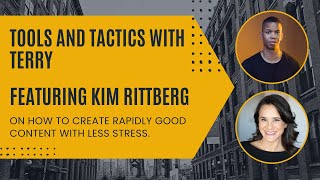
Kim Rittberg shares how to make video content faster without burning out. She covers planning systems that save time, gear that actually matters, and how to get comfortable on camera when you're nervous.
There's always the fun part where I'm like, are we live yet? Are we live? Does anyone see me? Can you hear me? Can you acknowledge my existence?
I can hear you.
Cool. That's one.
Two, actually have two people right now.
Two. Sweet. Yeah. There's always, like, a bit of a lag between when Streamyard goes on on LinkedIn. So you can see me. If you can hear us, please say hi and let us know where you're dialing in from. Both Kim and I are in Brooklyn, so, Kim, you're probably, like, three miles away from me.
You'll be able to hear the sirens at some point during the broadcast. Don't worry. You'll know I'm in New York City.
Yeah, they'll start at your apartment and make it over to mine.
Yeah, exactly, exactly, exactly.
It's almost comforting for me when I hear that. I'm like, okay, cool. I'm not the only one. But, you know, the theme of today is creating content. That is a pain. When you're trying to create content from your apartment and, you know, you sound all professional, all of a sudden, it's like there's a siren that goes by or like, I don't know, like. Like Meek Mills blasting on someone's car stereo. And you're like, all right, cool, we'll just.
You're like, I don't have the rights for this music, so I will have to cut out Meek Mill later.
Yeah, yeah.
But there's inevitably always something that goes wrong. Like, that's the one thing I've learned from 15 years in TV and media is something will go wrong, but it's never the thing you're predicting.
Yeah, yeah.
It's very encouraging. Right? That's a very encouraging advice I have at the top of the hour.
Yeah, right. But I think it's this. I mean, I think it's good knowing that everyone has constraints and because it's easy to feel like you're the only one who doesn't have a fancy camera or whatever it is. But I remember one time I was creating content for Verizon, so, like, a real company, and we are in the Bronx, but there was a recycling plant located next door. So they're like, hey, can you do us a favor? Can you just talk really loud so we can kind of draw out the sound? So I'm yelling as I'm saying my lines, and you see the veins in my neck, like, bulging on camera because we're trying to get this take while there's all these trucks going on in the background. So I, you know, I'll start looking in. It's like, wow, this guy's making videos for.
I know we always talk about, like, know and trust. You have to be really comfortable with yourself and you have to show up on video. And I'm not just saying that because that is a part of my company. But truly, when entrepreneurs show up as themselves and as really as themselves not imitating some other version of themselves that they think they should be it converts, because people feel like they know you and they're just more inclined to do business with you, buy your product, hire your service. So that's another thing that's really, really important is becoming comfortable on camera and becoming comfortable talking to your laptop, to your iPhone. So those are like the first two things, because I think that is applicable to everyone. No matter your business, no matter your industry, time and resources are finite and they will run away. So be ruthless about what your goals are, make sure it matches up, and get comfortable with being on camera. You have to show up to grow your business.
That's hard, though. That's really hard. I mean, even for me, getting comfortable on camera took a while. And I always say in my first few videos, I looked scared and angry at the same time. So it's a really bad combination. And I know common advice is like, oh, you just gotta do it, you know, get your reps in, so and so forth. But for some people, like, just getting that first rep is the hardest part. So can you give us some tactics? How do you talk to people on camera without feeling you're talking to a computer? You know, feeling that, like you're talking to that person behind the computer. But just, just get started is not going to be enough for a lot of people. So how can we get comfortable creating this content on camera? What, what, you know, devices can we use? What kind of, like, mindset? What kind of content? Like, just for people who are like, sounds great, but I'm still stuck at step two. What can we do?
So first of all, I posted, and I can repost it on my Instagram. I posted like one of my first videos that I ever did. That's a good idea. I'm gonna. I'm gonna post it later tomorrow. My first time reporting on camera, I looked like a deer in headlights. I looked terrified. I was like, imitating what a reporter might look like on camera. And that's just how we are. It's practice makes perfect. Like, there is no silver bullet, but you have to put your phone up against your dresser or get A ring light with a tripod stand. Something cheap, easy, you can buy, you know, online or in your local store. You have to start talking to your camera and you have to just start talking about the things that you would be talking about. So if you're a lawyer, if you're a selling T shirts, whatever you're selling, start talking to your camera about who you are. Hi, my name, like, hi, my name is Kim. I run a communications company. We offer media training and content strategy. You know, just get comfortable saying it. Get your mouth and your muscles comfortable with saying it. The more time you do it, the more comfortable you'll get. And then prepare. You know, nothing, nothing makes you feel more uncomfortable than when you don't know what you're saying because you didn't prepare. So that's another thing is prepare. And just for everybody, truly. I work with CEOs, I work with founders, people who are very successful and very smart. And everyone feels self conscious. So some of the other things is dig a little deeper to figure out what it is that is scaring you. Because a lot of people feel like people are judging them. The truth is they're thinking about what they're having for dinner or what they're doing after work. They're not really putting that much thought into you and what you're doing. So just really think about who you're serving. In theory, you're showing up to help your clients, to teach people whatever it is that you're doing it for, remember the underlying reason. It's a lot easier to break through that nervousness when you realize you're helping somebody.
Yeah, I think there's two takeaways from that. One is day in the life content you mentioned? Hey, if you're selling T shirts, talk about that so you can say, hey, right now I'm at this factory sourcing T shirts. This one has this blend, this one has that blend. This one feels better. It may be more expensive, but I want you to have a good experience on buying this one and then just getting more comfortable. I think there's some breathing exercises that have helped me in the past. And I'll give you a really good example. This one time I was doing this interview. It was a video interview for Entrepreneur magazine. Can't remember who the person was, but I worked out like an hour before the interview went live. So I take this pre workout just so I can get a little energy when I'm working out. And it was still like in my system when I'm doing this interview. So I'm Pretty much high, trying to interview someone. Entrepreneurs, like 1500 people in attendance. And I'm just like, you know, 100 miles a minute that I'm talking. But I knew, like, if I can just get my breath, if I can just slow my breath down and focus on that, I'll be able to slow my words down and become more focused. And while she was talking, that's what I did. I just practiced on getting my breath down. Deep breaths, longer exhale. Deep breaths, longer exhale. And then by time, it was my turn to talk. Again, I was calm. I had no clue what she said because I was focusing on breathing so horrible. Again, I was calm. I had no clue what she said because I was focusing on breathing so horrible. But what I'm saying is, if you're feeling nervous, don't just, like, launch into it and start talking. You want to get your breath first. And Kim, some advice you gave me as well is talk to someone else. You know, if you have your spouse there, you have a friend you can call, do whatever, but don't have the first time that you talk. If we're doing video camera, be when you're live, get. Get in the conversational tone already. And then if you can, pretend you're talking to that person behind the camera as well, because that helps as opposed to just kind of launching into it.
Absolutely, 100%. So I think of it as in the weeks leading up to when you're going to start to be on camera, get comfortable, start talking to your camera. And in the minutes leading up to it, there's breathing. Breathing can do wonders. Like, it always sounds like, oh, what is 10 seconds of breathing going to do? A lot. Your body responds very quickly. So even if you're just going, and if some people have too much energy, not too much are higher energy, and some people are lower energy. So you have to figure out what you're more prone to. I'm obviously more prone to higher energy. So I have to breathe in to calm myself a little bit. And other people who are a little lower energy, they have to breathe, breathe and get a little higher energy. They might lean on music. Like, a lot of people listen to some sort of music that gets them in the mood. So they could. Maybe for them, it's maybe a dance music or exercise music. For me, it's like classical and definitely don't be cold. So Terry and I worked together before, and that is one of the best tips I learned ages ago and I carry through is don't start a video being like, hi, because that's going to come off really cold. So you talk to your friend, you talk to your partner, and you're like, hey, could you please make me a coffee? Thank you so much. I really appreciate it. Hi, Terry. Thank you so much. I'm so glad we're chatting. It's just warmer. Your vibe is warmer. Your actual vocal cords are warmed up. So I think breathing, not being cold, figuring out which energy level you're trying to get to and set to that right before. And then the last one that I've done on my own that I find very, very helpful is a mindfulness technique, and that is using touch to ground you. So you can either rub your fingers on your hands, calms you down, rub your hands on your jeans or whatever. And the actual touch sort of grounds you in that moment and gets you out of your head a little bit. So I think those are four in the moment of really great tips to keep in mind before you're going online for social media, recording for social media, public speaking, investor meetings. I mean, this is for everywhere, truly. So I hope those tips are helpful. I think they're both for showing up on social, but also applicable to a lot of other places.
Yeah, I'd agree. And we're already getting some great tips in the chat window here. We're saying, join your local Toastmasters Club. I love that. So local community where you're practicing speaking in public. Steve saying the same thing. And Cynthia, who was our guest last week, said, you know, one thing that helps me a lot is making conversation with the coordinators of an event, if there is one, before going live and, you know, cracking some jokes. Eric is saying he's in the Calabasas Toastmasters. I'm guessing that's Calabasas, California, where my business partner actually has an office.
So where all the celebrities live. That's what I've learned from all those reality shows.
That's why we have the office there. But let's, let's take a step back and go broader than video, because I know some people are like, hey, video cool. Some people, it's like, well, how can I get started with other ideas? And what I'd like to do is go back and forth a little bit with where you get ideas from, where I get ideas from. If anyone wants to chime in where they get tips, ideas from as well, that'd be great because I want people to walk away with this actionable next steps. So for me, one way that I get content is by retelling stories from my career as an Independent consultant. So there was this one time when I, this person hired me and the next day they're like, why isn't all this stuff done? I'm like, I don't know, because you just hired me like 4pm the other day. And the guy's like, look, I'm under a lot of pressure, so I'm going to put that pressure on you. And I was like, actually, you're not, and I'm done, right? So I told that story on LinkedIn and people were like, wow, this is, this is beneficial. Because first of all, it's inspiring and empowering, but it's just me being authentic. So that's one thing I like to do. Another thing I like to do is just look at myths or at least common approaches towards entrepreneurship and saying, actually, this is a horrible idea. So people will tell you, hey, you got to do cold calling and DMing. Actually, that's a crappy idea. Instead, you should create content that attracts and converts your ideal audience, right? That way they're reaching out to you as opposed to you begging them to answer your DMs and have this virtual coffee. So two things. One is day in the life content that I like, sharing my experiences. And another is being kind of a contrarian or at least going against like the tide of common thoughts that are out there. But how about you? Where are some ideas that you get? Ideas for your content?
So I agree that in terms of like video and content overall, when you're showing up for your business, you have to be thinking of a content mix. So you're going to need a content strategy that is not just video, but is video, photo, text. So thinking about all of those things and then thinking about how you're going to approach it. So. So number one, I love the idea. You know, I love it when any presentation or Q and A or things that people respond to in your DMs, I have a document, I jot those down. And then for when I'm looking for content ideas, I go back to it. I say, okay, let's say I got a bunch of responses saying, I loved hearing your tip on this. Or hey, I have a question with this. I add those content, I add those questions to my ideas document and at some point those become content. So real world questions from customers or potential customers, that is exactly what you should be making. So 100% to that. I think so. My background is journalism, so I really always think about generally companies want to make an ad, right? Like that is by nature a company wants to make an ad and a consumer wants to read an article that is interesting to them. And so the best type of branded content is like somewhere in between. So you're serving your audience or your ideal client with interesting content and you're also promoting yourself or your brand or your message in some way. So I think of that as whatever product or service you're selling, think about what are people asking about and it doesn't necessarily have to be your own product. Like, let's say you sell T shirts and everyone's talking about recyclable cotton or synthetic fibers. So injecting yourself into that conversation in a way that is editorial. And editorial meaning you open a magazine or you watch TV or you're, you're, you know, online what people are actually like reporting on versus branded content or an advertisement. So I think you kind of always want to be in that middle of that, you know, Venn diagram of what an outlet would write and then what you would put out as an ad and kind of be in between. I think that there's a lot of different ways to get ideas. So depending on your area, you're an entrepreneur, so you're very smart and you work really hard. And I'm sure you, you, you follow competitors and you follow your field. So always be following competitors on social media and be following magazines and websites and seeing what they're covering. And of course that's not to steal ideas, but it's to spark ideas. And I try to consume both things in my area and then also stuff completely outside my area. So for me, I follow a lot of like typography and font stuff and I don't actually use them in the majority of my work, but it does help me think of a different way, colors and visuals, and it will help at some point. But I also think be in your area, but be in another area because you really need other inputs instead of like the same eight voices all the time. So I think those are things that are really important to think about when you're creating content.
One theme that I'm hearing here, and I say this often, is you must consume content to create content. Otherwise you're just saying the same thing over and over again based on your experiences and, you know, your knowledge and, and we're seeing some great tips here. First of all, I think it was, let me go back, Liz was saying just to get more comfortable on camera. She has a handful of comedy videos saved her phone, which is awesome because you're going to be in a good mood. I'm hearing now Toastmasters is also available online so you can practice on camera remotely. Cynthia I love this idea for her getting good ideas. So join exclusive groups like could be an online Facebook group that you have to pay money to attend to join and she'll just read the conversations that are taking place there and those are often more more of groups like could be an online Facebook group that you have to pay money to attend to join Fruitful because these are people that invest in communities so that the thought levels a little bit higher sometimes. But if you see this theme keeps on coming up over and over again in digital marketing or UX or recycling or whatever the heck it is, you're like, wow, this is really top of mind. And what I've done before is even go on channels like Reddit and I'll look for audiences that are aligned with my brand. Could be entrepreneurship. And if I see wow. Automation. This post about automation really took off this week. It's the top post the last week. I know that's top of mind for people that are entrepreneurs and I can create content about it as well. So it's hard enough to make content. I think if you can make it easier to find ideas, you absolutely should. And one of my favorite approaches is just like you were saying, looking for competitors or similar people to you and just reading the comments on their posts as well. And you can answer them. Sure. But often my comment on a post turns into my own post because I was inspired by the context provided.
Absolutely. And one of the best things I would say is as you're having those moments of inspiration or ideas, take a screenshot of it, put it in a document for later, because there's always like a month later when you're struggling for an idea. But dip in screenshot things as you're going around as you're online and looking at inspiration, because you're going to need that when you feel like you're out of gas, you're tired and you don't really have time or you don't want to do the promotion and then to the point of speaking and being comfortable. Clubhouse is a great way also to be more comfortable speaking. It's audio only, so it's very low bar of stress. And again, it's about getting comfortable with speaking. Like the first few times are hard. And I think all of these ideas are great. I think Toastmasters is great. I think no matter where you are, if you're really nervous to be on camera, perhaps shy or whatever, or you're borderline like doing the moth and a Comedian, stand up comedian. I think no matter where you are, you're always just trying to get to that next step. Try to grow yourself a little bit more, feel a little more comfortable. And I know people really hate watching themselves back, but you have to watch your videos back to get better. You do, you have to. And I know that that's something. As I've said before, I've worked with tons of people.
I'm with you. There's so many videos. People said, oh, that video is amazing. I'm like, cool, because I've never seen it. Like I, there's a, there's like even this I might never watch. You know, we'll see. So if you're watching this and you enjoyed it, please let me know at what point you enjoyed and I promise I'll go back and watch it. But why do you think that's the case? Because on my end I, it's not that I bored myself, but there still is that. I don't know, maybe it's self. Being self conscious. Maybe I don't know what it is. But why do you think people don't watch their own content or even read their own content? Because that's how you get better. So what's stopping people and how can we push through that?
Well, thanks for asking because Dr. Ritberg is here. I read a very interesting article. Scientifically, we actually hear our voice differently than it sounds out loud. So when we hear our voice we think it sounds bad because we're not used to hearing what other people hear. The truth is like all of our voices are fine. Like it's not, you know, none of us sound like, what is it, Alvin and the Chipmunks or whoever. And I think secondly, there is just. People are our own, we are our own worst critics. It's with a lot of things and I think that I like to think of, you know, all of our characteristics have, are sort of a double edged sword. We're very ambitious, we're very hardworking, we want to be the best. Like that's a lot of people, but especially I think, entrepreneurs, you're in it because you have a passion and you have a drive and you want to be the best. So when you don't feel super amazing at something, you don't think you're such a star on camera, it can sometimes drive you to maybe not want to show up on camera. So I think that a lot of people feel that way. It is actually a very normal thing to feel judgmental about yourself or to feel a little negative. But again, I really think you just have to lean into the fact that if you believe in what you're doing, you have to believe that you're doing it to grow your business. Remember, it's the business goal. So every day that you're showing up on Clubhouse or at Toastmasters or talking to your dog to get more comfortable recording on a selfie that it's one step to the larger goal of showing up more, making people trust you more to grow your business. I think that, that really keeping that goal in mind will help you because it won't feel like, it won't feel so narcissistic. It will feel like a business goal. I mean, I honestly, last year I was like, oh my God, I'm a media trainer. I run my own content company. Like, I worked at Netflix. I ran the Us Weekly video unit. I'm honestly a content expert. I'm not showing up. How can I not show up? Like, that's crazy. So I forced myself to start showing up. But even someone like me, it was a little uncomfortable at first. And I've been a reporter, you know, an on camera reporter for a little bit, but I've mostly been a producer. And so everyone has these same, these same doubts and these same insecurities. So just remember that. But you have to fight through because it is a business goal and you do have to fight through it.
Yeah, let's, let's kind of get more, even more tactical. And I have a question for everyone listening just to kind of tee things off. Yes or no, do you plan your content in advance? Yes or no, do you plan your content in advance? Because one thing I'm hearing from you is the need to organize better. Whether it's keeping track of ideas or eventually we'll get to content planning. But on my end, that was an issue for years where I was a day of type poster, not someone who planned because it felt more authentic. And the downside sometimes for planning is sure, when I wrote this two weeks ago, I was deeply involved. It was meaningful. But right now, if you're responding to my post, I'm like, I'm not really feeling it right now. It was harder for me to be in the moment. But that's what pros do. If you're not planning your content, they're not going to be aligned. It's not going to be aligned with your business goals. Because so often I'll have an event like this or something else that I'm planning and I'm like, oh, shoot. I have not promoted this because I didn't plan a week in advance to say, by the way, I'll be here LinkedIn live or so on so forth. So again I'm asking everyone yes or no. Do you plan your content in advance? And then Kim, back to you. Do you do so how do you do it? I mean, my friend Brittany Barnhart, who might be in attendance right now, she's an expert at doing that notion. She sells notion templates for people to plan their content as well as their business. But on your end, what's that process look like for you?
Sure. So I 100% recommend planning your content because a, that's what the pros do. But it's not just cause what the pros do. It's because all of us, life happens. So let's say you're going away for a three day conference or you get really busy with family or social obligations, you look at your social media and you're not showing up for like three days or five days. You really want to be consistent. And the way to be consistent is to prepare your content in advance. Not only will it help you to be consistent, but it will also help you be more efficient. And so efficient doesn't mean doing it fast, it just means doing it faster than if you did it separately. So think about this. If you set up, let's say I'm just going to talk about video for right now because you know, it's a video, we're talking about video. But you set up your tripod, you turn on your ring light, you set up your camera, you're lowering your blinds, you're getting the audio right. It takes a little bit of time to get your setup right. So if every time, and this is by the way, something we did at Us Weekly when I ran like a small unit and then eventually an 18 person unit, it has to be turnkey, you have to be able to say, okay, ring light on, phone on, tripod up. Shoot. If you're spending more than like five minutes on the setup, it's, that's valuable time away from your business and away from other goals. So you want the setup to happen once. And then when you're set up, you maybe, you know, did your, did your hair, did your makeup, put on a nice shirt, whatever it is for you.
I didn't do any of that. As you can see.
I can see Terry.
I can see worked out in this shirt.
I'm just kidding. I'm only kidding. Your workouts really inspire me. I almost want to deadlift 300 pounds, but I, I'll maybe do like 85. But once, once you're ready and we talk about, you know, being comfortable on camera, once you're in the groove, you should absolutely try to shoot as much as you can while you're in the groove. You're warmed up, you're looking good, your lighting is good, and your audio is good. Every time you turn that on and off, it's just extra time. That's time away from your business. It's just not a smart use of resources. So just think about it strategically, ruthlessly and efficiently. It's much more efficient to do that. So set up your camera, prepare that stuff. So when you're shooting it, what you're going to want to do is you're going to want to be shooting all of your scripts in a row. You are going to be preparing for a lot longer than you are going to be filming. I just want to tell people that everyone thinks it's about, like, turning your camera on. It's not. It's like very little is about the record. It's all you're preparing in advance. What are you going to say? Where are you going to film it? Like, who are you going to be talking to? Is it a Q and A? A lot of your time will be spent preparing much more than your actual video content. Your video content might be a minute or maybe it's 20 minutes, but you should be spending a lot more time preparing because that is really the most important part of any shooting.
One thing I got in the habit of doing is if I am recording a video, I'll set the stuff up the night before because it might take me like a half hour to get everything done. And that's usually after I drop my kids off, right? So I dropped four kids off. They're complaining about everything under the sun. So my brain is already a little frazzled as it is about having much.
More than your actual video content. Your video content might be a minute, or maybe it's 20 minutes.
I spend 45 minutes or half an hour setting up my equipment. It's like, great, now I'm shot, so. So that helps. But even with batch creating content, I'll take like two hours on a Monday, right in the morning or even on the weekend, like usually around 5 in the morning. I don't recommend that if that's not your thing. But before any distractions of the world get into your head and just dump out this stuff. And that way you can write a week worth of content in as little as, you know, 90 minutes or so. But throughout the day and throughout the week, I have all these ideas that are popping up. And that's what you're saying, like, jot them down now. I'm horrible at jotting them down. I'll email them to myself. I don't know why. Right. I know Evernote exists, Right. I know Google Docs exist too. But when it's time to actually write stuff down, I already have a lot of ideas. And then I put some kind of format around them again, whether it's video or written. But that's the way you do it and that's the way you show up consistently. Because one thing you have to realize is like, whether you're creating content on LinkedIn, Instagram or whatever, the views never go down. So even if you have a post that's, let's say, not that great, you know, you're still going to incrementally keep on getting people that see your content. And sometimes what I found is the content that, let's say flops because you didn't get a lot of views or likes or engagement. It's because it went so deep with a specific audience. The people that do see it, they reach out and they're like, how can you help me? Right, because you can go viral with a knock knock joke, right? Or memes and stuff like that. No one's going to say, hey, Terry, great meme. Now can you help me grow my business? No, they're just going to like and keep scrolling. But if you have like this very deep, insightful, quality content, maybe it's not, as you know, accessible to the masses or interesting, but the people who do pay attention, like, oh, wow, this guy gets it. And that's why I want to work with him or her.
I was just jotting down notes because I want to respond to that. I think that's a great point. So I'm going to go back to the very first thing I said, which is about be ruthless. So I agree with you 100% about. So analytics, right? In our social media, how you can see if a post is doing well, you go into your analytics, you see how it's reached, you see its responses. You can see some are really high, some are low, and some are in the middle. Great, okay. The truth is, if you're trying to drive clients, you're trying to bring in business, it really only matters which of your content is hitting your target audience and which is driving actions. So I think that that's some of it is you can, you can have a million followers on TikTok or Instagram or LinkedIn or, or, or a thousand. But the person with a thousand might be making more money or doing more business or hitting more of their goals. So I think metrics, it's really important to not be so consumed with metrics or vanity metrics because if you're hitting your goals, that's way more important than how many views or how many engagements on that post. So I'm really glad you brought that up. And then the other thing about systems and content creation is I never like to fight. I never like to fight a person's natural state. So some people are more spontaneous and other people are planners. So if you are a more spontaneous person, you might not get into doing the four hours, sit down with Canva and Adobe Rush and do all your content, that is okay. Don't fight that. However, if you can learn to do an hour at a time or half an hour at a time and get three posts out of that. So I think it's really important. A lot of these, like hustle culture and productivity hacks and all that stuff, they try to make you be someone else. And that's something that I fight. I'm like, I'm not someone else, I'm me. So if I can put aside an hour, I'm not going to put aside five hours to shoot. I'm just not. I like, I have two kids, I'm running a business, I'm busy. But if I can force myself to shoot for one hour and get X amount of content, that's better than waking up and being like, oh, I didn't have time to post that reel and now I haven't posted for three days. So I think it's really important for each person to figure out what works for you. I love Google Docs, honestly. I have a 88 page Google document. I recently interviewed Gretchen Rubin, the happiness guru, and she and I have that in common. I have like an 80 page Google document with a table of contents and it's insane, but it works for me. So I think that it's really important to remember whatever works for you. I put my ideas, I have an Excel, I just have like a basic Google Google sheet and I put in ideas and I write like a caption and I write what type of, what type of content it's going to be and then I build it out. I use Canva. I think Canva's amazing. It's very inexpensive and they have templates that are really nice and then you can customize it to your colors and it's just very easy to use. I also have, I use Adobe Rush or Inshot on my phone. So those are a couple of video platforms that I think are very user friendly. Like even though I work in video, I'm actually not an editor. So I can edit for social media. But like if I were, if I'm working a documentary I wouldn't be editing it. So those are very user friendly things. And again about batch creation, you're in the groove. You're on your laptop, you're editing and you're in the flow. Try to get, you know, two videos, four videos, six videos, whatever you can do. And also remember a video can be five minutes, a video can be 15 seconds. So if you sit down and you're creating like a hero piece of content that's long, don't forget to cut that up and use that in different places. Don't forget to take pull quotes from us. Like I'm going to take some pull quotes from this Terri and it's going to be a post next week, you know. So remember that when you're making one big piece of hero content and hero being like a big, a big video, big YouTube video, big blog post that you can then cut that up and do that in a lot of. Use it in a lot of different ways so you're getting more bang for your buck.
I want to talk about that. I want to, I want to do things. First of all, Liz is a coachuman. Hopefully that I'm pronouncing that correctly. If not, please do correct me. But she's saying in regards to her idea, she leaves a voice note on her phone to do so, which I think is brilliant. And she's saying you can be much more strategic with your content if you in advance as opposed to doing it on the fly.
So I like a big, a big video, a big YouTube video, a big blog post that you can then cut that up and do that in a lot of. Use it in a lot of different ways. So. So you're getting more bang for your buck.
I want to talk about that. I want to do things. First of all, Liz is a coachuman. Hopefully I'm pronouncing that correctly. If not, please do correct me. But she's saying in regards to her idea she leaves of a combination. But Liz is saying a lot of cool stuff so I would consider following her. If you're listening. And another question is saying any recommendations on how to have an easy to set up recording for videos when you can't have a dedicated space for It, I mean, I'll tell you what works for me. It's just having just a ring light with one of those cell phone holders on it and just from there I'm good to go. I just pick like a corner that doesn't look like there's crayon on it. So if you see my voice note on her phone to do so, which I think is brilliant. And she's saying you can be much more strategic with your content if you advance as opposed to doing it on the fly. So I like to have a combination. But Liz is saying a lot of cool stuff so I would consider following her. If you're, if you're listening. And another question is saying, you know, any recommendations on how to have an easy to set up recording for videos when you can't have a dedicated space for it? I mean, I'll tell you behind me like it's good enough as a background and that's what I use. But anytime you can be facing a window, that's going to be helpful too because of lighting issues. You know, I'm facing a noisy street unfortunately, so there's going to be sound issues but you don't. What works for me, it's just having a, just a ring light with one of those cell phone holders on it and just from there I'm good to go. I just pick like a corner that doesn't look like there's crayon on it. So if you see behind me like it's good enough as a background and that's what I use. Want to let the setup interrupt your ability to create content. So the faster you can do it the better. And like I have a tighter shot right now so it's like, you know, you don't have to worry about too much of your background. Just like kind of you more or less on the camera. But that's what I would recommend highly. And Kim, I want to have you chime in but after that I want to go back and bullet point some of the tools that you mentioned because I'm sure people are scrambling to write them down. We will have them on the show notes on my website. That's terryrice Co. But if we can go back to bullet pointing that out later. But let's right now focus on how do you have this set up where you can quickly create content, especially video content in this case.
So the good news is that there is a lower bar for social media. And by that I mean I came from tv. Right. You'd have to have a really deep background and you have your cameraman like 10ft in front of you and you needed a big studio. You don't need that anymore and people don't demand that. So the good news is you don't really need more than like a nice corner of your room. So there are a lot of things you can buy. Tripod wise. If you're really hurting for space, I would recommend a tripod that can sit on your desk, that has a small ring light that your camera can sit in. Which I think, Terry, you were mentioning, if you have a little more space, I'd recommend getting a standard tripod with a larger ring light that just. The ring light is going to be lighting up a larger space so you can film from a little further back. It just gives you more versatility. And again, no matter your setup, there are tons of tools. So a ring light, a tripod and get whatever fits in your area. Now another thing I would recommend for some people, a selfie stick. If your sort of content, like let's say you're shooting a lot of behind the scenes content, I'd recommend getting a selfie stick because just being able to change your background is very visually arresting. You know, someone's like in your, in your feed and seeing you in your office, in your factory, out and about in the gym, it's just, it's great. And then so ring light, tripod, selfie timer as a function, as a functionality I think is a great thing. That's, that's one of them. I'm trying to think what I am looking around my studio and then, you know, I'm recording a podcast. So I have like a really fancy mic. But you don't need a super fancy mic. You can just onboard it. I'd say if you are doing a series where you're interviewing people, then I would recommend buying an additional little mic that plugs into your iPhone. It's called a Zoom recorder. So those are all really easy, they're really accessible. I think the beauty of social media is it's really accessible. Like everyone can do this. It used to be that you needed a whole camera crew. Like you don't need that anymore. So those should, those should be just great for now.
Yeah, so I absolutely agree with that and I'm going to answer some more questions. But before I do that, if you're listening and you're wondering how to create content for, for LinkedIn and how to optimize your profile, I do have a workshop coming up on the 26th from I believe 2 to 5pm and Megan can drop a link for that for you attend. But I'll show you everything that I've done to optimize my content process as well as doing inbound marketing. So if you want to join me and hear me talk for three hours instead of one, please do. But we'll get the link to that in the chat window soon. One question from I hope I'm pronouncing this right. Lina L I N a My daughter's name is Lena. L E N A people call her Lena. So I feel you. If this is incorrect, I apologize, but she's asking, you know, what is. Yeah, what are some planning tools for social media planning that you recommend? Ideally a one stop for tracking. And again, my friend Brittany Barnhart, she makes these notion planning templates for you to plan your content. On my end I use Publer P U B LR I think just drop off the E and that integrates with Twitter, Instagram and LinkedIn. I know there's several out there, but Kim, just do you have any recommendations.
As well in terms of planning and scheduling? A lot of people like to use Later.com or Planoly and different ones have different analytics and insights so you'll kind of have to compare. But generally a lot of people use them and they, and they find them to be, you know, well suited to their needs.
Yeah, I mean, I think a lot of them like the basic function is the same and what I don't want anyone to do is to get caught up on what tool do I need. It's not the tools, it's the ideas and it's the execution. Because tools will amplify the reach of your content, they'll make it easier for you to plan your content, but they're not going to create your content. And I'm guilty of that saying, oh, this ring light doesn't look good in this kind of light. Or this microphone doesn't operate at this decibel. It's like, dude, just start talking. Right? So I think we've mentioned some great tools and I'll go back canva. Gosh, that should just be automatic for everyone at this point. There's so much you can do with it, it's ridiculous. It'll be well worth your time to spend just four hours learning how to use it and you'll be on your merry way. Another tool is Adobe Rush, and Adobe Rush is a tool that you can use just on your cell phone to edit videos. So let's say you have two videos you want to stitch together. You can do that or maybe it's a video, then an image, then another video. You can do that too, and it looks really good in shots. Another option for you, too, to do the same thing. I use a tool called Descript D E S C R I P T. Nailed it. To edit my videos as well. Because what you can do is, if you want, you can record with your camera and then still put it through this tool, but add elements like, it could be captions, it could be titles, so on, so forth. And all the stuff we're mentioning is either free or less than 20 bucks a month. So don't go crazy buying a bunch of expensive stuff. And definitely don't buy stuff that you don't know how to use. Like, don't say, oh, I'll learn how to use it. You probably won't because you're so busy running a business and creating content, you don't have time to learn, like, some complicated system. Eventually you can outsource that. But I just don't want you to get stuck on spending a lot of money on tools, whether it be software or hardware, and thinking that's going to make it better. Like, you make it better. Right. Everything you need is already within you. We're giving you some structure around it, but don't feel like you need all these external resources that make it better. It's your ideas, perspective, and worldview that really matters.
And the one thing that I'd say when you're setting up a video is important is have it be well lit. And there's a lot of resources online and you can Google, like, how to light my iPhone video. Well, the idea is you really want light from three sources, like 1, 2, 3. So front, right, and left. Obviously, if you don't have a huge light setup, which most people don't, you can use a window and then you can use a ring light. And like, right now, like, one half of my side is. One half of my face is getting natural light and the other is getting a ring light. And I'm using that to balance. So I would say, you know, you all had those zoom meetings where someone's like, in a closet in a cave, and they like, I wouldn't film like that. But that's not a matter of buying a huge light set. It's a matter of buying one ring light and balancing it with natural light or buying two ring lights. But it's not a lot that you need.
I feel like that person hiding during those meetings just didn't want to be on the call.
I'm like, you can just, you could just turn your video off. Like when you're sitting in the corner shrouded in shadow, you could just turn your video off.
Yeah, I dig it. So another question from Eric is saying, if you have Canva, do you still need to learn Photoshop? Eric, I mean, this is my perspective. I wouldn't, I wouldn't. Because you are a business owner. You have to grow a business, not learn Photoshop. I'm not dissing Photoshop. I used to work at Adobe, and guess what? I don't want to use Photoshop. And I worked there for three years. No one said, hey, dude, prove it, right? So these things, like, I get it, you know, it seems like it should be a good idea. Maybe you want to, like, have a growth mindset and all this stuff, but how about you just get really good at your job instead of really good at Photoshop because it's not something that you. That's not in your zone of genius, as I talk about all the time. So I would pass on that.
I give a total thumbs up. Do not, no offense, Adobe, do not learn Photoshop. Canva can do the things. When I started the Us Weekly video unit, our editors would spend hours, hours, like cutting out heads and merging things. Canva now does that like this. So really, so many of the tools that Photoshop can do, Canva can do that a person, like a business owner would need. I'm not saying that if you're a graphic designer or if you work in an ad agency, you might need Photoshop. For most entrepreneurs, you do not need that. And Canva is pretty amazing. It has so many tools and is very user friendly.
And just out of curiosity, yes or no, in the chat window, do you use Canva? Because I'm pretty sure a lot of you do. A great question from jshill. Do you suggest using a teleprompter? Yes. Yes. I own my own teleprompter. Probably cost me like 180 bucks. And I have this app that I put on my wife's iPad to make it work. But. But there's times when I'm supposed to talk for like three minutes straight and they're like, yeah, sound natural. I'm like, bro, I'm gonna, like, I'm gonna. I talk as fast, as quick as I can so I don't forget things. So, yes, get a teleprompter. And just be aware, when you have a teleprompter, there's gonna be like a little blue line there. That blue line has to be aligned with your camera, because as long as you're looking at the blue line, it looks like you're looking at the camera. So do that. If you can find an app where it'll scroll as you're talking, not at a predetermined speed, that's golden. Because when you have this predetermined speed, you're always trying to stay in that flow. And if you want to have some kind of dramatic pause, you can't because it's like it's still moving and you're always trying to catch up with it. So, yes, to a teleprompter, even one on your phone, those apps would be useful because it's hard to one take stuff unless you want to be more conversational without having that device available. But kind of going back to that, it's hard to one take stuff unless you want to be more conversational without having that device available, but kind of going back to that part about having more conversational content and repurposing, which I want to talk about too. This whole interview you're seeing right now will eventually be a series of social media videos. So the benefit of writing a blog is you can slice that up and create a social post from it. The benefit of doing something like this is you can slice it up and have social videos from it. So the more you, you can repurpose that part about having more conversational content and repurposing, which I want to talk about too, this whole content, the less content you have to make, right? You just amplify it, you know, edit it slightly, so and so forth. But one hour of work, I could run this conversation through that tool called a script and just get the transcript from it and then turn that into a blog, turn that to a social media post, so and so forth. So learn to do more with less, if that's the right way to say it. And that way you don't spend as much time creating content.
Terry, one of the other things I was going to say about when you think about creating content, so we talked earlier about how to come up with ideas. So then there's the ideas which you're jotting down in your own tools on your own time, you're screenshotting your Google Docs or whatever, or voice memos or emails. But then you can also think about the different ways you can present that content. So for videos, there could be Q and A. We could talk about explainer videos. I wrote this down earlier, so I'm reading it. It could be a live video. If you have A product. It could be like beauty shots, you know, a moving shoe, a stop motion of a purse, you know, all sorts of things like that. So once you have your ideas, you could think about different ways to execute. And away from video, you, you also have, you know, a photo with a caption. It can be a blog post, it can be a pull quote. So this video is going to exist in different forms. A blog post, shorter video content, it could be a pull quote. So really you can get this content is hero content. Hero means it's an hour, like we're spending an hour. So we should be able to get a lot of assets out of this. So whenever you're. You're coming up with one idea, then think about what else can exist from this main herochrome content.
Unmute. Because there was a siren going by. But yeah, I mean, let's go back to what you just said too, because I love the whole Q and A approach. And I talked about this with Patrice Pulser, I think she was on a couple weeks ago, where if you're like, dude, I don't know what that to talk about, just answer questions, right? Just think of common questions that your audience has and answer them. And I did this whole series of these during the early stages of the pandemic. If that's a time period we can reference where I was on camera and I would just look down at my phone and I'd say, okay, we got a question from Kim. What's the best way to get clients? Well, actually, Kim, the best way to get clients is to attract them. And what do I mean by that? It's through the content you create, so on and so forth. So it would sound like I was thinking about it off the top of my head. So when I would, um, and ah, a little bit, it was fine, right? But if I'm like, this is the best way to create content. Like, it's like, dude, you know, it doesn't, it doesn't work as well. So I'll say this again. You know, if you want to learn more about my process, Kim can drop the link to that workshop I have coming up. It's LinkedIn optimization for entrepreneurs. That's one of them. I made 30 videos in about 90 minutes. And I had to do it quickly because my wife was taking the kids out just so I could have some peace and quiet to do it. But you can do this stuff super quickly and, and be very impactful without spending a lot of time or money on tools or any kind of like, fancy background.
And I think it's really important. Speaking of efficiency, like, I think I'm also an entrepreneur, so I understand how, you know, really our time is very valuable and we have to be really protective of it. But once you are spending the time to create content, you really gotta squeeze that orange and get all the juice out of it. So if you're making a 30 minute or 10 minute or hour long video, you, you got to think about all the ways that can exist in other content and remember that could be sprinkled out throughout a quarter, throughout a half of a year. So no one's going to be like, Terri, you're pulling that quote from Kim and it's December, you talked to her months ago. No one cares. You know, no one cares unless it's news and it's timely. So remember that all of the things you're making you can be sprinkling throughout. And also try to vary your content. Like I was just mentioning, you know, you could do Q and A explainer live beauty types. And we were talking about what types of materials you need. Most of these, a ring light on an iPhone and a tripod is fine. There are some areas, like I'm right now working with a luxury realtor. There are some times where you do need to hire a camera crew and have an editor and edit with proper graphics. But you, only you and your business can decide when that's necessary. Like, if you're a makeup company, you know, you're going to need some sort of like, ad and you're going to want to really show close up mascara and blush and stuff like that. So maybe that iPhone is not going to serve your purpose, but maybe it will. So I think that the guidance that we're giving today, it really is pretty much across the board. But you have to figure out for your business, like, what do you need? What's the most important thing? And a lot of these can be done with an iPhone and connecting with your clients and connecting with your ideal audience. Because the most important thing is that you're showing up and you're teaching people and you're showing you're an expert and you're showing how you can help them. So that could be done in LinkedIn lives, that could be done in Instagram reels, that could be done Instagram stories. And, you know, if you're on TikTok or whatever. So wherever you are, like showing up and showing people why you want to help them, or your product is going to help them in a variety of ways, you know, editorial ways, how your product works. How you work, how someone can work with you. Like, there's a million types of things. And to our point earlier about thinking of ideas, think of what people ask you. When someone's like, how do I work with you? What's your process? That's a video. Like, you know, what are the questions you get? Often those should all be videos that you answer straight to camera and that becomes, you know, content for your social platforms.
It's also a good way to avoid people picking your brain because you're like, hey, man, go watch my videos. And you're good. But one thing I do want to mention, Ryan Quinn brought this up earlier as comment, like, hey, you know, make sure you review your work and check for errors. And I think I agree. I have a somewhat unique perspective on that, where I just say, perfection is the enemy of progress. And there's been so many times, because I'm creating content for myself, not what I'm doing at a corporate level or with a sponsor, then it has to be good. But when I'm doing it for myself, I mess up all the time. So Megan's here. She's my executive assistant. She's reviewing one of my articles I wrote recently. And she's like, you know, maybe that's not where you put the comma. Because it was, like, in a weird place. And, like, I just messed up all this stuff. And I did a video the other day, right? It's like, set the wrong number. Instead of, like, 1 million, I said 1 billion. It's like, you know, my bad. Right? But I think, you know, if you get so hung up on trying to make things perfect, you'll never get anything out. So you'll see videos from me that are on Instagram or LinkedIn where I'm, like, correcting myself as I talk. Right? Or you hear me, like, hesitate or whatever it is. Sure. I mean, is that. Is that great? No, but, like, for me to get it perfect with four kids, it ain't gonna happen. You know what I mean? I'll get, like, one video up per quarter. So if I just do it when I can and just, you know, hopefully get the theme of what I'm saying, it works better. So same with my written content. One of my lead magnets. It's this. It's this online course that teaches you how to attract and convert clients. There's errors in that, too. Like, there's typos. People tell me, hey, Terry, great course, by the way, you spelled duh wrong. I'm like, thanks. You know, like, maybe I'll just, like, edit out that part when I post this on social media. But it's like, if you let perfection hold you back, you'll never make any progress. So don't worry about it. I mean, the most successful people I know mess up all the time. And even just now, like, we're talking, right? Kim and I are having a great conversation, if you didn't notice. I left for a moment of time because I had to let the UPS guy in. Right. So is this video gonna be clean, you know, with me and Kim looking perfect the whole time? No, because I had to go buzz the person in before I missed out on, you know, Amazon delivery. That is what it is.
So I want to also note that I'm sweating because I can't turn on the ac and our windows are closed, so I'm also a little sweaty. So it's, like, not perfect, but it's good. It's good. It's totally good content.
Yeah. Yeah. I don't know anyone who just, like, has, like, the perfect opportunity all the time to create content, but they do it. They show up. And I think, again, that makes it more authentic. And what I've done before is, like, if you're listening to me and you hear, like, a siren go by, I'll say, hey, if you've never been in New York, here's your chance to experience it vicariously. It's like, I can't do anything about it, you know, like, other than just show up and acknowledge it or not acknowledge it and pivot from there. But this is me, and this is. This is what I have to offer. If there's a horn to Snell, if that offends you, sorry, but okay, this is how I live.
I started my career in news, and if you made a mistake, like spelling the wrong thing on a live graphic that, like, millions of people are seeing, it was a really, really big deal, and, like, someone was in trouble and there was a big meeting with executives. It's not like that now. You know, people understand. And there is that understanding that, like, you're a person and you're on your iPhone, and, you know, as long as you're offering value, it is okay. And, yeah, of course, like, in a perfect world, everything is perfect, but, you know, you're doing your best. And, yeah, you should try to copy edit. Like, especially if you're publishing from an article. Tara, you said, you know, Megan is copy editing you. So that is important, but people are more understanding. I actually posted an Instagram reel recently of a throwback to The Oscars. When I went and I had, like, behind the scenes footage of me, I was like, pregnant on the Oscars red carpet. And I wrote like, look, it's Ryan Reynolds. And someone wrote, that's Ryan Gosling. I'm like, well, I don't work at Us Weekly anymore.
I was like, all right, is that how they. Things ended or what?
No, that was it. The reel was up. I didn't delete the reel. Like, the reels up.
No, I meant your career at Us Weekly. Is that.
Oh, yeah, I got fired because I didn't know who Ryan Gosling was. No, no, no, no, no. They loved me. They loved me.
Awesome. Awesome. Yeah. And I think we're seeing some people chime in where Lena, hopefully it's Lena, is saying, you know, it's authenticity is beautiful to me. And you trust people more when they make those mistakes. So, yeah, I mean, it's part of it. And it's not something you should just pursue because it's impossible. And if you're too polished, if you're too perfect, you're not going to be approachable because it's like, well, that person ain't like me because I'm flawed. You know what I mean? Like, how can I. How can I learn from that person if they're, you know, all. You know, everything's prim and proper for me. I'm a bit of a mess. That's why I want to learn from someone who seems like they're going through it too, or they've been through it as well, but otherwise it ain't gonna work. And, but. And I do think about it, though, because, like, one of my posts last week, there was like a. A few typos, and I'm like, like 20, 000 people saw it. No one told me that there's a freaking.
Maybe they're afraid of you because they see how much you weightlift in the gym, that they're afraid to tell you that you had a typo.
It could be. I want to say they're being kind instead of being afraid. But. But, no, I do think about that. But years ago, I'd be like, oh, man, I can't believe I did it. Now I'm like, all right, well, listen, I got kids to raise, so there's other things that are more important than me misspelling, like cardboard or whatever. So I think when you get comfortable being uncomfortable, when you get comfortable with your flaws, that makes it easier to create content too, because you don't have all these great ideas that are Just trapped in this filter of perfection. You just let it out and you know people that are going to appreciate it, appreciate people that ignore it, ignore it. But no one's ever written back to me or a few, very few people have written back to me and said, hey, you're kind of stupid because xyz, right? I mean, some people have. And it's like, okay, you have internal problems. Apparently you're taking out on me because like anger is often depression turn outwards. But the majority of times people are just like, okay, hey, you spelled this wrong. Or they ignore it. So hopefully that encourages all of you to start creating more content based on the tools we talked about, the tactics we talked about, and this mindset we're sharing as well.
And again, at the very beginning of the conversation, we talked about showing up. And again, showing up isn't about trying to be personal perfect. It's about being the most confident, most helpful, most serving your clients version of you. So it's not about being perfect and it's not about being like an anchor on tv, you know, it's, it's just being about, it's about being yourself, being authentic and really serving, serving that ideal client.
Awesome. Cool. All right, so let's wrap things up here, Kim. Where can people find you? What's the best way to learn more about you? What do you have going on?
Sure. So you can find me@kimritberg.com and you can follow me here on LinkedIn, my full name or on Instagram. As I mentioned before, I help companies with content strategy. So I do audits and plans for company to help them figure out how to create content and really thinking about all the platforms, what you should be doing, where should you invest your time and where you shouldn't. I also do media training, so I do courses with people on how to become more comfortable on camera. And again, you can reach out to me. I have a new website. I just invested in myself in a new website and a new logo. It's very exciting. And then in May, I'm going to be launching my new podcast which Terry is a guest on because I love, always love talking to you. It's called Mom's Exit Interview and it focuses on women who are ditching the 9 to 5 to pursue other paths. Entrepreneurs, consultants, part time, all of those things. And each episode is an inspirational mom and then an expert with tangible tips to get you there. So my website, kimrickberg.com has a drop down that you can sign up so we can alert you when it launches and I'm very friendly, so feel free to reach out.
Awesome Cam. Thanks again for this. Everyone else, thanks for chiming in. Next week, we're going to be talking about how you can plan your content using a tool called Notion, as well as how you can plan your OKRs, your objectives and key results for the quarter. So stay tuned for that. But again, thanks for attending and I will see you next time. So thank you.
More from Terry







When you want to quit, don’t. #FitnessOver40 #MindsetShift #TiredIsNotAnExcuse #PersonalGrowth




You’re gonna want to give up. Don’t. #mindsetshift #motivationalquotes #motivation #dontgiveup