How to go from employee to entrepreneur with Cynthia Sandoval
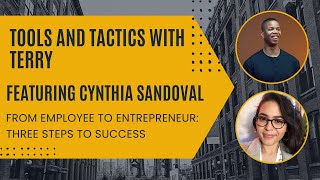
Cynthia Sandoval talks about leaving her job to start a digital marketing business. She covers client acquisition strategies, how to avoid burnout, and the mindset shifts needed to succeed as an entrepreneur.
So, Cynthia, the reason why I was really excited to talk to you today is because when I think about the journey from employee to entrepreneurship, I always bring yours up because it's so inspiring what you. What you went through, what you left and what you've accomplished. And when I see you now on social media, getting engaged, getting a new apartment, like, doing all this amazing stuff with your. With your grandparents, who I know played a big part in raising you, I'm like, wow. That's why I try to help people, you know, grow their own business as opposed to. And if they're not happy with a 9 to 5, as opposed to being stuck in a 9 to 5. So I'm glad you're here to tell that story. You might hear Trevor in the background right now making himself known. But for those of people who don't know you, do you mind us introducing yourself?
Yeah, of course. Is Trevor the new one? Or that's like a middle one.
Trevor is two, then Bri is six months. Tyson's three.
Three, Lena, six, second to last.
And I'm. And I'm tired.
I'm sorry. So my name is Cynthia. I do like taking a step back with this just because, you know, oftentimes we think, like, it starts off like my last job, that I just broke into it. I was, like, super tired, and I hit burnout, and that sort of happened. But I think the journey from entrepreneurship started. Started way before that. And that's pretty much why I got into digital marketing. It's why I got into paid media as a whole. So I was fresh out of college, and at this point, I was. I majored in communications, and that isn't anything, honestly. So from there I was like, excuse me.
I was a communications major, so I'm gonna take offense here.
Well, you have an mba, so maybe it's warm. So special. I'm not sure. I don't. It's just a bachelor's degree in communications. A whole lot of nothing. And while I was in college, I was already freelancing, and I was doing a couple internships, trying to figure out what it is that I like, what I like to do. I was freelancing as a wedding photographer, and so. And I'm completely asked out. Sorry for cursing on LinkedIn. It's just how I am from New York, and I was asked out and I started working at a print shop right after college, and I was making $11 an hour. And I would say, like, that was a pretty low low. I was also living with my parents. Well, my mom at the time in Section 8 housing. And I was just completely, you know, I wasn't happy. I was also in a weird place in my relationship, my life, everything. You know, I was like 23, 24 at the time. So society kind of tells you you should have your stuff together by then, which is not the case for most people, definitely not for me. And so I started researching like how to scale my photography business. Like, what can I do to bring it up or how can I move that forward? And I kind of stumbled into Google Ads. So I was like, oh, I should run some ads for my photography business. Maybe that'll make me a million dollars and I'll be a millionaire or whatever the case is, which wasn't. I actually ended up going down this rabbit hole of learning about online advertising. I built my website, I started doing all these things. I realized I really like that I got, I wanted to learn more about it and I actually wanted to get into that space. I thought it was a place where I can really grow and scale and I can use this skill set for whatever I plan to do in the future, even as a service delivery. Like immediately I thought about that, like, this is an opportunity for me to break out of, I guess, the system, you know, Like, I thought of it as just more opportunities. And so I started working at an agency, pretty well renowned agency within the paid media space in Long Island. And I had an amazing mentor from there. And I stayed there for about a year and a half, maybe two years, something like that. And then I broke off and I started working. I started freelancing some more, kind of like offering kind of like door to door salesmen, like, hey, do you need Google Ads? Hey, do you need Facebook ads? I can help.
Were you actually going door to door? Like, what did that look like?
Yeah, I really did. So like I lived, I lived in, I lived in a place where there was like a lot of small businesses and I literally like knocked around. There's like a real estate agent's office. There was like a window repair shop, like a cheese shop. And I literally just came in, I was just like, how are you guys growing your business currently? It was so bad, I would not have hired me, but it got me, you know, kind of out of my own comfort zone and got me talking to people. It got me like networking too, because some people like actually felt bad for me and they're like, yeah, you can start, you can see what we got going on. And so I got more experience doing that.
I want to pause you here. Just because people when they're first launching their business. It's challenging, right, to, like, reach out to someone on LinkedIn or do a cold email when you're physically going somewhere to someone saying, do you want to work with me? It's. It's. It's tough because I did that too. When I first started doing digital marketing consulting, there was this T shirt shop here in Brooklyn that I liked a lot. And I'm like, I'm going to go there. I'm going to force myself to get uncomfortable because I want to be comfortable being uncomfortable. And I walk in there and I'm like, hey, guys, I want to run ads for you. And the way the shop was set up is, like, the register was, like, higher than the rest of the store because they want to make sure no one's stealing anything. So I'm, like, looking up at these guys, and I'm six four, so I'm not used to looking up at most people, but I felt even smaller because, like, I'm there begging for work, and I'm looking up for this person. And they said yes. And I never did it again. I'm like, I hate this stuff. So I was done after that, but. But it got me used to, like, at least, you know, getting to that edge of your. Where you're feeling comfortable. So I'm glad you did it more than once, because I was done after the first time.
I was done after the first couple of times. But I just kept. I don't know, I just kept pushing myself of, like, maybe. Maybe I could get better. Like, for me, I just saw it as a. Like, putting in reps and, like, exercising with my communication skills. Like, I remember when I was working at the agency, my first time getting on a call with a client, like, stepped outside to throw up. Like, literally, it was really bad. I couldn't get on the phone. I just, like, had so much fear. Fear of talking to people. Like, it. It was really bad. It was really bad. Like, people are just like, is that true? Like, I remember telling that to Dre. He was like, you were shy. You're shy. And I'm like, yes. So it's just take us on this journey.
How did you go from being shy and throwing up to. To now, you know, doing what we're doing now.
Let's exposure. Exposure therapy. So from there, I started working with Demon John. I managed his digital marketing kind of department there, specifically with his digital products. And for that. That, for me was like a networking opportunity. I actually was paid a little bit less for me, like, I wasn't really thinking about money at that time. I was just thinking about building this foundation. I was thinking about networking, I was thinking about exposure, building my reputation at the end of the day. And I had some clients at the time too, so I was working and then I was also had some side clients. And for me that time was just building reputation. So I think like this journey, if we could boil it down, it's like skillset, right? Having a skill set that you can kind of like compounds over time. That could be digital marketing, that could be like website design, that could be se. Anything that could be coding. And then from there it's like building your reputation. And so at that point I was building my reputation and then from there I, you know, I got really burnt out and I was like, man, I prefer to be.
Let me, let me stop before you get burnt out because there's an arc here that I want to explore. I think a lot of people, when they first leave their job, there's an identity crisis, right? And you're like, okay, what should I do? How do I get business? So and so forth. And you, you were brave. You know, you did this in person stuff, knocking on doors. And then what I think is brilliant is you saw an opportunity to work with Damon John at his agency and even though you're making less money, you're like, look, that's in the long run, this is going to pay off more. So often when you have a scarcity mindset or you're just thinking about transactional revenue, you wouldn't do that. You wouldn't care if it's Damon John, you know, whoever, like, oh, it pays $10,000 more a year. But you absolutely have to play the long game. And early in your career, building those relationships is really what matters. Like 10, $20,000 x years from now is not going to matter if you know all these other people and have this, this logo on your resume that's, that's more street cred and that's going to help you get more business going forward. So. But then you burned out. So. So let's go.
Yeah, then it came crashing down. No, but even like to add on to that, like I moved into my grandparents home, like I just buckled down on everything and I started completely fresh and I, I just, I didn't care about money at the time. I just cared about building that reputation. Like I said, from there I got completely burned out. I was going like a million miles per hour and that tends to happen. And I wasn't going with as much direction. So I was kind of going all over the place. I was like contemplating should I just build websites or whatever? And then I. That's when I started honing it in and I buckled down. I was like, okay, here's my zone of genius. I really like online advertising. I really like Facebook ads, I really like Google Ads. I'm really fricking good at it. Um, now I do more TikTok, but I really love it. I'm good at it. I can, I can yield X amount of results. Um, and yeah, I had that moment of clarity. And that's when I started to build. And so that's when I started getting into this mindset of like, if I'm going to be burnt out, I'd rather be burnt out on my own accord. Like, even I find myself even now, like, I can work up to 60 hours a week. That's not a normal thing, but sometimes even more. It's not necessarily normal, but it doesn't feel as like taxing energy wise. Whereas if I'm forced to be in a, in an office space and I'm forced to interact with certain people and I'm forced to do certain tasks, it takes out more energy out of me. So like 40 hours there is not as productive as like 60 hours plus on my own time where I'm in my own office, I make my own rules, I hire my own people, I get my own clients. It's completely different. It's a completely different mindset. So it was just like that desire of wanting to do things on my own term, which I've always really have had and I just kind of nursed it a bit more.
Yeah. And one thing you mentioned was your zone of genius. And it's funny, I was talking to one of my buddies from high school the other day, who I'm not going to name, in case you're listening, and they were struggling with their current career. They're like, look, I'm just not. I'm not feeling this anymore. I want to do something else, but I don't know what it is. So it's beneficial to go through the exercise of finding your zone of genius, which is referenced in the Big Leap by Gay Hendricks. And there's four zones of competence. When it comes to a task you're performing for work, there's a zone of incompetence. These are things you're bad at, you're never going to be good at, you don't want to be good at, so don't choose that as your next step. Then there's your zone of competence. Things you can do, but they don't excite you. And pretty much anyone else can do it just as well. Right. So that might be part of your day to day job sometimes. And that's going to drain you right after that is your zone of excellence. Things that you're really good at. You're a recognized expert, but sometimes after a while you're like, I'm just not feeling this anymore. Or you want to do it on your own terms. In the last zone, the zone you referenced is your zone of genius. These are things that excite you. Yes, they're challenging, but you could read a thousand books on it and never get bored. And you get in a flow state when you're working. So it's like one hour, two hour, three hours and you don't want to stop. So if you're assessing how to go from employee to entrepreneur, what you want to do is think about all the skills you've used at any job in the past, assign them to different zones and then aim for either your zone of genius and or excellence. And that's what you should offer. So if you're struggling to find that, you want to do that personal inventory first and that's how you can better hone in on next steps.
Yeah, another way to look at it too. Have you ever heard of ikigai? Like that really helped me. So ikigai is a Japanese word for I think could Google it. I think it's like finding purpose. Ikigai, finding your purpose. Yeah, good word. So it's a Japanese concept referring to something that gives a person, per person a sense of purpose, a reason for living. Okay, so there's like a bunch of different, like it's like a Venn diagram situation going on. But the main thing that I always think about is like the top three, which is like what you like doing, what society like or what's in demand in society and then also what you like doing, what's in demand in society. And there's another one and you find the middle right in between. I think the last one is just like what you're good at or like what you like doing, what's in demand or something like that. I don't know.
We got homework. So if you're watching this and you know the answer, please put it in the comments because that way we can all, we can all follow along later. So but you're at this job and you're working like crazy and eventually you left obviously. So what's going on in Your mind as you're, you know, you're leaving to go start this business, like, because I think some people want to leave, but there's this fear, this hesitancy because you're making good money. And it's also sometimes societal pressure, like, oh, why aren't you happy? You know, why do you deserve more? You know, so on and so forth. Everyone else has this, and they're happy. What's your deal? So what was going on in your mind? You know, what kind of conversations were having with your family? Like, what was that? Like when you're. When you're about to leave?
Yeah, that's. That's interesting. It wasn't that I was unhappy per se. Like, I've always been happy all throughout that. That wasn't the case. And that was because I had, like, a vision for my life. I. I knew what I wanted out of life. Like, I was looking for. I knew all of these pieces would play into that. So I would say I was really nervous. Like, anyone, right? You were nervous about. You're nervous about, like, the cash flow. You're nervous about going to live. How am I going to support myself and my family and things like that. At the time, living with my grandparents, I was supporting them. So that was, that was. That was really tough. And I don't necessarily recommend leaving a job with just having like, 6K. You do want to have some kind of cushion, at least six months. Like, I always tell people, like, have six months to hold you down or something like that. But all throughout, you know, like, I was building a network, like, all throughout, like, I had a website I was pitching. Like, I also had clients. So I didn't leave without anything, you know, like, I was building the two years prior. So I didn't leave and just, like, take the giant leap of faith like that. It didn't feel that. It didn't feel that scary just because I had clients already, existing clients, and I was just like, oh, well, I'm getting paid more than with my job, so might as well just buckle down and see how this grows. And I also see it as, like, working with clients and doing what I do. I'm just compounding on that skill set. It's only getting better. So I just saw all of it as a plus. Does that answer your question?
It does. And you're answering a question that people ask all the time, is, if I have this side hustle, while I have a 9 to 5, when do I know it's time to leave? So you already said, first of all, if you can save six months, that's good. But another is when you feel like, wow, if I just didn't have this pesky nine to five, I could grow my own business so much more. Right? Because I have all these people that want to work with me, but I can't because I have a real job. And where I caution people is saying, where are you getting these clients from? Because if there are only few referrals or your network, that's not good because you still have not learned how to convert a cold audience. But if you're just posting on LinkedIn, if you were reaching out saying, how can you help me? And you're converting a cold audience, that's when you know that you're really onto something and it's sustainable because eventually you're going to run out of referrals. Like, you only have so many cousins that can send you business. But if you're feeling that pressure where it's like, gosh, so many people want to work with me and they're coming out of the blue, that's when you know that you're really onto something and can consider moving forward.
I think another big sign is like, if what you're making on the side is more than your day job, then you should probably leave.
That's another one. Yeah, we'll add that to the list.
Yeah, that's a big one. That's a really big one. I mean, for a long time, you know, there's many different ways to like build a service based business, right? For me, I took this very long winded approach of just like building the skill set, mastery, making sure that my clients are a hundred percent satisfied, going above and beyond for them. Which is why, you know, you saw the burnout situation. It's just like this impeccable attention to detail and making sure that my clients are always good and the results are there and the results will always speak for themselves. So in the beginning I was all referral based. Even, even after I met, like up until now. It's only now that I'm doing more more strategic. Strategic outreach.
I can't say that word either.
It's a hard word. Doing a lot more strategic outreach with like loom videos and cold outreach by email and a couple of things on, on Instagram. But before then I was just completely referral based and I was hitting like 20k months.
So.
And it all comes from just doing a good job. And I think that sometimes, you know, like, it's this nice balance of like, yeah, you need these cell systems, you need Inbound, you need a combination of inbound and outbound. But, like, don't forget to do a good job. That's like a good service. Like, you can't market a bad product. Right?
Yeah. I mean, I always say, if you want to get more customers, just treat the ones that you have well, because then you go through testimonials and referrals, not through sales and marketing. But whenever I hear someone saying, oh, I'm gonna teach you how to grow a business, and they don't mention treating your customers right, I'm like that person. You're setting yourself up for failure because you're focusing all on the front end and not the back end, not the delivery part. So, yeah, I think that's. That's. That's really bright. And what I. What I've seen from you, which is amazing, is you're now more open to sharing your success with other people and even doing some. Some coaching with people, which I think is great. But let's just. Let me just grab this question.
Someone got the icky guy thing. Thank you so much. Yeah, you love it. So the combination of these four. Four spheres, not three. Close enough. You love it. You're great at it. The world needs it. You're paid for it. There you go. That's a great. That, like, gave me so much clarity when I read that.
I dig it. Thanks, Vanessa. And then I want to hop into some other things too, but Sarah has a question first. You know, how did you get that first referral or gig? Because again, a lot of times when you have a 9 to 5, you can't go on LinkedIn saying, hey, everyone, if you want to hire me, click here. So how did this happen for you to get that first referral?
Yeah, and this is something I go over, like, a lot with coaching. This is something I learned with you with coaching, but with my clients, I think, like, the first step to getting your first client is letting the world know what exactly it is you do. And if you don't feel comfortable sharing that on LinkedIn, there's always Instagram where your co workers aren't following you, or Facebook. The idea is, like, usually your first clients are like that cousin that you're referring to. It always is a family friend. Like, for me, my first client was a family friend, and I offered to do, like, discounted work for his agency. You know, that was my first client. It's always, like, it's either a discounted rate or it's a free kind of something you do for free. And you pitch them and you find them within your network. But that doesn't, that doesn't happen unless you let the world know what it is that you do. There's obviously so many more strategies to that, but that's the gist of it. Like, the world needs to know what you do. Reach out to people. I'm like, hey, like, I remember, I, even before I got my first client, I was just reaching out to people on LinkedIn. I was like, hey, you know, I'm currently freelancing. I have X amount of experience. Here's. Here are the results that I've done, like with the agency so far. I would love to. I see what you're doing over at X Whatever, and I think that's amazing. The time type of clients, whatever. I'm already looking at some of their accounts and I see that, like, they could need, they can use X, Y and Z. I would love to offer you, I would love to hop on a call to see how it can help at a discounted or even pro bono in exchange for a referral.
That worked.
It totally worked for me. I'm offering free work. Oh, no, I'm not.
Because I think sometimes people think like, no, they're, they're getting bad advice, like, oh, you should never work for free. If people don't pay, they don't pay attention, so and so forth. And when I hear stuff like that, yeah, yeah, that's, that's different. Well, I would do some free work now. I mean, if the right person was like, hey, Terry, can you come speak at this conference? You know, I'm there, you know what I mean? But, but I think there's this misconception that you should never work for free because people are going to value your service, so and so forth. But I always say the best way to avoid imposter syndrome is to not be an imposter. So if you're saying straight up, I've never done this before, but here's what I do and here's what I do it for. I would love to help you out with this at a discounted rate or for free in exchange for first of all, your understanding and second of all, a referral. If you do that, then you don't have to pretend to be someone you're not and do a good job at the same time. You can just say, hey, look, brand new. I might mess up, so and so forth, but that's how you build those reps then and that reputation. So I think it's brilliant that you did that. I think that still does work today. And I want to double click on something you said earlier. You're sending LOOM videos. L o O M. So with loom, you can record a video directly from your desktop and send someone a link to watch the video later. So what I've done even as recently as a couple of years ago, is I would go to someone's website and show them some things that could be optimized. Like, hey, you're mentioning this, but actually it seems like you do this too, or your competitors doing this. Xyz. So when you send that personalized video to someone, first of all, they know you're not just throwing stuff at the wall, but you proactively solved a problem. And I think where people mess up, sometimes they're like, oh, let's talk about your business and how I can help you. It's like, no, I've already solved the problem. Do you want to talk more about it? You're better off sending 10 of those a week as opposed to 100, like, spammy messages. As in, because it shows you're putting this effort in. But people don't want to put the effort in. They just want the results sometimes. And that's not how it works.
Yeah, and even that, like, I'm going to point that that's obviously taxing. So I'm hiring appointment setters to do that for me and then looking into a closer internally, like, but that's like the next stage. I think if you're making under 10k per month within your service, whatever the case is, you definitely have to do that initial grunt work yourself. And then you can work to outsource it. But that's the next step of scaling. But even then, like, I'm working with two, working with a couple of people with coaching and one of their strategies, one thing that I have them do, like, is to go into Facebook groups where your ideal customer lives. Like, this is a really great strategy right here. I'm giving you a gem. Um, that I paid, like, way too much money to find out. Um, for free.
Right here. Thanks.
Yeah, you're getting it for free. I think I paid like 5k. Okay. So you buy courses from whatever your, like, ideal customer would buy. Like, buy those courses, get into those groups, and within those groups, you just answer questions. Like, it could, you know, like, you're already positioning yourself as an expert by answering these questions, answer questions and then, like, share findings, share any updates within the industry related to that. And then when someone comments, you know, just like, take it offline, slide into their DMs in a non creepy way. You could say something across the line along the lines of like, hey, you.
Know.
It was really great. Like I really love that comment, blah, blah, you know, like I looked at your website, what did it, it looks really cool what you're doing, blah blah, blah. I don't know, you could just comment with them and build a rapport. Yeah, that, that works really well. I've had a couple of coaching clients, get a few close a few clients there and like E commerce and the E commerce industry and then also going on to upwork. Like we have platforms like Upwork and then specifically for E commerce there's a platform called Maple. Just get your first client there and you know, work to transition them out of that, out of that platform entirely. They're going to love the quality of the work and what you do in your onboarding process so much that they're not going to see you as a freelance to be like, how can I pay you outside of this? I want to continue working with you.
I love both those ideas, but the one about because like you can always go into groups where your audience lives and you can do the whole answering questions thing. But I like how you're using the filter of someone who paid for a course and that's why they're in the group, because you want to be around people that are willing to trade money for help. So it's already going to make the audience smaller but more valuable. And it's almost like paying to go to a conference. Right? The reason why you go to a conference is because there are people there that are going to gather your tribe for you and you can network with them while you're there. So it's pretty much the same thing except for doing it online. I've actually never heard that strategy before, so it was definitely worth $5,000 to me and everyone else listening. But I'm going to pass it off.
It costs you a lot more too when you have to buy all those courses.
Yeah, yeah. Tax write off though. Um, so, so I, I dig that. And then yeah, upwork is a great place to start and I would never stay there either. But it's a good place to get discovered and get those reps in. And then just like what I normally tell people to do is sure, start on upwork and even screenshot, like those testimonials or those reviews and then put them on your website. But you don't want to always be paying another platform money for you to be listed there. Plus there's Way too much competition as well. So it's not a good look at the end. But you're talking about. I love stories. Go for it.
I have a story on how I got like my first like 10k plus client. I charge a percentage of ad revenue or ad spend. And so I actually did free work for this client for three months and I researched the shit. Sorry, I keep cursing the hell out of this client. Right. And thanks. That doesn't count. Sorry for offending your audience. Yeah, I researched the crap out of them. I saw that they had a really great product and I saw that they had a really good, like, SEO standing. They, like, I, when I looked at their Instagram, I saw that they were hiring people. It was curated a certain way. So if they can afford a service working with freelancers to build out their Instagram, obviously they can afford someone like me. And they also had the product that was in a perfect place to scale it. Like, not everyone's great for ads, right? Not everyone's an ideal client. Like, you know, not everyone's great to scale, especially give if they have a really bad infrastructure. Likely whatever you provide in terms of advertising or marketing is not. It's not going to work for them because they can't actually implement any of it or help you manager, whatever the case is. So perfect client. And I reached out to them and I just so happens someone that I offered like free consulting to, like, they were looking at an ad account and I was just like, listen, looks like you're having a really hard time with this. I'll just hop on a free call with you. Like, I have 30 minutes. It's not really a big deal. And then I pretty much did an audit with them. I was like, you need to change this. Like, what are you doing here? Like, this is ridiculous. Like, there's so much opportunity to scale this. And it just so happens it was kind of like the same account that I was researching. I was just like, hey, you know, like, how. What's the situation here? It was crazy happenstance. What's the situation here? He's just like, yeah, I'm just doing this for a friend, but I can connect you to see if you're interested and whatever. And I'm just like, yeah, of course I would love to. And then that's when I pitched him. And I was just like, listen, I don't have too much in terms of case studies. I get it. I don't know if I would hire me either. Horrible pitch, worst pitch ever. But listen, I'm going to do free work for you for three months, and if you don't get five times return, you don't. You don't pay me. Like, it's a win win. So what do you want to do? And they're like, yeah, sure. And I sent them a contract. I let them know my real management fees. And in that contract, it was like, xing out. So just like, whoa. I get, like, a free $10,000 service. Yeah. And that's how I got, like, my biggest client right now, where those management fees are anywhere between 7 and 15k per month. It's not bad.
That's amazing. I mean, it's funny because I've known you for, like, two or three years, and I feel like I talk too much. That's why I don't hear all these cool stories. So I'm gonna stop trying to dominate conversations going forward because I'm learning a lot here, and I know our audience is too. There's a question here from Ryan Quinn. Ryan, I used to actually work with him in Buffalo, like, years ago. So he's saying, cynthia, there are so many agencies and freelancers. How do you differentiate yourself to show a unique service or offering?
Man, there's so many different ways to go about this. And I think, like, the standard, like, cookie cutter advice is tanish, right? What exactly? I think, like, it comes down to, like, what's your secret sauce? And that's a combination of your niche and then how you deliver your service and what your service even is. Oftentimes, like, people that are breaking into the industry, people that are breaking into paid media, they're just like, you know, like, how do I niche? I'm just like, yeah, honestly, like, offering Google Ads and Facebook ads is like, a niche in and of itself. Get good at it first, and then from there, you kind of. You'll get to see, like, a process for specifically, like, car dealerships. And then, you know, like, you rinse and repeat that process. You become so good at it. You understand the industry so well inside and out. That becomes your niche. And you have a specific delivery service for that. For me, it's like, it's E Comm, Right? So for me, like, I have a unique signature service where I provide UGC and we're creative first. You know, like, a lot of people say that already I have a better spiel, but I'm on the spot right now for you. Like, I don't, you know, like, it can be a combination of your niche and how you deliver it. Another way that people differentiate. Differentiate themselves is like, Obviously reputation, you know, like, I didn't come into this completely fresh. I didn't come out of this like with no experience whatsoever. It helps to drop Damon John's name. That's a differentiator for me. You kind of have to use your unfair advantages here. Are you a mathematician? Are you a math whiz? Like, are you an Excel wizard? You know, like, that's really going to give you a leg up when it comes to offering a service like Google Ads and say like, if you're offering website designs or web design in general, like build your own mock ups, build out your own websites, do it for free. And that's how you differentiate yourself with your unique style. There, there's so many specific nuances and so many different ways to go about it. It all depends on like, what is it that you're trying to do.
Yeah, yeah, I, I agree. And one thing I always say is your unique differentiator is going to be your personality too and the way you present yourself. So I think if you just try to exhaust yourself trying to like come with some unique way to do Google Ads, it's like, look, just do a good job, you know, like first of all, because there's, there's data and be who you are. Maybe you're kind of stoic, maybe you're kind of funny, you know, maybe you're really athletic. And you talk about that a lot too, whatever it is. But end of the day, people want to work with people that they know like, and trust. So you can just say like, hey, my stuff's basic, but it works. That's fine, you know, as long as it works. Yeah, I mean, I, well, that's kind of the way I describe what I do. I'm like, the stuff that I do, you could Google it. There's 20 other people on LinkedIn saying the same stuff. Go talk to them. That's fine, you know, but, but what I do is I just, I'm just honest with people and saying, here's what I can do, here's what I can't do. And you know, I also got four kids, so I might like, you know, not be available after a certain amount of time. But I think when you try to find this unique differentiator, you end up just kind of lying or BSing. People are like, dude, just, just be honest, you know. So I think, I think that's what it is. I think a unique differentiator can be the value that you put on relationships and not having a scarcity mindset or projecting lack meaning when you meet someone, you don't think, what can I take from this person? You think, what can we create together? Even knowing it might take years for that to happen. So that's a differentiator. Because when someone is a service professional, people are always used to getting pitched by them. But if you just really reach out and say, hey Cynthia, I liked your post, and then just leave, they're like, wow, guess you just like my post, you know, so like you can just do that. You can just like just drop like, you know, just like nuggets of like good karma or whatever you want to call it around people and that itself will grow.
Yeah, it's like building trust in general. And I think people want to work with people that they trust. And also another way to go about it is like, okay, so what's your, what's your customers or your ideal customer's biggest pain points? Right. You just address the pain point. For me, it's like, you know, business owners or e comm owners that are in this space not unable to navigate like life post iOS, they don't know how to structure their campaigns and they have no idea how to, how to utilize UGC in a way that's going to actually add an additional 100k revenue plus, you know, so that's a huge pain point. And then they also like don't want to trust an agency. That's another one like age. They got burned in the past by an agency. So you kind of want to address all of these pain points and you want to know like it comes down to like knowing who you're, who you're selling to really well as well. That's a big one.
Yeah. And when we were working together, we made it a point. One of your differentiators, if you want to call that is you say stuff in language that people can understand. So right now, like, I know you're just kind of like riffing, but you said like iOS and UGC. Some people don't know what UGC is. Right. So UGC is user generated content on social media. So as opposed to branded content, it could be me saying, hey, I really like this, this MCT oil. It's great, and making a video about it. But what, what Cynthia does and what you can probably can tell by now is she's very personable, very relatable and she empathizes with the person she's talking to, knowing they got ripped off before. So she's saying, look, I want you to understand exactly what's going on. Here's what this Means, here's what that means. Here's our report on it. Here's you know, how to stay in the loop, so and so forth. And that alone can be a differentiator, if you're looking for one. But we got a good question here from justice, which I think a lot of people want to hear the answer to. How do you prospect for clients who can afford 7-15k? Are you charging at a percentage and helping to scale into that? So how do you find people that can afford to even pay $15,000 a month for your service?
There are breadcrumbs. There's always breadcrumbs. So a couple of things you can like, it's also, it's how the website is built. You can use tools like Semrush to see, like, okay, what are their ranking in terms of SEO? So for me, like, I know a good client is a good client. Like I mentioned before, kind of their Instagram, their Instagram is optimized. Clearly, it looks like they hired someone. If they can hire someone for organic help, they can hire someone like me to scale it. You know, if they can hire someone who doesn't actually provide an immediate return, they're going to, you know, pay buttloads for me. Same with SEO, right? If they have really good SEO, oftentimes these clients already are working with someone. So it's like, it's. Then you find that right client, you find who they're working with. After doing that research their website, like I said, um, their Instagram will tell you a lot of information as well. Researching the company, you also want to see that the, the, the product itself, you, you can tell just based on reviews on the product itself, if it's actually solid. Like, for me, I need to look, I, I, there's a sweet spot for me between, like, honestly, $300 average order value. That's like, I know I can scale. It's set to scale for me. Um, I have a couple of hashtags that I use on Instagram and then I have appointment setters look up and stuff like that. Uh, but that's a little bit more nuanced, but that's the gist of it. And then from there, you know, you kind of have to win the account. So offering a free audit, like, hey, I notice X, Y and Z. I know, like, sometimes in these loom videos, I'm giving you a lot of gems right now. I charge money for this. Sometimes in these loom videos, I'll go, I'll blur out certain aspects in the account. But I'll go into an account and like this is a very similar structure that we can implement for you some areas that we can test. I'm also, I go on the Facebook ads library. I look at the, I look at what they're doing on TikTok or something like that. Here's what competitors are doing, here's what you're doing, here's where you can improve and UGC or user generated content is a huge pain point for you. And so we actually source those influencers for you X, Y and Z.
You know, so yeah, let's, and I, and I do appreciate the value providing. Let's zoom out a little bit away from digital marketing for a second because one thing you keep on saying is I'll do this audit, I'll do this audit, I'll do this audit. You can do that for a lot of different industries, right? If you're in email marketing expert, if you're like an environmental change consultant, whatever it is.
Yeah.
But when you say hey, I'll do this audit for you, one thing that I have people do when they work with me is create a sample audit. Show them what they will get from their audit. Hey, you'll see this, that, that I'm going to grade X, Y and Z. And it has to be fake data. Like don't give them real data from another client. But when you just say audit, someone's mind might go any place. But when you say look, you'll get this document that shows these things that you can improve and exactly how to do it, then it's much more valuable. So that's, that's work, right? And people don't always want to do that. It's like, oh, can I just say audit, sure, go for it. No one responds. That's on you. But if you take a week to create a sample audit and then have it on your website or have it available on LinkedIn or have a checklist, here's how you do an audit. Do you want me to do one for you? You'll be much more successful.
Let's grab something straight. Sorry, have a quick comment. That's great. If like if you're selling an audit, right? What I'm talking about right now is not like, not a real audit. Like from there I'd say like I'm giving them like a high level audit but I'm actually not crunching numbers and stuff like that. And obviously if we do work together, that would be the next step to do it. Perform an in depth audit to see where we're at. Right.
I think for me you don't just sell audits though.
I have in the past. But it's just like for me that's more of like a tripwire. Like that, that's not reoccurring revenue. That's not going to add to my mrr. Right, that's not.
What are these terms? Tripwire and mrrv?
Monthly reoccurring revenue. Right. It's not going to add. It's just like a one off thing. And one off things aren't really that valuable to me.
What's a tripwire?
Okay, so tripwire is basically like a lead magnet. So it's to get them into your funnel and Right. This is something we've worked on together. A lot of your audience members might know this and if you work with Terry, you'll get to know all the ins and outs of building out your funnel and actually building out a lead magnet. Magnet, AKA tripwire. That's just someone to, you know, like an entry level service and you eventually you want to upsell them your signature service. For me it's advertising. And honestly, I just want to go straight to the chase. For me, the audit is just to sweeten the deal and obviously I need to perform it regardless if I want to do a good job in the account. But. But yeah, just, just commenting that my 2 cents for no reason.
I appreciate your 2 cents. So we got some questions and one thing I would add to that is how do you find clients who can afford to pay 7 and 15k is don't take the ones that can only afford 1k because you'd rather you're better off spending time prospecting and building your brand to attract the ones that can pay 15k. That'll be my piece of advice.
And also like with those smaller clients, you can refer to another media buyer and you know, take a little cut from that. A referral fee.
There you go. I dig that. Passive revenue. So Dario's got some straight up questions here. He's saying, how do you find clients? Would you use ads to find clients or do you think you should do it organically if you're generating $10,000 or less in revenue?
No, if you're generating under 10k, do not. You can't afford ads. Right. Like the cost of living. What is that after taxes? Like what? So six, seven. Yeah, like New York. And it's like in New York, it's like 6.5. So it's not, it's not worth it. I think you're. There's way Better ways to invest into building out your service based business. Likely finding additional help with like either media buying or I don't know what it is that you do. Like it all depends. Right? But under 10k, I don't think you should launch with ads. You still have some foundational issues to fix.
Yeah, I normally say I would not run any kind of paid media to get clients until you have an organic process that works and you're like, wow, if I just put some more money behind this and get more eyeballs on it, I could scale it. But ads don't solve problems, they amplify the reach of good ideas. But if you have bad ideas, they amplify the reach of bad ideas and you make no money from it.
Yeah, like think about like how I prospect, right? I'm not gonna just work with anyone because ads don't work for everyone. You gotta have a nice website. It has, the website has convert. You have to have existing customers. Ideally like these are all signs of a company that a business that's making over 10, 20k per month. And I'm just looking to scale that.
So yeah, yeah, let's talk about scaling. And this is something that on my end, I mean, you know how I work. I don't like having teams to manage because like I have weird schedules, I got a bunch of kids and you know, it's what it is. But I just signed on with this VA service called ChatterBoss and it's freaking amazing because you have an executive VA who can do a lot, but then they have a team of other VAs beneath them who could do things that maybe they're not the best fit for and are cheaper. So for me, I've been really happy with it. If anyone has any questions, please do reach out to me. But I'm just like amazed at how little I'm doing now to actually do the day to day stuff for my business because I have this genius person who I can just reach out to on WhatsApp and ask for help. But on your end, I know that you're really good at building a team. We have a question from justice and I love this question actually saying, you know, one more question. I've seen ads for appointment setters, so someone who would reach out on behalf of your company to generate leads and appointments. But they seem sketchy. Justice. I agree. Do you have any advice or best practices when using one of these services?
They are usually sketchy, honestly, and this took me some time, like kissing a couple of frogs. They are super sketchy. So I only work with appointment setters that I've either trained or some. Someone that I trust has trained. And it, again, it's, it's hard to find these things.
So how do we get access to your network then? Because you're like, like you're all sketching.
No, the best thing that you could do is like. This is the same approach with my media buyer that I'm currently working with. He was a former coaching client. I trained him from the ground up. I mean, granted, like, I've had a lot of coaching clients. This one was particularly different because he had just like very similar mindset. Obsessed, neurotic with data like I am. And so I'm just like, damn, this kid is actually great. He's not a kid. He's actually older than me. So I was like, I gotta work with you. Like, we got, we can figure this out. And he just had a perfect situation for it. And he was really passionate and he, we shared the same vision. And so I trained him for the ground up. I got him into client accounts. I got burned a couple of times. I was not profitable for a couple of months, for six months. But you know, like in the down the line, it's absolutely worth it because I, you know, I didn't have the resources to hire a really great media buyer. So I, you know, like, if you don't have time, if you don't have resources in terms of money or then you have time. So I use that time to train him from the ground up. And now he's like killer, honestly, better than me at this point. So. Yeah, and it's the same thing, like if you, you can hire really great appointment setters, you know, like, usually if you got to pay more for it, but if you don't have the resources, like, which is what I didn't have originally, you have to put in the time to train.
Yeah. And I'll add to that. You can have the best appointment center in the world, but if you don't know how to express the value that you provide to a client, like if you're not good on calls, you're in trouble. You can hire closers too. If you have a bad product, you're still in trouble. So I think these are all great things to think about, but they will not solve a core problem. Meaning you provide value for your audience in exchange for money. If you haven't taken care of that already. And what I would also say, justice, is reach out to your network. This is one of my favorite tricks. If you want to call that even though Cynthia has more apparently, which I didn't know about, I would go on LinkedIn and say, hey, everyone, I have this business where I do this for this audience, and I'm looking for an appointment setter. Does anyone recommend anyone? So maybe no one has any leads for you, but at least you're kind of passively advertising your business and getting some appointments like that. Or on the upside, they might have someone for you, and they've already vetted this person for not being shady, sketchy, and you can move forward more confidently. So that's, again, that's the benefit of growing your network. Like right now, you're all on this call with us, right? So you all have this, this interest in entrepreneurship. I would be going through here and saying, oh, should I reach out to Justice? Should I reach out to Dario, Should I reach out to Sarah, so and so forth and say, hey, I saw you in a thing with Terry and Cynthia. Just wondering, what kind of business do you have grow your network? You know, but if you do it that way, where you're just saying, we have this in common, I'd like to know more about you now. Would you like to do virtual coffee? You know, next Tuesday at noon? You can slowly build your network, and that's how you get exposed to more of these opportunities to find these good leads on work. In this case.
Yeah, yeah, I think it's all about. I mean, everyone harps about network, but you can't really do anything without awareness. You can't. I mean, like, that was the big reflection the other day. I mean, like, for me to get to where I'm at now, the one thing that was holding me back was just eyeballs. You could say it's mindset, you could say it's all these other things, sure. But at the end of the day, the one really big catalyst is awareness. People just knowing what you do. So start now connecting with people. And also another thing, on referrals, whenever I hire someone, I always go to my, like, the people that I trust first. That's why for me, like, I love referrals. They're the best. You get the best clients. Like, you usually, like, if they're in your network, like, they, I don't know, they watch the same shows as you, they get like the same jokes and whatever. But that's how I hire as well. So referrals all the way.
You make a good point in regards to the biggest problem people is people don't know you exist. And that's why again, people ask me sometimes hey, Terry, you know, I'm afraid I'm giving out too much free information on social media. What do you think? And I would say, well, do you have clients? You know, do you. Are you busy? No. Then I would give out more, perhaps because maybe you're not showing your expertise or not so originally, initially, your problems, it's scarcity. It's not the fact that people, you know, you know, don't want to hire you something because they don't even know you exist. If you're saying, like, brilliant, useful stuff on a regular basis, that's how you get in these circles. And you attract the right people. And then from there, you can kind of gate what you want to gate, but just share knowledge, provide value, answer questions, like Cynthia said. And the benefit is you can do this while you still have a 9 to 5, because I know there might be a concern. Oh, if I'm posting too much on social media, is my boss gonna, you know, be concerned? If you're just answering questions and sharing industry updates, that's just you doing stuff for your job. Right? Share it internally, too. Say, hey, everyone, here's this new thing. That way, it's not like you're only doing it on social media. You're sending a group, you know, email too. You're like, hey, I just like sharing stuff, you know. Why. Why are you looking at me funny? So. So I would do that, but. Sorry, go ahead.
I was gonna say it's like such a toxic environment that you'd work in where they don't want you to get better, you know?
Yeah, yeah.
If you have a newsletter, like, say, if, like, I remember I was interviewing at a job, and they're just like, oh, how do you, you know, like, you're freelancing your consulting right now. Like, is that something you would drop for us of, like, I just reposition the question. I'm just like, listen, whatever I sign on to that, if this would be the next opportunity for me, this is my priority. Right? But so is my life. My life is a priority. I have to live right, Just as you have to live and respectfully. Freelancing keeps me very sharp at what I do in the marketing space. You know, like, if you're not. Whatever you did a year ago, it's just out the window tomorrow, you know, it's just like, it's not really applicable. So you constantly have to be on your toes here and you have to keep yourself sharp. And this is what I do to keep myself sharp so that I could provide the best service for you as well. That's what I would say.
I think more companies are realizing now that they have to let their stars explore their entrepreneur side because they're just going to leave. And you'll be left with people who have no other choice but to stay there, who are underperformers. Right? And you make a really good point. Because at your corporate job, if you want to do something risky, it has to go through all these layers and approvals, so on, so forth, and you can't learn as much. But if you're like, look, on my own time, you know, with my own business, I can get as risky as I want, but with the stuff that I learn, I'm bringing to my 9 to 5. So it's going to benefit both of us. And again, people can't realize, especially if you're working from home, that you have like 12 extra hours during the, during the week now that you can spend however you want. Then there's a problem with them, right? There's a problem with them just trying to limit you or they have some kind of fear or maybe it's like a scarcity mindset or whatever it is, that's a good sign that you should leave that environment as quickly as possible.
Have you ever read the re. The. The E Myth?
No, I haven't. I have all these books behind me. You're not naming any that I've read. I'm like, no, no. Limitless. Jim Quick. That was good.
Yeah, that sounds like a good book. I like that dude on Instagram, you know, there's like this really great concept and it kind of ties into it in some way. What we're talking about, like, is the biggest, the biggest hurdle or like the biggest mistake most people make to transition. The E. Myth talks about like these three different components to making an entrepreneur or actually scaling a business. Like, being a freelancer is one thing. Doing a skill, doing a skill. Or like technical work is one thing. And this is what you're doing at a job that's not a business. Me knowing how to scale an account is not a business in and of itself, right? So there's these three main components. It's like the entrepreneur, the manager, and the technician. So the entrepreneur is like working, thinking about tomorrow. The visionary, someone who's planning goals and like, okay, you know, like next quarter we're Gonna hit a 10% increase in gross revenue or whatever. And then the manager is the actual project manager, like actually building out the systems, super oriented, whatever, task oriented, or like just building out systems. And then the Technician is the person that's actually like behind the keyboard and like building all that out. Like in my case, like media buying and adjusting bids and all that nerd stuff. So I think the biggest mistake that people make is like staying in this technician role and in the technician role one, obviously you're not, you know, stepping into the entrepreneur role and like built having a vision and like telling people what you do and you know, like, you're not building any awareness because. Because you're behind a computer, just like typing all day and like adjusting bids and budgets, which is what I do all day anyways. But, you know, and then you're also not building out systems for yourself. So it's like, say if you did have a client, do you even know how to onboard them? Like, do you have a system for it? You know, do you know what access do you need from them? Like, yeah, in terms of fulfillment. And then you're not even thinking big picture. You're not thinking three years from now, you're not thinking five years from now because you're so, you know, tangled up into the technical work. So for me, like the biggest ways that I've scaled is like one, I hired a business coach, Plug for Terry, Ultimate Plug also plug for me if you want to hire me. But like working with Terry, you know, like, it forced me to start thinking big picture, right? You're thinking, okay, like, what are my goals? What's the vision that I have? You know, like, how do I want to scale this? How do. What do I even want to build and why? Right? That's really important to have that kind of North Star or else you're just going to be like chasing your tail. And then in terms of like project management, you know, I invested in a ton of courses and even hired some VA help as well to like help me build out these systems on Notion so that like when I do onboard a client, it's just like rinse and repeat. I mean, there's always hiccups in between just because the nature of the work that I do. But yeah, at least we can like always optimize and update those systems. We have a, you know, like we have an intake form. We know client here you're going to have access to our Slack channel and then from there you have access to us and blah, blah, blah. We're available from X amount of time, all of that. You're expecting X amount of deliverables for a month, et cetera, et cetera. Reporting is on this day of the month. Like that's all already in like the onboarding process and one of the first emails they get out or even on the kickoff call, we repeat it and then the technical work, like it was really important for me to, to be good at my craft. I'm still in accounts so that I could talk high level and I could talk strategy. But I also, you know, I hired a media buyer to help me because accounts can be massive and then also doing like sms, like I can't do all of it on my own.
One thing that you're pointing out that I'm horrible at is building systems like you notion and workflows and all that stuff. So like I'll have like raw talent and strategy and ideas and, and you know, here's how you should, you know, build your personal brand. When it's like, okay, what should I do day to day, I'm like, I gotta hire someone else to build that stuff out. So if you're like that, then you need to solve for that. Because James Clear says something to the effect of you don't rise to the level of your goals, you, you fall to the level whatever your systems are. And if you don't have good systems in place, you could be a brilliant whatever you are. But if you can't onboard someone, if you can't follow up with them after each call with whatever, if you don't know how to use asana or notion, you're going to mess up. And unfortunately, you know, you're not going to get rewarded for who you are. You get rewarded for what you do. And what you do is you're messing up. So you want to make sure you have these systems built out. And if you have to hire someone off upwork or wherever to do that for, you do so because that ain't your zone of genius and that's fine. But it is part of your job still, so you have to address it.
Yeah, I think someone in the chat mentioned do you have notion templates or onboarding intakes templates that you sell? I don't sell them. I think, I think Brittany sells like someone that we're connected with might sell some.
Brittany Barnhart. Yeah, Vanessa messaged me because Brittany Barnharts, who you and I want to go to for that.
She's a, she's a notion nerd. But I'm not sure even if like the actual setups that I have would even be applicable for to you. But reach out and we can work something out. But Brittany is also awesome.
Yeah, Brittany, that's her new thing is she builds notion Templates for people to do their okrs, their weekly plans, their content, like all this cool stuff. So that in itself, I think, is a niche. And really the moral of the story here, I think we can kind of start tying a bow on it here is no matter what you do for your job right now, you could offer that as a service externally and make more money doing it. Why? Because your company has to pay you less than they make from you. Otherwise the lights would go off. That's the way that corporations work. They pay you less than they're making from you. But the value of your knowledge is contextual. So if you want to control the context, you have to reach outside of those four walls and build your own business. But based on what Cynthia said today, there's some cautionary tales you want to be aware of so you can make sure that you're following the right processes. And they're all basic. I mean, they're simple, but they're not easy. But the thing is, that's why you have to go back to that vision you have the vision you have for your business in your life. And if you want to achieve that vision more than you want to avoid all the challenges you go through, you'll have all the motivation needed to move forward. But, Cynthia, I want to go ahead and wrap this up here. So first of all, where can people find you? How can you help people? Let's get some plugs in for you as well.
Yeah. So much plugging for you right now. You can find me here on LinkedIn. Go ahead and add me. I'm really friendly. I don't bite. You can also find me on Instagram. Instagram at the sinsandoval. Additionally, like, if you're at a point where if you're transitioning into digital marketing or if you're looking to freelance into digital marketing, I do offer coaching. I have plenty of really happy clients on my YouTube and I'm happy to refer some really happy clients. We've changed a lot of lives and it's really fulfilling work. The less boring stuff is advertising accounts. We're just really good at it with Facebook, TikTok, UGC that. That really sexy acronym that we keep using. Yeah. Keep me in mind for all of that. Are happy to help, happy to connect regardless.
Awesome. Cynthia, thank you for this. It's been great watching you grow the last few years and I'm looking forward to watching you continue to ascend. So I'll let you go because I know you're busy. But thanks for this and everyone else, thanks for tuning in. I'll see you next week at the same time.
Awesome. Thank you, everyone. Thanks, Terry.
More from Terry







When you want to quit, don’t. #FitnessOver40 #MindsetShift #TiredIsNotAnExcuse #PersonalGrowth




You’re gonna want to give up. Don’t. #mindsetshift #motivationalquotes #motivation #dontgiveup