How to make short videos to promote your business (even if you don't like being on camera)
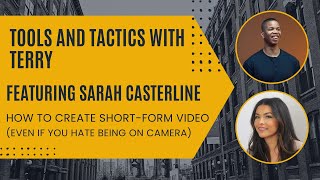
Terry Rice and Sarah Casterline discuss how to create short videos for business promotion without appearing on camera yourself. They cover content repurposing, workflow strategies, and tools to overcome camera anxiety while building an engaged audience.
Sarah, you know, obviously the topic is talking about short form video and I know this is something that you're obviously great at, but I want to say relatively new at too over the past couple years. So I'm glad to have this chat with you because often when you're getting advice from an expert, they like blew up years ago and the tactics they have aren't really useful anymore. It's like, oh yeah, get on, get on vine and do this stuff. So it's always better to have someone a bit more relevant who's finding success as opposed to someone who, you know, had this platform and then just move it to another one with these videos. So glad to have you here. Let's take a quick poll of the audience. Yes or no, have you created any kind of short form video in the last, let's say, month or so for social media? Yes or no, have you created any kind of short form media on social media? Most likely in the last month. See what, see what we got here. We got Amanda from Nashville. So Amanda, thanks for, for joining here. Megan, what's up? We got Megan from Brooklyn. Glad to see you. And we're waiting for responses here. Yes or no, have you created content recently? Rachel saying Streamyard is having a hiccup where people are showing up. As a LinkedIn user, I thought people were just being anonymous. I was waiting for trolls named LinkedIn user to start to start bashing us. So thanks for telling me that. I don't feel like it's a challenging situation, so it's always a risk.
Polls are always a risk.
Yeah, yeah, you gotta go with it. Stuart hasn't made any content recently, Megan hasn't. Michael has. That's awesome. Amanda has as well. Denise has to. Hey listen, if you want, you can share links to the content you created in the same thread. That way we can all go look back later and see some examples. Because it's not just about us, obviously. But I do want to get started here and the goal today is to talk about how you can create short form video even if you're not good at it, even if you're not good at being on camera. For someone like me, I lean towards being introverted. So when I first started creating video content, it was challenging because I just wanted to be done with it. I was speaking too quickly and mumbling, which is just the worst combination ever. And I eventually somewhat got the hang of it. It's something I'm still working on. But I feel strongly that if you can't create short form video, especially As a knowledge based expert, you are at an extreme disadvantage. And my most recent article for Norby, which is linked on my most recent comment, I was talking about how you can get paid as a content creator by creating short form content for brands that is educational. So that's also known as Nano learning. And if you can master that, first of all you can educate your audience, but you can also get paid content deals which is a lot of fun. So we really want to get good at this. And I can't give you too many details, But I know LinkedIn's launching some new features that will rely on video as well as some other mediums to help give you new ways to interact with your audience. So I'm going to be in the beta testing group for that. So I probably can't say too much about it right now, but stand on the lookout for that too. So now's a good time for us to get used to this stuff and just know how to master LinkedIn or sorry, master short form video. But Sarah, let's move over to you. Do you mind just introducing yourself, just giving us an idea of your background and what you're up to these days?
Yeah, sure, I'd love to. So I've been a graphic designer and part of marketing teams for many years and, and about a year ago I finally went out fully on my own and so I still continue to work with a lot of startups with my one to one services. But also this year I launched the Brand to Blow up program, which is a course coaching program where I work with small businesses and I help them with their social media as well. And I love what you said about me being relatively new to the short form video game. I love that because I feel like I'm just a little a learner of it as much as anyone else is. And I've definitely learned a lot after, you know, about a year of being on TikTok and about six months of like heavily researching and just trying and failing and learning. So I think I have a lot of tips and I think you're right that it I can speak to people who aren't, you know, people who have been doing this for a really long time.
I mean, you make a good point that you should be experimenting, right? Otherwise you're going to bore from everyone, including yourself. And one fun experiment I did about two weeks ago is I made a bunch of short form videos for LinkedIn, but I was just reading my old content from previous posts and it's funny because first of all, it took Me, literally two minutes to create all these videos, but no one really noticed or cared to mention the fact that I was just reading stuff I mentioned like a month or two ago. So you always want to be experimenting and seeing what hits because otherwise, you know, you can't learn anything new. But one thing that we just want to address initially is some people have a fear of being on video. And I get it, it's real. I used to be there as well. So I'm wondering on your end, did you ever have this fear of being on video? How did you get over it? And what tips would you give to anyone else who's afraid of being on video? And before you answer, quick, quick poll, yes or no, is anyone here just a bit reserved about being on video? You'd rather not do it? Just so we can see, you know, by show of hands who's kind of leaning towards not wanting to do it. And then Sarah can go ahead and help you out. Yes, there, go ahead, you can. It's gonna take a while for that comments to come in. So. Yeah, go ahead.
Gotcha. Yeah, yeah. I mean, absolutely. So like you, I am definitely more introverted and I think everything's scary when it's new. And especially putting yourself out there is always going to be scary. I think the really good thing about video is that you could take as takes as you want and they never have to see the light of day. So I think that can relieve some of the pressure. I never record, you know, straight onto TikTok. I'm always recording 8 million things on my camera roll and then taking the best things and putting them on my actual platform. So what I think people need to know about being on video is not that you have to be this outgoing person, but I think we all kind of have access to different parts of ourselves. I think we all have an awkward version of ourselves and we all have a charming version of our. And it's all about just accessing that charming version of yourself or whatever you're going for, whatever vibe you're going for on your channel. Sometimes it's just, it can be dorky, it can be whatever it is you're going to find your people who resonate with that. But it's just accessing that kind of higher energy part of yourself and capturing that. And some days I don't have it in me, so I don't do it on those days. Those might be the days that I edit in my pajamas on the couch for a couple hours and still instead of being on camera, the days When I feel really, you know, a little bit more high energy. That's the day when I try to film most of my videos. And I think you are dead right about reading your old content. I just wanted to comment on that one. I think it's better when you are an actor, when you're filming, right? Like, don't try to think of your points as you're filming them. Think of your points ahead of time. And even if you're filming one sentence at a time to get it so it's clear and concise, do that, splice it up later. There's a ton of leeway to just cut things up. Things can be choppy, it doesn't matter. It's better to be concise and know what you're going to say ahead of time and just be an actor, right? When you click that camera, that's when you turn it on and you just go. And that's when you say it. That's when you get animated. And then as soon as you're done, you can just be dead in the eyes, lay down, do whatever you want. So, you know, and the other thing is, any content you have, you know, the goal is volume in this new world of content, it is experimenting. It doesn't have to be perfect. I've been saying recently, be prolific, not perfect. And also, if you have any content that hits home, do that content multiple times in multiple different ways because you don't know which way is going to resonate with people and use and abuse your content. Don't assume people have seen it. Always assume it's hitting a new audience. You can post one video on TikTok and it doesn't do very well. You can repurpose that same video and it takes off. You have no idea.
There's so many great takeaways you're providing right now. And luckily Megan, my assistant, is taking notes. So for anyone listening who could not keep up with that, the show notes will be available on my website and on YouTube afterwards. Because as someone who's conducting this interview, I'm trying to bookmark everything, like, what should I talk about? I'm like, that was a lot of cool stuff. So. So I. Hard for me to repeat all of it. But one thing that really stood out to you, just basically being authentic. And I think sometimes when people are on video, they're like, I should act like this or I should act like that. If I act too energetic, it's going to scare people, especially people that know me well. And my niece called me out, she's like, hey, Uncle Terry, like when you're on your videos, you seem a little bit more friendlier than you are in person. And I'm like, I'm turning it up a little bit, but I'm not going over the top. I love the idea of having a place plan of what you're going to say with your content because I do some ad hoc stuff and that's normally going to be like an Instagram story. But what I'll do sometimes is I'll, I'll do ad hoc, but then I have to do it three or four times and then I can remember it to deliver it concisely. So that's another takeaway. But also the fun thing about short form video is you don't have to have a continuous shot where you sound smart for like a minute. And that's the problem that I have sometimes when I'm working with videographers are like, hey, Terry, can you say this for a minute? Just read this teleprompter. I'm like, it's going to be obvious that I'm reading up a teleprompter because you see my eyes moving and I sound like a robot. But if you can just put in some B roll, meaning just background video while you're talking and, or just cut it and jump to the next frame. People are more used to that these days. And you can get away with it. And I'm seeing some feedback here in the audience. Lisa would rather eat her eyelashes than create video. So Lisa, by the end of this, this, this session, I just want you to not want to eat your eyelashes and try it. Rochelle's saying, you know, she doesn't have any reservations. She got over having to look younger, skinnier, etc. So I'm glad to hear that because the best version of yourself is all you need to be. And that's by your definition. So glad to hear that. And then Monica's saying, you know, even if people see your content on multiple platforms, it might not click with them automatically and therefore it's okay to repeat it. And what I would also say is people sometimes don't need new information. They need a reminder of the same information to take action. So it's okay either way to repeat your content and that way you don't have to worry about producing as much.
I saw someone, I saw this quote, I can't remember to credit it, but someone said creating great content and only using it once is like having buying a great outfit and only wearing it once. You know, you just, you should reuse your content. You put so much time and energy into it, and only whoever sees it at that time is going to see it. No, like, use it again and do it in different ways.
I love that thought. It reminds me when I was in high school, I bought this, like, bright red Tommy Hilberger shirt. And this is back when Hilberger was like the hit, like in the late 90s, and I wore it once and everyone was like, oh, that's awesome. So I was afraid to wear it again because I would have been that guy. And then by the time I was going to wear it again, it went out of style. So, yeah, I mean, if something hits, let it keep on hitting. Because repurposing content is one of the best ways to get more content. Right? Just use the same stuff over and over again. Change the captions, change the takeaway, whatever it is. But we're kind of leaning towards saying, actually, let me grab this question. Even if you get over the fear of video, what about finding the time to do it? And we're both parents, so. So that can be a challenge. So how can you set yourself up for success? Sarah, in regards to finding the time.
To create content, I love this because what I always talk about, there's a lot of, like, especially with TikTok being about volume, I think there's a lot of gurus who will say you have to post six times a day on LinkedIn, and I personally can't do that. And I don't think that's sustainable for a lot of people. So what I tell people is to focus on whatever is sustainable for you and things that can make you more efficient always help. That's why I say reuse your content, but also, you know, focus on one platform first. For me, I focus on TikTok, then maybe I repurposed some of those and I put them on Instagram. The ones I think will do well on Instagram. I take the slides that make up some of my videos and I put those on Pinterest. Some things I use on LinkedIn as well. But, you know, focusing on one platform first and. And just trying to win there and then trickle things somewhere else. That's another strategy. And also like creating a setup so you're not like pulling out a whole studio every time that you need to make a video. That's going to be too much. If you can create just one, it doesn't. I know you're. The rest of your house can be a mess, but if you look one corner where you know that's video Ready? So for me, I bought this backdrop. Behind this backdrop is the back of my husband's head. It didn't look cute in any of my videos. This ended up looking way more professional, right? So I have one clip on light. I got it on Amazon, like 11 bucks, you know, so it doesn't have to be crazy. A lot of my best lighting, my best videos are in front of a window. But just making sure you have something so that if an idea does strike and you want to take that moment to record, you can do it. And also for me, I don't. Not everyone can do this, but I got a content creation phone. Here's another thing. Make it as easy as possible for yourself to do and prioritize it and just try to squeeze it into your life and whatever makes sense for you. Like for me, I was constantly filling up my regular phone with videos. It was like videos of my kid and then videos of me talking. And you're trying to make a video and scroll to find your B roll in between all your family photos. And you're constantly having to free up more storage. So for me, just having one phone, I like a Google Pixel, like an older version, and I love having just a phone that's dedicated only to all of the content that I'm creating because I've got all of my cover images on there, I've only got the apps I need for editing and that's it. And the storage is always available. And I've got 8 million takes on there. And so just anything that can make it easier and more sustainable. And then one more tip I'll say is, is try habit stacking. Since social media is a consistency and a long play and a slow build of real engagement. Something I like to do is, you know, pair engaging with people with something that I already like doing. So it's like 10 minutes a day when you have your coffee or some other thing that you know you're going to do every day or that you are going to do all the time, pair it with something you like so you can continue to do it over time. Things like that.
There's so many notes, there's so many takeaways. One thing that I've never heard before is having a content phone. And I think that's brilliant because I have the same issue, right? So it's like I'm making content on my, my phone and oh, I'm out of space. Do I delete, you know, my kids playing soccer or so I can keep creating content or, you know, what's the trade off. So I love that. And one thing that I also do is the content that I shoot on my phone. I automatically upload that to. To Dropbox, and that way I have access to it, whether my desktop editing or if I want to bring it in through a different platform. But I just love that idea of doing so. Also, you know, you said the backdrop. I mean, mine is good enough, right? It's like Brooklyn and books. Right? But just have something because it's beneficial to just be able to just set yourself up and just go. But when I have to create more robust videos, I'm getting out all these fancy lights and like my teleprompter and all this stuff, I'm like, gosh, you know, that's a half an hour there. But when I'm making short form video, I'm just here sitting at my desk. I can bang out like 20 or so in less than an hour because of that. So it's, it goes back to that habit stacking, like remove the barrier to success by just making it so easy to move forward. And Shelby's chiming in on here too. Lisa's agreeing that content phone idea is great. And then Rachel. Sorry, yeah, Rachel said the same thing. You know, she teaches financial coaching and habit bundling is another one that she uses. So Shelby's going to start using her old phone for content. I know Shelby has kids too, so she doesn't want to delete them either. So, so, so I love this. But, so, all right, we, you know, we're over our fear of creating content. Lisa's not going to, you know, cut her eyebrows out and we have our backdrop set up. We know more or less how to do this. But where do you get ideas for content? Because what I see in your content is something that I try to do is I'm giving advice to the person I was five years ago. And that's why it's relatively easy. Because I'm like, what would I want to know to grow my business? And you're just spitting facts. Right? So on your end, where are you getting your ideas?
Yeah, that's a great question. I think one of the things that I see all the time is that people will just sort of create content and, you know, whatever comes to mind. And, you know, I think you definitely do need to have a unified theme, but I don't think it has to be so constricting that you're just completely boxing yourself in. So one thing that I like to do is have kind of. I have four kind of core pillars that, that I go by, and that's entrepreneurship, design, marketing and mindset. And there's a lot that can fall within all of those, but they still kind of relate. But the other thing I do is I do try to keep in mind kind of my target person, which now is, you know, small business owners, particularly E commerce business owners. But also I know, you know, people follow me for sort of entrepreneurship inspiration. So you also need to know kind of what content people are. You know, that's resonating with people. And I see people all the time sort of speak to the other people in their industry. So, for example, I'll see designers that only make content that's for other designers. And I think that's great, but I don't think they're getting anywhere with that. Like, they're not meeting other customers with that. So I think it is really important to understand who you're talking to. Otherwise you're just getting a bunch of other people who are in your industry supporting you. And that's lovely, but that's not going to get you any sales or new clients or anything like that. So I, I talk to people a lot about creating content that's, you know, building the community that they want to build, attracting the people they're trying to attract, and ultimately eventually leading to sales. And so there is a lot of thought that needs to go into those things. But I think you're smart to be thinking of, like, answering the questions that people are going to be asking, who are your target people? And also I think one of the things is, you know, you're gonna need to have a topic that you could just talk for hours and hours about and that you're excited about. Right. Because I think we can all be reserved in things that we don't really care about and we can all be really animated and really excited about other things. Like, those are the things you need to pick to talk about. The things that kind of light you up, that could talk to your friends about for hours. That's the only way you're not going to run out of ideas.
Yeah, I love that. And I think one thing that I was corrected on during our last episode, which Anna Batune, who's a personal brand strategist, was on, and she's saying like, hey, it's great you're using like all this you content. Like, here's how you can do this, here's how you can do that, but you also want to do eye content. I was doing this, I was doing that. Here's how I Learned about that. And I went back and I looked at my data from my post using SHIELD analytics, which is a tool that helps you measure the success of your LinkedIn posts. And I realized when I was talking about myself, like all the shady clients I had or bad experiences, those often got a lot more engagement than me just preaching, saying, hey, random person, here's how to live your life. So I think that's important. And what also surprised me is this. Lately, I've been posting some of my workouts, like, hey, I'm at the gym. Whoops, failed that rep. Here's a business lesson. Try again, right? And that's been taking off, too. And now people are saying, well, how do you have four children, you know, and, you know, run a business and have time to work out? So that's like another lane I can talk about, which is efficiency. And I don't like the term work life balance, but integration as well. But you'll never find those additional pockets if you don't explore other forms of content. And Shelby's kind of chiming in here. She's saying, I always feel a little boxed in when I hear people say, find your niche. Because, Sarah, to your point, you're just talking to the same people, like, patting each other on the back, having this echo chamber, but you're not expanding your circle whatsoever. So we've got a great question here from Rachel here. She's just saying, hey, what's the best way to start? We got all this great information. We got our lights right. We got our special phone. We got some ideas. But how do you actually hit record and get started?
Yeah, I don't know if anyone's gonna like this answer, but the best way to start is to just start and to be cringy. That's the best advice I can give people because I 100% did that a year ago. And I tried all again. You have to view it as one big experiment. You can't get too hung up on the initial views or anything like that. And, yeah, I think finding your niche a lot of times is. Is, you know, something a lot of people find retrospectively. And then it makes sense, right? Like, they go, oh, I talk about this. But they learned that because they posted 50 videos and found their way into this niche, and then it made sense. They didn't know it going forward. And so I've posted videos where I'm not talking and I'm just pointing to the words on the screen. And I tried different videos where I'm, you know, I'm speaking in different settings or I'm talking about different things. And you know, I've talked about things in different ways where one I'm just giving you the information straight and then in another one I've wrapped it in a narrative. And that's the only way to start. There doesn't have to be, I think back when everything was on Instagram, you know, there's a lot of this focus on your, your profile grid. And so it was all curated and you're ready for anyone to look at your grid at any time and kind of assess you based on all of your content. And that's just not the way it is anymore. Oftentimes now it's going to be one person seeing your video kind of in a vacuum and they don't know any of your context. And so all you want to focus on, on each video is how can I hook somebody into this video first and foremost and make this an interesting video? And again, just view it all as an experiment and just go, okay, like that's more data for me.
I want to get back to the hooks point in a moment. But Stuart asked a great question. He's saying, look, I'm way behind you on this. Are you going to go over how to actually create a video? I love you being blunt on this. Like, hey man, like, how the heck do you create a video, Stuart? I'm going to walk through my process and then Sarah, if you want to share yours, which I'm sure is going to be different, I think you'll, you'll get some good information. My process for creating a video typically has some kind of script. And if it's a one minute video, I don't want to go over 150 words because normally people speak about 150 words per minute. I'm much faster than that. So it helps me throttle down to not speak too quickly. So that's step one. We can talk about like hooks and structure after this. But aesthetically, I then grab my camera and I'm going to have some kind of a stand on my desk to start recording. And I'm recording knowing that the first time I say it probably ain't going to work out too well. The second time, probably not too well. By the third time I got it and I now have this, you know, on my phone. But it also goes deeper than that. Again, I'm not trying to get one continuous video of me saying, here's, you know, how I played football at Webster High School? It's like, it's gonna be like, choppy and when I'm in the editing phase, so we'll call that post production, I upload all these videos to a. A tool called the Script. It's just D, E, S Script or DE Script, right? You can spell script. So that's what it is. And the benefit of this is you can literally just like transcribe everything you. You said and just like cut and say, okay, give me this part of the video, give me that part of the video, give me that part of the video. And then from there, hover over everything, add subtitles, and then add a title on it and you're done. You just download it and you're good to go. And then to be more descriptive, I will download that to Dropbox. And therefore, when I'm ready to upload on LinkedIn or whatever platform, it goes directly from Dropbox onto the platform. So it's never actually on my device, taking up a lot of space. So from A to Z, that's my process. And again, there's. There's other tools you can use for the editing part. Adobe Rush, just Adobe R Us. H is a free mobile app you can use to do pretty much the same thing or very similar. I like desktop because I'm old, but if you just want to do it on your phone, you can do that. And then obviously, each individual platform, such as TikTok or Instagram, there's other ways to do it. So, Sarah, I'm sure you do it a much cooler way than I do. I'm going to stop talking. And actually, real quick, Shelby saying, how do we avoid recording it again and again? I'm always so critical, and sometimes I spend too long trying to get it right. Don't try to get it right. Honestly. I mean, done is better than perfect. And I think authentic content, you mess up a little bit, right? And that's what happens. And that's the benefit of stitching together. Maybe it's 10 seconds here, 10 seconds there, it can just jump to the next frame and some of that's gonna sound good. But there's been times when I'm mumbling to the point where it can't even get transcribed properly. Like, tools, like, dude, I don't even know. Like, you know, like, are you eating right now? So I wouldn't worry about that.
Yeah, I totally agree that that done is better than perfect. Maybe even. Even instead of looking for the perfect take, you're just like, I'm taking the best take. You know, maybe that's it. But like I said, sometimes it's even Line by line. For me, if I'm struggling, then I just have to look at the line I need to say and then look at the camera and then say this is how your Shopify site should look, you know, and I can say one sentence, hopefully. So sometimes I do that. And to go through my process, I don't really use a cool a tool as cool as Descript, but I keep it as simple as I can. I wish I could say it was like really, really organized, but I think sometimes, you know, inspiration strikes me in different ways. So some, some weeks I can batch and I can just do it all in one day. And other weeks it's like I just have like I can do a little bit every day and I can't say I stick to one or the other. You know, sometimes it just flip flops. And then there are days when I have lots of ideas and I put them in a document that I have where I have each of my, you know, pillars and I just put ideas or I will copy links to other TikTok videos that I'm like, oh, this format, I'm going to try it in this way. I think that's a really good other way to get started is looking at other videos and saying how can I apply this to me? And it's going to be different. It's going to be different than how they did it. So it's a good way to start. And then on the day when I'm feeling more presentable or I have the time, I'll pull up my, my document of ideas, I'll look at them and then I. It's really, really just as simple as I've got my backdrop behind me, I've got a window for, for good lighting. I, I don't even have a phone stand. I like hold it up in front of me and I take, I basically go through and I just record myself speaking each part in order. And if I mess up the take, then I stop and I re record it or I record it in the same clip. And then when I go and I bring things into my editing app, which is all on the same phone and I use Inshot I N S H O T which is free. And then because it's all in order, it makes the editing pretty easy. I just go through, pull in all the clips and then cut out any of the dead space in between each line and cut out, you know, the ones where I messed up. So that I've just got the best takes. And it's funny, Terri, that you think you Talk too fast. Because everything on TikTok is so fast that I'm advising, you know, my small business owners, I'm like, shorten it and then when you think it's short enough, shorten it again. Because the attention span is so small and if you take too long to get to the point, people will just swipe away. So I even sometimes will, you know, cut it. So it starts like I'm mid word or I cut it at the end before I finish a word. So you feel like you just stumbled across like mid conversation with me. And sometimes I'll even do. You can do a slight increase in speed to where it doesn't really distort my voice, but I'm speaking a little bit faster. And sometimes I find that that I think works better than just the normal speaking pace that we do in conversations. TikTok's a different world than that. So I think sometimes being fast is a good thing.
Well, thanks, because for me I'm constantly trying to throttle it back. I didn't know, I've never tried this actually speeding up my voice before. But that makes sense too, because, you know, if you have constraints, it has to be a minute or whatever. You gotta get in there some way and that way you don't have to actually edit. I see Elmira chiming in here, by the way. If you see Elmira in here, please do follow her. She's actually the head of nano learning at LinkedIn learns. So nano learning was the topic of the article that I talked about before, which Elmira was nice enough to contribute for. And essentially it's delivering short form educational content via video in a condensed form. And again, if you don't know how to do this, I think you're going to be in trouble in the future and it's going to be an advantage right now. And she's saying, hey, getting started was so hard for me. Finally I just hit post, didn't delete, and started thinking of it as an experiment. So on your end, Almira, like I applaud you for not deleting because I used to be that guy. Like within four seconds, if I don't get eight likes, it's done. It's garbage. But first of all, it takes time for algorithms and humans to watch content and review it. And also the views always go up, they never go down. So that's super important. Another thing, Sarah, that you mentioned again, super important. Just get comfortable playing around with editing because years ago you had to pay someone hundreds or thousands of dollars to do something you can do on your phone right now to spend half an hour getting used to using Inshot, the script, Adobe, Rush, whatever it is. You'll be amazed at how easy it is. And then it gets fun because I even like edit photos and videos of my kids together just for, you know, whatever doing dad stuff. And they have fun with it as well. So I think you have to kind of get over that, that reservation to an extent and then from there you can have a lot of fun with it. But we're getting a lot of questions here. I'm going to grab this one from Rachel and Sarah. The first one is. Oh, that's how you show questions. I just learned how to use it. All right, so the first question is, where do you find you post the most? Where are you putting the majority of your content?
Mostly TikTok. That's where I'm posting the most. That's kind of the platform I'm prioritizing.
Cool. Awesome. Next up. This is so cool. You just push a button. Is there an optimal time for short, short form content? 1 minute, 3 minutes? What would you say?
I'd say generally less than a minute. Unless you're just telling a really juicy story. Then people, people will watch up to, you know, three minutes of a really good story. But I think if you're doing more educational content, I think bite sized is best.
Cool. And there's a question about how do you spell Elmira's name? There you go. It's a L, M E E R A J, I W, A P R A T, T. So yeah, please do follow her. She's just leading the trends in the industry in regards to creating the short form educational content. So check her out. A great tip in regards to editing social video as well from Megan, who's my wonderful executive assistant. Splice is another app for video editing that's super user friendly. So there you go. Cool. So I think that's all the questions for right now. All right, so we're going to. How do I get this question done? So we had a lot of great questions here and we're getting some, you know, some great advice from you too. But what are some avoidable mistakes that are common that you can just help people avoid from what you, what you've observed?
That's a good question. I think definitely the one I mentioned earlier of not knowing who you're speaking to, that one is a big one. And, and being a little, you know, like I said, I think you don't have to stick to just one topic. But I think being Inconsistent and being kind of like fashion one day and then, you know, lifestyle and makeup, and then the next day your business. You know, I think that kind of people need to be able to know what you're about pretty quickly. It needs to be simple enough that they could just say you're the expert on blank to someone else. And they need to know that if they're seeing one video of you that has some something in it that they like that resonates with them when they go to your page, they need to see other videos that have that too. That's what creates a follow tools within my business. And one of those was honeybook, which I use as my CRM and project management tool for my business. And I made probably, I don't know, I made a bunch of videos for them and they weren't working for all these different reasons. And I almost gave up. And I was like, this is a waste of time. And then I finally, since I had been trying to say my message so many times, and this was before I was good at creating anything. I was very new to it. So I made all these long videos, these videos that use songs that I couldn't use. This one video got cut off and they were like, can you remake it? So finally I just made this really short and sweet video because I was fed up. And I just went, here's how I use honeybook. It's the best. And I just like made this thing. And that is the video that now has 22 million views or whatever it is now. That was over like the span of a year, I think that it took to get to that point. But they've just continued to show that to people. They've continued to push that ad and it's helped in me getting consistent views to my page. And so that element of it is like the reach component, right? But you're also talking about like, so that's how you get views. That's one way to get views besides just organically getting views. And to me, I think that's better because virality is, to me is almost pointless because it's so haphazard. If you can get it, you get in front of an audience, but it's an audience of completely random people who you don't know if they're your target audience or not. It's usually really, really broad. That's not usually your evergreen content that will go viral. And so you know you're not going to get a lot of retention from that versus if you do it with a brand deal when it's something that authentically makes sen and the partnership makes sense. They're showing it to other business owners and entrepreneurs, like people who are in my target audience. And then those people were interested in that content, and then when they look at my profile, they see more of that content. So there's a high retention rate where people would then, you know, follow me. So it got me reach and retention, which is what I'm always talking about with people, because some of my really good evergreen content doesn't get a lot of reach, but it has really good retention with the people who see it. So it's all about the balance of getting both. And just another kind of related story. So my husband, he went viral and he, on his regular page, he had a camera watching a nest of birds hatching. And it was really cute. And they were hatching, and he did it for his nephew. But then one night a fox came and snatched some of the baby birds out of the. Out of the nest. And so it was just a really big kind of plot twist in the video. And so the video went completely viral organically. Got like almost a million views. And he did get like a thousand followers out of it. But then as he continued to post kind of inconsistently or other different topics over time, he lost some followers. He never gained any more than that. People, you know, it was just kind of random. So I think you can get that reach, but I think you need that, that retention or the reach doesn't matter.
What happened to the birds?
I'm. The birds got snatched by the fox. That's okay.
That's how it is. Okay.
They didn't come back. Yeah.
All right. I will. I will not show this one to my kids then.
I know it needed a trigger warning.
Yeah, yeah, yeah. But no, I think what you're saying is brilliant because that essentially, again, I keep on going back to Nano. Learning content. If you're creating content that educates your audience and you're talking about Honeybook or Descript or whatever tool, you can either A, show that to them and say, hey, I'd love to partner with you, or B, they might just discover because you're hashtagging, right? So instead of, you know, just reaching out blindly, trying to get paid deals, start with stuff you actually use, right? You know, look at the apps on your phone, on your computer, the tools all around. You make a how to video about that stuff, and then from there you can authentically speak to it, which. Which brands appreciate. And I love the fact how you're saying, like, look, you don't need a big following. You are the talent, you're not the marketing channel. Right. And if they have this deficit you can fill with this educational content, boom, it's a perfect match. Right? So just the more you create, the more examples you have and the better chance you have to hit. And Honeybook, I work with them as well. They're a great brand. And the more of these honey books you can find, the more people you'll attract to. Because when you start having like hashtag ad in your post, so and so forth, people see that stuff and like, oh, this person's been trusted before by someone to create content. I will pay them as well. And the last thing I'll say is those Spark ads from TikTok, I would love to see that on LinkedIn. I'm going to reach out to my creator manager and to see if we can somehow at least get a conversation around that. Because there are so many amazing creators on this platform with a very specific audience and an audience that makes decent amount of money in many cases that I think it would be amazing to at least try that out. And I'll volunteer to be a guinea pig for it because I think this makes sense. So I'm glad that you brought that up, but let's, let's, let's talk about something else because again, I look at your content and I know you personally, so I know who you are as an individual. But I see sometimes people are just talking junk to you. You'll say things like, hey, everyone, here's how you run a business. And someone like, someone said something like, what do you know about running a business? I'm like, dude, she just said in the video, where are you so confused in regards to her skills or background? But how do you, how do you deal with the negative feedback that you get from, from some of your videos?
Yeah, that's a good question. Because I wish, you know, I wish negativity didn't take up such a spot in our brains so easily. I think it's really easily easy to let it do that. So I think if I ever got huge, I would have to hire someone to manage my comments because I think, you know, it could get out of hand. It really could. And when you're the brand, it's very personal. It is very personal. But I think also just knowing that there's always going to be trolls and nobody's bothering people who aren't putting themselves out there or who, you know, it's never like these amazing people that you admire who are being Trolls. It's always someone with, like, no face, no username, and, like, two videos that aren't original. You know what I mean? It's always some. Some weird person who you're just like, okay, like, you just have a lot of time to be negative all day and. And you've probably got your own things going on. So I try not to take any of it to heart. And then some. Some of it does make good content. Some of it really does. Like, I think, you know, you have to be careful with clapback content, but sometimes I use it to make a point. And so if it is about business, I think you've seen some of these where it's like, somebody said something about, like, why does Gen Z just want to make a quick buck? And, like, they don't want to be doctors or engineers anymore or something. And I made a whole video about how, like, why would we not want to, you know, work less, enjoy our lives more, and still make a living, you know, and if you're not into that, maybe you just thought it was never possible for you, and that's why you're resentful now that people are going for that. You know, something along those lines. Just take it and make more content. Because remember, at the end of the day, if you have to print it out, put it on your wall or make it your phone, background content, like, just as much content as you can create, the better everything is content. Always make it into content. So, you know, just take it and use it.
Yeah, I mean, I like the fact where you're saying, like, hey, I'm sorry, but sorry that you're a miserable person, but not everyone else wants to feel that way. And here's. Here's what it is, and you're making the best out of it. And I think even by acknowledging the negative feedback and then replying to it, people who've also had that same experience can see themselves in you and feel empowered that, you know, that you're willing to step up and say, like, hey, dude, like, I will reply to this in a constructive way to your destructive content or comment and make something out of it. So I love that. And Rochelle's asking just for some feedback here, can you clarify the statement that you're the talent versus a marketing channel? Yeah, absolutely. I mean, as a content creator, you make content, right? You make videos informing a specific audience. But as an influencer, you're essentially a marketing channel. They want to know how many followers you have, because you are supposed to spread the word to your audience, and that's part of your job. But if you think about it, like a lot of regular brands, they have an internal content creation team. They make videos or they hire someone to make videos. You're doing that job for them because you're saying, I will make the videos, I will star in them, so and so forth. So you're a content creator, you're not a channel. And as Sarah was saying, they can then use this stuff in paid ads. And normally when I'm negotiating any kind of content deal, they'll say, do we have ad rights to this too? And yes, normally you charge more for that, but that's why they don't care if you have four followers or 40,000 or more, because they can distribute their content through other channels, which actually makes a lot more sense because it's more strategic. So one thing Amir is chiming in here, she's saying, I love the comments on not focusing on the virality or our followers. So going viral, getting followers. Our LinkedIn learning members care more about the substance of message over the number of followers their instructor creator has. Which is great because it democratizes access for experts to reach an audience regardless of how many followers they have, which I love. Engagement can inform the value of the content and your audience needs pain points. So, yeah, I love that Shelby's chiming in here. She works with someone who does a great job of replying to people who are maybe being rude or definitely being rude in this case, and the way they respond is kind of hilarious. So, Shelby, feel free to add those comments later because I think that would help all of us. And, you know, I'm not immune to it either. Like, people do, like, drive by comments like, like, hey, you're kind of stupid. I'm like, okay, dude, like, really? You had four seconds. That's the best thing you could think of to deal with it is to insult some. Some random dude. And I don't feel sorry for those people, but I'm just glad I'm not them because it seems like a miserable way to live in general. But. But Sarah, you know, just on your end, because we're getting to the top of the call here, you know, what are you excited about doing over the next three to six months with your content, with any deals you have with any courses? Like, what are you really looking forward to regards to some next steps?
Oh, that's a great question. I tend to only think about things in terms of like, three months at a time. Right. These days I'm kind of like, okay, this is my goal for this Quarter and this month and this quarter and this month. And so I can't even tell you where my, my content will be like in six months. But what I always tell people is like, I think people think it's like an overnight success kind of thing. It's all or nothing with, with social media. And I just really think it's more about the slow build because I, I'm at like 62, 62,000 followers now on TikTok and it was just like such a slow build to get there and it was just like, oh wow, 10. Oh my gosh, like and then it was like 50 and I was like, I would have been happy with that. And now I'm like, okay, well 100. Okay. And I'm going to hit that probably next year. It's a very steady rate of, of slow growth kind of. And so I think the thing I try to remember is each follower is a whole person and that's really exciting. And so I try to follow back certain small business owners and people like that and engage with them and get to know them. And then when I do that, you do build real relationships. And since everything's still virtual and definitely for me, I'm still working completely, virtually, that's my networking, that's my community. And so I think that's the thing I'm the most excited for is the people that you end up becoming friends with and then you're rooting for them on their journey. Kind of like us, we didn't know each other at all. And then you meet online and then you're rooting them on, you're like, that's awesome. So I think that's the thing I'm the most excited for.
Yeah, I love the fact that you're saying I plan three months in advance, especially with your content, because your content should be informed by the feedback you're getting from your audience. And if you don't have that feedback, you can't plan a year in advance because things might change. They might want an online community, they might want a course, they might want an SMS based communication forum. So I think that's smart because it's long enough to accomplish something meaningful. But it's not so long that you're locked into one way of thinking and because okrs your objectives and key results and those are normally 90 day sprints. So I think that's super bright. One thing that I want to ask because I this is something that's debatable. Your kids, I think, I think you have one right now. Do you Feel comfortable putting your son. Son?
Yeah.
Yes. Okay. Do you ever put your son on camera? Why or why not? I'm just curious.
Oh, that's a great question. Because I have thought about that a lot. So every once in a while, you know, most of my videos are the top. Just talking. But then I also like to mix in some with B roll or some that are like a quote with, you know, B roll are just like a bunch of clips that I'm, like, showing and making a point. Right. And I have included my son, but strategically, it's been really sparingly. And in almost all of the clips, you really can't see his face. So it'll be like he's a toddler. It'll be like him waddling across the room or the back of his head in the stroller. And that was intentional, right? Because I just. I haven't decided 100% how I feel about it. I think I definitely lean towards the side of, like, he can't make a choice of whether or not he wants to be on the Internet. And the Internet could be so permanent. And this is kind of my channel. It's about me. I don't really show much of my husband. I don't really show much of my kid. And for me, especially, because it's more of a professional channel, I don't think I need to. So I don't. I really don't. I. On the more protective side. But then if I was like a mommy blogger, I. I would, you know. So it. I think it also depends on the channel that you are, you know, the type of content you're doing. If it's. If it's mom content, then, you know, maybe. Maybe it would make sense. But for me, no.
Yeah, I was like that originally, too. And lately I've been doing a bit more with my kids, and this is, like, totally real and stage at the same time. My wife is out of town for the next day and a half, so I have all four of my kids by myself, which is a challenge because the oldest one's six. The youngest is eight months. And I'm going to. When I drop them off at daycare tomorrow, I told the teacher, I'm like, can you get a video of me walking down the street with four kids? Because I want to use that for my social media. So it's totally a flex, but it's also real life because, I mean, if you got four kids, you gotta use them for something, right? And it's gonna be content. But I like to show people that hey, even if you do have. I don't want to call these constraints. I'll call them responsibilities. You can still create video content. You still can run a business. You still can go to the gym, which I'm also gonna do tomorrow. You just have to figure out what you want to say no to and remove some things. But you don't have to give everything up because you have these other things that are going on. And I think I can represent that well through content, and it's going to be a lot of fun.
Yeah. Well, and actually, now that you say that, I think that is really important too, because for me, like, I also like to show, like, you know, it's a huge part of your life. Right. You can't just completely hide it. That's why I've snuck him into some of my videos. And one of my best. I don't know if it's best performing, but one of my popular posts on LinkedIn was a photo of the professional headshot of me and then a behind the scenes of taking the photo of the headshot. And it's me, like, from here up looking put together. And then my. My son in the bouncer, like, right next to me, like, blurry because he's bouncing up and down. And it was. And me, I'm in, like, leggings and slippers, waist down, and it was very real. And I think, I think, you know, there's a lot of room for that because authenticity is so key nowadays. It's like, you don't have to hide whole, whole parts of yourself to be professional.
Yeah, yeah. And I want to do ask one question before we take off, which is, where can people find you? How can you help other people? But one more thing, on the whole kids in the video thing, you don't actually have to have your kids in the video to get credit for having kids. Because I see you sometimes, you're like, now I'm getting dinner ready for my son, or, now I'm cleaning this up, you know, so it's like, just get credit for it because it takes up a lot of your time, but you don't have to invade their privacy either at the same time. Yeah. So, Sarah, like. Yeah, you should. So, Sarah, you know, you're doing some amazing work. You're helping other brands with their. Their content, their strategy. Can you give us some information about that, first of all? And then second of all, where can we follow you to. To learn more about that as well as you in general?
Yeah, sure. Well, everything, I think, on everything, I'm just Sarah Casterline design or Sarah Caster line. So TikTok, Instagram, LinkedIn and then sarahcastline.com to see any of my design work and things like that. And so they could probably work with me one of two ways. I do design and marketing, email marketing, website design, social media, brand design, all of that. That's my bread and butter. That's how I started. And then I have my program where I work with small business owners and I just help them kind of simplify and make content creation manageable and help them, you know, have their social media do more for them in terms of sales and their own community building. So that's my brand to blow up program.
Love the name and a big fan of your work. I've been able to watch you continue ascending over the past few years. It's great to see and thanks for joining us today and sharing that experience. So everyone, if you have any more questions for me or for Sarah, drop them in the comments. We'll pay attention here. Otherwise, we'll see you next week. But Sarah, thanks again for attending. It's been wonderful chatting with you. Thank you.
Thanks so much. This was so much fun.
More from Terry







When you want to quit, don’t. #FitnessOver40 #MindsetShift #TiredIsNotAnExcuse #PersonalGrowth




You’re gonna want to give up. Don’t. #mindsetshift #motivationalquotes #motivation #dontgiveup