How to Start a Coaching Business Q&A with Terry Rice | 1/7/2020
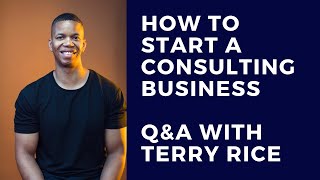
Terry Rice answers questions from entrepreneurs starting coaching businesses. Topics include pricing strategies, content creation, client management, and ROI models for scaling a consulting practice.
Welcome to Q and A. This is your chance to get any questions that you have in regards to growing your consulting business, your coaching business. Anything in the course that you're confused about now is your chance to do it. We're going to be here every week. So as an added bonus, that's what I want to provide to you to make sure that you feel supported on this journey that you're on. And I also want to hear your stories because for me, it's a lot of fun learning from people as they're. They're growing their business, as they're scaling it. I can help you avoid a lot of mistakes I made and, and just help you accelerate that process of finding success. So most of what you hear me talk about is going to be things I messed up on, but luckily you don't have to, and there's no hacks whatsoever. You are going to have to work hard, but it doesn't have to be so confusing. And that's my goal here. So what I want to do is just start taking a look at some of the questions that we have here. Rick, welcome. Xavier, welcome. And go ahead and get started here. So first question is, will I be discussing content creation at a high level? I can do that right now. If you have any specific questions, that's gonna be really beneficial. But that's something I mentioned earlier. I'm actually training a team of consultants in Canada on how to better leverage content marketing to attract clients to their agency. They're not individuals, they're an agency. And then from there attract clients to them. And I did some research through Salesforce. Actually, when you're referred to a company as a service provider by someone internal, the conversion rate can be up to 14%. Whereas if you come through other channels, so, you know, search, social, ads, so on and so forth, it's much lower. So as a consultant, in this case, the more content you have that solves problems, that answers questions, you can attract people to you and, and you're much more likely to convert those individuals. So on my end, I think, you know, what's the most impactful thing I can do with my time? It's often answering questions like I am right now. So if you have specific questions around that, love to hear you. But I mean, what I normally say is if you're stuck, like, where do I even start? I just say think of 10 questions that your audience has and answer them.
Right?
So I used to do digital marketing consulting back in the day, which was like two years ago, so it wasn't that long ago or four years ago. And common questions would be, you know, what channel should I be on, how much should I budget, what's a Facebook pixel, so on, so forth. You would just create content that answers those questions.
Right?
And it goes deeper than that too.
Right?
You do want to show your personality eventually. That's how you grow a personal brand. But just starting off, if you're kind of on the fence, like, I don't know if I can do this or not, just start by answering questions. And it's one of the best ways to do it. So let's get some more questions here. This one's from Rick. How critical is your personal name in branding for consultants and coaches? I asked because I already have my personal name for my art, my oil painting, Rick. It depends. And I know that's what all digital marketers would say. It depends, right? It depends on where you want your business to go. So if you plan on being a solopreneur, I think there's an advantage to using your name. And I'll go into that why? I'll go into why momentarily. If you want to expand your business, you want to have a team, then it might help to have a name that reflects the fact that it's not just an agency of one or a company of one, but where it's beneficial to use your name is that's how you grow your personal brand.
Right?
Because when I first started consulting, I wanted some generic sounding name. So I live in Brooklyn, I did digital marketing, so I called it Brooklyn Digital Marketing. And part of it was me just trying to pretend like I had a bigger company than I did. Um, but I also want to be somewhat, I don't know, anonymous or something like that. But as soon as I changed it to Terry Rice Consulting, that's when I started getting more speaking gigs. That's when press would reach out to me for interviews, so and so forth. That's how I built my brand. So if you're doing painting, maybe you have one which is, you know, Rick's painting, the other one's Rick's Consulting. There's nothing wrong with using your name and then post pending it with something else that's more relevant to, you know, the actual delivery that you're doing with that company. But I think it'll behoove you to keep it consistent with using your name if your goal is to more or less remain independent. So that'll be my advice. It's also on your website, you don't have to keep on saying, we do this we do this. Like, no, it's me. Like, that's it, you know, so it's a lot less confusing for you and for anyone who's reading your content. So that would be my suggestion. All right, so another question from an anonymous attendee. All right, cool. So there's like, five of you here. Anyways, can I talk more about the 3C model and how to price it accordingly? Yeah, love to. So the 3C model is something I developed where you have a course which is your core content that you can sell independently on a platform, like teachable. Right. So you obviously all know what that looks like. You're all in the course. So X amount of modules, videos, activities, worksheets. And you have that one page business plan as well that I hope you all started filling out. And then from there, if you want, you can leverage that same content to have a group coaching program. And the benefit of that is all the content is prerecorded in the course. So when you're having your coaching calls, I do mine twice a week. We have one call on Monday and one call on Thursday. All the content on how to write a speaking topic, how to reach out to people on social media, how to write a sales page, how to ask for a testimonial from a current client, how to keep your clients happy. All that stuff is in videos already that are in the course. And again, you all have access to that as well. So the benefit of that, benefit of that is during your live coaching calls, you're not explaining things. You're going to the details, but you're not saying basic stuff like, you know, here's how you write a positioning statement, or here's how you write a biography. You're saying, okay, well, Walden, you had questions about your biography. Let's talk about that now, because we might all learn from it too. All right, so it takes a lot of pressure off you to get through content that you're teaching during these sessions. And you can just ask questions or answer questions, which makes for a much more fulfilling environment, in my opinion. And the last C is consulting. And that's more like white glove assistance. So someone saying, look, you know, I saw the video, talked about you, talked to you in these group calls. I need someone actually help me write my speaking topic. I need something to help someone actually help me write the content for my website. You know, sit down with me and help me with my prospecting, so on and so forth. That's when maybe you're giving someone more time. Maybe you're meeting, like, once A week with them and they have more access to you. So Those are the three Cs. Again, it's having a course, then doing group coaching and then also doing consulting, which is more one on one. And you would price that as a premium. So normally you would say it's going to be 3x to 4x, whatever the course is for individuals and then your online course, that's up to you. Kind of depends on what you're doing. Mine is 297. I wanted to have it affordable for people that can't afford my other rates for my other programs because my group coaching program is $4,000. And then one on one would start at $10,000. So it's $4,000 for 12 weeks currently and then $10,000 if you want that one on one access. So in this case it's close to 3x on the four, between the four and the 10. But that's how I would think about it though. And I strongly recommend all of you, once you deliver content, live a few times, to go ahead and create a course. Because then again, if someone can't afford you live for one reason or another, you can have that course that has all the same information available to them. So do yourself a favor and make sure to do that and let me know if you need some more clarification on that one. All right, got a question from Xavier Chang here. Okay. So he's saying, I completed my audience research today and it was enlightening. Awesome. Yeah, and I know that's the tough part too, because a lot of people just charge in like, oh yeah, how do I start posting on Instagram? It's like, well, no, you have to learn about your audience first. And that's how you know what their problems are, how to solve them and how to communicate with them. So super important. And you're saying, you know, after writing up my market research questions, I'm now ready to send out my surveys through various channels. What are your thoughts on requesting feedback from former current clients, prospects, accountability partners, and other business partners? I would say, first of all, I admire you for being so willing to reach out to these, this many individuals. I would also say make sure you're getting feedback from the right people. And from what I'm seeing, it sounds like you are. But I remember when I used to teach these, these courses at General assembly, sometimes people that were in the courses, they were just like the wrong audience in general to be there and they didn't enjoy it or that wasn't as fulfilling for them because they should not have taken a course. So whenever you're getting feedback from people, make sure it's someone who's aligned with your target audience. Now, the best audience you'll ever have, going back to your point, would be former or current clients, because they are willing to pay to solve their problems. Right? You always want to get information from someone who's willing to pay to solve their problems. So on my end, when I was doing my research, I reached out to some people, and they're like, oh, I already work with a coach. I'm like, that's fine. You know, what could they have done to have made you pay more for their service? You know, how could that. How could that have been improved, so on and so forth? So, yeah, I think you're spot on. So long as all these people that you're listing here are aligned with your target audience, I think it's a good idea. And when you're doing that outreach, I'll explain what I did to everybody. I reached out to over 200 consultants on LinkedIn, and I said, hey, look, I know I'm charging. I'm coming out of the blue here, but I'm wondering if you could just answer a few questions about your role as a consultant and some of the daily challenges that come up, as well as what a solution might look like. There's a script for this in the course, by the way, so don't worry about writing it down right now. But I saved that outbound script, which I sent as a LinkedIn connection request, as a text shortcut in my phone, so I could push a few buttons and it would just spit it out, and I could send off several at a time. I sent off 200 in about six hours, and I got about 43 responses within a few days. So that's what I would do is just make it more of a process as opposed to a task. Awesome. Yep, no problem. Okay, got another question. I want to make sure I'm pronouncing this correctly. Is it Saroshi? And just let me know in the comments if I have that correct. I'm gonna make sure I get this right. And while you're waiting to chime in on that, close. All right, well, get me closer. I want to be respectful of that. Shah Roshi. Shay Roshi. Is that correct? Shiroshi. Awesome. She Roshi. Got it. Thank you. All right, so the question is, do you charge 10k no matter what the size of the business or scope that you consult with? Okay, so let's be clear. That 10k, that's only for individuals. And by that I mean an individual that's going through my coaching program where it's all very structured from the beginning. So it's not like they have multiple people that are coming to talk to me so and so forth. It's just going to be for an individual, for a business. No, it depends on how many people I'm training and what the scope of their needs are. So, example I was saying earlier, I'm training that consulting agency in Canada. They have, I believe, 10 consultants that I'll be working with to help them with content marketing and LinkedIn marketing. That's a question you ask first, right? And I always say it jokingly. I always say like, you know, it starts at $10,000. But let me ask you some questions. First of all, how many people will be in attendance? You want to make sure because they might say three or they might say 300. I'm like, well, if it's 300, that's a freaking conference. You know, I got to do way more than that. If you have that many people coming and. But be prepared. They say, well, how much more is it? Perhaps person, you have to have that number prepared. So you would say, okay, well, it's $10,000 for up to five people. For every additional person, it's another $500, whatever that looks like. Don't say, oh, I got to think about it. You should have thought about it already.
Right?
So you want to be prepared. Otherwise it seems like you're not confident and you're making it up as you're going along. That said, I know sometimes we are making it up as we're going along. We try to stay like one question ahead of the audience and you'll be more successful.
Right? Right.
And after a while, you have all this stuff established. But to continue with your question, you're saying, I sometimes work with emerging architects or startups and struggle to justify pricing at the same across the board. So, yeah, I mean, it depends, you know, I think about the upside they're going to get from it.
Right.
A very small, you know, architect firm, if that's what you call it, is not going to get the same upside as someone who's, you know, very successful. And I'll give you an example. One of my colleagues, he's a public speaking coach. And depending on how established that person is, his rates vary. Because someone's getting $10,000, $20,000 of speech, they have a lot more to gain from getting better at speaking as opposed to someone who's just starting out. And the nuances that you have to go through with someone who's much more experienced often require more effort, maybe more research on your end. So that's why. And then thinking about the ROI model, I see a question here. I'd also love to learn more about the ROI model. I've been jumping around the courses because I have to send a proposal to a prospective client recently. Okay, well, let's get you some help quickly. So the ROI model is based on you understanding, as per the term, what the return on investment is. But that means you have to ask questions to see what the upside is. So let's pretend you help people set up their CRM systems, their customer relationship management systems, and you figure out they get like a thousand leads per quarter, their conversion rates like 10%. So that'll be 100 clients. And their average deal value is like $5,000. That'll be $50,000. If you help them increase their conversion rate by 20%, they would get two more clients and they would make another $10,000. I'm not gonna do the math, but you get the point. So what you would say is, based on how much incremental revenue I'm making you, this is how much I'm going to charge.
Right.
And you normally want to give people between a 5 and 7x return on the investment in you because that way it's obviously a deal. And then beyond that, they won't say, well, hell, we could, we could have figured this out ourselves. You know, we're bringing you in as an expert. Now what you might also find, if they're an emerging architect, they're like, I don't price myself that way. You would say, well, look, I'm going to help you just grow your career much more efficiently. You make how much a year run? 100,000. Well, hell, if you work with me, you're going to easily land more deals. And maybe you charge 10,000 a deal. Okay, so that's two, three deals I can help you get. That's $30,000 this year and next year and next year and next year. Where many consultants fail is they don't think about the long term value of the information you are giving people. It's not just that quarter or that year, it's forever if they're paying attention.
Right?
So don't sell yourself short by saying, oh, well, it was only a quarter, it only took me 10 weeks. Yeah, but it's going to help them for 10 years.
Right?
That's how the education model at school works. You know, when you Go to college. They don't just charge it for the four years. It's like, here's the rest of your life. So that's the way you want to think about it. And let me know if you have more questions on that as well. Oh, and then while we're on this, don't just focus on roi, focus on coi. Yes or no in the chat here. Have you heard of coi before? Coi? Xavier saying, not yet.
Rick?
No, Shiroshi. Oh, very helpful. Cool, good here. Okay, no. So COI is the conflict of interest. That could be, but not in this case. Yeah, it's gonna be the cost of inaction. So you're gonna say, all right, let's just. Let's just talk, you know, like. And I'll just go through the whole process here that you want to have some questions prepared to get to this. This ROI conversation. Don't read a script because it's very obvious, but you want to say, okay, so you know, what's going on. You know, why are we talking today? You know, just give me some background. Do not fall for the trick where you just start talking about yourself the whole time, because you'll start stumbling on your words. You'll wonder if they're paying attention. It's going to bomb. So just get that information out of them. What's going on, and what's the impact it's having on their business?
Right.
And then another question I'd love to ask is, what would need to happen in order for you to be happy about our time together? What change would need to occur? In my example, I was saying their conversion rate would go up. Well, how much would it go up? 20%. Okay, 20%. We can do that. So if it went up 20%, you know, how much more revenue would you bring in? About $100,000. Okay, cool. So if you go up by 20%, you'll make another $100,000 in revenue. Is that per quarter or per year?
Right.
Dig down into it. Per quarter. All right, cool. So, well, listen, here's what I can do for you. I'm going to help you streamline this, do that, so on, so forth. When they ask about the price, you already know what the upside is for them. Then you can say, all right, well, based on this, it's going to be $20,000.
Right.
You have to ask these questions, and you might feel uncomfortable at first, but you know what's even more uncomfortable is not knowing how much to charge. Right? Because you have no idea. Is this too little? Is this Too much so on, so forth. So ask those questions. But if you want to sound more intelligent when you're asking questions, also start inferring. So when they say things like, yeah, our conversion rate is low, you must say, okay, so that probably has a negative impact on morale, too, because, you know, you have all these leads coming in. For some reason, people aren't, you know, signing on, and people are, like, wondering what's wrong? Am I correct in that? Yeah. You know, it's so frustrating. Is that also causing some churn or people leaving because they can't hit their number because you're losing so many deals? Yeah. You know, our churn's horrible. So on and so forth. So start inferring questions as well. Even if you're wrong, it shows you're thinking from their perspective.
Right.
That way you can ask these questions that are more granular, how much more money, you know, is on the table here. Now, getting back to coi, that's the cost of inaction. So they describe all these scenarios. You know, they're like, hey, we're losing all these deals. People are quitting. No one wants to work here. You say, all right, so what happens if you do nothing? We might go out of business, you know, or. Or, hell, I'll never get a break. Cause I'm the one closing all the deals. Because no one else knows how to do it better. That's why we need a better system. So really just, you know, you want to really harp on that, that. That challenge that they'll continue to face, including, you know, going out of business if they don't work with you. Coi, the cost of an action, all right? That's what you want to focus on. And then if you still get pushback, you're going to say, okay, well, listen, you know, other than price, what would prevent you from moving forward today? What else, based on what I've described, you know, would prevent you from moving forward right now? Just get all their objections off the table. If the only thing is price, you would say, look, you're gonna make another $20,000 per quarter or whatever that number is going forward. That's $80,000 this year, 160 next year, quarter million within the next three years. I'm charging $20,000 for that.
Right?
So just be open and honest and do some math and say, this is an investment in your future, in your business. Right. So hopefully that helps. That's the way I would navigate those conversations. But you have to ask the tough questions, right? That's how you do it. Yeah. Xavier saying, are these scripts in the course? Yeah, they are, Xavier. So all those scripts are in the course. And I would also say, if you have not already taken a look at the coaching consulting playbook, you want to look there as well, because we go through the same scenarios. So, yeah, you all have access to that and just reach out to me if you can't find as well. So we're going deeper in the conversation about ROI, saying, you know, I help them respond to RFPs better, which vary in value based on the potential clients. They could be making a large range in revenue with these tools that they learned from me, but they won't get shortlisted more for sure. If they used my framework, they would get shortlisted more for sure. Okay, so, yeah, what you're saying is even if they don't, like, win deals, they're going to be more likely to get deals going forward. Yes. So you're providing a ton of value to these individuals and these are architects, so they're going to think logically. If you have a good foundation, you're going to build a stronger home. I mean, don't get corny with it, but you know what I mean? Just say that and let's stick with that.
Right.
Whenever you can put something in someone else's terms that aren't related directly to what you're talking about, like, you know, your service, like, it makes it more easy for them to understand the value. So if you can say, hey, you're an architect, you get how it goes, you're building a foundation now. I'm helping you build a foundation, it's going to be stronger then everything else you do on top of it's going to be much more secure. So don't get poetic with it. But that's what I would do. All right, let's get some more questions here. That way you don't hear the helicopters buzzing above. Hopefully everything's all good there. But yeah, those, those sales conversations, it's. Well, here's the thing, let's be clear. You're not pitching anything. There's no pitch going on, you're diagnosing a challenge. And this is what I always say. Like, if you went to a doctor right now and you said you were under the weather and they just said, okay, well, here's a prescription. You would say, what the heck? Don't you at least want to talk a little bit? So you're having a conversation, you're diagnosing their problems and you're saying, you know what? Based on what you're saying, I have a solution for you, and here it is, and here's how much it's going to cost. But you will solve this problem. That's why that other question, I said, well, what would be your desired outcome of working with me? You know, what would have to be, what would have to happen in order for you to be happy about our time together? And if you can deliver on that, then, yeah, that's what you mentioned. If you can't, you gotta pass. And in fact, since we have some time here, yesterday I was talking to this woman. Amazing, amazing woman. Liked her a lot. I've also been in contact with her husband. Both good people, and she wanted to learn more about my coaching program, my. My group coaching program. But she didn't necessarily have the clarity needed for that level of support. And I was like, this is not going to work for you. Because the system that I have is all based on having some initial clarity. And if you're in the program and the clock is ticking this 12 weeks, you're going to get left behind. I'm like, if you have the course like all of you do, it's different. You can take a week, a month, whatever it is, to get more clarity. And that's what you do in Module two. You get clarity on what you want to do, how you want to help these people or who you want to help, how you want to help them, how much you're going to charge as well. You do all that clarity in Module two, and then you can move forward with everything else with her. I'm like, if you're doing this in a live program, you're going to feel left behind because you're still trying to get clarity in week two, whereas we're talking about things like creating your lead magnet and stuff like that. So in some cases, you have to say, look, I like you, I wish I could help you, I can't, and just move on. And I've done that twice in the last two weeks. Just saying, I can't help you, politely, obviously. Who's done that recently? Anyone else had to say no to someone for one reason or another. Just can't work with you. It's one of those hard conversations they have. And when I first started consulting, instead of being upfront about it, I would just lie. I would say, oh, sorry, I'm not taking any more clients. And they'd see me on LinkedIn a day later, like, hey, if you need help, reach out to me. It's like, dude, you obviously are taking clients. So, you know, why'd you just. Why'd you just tell me that you're not taking clients when you're clearly begging for help or work on LinkedIn? So now I am just more upfront about it. Rick, you said you have recently. If you don't mind sharing some of your experience as to why, that'd be great. Xavier saying not yes, all yeses for the first two years. Yeah, man. I mean, here's the thing. Like I always say, even as a seller, you should always be the buyer. Meaning you should never work with someone that you don't feel comfortable with.
Right.
For one reason or another. Or if they want you to cut your rates, and we could talk more about that too, say, oh, don't do it. Just say no, stick to your rates. But at the end of the day, you know, if you got to pay your rent, don't turn it down just because some guy on a freaking zoom told you not to, right? You have a responsibility to yourself and to your family first. But when you get to the level where you're comfortable and you can be more picky and choosy, I'm not saying you're not at that level yet. Then you want to say no more. Especially these days, because there's enough stuff going on. You don't want to get on the phone at 3 o' clock and say, oh, great, I gotta talk to Mark. You should never work with Mark. You shouldn't have said no in the first place. So that's something to think about, is being much more selective about who you work with. Because if you don't, they will drain your energy and you can't show up as the best version of yourself for other people who might want to work with you. You've already been beat down by talking to Mark, right? So you're like, great, someone else.
More from Terry







When you want to quit, don’t. #FitnessOver40 #MindsetShift #TiredIsNotAnExcuse #PersonalGrowth




You’re gonna want to give up. Don’t. #mindsetshift #motivationalquotes #motivation #dontgiveup