How to Start a Coaching Business Q&A with Terry Rice | 1/28/2021
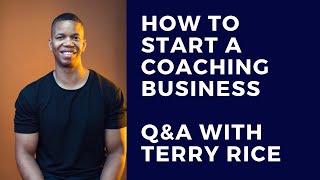
This is a YouTube video titled "How to Start a Coaching Business Q&A with Terry Rice | 1/28/2021" featuring a Q&A session led by Terry Rice. The content consists of Terry Rice answering various questions related to growing a coaching business, including topics such as PDF editing tools, CRM recommendations, hybrid coaching, hiring contractors, project management tools, content creation, and business strategies. The session is informal and educational, aimed at helping entrepreneurs and coaches improve their business practices.
Cool. All right.
So welcome to Q and A and I'm looking forward to answering any questions you have today in regards to growing your business. Anything in the course. Anything in the course of your day that's going on the week, whatever it may be. But this is your time to get your bespoke questions answered and looking forward to helping you out here. So any questions that you have, just please put them in the Q and A window. If you just want to chat, you can do that too. But if you have a question that you want answered, or please do put it there so I can definitely grab it. And I'll take a look at the first one. This one is from Rick. Rick, welcome back. We had a great chat. Was a couple weeks ago when it was just you and I talking. So good to see you here again. And the question is, what PDF editor do I use to create my handouts? Rick, I don't create my handouts. I hire a designer to do that for me because I am not good at stuff like that. And I'm sure I could learn, but it would probably take me hours, maybe longer. And in that situation like that, I decided makes more sense for me to pay someone to do it. And therefore, instead of me spending 10 hours trying to figure it out, I can spend 10 hours doing something that I'm good at that will help grow my business. So one PDF that I have which has been well received is this one page business plan for consultants. And it's about six pages long. Just to explain, you know, how the business plan actually works. The actual business plan is only one page and it's fillable. You can put your own information in there to make it fillable. So it's literally the template you would go through to complete. And I gave it to this woman to do, to work, to create for me. It took her less than a day and it cost me $300. So for my time and my money, I'm like, heck, if I can just be the, you know, the person creating the content and then giving it to her to, you know, work her magic on and only pay 300 bucks, that's a pretty good deal for me. So do I eventually want to learn how to do stuff like that? Yeah. But then my niece does some editing too, and I pay her, not as much as the other lady, but she's family, so no, I don't. I don't know how to do that stuff. I believe Adobe Acrobat Pro is what she is using, but what you can also do, Rick, if you don't want to learn how to do this stuff or outsource it is use Canva C A N V A. It's a great tool. I'm sure a lot of people have used it already that you can make great looking handouts because there's so many templates available. So for me I feel like that's a great equalizer. If you don't want to use a designer or you just want to make it yourself, I would use Canva. Even the free option gives you several great templates that you can leverage to create amazing content. So either few options. One pay someone to do it. Another is you can learn how to do it using Adobe. Acrobat Pro I believe is the one that they use. I used to work at Adobe. This is embarrassing by the way. I worked at Adobe for three years. I have no idea what the hell it is. One of those Adobe programs, I think it's Acrobat Pro. I'm not sure but and or use Canva. I would actually start with Canva because you'll find there's templates that are pre made with content that might be directly aligned with what you want to do. You just put your own information there. So again it's C a v a dot com I would try that first and let me know how that goes for you. Another question here. What CRM do I recommend? So a CRM is the customer relationship management platform and you would use this to track your leads. How much revenue is associated with those leads, any kind of follow up you should do. So imagine you meet someone early December who might be a good candidate to work with you and like, hey, the holidays are coming up. Can we just, can we just check in? You know, in the new year you would say sure, sounds good. You can use a tool called HubSpot to track that. You would put their name in, all their contact information, any notes from that meeting and then set a task to remind yourself to follow up with them. Let's say January 15th, right? So I recommend HubSpot HubSpot because they have a free version of their CRM which can handle a lot of these tasks for you. I use the free version and I've been using it for two or three years. So is there a paid version? Sure, if you want to try it out, go for it. But for me it's perfect because here's what happens, right? As soon as someone goes to my website and fills out a form to potentially join my coaching program that triggers a deal to be created in HubSpot. A deals you know what a deal is, right? It's an opportunity for you to work and then it's automatically populated with their name, their email address and whatever program they're looking at. I can then go in there and augment the information, obviously. But when you have this whole process automated, then you can look, you know, first thing in the morning and say, okay, well here's how many deals I have in the pipeline. Here's the revenue value, here's the lead source. I love tracking the source of leads. And then from there, what's the next follow up I should do? And I say, because you can't just keep notes all over the place, right? It's, it's too hard to keep all that stuff in track, on track. So yeah, use a tool like HubSpot. HubSpot. They have so much free like resources and guides to help you get set up with it as well that I completely recommend it. So check that out. All right, all good questions here. How do I feel about hybrid coaching? Hybrid coaching, Business example, a life business coach or an executive spiritual coach. Yeah. So I couldn't do it because that's not my zone. But a good friend of mine, Amina Altai, I'll spell it. A M I, N, A, A L, T A I. If you go to her website, Amina Altai, that's exactly what she does. And let me give you her background first. So she used to work in corporate, she worked at an agency and you know, launching these brands worth millions of dollars, so on and so forth. Worked so hard that she gave herself two autoimmune diseases.
Right.
So not a good situation. And she was surprised that there weren't coaches and resources available to help her overcome this. Right. So that's what she did. She educated herself on how to heal herself. And now she uses her business savvy as well as this new acumen she has in health to help female executives show up as the best version of themselves at work by helping them maintain both their mental and physical health. But she also knows about profit and loss, mergers and acquisitions, all this cool stuff. So she's a holistic business coach. And she's amazing, but she's legit. Like if you have a chance to just listen to her talk. I actually interviewed her a few weeks ago. If you have a chance to listen to her talk, you're like, wow, she's on point. And she did a, she's on two talks actually for my group coaching program because she comes on as a coach and it's blew everyone out the Water in regards to when you're negotiating your rates, how you have these limiting beliefs that actually cause you to discount your rates and not charge your true value. And she just walked us through these processes of how to overcome that, first of all, by recognizing that as a limiting belief. And second of all, just like, being very clear into the value that you deliver to people and why it's worth it to them to pay 10,000, 20,000, $30,000. So she's amazing. I think if someone has the right intentions and can prove outcomes, go with it. And I think what might be the challenge is some people don't do that, right? It's all snake oil, and that is authentic. And, hell, unfortunately, these days, they could prey on people who are really going through it. So I think it makes sense so long as it's rooted in measurable outcomes and not like snake oil. So that's the best way I can say it. But for me, it's not something that I would do. I'm not skilled to do it, but I can respect it if it's done properly. All right, another question here. What do you see as the best source for hiring designers and other contractors? All right, I just had a horrible experience going through this. I'm not going to vent. I'm just going to be honest. I wanted to find someone to run paid ads for my company for this course, actually.
Right?
Because I want to scale my reach more. And I went on upwork. Went on upwork, upwork and put up an ad or post saying, I'm looking for a Facebook expert who can do this and has proof they've done this before.
Right.
And I got the most, like, random people reaching out, like, oh, I used to do Facebook ads for a cruise line, or I've helped this local restaurant get more people to buy their pizza and stuff like that. I'm like, that. I didn't say anything about that in my post. And what really turned me off was the way some of them just trashed the competition. They're like, unlike all these other fools, I do this. And, like, everyone else is dumb but me. And I'm like, why are you doing that?
Right.
It was really a bad experience, but it helped me realize that that's exactly who I don't want to be. So whenever I encounter situations like that, I'm like, you're the perfect example of who I don't want to be.
And.
And I think it'll help me represent myself in a more. Less annoying way. I don't know if I ever was annoying. But if I was, I want to stop, but I gave up during the process because I'm like, there was too much friction in trying to find someone that I trusted. So what did I do? I asked my network, I asked her, and I said, do you have someone who can do this for me? And eventually I landed on actually hiring one of my ex clients because I forgot she could do it too. But I think you should start with your network. And this is a great opportunity because we. What you can do is you can have a post on, like, Instagram, like a story or on LinkedIn and say, hey, everyone, I have this business where I do this to help people, and I'm looking for a designer or whatever it is, because then it's a thinly veiled advertisement for your business, but it's an authentic way, and you can get someone that you trust by activating your network. That's how I found my first virtual assistant. I put up an Instagram story saying, does anyone have someone who can help me with this type of stuff? And my friend Jake Savage, who's a persuasive communication coach, he got back to me, and that's how I found my first virtual assistant. So you can go through platforms after I just trashed them like Upwork, but I feel like it'll reduce the noise and the uncertainty if you can find someone in your own network who can maybe recommend someone, or I would say pretend it's like a website. I know it's not what you're asking me, but, like, let's say it's a website. Squarespace has verified experts that they list on their platform. They're like, these people have been, you know, tested by us, or we check their background, their credentials, so on, so forth, and we recommend them. So if what you're looking for, if you can find a similar platform where they've been vetted by an independent third party, like these Squarespace experts, I would do that as well. So to recap, the two choices are, in my opinion, ask your network or try to find experts that have been vetted by an independent third party that has nothing to gain from giving them these accolades. And then, yeah, you could try Upwork, too. I'm not saying don't do it, but for me, it's like, it was exhausting just trying to find someone. I was like, I just want someone to help me. So that would be my approach on that. All right, let's get another one here. What are some additional tools that some of your clients have used to take your course and Curriculum and turn it into a form that they can work better in. For example, I have everything in Excel so I can put it into a project plan. But I'm curious what others are using. So one thing, Lauren, that you could do is you could put everything into Asana. Asana is a project management platform and we talk about it in module six, I believe. So what you would say is, okay, one, like one section can be social media marketing and then you can have a task under there, you know, determine names for social media platform. It can be, you know, get your color palette, whatever it is. It can also be, okay, determine, you know, content calendar, so on and so forth, or link to your content calendar. I use Asana for myself to keep track of all my projects. So I think that would work well for you as well. Just using that tool because we talked about it already in the platform. And unlike, you know, Excel or some of those other platforms, just like HubSpot, you can set reminders for yourself, okay, by Tuesday, have this done. By Wednesday, have this done. And you can look at it and see all your tasks and say, ooh, shoot, I'm behind. Or, wow, I'm doing very well. I'm ahead. I'm going to relax today. So when I did this, I realized for my, for this year to reach the goals I have, there's really only 70 critical tasks that I have to complete. And 70 seems like a lot, but it's over the course of a year, right? So it's like, that's not bad. You'll see the same thing. And beyond that, you'll see, okay, for me to achieve this one big goal, here's like five other things I have to do. But those five other things will seem so much more impactful because you realize, okay, this seems insignificant, but no, it ladders up to this and this and this. So I would do that. I would use Asana because again, there's a free version of it that I use if you notice. I haven't noticed by now, I'm kind of cheap. There's a free version that I use that'll help you do this. And you can even bring other people into the platform as well. You can have them join your platform if you want to. So the first time when I had my website designed, the person who made it, we used Asana as the project management tool to make sure we're communicating properly.
Right.
And Lauren, what I do now too is with my, my group coaching clients, a lot of them use Asana and then they invite me to it. So When I say, hey, are you working on this? I can just kind of poke around and see how things are going, see what's on time, see what's late, so on, so forth. So that's what I would use is Asana, if that hasn't been clear already. It's a cool program. And again, there's a, there's a, there's a walkthrough of it in the IN module six, I believe. Yeah, check it out. So let me mark this one. And you're saying I have to get over the decision paralysis with selecting a project management tool and just do it? Yeah, I mean, here's the thing. I get it because it's like any new tool that you use, you're investing time learning how to use it. Now the cool thing about Asana is it's free, but your time is still valuable. I hear you. There are other platforms. I'll mention one just for the sake of doing it. One of my other clients uses Notion. N o T I o N where it's a lot more flexible than in Asana. If you want it to be more customized to what you want to do. I don't want to do that because I, I got enough stuff going on. Right. Got all these kids to watch and stuff. Trello is another one you might want to take a look at. I've used that before with other organizations and I would say, like, once you get used to using one platform versus another, you kind of get it. You're like, okay, here's what it looks like, here's a goal. Then it's like, okay, who's responsible for it, so on, so forth. I'm particular to Asana. You might like Trello better and if you want, maybe you like Notion as well, but that's what I, I standardize on. What you want to avoid is any tool that's like new and shiny because they normally don't have as large of a user community or like a resource base for you to get answers if you need them. So I look, I take, I try to not jump on the latest new trend out there because there's not as much material to support you. If you need help, there's not gonna be a slack group for it of people that can help you if you're in trouble. So that's what I would do. Another question. These are all anonymous. For some reason. I don't know why I can tell who's in here messing with you.
All right.
Do you draft 100% of your own content or do you outsource some of it. I've tried outsourcing it before, and I didn't. I shouldn't say I didn't like. I didn't like, wasn't that it was bad. It's like I know what I want my voice to sound like and, yeah, I guess it's the best way to say it. And I enjoy writing too. For me, it's an art. I enjoy it. So I hold that pretty close to chest. I think there's a benefit to outsourcing it, and I fully support that. I just, from my perspective, I like writing even because, I mean, I write for entrepreneur. You know, I write for myself too. But I think if you do outsource, which is probably gonna be a better way for me to answer the question. You have to be very clear about the tone that you want to have in your work. What's your personality like? Right? Are you funny? Are you sarcastic? Are you stoic? What's the tone of the writing? Are you warning someone? Are you educating them? You know, whatever it may be? Because it's hard for someone else to crawl inside of your head if you don't give them these prompts, right? So be patient too, I would say, which I wasn't. Be patient and realize there might be some back and forth, you know, a few rounds in regards to this content before they get a feel for what you want to hear. And then also realize how maybe you're better off having them get you 70% there and then you take it the rest.
Right?
So that's one way that you can think about it. Another thing I'll say is this. I just discovered this tool called Copy AI. Just copy C O P Y AI. It's all like artificial intelligence that generates your content for you. So what you would do is you would put in like a product description or your service description, and it'll spit out ways to describe it or ways to write ad copy around it, even blogs. So, yes, you'll have to massage it, but that'll get you started too, if you want help writing your content. I was fascinated by it because I put in something about my group coaching program, and I thought I was just gonna remix it, but it was just grabbing content just from the web, like whatever database they have and including that to make the content look more appealing. So there's a free trial, I think, for a week or so if you want to sign up and try it out. But it's. It's Copy AI. I highly recommend everyone check it out just to see, you know, what it can do for you, but I thought it was awesome. All right, another one here. Are you able to collaborate with contractors on the free version of Asana? Yeah, absolutely. You. Just. As long as you have their email address, you can. And what you would do is make sure, you know, they don't have any sensitive information. But, yeah, that's what I was doing before with my website being built, So I highly recommend doing that. And because I've done it before, I've done it the other way, where it's like, here's one really long email. Oh, let's try using Google Docs now. It's like, I've tried it both ways, but it tends to work better if you have a dedicated project management system like. Like Asana to make sure that you're, you know, dotting all the I's and crossing all the t's. And what. What you can do is, like, let's pretend something's due on the fifth. You would see it there as due on the fifth, but after that date elapses to the six, it would, like, turn red. So what you can literally do is glance over. Is anything red? No.
Cool.
And then you're done. But it just makes it so much easier to keep track of everything because you're busy.
Right.
You have stuff to do. So, yeah, I would highly recommend that.
Right.
Get some more questions going. And as we're waiting for that, had one coming earlier that I want to address, and I thought this one was pretty good over here. I'm a digital marketer, and I want to pitch someone who's already working with a Facebook ads expert, how do I approach them without seeming like I'm poaching them? Approach and poach. Probably the same Greek and Latin root approach, approach. But to the point, you kind of are poaching them.
Right.
That's. That's. That's the deal. There are respectful ways to do it. First of all, don't bash the competition, all right? You just want to say, hey, this is a different perspective. But I've been taking this sales accelerator course with this guy, Brian Cristiano, who's the founder of Bold Agency, sorry, Bold Worldwide here in New York City. And he has this strategy called the wedge strategy, which is basically what McKinsley does when they're selling their consulting services. They have a lot of ways to help you, but the way they make money initially is through assessments and audits. They'll charge you for an assessment, whereas sometimes people like us will have a discovery call. Okay, let's kick some tires. And give some free advice. They charge for that stuff. So what you could do in this case, if you're this, you know, this digital marketing expert and they already have someone they're working with, is offer an audit. You would say, okay, I know you have another, you know, incubant right now. I'd like to just give you an audit to give you my perspective on what, what's going on and maybe some ways to improve it, right? So you do that. You charge $2,000 for it, and you can say if you want, you know, stay with that person, it's fine. When I did this as a digital marketer, I said, you know, it's normally easier to course correct someone who's already handling your campaigns as opposed to starting all over again. So I'll just give you an audit, you pass these thoughts and findings on to them however you see fit, and then we can do this every quarter. I'll give you a quarterly audit. I'll review the changes they've made, give you some more suggestions, keep moving forward.
Right.
So you don't have to actually, you know, take over an account to generate revenue from it. You can just give these audits instead. So hopefully that's beneficial. Get another one here. Which is actually related to what we were just talking about in regards to hiring help. And this person saying, you know, I've been working with an assistant and their work just isn't up to par for what I need. So I've been there before. Unfortunately, they're a friend of the family, so I don't want any hard feelings, but I have to let them go. What advice would you give? So you have this assistant that you're working with. I'm not sure what capacity, but it's not working. I would normally say, are you sure? Is there something you can do to, you know, explain things differently? Maybe they're a visual learner versus verbal, so on and so forth. Because like I would say it's usually easier to course correct than it is to replace, so long as there's no like, kind of like moral or value challenges. But if you have to let them go, it's like when you work in house somewhere, if you have to let them go, let them go with some advice like, hey, you know, you did this, right? You didn't do this too well. And here's what I would do to improve going forward. But at this point, you know, we can't move forward with you, you know, working with me. So I think just being direct yet kind is the best approach to have. Because there's no reason to make anybody feel bad.
Right.
You just want to be very blunt, and blunt's not the right word. Just, again, direct and kind and critical feedback that would help them improve something going forward. So my best approach for that, but luckily, I haven't really had to do that too often, so I'm lucky in that regard. All right, there's one more question that was sent over previously, and after that, I'm going to turn it over to the rest of you if you have any more, because we're only about halfway through.
All right.
I'm consulting an agency, and the owner constantly berates his team. It's at the point where I feel sorry for his employees, and I want to end the relationship. Is that possible? So I'll. I'll recap and I'll share my own experience. So you're working with this, this. This agency, it looks like, and the owner's mean to everyone, and you want to quit? I had a similar experience years ago when I was training this team of digital marketers how to do, like, digital marketing for nonprofits, actually, which usually lends itself to nicer people. So I was surprised. But, yeah, the owner was just rude. Rude to the staff. And what really got on my nerves, he was, like, an older guy, and it's mostly like, younger women. I'm like, this is not okay. So I wasn't feeling okay about it. And eventually I just thought to him, I was like, do you think they would work, you know, better if you're nicer to him? Like. Like, do you think, you know, why are you acting this way? Like, what's. What's up? And he, like, brushed it off. He's like, oh, they need to be motivated. I'm like, that's not motivation, you know? And I was just like, I don't want to be here anymore, and you should all leave, too. So I actually told the people there not to continue working there, and some of them actually did leave, and I know one of them, I helped get a job later. But. But, yeah, I mean, I think actively about the legacy that I want to leave behind, not just what am I doing today with the legacy.
Right?
And part of my legacy is going to be, like, helping people.
Right?
If I can help you grow your business, cool. If I can help you realize your. Your worth and you quit your job, that's cool, too. But that's really what I focus on. And in that. In that situation, I definitely wouldn't work with the person anymore and find. You can find a Way out. Because it seems like a hostile working environment, which is probably like some kind of, like, harassment thing. Whatever state you live in or country, I'm not sure. But that's what I would strongly consider doing, and you'll feel better because of it. Question here. How long did you operate as a true solopreneur, that is, before beginning to hire assistants and other contractors? How long? I would say too long. About 18 months. Actually, no longer. Probably about two years. And that was a mistake because going back to the question Rick asked earlier, I would spend hours trying to figure out how to make a PDF, right? And then fail. Or I'd spend hours trying to do something else that wasn't in my zone of genius. And I think we've talked about that before, like, in the course. Like, there's. There's four zones of competence. There's incompetence, stuff you're never gonna be good at. Don't worry about it. Don't even bother. There's competence, things you can do well enough, but pretty much anyone can do it just as well as you. Then there's the zone of excellence. These are things you're really good at. You get rewarded for it, but after a while, you're like, I don't want to do this anymore. And there's your zone of genius. These are things they're really passionate about. You could read a thousand books on it, never get bored, and that's hopefully what you're doing with your business. So I was doing a lot of things that were in my zone of competence and incompetence, to be honest, for the first couple of years. And then when I finally hired someone, I was like, oh, wow, that thing's just done now. And it's very hypocritical. It was very hypocritical of me, I should say. It was very hypocritical of me not to hire someone sooner because what do we all do, right? We sell our services to help people. And we're like, you will make more money or be happier because of your time with us. That's why it's worth it. So if I'm charging people for, you know, to pay me as a consultant because I'm going to help them, why am I not hiring other people?
Right?
And that's what I realized. You know, I'm like, you need to invest in other people because you'll get something back in return. And I have to screen them well and often train them well, depending on what they're doing. But it's almost Hypocritical not to do that. So, you know, I pay my niece. I think I pay her well. She's probably not gonna listen. Actually, she will listen to this. I pay her 500 bucks a month, whatever, to help me. And I would say that's worth it. And if she doesn't, then maybe this video will never come out. But that's what I pay her. And then I have another assistant that I had do a project for me recently where he got the contact information to 50 libraries, public libraries in the 50 biggest cities in the US cause I want to give talks there. So we got the contact information website, the LinkedIn profile of people that might be event coordinators, and then I'm going through now and actually just messaging them. I sent 10 messages, I think it was Monday, and I already got three responses back in regards to booking talks at libraries, because that's how I can grow business. But he's the one who did all that research, and I think I paid him like 100 bucks or whatever for that. So I would say as soon as it's necessary, but wait as long as you can, because when you're brand new, like, you don't want to be spending money that you maybe don't have, or it's good just to kind of try things to see what the flow should look like, and. And that way you can explain it better to people when you are trying to hire someone. So I waited a while, but it's nice. I mean, again, like the other day I asked my niece to do something in the morning, and then I was going to play with her cousins, my kids. And then my VA was doing something the night before. So I woke up and that was done. You have to get to a point where work is being done on your behalf when you're not doing it actively.
Right.
Maybe that's you automating things though, right? That's using tools like ConvertKit to automate your emails. Right? Someone goes to your website, they fill out a form, it goes to ConvertKit, and they get a series of four emails encouraging them to do something. That's another way to find leverage and scale your time. So whether it's a person or a tool, we all gotta leverage as much as we can because there's only so many hours in a day and. And you don't want to spend all of it working. So hopefully that that helps.
All right.
Any recommendations for a VA service? Yeah, Find one for your network. That's one. Online jobs. PH PH is in Philippines is one of them. I've, I've heard good things about it. Now remember, if they're, they're in the Philippines, that's like 12 hours ahead of, at least here in New York. So different time timetables or time schedules, but you can see their ratings on their website, so that's beneficial. You can also use upwork. I'm not, I know I started off today saying upwork was, you know, a chore, but you can use upwork and find people there. There's another service called Belay B E L A Y that's more for long term partnerships with people who are making a bit more money than like a VA who might charge like 10 bucks an hour. But I would look first at Upwork onlinejobs, ph and then Belay B E L A Y if you want someone who's a bit more sophisticated in the.
Work that they're doing.
But the first stop, should this be your network? Like I was saying before, just put up a post on Instagram, on LinkedIn, on Twitter, whatever it is. Hey, does someone know a VA who they know and trust? And right now I don't want to be predatory, but right now there's a lot of people that are out of work who would say, heck, I can do that stuff. You know, for 20 bucks an hour, you could find someone here in New York City potentially to do that, maybe even more per hour. You know, it is what it is, but I feel like now is going to be a time when there's a lot of talent available who would be happy to do this work just to get some money coming in. And you want to be respectful.
Right?
Maybe they, they will leave when they get a new job, right? I hope they do. You know, no one wants to, you know, have their career change that much because, because of COVID But, but yeah, I think you will find success in finding the right person. What you also want to do is think about how you're going to give them tasks. So whenever I give my VA tasks, I use a tool called Loom L O o M and I'll record myself doing it like, this is what you got to do. This, this, this. And then I'll give them that video so they know exactly what to do and there's no confusion around it. So you want to make sure that what you're, you know, encoding, they decode properly. And one of the best ways to do that is through video. So I would do that.
Well.
All right, you guys all questioned out or can I do some more? More Good. Surprised. No questions about pricing Came up this week. Normally they do.
All right.
Got one for Marion. Is it important to use a professional service when creating your videos? It depends. I'll tell you why, right? Sometimes you want your videos to look more authentic, like you just literally shot them with your phone, right? So if you're doing like an Instagram story, that's something you just do with your phone. But what's happening now is you see a lot of people in our industry, the knowledge industry, are using like these more organic looking ads, videos in their ads because it seems more genuine or. Or it's like there's walking around like they're messing up a little bit. So in that case, yeah, you don't need to have a professional. Oh, you're saying for my teachable class. So I shot all those videos myself, which was a learning experience because I bought all the gear, the lights and all that stuff, and I had fun doing it. I mean, it was hard, actually, but I'm glad I did it. It was fun when I got the hang of it. But I hired someone to edit all the videos, and that was actually one of my old clients who edited my videos, because that's not something I know how to do. So is it important? Marion, here's the thing. You don't have to have your setup like mine, where it's like, you're in front of like, you know, a white screen or whatever, and there's like text and everything. You could just talk over slides if you wanted to, right? You could just have your first video where you're like, just, you know, you in front of your camera like this, saying, hey, everyone, today, you know, we're gonna talk about where it's like, you're in front of like, you know, a white, you know, screen or whatever. There's like text and everything. You could just talk over slides if you wanted to, right? You could just have your first video where you're like, just, you know, you in front of your camera like this, saying, hey, everyone, today, you know, we're gonna talk about, you know, the best ways to, you know, use SAS tools, so on, so forth. And then after that, just talk over slides for the rest of it. So you don't have to do that. You know, I don't want you to feel like that's a requirement. And in that case, you wouldn't need anyone really to help you because you're just recording yourself talking over slides. You might have to, like, cut some of the edges out, you know, beginning of the end, but then you're done. So if you really just want to churn something out and what's your course about? I'm just kind of curious. I would do that. I took a really good class. It was on, it was on LinkedIn marketing and the guy was just sharing a screen the majority of the time. And the video quality wasn't great. Um, I think at one point his roommate walked behind him too. So, you know, like quality control wasn't really there. But I was more concerned about the value that he was providing, not the, the video. So especially nowadays when it's harder to do things in person or like I shouldn't say in person with a videographer right in front of you or like get a studio, I would say do that first. If you want to update it later, go ahead. But you'll save yourself a lot of time and a lot of frustration in regards to creating this content. So I would do that. But have someone edit it. If you're not going to, if you want to have like any kind of special text on there or like Rick was saying, you can also learn how to use imovie. That's a goal for me. I do want to learn how to use imovie right now. I have my niece doing some of that editing for me because she learned how to do when she was in college. But for my business it would be great for my kids would be great too. I could make cool little videos of my kids running around doing stuff like we want them. Like an indoor swing where like you hook it up to a door. It's almost like one of those indoor like pull up bars and there's like a swing they can go on. So like my 1 year old's on that thing today, like going back and forth. I would love to make a video of that.
Right?
So going forward you'll see me do that more when I have more time, like when they're not around. I think it's a good skill to pick up because you can do some light editing yourself. Because Marion, I suspect what you want to do you could do yourself eventually. But. But you know, if you don't want to learn how to use imovie right now, don't worry about it. But I think eventually we'll both be able to. Yeah, you're welcome. Question here. Is it important to have no less than three levels of service offerings? Entry level, midpoint and premium? No less than three? No, not really. I mean it's good to give people options, like good, better, best. You know, it's on you. But I think there's also a benefit in saying like, no, this is the offer. Like, that's it. Like, there's no, oh, can I get this instead of that? Like, no, like, this is it. Because then you're so clear and confident. So if you think of a good example. Well, I mean, partially my group coaching program. Like, I don't, I don't do one on one stuff. So it's like, no, this is a program. You can, you have access to all this stuff. You don't want to use it, you don't have to. But, but this is the program, right? You can, you can text me whenever you want. You know, we, we meet twice a week. You know, we can meet, we have phone calls. If you don't do that stuff, you don't have to, but that's what it is. I'm trying to think examples of other companies where they only have one thing, but it just, it seems so bold. It's like, no, that's it.
Right?
Um, and I'm not talking about like, like Henry Ford type stuff, but I mean, yeah, if, if you, I mean, I'm curious why you only want to have one, why you don't want to have a scaled back version. If you want to give me some input on that, it would help. That would help. But if you feel like you're struggling to come up with, like, different levels, then don't, you know, to say, this is what it is. Because, like, what might happen is the market might ask you for something that makes sense. I see you have this, but can you do this too? And if you hear that enough or if it makes sense, you'll just say, okay, I guess I can do that. But if you're sitting down right now and you're not launching fully because you're like, oh, I don't have different levels, then I would say, don't let that get in your way. Yeah, I mean, here's the thing. Like, there's always gonna be a best practice out there. That makes no sense, right? Oh, you should always do this, you should always do that. Maybe, you know, maybe you should, maybe shouldn't. So you have to kind of go with what's right for you. Because if you do exactly what everyone else is doing, you get the same results and you want to be unique.
Right.
So you don't have to do that just because, you know, you write a blog about it or even I said it, you know, like, make it your own. It's fine. This woman, actually, I had a really good talk with this woman the other day. And she was talking about, you know, everyone says you have to pursue your passion, you know, in your business, you have to be pursue your passion, whatever you're doing, you know, as an entrepreneur. And I'm like, I disagree. I'll tell you why. You don't have to be passionate about what you're doing.
Right?
You have to be passionate about the lifestyle it gives you. Oh, I love being able to consult. Cause I can do it from anywhere in the world and travel with my family.
Right?
So maybe you don't like consulting, but you like working from Tahiti, Right? Or maybe you don't like drop shipping stuff off Amazon, but you do like the fact that you can be location independent and make millions of dollars selling, like fidget spinners. So you don't have to be passionate about what you do. You have to not hate it, but you have to be passionate about the lifestyle that affords you.
Right?
Or maybe you just want to have more time to volunteer, spare time with your kids or whatever. So people say things like, you gotta be passionate. I disagree. Right, so just because it's something people say doesn't necessarily make it true.
Right?
That's. That's the way I feel like, especially when things rhyme, you gotta be in it to win it. Like, do you like. Just because it rhymes? That makes sense. So I would, I wouldn't worry about that too much.
All right.
Trying to think, though. But yeah, to circle back on the one I think the market will eventually tell you if they want something else. All right, what else is going on, Lauren? Rick Walden. Tell you what I'm excited about. This week I started pitching more speaking events, like, to actual conferences, which I never do because I normally wait for someone just to approach me. And I'm like, yeah, sure, cool, I'll do it. But I was like, that's kind of a lazy way to build a speaking career, because I don't really speak that much. I like doing workshops, but like, speaking at conferences. I don't really like that as much these days, but I started pitching some this week and I'm just looking forward to seeing what happens. Like, maybe I'll get in, maybe I won't. But it's like you have to, again, just reward yourself and be happy with the fact that you're making these steps, you know, towards living in your vision, even if it doesn't happen that day. And there were some opportunities that I reached out about in December where one of them actually came through with a yes today. So I was like, okay, that's cool. Like the things you did weeks ago, months ago, you know, they're out there and they'll, you know, they'll come back to you eventually, hopefully with a positive answer. But yeah, it was cool just to do that and then see some, some good, some good signs come in. So it's beneficial.
All right.
Well, I feel like I'm answering questions no one's answering. They're asking. So let's do a quick last call here, but if you have any more questions, love to grab them. If not, we can meet back here next week.
Cool.
Got a question here. This one's going to be pretty impactful. Let's talk about mental health. This is from Lauren. What did you have to change about your health routine in order to live the life of an entrepreneur, a healthy entrepreneur? You mentioned high performance psychology in your course earlier and I'm curious to hear more what I have to change about my health routine.
Okay.
So there's this guy, he's a high performance psychologist. His name's Dr. Michael Gervais. I would write that down and look him up. And he talks about the four pillars of recovery, sorry, recovery for high performance. The first is eat well and hydrate well, which I need to work on right now. The other is sleep well, then move well and think well. So mindfulness and meditation, right? So if you hit those four pillars, you're taking care of your mental health and your physical health. So what did I have to change about my health routine? I don't want to be that guy, but I started doing CrossFit. I'll explain why. I know people don't have CrossFit. Love talking about it, but here's why. It's because the classes are only an hour, right? Because when I used to go to the gym, I'm like, oh, I'm going to do this for a minute. I'm going to do that. I'm just on my phone the whole time. The classes are only an hour and it's a group class so that all the programming is done for you. So you can't pick and choose what you're going to do that day. Like, no, here's what the coach is doing. So it gave me discipline and it gave me this concentrated time when I could do it. Because classes only were certain times a day. It was like between 6 and 12 and then between like 5 and whatever. And I was already home by then. So I'm like, I can't put this off. I have to go before 12 o'.
Clock.
So that gave me discipline and plus the Workouts are really hard too. Like, I, you know, done well there. So that's one thing I had to change. Another was just having more respect for sleep, which during COVID I'm kind of slipping on, to be honest. But, like, if you're even just like a little bit sleep deprived, like, you're like an hour short. It's like having a couple drinks and then trying to work, you know, it's like you're. You're under recovered and you never, you know, do have high performance when you're, you know, under recovered like that. So you have to look at the way that Olympic level athletes train and recover, right? They go really hard, but they recover really hard. So that's part of it too. Another thing that I started doing was just meditating. And that's hard because you're just like, I'm just breathing. You know, you're focusing on your breath. Or it could also be like, you know, like a guided meditation. The problem with that is it takes about three weeks to take effect. So if you don't push through that three weeks, you're like, this is stupid. But after, you're like, oh, well, I'm much more balanced. I'm not irked as much as I used to. And I remember when I realized it was working. I was with my niece at a football game at Syracuse University, and there's these kids behind me and they spilled a beer on my coat. And I'm like, that's annoying. I was annoyed. I'm like, this is annoying. But I wasn't annoyed. And I'll say it again, I knew it was annoying, but I was not annoyed because I was like, the kids. You know, I was probably doing the same dumb stuff when I was a kid. And in that moment, I was almost confused as to why I wasn't annoyed, because I'm like, someone just spilled a beer, right? But that's the benefit of having your mood regulated by doing meditation. So what I also do now, I'll try to show you, is I have this app on my phone, it's just called breathe. But what you'll do is you'll breathe. So when you see this thing going up, you're inhaling, hold at the top. So like, it's like a six second hold, I think, and then exhale for eight seconds on the way down, hold it empty at the bottom for six seconds, and then inhale, right? It's just called breathe. But a longer exhale paired with a shorter inhale tells your brain that you're safe and that you can relax. And what I'll do is I'll do this for five or 10 minutes. And that's another form, more or less, of meditation, too. So that helps. Another thing is front loading, what are called epic thoughts. And epic thoughts are when you remind yourself of difficult things that you've done before, like, literally write them down. And then during times of uncertainty or challenge, you can just remember these things, and you can just thrive, even in challenging situations. So I'll give you an example. When I was speaking at south by Southwest, I was, like, somewhat nervous. I'm like, don't mess up, right? So I had to remind myself of all the times I've spoken in other events and gotten good feedback, even if it was a smaller stage. So you say that in your head, like, I've done good things before and I can do it again, right? Because confidence has to come from within and past experiences. So notating these things is very beneficial. So these are things I've had to change. And it's constant, though. It's not like, oh, I mastered. It's like, oh, I messed up. But I'm trained how to fix this. It's more or less the realization that I'm not expressing high performance and reminding myself what to do. It's not that I'm consistently doing it, because sometimes I have a bad day. I'm like, hey, I'm gonna go eat some ice cream, right? That is what it is. But having these tools is what helped me thrive. I won't say thrive. I would say thrive. Do well during COVID because I'm like, okay, this is gonna be a tough one, right? But I have the tools necessary to push through this, and I have the empathy to realize not everyone does. So I'm not gonna take it offense. Take offense to people who are, like, kind of short with me or are projecting lack or scarcity or uncertainty, because these are crazy times, right? So the best thing I can do is be a beacon for people and try to show them how I handle things, but not in a preachy way and not in a way that makes them feel less than so. So that's a lot. I'm looking at your question. Hopefully that that helps. But, yeah, that's. That's really it. I'm a work in progress, but, hell, I make. I'm excited for what my kids are going to be like, you know, hopefully, you know, growing up with this kind of environment. And I'm trying to teach them focus as well, because, like, mindfulness is really important.
Right?
Really cool stat I talked about this last time out of Stanford that showed about 47% of us are not paying attention at any given time. And that lack of attention leads to unhappiness. So if you want to be happy, just pay attention. So I'm trying to train like, my daughter, especially. She's five. She's the oldest in mindfulness. You know, just focusing in, just paying attention, which is tough, but, you know, she's fine. We'll give it time, so hopefully that helps. And, you know, I could go on forever about this, obviously, but, yeah, that's my approach. Yeah, no problem. Happy to continue the conversation, but it's like, I feel like there's also, like, a negative side to it where people confuse high performance with pushing themselves to limits that are unhealthy. And that's not good, Right? The whole hustle hard thing, that hustle hard culture is fundamentally broken, right? Because you can rev that high and, you know, accomplish a lot, but the exhaust is toxic, and it's not sustainable either. So that's really what I was concerned about early Covid. All those people are like, oh, I'm gonna hustle hard and do all this stuff. It's like, what if all these opportunities dry up and you're just there sitting in it? You know, what do you do with all that energy, you know, if you don't have the tools to direct it or manage it in a positive way? So I don't know it's to be continued, but, yeah. All right, well, this has been great. So I appreciate all the questions put in. You know, work with the course and any questions. Obviously, you know, please do reach out, because that's what I'm here for, and I know it's challenging. What my goal is always to not make it confusing and to just share with you the challenges I've gone through and I'm going through. So it doesn't seem like I'm just preaching like, no, I'm going through it too. And it's frustrating, but it's also a lot of fun when you see the fruits of those actions. So, everyone, again, thanks for the rest of your night and looking forward to catching up again soon.
Take care, everybody.
More from Terry







When you want to quit, don’t. #FitnessOver40 #MindsetShift #TiredIsNotAnExcuse #PersonalGrowth




You’re gonna want to give up. Don’t. #mindsetshift #motivationalquotes #motivation #dontgiveup