How to succeed in the creator economy with Quentin Michael Allums
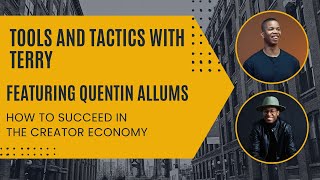
Terry Rice talks with full-time creator Quentin Michael Allums about building a career in the creator economy. They cover monetization strategies, landing brand deals, and how to build a community that actually sticks around.
We are officially live now, and if you can't see us, please do let us know. Just say hello in the. The comments and let us know where you're dialing in from. I'm here in, in Brooklyn and pointing. Michael, how about yourself?
I'm in Denver, just moved like a month ago.
Denver, cool, cool. Where'd you move from?
Milwaukee, Wisconsin. So a lot more sun here.
Yeah, you're right. You're in the Midwest, though. Like, for some reason, you seem coastal to me. But everybody says that every.
Everybody says.
All right, I can dig it.
That's fun.
Cool, Cool. All right, well, I'm excited to chat with you today because obviously we're talking about the creator economy and how to find success there. And as per your really nice mic, you're a pro at this stuff. I got these, I got these cheap earbuds.
I just have to look like I'm a pro. Not actually.
Yeah, yeah, but I just checked. But, but yeah, I mean, the, I said this earlier that the creator economy, which can be anyone from a consultant, a course creator, a community builder, a videographer, a blogger, is currently valued at $20 billion. That's billion with a B. But it's expected to grow to $102 billion this year with about $800 million coming from venture capital companies. So even they're seeing the value in this. But for me, I think this democratizes access to entrepreneurship for everyone because we are all creators. Every time you open your mouth or write an email, whatever you're doing, you're a creator. And if you can do so in a way that is intentional and solves a problem for an audience, even if you're just inspiring people, which is also very viable, you should get rewarded for it. I mean, if you think about it, when you're watching tv, when you're listening to music, you know, these are all creators too, and they get rewarded. Well, so are you as well. And that's what I want to help everybody do. So that's the goal for today. And again, we have the pro here. We have a full time creator, and I don't know too many full time creators because as I'm sure you'll get into, it's, it's, it's. It takes them. Takes a while to get that traction. But one thing I also want to bring up is please do ask questions. I obviously have a lot ready. But, you know, that's what we're here for, is for you to learn from us and each other. And I would also say right now you're among peers, other people that also want to learn more about this economy. So if you see someone ask a bright question, maybe follow them on LinkedIn too, and get in contact with them, because it's a great opportunity to network as well. So I'll briefly introduce myself, which is going to be the boringest part of this whole talk, and I'm going to hand it over to Quentin. But my name is Terry Rice, and I am a business development consultant. And that normally involves helping other entrepreneurs build their brand and revenue. So. So maybe you need help figuring out your revenue streams, Speaking topics, how to get paid gigs one way or another. That's what I do. And I also write for Entrepreneur magazine, and that's a lot of fun because I get to interview some of the brightest minds in entrepreneurship, learn their best practices, try them out on myself, and if they actually work, then I pass it on to people just like you and talks like this. I also have four kids. You might hear one or two of them running around. You never know what's going to happen here. But for me, I think that's one of the main benefits of being a creator, is when you have content out there, it's working for you. Throughout the day. Every video you make, every post you put up, it's working for you. So I could be changing a diaper, but someone in Denver seeing this and saying, you know what, that Terry guy seems kind of interesting. And I'm doing lead gen while I'm also parenting. So that's what we're going to talk about today is not parenting, how to become a creator. But, Quinn, I'd love for you just to go ahead and introduce yourself, but we have, we have Lindy here, we got Stephanie from Chicago, we got Megan here from Brooklyn. We got Jamal. Hey, well, Jamal, what's up? Thanks for coming. So a lot of great people here ready to learn, but if you can just go ahead and introduce yourself, that would be amazing.
Yeah, I don't even know how to. How to answer that anymore. It was always like, yo, I'm Q. I'm an entrepreneur or something. You know, I. I create things. Recently, I think just more social experiments, but really I just, I like to break things down, run experiments, see what works, see what doesn't, repeat my results. Yeah, I just, I create things. I'll work on that as I. As I get older.
No, I mean, I think some people pursue significance and they'll have some really cool opening line like, I do this to do that, so on, so forth. Whereas some people are already doing Significant things meaning yourself and your work speaks for yourself. So I think once you have this body of work out there, you don't need as much buildup and there's maybe not an ego associated with it because, you know, you enjoy sharing this content as opposed to talking about how great you are. So now I feel silly for having this long lead up to regards to who I was. But we're gonna, we're gonna, we're gonna pass on that. And I love the fact that you said you like experimenting because I think as a creator, you're creating something new, right? And that relies on trying things. And I think if you can't learn to see failure as data, then you'll get discouraged and you'll stop. But what I'd love to do is just kind of start from. I don't want to say the beginning, but the middle. What were you doing before you became a full time creator? What did life look like for you?
Yeah, there are a few things. So I was a singer songwriter very, very early. I just want to mention that because it's like the creator thing, you know, So I was always a creator. It's a writer in there too. From there, did all the normal people things, go to school, get, get the job. Ended up quitting my first full time job to start my first business which was. I don't even have this in my bio or anything because it was so bad. It was a virtual reality, like essentially simulation. You walk in and order coffee in Spanish. I grew up speaking Spanish, so I built like this MVP. It was really bad. Closed it down within 6 months. From there I launched my first agency. Struggled a lot, but eventually like found some success. But I was creating content within there and that's what brought me success. And then close that down to launch my first, like really successful agency. It was a lot of fun. We were creating a lot of content, building personal brands, creating videos for other people. Ended up closing that down. During COVID Just a lot of things happened in my life. A lot of things happened in the world. 2020, 2021, you know. From there I moved to becoming the marketing lead with team greatness, like Lewis Howe school of greatness. And I led that marketing team. And then from there I decided that I wanted to just focus on like just living my life, you know, like working less. It's always been about like checking the box, like, am I successful, how much money am I making? Which all that is good. But at the end of the day, like if you're not enjoying it, like, like what's what's the point, you know? So I was an entrepreneur, I was a creator, and now I'm just really focused on turning myself into a business, but turning myself into a business that allows me to live, not just work.
That's deep. The more you talk, the more boring and basic I feel. I'm like. I like CrossFit, you know, like, that's. David.
I wish I like CrossFit.
But let's go back to where you had this agency and you. I don't say failing. You're learning, right? Because failures, data. How long did it take from you, from when you first started just focusing on creating content, to where you felt like, you know what? This is it. I would never go back to anything else. And you just felt secure in your role as a. As a creator?
Yeah, on. On paper. And maybe from the outside, it looked like it was a lot faster than it was. I think people would probably say maybe a year. But for me, like, actually going through it, like, 2016 is when I really started. It's a lot of video content, a lot of recording myself. It wasn't until 2018, where I really started, like, making somewhat decent money. But the sad thing is, is that I didn't know how to run a business or build a business. I wasn't paying myself, so I was still struggling, you know, so it wasn't honestly, until 2020, maybe, where I was like, okay, like, what am I doing? Like, I'm going to go take that consulting gig for myself. I'm going to go do that speaking gig and, like, actually pay myself, honestly, like four years, which is wild to think about. And if you really break it down, like, to what I understand what success is now, like, enjoying your life, I would say not till now. So five, six years, which seems like a long time, but it's gonna pass anyway. But in terms of metrics and bringing in deals for the business and things like that, I would say two years, but five years, really.
Honestly, for me, what I've noticed is you'll grind. In any business, you'll grind for one years, two years, three years, whatever it is, and then you hit this inflection point where things just get better. But the thing is, the gains aren't incremental, they're exponential. So if we want to put a number to it, year one, you made 10,000. Year two, you make 30. Then year five, it's like, there's $200,000. It's like, where'd that come from? But for you to be a creator, you need you need material. And sometimes it's those things you went through in those year one, year two, year three. And you make another good point. It's frustrating when you appear to be successful on the outside, but on the inside they're like, yo, like, it's not really, really that cool. Like, I remember I spoke at south by Southwest twice in the last five years. I didn't get paid to be there. In fact, I paid to be there because I hired a videographer to create that content for me because I knew that would get me more gigs. But on the outside, you see me at south by Southwest, you see me on Good Morning America and it's like, oh, this guy's crushing. I'm like, no, this guy's still renting a three bedroom apartment in Brooklyn. Like, I'm not, you know, this is not my yacht that I'm currently on. So I, I think there when you're a creator and I don't think you do this, I think you do a good job of showing both sides. But people always have like their best self out there on social media and I think that hurts other people because if you're in a bad mood, it's going to get even worse. So can you just explain some things people might be surprised that you do as a creator? That doesn't seem so glamorous. It's not all like TikTok videos and like making sure your lighting is right. What are some things that might surprise people to know that you through on a daily basis as a creator?
Yeah. I feel like I'm a little bit unique just because I've been behind so many people. So I don't do anything that I really don't want to do. Like, that's just my life. I want to do what I want, when I want, how I want. I think what would surprise people, like, is how obsessive I am around certain things. Like I'm doing this experiment right now. Like when I say I run experiments, I run experiments. Like I have a scientific notebook doing this experiment. Like, I've never launched a digital product for myself. For other people, sure, but I'm just creating this digital product. I want to see if I can make 10,000 on the first launch. So I go by like day one, day two, day three, day four. All the actions that I take, the conversion rates that I have. Like, it's like I just get so giddy about this stuff that's like stuff that I do in terms of like creators and things that we go through. Like, I've interviewed A lot of creators, like, like what you said, like a lot of us, I feel like, start from ego and a lot of us maybe had childhoods where like, we weren't, like we were bullied or like we didn't fit in. I think that' very, very common, you know. So you go from that to not being loved, not fitting in, being the other, to all of a sudden you have all these people liking your stuff, commenting on your stuff. You're so amazing, like, please come speak at this thing. And like you have all of this good stuff coming to you. It's so hard not to get inflated ego. I'd say that's one thing that just a lot of creators go through. But on top of that, like just being a creator and wanting to monetize it, it's a business, you know, so the structure, the processes, the systems, the, the accounting, like, that's all there, you know. But me personally, I just, I don't want to do anything that I don't want to do. So I don't do it. And that's, that's me.
That's. No, I dig it. I, I think I'm the opposite because I have so many constraints as a parent, to be honest. And I'm not complaining because I know somebody would love to be parents. But for me, I think my unfair advantage is also my disadvantage, which is I'm low on time, so everything I have to do has to be as efficient as possible. Otherwise there's something else I have to do. Right. It just, it just makes sense to me. But I love the fact that you're making a business out of this by having metrics and formulas and all this stuff, because there are so many talented creators out there who could be wildly successful, but they never were able to just turn that, that talent into a skill that they can then monetize. And that's the tough part, you know, it's the back end. You know, how much do you charge? How do you invoice, you know, how do you even form a team to, you know, know, get your creativity out to the world? So I, I'd like to kind of dig into that as well. I should, I shouldn't say I'd like to. I, I want to dig into that as well. What kind of team do you have to support you? Because it sounds like you're doing some editing too, but who do you else do you have around you to support you as a creator?
Yeah, I used to have a team of like 12, like 10, 11 when we had the agency and again, we built personal brands. We also work with companies. So everyone was a creator within this company. So I always had a videographer following me, had editors. Like, we did photo shoots. It was awesome. And then I moved out, like just on my own. And it was, I was like, damn. Like, this is what regular people like, oh, this is really hard. Like, I have anyone to take photos of me. Like, how do I create content? I've got to edit all this myself. And I was like, wow, this sucks. So I started picking up consulting clients again. This is like 2021, I think. And from there I'm like, okay, like, let's start creating content how we used to. So I was writing, I was creating TikTok videos and I just realized, like, I can do all the things. I just. It's not even that I don't enjoy them. It's just like, where am I really good? And I'm really good when I have something and it's out and then I can analyze, like when I'm thinking that's where I'm best. So I reached out to my old personal videographer and like, he literally just followed me around. And now he edits all of my social experiments, he edits all of my TikToks and he's really my only person on my team right now. And then for this six week program thing that I'm building that I mentioned earlier for my experiment, I'm going to hire someone to like run that for me or with me, I guess, but that's it. But the minute I hired Ken to do like my TikToks and, yeah, just my TikToks. The minute, like I outsource that. Viral, viral, viral. And there was just like crazy amount of growth because I was allowed to do what I'm best at and he was allowed to do what he's best at, you know, So I only have a team of one, but soon to be two soon.
And what's your TikTok? Just so we can all check out all this viral content.
Yeah, so it's Quinton M alums. People think it's Quinton Mallums and I made a mistake there, but I'm not going to change it.
Yeah, own it. No, I hear you, but what I'm hearing is sometimes people try to build up their weaknesses. Like, oh, I'm not good at editing. I got to build this up. Ignore it, you know, like, find someone else to do it because that stuff can snap your energy. And as a creative, you need to have as much energy as possible. I mean, you could have the best ideas in the world, but if you can't execute them because of your energy being drained by trying to edit or whatever, you know, you might as well outsource it. So I think on my end, that's something that's been helpful too in my career as a creator. It's not the extent of yours, but. But yeah, I mean, if you can't quickly turn ideas into content and distribute them, even, like, someone's got to post your TikTok, someone's got to post your YouTube, so and so forth. If you don't feel like waiting for the thing to load because you want to go create some more content, it ain't going to happen. So that's a huge challenge. But let's get to, like, the meat of what some people might be looking for, which is how do you actually get paid creator opportunities? How do you reach out to a brand or attract a brand who is willing to exchange content for your ideas? Sorry, money for your ideas.
Yeah. I honestly like brand deals. I've only done a handful. I think of everything, like, social capital, like, spend all this time. Again, it's been five, six, seven years for me, like, just building brand that can all crumble in a second. So I'm not like, bullish on brand deals. I know most creators are. It's nice. But then again, like, typically, it's like, what, net 30, 60, 90. I hate that. Like, I like guaranteed income. I like being paid right away. Like, I just, I'm not a fan of waiting for that check. It's. It's fine. So for me, it's like one, what's going to allow me to do what I want to do, how I want to do it, when I want to do it, with who I want to do it. So for me, how I monetize one is consulting, which I don't, like, enjoy. It's not like my most favorite thing. I only work with.
Are you trying to make money or what? Because, like, everybody, like, I don't want to do this. I don't do that.
Again, like, every. Everything was about making money. That's the point. Everything was money. Like, how do I check the box? How do I do this? Not how do I create a life that I want to live? If I make a million dollars and I hate every second of it, what's the point of the million dollars? What's the point of I'm working 80 hours a week? Because I did that, you know, like, yeah, the company was growing. Like, we were. We were Freaking rolling. Like, it was awesome, but I hated it. I despised it. I'd rather make 100k and work 2 hours, 2 hours a week, 2 hours a month. Like, that's the life that I want to live. So how do we create that? So for me, it's consulting again. It's the programs. It is brand deals too, but I just don't like doing them. It's speaking and then whatever else I want to do from there, you know, and then just like random stuff that comes through, like LinkedIn, like, Yo, let's collaborate on this event, let's do this. But it's me, me capitalizing on the skills that I've built in the brand that I've built. And of course, like ad revenue and things like that, but I don't get a lot of that. But brand deals, in terms of reaching out to them, like, there's a lot of things that you can do. I just don't reach out to them. I want to create something so attractive and be so good that people want to come to me. And I don't really want to ruin my social capital by. By collaborating over and over and over and over again for. For money. But again, like, I want to build something that I want to enjoy. Not build another prison like a job was or my last company was, you know, it's got to be something I enjoy.
Yeah, I hear you. And I can speak from the perspective of aligning with brands is, yeah, the money can be great, but you also do lose creative control at times. And for me, that's the funny part. They'll say, hey, we saw this video we did. We think it's great. Can you make one for us? Sure. Okay, do it just like this. It's like, well, I thought that, you know, you kind of like what I was doing already, and that is what it is. But you're making a good point, because I think so many people. And this just goes back to even the corporate culture. It's like you want to climb the corporate ladder. You want to make as much money as possible, but you could be perfectly happy making $100,000 or $50,000 a year and super miserable making $3 million because your brand's diluted. Your time's, you know, always owned by someone else. Your kids are calling you by your first name, like, whatever it is. But it's like, everyone's like, I want to be a full time creator. It's like, maybe you do, and that's great, but just realize you don't have to be the Next, whoever, insert big name here because you decide what success is, not society. But if you're going by some metric that you really don't even care about, then you're going to be miserable. So I'm glad you brought that up. And I will say this for anyone who's wondering how you pitch brand deals. I mean, as Q was saying, just have content that's going to attract someone, and then when they reach out, you have all the leverage because you're like, hey, if you want this stuff, sure, cool, let's do it. Or you can proactively say, look, I really do like this product. Here's an example of how I made content that supports products like this in the past. Would you like to collaborate? But you want to make sure it's something you actually believe in. And because you don't want to just be a marketing channel, essentially, you want to be a creator who has a really good idea you want to share with the world. And if you can get money for that, you should. In my opinion, you should be able to monetize it. But you don't want to sell out and feel like, you know, you're just kind of going through the motions. Otherwise, it'll eventually show in your content that you're just phoning it in. Right.
It'll be so obvious that social capital that you build too. Like, it's very, like, enticing to just, like, say, like, hey, like, I'll accept this and that and this and that and that. But if you wait, like, now, like, I don't like brand deals typically, but I like the right brand deals. Like, I've approached companies like, hey, like, I want to do this. Pay me X amount of dollars. And we do it, like, because I have the, like, the social capital now, you know, like, even if I didn't, I feel like I could do that. And I've seen people do it with, like, zero followers. Like, nothing. Like, launch hbo, like podcasts in collaboration with a TV show with no experience just because they asked. You know, ask. I think that's just a big, big thing.
Yeah, I mean, if you ask, the answer will be yes or it'll be no. But if you don't ask, the answer is definitely no. So shoot your shot. And again, I've done this in the past as well. I mean, a company that I partner with right now, it's. I'll just say General Assembly. It's an educational institution. I've taught there for years as an instructor. So teaching biz dev classes, digital marketing. Some people that are attending probably know me from that. But I reached out recently and said, hey, how about we start a podcast as another way to spread the message about General Assembly? And how about I host it? And they're like, okay, cool. I mean, it was months before I got to the okay, cool part. But I think that's the value of what we would call having an exponential mindset. Because if you're just looking for incremental gain, that's like saying, okay, how can I grow my revenue 10%? But exponential saying, how can I create something new that never existed and potentially 10x the output of a relationship that I have? And you just got to shoot your shot. Because again, they'll say yes, they'll say no. But if you don't ask, the answer is always going to be no. And I think what I'm hearing from you is you're so secure in yourself that if you hear no, you're like, okay, cool, Next experiment, you're not going to be crushed by that because you heard a no. So I think that makes you even more dangerous because you're like, yeah, I'll do this for $20,000. They say no. You're like, cool, I'm gonna go meditate. That's fine. You know, I got. I got other stuff I can do today. So how. How do you. You don't have to give me numbers, but how do you price your deals as. As you're reaching out to people or they're reaching out to you?
Time and scope, probably. That's pretty much it. And then reach. I suppose it depends what it is. Again, I'm not doing, like, a lot. Like, hey, can you post this on LinkedIn? Like, I'm just not typically a fan of that. I've done some of it, and it's just based off of reach. And you could just look those up very easily, just whatever industry you're in. Never done anything on YouTube, haven't. I think I've done one thing on TikTok. Again, it's just based on reach, typically. But if it's like big scope, which is where I prefer to play, like, with these social experiments, I haven't done it yet, but something I would probably pitch just as an example. Let's say I wanted to do something around mental health. So I take 50 strangers and I say, hey, like, you're all going to talk to each other one on one. Here's a couple prompts. And then we're going to insert, like, this thing on Calm or Headspace or something like that in the mental health space, something like that, depending on how long it would take me to do it. The reach that I would expect. But also, like, they can use this content too. I would just get creative with it. Like more of a 360 package versus let me post this on TikTok. Let me do this because I've got a newsletter, I've got LinkedIn, I've got IG, I've got TikTok. And let me create like this experience for people that they're going to experience, like in real time. I would approach it like that or 360, but again, that's not really my expertise or the world that I want to play in. But that's how I would approach it.
Well, what you're saying, though, is another example that exponential mindset. Because the benefit of this saying, hey, Calm, let's do this social experiment where we have 50 people and they all meditate for 10 minutes a day. And let's like, have them, them, like, do video reactions of how they feel day one through day 50. It's not based on your reach of your audience necessarily. You could be anyone with a good idea. And then Calm has their own reach. And that's what I always say. Like, you might have 14 followers on Instagram, but you're still a content creator. Some brand could put a thousand dollars behind you as an ad. Now reach a hundred thousand people. Cool. Now I got 100,000 followers. Right. So don't feel less than because you don't have a large following. You just need to have good ideas. And again, the mindset to reach out and pursue these opportunities, that's. That's for me, what it comes down to. But I am seeing a question here from Andre saying, you know, how do you reach decision makers? Cold emails, especially LinkedIn DMs, don't always work. I'll give my experience. And Q, it sounds like this is something that you don't necessarily do a lot, so feel free to set this one off. You want. But, Dre, Sean Ryan's here. He said he's upset that he's late hearing you talk. So. Dre, it's being recorded. You'll catch up with him. But, Andre, what I would do is you can still go on LinkedIn and look for someone at that company with partnerships in their title. If it's like a brand like Calm or Event Coordinator, if it's a conference or an organization you want to reach out to. And then from there, I mean, I think if you build a relationship, you don't have to necessarily pitch. So if that person's active on social media, just engage with their content over a period of weeks, maybe months. And that way, when you see they have an event coming up, you can say, hey, Q, I see you're doing this talk. You know, gosh, I have this topic. It's based on this. I'd love to get on stage, or, hey, I see you're putting out content like this. I have something tangential I'd like to share with you as well. What do you say? But again, going back to Q's point, your social capital is what really matters because they might not know you. And what you want to do is reduce the risk of them saying yes. So if you have testimonials and even, like, screenshots of saying, hey, Q, great talk, like, that alone lets them know that you're someone safe to align with. So that's where I would start. And from there, once you get the ball rolling, you're known as a creator and you have this portfolio to speak in. You can have like a media kit or a partnership deck that you can put together as well, and it look even more professional. But that's why I think initially it does make sense to do some free stuff or some stuff you're not getting paid too much for. And Q, if you want to dispute that, I understand. But I always. It always baffles me that people will pay to go to college to get experience and connections, but they won't do free work to get experience and connections. So in my opinion, like, if you got to make some, a couple free TikToks or whatever, YouTube videos to get that experience of connections, it's going to pay off in the long run.
Yeah. Only thing I would add is I don't have much experience, like going after brand deals, but I used to do all of that for, like, clients. What I would probably do if I wanted to go aggressive on brand deals, that I would make a list of ideal, like, my dream clients, dream companies that I want to partner with. Let's say it's a list of 5 to 10. I'd put that in LinkedIn, sales, navigator, or bookmark their pages, whatever I wanted to do. Then I would make a second list, more criteria based, hey, they're head of partnerships, director of marketing, VP of marketing, whatever the titles are, they're in New York, Louisiana.
Whatever.
Like, all that criteria. And then that would be a second list. I would obsess over the first list content. Hey, like, yo, I love this. Boom, boom, boom. You just posted this TikTok. I wanted to say that it reminded me of X, Y and Z. I would obsess, like stock them almost. And then over here, which I've done this just more client base. And over here on the criteria list, I would just be more aggressive, like maybe few conversations, but I would like, hey, I'd love to hop on a call X, Y and Z. I have this idea that's going to blah, blah, blah, blah, blah, like whatever your pitch is. And then from there it's just math. You know, you'll close 10% over here, over here you'll close 50%. But it might take two years. And I would get that data and then I would just keep repeating and replicating from there. That's what I would do. If I were to be aggressive with more of the brand deal size, that.
Was a better answer than me. I was like, hey, not a better. Yeah, but I mean, it's funny because you're a creator, right, I get it. But you just have this analytical level that I think a lot of creators don't, where you're talking about experiments and it's a numbers game and so on and so forth. So I think that's it really is.
Though, like, like, I'm sorry I'm such a nerd, but like, like the six week thing, I was like, can I make $10,000? I broke it down by conversion rate based off of who was on what list. So one list was people that said they would buy anything that I made basically because they knew it would help them. That was a list. The second list was people that I also have a list of like any problems that people have. And I say who said it? It was people that had a problem that was aligned with this product. And the third list was just my text list on the people that said they would buy 50% converted people that said that or people that I knew would. It would be helpful, 40% converted. And then my text list, it was 8.5 from there. I know that I just need to. If I want to make X amount of dollars, it's just math. Like I just change the numbers around, you know, like that's anything you want to grow by a million followers. Like it's just math, like in my opinion anyway. And I'm, I'm a terrible. I failed every single math class that I've taken. But I believe in it.
No, I mean math is universal. So I'll take your, your, you know, your word for that. But I think that's. That brings up another topic which is to be a creator, you need to have a community, because your community is where you'll discover problems you can solve with your content and they'll also support you as you're growing and as you're getting more steam. But then to your point, when you want to sell something, then you have this audience ready too, whether it's you selling something or a brand wanting to sell something. But I think some people are so detached from their community that they run out of ideas and inspiration because they're just, hey, okay, I'm going to keep on posting this stuff and not engaging and not learning. So that's one point I'm hearing in your. And you said you have a text community. Can you explain how you grew this? It sounds like an SMS distribution system, how you grew that as well.
Yeah. So I want to touch on two things that you said there. So one community. I would argue that most people don't have a community. I would almost argue that I didn't even until like recently I've built other communities, but then I stopped them. So for my text community, actually the reason I say that is because again, they're disconnected. I don't think you can be disconnected from a community. I don't think that's a real community. There's got to be value and exchange there. For the text community, the way that I approach it is like, why would people want to text me? Like, what value are they going to get from texting me? Not like, let me sell you products, let me do this. Because I barely do anything like that. I've only sold this program and that was about it. And it was like, yo, I thought of you. Like, here is this. If you want it, text. It's. So I do these social experiments, but I pull people from the text community to create these social experiments. So if you're. I just did one on mental health and grief where I took two strangers and I had them write a letter to themselves six months before who or what they lost. Which was like powerful and beautiful experience. But they're both from that text community and they both like, one lost their son, the other one lost their son and their ex wife. So like really, really strong stuff. And I text them, I'm like, yo, like, do you want to show up on this? Do you want to do this? But like they're there to participate. That's a community. Like they get something and I get something and it's awesome and it's fun and it's beautiful. So I just grow it by like pushing my experiments and that's it.
You know, you say that's it. Like, oh, it's so simple. Like, you're putting a lot of thought, effort. And there's an emotional investment, too, because you can't hear stories like that on a regular basis and just go about your day. So I know everyone appreciates what you're doing by absorbing these things and then sharing them in distilled fashion. I think it's great you're doing that, and I think you're humble by design. But let's all be clear. This guy's doing some amazing work, and it's great for us to learn from him. So I'm going to ask a question here. I'm going to read a question here. And normally I try to pre read before asking something live because you never know what's going to happen, but this is from my buddy Drayshawn, so I know he's not going to try to trip me up. Here we go. Since I have a question. We guessed by the question mark at the end of your sentence. But I have a question. What do you guys do when you feel like you want to create something so bad, but you have no idea what you want to create? And by that I mean I recently took a break from creating content because I didn't feel like making videos about SEO tips anymore, nor do I have the desire to monetize my content from a sales perspective. I don't want clients. I don't want to sell anything. I just want to make something, but I just don't know what anymore. So what are your thoughts on that? So basically he's saying, I want to create something, you know, really bad. Like, I have this desire to create, but I'm not sure what it is. And there's no end game. I'm not trying to generate revenue. I just want to get content out there.
It's a good question. It's a really good question. I could take it first if you're cool with that.
I won't have a response. Yeah, that would be great.
Oh, it is amazing. That's how I felt when I closed my agency down, because I. I felt like I lost my identity. I was an entrepreneur. I also lost other things in my life. So it was just like, what do I do? I just want to create something. So I just launched a creative podcast that I don't even do anymore. Lewis Howes was my first guest. That led to my. My job with Lewis. I would say just play. I think we were designed to play. I think everything becomes about like, how do we grow? How do we do this? Like, how do we make more money? How do we be successful? Like, if you don't know what you want to create, just pick something and create and don't share it honestly, just do it for yourself. It doesn't have to be about growing your personal brand or generating results or whatever. It's just about having fun. Like, I feel like we don't even do that anymore. That's why I moved to Denver, because I just want to have fun. I'm a really bad beginner. I want to, like, I want to master everything. So I started snowboarding. I'm terrible. So, so bad. But it's fun. You know, I would just play.
Yeah. And I would. I would echo that now that you gave me that. That lead in. I always say optimize for interesting. What's something you're interested in? Did you just start watching some show? Did you just learn how to snowboard? What is it? And that'll at least get you back in the group of creating content. But you might find that there's this. This. This audience who really enjoys. I don't call it random content, but just, like, what's Dre thinking today? And go from there. So, yeah, to your point, playing. And playing is obviously fun, so you should be enjoying it. And, you know, don't. Don't feel like you have to crave. Because I know, Dre, you put a lot of money into, like, some nice equipment and you got fancy lights and all this stuff, but it's there when you're ready. But I. And Q, I'm going to toss this over to you. I think ideas have to come to you often when you're doing a mundane activity, like when you're washing dishes, when you're, you know, walking to the park or whatever. But if you sit down and say, okay, how can I be creative? How can I be impactful in this moment? It's tough. And that's when it's like this recycled, artificial stuff that people don't feel. But if you just exist. And this is a function of mindfulness. Right. Being present in the current moment, you'll see their stories unfolding around you all the time. And I'll give you an example. I was dropping my kids off earlier today, and I was walking. As I was walking back, I heard a subway car go over my head, and I'm like, what's the story here? Well, I'm often complaining that when I'm doing events like this, a car will go by once in a While, like, blasting music or whatever it is. But that person living in that building, every two minutes, that S train is going by, right? That's their life. So who am I to complain about an occasional car when that person can never predictably create any kind of content because of that? So that alone is its story. But really, end of the day, it's me walking down the street. So I think if you're mindful, though, you can pull these stories out. And the overwhelming theme here is gratitude as opposed to, you know, woe is me. But I think that's part of it. Just realizing there's stories that happen around you every day, and how you choose to share them is up to you.
Agreed. 1,000%.
Cool. All right. So, I mean, what inspires you as a creator? Because what I'm hearing is there was a pivot over the last, let's say, year or so where maybe you went through some personal challenges and realized, hey, other people might be having challenges with. Call it mental health, call it trauma, whatever it may be. And you're saying, well, how can I help others? The same way that I've been able to get my arms around this as well. Is that true? You're mostly sharing your own experiences and realizing other people can value or get value from your opinion as well.
I think just like we were talking about, for me, I do share my personal experiences. Like, if you follow me on TikTok, I share stories, but I think where I want to go and what I want to do and what I've been doing is. So I, like, really want to create. Like I said in the beginning, I was a musician. Like, musicians create. I think people call me a creator. Yeah, I'm a creator. Like, whatever. But for a long time, I was just talking, which is creating. But I'm such an artist at heart that I just. I want to, like, create experiences and create art and create films. Like, just focus on creating. Like, I don't care about what happens. That's where I want to go, and that's what I've been doing, and that's the change that I've been focused on including. Like, okay, this is also what I'm going through. This is what you can learn, because it's just what I'm good at. But I'm. What. Where I'm really inspired is just people that are happy. Like, genuinely happy, genuinely content. Like, I. I built something that I wanted to be. Freedom. Freedom that became a prison. And I think a lot of us build something that we want to be. Freedom that becomes A prison. Especially creators, because we don't know any better. And we look at all these other people, all these other creators, and it's like, wow, they're doing this and that and this and this. And we're constantly on the defense. We're constantly trying to catch up. We're just trying things because other people are doing them versus, like, what is a life that I want to live? People that do that are so inspiring to me. Like, again, I would rather make 50k a year and love what I do than make a million and hate it. Like, so I'm constantly evaluating and looking at what other people are doing and why they're doing it. Like, how do you build a life and a system that you genuinely enjoy? Like, what are the things that I genuinely enjoy? If I'm creating experiments, I'm not working. I don't think everyone needs to be like that. That's just important to me. Like, I don't. I don't want a job. I don't want to do things that I don't want to do. I'm lazy. Like, I want to snowboard and still make good money, you know? And I can do it because I'm good at it. Um, it's a really long and weird answer, but I'm inspired by people that, like, just do what they want, how they want, when they want, and it's because they want to do it, not because other people are doing it.
I think here's where that. Here's where I have a problem with that, because not you personally were saying, but me.
No, no, disagree all you want, man. I'm totally down to debate.
Yeah, that would be a good show, right? It's like, like shit on everything that you say, right? Like, oh, but. But what I see when I hear people, like, complain about things like, oh, I can't get this promotion at work, and there's all these politics and all this stuff, and I'm like, I hear you. I'm like, you should quit. Like, and I know it's not easy because there's other constraints in place, but I think you owe it to yourself to at least have a side hustle where you can share your ideas, your perspective, your worldview creatively and get recognized and rewarded for that. Maybe that will turn into a career. But, I mean, I used to work at tech companies. I worked at Facebook and I worked at Adobe, and, like, they call it the golden handcuffs, that prison that you refer to because you're making X hundred thousand dollars a year. Like, maybe you want to do Something else. Because you're told you're the brightest person in the room, but you can't because it's like there's this fear. So when I. What I'm hearing is, it's echoing my thoughts as well. But what I try to do is just like yours, empower people to do that and support themselves. Otherwise you'll never get out of that prison, unfortunately.
So I'm saying you should build something on the side before you jump in, is what you're saying.
It depends. I mean, for me, I agree.
Don't, don't be an idiot and just jump in. I'm just saying for me, sorry, continue.
Yeah, I mean, if I was younger, you know, if I was like still in my 20s or in my 30s and didn't have four kids of support in New York City, be different, sure, I'll go sleep my best friend's couch. But now my best friend would say, you're a grown ass man. Go get a job. You know, you can't, you can't be here. So it depends on how much risk you can take. But I think when you can take a lot of risk, you could because the reward is so huge. But someone like me, I would have to play it safer just because there are certain constraints in place. But I think either way, what all of us need to do is document a vision for our life. What does it look like? What does your day to day look like? What are you known for? What circles are you in? What impact are you having? And then use that as the inspiration for your content. Because then your content is an extension of you and what you believe in. You're not just phoning it in and you'll never run out of ideas and you'll be extremely authentic in what you're presenting as well.
I agree. I would just say I feel like, and again, I'd love to just, just, just chat on it. Like, I recognize my privilege and be able to, being able to do whatever I want. But I've also worked very hard for it. And I did not come up or grow up in a privileged life at all. Like, my life was garbage. It was garbage as an adult too, because I had to hustle. I feel like there are systems and things that we can do, especially if you like, if you have the chops and you have the skill and you already have like the network that can help you get there. Like, mostly it's just people going in circles and doing all these different tasks because they don't really know what to do. Whereas if you Focus on two to two to three things. You could get there a lot faster. But getting clarity around, like, what you want. Hey, I want to be a speaker. Not I want to be a speaker and courses and this and this and this and this and this and this. Because that's a lot of people. I want to be a speaker. How can I get $5,000 every single month off of this versus how can I do all these different things and make $5,000? Because if you're just doing one thing and you make 5K and then use that 5K to make 10K, 10K to make 100K, 10K to make 20, like 200K, like, and so on, like having the systems there to help you scale versus doing all these things, I feel like it's doable, but you have to know where you want to go first. I know because I've been there, you know, Like, I was negative $900 in my bank account. Don't even know what to do. Like building the business. Wow, this is making money. But we lo. Because I have no idea what I'm doing. Like, I feel like it's, it's doable if people one knew what they wanted and then focus on the things that actually got them there versus all these different tasks. But again, I am privileged. I'm not, I'm not gonna lie. I am.
Well, I've been there when you have negative money in your account and someone, someone loaned you money still enough to cover the negative amount. Like, wait, Now I'm negative 800. Like, I, I, I've been there before. So you're not the only one I remember. Like, this is, I'll just tell a story. Back in 2009, I got laid off from my job and I was out of work for five weeks. So I'm like three months behind on my rent, student loans, electricity, got turned off. I still have money for beer. I don't know why. Gotta prioritize. But I invested in my education and learned how to do Google Ads. So I got a job at Adobe making six figures. Like, that was my, my arc. And things have been fine since then. I've electricity. But I know what it's like to struggle. And I'm like, hell, if I had spent those five months building my personal brand, creating content, maybe I never would have gone to Adobe. Maybe I just would have become a content creator and make courses or got done speaking engagements, whatever it is. But that's the benefit of sometimes having limited options, is you're forced to focus on just a few things to your earlier point. And I feel strongly if most of us just said, look, I want to be a full time speaker, I want to be a full time whatever. And that was the thing, as per math, that if you do this many posts per week, get this many people on your email address, do this much outreach, you'll be successful. But then there's a shiny object. We're like, oh, here's this new app that helps you do this and find your left shoe. You're like, oh, cool, give me that. Right? So you get distracted by all this random stuff. And there's this book called the One Thing by His Name is Gary Heller, where it's like, you just think, what's the one thing I can accomplish that by doing so? Everything else becomes easier or, or unnecessary. And you pick one thing each quarter, each month, each week, each day, even in this moment right now, what's the one thing? And if it's not the one thing, do something else, right? So if you sign off right now, I hear you, but I think that that's called goal setting to the now. And if you have, if you're that disciplined within regards to what you want to accomplish, you'll reach those goals. Because what you focus on is what you're going to accomplish. But if you have all these shiny objects and distractions around you, including your social group, then it's not going to work out too well.
It's hard too. I struggle with it every quarter, maybe even every month. Sometimes I make a list of everything that I'm doing. Then I cross things off. I'm like, nope, just focus on this. And then it gets long again, like it's. That is a big issue of mine. And I've recognized it because again, like, what are the systems, the processes, the one, the few actions that I can take that are going to get me there? Like, that's how I combat that. Because I, I am not to a T. My ADHD is so bad.
So full setting to the now. And if you have, if you're that disciplined with, in regards to what you want to accomplish, you'll reach those goals because what you focus on is what you're going to accomplish. But if you have all these shiny objects and distractions around you, including your social group, then it's not going to work out too well.
It's hard too. I struggle with it every quarter, maybe even every month. Sometimes I make a list of everything that I'm doing, then I cross things off. I'm like, nope, just focus on this. And then it gets long again. Like, it's. That is a big issue of mine. And I've recognized it because again, like, what are the systems, the processes, the one, the few actions that I can take that are going to get me there. Like, that's how I combat that. Because I, I am not to a T. My ADHD is so bad.
So do you, do you meditate? Do you practice any kind of mindfulness?
Like, I used to a lot. Running has become a form of meditation for me, but I actually do not anymore. Big part of why I moved to Denver, though, because it's like I want to be in nature and just think and have that stillness, that quiet.
Yeah, well, I mean, running can be a form of meditation. Any kind of exercise, like, even like doing squats. It's a focus. It's a focus forcing moment. Because you're like, I, I'm not focusing. I ain't getting back up. Right. So I, I think we all need to find some kind of way to almost getting a flow state or the zone. And for me, that's when a lot of my best ideas come to me. Yeah, it is. And like, people think, oh, it's crazy. You're going there and trying to kill yourself for an hour. I'm like, I haven't died. You know, like, it's. For me, it's fun because, like, I'll beat the heck out of myself for an hour. Just like when you're running for an hour and you're like, well, hell if I can do that, I can handle this thing. You know what I mean? But I think people don't challenge themselves enough on a daily basis. So they don't know what they're comfortable, they're. They're capable of. Right? That's that growth mindset, leaning into these challenges and failing. Sometimes that's how you know you've reached the edge of your capacity. So, like, when you're maxing out, when you're squatting, if you don't fail, the coach is going to say, you didn't max out. You don't know what your upper limit is because you didn't fail yet. So I think as a creator, that's what it is too. So when you're pitching yourself and you're saying, oh, instead of $2,000, I'm going to say 10. You get a no. It's like, okay, that's my upper limit for right now. Right, I get it. But you don't know until you put it out there, because there's, there's no data as you would say Q to back up the fact that that was too much.
Exactly. Everything's an experiment.
Yeah. Yeah, I think, I think failure recovery is a skill, if you want to call it that. Any entrepreneur and any creator needs to. To quickly adapt. Because you might put a post out on LinkedIn like, oh, it's going to be so dope. It's going to be so bomb. I got the right emojis. I'm going to use the right hashtags. Okay. Is it 901 yet? Fails miserably. Right. And if your whole day is ruined because of that, like, you got to get over it. You know, first of all, you didn't pay any money for it. You know, it was your time. I get it. But if you can't quickly recover from failure, then your mindset is one of lack and scarcity as opposed to growth and abundance. And then you won't want to put yourself out there again. You'll do the basic, like, how to type content. Like, as opposed to, oh, I heard a train while I was walking back for my kids. And that's how you build your personal brand. So we can't agree it's all an experiment.
Master that now. Like, I've had to check myself recently, like, because I've grown on other platforms, but YouTube has always eluded me. It's the hardest platform. And I started posting on it consistently again. And I'm like, what is wrong? Why is this not growing? And I know, I know because again, I've been behind the scenes for other creators. Takes time. It definitely takes time and gotta. It's all an experiment. But still in my head I'm like, this should be going faster. This needs to go faster. So master that now. Like, just play. Like, if it's an experiment, it's a lot more fun. Versus this has got to hit 10 million views, you know?
Yeah. And anyways, if anyone else has any more questions, please do bring them in. I want to be respectful of your time. But going back to, like, content and not growing as quickly as you. As you might want to. I had a revelation the other day where I'll see some content that I just think is straight trash, horrible. And it's getting all this engagement, like, shares and I'm like, you know what? If other people like that, if that brings them joy, cool. It's just not my cup of tea. But I, I was, I used to be like a hater, to be honest. Like, I'm just had to pray it out my heart. But I used to be like, why Is this person getting so much attention? Like, this stuff is basic and boring. But the thing is, I mean, there's. There's room for everyone to be a creator, right? So it's like you just have to find your audience and they will appreciate it. But I always say you're better off being, being Nickelback. So Nickelback is one of the most hated bands in the world. If you Google most hated band in the world right now, there's a picture of Nickelback smiling, right? But also if you google most successful Canadian bands in history, there's Nickelback as well. So the people that love them, really love them, people that hate them, we're never going to buy anything anyways. Who cares? So I think if we all take that perspective, like, I don't have to go viral. I don't have to get like a million followers. I just have to create an impact in the world based on what I know to be true and what I enjoy doing. Then you have already achieved success as a creator.
Agreed. You don't need a million. Like, I just, I just signed this deal for this Snapchat show. Like, this official, like, partner Snapchat show.
Why do you, like, bury the lead all the time? Like, you're like, oh, yeah, by the way, Lewis Howell is my first guest on my podcast. And by the way, I am actually going to the space with Jeff Bezos next. Taken.
I was a middle child, okay? No one, no one celebrated our wins, right? But I signed that and they.
Well, congrats on that. Can we just say congrats to him because he's not going to celebrate it himself. Can we get people saying congrats to Q? That's amazing. So please do tell us about it. I'll stop interrupting you.
It's called the Modern Entrepreneur. Go, go follow it. I just break down, like, entrepreneurs and growth and things like that. But they didn't find me from LinkedIn. They didn't find me from Tick Tock. They didn't find me from my old YouTube. I'm sorry. They didn't find me from my new YouTube. They found me from an old YouTube video that had 200. 200 views. Like, you do not like a lot at all. Just do your thing, you know?
Yeah, yeah, I, I agree. Because I got a speaking engagement from my. My alma mater, went to the University of Buffalo and they found me on Twitter and they're like, hey, we'd love to have you come speak at this event. You know, we think you're really great at this and that, so. And so forth and like, oh, it's cool that you're bringing in alumni. And they're like, you went to college here? I'm like, I'm like, you guys didn't know that? They're like, no, we saw you on Twitter. And I have like four followers on Twitter and that post got three likes, but one of them was an event coordinator from the University of Buffalo. So I just thought that was hilarious. They had no idea who the hell I was. I'm like, I went there for undergrad and business school. Like, why do you not, like, why is this? That is amazing. So, yeah, I mean, we can wrap it up here. But I found sometimes the post I think, just tanked the content that just underperformed. Maybe it's because it wasn't broad enough for a large audience, but it went really deep with a few people. And those are the ones that reached out and say, hey, Terry, we'd love to have you speak here. Hey, Q, we want you to have the show, whatever it is. So be aware of those vanity metrics, because that'll fuel your ego. Right. But it's not going to reward you financially. And maybe you're not going as deep as you could with people who really do value your. Your opinion.
Yeah, one of my consulting clients, something that I have her do, we work like with her podcast, her LinkedIn, TikTok, and just some other things. But one of the things that I have her do on LinkedIn is every post that she has, like, there's always like a clear, like, message me this in the comments or something like that, or go to this. There's always a clear goal and objective with a post. So even if it's not viral, she can see, like, maybe this one got 10 likes, but three people reached out, whereas this one that got a thousand likes, no one reached out. You know, like, understanding what drives traffic to what I think will be helpful for anyone. So everything's an experiment.
I dig it. Well, listen, this has been great. I've learned a lot and I'm glad we got a chance to talk in real time because I've been message with you on LinkedIn and by email, but you're a legit dude. I.
You too. This is dope.
Thanks, I appreciate it. Yeah, I mean, I get a chance to interview a lot of people, but it's clear that you're effortlessly engaging and authentic. And I think you've shared a lot of great information with everyone out here today. So I appreciate it. I'm sure we appreciate it as well. So please do. Reach out to Q, follow his new TikTok channel. Go give him some more views on YouTube, please. On LinkedIn as well. But thanks again, man. This has been great. I do appreciate it.
Appreciate you. This has been dope.
All right, take care, everyone.
More from Terry







When you want to quit, don’t. #FitnessOver40 #MindsetShift #TiredIsNotAnExcuse #PersonalGrowth




You’re gonna want to give up. Don’t. #mindsetshift #motivationalquotes #motivation #dontgiveup