Jason Feifer Interview: How to Adapt to Change and Future-Proof Your Business
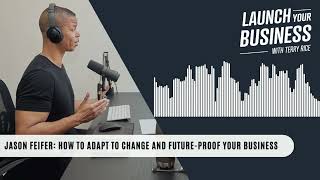
Jason Feifer, editor in chief of Entrepreneur Magazine, talks with Terry Rice about why adaptability matters more than passion for entrepreneurs. He argues that successful business owners embrace change rather than resist it, and shares how to find purpose when passion alone isn't enough.
I talk with billionaires, but I also talk with people running really successful Main street businesses and consulting practices and everywhere in between. And the most successful people are the ones who are willing and able to do that, who don't hold to an idea for so long that they calcify, they stop changing, who are excited by what's coming next rather than trying to maximize what has already come. And if you can become comfortable doing this, you will get over the greatest hurdle in business. I am just so convinced of it.
Starting a business involves a lot of change in your personal and professional life. Today we're talking about how you can not only embrace this change, but get excited about it as well. And we'll be guided by Jason Pfeiffer, the champion of change and editor in chief of Entrepreneur Magazine. This is the Launch your business podcast because we know starting a business is challenging, but it doesn't have to be confusing. Each week we'll give you the tactical advice and the necessary tools to scale your business without feeling burnt out. I'm Terry Rice, business development consultant and staff writer here at Entrepreneur Magazine. Let's dive in. Today's episode is brought to you by chatterboss, a company that provides entrepreneurs with top notch executive assistance so you can make more money, save time and avoid burnout. Get started today and save $50 off your first month by heading to chatterboss.com launch that's chatterboss.com launch. My daughter Lena forced me to make a huge change in my business. For years, I spent the majority of weekends leading business development workshops. It was good money and I learned a lot from answering all the questions. But after a while, she started asking things like can she go with me or would I still have time to play? When I got back, the answer to both those questions was no. So I decided to make a change. I quit leading workshops over the weekend, even though it brought in thousands of dollars per month. Two weeks later, I brought Lena to a gymnastics class in Brooklyn. It was a weekend and the place we went to was offering free trials. And as I'm sitting in the hallway with other parents, I was surprised to see Jason Pfeiffer was there with his wife. And if you don't know Jason, he's the editor in chief of Entrepreneur magazine. I recognized him and thanked him for the content he shares in his podcast, Problem Solvers. And actually, I think he was surprised I even recognized him. But then he asked me why I liked his podcast and I was just blabbering for I don't know how long so fast forward X years later, and here I am talking to you as a podcast host on the Entrepreneur Network. So I'm grateful to my wife Dominique, for finding that class. And. And I'm also grateful to Jason for all the help and support he's given over the years. And it's amazing to think all of this started for me. Making one change. That's it. One change set off this huge chain of events that worked out well for my business and as a result, my family. So that's what we're going to talk about today. Not only how you can embrace change, but get excited by it as well. You'll also learn why your ability to adapt to change is critical to your success as an entrepreneur. And we'll also discuss how to find your purpose so you know what can change and what should remain constant. Let's hop into it right now. So, Jason, you're the champion of change, and I would just like to get an understanding. Why are you so excited about it? Because some people see change as being scary or something they try to avoid. So why are you such a proponent of it?
So it's funny that you use that phrase. Lots of people do. Hot tip for anybody, if you want to give people something to call, you just put it in your social media bio. I just came up with the phrase champion to change, frankly, and I put it in my social media bio, and suddenly people started referring to me like that. That's all it takes. But the reason that I felt comfortable using that phrase is because I've spent years studying this subject. And to your question, why is this something I'm excited about? It starts really with when I became editor in chief of Entrepreneur magazine, which was in 2016, and I had tons of people ask me the same question. When I would go on podcasts, when I would be at events, basically anytime people would ask me questions, they would ask me the same one. And that was, what are the qualities of a successful entrepreneur? Like, you see all the successful people, you talk to them all. What do they all have in common? And I will be honest with you, Terry, I did not know the answer to that at first. So I would give them a terrible answer or I would defer because I just didn't know.
But.
I realized I should have an answer to this question because, one, if people ask you a question over and over, you should have an answer. But two, because I felt like if I did have an answer to this question, I would be able to study it and come away with real value for people because it's the thing that they all want to know. And so I spent a lot of time talking with people and a lot of times studying it. And I came to an answer. And the answer is that the most successful people are adaptable. That's the answer. I mean, I talk with a list celebrities, I talk with billionaires, but I also talk with people running really successful Main street businesses and consulting practices and everywhere in between. And all of them have started in one place with. With an idea of who they are and an idea of what they're trying to do, and then navigated through a absolute crazy maze in which they had to revise multiple times who they are and how they work, and they had to revise their idea and their business multiple times. And the most successful people are the ones who are willing and able to do that, who don't hold to an idea for so long that they calcify, they stop changing, who are excited by what's coming next, rather than trying to maximize what has already come. And if you can become comfortable doing this, you will get over the greatest hurdle in business. I am just so convinced of it. And that's the reason I'm excited about this, because I feel like I have the answer. And then I wanted to figure out how it works.
Are you familiar with the term adaptability quotient?
I'm not.
It's a buzzword, but essentially it says, how well do you adapt to change? So there's iq, obviously, and there's eq, which is emotional quotient. But adaptability quotient, I think, is what separates people who can thrive in any situation versus those who get frustrated and just throw their hands up. But let's go back to people being stuck. And sometimes people like being stuck. I'll tell you a quick story. It's almost like a. Like a. Like a parable. But there's this guy who goes to work every day and complains about his sandwich. Oh, man, peanut butter and jelly again. Next day, peanut butter and jelly again. Complaining, complaining, complaining. And eventually his co workers are like, hey, why don't you just tell your wife to make you something different? And the guy says, what are you talking about? I make my own sandwiches. So I like this story, except for the implied, you know, misogynistic part. And I think a lot of us make our own peanut butter and jelly sandwiches because maybe we're not happy with it, but it's predictable, right? Sure, you may want some nice turkey on rye with fancy cheese and aged mustard or whatever, but if you mess up Then you ruin your lunch, you're upset, and your whole day is ruined. So my question for you is, how can we get people to just unstuck and get excited about change? Like, what are some things that we can do at a tactical level in order to stimulate this desire for change?
I think the first thing that you can do is recognize your own reaction to change, which is almost certainly going to be that you are going to recognize loss. The biggest, first problem we run into is that loss is so much easier to see than gain. When something changes, you know what is being changed. You say, I was familiar with doing this thing, and therefore change has come along and I've lost that. And then you extrapolate the loss. You say, well, because this changed, that must change, because that changes, this other thing is going to change. And soon enough, you have worked yourself into a panic because you believe that every single thing that you know is now a total loss and you are starting at zero. And, you know, one of my favorite stories to illustrate this comes from history, which was. Is the story of. So in the late 1800s and early 1900s, recorded music technology was first introduced, the very first time in human history. I mean, think about it as radical change. The very first time in human history that you could hear music without a human being playing an instrument in front of you. Prior to that, for all of human history, the only way to hear music was to have somebody playing it in front of you. Suddenly a machine could do it. And this is fantastic and mind blowing. And consumers are so excited about it, and musicians are horrified because they see this thing as a radical change to their industry, and they are only seeing loss. They see being replaced by the machine. And I talked a moment ago about extrapolation of loss. So here's what that looks like. John Philip Sousa, very famous composer at the time, his work is still with us. The military marches we all know. Da da da da da da da da That's John Philip Sousa. So John Philip Sousa, he writes this fantastic, just fantastic article in something called Appleton's Magazine. And I could have the date wrong, but I think it's 1907, maybe 1908. And it makes a number of arguments against recorded music. And my favorite goes like this. He says, when you bring recorded music into the home, you will replace all forms of live music in the home. Because why would anybody perform live when there's a machine that could do it? Okay, so there's loss number one because of that. Now we're extrapolating loss because of that. Mothers will no longer sing to their children, because why would they do that? Because there's a machine. And because children grow up to imitate their mothers, the children will instead grow up to imitate the machine. And thus we will raise a generation of machine babies. That's the argument. And that's a crazy argument that just makes absolutely no sense, except that it makes sense in the context of how we extrapolate loss. Take that and apply it to your own work. Something changes. Some industry changes, some new technology rolls out, There's a reorg at your. At your company, whatever the case is, some first thing will change and you will say, oh, no, the terrible loss. And then you will say, oh, but because this. Because I'm no longer able to do this at my job, I will no longer be able to do that at my job. Oh, no, a larger loss. And because of that, I will no longer be able to do this. And suddenly I'm out of a job and I'm out of skills, and I have nothing. Right? This is how we do it. So instead, we need to take a step back and we need to start asking ourselves some more leading questions, right? We need to look at change. We need to say, what is this new thing providing us that we didn't have before? What new skills can I learn? Or what new opportunities can I have because of this that I didn't have before? When you start to reframe it that way, don't focus on the loss. Don't obsess over the loss, obsess over the possible gain. It's harder to see. But if you extrapolate it out, you could say, I mean, imagine if John Philip Sousa had said, well, recorded music technology is going to change the way in which we produce our music and distribute our music. People can now listen to the music without us in front of them, but they still got to listen to music. Which means that I can sell my music to people who I couldn't have traveled to see. That actually is a massive market opportunity. I have to extrapolate the gain to get there, but not that far. If I'm John Philip Sousa and I perform up and down the east coast, and there's no chance of me ever making it to Scottsdale, Arizona. Well, I can record something and sell it to somebody in Scottsdale, Arizona. Now I am making money and reaching listeners who I would have never otherwise reached. That is me. Massive game, transformational game. And that's what we need to do at every level. If you want to get excited for change, you got to do it yourself because nobody can show you what the end result is going to be. You got to find it yourself. And the earlier you get excited about it, the more you will move towards it.
Okay, we're going to take a quick break here, but when we come back, Jason's going to explain how you can get excited about the change that comes from starting your own business. Let's take a quick moment here to talk about chatterboss. Chatterboss is a company that helps entrepreneurs make more money, save time and avoid burnout by providing top notch executive assistance. And I got to tell you, I've been using the service for the past several months now and I have no idea how I got by without them before. My assistant Megan handles everything from prepping my newsletter to designing social media posts, sending out invoices, and even finding local activities for my four kids. But here's one of the most important things. She's not just an order taker, she's also a thought partner who presents new ideas and even challenges some of my bad ones. But here's what makes Chatterboss as a company so unique. You have one assistant who can handle your entire remote team. This includes other specialists within the ChatterBoss network as well as independent experts that can be found elsewhere. But either way, you have one point of contact who knows you, your business and can anticipate your needs while you're focusing on other high impact activities. Get started today and save $50 off your first month by heading to chatterboss.com launch that's chatterboss.com launch. Today we're talking to Jason Pfeiffer. He's the editor in chief of Entrepreneur magazine and as per his Instagram bio, the champion of change. We've already talked about how being able to adapt to change is a common trait among successful entrepreneurs and how looking at the positive outcomes of change can get you more excited about it. But now we're going to get specific in regards to how you can best adapt to change when starting your own business. Let's hop back into it. I like the extrapolation part because it reminds me of second order thinking, which I learned about in the book Limitless by Jim Quick, which Jason Yu actually recommended to me. And it's basically just saying, and then what? Some event happens and then what? What do you think can happen after? And the and then what doesn't have to be something negative, it can be something positive. And you can find opportunity in this change. And I think as people lean towards that more, they'll get excited about change. And from the framework of launching a business, I think about work in general. And every time I've been forced to make a big change in my employment, and by that I mean getting fired, things have always worked out better. Always worked out better. Like, I remember I got fired in 2009. I got a $50,000 raise and a better office. So the real scary part for me is I would have never made that leap had I not been asked to leave. So from the lens of someone who's considering or just recently starting their business, what would you say to them in regards to how they can embrace this change, this. This uncertainty, Especially if they're just wondering how they're going to get by day to day and thinking about going back to or sticking maybe with their nine to five?
Yeah. All right. I think that the first thing that you need to do is you need to be really clear on your mission and your value. And this is not something that comes easy and natural. The thing that we tend to do is we find, focus on, and we associate with the output of our work. Which is to say that when I was a newspaper reporter, that was the first job I had out of college. If you had asked me, what do you do? What is it? What are you passionate about? The answer is, I'm a newspaper reporter. It's what I do. It's what I show up to work at every day and what I do. And that's fine until I realized a couple years in that I don't think I want to be in newspapers anymore. The work is really unstable. The hours suck. These newspapers are laying people off. But I had a bit of an existential crisis as a result. Because I thought, well, if I am a newspaper reporter and then I don't have a job as a newspaper reporter, what am I exactly? Am I anything? And then I got into magazines. I basically went through that same exact thing over again. Although I did stay in magazines. But I considered leaving. And what I came to realize is that we too often tie together our what's and our whys, what we do, why, why we do it. And this is really dangerous because the what is going to change, it will change all the time. If you start a business and you produce something for people, a product or service, that something about that is going to change. I just guarantee it. The way that you deliver it is going to change. The desire of your customer is going to change. The kind of customer that you want to serve is going to change. The way in which you can serve them is something is going to change. And if you identify too closely with this one thing that you do well, I'm going to tell you something. When change comes along, when something disrupts the way in which you've been operating, you will find yourself absolutely lost. And so your question, Terry, is like, well, what do people do when they've gotten into business and they're trying to either brace themselves for change or try to navigate it? The answer is that you need to think of yourself as like a flagpole. The problem is that you're often associating yourself with the flag flapping in the breeze. Direction could change at any time. You need to be the flagpole drilled into the ground, unmovable. How do you get there? It's by identifying something that is so core to you, so core to your business, to the mission, that it does not change, regardless of what else changes. Here's a little exercise that I like to do to get there. Somebody comes up at you, a party, and they ask what you do. You can't talk about your tasks, and you can't talk about your skills. Now, what do you talk about? Well, the answer is you talk about your core, you talk about your why, you talk about your mission, the thing that fuels you such that you developed the skills that enabled you to do the tasks. And I recommend, if you haven't thought of this for yourself, you may not have an answer to this immediately. I would recommend spending some time with it and coming up with something that's really short and simple. For example, I remember talking to Greg Fleischmann, the CEO of a company called Foodstirs, so they make baking mixes and other stuff. And he said, our mission is to bring joy to people with sweet baked goods. And I really like that, because bring joy to people is a fantastic mission that can be executed in so many different ways. Sweet baked goods gives him so much flexibility. It's not baking mixes. It's not cupcakes, it's not cookies. It's a category. And between the two of those things, you can find so much opportunity so that if anything happens in the marketplace, you can pivot and still fulfill your mission. Me, here's mine. It took me a long time to get to this. I tell stories in my own voice. Again, there are two elements here. I tell stories, stories, really important. Not magazine stories, not newspaper stories, not podcasts, not speaking, not books stories, any of it. That is because if you take one of these things away from me, I still have all the others, and I can create new ones as well. I'm not Married to any particular medium, you can't take it. You could. You could take my magazine job away from me. I, you know, as editor. I hope you don't, but you could, and you haven't taken away. I tell stories in my own voice. I'm not interested in carrying the ball for somebody else. I'm not interested in speaking for somebody else. I'm telling my own stories. That's my core. And you, the listener, as you get into business, you need to identify that for yourself and for your business. Because as you continue to evolve as a leader, as an entrepreneur, as a business, you need to understand what part of you does not change so that everything else can change. That is the only thing that will help you feel grounded.
That's. That's really powerful. And I was hoping you would not ask for me for my response to that last question. It's. It's there somewhere. I have to dig it up. But one thing that you're hinting at is you don't have to follow your passion. You have to follow your purpose. And I see this happen all the time with entrepreneurs. They're like, follow your passion. Follow your passion. Follow your passion. You might be passionate about Pokemon cards. Like, you know what I'm going to do? I'm going to start selling Pokemon cards. I'm going to make a lot of money off of it, and it's going to be great. But then all of a sudden, you're like, this is actually a pain in the ass because I'm dropshipping. There's margins. People complain, saying they didn't get any good cards, and now you hate Pokemon cards. So I think we need to just dispel that myth that you have to be passionate about your work. There has to be a purpose behind it, and it should be rooted in your core, but it can also change based on one thing or another. But if you just follow your passion, it's like you're. You're too emotionally involved into it, and you're not prepared for some of the tough decisions that you're going to have to make.
I, I completely agree with that. And I've heard that. I've heard that come out of so many people who have made that mistake. The. Although, you know, the, The. The nuance to it, which I think is interesting, is that once you drill down to the core level, you may find something that you are indeed passionate about, but it isn't attached to a singular thing. Right? So there's a difference between, for example, being passionate about Pokemon cards, which is so hyper specific that it really narrows you in and maybe being passionate about the things people are passionate about. Which is to say, the thing that I love doing is working in a space in which I help people who are passionate about certain things, right? People are passionate about Pokemon cards. Serve them. People are passionate about sports. Serve them. This might drive you to open a collectible store or to figure out some kind of new way to engage that market. And that's really exciting. In the same way, which I'm passionate about storytelling, and that doesn't feel limiting to me because it's so big and broad. It's okay to be passionate about your work, but you need to give yourself the flexibility to, to be engaging with a passion that is. That is not limiting. That is instead almost like fueling you the way that the sun fuels itself. Right? It just, it doesn't go out because it is so a part of you.
We're going to take a quick break here and when we return, Jason's going to present you with the question you must be able to answer in order to fully understand and embrace entrepreneurship. Just Get Started if you've ever looked for tips on launching a business, just get started seems to come up a lot. And while that's vaguely motivational, it does not provide any real direction. Because the next logical question for anyone would be, well, how do I get started? What specifically should I do? Well, if you're looking to quickly start a business without the confusion, risk and pressure of doing something entirely new, I've got a solution for you. It's called the Solopreneur's Fast Track, a step by step process on how to start a business using the skills you already have and actually enjoy using. So let's say your favorite part of a previous job was email marketing. You'll learn how to start a business offering other companies advice on how they can improve their email marketing. Or maybe you are really good at integrating complicated tech tools. You can help other organizations do the same thing without the need to bring on a full time hire. So the main point here is that everything you need to start a business is already within you. You don't need a cool website or fancy tools. And by completing the course, you'll also discover a simpler approach for attracting clients without using complicated funnels or cheesy sales tactics. You can finish it over a weekend and start making money in as little as 30 days. You'll gain the clarity and confidence you need to start your business and receive a one page business plan so you can immediately apply what you've learned get started today and receive a 20% discount by heading to TerryRice Cash Co backslash fast. That's Terryrice Co backslash fast. I like the point you made about getting clear on your mission and in your why. And that leads me to something that you say often, which is you help people find their wouldn't go back moment. Can you unpack what that means? And how do you know when you've arrived at your wouldn't go back moment? Because again, you're launching a business. There's so much uncertainty, there's ups and downs. How do you know when you're like, okay, this is it. I'm in this for the long run.
Yeah. So the wouldn't go back idea comes, comes from this philosophy that I have about how change happens, which is that it happens in four phases. Panic, adaptation, new normal, wouldn't go back. And I mean earlier when I was talking about John Philip Sousa, that is a classic panic right there. Wouldn't go back is to me the whole point of the exercise. It's the reason to go through any moment of change. And what you're getting to is something where you say, I have something so valuable, something new that is so valuable to me that I wouldn't want to go back to a time before I had it. And you know, the crazy shocking thing is that we all go through many cycles like this without even recognizing it. I mean, every new thing that you have that you love in some way replaced or supplemented something that you, you know, some, some previous thing and it came along and you weren't sure what to do with it. And then eventually you said, I wouldn't want to go back to a time before I had this. This is wonderful. So how do you know when you've gotten there? I mean, look, it's not, you know, there isn't like a five part questionnaire that you can fill out to, to figure it out. But, but I, I would, I would almost challenge yourself to, to look at it like this. There's, there's, you know, there's. That you had brought up Jim, Quick second level thinking. And I have a similar way of thinking about something which is to ask what is it for? Really love the question what is it for? Because the answer can change. And when you know what the right answer is, you know what to do with it. You know the value that it has. This sounds very abstract, so let me make it more specific. Sometimes people ask me, jason, you talk a lot about change. You work at a print magazine, which sounds kind of like the opposite of change. Pretty old style of communication. What's up with that? And I say you're right. I do work in a print magazine. And yet I think that the power here is that to survive as a media company, and that includes with a print magazine, we need to make a fundamental shift. And I think at Entrepreneur, we're at the very beginning of making this shift, but I think all media is going to have to think like this. We're at the fundamental shift of asking, what is content for? Right. So here's my question. What is it for? What is content for? Well, a long time ago, here's what content was for. It was for monetization. You sold ads against the content or you sold subscriptions to the content. That's what content was for. I don't believe that that's what content is for anymore. I mean, it is in a way, right? We still monetize the content, but we're monetizing it less and less because there's just fewer and fewer ad dollars to go around. You can thank Facebook and Google for that. And so it is silly to sit around and say content is only for monetization. Content is primarily for monetization because there's less monetization to be had. But does that mean content is valueless? No. Content actually has a great value. You got to keep asking this question, what is it for? Ask that of everything that you do. What am I doing? What is this for? I do this in my business. What is it for? I have this kind of relationship. What is it for? I have this partnership. What is it for? These things might change. The answer to the question might change. What is content for? I'll tell you what it's for. It's for relationships. Because if you can build a relationship with content, and content builds relationships, amazingly, Terri, is the reason you started this podcast is because you create content and that builds a relationship with you. And then what are you going to do? You're going to sell people products and services that. That they will pay for because they trust you, because of the relationship, because of the content. That's what content's for. And once you have that answer, I think that you. You could execute on it. And if it makes sense, I think that you've reached. Wouldn't go back. Which is to say that if the answer to this question changes and you have an understanding of how something fits into your ecosystem in a new but coherent way, when it brings value to you in a new way where you understand it, where it's not Just like, oh, this is new thing, and I guess it's okay, but I'm not exactly sure what to do with it. You're not? I wouldn't go back yet. But if you understand, if you could answer a question as simple as what is it for? And you know the answer to that, well, then it starts to dictate all the other things that you can do, right? I mean, just think about the transformative quality of answering the question, what is content for? With it's for relationships. It starts to change how you make the content, starts to change how you produce it, who writes it, how you write it, how you distribute it, how you build the rest of the business around it. Everything changes once you change the answer to that question. And I guess ultimately what I'm getting at here is a clarity of purpose. If you have a clarity of purpose about the things that you're doing and the reasons why you're doing it, well, then you have reached a state in which you can say, I wouldn't want to go back to a time before I had this, because that time is answering an old question that is no longer relevant.
Your point about clarity of purpose hits me kind of hard, and I'm sure it does for many people listening as well. Because when I first started my career, I thought my purpose was to climb the corporate ladder. I have no clue why. I mean, my dad worked for a corporate tech company, so I probably started hearing that phrase at an early age. And then I graduated from business school, then worked at smaller companies before moving on to Adobe and Facebook. And on the outside it looked cool. But one day I had this realization that I did not want my boss's job. And I looked around more and realized that I didn't want anyone's job who I worked with or really had ever worked with. So to your point of what is it for? I didn't have an answer. So I struggled. So it was challenging. But these days I'm living in that wouldn't go back moment. And it's great, but what would you say to. Let's. Let's say you're talking to someone you know from high school and you keep in touch enough for them not to be weird. If they reached out and they say to you, hey, Jason, you know, I've been working in accounting for the last X years. I want to quit my job, but what is it for? It's to pay my bills. What would you say to him or her? To someone, encourage them to make this leap. This change in regards to leaning into Entrepreneurship.
Well, so that's an interesting question, and I actually want to step back from it, because the thing is, it's funny. I am in a position as a sort of salesman for entrepreneurship, in a way, as a guy who champions entrepreneurship. But I also want to be super mindful that it's not actually for everybody. You have to make sure that it's for you, because it's very, very hard. And people who think that starting your own business is like the pathway to riches are wrong. It's hard work. It may very well be much more work than whatever job you're currently doing, and it may pay worse. Why would you then do it? Well, I think that the only reason to do it is because you can't do anything else. And I don't mean that in a way in which you're trapped. I mean that in a way in which nothing else drives your passion, nothing else will fulfill you. That's the kind of. That's the kind of. It's the kind of. I mean, limitation is like the wrong word, but also the right word that you need in order to pursue that path. I mean, if somebody comes up to me and says, I want to quit my job and because I hate my. And start my own business, you know, I guess my first question to them is, why do you want to quit your job? And if the answer is just because I hate my job, well, I'll tell you something. There are a lot of other jobs out there. You could get another job. You don't need to start a business because you've quit this one job. And if. And so why do you want a different job aside from that you hate your job? If the answer is because I just. I need more time with my family because I want to make more money, there are other solutions to this. So, you know, you need to. You need to have an absolute burning desire to do this. There cannot be another option. It has to fulfill something inside of you that goes deeper than, like, money and time. And yes, if you do this right, you have a lot more control over your life and the money that you make and the time that you spend. And that's a great gift. But let's make sure that the reason that you want those things is because at its core, you cannot imagine going much longer without contributing something different to the world. And. And if that's the case, well, then the next things you have to ask yourself are just very, very practical things. Do you have an idea? Is it a viable idea? Have you tested the idea? Do you have the Finances to commit yourself to the idea right now? No, you can still try it, but I'd probably suggest trying it on the side instead of quitting your job. Are you aware of all the options available to you? I mean, there are a lot of people, for example, who want to be their own boss but don't have an idea. And that's okay because that's what franchising is for. You to buy a franchise. You can start a start up handyman service or the flowers or whatever. There's literally thousands of franchises out there. But you need to figure out what's right for you. I don't want to push entrepreneurship onto anybody. Instead, what I want to do is make sure that you are coming to it, that you go through the gauntlet that is in front of it so that by the time you get there, you know the purpose and I guess to kind of bring it full circle. You know your why, you know, you know the at least in some kind of abstract way why on earth you're doing this. Because, boy, on those hard days, you were going to need to know that answer.
Simon Sinek coined the phrase, people don't buy what you do, they buy why you do it. So like Jason said, you need to have that answer. It's the foundation of a successful business. Now, you may not have it yet, and that's fine, but thinking about your business idea and asking what is it for? Will help you find it. So when I think about what I do, creating content, consulting, leading workshops, here's what it's for. I share experiences and information to help people and that's just what I do. So that's probably why I'm always giving out unsolicited advice.
Advice.
I just can't help it. So I'm hoping today's conversation helped you out. And if you've enjoyed this chat with Jason, I highly recommend checking out his podcast Build for Tomorrow, which not surprisingly, people say makes them feel more comfortable with change. You can head to his website jasonfeifer.com to learn more. That's Jason F-E-I-F-E-R.com and if you enjoyed this episode, please do reach out to him. Reach out to me, me and I'll see you next time. Apply what you've learned on today's show. You'll find the show notes and more resources at TerryRice co. Podcast. Again, that's TerryRice co podcast. And the best way to support this podcast is by subscribing, telling a friend and leaving a review. Also, you can get more tips by following me on Instagram @TerryRice or follow me on LinkedIn. This episode was produced by Josh Wilcox of Brooklyn Podcasting Studio and edited by Dan Lardy. Special thanks to my wife, Dominique, for keeping our kids relatively quiet as I recorded. Thanks again for listening. I'll see you next time.
More from Terry







When you want to quit, don’t. #FitnessOver40 #MindsetShift #TiredIsNotAnExcuse #PersonalGrowth




You’re gonna want to give up. Don’t. #mindsetshift #motivationalquotes #motivation #dontgiveup