Justin Welsh Interview | How to go from a corporate job to starting your own business
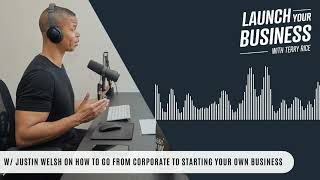
Justin Welsh, a former corporate executive, talks with Terry Rice about leaving his job to build a one-person business. He shares how he monetized a personal brand on LinkedIn and created online courses, focusing on scaling down instead of hiring.
To me, it's about scaling down, not up. And so let me kind of describe what I mean by that. Much like I was just referring to earlier, you raise 100 million in venture capital, you are tethered to an outcome, you have to staff up accordingly and it's go time. Let's go for the next 10 years. Whereas solopreneurship, I can define how much money I need to make based on how much I spend. If I need to make $200,000 a year, I can figure out a plan to do that. If I need to make a million dollars a year, I can figure out a plan to do that. But I can dial that up and down. And to me, it's not about the money.
It's about the time Justin Welsh went from being a burnt out corporate exec to an online business owner with over $1 million in sales. Today he's sharing his step by step process with you. This is the launch your business podcast because we know starting a business is challenging, but it doesn't have to be confusing. Each week we'll give you the tactical advice and the necessary tools to scale your business without feeling burnt out. I'm Terry Rice, business development consultant and staff writer here at Entrepreneur Magazine. Let's dive in. If you are looking to start a one person business selling digital products, Justin Welsh is the guy to follow. As an executive, he helped build two successful companies. Now as a solopreneur, he's made over $1.3 million from online courses. But here's what separates him from many other creators. As he's building his company, he shares how he does it in real time so you can copy his entire business strategy. During today's chat, he'll share how he stumbled across a million dollar business idea, a repeatable system to grow and monetize your LinkedIn following, and how to scale a one person business without accidentally getting back into the rat race. Let's get started. Hey Justin, thanks for being here today.
Gary, thanks so much for having me, man. I'm looking forward to having a chat with you.
Awesome. And I discovered you on LinkedIn, so I have an idea about your background. But for those who don't know, do you mind just introducing yourself?
Sure. My name is Justin Welsh and I've sort of had two careers in a weird way. I was in technology from 2009 till about 2019. I was a very early hire at a company in New York called ZocDoc where I worked my way up from the bottom to reporting to the CEO over five years. And I parlayed that into my first executive role in Tech in 2015 when I became the VP of Sales at a company called Patient Pop in Los Angeles. And it was pre revenue, so we didn't have any revenue, didn't have much funding or anything like that. I, I was the VP of sales of one person. And I went out and spent the next four and a half years, grew that team to about 140 folks, built revenue to a little over 50 million, did a quick sabbatical, came back as Chief Revenue Officer and took it to about 75 million during COVID And as I went to exit that role, the truth is I burned out. I just burned out really hard after 10 years of high growth startups and being an executive and just trying to hit that number on the sales side. And it just burned me to a crisp. And I knew I was going to leave my role. And when I did, I just started creating this hypothesis that if I was going to leave my role and actually be able to make some money, that I was going to have to create a little bit of attention online, go out there and make people aware of who I was and what my professional skills were. So late 2019, I started writing on LinkedIn with the idea that I'd be an advisor and consultant for SaaS businesses. And that has turned into a three year whirlwind of leaving the SaaS world, becoming a creator, building a bunch of different businesses online and helping other creators do the same thing. So Now I've left SaaS and I'm helping, you know, creators monetize their professional skills.
I love that. And I always say if you're leaving a professional service business or corporate career, you probably had these skills within you that can be applied to entrepreneurship, but you have to take the time to think about it and apply it and then test it out. I think you're a great example of that. But this almost happened by accident from what I'm hearing. So can you kind of just describe when, when you realized, hey, yeah, I can still do advising, but gosh, you know, people are coming to me for help just with creating content too. So where was this, this, this drive coming from?
Yeah, it was actually a very specific moment. So I was having lunch, I lived in Los Angeles. I was having lunch with my VP of Inside Sales, Kevin Dorsey. And I was chatting with him saying, I'm going to release some courses on sales on LinkedIn. I had grown a following to maybe 15 or 20,000 followers. And he said to me, he said, everyone is Releasing sales courses. Why don't you teach people how you've grown to, like, 15 or 20,000 followers on LinkedIn? Back three years ago, that was a lot of followers on LinkedIn. It's still a lot, but not as in the context of some of the other larger creators now. But I was like, oh, that's interesting. So I went and I looked into my direct messages on LinkedIn, and I started scrolling through all of them, and there were a few like, hey, how do you build a sales team? And can you help me grow my SaaS business? And things like that. But the majority, 80, 85% were like, I like your writing. How do you write so much content? Where did you learn to create content? Why are you growing so fast on LinkedIn? And I was like, oh, this is different than what I had assumed. And so I went out and I created this course in 60 minutes called the LinkedIn playbook. And I made it $50. And in the first 12 or 18 months, I sold $75,000 worth back in early 2020. And my eyes lit up and I realized I created this once, and Now I'm selling 1500 of them. This is really, really interesting. How do I do more of this? Because this is less work, more impactful at scale, easier, and I'm starting to make some real money doing this. And that was when everything changed for me.
Okay, so full disclosure, I've taken your course. I love it. I don't want this to sound like an ad, but it just works. So, so, so thank you for that. But one thing that I really liked about it was, first of all, it's good. But at the very beginning, you said, look, I'm focusing on high valuable content, not high production value. Meaning, you know, you just, you have these videos without all these special effects and, you know, cool lighting and so on, so forth. It's more or less just you talking over slides. And I appreciate that because on my end, what I found is some of the best courses I've taken recently. That's how they're put together. It's not like all this glitz and glam. It's more like more steak and less sizzle. So what was going through your mind when you decided to go with this approach? And I don't want to call it like a low fidelity approach, but just simpler and easier. Were you thinking it might flop? Was this an MVP model? What was going through your head as you went with this format?
I think it started with just lack of confidence. If I'm being very, very honest, and candid. I didn't know how to price it. And asking for money online for the first time is really scary. And I think a lot of people that I talk to are like, can I even charge money for my skills or my knowledge? And so it was partly that. The second part is that I don't like overly produced things. So I made it from a consumer perspective how I like to learn. Just give me the information, teach me how to do the thing. I don't need you to be in a yacht. I don't need you to be in a skyscraper in Manhattan that you rented out for a day. I don't need you to pretend that you're flying on a private plane. I think that's all a turnoff, to be quite honest. And so I wanted to be the opposite. I wanted to be like, this is going to be really, really good information. And I'm going to be sitting in my office here in Los Angeles using loom and zoom and recording and giving you all the knowledge I have in 60 minutes or less. And I'm going to make it really, really affordable. I think that was my original sort of take on it. As I grew and grew, one thing became really clear was that there was some really big sort of compounding effects of getting a great course at high quality into the hands of thousands of people. Because fast forward two, three years and I've remade the course. It's much more current. Somebody somewhere is saying something good about my course on LinkedIn every single day because I've got now 6,000 students and they talk about it because it's affordable. And that just does this network effect where every day, 10, 15, 20 people buy it because their friend talks about it for the first time. And so I'm doubling down on that. Affordability, accessibility, a hundred x value for what you paid for it. Because I love getting it in the hands of as many people as possible.
Okay, we're going to take a quick break here, but when we come back, Justin's going to tell us more about his course and pass along some extremely valuable content strategy tips. Just get started. If you've ever looked for tips on launching a business, just get started seems to come up a lot. And while that's vaguely motivational, it does not provide any real direction. Because the next logical question for anyone would be, well, how do I get started? What specifically should I do? Well, if you're looking to quickly start a business without the confusion, risk and pressure of doing something entirely new, I have got a solution for you. It's called the Solopreneur's Fast Track. A step by step process on how to start a business using the skills you already have and actually enjoy using. So let's say your favorite part of a previous job was email marketing. You'll learn how to start a business offering other companies advice on how they can improve their email marketing. Or maybe you are really good at integrating complicated tech tools. You can help other organizations do the same thing without the need to bring on a full time hire. So the main point here is that everything you need to start a business is already within you. You don't need a cool website or fancy tools. And by completing the course, you'll also discover a simpler approach for attracting clients without using complicated funnels or cheesy sales tactics. You can finish it over a weekend and start making money in as little as 30 days. You'll gain the clarity and confidence you need to start your business. And receive a one page business plan so you can immediately apply what you've learned. Get started today and receive a 20% discount by heading to TerryRice Cat. That's TerryRice co. Fast. And we're back. So Justin, walk us through the course. What is it about? What are the outcomes? Just let us know what we can more or less expect from it.
Yeah, my newest course, which is the LinkedIn playbook but redone for sort of 2022, is called the operating system. Can't call it the LinkedIn operating system. I was notified by LinkedIn, but, uh, it's called the Operating System. And essentially it's not just a course about like writing content on LinkedIn. Like writing content is one slice of a fuller pie. And so what the goal is is to really teach you how to figure out how to take all those professional skills that you've learned in your career and how to monetize that as a one man or one woman business. And so LinkedIn is a major driver of that monetization. But it all starts with becoming known for one thing. So I teach people like, how do you niche down? How do you become someone known very specifically for one thing? And then once you become known for one thing, what are all the pieces that go into that? How do you set up your profile? How do you set up all of your different content? How do you make sure that you have the right outcomes in mind for your readers? How do you use outbound and inbound marketing to finally get customers? How do you write good content that gets people interested in actually doing business with you? So it's picking your niche Setting up your foundation, creating the right amount of content, using inbound and outbound marketing, and really setting up a flywheel system that's almost fully automated for the most part. And that's what I teach over about 90 minutes in the newest course.
To your point about it being automated, I can attest to that because during the last month at least one member of my family had Covid and it was tough, obviously, just managing that. But my business actually grew last month due to the fact that I had so much content on LinkedIn it was insane. So people are reaching out to me saying, hey, you know, how can I work with you? Can you talk to me? Can we talk to you? So and so forth. And I'm like, not right now, cause I look like crap. But yeah, I mean, I think you're enabling people like me who have good ideas, have a business, but just don't have a way to create a system around it to monetize it, which I think is amazing. And that's really what separates your course, in my opinion, from some of the other ones I've taken. Because you're not just like the content creator guy. It's like, you know, well, what do you do next? You know, what do you do with this, this content? But with that said, I would like you to go through a few high level tips on how we can create better content on LinkedIn to grow our brand and revenue. Do you feel comfortable sharing a few of these tips? I don't want you to give away the whole course, but if you could do that, that would be amazing.
Yeah, for sure. I think about it through the lens of a former sales leader, because that's what I am. And sales is always intertwined with marketing. So let's kind of think through the traditional marketing funnel, which is awareness, interest, action. People have to be aware of you, then they have to become interested, then they have to make a decision and they have to take some action. And so I think of creating content that pulls people through that funnel. And I price my courses in what I call impulse buy pricing. So I can bring you through that funnel in one week. And so let's kind of break down a week. We'll start with Monday with awareness. Awareness is just the fact that I exist and that I am Justin. And here's what I do for people. I just need you to know that I'm alive, that I'm out there. And so in the beginning of the week, I'm generating a lot of awareness content and awareness. Content is really sort of four styles of content. Number one is this person teaches or educates me. Number two is this person makes me think. Number three is this person empathizes with me. Or number four is this person motivates me. And so I try and create that four different styles of content early in the week, just to get a lot of engagement, 2,000, 3,000 engagements on a piece of content, really getting people to connect with me, right? So that I'm going to be in their feed every day. Once I kind of generate that awareness, I want to get them to show some interest. And interest, what I found comes through education, showing them something they otherwise wouldn't know. So as I move a little further in the week, what I might do is really kind of open up my brain and show them how I think about a particular topic. So here's 11 steps to writing the perfect piece of LinkedIn content. Or here's seven different ways that you can market effectively on LinkedIn and getting people further down that funnel. And then I'll try and get them into my email newsletter where I can take them further down from just having that interest to really building that trust, getting them to that decision. And then once they're in a place where they can make a decision, I want to actually ask them to buy. And so once a week, towards the end of the week, I put together a sale or I promote my course online and I ask people to pull the trigger. And given the fact that it's at $150 price point, I can usually move them through that funnel in the course of a full week and get them aware, get them interested, get them in a position to make a decision, and then get them to take some action.
That's, that's brilliant because I followed your content for a while and I obviously brought the course right because I saw value in it. But the level of care in strategy that you put into your content is, is admirable. And I mentioned this a while ago, like, even when you're writing lines, like, the shape of the lines is important to you, and I can appreciate that. And just as an aside, you know, you deserve all the accolades and respect and revenue you're generating because you're not just throwing stuff at the wall. I mean, I can tell this is something you've thought about and said, you know, what's the best way to do it? And even before that, you said, look, you know, I built a community before asking. Whereas I think a lot of entrepreneurs, unfortunately, you know, they seek significance before they do something significant. And you, by design and by practice didn't do that. So it's just a good lesson for anyone that you know. At first you find the audience, then you listen to their problems and then you build a solution. Don't do it the other way around. Where it's like, here's a solution. Now where's my audience?
That's, that's right. I see so many people out there trying to sell something, services, products, whatever, and they, they're not actually known for anything. Like what? And when you're not known for anything or you're just in sort of a nebulous large niche which is like, I help small businesses grow. Like what does that mean? What kind of small business? A small startup, a bakery, a plumber, what does that mean? And so people are super nebulous. So they're commoditized, they're competing against every single other person in the world. Who says I help small businesses grow versus some people get known for one specific thing over many years and they write content about one very specific thing. So early in my career I wrote content around helping early stage SMB SaaS companies in the healthcare technology vertical grow to 50 million in recurring revenue. I was the only guy in that very specific niche, so I could charge top dollar. And when a healthcare company was early stage and wanted to grow towards 50 million in recurring revenue, I was the only option. And so that made it easy for me to win all the time. So it's like become known for one thing and focus on that very specific niche. Nail that. Expand, expand outwards later, but start small and own that.
So we talked about how to create content and that was great. But now how can people monetize it?
There's so many different ways. And I think that's where it's so fun to be creative about earning income online. And once you figure out how to make a little money online, you can't stop seeing opportunities, which is really neat. So I'll give you a few examples of just things that come to mind. For me, the simple one is digital courses. Other ones are things like cohort based coaching programs where you invite a group of students in for a cohort or a group and you say, hey, we're going to take 30 students over six weeks and we're going to march together towards some intended outcome. That's another one, right? Another one is a private community taking people who are all marching towards one outcome or marching to the same beat of the drum. And maybe there's no coaching involved, but maybe it's just a slack channel or A discord channel where people are all helping each other out. You can charge recurring revenue for that. I have a product called the Monthly Templates where I actually send out five, fill in the blank Twitter and LinkedIn contents that people can use to scale their writing. I charge $9 a month. In 45 days. It's a $9,000 a month product. That is another opportunity. You could do LinkedIn profile tear downs. So like charge $50 to tear someone's profile down and rebuild it from scratch. Once you get really good at it, outsource it for $15, skim 35 off the top. You know, I also go through and say things like, here's 50 posts of mine that are my top 50 posts. I find that in a piece of software. Send that to somebody in upwork, turn it into an ebook, sell it. Like, there are so many different ways to make money online. Or take your skill professionally. Whatever you do, coaching, marketing, sales, customer service, tying balloon animals, doesn't matter, right? Whatever you do, like, go create content around that, Find people who are interested in that service, charge them an hourly rate, generally charge 2 to 3x what you might charge at your current corporate role. There's so many different ways to make money online. And I take an approach. I call this diversified entrepreneurs approach. Where it's not like, don't find one, find five, or find one, double down on it. Get really good at it. Add a second, add a third, add a fourth, add a fifth. Because when you have a diversified approach to entrepreneurship, you're like a venture capitalist, right? You're not making one bet on one startup. You're making many, many bets and hoping that one big one pays off. That's how I treat my career. So the more creative you can get with finding these revenue streams, the more you can act like a venture capitalist treating your own career.
All right, love that. So what are you doing when these creative ideas come up? Because I saw one of your posts, like you and your wife go for walks in the morning. I'm not sure if that's when it happens, but when does creativity hit you? Because on my end, it's usually when I'm not trying to be creative. I'm on the assault bike at the gym or the rower. Maybe it's when I'm washing dishes or something like that. But what about you?
Yeah, it's definitely times where I'm away from the computer. When I'm sitting in front of the computer, I am producing for the most part. When I step away, shower, walk, chatting on the phone with A friend, yesterday or two days ago, we were in Mexico and we were at this like, really small village watching these rug weavers weave rugs. And like, I had this idea for a new product just because I was watching them do this thing that kicked off an idea. So generally, no, no, it's not a rug. It's just. It's just how they priced their rugs that actually like kicked off this idea for bundling my services, which was really interesting. But it comes every time I'm not in front of the computer. And I think that's so important to, for creators, which is sort of the word that we use to encapsulate all these folks. Creating online to actually be creative. And to be creative you got to disconnect from the Internet and from online and from all the, you know, all the sort of distractions. And So I recommended 1staley 90 minute walk. That's where most of my ideas come from.
Okay, I got to find those 90 minutes. But you have to create time for that white space because there's this really great study, I think it was from Forbes, where 96% of corporate execs said their best ideas came to them when they had white space for strategic thinking, but only 3% actually make time for it. So it's like, well, maybe you should because the outcome is so important. But on your end, what I'm hearing is, you know, you have this set of skills, but you're also not afraid to develop other ones by using different tactics, tools, and so on and so forth. So during your journey as an entrepreneur, do you mind sharing some of the, let's say, routines, tactics, tools or whatever that have helped you?
Yeah, I'm super routine focused and my whole sort of business or businesses couldn't operate unless I was routine based. And so generally what I do is each morning I start by getting on social media, LinkedIn and Twitter and I'm sharing my content. So my content goes out at about 7:15 on LinkedIn, about 7:25 on Twitter. I spend those first 45 to 60 minutes doing what I call unscalable things, which is basically like interacting with every single person who interacts with my content for 60 straight minutes. And that's like 500 to 700 people every morning.
Isn't that a bit exhausting? Like, do you ever run out of stuff to say? Sometimes you just drop like a quick 100 emoji and call it a day.
I mean, sometimes if people aren't saying anything, that requires, you know, a good thought back. But for the Most part, like that became part of my habit. And where you see like these large creators, like, I'm not picking on anyone in particular, like Gary Vees of the world. And those folks, like they're not doing a lot of interacting with their audience anymore and they don't have to, by the way. They've built a big enough, you know, brand. But like, for me, that's part of my, my mantra is like staying connected to my audience and staying connected to my community. And So I spend 45 to 60 minutes every single morning doing that. Once I'm done with that, I go on that 90 minute walk. So 90 minute walk, let those ideas kind of flow in the beginning part of the day, get my mind working, come home, shower, lunch, and then it's content time. And there are three kind of specific things I need to accomplish every week. One is I gotta write content for Twitter, I gotta Write content for LinkedIn, I gotta write my weekly newsletter. And I have to make progress on my subscription product, which is those templates that I talked about earlier. So generally like I'm doing that kind of early afternoon, ish, after a cup of coffee, second coffee of the day, I'm in my creative zone, kind of rolling through those things. Later in the afternoon, as we move into 3 and 4 o', clock, I'm doing some of my coaching and consulting calls where I'm helping other creators who want to maximize their online presence to monetize their brand. And so I'm spending a lot of times in the afternoon and doing that. What's really interesting with those afternoon calls is that's another time for energy to flow. You're talking to people, you're hearing about their problems. What does that do? It's content for tomorrow. All the things you learn and hear, you turn that into content. So it's kind of like a wheel where every single day, getting fresh in the morning, getting creative writing, talking, getting stuff from that talk, using that to be creative tomorrow, it all sort of hooks together. And that's kind of my routine. Nothing too much more complicated than that.
I found for many people, once you get clear on your purpose, which for you sounds like challenging yourself, being able to help people while still staying active and spending time with your wife, you don't really need much extra stuff.
Well, one really interesting thing about being a solopreneur, which is sort of how I describe myself, I think entrepreneur always conjures up These images of SaaS, entrepreneurs or people who raise 100 million in venture capital funding. The problem with that, it's not a problem, it's just a choice. The problem with that is you become tethered to this one result, raise 100 million bucks for your startup company and that's it. Like, you better grow that thing. Get the you're all in. And being a solopreneur allows me to actually have sort of a different take on purpose. So my purpose isn't scaling my business to 5 million or 10 million, regardless of whether I have goals. It's not my purpose. My purpose is actually more internal. And the thing that drives me is reaching the top of a new game, reaching a new level. And that sounds weird, but I went from the bottom in sales to the top, became a chief revenue officer and then quit and then completely turned into a creator with no followers, no monetization, and have ascended up that ladder and figuring it out and starting to make a real seven figure business out of this. That's awesome. I may quit this in two years and open a brewery, try something new. I enjoy the idea of being so flexible that I can do whatever I want and have the confidence to say, let's start from the bottom again and see if we can work our way to the top. That to me is the most fun thing in the world.
So you just used the word solopreneur as opposed to entrepreneur. What's your operational difference? So what does solo entrepreneurship mean to you and how has that impacted you both personally and professionally?
Yeah, to me it's. It's about scaling down, not up. And so let me kind of describe what I mean by that much like I was just referring to earlier, you raise 100 million in venture capital, you are tethered to an outcome. You have to staff up accordingly, and it's go time. Let's go for the next 10 years. Whereas solopreneurship, I can define how much money I need to make based on how much I spend. If I need to make $200,000 a year, I can figure out a plan to do that. If I need to make a million dollars a year, I can figure out a plan to do that. But I can dial that up and down. And to me, it's not about the money, it's about the time. People always say, how do you plan on scaling? I don't, I don't want to scale. I make plenty of money and I don't want to do any more. I don't want to scale that at all. I actually just want to work less. So I'd like to make the same amount of money and work Less to me, that is scale and that is not scale in the traditional sense where people are talking about going from 5 to 10 to 20 to 50 million. I just want to stay stagnant and do less. And that allows me to be more creative, spend more time with my wife, travel more. And those to me are the wins versus can we scale the business? So that's how solopreneurship, kind of. That's what it means to me.
Okay, so you just gave us a lot of great advice on how to start a business as one person. But I know there are some people out there who for every reason feel like this just won't work for them. So what holds people back and what would you say to help them out?
Yeah, I would say the biggest thing I see that keeps people from starting on this journey is the idea that they don't have monetizable knowledge. And I would say to everybody, don't think of yourself as becoming a quote unquote expert. Like, there's not usually a certification for being an expert in what you do think about what you do as a journey. And the question that everybody should ask themselves if they want to monetize their knowledge is, who? Where was I two to three years ago? And what do I wish I knew two to three years ago that I know now? If you can answer that question, the only thing that's stopping you is finding the you from two to three years ago out on social media. And if you know who you were two to three years ago, you can go help those people. And they will need that same knowledge that you have today. So don't worry about being the best, the greatest, the smartest. Just look at it as a linear journey. Find those people that are one rung below you on the ladder. Go help them.
And that's our show for today. You can learn more about Justin by going to his website. That's Justin Welsh. Me. I'll spell it. J U S T I N W E l s h me. And don't forget to follow him on LinkedIn and Twitter as well. I'll see you next time. Apply what you've learned on today's show. You'll find the show notes and more resources at Terry Rice Podcast. Again, that's Terryrice co Backslash Podcast. And the best way to support this podcast is by subscribing, telling a friend and leaving a review. Also, you can get more tips by following me on Instagram at Terryrice or follow me on LinkedIn. This episode was produced by Josh Wilcox of Brooklyn podcasting studio and edited by Dan Lardy. Special thanks to my wife, Dominique, for keeping our kids relatively quiet as I recorded. Thanks again for listening. I'll see you next time.
More from Terry







When you want to quit, don’t. #FitnessOver40 #MindsetShift #TiredIsNotAnExcuse #PersonalGrowth




You’re gonna want to give up. Don’t. #mindsetshift #motivationalquotes #motivation #dontgiveup