Kim Kaupe Shares How to Build a Powerful Network (Even if You’re an Introvert)
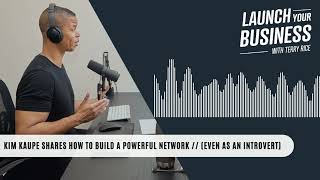
Kim Kaupe, an agency founder, talks with Terry Rice about building a professional network without forcing it. She covers follow-up strategies, using LinkedIn effectively, and finding accountability partners to keep you consistent.
Nobody really understands the nuance of the follow up. That's the part that most people are missing when it comes to really powerful networking. It's following back up and saying, hey, I loved your speech. You're amazing on that podcast. I loved your quote in that article. I thought you were so great at that event. Can you give me some homework? And then actually doing that homework and giving them feedback. I think most people don't realize that that is such a small, nuanced thing when it comes to networking, but it can be the most power feature that you have.
I'm sure you've heard the phrase your network is your net worth. And while that may be directionally true, it doesn't provide any pointers on how to actually build that network. That's why today we have Kim Kopp. She's an agency founder, educator, and podcast host. And today she's going to help you grow a powerful network. This is the launch your business podcast because we know starting a business is challenging, but it doesn't have to be confusing. Each week we'll give you the tactical advice and the necessary tools to scale your business without feeling burnt out. I'm Terry Rice, business development consultant and staff writer here at Entrepreneur Magazine. Let's dive in. How much would you charge to make a social media post for a brand? $500 5000? I had no idea either, but I needed to, since a brand was asking me to complete a proposal. Fortunately, I had someone in my network that would have the answer. Kim Kamp. I had a brief cameo in a video she made for another brand, so I knew she was at least somewhat familiar with how the whole thing works. We chatted for about 30 minutes and I left with the clarity needed to move forward with the proposal and I was able to close the deal. So my network actually helped me increase my net worth. This is just a small example of how having the right connections can boost your business and your confidence. But how do you build your network, especially with the lack of in person events and constant solicitations on social media? Well, that's what Kim's going to chat about today. She'll teach you how to build an impactful LinkedIn profile so you can stand out from the crowd. A repeatable and authentic way to connect with the right people no matter how busy they are, and how to provide value to your network no matter how far along you are in your business or career. So let's hop into it right now.
I'm Kim Kalp. I'm a founder and edutainer Which I like to say is an educator, but that is also highly entertaining.
I dig that. And can you go a bit more into your background? How, what are you educating people on? If that's the way to say it.
I have two companies. I have a marketing agency called Bright Ideas Only, where we work with celebrities, a list, artists, sports teams, entertainment properties to help them engage their fan bases. And then I have a company that's all about helping people build their career capital. So helping them capitalize on their knowledge, their network, and really how they're showing up with their executive presence in their space. As a leader or as a corporate worker, or as a CEO or a founder.
You're obviously a pro at networking, so I'm sure you get a lot of questions. But what is one question that people never ask you, but they should because the response is so critical to their success?
People never ask me about following up with networking. So everybody gets the idea of I exchange business cards or I add them on LinkedIn or I follow them on Twitter, but nobody really understands the nuance of the follow up. And that's really the most powerful part. It's not just about I contacted them on LinkedIn or I connected with them on a social media platform. It's following back up and saying, hey, I loved your speech. You're amazing on that podcast. I loved your quote in that article. I thought you were so great at that event. Can you give me some homework? That's always my go to line. Is there a book that you think I should be reading? Is there a podcast that you think I should be listening to and then actually doing that homework, reading that book, listening to that podcast, checking out that article and giving them feedback. I think most people don't realize that that is such a small, nuanced thing when it comes to networking, but it can be the most powerful feature that you have because sometimes people are getting outreach from hundreds if not thousands of people, depending on who they are and what they're doing. So making sure that yours stands out and is unique in a special way. I think that's the part that most people are missing when it comes to really power networking.
That's brilliant. Even on my end, I'm like, never thought of that. So I'm glad we're talking here. So now I'm going to shift roles for a bit, pretend that I just left my job in corporate and I'm venturing off into entrepreneurship. But for years my identity was tied to the logo of the company that I worked with. Right. What should I do? What are some of the first steps I should take in regards to growing my network?
The first steps that you should really take to growing your network is to, number one, let people know that you left corporate, I think so many times, especially now, we're all busy people, we got a lot of stuff going on. Sometimes your friends or your family members are those closest to you, they don't even know you left or they don't even know that you started a new gig and a new job or a side hustle or a company that you intended to found. So let your network know, whether that's posting on LinkedIn or Twitter or Instagram, or sending personalized emails out saying, hey, I'm doing this new thing. I wanted to tell you about it. I wanted you to check it out. So I think, number one, let people know what you're actually doing. I think that so many of us miss that very basic first step because as you know, we are always the centers of our own universe. And so sometimes we think the sun and everything else revolves around us, but it does not. So actually letting people know what you are doing is number one. And number two, I would say the best thing that you can do when it comes to representing yourself outside of the corporate sphere is really building your career capital, really investing in yourself. So I would say if I could start anywhere with anybody, please start with your LinkedIn. It is one of the most powerful business networking platforms. It is also, fun fact, one of the oldest. It is 18 years old. I know it's, it's legally allowed to join the army, but LinkedIn is 18 years old. It is the oldest social platform and it is also one of the most frequented by C suite executives, business leaders. It's just a powerhouse platform that you need to be on. So I know sometimes that can be intimidating for people, especially when they maybe have let their linkedins lag or they haven't logged in in a while, but I know sometimes you just need that little boost. So if you actually go to helpmylinkedin.com I have a whole system. It'll probably take you anywhere from 30 to 40 minutes. It's totally free. It's easy, I promise I make it super fun. But I would say LinkedIn is another great tip. If you're just leaving the corporate space.
I think everyone wants a cheat sheet. But then it's like there's still hard work that goes into it. It's like it's gonna be challenging. You're making it less confusing. That's the gift. You're Giving people it's clarity and time comp.
The best example I give people is if anyone has nieces or nephews or they themselves play video games. It's like getting a cheat code. I'm not saying that you can't go through the game. You can. But if you have a cheat code and you can just automatically get to the next level or automatically get that secret weapon that you've been looking for, then why not do that?
Okay, so from my perspective, the three most important things you can bring to any relationship are your knowledge, your network, and your ongoing support. But when you're first starting out, it's hard to even position yourself as someone that people want to connect with. So what would you say beyond going on LinkedIn or even in addition to LinkedIn you could do to make yourself someone that people actually want to align with?
The number one tip to make yourself somebody that wants to be in the mix and people want to network with is to be helpful. I always say the number one way that you should be ending meetings or interactions with people is to say, how can I help you? And don't just make that end on how can I help you? And work, but just as a human being, how can I help you? I cannot tell you how many times I have been recommending hairstylists, dog walkers, movies, podcasts to listen to, because at the end of the day, in addition to work, we're all humans. And if you can help somebody find that dog walker or find that new hairstylist, that can be a huge help in their life. So I always say, if you can end a meeting with how can I help you? Or that networking session, or end that event or conversation, it's going to be a really powerful way for people to remember you.
We're going to take a quick break here, but when we what are some not so obvious ways that people can network that they should strongly consider if they want to stand out from the crowd? Right. Which is our goal. And this would be in addition to, you know, sending these very unique DMs and talking about the person's background, what are some other not so obvious ways that you can grow your network?
I would say the number one not obvious way that you can grow your network and also the one that tends to make people feel the most uncomfortable. But it is the, the best is to ask for help. People don't realize how much their connections that they already have want to help. So if you say, hey, I'm actively trying to network with people in the CPG space because I'm really curious about XYZ or hey, I'm really trying to network with people in the NFT space. I'm really curious about how Blockchain is going to be doing there in the future. If you post again, whether it's on LinkedIn or just in person with friends or family members or coworkers, hey, do you know anybody that's working in this field, in this industry, at this job title that's going to be helpful to help you network with other people in the industry? I think sometimes we forget that simply asking for help can lead to a flood of information that. I'll use myself as an example. I recently moved from New York City to Austin, Texas. I moved during the pandemic. I didn't know anybody in Austin, and obviously meeting new people during a pandemic is a little difficult because people don't necessarily want to interact with people they don't know, know certainly people who had been traveling. And so what did I do? I reached out to my wider network and I said, hey, does anybody know anyone in Austin? Do you have an old college roommate? Do you have a sister? Do you have a cousin who lives here? That is cool that you could introduce me to? And I'll use an example from Entrepreneur. But Jason Pfeiffer actually was like, I have a great friend. She lives in Austin. Her name's Vanessa. You're going to love her. Turns out we did meet up and not only did we hit it off, we have become fast friends and we hang out now all the time. All because I sent that one message that said, hey, I'm moving to Austin. Do you know anybody? And so that's a perfect example of a through thread of I sent the message, Jason reached out. Jason knows Vanessa now. Vanessa and I know each other, and it's all because of just asking for help.
I'm going to jump in here real quick just for context. The Jason that Kim was referring to was Jason Pfeiffer, who was the editor in chief of Entrepreneur magazine. And I wouldn't be talking to you or Kim if it was not for him. I met Kim through Jason, and I met Jason while our kids were attending a gymnastics class together here in Brooklyn. X years later, I'm now a staff writer at Entrepreneur magazine and talking to you right now, but it also started with me offering and asking Jason for help. We had him on the podcast that's episode two, so if you haven't already listened to it, I strongly suggest that you do. He passed along some great advice on how we can embrace change and come up better on the other side. But in looking back at that chance encounter, I remember scrambling to think of how I could even start the conversation. Now, I'm not shy, but I am an introvert, so just walking up to a random person does not come easily to me. So I asked Kim what advice she had for other introverts out there and we'll get into that.
Right now I have two pieces of advice for introverts who are interested in networking. And the first is to start digitally. I think that's a great way to kind of get into the shallow end before you move into the deep end. But digital networking, I think can be a really great forte for you into what it's going to be like when you start networking in person again. So definitely start digitally. I think that's a really great key. And the second is accountability. It's like going to the gym sometimes. It's really hard to go to the gym by yourself. Sometimes having that extra gym partner or somebody who's relying on you makes it a lot easier and kind of gives comfort like, hey, I'm going to the gym with someone else. So as you start networking, I would say get that accountability partner, whether that's me, whether that's somebody else. It doesn't even have to be somebody who you interact with in real time. It could be somebody that you know digitally. But having that accountability partner is going to be really key to help you feel confident and help you feel like, okay, this is something that I can do, I'm feeling good about it, and it's not something that's causing a lot of nervous energy or anxiety.
So speaking of anxiety, let's, let's stay with that for a moment. Do you have any tips for how you can make the most out of an in person event while also respecting everyone's boundaries, that they might have the.
Best piece of advice as we start to get in back into in person networking and what that looks like. I always say less is more and you can do more later. So what I mean by that is let's say you're at a networking event and there's 20 people there or 30 people people there or 40 people there. If you can simply meet two, maybe three people at the entire event, but you keep going afterwards, that is going to be what matters. So let's say you meet two people at an event, you meet Brian and you meet Rachel, and Brian and Rachel were interesting people and you had a great conversation. You can reach out to Brian and Rachel separately and say, Rachel, it was so wonderful to meet you. I'd love to have a further conversation. In fact, I love what you brought up about xyz. Do you have any other colleagues, co workers, friends that are also knowledgeable in this subject area or that you think would be interesting for me to meet? And Rachel might say, absolutely. In fact, I know two people that are also in this space. Why don't the four of us go to coffee together? Or why don't the four of us go to this event that is coming up next week? So that's just a simple example. But sometimes when you utilize people's networks, they also feel more comfortable because they say, oh yeah, I know my coworker or I know my friend. And therefore you are the only new person in this group in this smaller subset. But it was organized for you for your purpose. So I always say, even if you meet two or three people at an event, how can you leverage their network, which they also might feel more comfortable with. As we get back to in person events, it might be much easier for for someone to say, hey, I'll bring my friend Tiffany, I just saw her last night, than it is to go into another event with another 20 strangers. So I think that can be a really powerful tool as we get back to networking in person.
I love this approach and I think the more specific you are about who you want to connect with, the more impactful it is. So I do want to be respectful of your time and I appreciate all these great tips and stories you shared. But is there anything else you'd like to pass along? And also, what's the best way for people to keep up with you?
I would say the most important thing when it comes to networking is also being around like minded people. So I know for me, what really helps is getting an intentional space every single week where I'm networking and meeting people on a regular basis. Kind of like brushing your teeth, you're doing it every day. So for me, that's every single Wednesday at 1pm I would love to invite anyone who's listening to join. You can go to get coffee with kim.com, that's get coffee with kim.com and you can join me for coffee every single Wednesday with other really wonderfully smart, brilliant, talented people that are also making intentional time to network every single week.
I like the part she mentioned about being intentional and having an accountability part partner. So fun fact coming at you. The American Society of Training and Development found that people are 65% likely to meet a goal after committing to another person. So let's say your goal is connecting to 10 new people each week. Let a friend know they also found the chances of Success increase to 95% when you build in ongoing meetings with your partner to check in on progress. So grab a buddy, set networking goals and keep each other accountable. This could be as simple as sharing a Google worksheet documenting your outreach activities, then checking in to see how things are going every week. And I'd also recommend sharing this episode with them as well. Kim passed along so many amazing tips and you'll find them summarized in the show notes. And also, don't forget to get her cheat sheet@helpmylinkedin.com you can also find her on social media at Kim Kopp that's K I M K A U P E and if you enjoy this episode, please reach out to her, reach out to me, and I'll see you next time. Apply what you've learned on today's show. You'll find the show notes and more resources at TerryRice co. Podcast. Again, that's TerryRice co podcast and the best way to support this podcast is by subscribing, telling a friend, and leaving a review. Also, you can get more tips by following me on Instagram terryrice, or follow me on LinkedIn. This episode was produced by Josh Wilcox of Brooklyn Podcasting Studio and edited by Dan Lardy. Special thanks to my wife, Dominique, for keeping our kids relatively quiet as I recorded. Thanks again for listening. I'll see you next time.
More from Terry







When you want to quit, don’t. #FitnessOver40 #MindsetShift #TiredIsNotAnExcuse #PersonalGrowth




You’re gonna want to give up. Don’t. #mindsetshift #motivationalquotes #motivation #dontgiveup