Nobody Cares – Now What? With Jay Siano
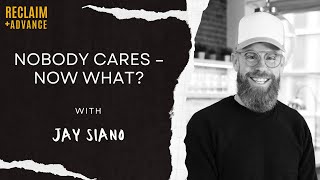
This is a YouTube video titled "Nobody Cares – Now What? With Jay Siano" published in July 2024. It features a deep and candid conversation between Terry Rice and Jay Siano discussing personal struggles, overcoming addiction, finding purpose, and the impact of family dynamics. The dialogue covers Jay's journey through loss, recovery, and success in commercial real estate and wellness, with Terry sharing parallel experiences. The content is motivational and aimed at helping listeners navigate challenges and build resilience.
Jason, how's it going today?
It's going well, my friend. Happy to be here.
Yeah, I'm glad to have you on too, because thus far, every guest that's been on the show I've known personally for at least a year or so, and they come on here, they tell their personal stories and they're comfortable because they, they know me. But this is the first time, like I met you, like everybody at a, at a networking event a while ago and we talked for like maybe an hour, which is great. But now we're about to get really deep really quickly. So this will be an experience for me too, because I have no idea what you're going to talk about and I like it.
That audience. Yeah, that's great. No, I, you know, it says a lot. I really appreciate you obviously asking to have me on here because a lot of my story and a lot of what gets me going every day is to really help people that maybe are going through some of the things that I have gone through or am currently going through.
Got it. Well, let's start with the bright side because you're doing a lot of cool stuff. You've done a lot of cool stuff. So let's just go ahead and brag for a little bit just to warm it up here.
Sure. I'm a 23 year overnight success in the commercial real estate industry. I've been super fortunate to represent companies like Starbucks Coffee. Brought Chipotle to New York early 2000s, started representing a brand called Orange Theory Fitness at their first studio. Still remain very close with the founders of that company. Just accomplished the hundred studio mark with a client that I initially was working with when they only had a handful in Washington D.C. that company is called Solidcore, which is one of the dominant corporately owned boutique group fitness companies on the planet today. I helped the founder, my friend, exit at 100 Studios for just shy of 90 million. So you know all, all fun things. Checking boxes along the way, having some fun.
Yeah, you're checking some pretty big boxes. I mean, you're being humble about it. But let's talk about checking boxes a bit further here because on your Instagram, I see you have this daily routine that you go through and you check the boxes off once you complete them. Do you mind first of all explaining what the routine is and what caused you to create it?
Yeah. So, you know, I pride myself on really surrounding myself with inspirational people that are way further ahead than me at things. Right. So those people kind of pull me along. I'm extremely disciplined and consistency is one of my superpowers. But having said that, when you start surrounding yourself with people that are really at the top of their game as far as high performance goes, as, you know, Terry, it starts to rub off on you. So, you know this. I would say that. That when I first did 75 hard in probably, you know, during the. During the pandemic, I want to say it was, you know, 2020, I was living a healthy lifestyle already and, you know, a workaholic as well. And I wanted to start checking my relationship with alcohol, and I did 75 hard. For those who don't know, 75 hard is essentially two workouts a day. They have to be a minimum of, I think, three hours apart. One has to be outdoors, no alcohol, 10 pages of a book, very clean, eating a gallon of water a day. And, you know, I. The next year, I felt so good as a result of doing 75 hard that the next year I did 75 hard three times. And part of the reason for it was, first off, I was bored as hell during COVID right? So I had to fill my time, and I just wanted to level up as much as possible. And somebody who's as busy as me when you're not as busy as you're used to being, I had to fill those gaps. And it was probably the best thing that ever happened to me because I. I started to realize that my very close friends who drink heavily would start to not ask me why I'm not drinking when I was doing 75 hard. So I actually used it as a tool to not have to explain to people why I wasn't drinking anymore. So in that first, you know, in that second year that I did it three times, you know, that's where those kind of daily habits started to happen. And I was thinking to myself, you know, how can I create a routine for myself that's really like an everyday daily habit routine that was definitely 75 hard inspired, where I don't need to be doing a program like that to just be living an optimized life.
Got it. It's funny you said you did 75 hard three times in one year. Quick math tells me that's around 240 days. That's pretty much the whole year. So. Yeah, you definitely, definitely made it a routine there. Can you just share what that checklist is that you.
Absolutely. Yes, that's right. Yeah. So I. An ice bath, a fasted workout, not eating before 1pm, hitting my body weight in grams of protein, REM, trying to get a minimum of, I believe, one and a half hours of REM sleep. Mouth tape shut at night to sleep. And evening journaling, I think. And alcohol used to be on it, but it's no longer necessary because that's not a thing any longer.
Got it. Got it.
Yeah.
So, yeah, we both do fasted workouts, and we both worked out today. And it's 11 o' clock our time right now, so we both have another couple hours before we eat. Let's see how this conversation goes.
Terry, my challenge now is that I'm actually trying to break my routine of intermittent fasting because you and I have this in common. You know, I was very overweight at one stage of my life, and I actually shed, like, 50 plus pounds by doing the Atkins diet. I'm talking, like, you know, early 2000s, late 90s, early 2000s. And, you know, that was the first time I ever experienced, like, a normal weight and, you know, being, you know, maybe considered even, like, skinny or not necessarily fit, but skinny for the first time, you know, not overweight. So, you know, now I have that mechanism in my head that unfortunately, like, some sometimes keeps me tied to, like, cardio and eating salads. You know, I can't. Even though I know that's not the answer, I sometimes resort back to. Back to that stuff. You know, the fat kid in me.
So, yeah, yeah, no, I'm right there with you. So it's like. And I remember, like, I don't go too down this rabbit hole, but I remember, like, spending a lot of time trying to manage my wardrobe to hide the way I looked, like, trying to find shirts that would hide, like, my man boobs and stuff. And it's like, bro. You know, that's an option as well. Like, so.
And you know what? So when you see the person pulling the bottom of their shirt out, like, as if it's, you know, like, it's just that. That insecurity of, like, not seeing your love handles. Like, I know that I. I feel it, but, you know, there is a. There's a way to actually, like, fit in your clothes. It takes hard work.
You know, it's funny, I still don't tuck my shirt in because I'm just kind of sloppy.
Oh, I don't either. No, but I meant, like, when people, like, even in T shirts, you know, like, it's. It's a. It's an overweight kind of insecurity habit that you, like, pull the shirt away from your stomach because you feel like, you know, you could kind of see the. The A and the C curve, you know, of your. Of your love handles. So it's a thing that I'm used to, and when I see people doing it, I'm like, just. Just optimize your life, man. You don't have to do that.
Yeah, yeah, I'm with you. So you mentioned doing 75 hard during COVID as being one of the best times of your life. And as you know, on this show, we also talk about one of the worst times of your life. So I want to thank you in advance for your honesty, for your openness, for your authent, because I know it's what our listeners need to help push through their own challenges. So I'm going to turn it over to you whenever. Whenever you're ready here.
Yeah, so this is an easy one for me, unfortunately. So my mother was diagnosed with cancer when I was in college at the University of Arizona. And I had to make the decision. When I learned about, you know, her. Her cancer diagnosis, I had to make the decision was I going to stay at school in Arizona or. Or come home and start, you know, figuring out, you know, business and going into the family business, which was the automobile business. And I had a conversation with my father when I was visiting. I was still going to the University of Arizona, but I was visiting home. And he and I were having a conversation at my. My kitchen table. And, you know, my mom was starting to deteriorate pretty significantly. And he said to me in that moment, you know, Jay, if you want to go into the family business, which I would suggest, you know, you have to leave school now and you have to come home because I'm not going to have the head to train you. And I just don't want to work much, you know, after everything that I'm going through with your mother. Right. So I looked at him and I said, you know, listen, it's not my business. It's your business. And whatever you think you need to do with the business is up to you. I am not going to go into the family business, and I'm also not going to come home from college. I need to finish college, and I need to figure out on my own what I want to do with the rest of my life. So that decision for me gave me less time with my mother while she was alive, because she ended up passing away probably within, let's call it a year and a half, two years of that conversation. And what I didn't know in that moment was how I would lose my family unit in that moment. When my mom passed, she was the glue to everything in the family. And my father, unfortunately, even though right after she passed almost by her bedside, said to my sister and I, we need to stick together now more than ever, and it's just the three of us. And following that day, he ended up selling our house, you know, without even letting us know, and moving to Florida and getting remarried within, you know, probably about four months or so of my mother passing, which unfortunately continued to be a habit of his through the rest of his life. And I'll kind of ruin the end of that story. My father passed away on December 27th of. Of 2023. So I'm in the process of grieving my father's loss now. But that gap in between, just so I don't forget 11:28, 2000, when my mom passed. Her birthday's on the front here, 5-5-45. That gap in between 1128, 2000, and only a few months ago when my father passed. My father made a lot of bad decisions that. That forced my sister and I to always kind of come to the rescue, even though he didn't really support us for a. Let's call it, 23 years of our life. So, needless to say, going back to my mom passing, I was in my early 20s, already, really loved partying and drinking alcohol and numbing myself with anything around me. So as you would imagine in that moment, as a young person who copes through booze and substances, I just continued to do that. And it got really dark. I mean, I got to a place where I truly. And I don't talk about this, but I was at a place where I didn't care if I lived or died in that stage of life for me, because, you know, in some strange way, you. You. There's no. Not really a downside to not being here. You know, I didn't have. I had close friends, but I didn't have a purpose. And, you know, I wouldn't find purpose really, until years later. And I'm sure we'll get there. But the. The event, I would say that really, you know, that that was rock bottom for me, which I also don't talk about, is one night, you know, I was a DJ and I was. Spent a lot of time in nightclubs, you know, just partying all night, getting up and, you know, doing my day job during the day. This is prior to commercial real estate. And one night I'm out with friends and I, you know, I couldn't really afford to live in the city anymore. And my sister wasn't doing well. She broke off an Engagement, you know, while going through all of this. So I figured that I'd move in with her back in Long island and, you know, obviously spend time in the city and whatnot. And one night I. We were partying at a club called Lot 61 and we were drinking a ton. I was, you know, drinking heavily. And I decided to leave the club and with. With. With a friend essentially, and get in my car and. And head back to Long island at like 4:30 in the morning. And I ended up, you know, being again, kind of in that mindset where you just don't fear consequences. Just I get on the LIE and I'm doing about 90 miles an hour, practically blackout drunk, and I end up getting pulled over. And, you know, in that, in that state of mind, I was so arrogant and not in fear of the consequences that, you know, I ended up getting in quite a, you know, argument with the two police officers that were arresting me. And I, you know, as a result of handling the situation that way, they made an example of me. And I was pulled over in the Hempstead district and essentially put in jail for what could have been one night, but based on my behavior, ended up being two nights. So, you know, that was by far the lowest I had been. You know, when after the euphoria of this, you know, like invincibility and party vibe, you know, dissipates when you're sitting on a concrete slab in a jail cell, you know, with a cellmate, you know, person that obviously you don't know and you don't know what they're capable of and what they're in there for. And, you know, that was for me when I realized that, you know, I had to. There were two directions I could go. And, and, you know, spending those two nights, you know, helped me realize direct which direction I needed to go. And that was the moment that I stopped feeling sorry for myself and realized that my mother would, you know, be extremely upset with the way that I was handling everything.
Yeah, I want to take a step back here. I mean, on mine, I've been that guy before. I worked at bars and clubs all through undergrad and all through business school. And we used to race back home. Yeah, I'm in Buffalo at this time, so we've been up since like whatever time drinking, and it's like five in the morning. It's Buffalo, so the roads are snowy and we're still doing like 90 on the, on the 33. Like a highway out there.
Yeah.
And I don't know why it never occurred to me, like, hey, this is a dumbass idea.
Yeah.
But for some reason, like, I wasn't, like, looking forward to death. I still had a fear of death, but I, it wasn't enough for me to, like, sober up and not take that action. And there are also times I got pulled over like, like drunk. Like, straight up drunk. And I'd get out of it because I knew the cops and everything. I'm like, aha. You know, I got away with it.
Yeah.
And I wish I had your experience where I actually get. Did get locked up, because I think I would have stopped drinking a lot sooner in life.
Yeah. Well, let me not give you the wrong impression. I didn't stop drinking.
Okay, let's continue the story.
Stop drinking and driving, you know. Yeah. So I, you know, it was. It was. Let's just say that was like, the moment that I realized I wanted to live, you know, that wasn't the moment that I realized that. That, you know, I was wasting my life away because I was still, you know, I was still somewhat, you know, I don't want to say like, successful, but I wasn't considered, you know, a degenerate. I wasn't considered somebody. Like, if you looked at me, you wouldn't know really what I was going through. And I think, you know, for me, I, I continued the party, you know, as most young people do, and, And Terry, I mean, I've been pulled over many times before that also, you know, inebriated and getting myself out of tickets and going to jail. But, you know, that experience when I was transported on the bus with all of the other inmates to the court handcuffed, and the entire bus started singing 50 Cent. What up, blood? What up, cuz? What up, blood? What up, gangster the whole way. And let's just say I, I did not fit in very well on that bus. But having, you know, listen, I, I grew up very street smart, you know, I, I was constantly. I was constantly, I would say, straddling both sides, right. Like, I had my, My. My group of friends that were academics and athletes and so on and so forth. And that in my group of friends that almost. I'm not even joking, at least half of that group is no longer alive. Right? And, and, you know, it. It's. But it was the, the experience of the family unit, Right. For me, like, it was the experience of my father, you know, just focusing solely on himself and really letting us down and, and quite frankly, disappearing and giving us no support, you know, from that moment on, like, my dad didn't even Know the situation of me being in jail, you know, my dad is so I just, you know, from that moment, I realized. That's when I realized, dude, that nobody cares. Right. Like, it's literally on me to decide what I'm going to do with my life. When you realize that, you know, your father. And it's tough for me to talk this way, but I have to, I think, with, you know, coming to terms with who my father was, you know, I think it's really important for me because, you know, the closest people in my life really frown upon, you know, who my father was to my sister and I. And I've always just wanted to protect. Right. Well, he grew up in Brooklyn with no dad, enlisted himself in the marines, was in Vietnam. Like, you know, that doesn't mean that you don't have to be a great father that, you know, is. Is there. Right? Like, that doesn't mean that. And. And, you know, those lessons through my life, like, just as an example, I went to my dad to borrow a couple of bucks to. To get on my feet. My father's answer. I'm not a bank. I get into commercial real estate. I. I started having success at the. The first company that I worked for was representing Starbucks exclusively, Chipotle exclusively. And I. All of the bigger commercial real estate companies started to notice what I was doing and pursuing me to bring me on. I ended up cutting a deal with CBRE at the end of 2006. They paid me handsomely to go, and I had an amazing package, and I ran, you know, to my father to talk about this. We were. I'll never forget, it was my birthday, and we're sitting down and we're talking about, you know, oh, what's going on? What are you doing? And I'm so excited to tell him this. You know, this is like the first time that I've accomplished something pretty good. And he's going to be proud. And I said, you know, dad, I, you know, was just paid to go to cbre. I have this awesome title and, you know, this expense account and, you know, all this health insurance for the first time. And he turns and looks at me and goes, jay, everybody at the banks are first vice president.
What the hell?
I don't work at a bank. And I, you know, have. But, you know, that. That was. And it was in front of my sister and her husband. And, you know, it was literally just like, really, like, that's. That's what's up, you know.
Yeah, I. I can relate. It's funny, the more you're talking. I'm just amazed at how much we have in common because, like, my dad fought in Vietnam too, right? He was in the army. And not the same experience growing up, but just like, the parallels and how it can impact you. But on my end, it's tough to talk about some of these experiences. It's not my dad, but my mom. I remember, like, when I got a job at Facebook. This is like, years ago when it was really hard to get a job there after I went to business school, after I got a job at Adobe. And she straight up said, none of you have ever done anything to make me proud. And I was like, damn. Like, that was just so specific. All three of you have ever done anything. Not making a JV basketball team, not getting a job at Facebook, not getting an NBA, not nothing. And I was like, damn. But at that moment, I was like, look, this ain't gonna work. Like, there's no way I'm ever gonna, like, please this person. And I love my mom. I'm not like, you know, talking shit about her, but I was just like, this is not like a me thing. That's a her thing she's got to sort out. And I can still love her and respect her, but I am not going to try to bring any accolades to her and expect any kind of good response, because it ain't happening.
Yeah. You know, and I need to say that too. You know, I. I love my dad. You know, he. There were plenty of things he did to help me in life earlier on, you know, to help instill in me values and, and work ethic and all the things that definitely play a major role in, in who I am for sure. And, and listen, and the tough skin and, and the attitude and the, you know, the, the, you know, he's. He. He was a very, very hard nose, you know, super Italian, just tough guy, you know, so, so that, you know, has definitely helped mold me in a world that's not easy, you know, and, And I will tell you that those disappointments, you know, with, with him also, you know, gave me a major chip on my shoulder, man. And at the end of the day, you know, fortunately, that, that, you know, drive and determination and fuel to show him that I could do something with my life converted over to showing myself that I could do something with my life. So it no longer, you know, understanding how he would respond to me accomplishing anything. I no longer had to, you know, I didn't have. That was my goal any longer. Right. But it was, you know, man, like if my dad is not, like, the person, like, shouting from the roof, you know, not my biggest fan and, like, trying to help me, you know, gain ground in any way, you know, like. Like, win in life. Like, you know, just encouragement or, you know, help. I mean, really any. You know, like. And I almost feel blessed that I didn't have that, you know, because, I mean, that's the killer instinct that I have. Right? Like, you can't take away my drive and determination and discipline and resilience. You can't. Like, it's just. And not everybody's built this way. Right. And that, like, almost, you know, that. That collision of emotions and life experience and realizing, like, man, you know, like, I don't have a mom and my dad's not really gonna help. Like, you know, I gotta figure this shit out. It's on me now, right?
Yeah. And I want to get to that point. I have two questions. One is, you said you found your purpose eventually, so I want to hear about that. And on the back end, I'm curious about how you show up for your children based on the experience you had growing up. So we'll start with the first one. How did you find your. Your purpose eventually? Because, I mean, honestly, like, you're crushing it, in my opinion. And I know how that feels because, like, the whole time when I was drinking every day, I was working at Adobe too. Like, I had, like, corporate jobs, like making six figures in New York. So I was like, hey, it's working. I'm finding this balance between getting drunk every day and still, you know, maintaining this job. And it worked, didn't. So, yeah, I'm wondering, like, when you found your purpose and again, on the back end, how that shows up for you as a parent.
Yeah. So I, you know, I. I mean, it's. It's. It's basically one in the same. You know, I found my purpose when I had my first child, when I had my first son, you know, like, that. That was. Now, I. I also want to say that losing my mother at a young age, the only positive thing that came out of that was when there were other. Other people that I. I knew or met that were going through something similar, I could help them. And that always made me feel good. Like, you know, like. And I had my wife lost her mother, you know, and after. After me and, you know, being able to help somebody that's going through such a difficult thing always, you know, was definitely part of my. My purpose after going through that myself, but I really didn't wake up and understand Why I was here until, until I had children, like that was the, the spark for me. And then, you know, fast forward as, as I started to really find a niche for myself in business. You know, I always wanted to help young people because, you know, the commercial real estate industry is a very difficult industry. It's even more challenging I think in New York, like most things. And the, the senior level people in the industry, a lot of them intentionally keep the younger people down. So you know, I'm, my dad's telling me to go be a fireman, which is, you know, I think an amazing thing. Right. You know, police environment are amazing people. And. But my dad's telling me since I'm not making money, I'm actually going into debt working for somebody because I'm taking a draw to, you know, go just get a job that pays you with, you know, with that, that has additional benefits and so on. You know, always talking me out of. And then when I started to get some success in commercial real estate, the senior level people were trying to talk me out of it and telling me that I should go be doing something else. So I feel like people were always, you know, trying to like throw a wrench in, in, in my, in my, my career. But to answer your question, you know, I initially in, in, in business, I became a workaholic. You know, I was really good. I became great like you at drinking and performing. You know, how what I thought at the time was being a high performer even though I was hungover, you know, five days a week. And you don't really understand what that is. You have this like warped perception of self. I think personally, until you actually get clear and thaw out, you have this warp perception of yourself. And I definitely did. And I, to me being this hard working person that was out at night, whether I was moving the needle out at night, you know, if I was just making an excuse to go out drinking with people that were in the industry, like, to me, I'd explain to my wife, like, no, I need to do this. Like, this is how I'm going to get ahead. This is what. And then, you know, all of my behaviors early on almost led to, you know, the collapse of my marriage on multiple occasions. And drinking was always the reason for it. But you know, I thought I was so good at convincing myself and my wife that these are the things I needed to do to get ahead in my career. And you know, I'm really, I, I regret a lot of the decisions I made. You know, in, in the beginning of my marriage. And I, you know, I tell my wife this all the time, that without her, you know, kind of showing me the way and leading me to fitness and wellness and all these things that now, you know, I. I'm one of the premier wellness healthy lifestyle advisors for companies in the country, you know, and, and all of that stems from, you know, and my, trust me, my wife takes any opportunity to remind me that when she was waking up at 5am to go crush a run, I'd be yelling at her like, can you please make less noise? Because I got home at 2am and I'm still drunk. Like, so, you know, it's. I had to find. I had to navigate it my own way and wake up on my own and find, you know, and become mature enough to realize that I was really only lying to myself.
Yeah. Yeah. I mean, again, like, a lot of parallels. And when I think back to those moments, I mean, like, after we end this podcast, I'll thank my wife again, even for putting up with my shit. Because, like, I look at who I was as a person, I'm like, I would not want to hang out with me on a regular basis, like, the way I was behaving. And it just really does show, like, who has your back and who doesn't. When you look at who was there to support you during those, those tough times. And, and again, back to being a father, I mean, that's really what made me snap out of it too. And I just realized, like, this, this kid needs me. They need me at my best, and I have to be healthy. I have to be around or else, like, I'm ruining lives if I don't.
Yeah.
And just that sense of purpose, to your point, really did anchor me into being a better person.
But.
But I want to make this helpful for people who are not going to. Not going to have kids to get out of their challenges. So what would you say to anyone else who was going through like, a challenging time? And I know it's like a very broad question in regards to how they can find their purpose, find a way out, find some kind of hope for tomorrow.
Yeah, I think you have to just stack really, really tiny wins. And I look at every day as its own challenge. And I think there's opportunities and challenges in every day that if you. The only way to establish confidence is to do things that you say you're going to do. Right. And things that you're not so sure you can do. And that means starting small. Right. Like, you and I were both out of shape. The workout, you Described to me that you did today lets me know that you've been putting in that work for a long time. And, you know, that's energy, man, right? So, like, I really believe in momentum. And this is coming from somebody who suffered from severe panic attacks. After I lost my mother and my dad took off, I would have debilitating panic attacks. I didn't really know what they were. And, you know, I remember times where breathing was hard, you know, so I remember those times, and it's. It's really like movement is medicine. And even if it's going for a walk, right? And then the next day, you know, if you go around your block once, go around it twice, you know, and listen to yourself, and you're going to start to see some sort of positive energy as a result of movement. And for me, you know, the physical, like, looking good has been a byproduct of the hard, hard work I'm doing on myself. But all of the physical activity that I do has nothing to do with the vanity of looking good. It has to do with keeping my mind right. Because I'm afraid of my mind, man. Like, I'm, you know, I have. I have a. I think a brilliant mind that's both creative and can execute. But, you know, I have crazy thoughts, and I know that, you know, if I don't. If I'm not able to, to channel them, and if I'm not able to, you know, again, just. Just find peace and fulfillment, which is my goal every day, you know, that. That I could still fall off, you know, like. So I think for anybody who's struggling with anything, get yourself up in the morning and do some sort of physical activity. And if drinking or substances are an issue for you, they probably have a big, big, you know, they're probably a big factor in your struggle, even more so than you realize. And I can only say that, you know, being clean now for a year and a half, I can only say that because I didn't know any of this. The way that I feel every day, you know, the way that I show up for myself and then everybody else as a result of showing up for myself. You know what? I used to also struggle with people talking about selfishness. My wife would say to me, you know, you are selfish. You're focusing on yourself and da, da, da. And, you know, I. Not everybody understands how important it is to be selfish about the most important things that matter to you, that give you the energy and the resilience to go about your day, to be able to provide for the people around you, right? Like, that's really, really, really important. And the. The analogy that everybody uses is the, you know, putting your oxygen mask on first on an airplane. It is that important, man. If my cup is not full, you know, there's no way that I could help all the people that rely on me on a daily basis. And that includes my wife and my kids, obviously, at the top of that list. And, you know, that's when I think you, you know, you start to realize you also can't listen to everybody. You can't listen even people who love you, right? Like my wife. Thank God my wife was so stringent and challenging to me out of love, right? Because I never would have woke up. I credit her for that. But now I also know that there's certain things she'll say that. That aren't I can't listen to, right? Like the. The you're being selfish thing. I know that I'm being selfish for the benefit of her, right? So, like, I'm not always the best communicator. I could probably just tell her that. So, you know, it's really just movement creates momentum, and do every day do something a little bit more challenging. So you're proud of yourself for doing that damn thing.
Let's. Let's end with this. I'm going to ask you what might be a challenging question, because we're both high performers, we're both very driven. We both know what can happen when you apply hard work consistently. But is there an end goal? Do you feel like you're always going to want to keep on ascending, or is there a part where your point where you're gonna be like, you know what? I was gonna cruise for the rest of my life. Like, that's what I struggle with. Because even my dad. My dad passed away of cancer as well when he was, like, 66. But he was, like, working, not working, like, at his job anymore. He was, like, doing like. Like volunteer work. He was holding workshops at his home, free workshops for people, teaching them, like, biz dev stuff, like buying, like, hors d' oeuvres and shit. And I'm like, dad, like, take a break. You have cancer. Like, what's your deal?
Sure.
So he didn't. He didn't stop because he wanted to be. Be useful. So on your end, what do you think is going to happen? Are you going to eventually hit a point where you're like, you know what? I could, like, not work anymore and just be okay for the rest of my life, or are you just going to Keep on hustling.
No, I mean, I recently said, and this is what I'm going to stick with, you know, I recently said that I want to make a living. Living. And that is everything to me. You know, I have, I feel like I'm just getting started, you know, Like, I want to have a big impact on, on, on this world. I want to be able to help people, you know, that, that, that need help. All different types of people, you know, my, my, my family, you know, needs, needs me. My, my, my kids are young, you know, like, I got a lot of work to do, man, and, you know, it gives me, again, purpose. Like, if I wasn't getting a. I don't, I. Weekends are tough for me, man. Like, I don't, you know, I have to work a little bit in weekends. It's just how I'm wired and I'm not ashamed of that. You know, my father retired when my mom passed away. He was in his mid-50s, you know, and I watched him lose purpose over the next, you know, call it 25 years of his life. He lost purpose and he lost his identity. And, you know, he kind of like, always struggled with that. And I think that's where like, his struggle for him was. As I was accomplishing things, there was almost a jealousy there. It was a, you know, it was something like that. So I, I, you know, I will never stop. I love the game, you know, and, and I play in a lot of different industries as well. You know, real estate is my backbone. But, you know, now it's time to spread my wings, man. We got, we got work to do, and you and I are gonna do stuff together. We, there's so much opportunity out there, right? It's like, let's have fun. And, and the challenge is, is what makes, makes it fun, you know, like, what the hell would, would you do if you, if you didn't have to get up and do, you know, act. Listen, do I, I, I, I'm not even employable at this stage of my life, right? I've owned my own company for 13 years. And even being a commercial real estate broker for 10 years prior, you know, you're not your own boss because you're not signing the checks, but you, you know, you're, you, you're an independent contractor. You're not an employee. So that mentality for me has been ingrained in me for 23 years. I think that, I think the fact that there's so much opportunity to really do anything you set your mind to, you know, that's the exciting part of. Of being here, you know, and meeting people like you and having conversations like this and sharing that, you know, regardless of where you start, you can accomplish tremendous things so long as you really break it down into days and hours, right? Like, if you focus on your day and you break it down and you focus on being productive, not busy, right? And things that are really moving the needle. We all like to do busy, right? It makes us feel like we're. We're accomplishing something. We're getting somewhere. I was so busy, I had to go to that dinner and get hammered. What do you mean? Like, that was an important dinner for me to go, right? All those things. This is the maturity and the. You know, the. The wisdom that you realize as you get a little bit older. But, man, no, I want to get up and be challenged every single day. I'm trying to find peace, and I think that's my definition of success, is peace and fulfillment. So if I. If I can wake up every day and not necessarily be told where I need to be every single hour, I'm happy. But I'm also willing to do things I don't want to do, and that's how I got here. You have to do things you don't want to do to ultimately be able to one day do the things you want to do.
There's this brand called. I think it's called the Few, and their motto is hard work in a soft world. So I dig that. And, Jay, I want to say thank you for this again. We met at a networking event, talked for a while, and I felt a connection, and I'm experiencing that again. So I appreciate it, and I know our audience wants to learn more about you as well. So where's the best place for them to learn more about you going?
Yeah, I appreciate that. And the feelings mutual. Terry, we're gonna. We're gonna be good friends for a long time, and I'm excited to develop that friendship. Everybody can. Can really find me on Instagram. It's my full name. J A Y S O N S I A N O. You can get to my website, which is also j a y-s O-N-S I-a n o.com or jcano.com and all the other places from there. My main business is Sabre, and the website for Sabre is S A B R E L I F E because it's a lifestyle.
Love it. Jay, is there a quote you want to end this with, like, a favorite quoter sing? Because I don't want it to be, like, transactional at the end. Like, follow me for this. More. More shit.
Yeah.
Anything you want to use to cap this off?
You know, I mean, there's so many, and I'm constantly. I post quotes all the time, and I'm sure you see them. I start my morning on Instagram on my Instagram story with a daily quote. So I think it's only fitting that I read the quote from my Instagram this morning.
Let's do it.
The best thing I ever did was not listen other people about what I should do with my life.
Fitting. Wow. There we go.
It's funny because when I posted it, I didn't remember what what I posted, but it's full circle, my brother.
There we go. Jay, thanks. I appreciate it.
My pleasure. Thank you for having me.
More from Terry







When you want to quit, don’t. #FitnessOver40 #MindsetShift #TiredIsNotAnExcuse #PersonalGrowth




You’re gonna want to give up. Don’t. #mindsetshift #motivationalquotes #motivation #dontgiveup