Pat Flynn Interview: Audience Building
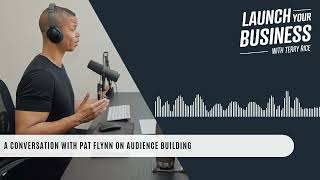
Pat Flynn talks with Terry Rice about building an audience from scratch. Flynn emphasizes knowing yourself first, mastering one platform before expanding, and treating your audience like a community rather than a number.
There is somebody out there in the world right now who is less skilled than you, who doesn't have as much experience, who has hundreds, potentially thousands of people who are hanging on to their every word, who trust them. And if you think that your skill alone is going to be enough to convince a person that you are their go to person for this service, well, you're just kidding yourself. It's not just the fact that I have a skill or an ability that's going to help me succeed. It's the fact that I can demonstrate this in a way that proves it, that builds trust and authority and earns people's respect that's going to get me the business that I desire.
Building an audience is the key to growing your business. But how do you do that? Today we're joined by entrepreneur and podcaster Pat Flynn, who will walk you through all the steps needed to find success. This is the launch your business podcast because we know starting a business is challenging, but it doesn't have to be confusing. Each week we'll give you the tactical advice and the necessary tools to scale your business without feeling burnt out. I'm Terry Rice, business development consultant and staff writer here at Entrepreneur Magazine. Let's dive in. Most entrepreneurs want to build an audience. It could be on LinkedIn, your email list, YouTube, all the things you know. You get the point. And for good reason. I mean, if you have an audience of people who know, like and trust you, you can not only sell to them, but they'll also spread the word on your behalf. So it makes it way easier to grow your business and make more money. But here's the problem. Most people don't know how to build an audience. And some will take shortcuts by buying followers on various platforms. But guess what? That's not audience building. That's just buying a bunch of followers and then paying even more for them to say great post, even if your post was not great. So how can you actually build an audience? The kind that will share valuable insight to help you craft the perfect offer. The kind that will buy your products and tell others about you. That's why today we're joined by Pat Flynn, and he's going to help you do just that. And in case you don't know, Pat is the host of Smart Passive Income and the Ask Pat Podcast, which have earned a total combined 70 million downloads. He also owns several successful online businesses, is a professional blogger, keynote speaker, and Wall Street Journal best selling author. And he's proven time and time again to be an incredibly valuable source of information for entrepreneurs looking to launch and scale their business. And by the way, we actually had Pat on our very first episode and during that talk, he helped you develop your business idea. So if you have not listened to that one yet, add it to your list. But like I said, today we're focused on building your audience. You'll learn why. Building your audience starts with self awareness, how to learn from your audience to build better solutions and the best ways to grow and monetize your audience. But here's the thing. All this stuff involves time and effort and some of you may be thinking it's just not worth it. You know how to do your job and that should be enough. So that's the first question I asked Pat. What would you say to someone who feels building an audience isn't necessary? We're going to hop into his response right now.
Oh, wow. First of all, I say, really? Okay, well, there is somebody out there in the world right now who's less skilled than you, who doesn't have as much experience, who has hundreds, potentially thousands of people who are hanging onto their every word, who trust them. And if you think that your skill alone is going to be enough to convince a person that you are their go to person for this service, well, you're just kidding yourself. So, you know, good luck. I would just tell them straight like that, you know, and it's true. And I think that might help convince a person to realize, wow, it's not just the fact that I have a skill or an ability that's going to help me succeed. It's the fact that I can demonstrate this in a way that proves it, that builds trust and authority and earns people's respect, that's going to get me the business that I desire.
Okay, so if you weren't already convinced that building your audience is necessary, hopefully you are now. But from my perspective, you can't just jump to the audience building phase. And I'm saying this because I've seen people try that and fail. They'll spend thousands of dollars on branding, fancy videos and fancier tools, but end up with nothing in the end. And I believe it's because they didn't start with becoming fully aware of who they are, what they want to do and who they want to serve. So I asked Pat for his take on this as well. Can you build an audience if you're not self aware?
What comes to mind is how one can understand that they themselves can potentially serve that audience. If you are doing research of an audience, but you're not Aware of the fact that you either have the drive to step up to serve this audience or the skill or the ability to find the skill to solve their problems, then this is all for nothing. Right? And I think a part of this goes into. Before you build the audience, you, you become a part of the audience. I do really think that's important. And by becoming a part of that audience, you get to realize, well, how do these people talk? What's the language? And that way when you have conversations with them later, when you're trying to help them, you can speak the same language and you can both understand each other. I know a lot of people who build businesses and then they start selling it and they have no idea why things aren't selling. But it's he as an employer, I think empathy is so key and it's almost impossible, it's not actually impossible to empathize with somebody or a group of people who you just met for the first time. I think it's important to ask questions in a way where you can begin to understand what's going through a person's head and not just what, but why, and getting into that deeper level of who a person is and, or who a group of people is so that when it is time to create content, when it is time to create a product, when it's time to serve them in some way, you're not just using some made up avatar like in the avatar exercise is really important, right? His name's know Jim and he's this age and he has this many kids or whatever. Like that's cool because then you can start to determine, okay, well this is who we're creating it for, but why not just find a real person or real people to fill in that role such that when you have questions about, well, I don't know what a person in this space might think, well, I can't go ask made up Jimmy, but I can go ask, you know, dawn, who I had a conversation with last week, who is struggling and I can ask them, well, how would he feel about something like this, which I might create or maybe not. So when you become self aware of the fact that you need to immerse yourself and understand fully your behavior changes and your approach to business changes.
Okay, I'm going to hop in here and bullet point a few takeaways. First, you can't just jump in and build your audience. You have to get clear on why you even want an audience. And if you're willing to put in the work to make it happen, then put in the work by becoming part of the audience. Find out what channels they're on and listen to their conversations and ask questions without selling. And I refer to this as the Lonely work. This is all the behind scenes stuff you must do in order to better understand your audience and and eventually build a better product or service for them. And I know this is not as fancy as a cool TikTok video, but the results you'll get from gaining this knowledge cannot be ignored. So do not skip this step. And right now Pat is going to tell you a quick story about a guy who serves as a great example of how you can take an audience first approach to your work. And look as a heads up, I'm not saying you have to take it this far, I'm just showing you a great example.
It should be always driven by the audience. Audience first serve first and you will be rewarded for it. You had mentioned understanding how a person feels. I know an entrepreneur who helps people who are in debt, help them get out of debt. Well, guess what he did to learn about this audience. He went in debt. He purposefully put himself in tens of thousands of dollars in debt so he can understand fully how that would feel. Like it might sound kind of crazy, but when he started getting those bills and started getting those follow ups to say, hey, you haven't paid, we're going to come after you or your possessions, he started to really feel like how some of his clients felt. And maybe you don't have to go quite to that level, but as much as you can and you're comfortable, you want to immerse yourself in the space so that you can make true recommendations. And you yourself are a part of this too. So you can also empathize fully on both sides.
Just get started. If you've ever looked for tips on launching a business, just get started seems to come up a lot. And while that's vaguely motivational, it does not provide any real direction. Because the next logical question for anyone would be, well, how do I get started? What specifically should I do? Well, if you're looking to quickly start a business without the confusion, risk and pressure of doing something entirely new, I've got a solution for you. It's called the solopreneur's Fast Track, a step by step process on how to start a business using the skills you already have and actually enjoy using. So let's say your favorite part of a previous job was email marketing. You'll learn how to start a business offering other companies advice on how they can improve their email marketing or maybe you are really good at integrating complicated tech tools. You can help other organizations do the same thing without the need to bring on a full time hire. So the main point here is that everything you need to start a business is already within you. You don't need a cool website or fancy tools. And by completing the course, you'll also discover a simpler approach for attracting clients without using complicated funnels or cheesy sales tactics. You can finish it over a weekend and start making money in as little as 30 days. You'll gain the clarity and confidence you need to start your business and receive a one page business plan so you can immediately apply what you've learned. Get started today and receive a 20% discount by heading to TerryRice co. Fast. That's TerryRice co. Fast. I've gone into debt before, but I definitely was not doing it for research. But I love the idea of becoming fully immersed in your audience's experiences. And here's an example from my past. When I first started out, I was a digital marketing consultant. So what I do is I would go to digital marketing classes here in New York City. I wasn't there for the content. I was there to see how it would feel to be an attendee and I paid close attention to the questions that were asked and how the presenter explained the content. Beyond that, I heard the why behind the questions. People weren't just curious about how Facebook ads worked, they needed them to work so they could avoid going out of business. So by attending, I gained a deeper understanding of why the content I provided was so valuable to them. So I encourage you to do something similar. It could be as simple as attending a conference or a webinar that your audience signed up for. Listen to their questions, understand their problems, and develop your solutions. Okay, so we've talked about why it's important to build an audience and gone through some of the action items. But now Pat is going to give you a step by step process for you to implement and how to avoid some common mistakes.
How does this happen? Well, this is where we go, okay, well what's going to give me the most leverage? Right? What's the one platform I could get on that's going to help me get in front of the most people and build me the most trust and the most audience in the shortest period of time? And that's a good question. But at the same time, again, it always comes down to, well, let's find out where these people exist first and let's talk to them so that when we pick the platform that is going to be our biggest lever. We'll know exactly what to say. We can even invite these people on and have ability to coach them right on. And demonstrate that authority and proof right in front of everybody else. And if that sounds hard to you, well, good, because this is the curl that you have to get over to do this. And this is where a lot of people who may consider themselves introverts feel like they're a little bit at a disadvantage. It's like, oh no, now I got to put myself out there. Well, here's the thing. You, as an introvert, you actually have an advantage because you can make deeper connections with less people. And when you're starting out, you can go deep with fewer people to find out more about more people. And so building those relationships, building an email list is what I would recommend at the start too. Going into forums, going to communities, being a guest on other people's podcasts, and having a place like an email list to bring people to where you can help them further, where you can communicate with them in a two way street, not just one way, but two ways. Maybe you provide them some sort of worksheet or cheat sheet or something that's going to help them get a quick win or a quick result to help them, help convince them to give you their email. Then those 10 people on your email list, you reach out to them, what are their names? Get on a zoom call with them, talk to them, understand them. Those people represent the people who are most interested in what you potentially have to offer. And it's going to be a collaborative effort driven by the audience to create something that will bring more people in.
Okay, so again, let's bullet point the key takeaways here to build your audience. Start with the platforms they already are on. It will be much easier and faster. Then listen to their conversations and be in conversation with them. You cannot solve your audience's problems if you're not in conversation with them. And you certainly can't build an audience if you don't speak the same language. From there, give them something tangible that will deliver a quick win. It could be a PDF or a worksheet. Anything that solves a problem for them. We call these lead magnets. And it's a great way to build your email list. But here's where some people run into issues. As you start to gain some initial traction, it may be tempting to start building a presence on multiple channels. So now Pat is going to explain why that would not be in your best interest, at least not initially. What do I do right now as a new entrepreneur to grow my audience.
You pick one platform and you master it. Everything that you want to learn about growth, just learn about growth on that one platform. And maybe that platform is podcasting, maybe that platform is YouTube, maybe that platform is LinkedIn, maybe it's TikTok. All of those will work for building an audience. However, if you do all of them, none of them will work when you disperse your energy across all those different places. 25% here, 25% here, here, and here. Sure, you happen to be on those platforms, but you're not 100% on any of them. And so you're going to find better results by mastering one platform. Take the course that's just about that platform. Watch all the YouTube videos that are all about how to master and grow on that one platform. And then experiment on that one platform, lean into it, make connection and build relationships with people on that one platform. On that platform. Reach out to the individuals who are there, subscribe to you or following you, and get to know them there natively in that platform. Instagram is a great place to do this. Instagram. And going to direct messages and sharing videos or voices to share messages blows people away. And it allows you to connect with them more so that you can learn more about them and serve them better, perhaps on your website. So I think a website's so important to have that's kind of like your hub. You get to control that. You build your email list there. That's very important because. Because who knows what happens to these platforms where we're building our audience, and any moment they could change an algorithm or get bought out or something can happen and then you lose them. So I think it's important to pick a platform where you can reach where there is organic potential growth, and then bring them back to your website and build that email list so you can connect with them further and just pick one platform. That's it to start with. You can optimize there. You can get. Once you feel like you've mastered it, or you hire somebody to help you with it, then you can move on to another platform. And then when you do move to another platform, you have that much more of a connection on that initial one to just easily start the second one, because a lot of those people are probably there, too. But you know, when you think about it, most people only enjoy one or two platforms as consumers, and we just stick around to it, right? I know people who only watch YouTube videos or people who only listen to podcasts. So why do we think that only showing up a quarter percent on that platform is going to gain 100% of a person's attention. It's not. So that's why I say, let's just narrow it down. Pick one, lean into it, master it, build your audience there, and then you can do some amazing things.
Pick one platform. It sounds counterintuitive, but it also explains a lot. I've noticed some people have hundreds of thousands, maybe millions of followers on one platform, but they can barely get a like on others is because they realize the value of being where their audience is and just picking the one platform that's going to give them the most leverage. Now, that's not to say you shouldn't eventually branch out to other platforms, but master one before you experiment with others. Beyond that, make sure you're actively building your email list. That's where that lead magnet that we talked about before comes in handy. You want to be in direct contact with your audience because you never know how platforms are going to change, and you don't want to put yourself in a position where you cannot reach your audience. So right now, Pat is going to share a story that will highlight this to you and share why you might want to consider building your community on a platform called Circle.
I had spent so many hours building my Facebook fan page, this was back in 2010, only to one day wake up to an email that said, yeah, basically we're going to deprioritize fan pages, and it's all about groups. And then people started building groups, and then groups started to get, you know, crowded and whatnot. And the big difference between Facebook and Circle is Facebook is just all the things we know Facebook to be. Circle is essentially just like the Facebook group's part of it, but you get to control it, and it's yours, similar to how you might have an email list. And so whatever platform you're building an audience, this is where you then bring them over to Circle to build a community. And that's the difference. You're not organically being found on Circle. Circle is where you bring people. It's like your home. You go out to a conference, right? The conference being social media, and you go out there, you find your pockets of people, you meet them, you connect with them, and you're like, hey, I'd love to invite you over for hanging out with everybody else who's in this space, and we can all connect together. Cool. Come over to the house or come over to Circle, which is outside of the social media sphere, and it's Its own sort of Circle, if you will, of people who you want to connect with. And that's the future of businesses, is my opinion. Community and these membership driven models that are people who want to connect with each other. And, and this is why Facebook groups were a thing. And it's still, they still are a thing. But Circle allows you to take control over those groups and to have, you know, your ability to better connect with those people. And it has all the same features of Facebook groups, or most of them, if not more and better. It almost looks like the marriage between Facebook groups and Slack, where you can have different channels for different discussions. And they're called spaces inside of Circle. Full disclosure, I'm an advisor to Circle, just so you know, but it has been amazing to launch a premium community on Circle over the last year called SPI Pro. We have paying members in there who pay not for more content. In fact, that's the last thing they wanted. In a survey, we asked, well, what do you want in this membership? They're like, we don't want more content. We want connection, we want community. We want collaboration, we want to get pushed, we want challenges. We want to find other people like us in a place outside of Facebook where there's all this other noise. And so that's really the big difference. And I highly recommend you all check out Circle because, wow, it's just an amazing platform and we've had so much fun with it. And a lot of people are in fact using SPI Pro as a prime example for how to build a really engaged, long lasting community, whether it's paid or free.
Okay, so Circle is amazing. I've used it. And in fact, I'm in Pat's case community, which is called SPI Pro. And when I first joined, I was really surprised at the number of people that were willing to share resources and suggestions to help me grow my business. So you should definitely check it out as well. But that does not mean a Circle community is right for your audience. And we always want to take an audience driven approach, or as Pat refers to it in this next clip, a commander's intent. Cool phrase. Now let's hear what it means to you and how it will help you grow your audience.
We want to connect with the audience and just leave it at that first, because you might not know what the next steps might be from there. I think that when we, you know, this is so different than building a business plan right, where we have all the steps laid out in front of us. I think instead of saying, okay, we here's all the steps of the things we need to do. I think we just need to have what's called a commander's intent. What is your intent? My intent is to best serve this community in some way, shape or form. Okay, step one, let's just go talk to them and see what they need. You might find that the last thing they want is a circle community because there's always. There's many of them that exist already or there's so many face. Maybe they. Maybe you might find out that they need accountability from a one on one coach and that's the best way to serve that audience. In which case your idea of going from lead magnet to circle would be completely wrong. So we don't again want to guess. We want to know for sure and have that traction so that when we're making the next decision, it's based off of the last step. And so that I would have you slow down a little bit and say, okay, let's put that off to the side. Because that is a potential pathway we could take. But it all starts with communication with this particular group, immersing ourselves in this space to understand what they might need help with and how they might prefer that help. You might also find that circle is going to take too much time because it does take time to manage a community. It's not a set and forget situation, whereas an online course is. And you might find that you literally have no time to manage a community right now. But hopefully you might find that an online course will work because it serves that audience. You'll make some money and then convert some of those people to a community when you can hire a community manager. But of course it's nice because you can set it up once and it kind of runs on its own, thus giving you back more time. So this is where again, we slow down and we go back to slide. Step one. First, let's just have conversations because I know that is not necessarily the sexiest part of this, but it's the most necessary part. Too many people have a website without having a business. So many people have business cards without having a business. So many people have a social media account and say they're a business owner when they haven't even tested or even had conversations with their audience yet. That's the first step.
So you'll notice we keep going back to step one, but it's because that's where people mess up so often. Even as you start getting traction, leverage that commander's intent, your intent is to serve your community. So how can you do that best? And look, I know we're asking a lot of you, so one question that you might be thinking is, you know, what am I going to get from this? What is the return on investment and the time I'm putting into it? Well, here's your answer from Pat.
Yeah, you know, this ROI situation can be a very interesting thing. A lot of people coming from corporate, that's one of the first questions they ask, because we're so used to X number of hours in, Y number of dollars out, just in all regards from your own paycheck to campaigns that you run, etc. But when it comes to success online, it can be very difficult to measure how much money does this conversation I have with my audience get me back? And I think the ROI question is one I don't try to avoid, but I kind of just go, well, that's not the right question to ask right now. And I don't mean that to offend you, Terry. I know that you're just channeling what everybody's thinking, and I hope I'm not offending everybody out there. But you need to immerse yourself in a space, and the ROI on that is infinite, in my opinion. When you discover who these people are, what they might need help with and what solutions they might need, that is not measurable. But it is infinite. Right? You can't measure infinite. I mean, infinite is infinite. But there's a million ways, an infinite number of ways that you could potentially solve even one problem, let alone how many different problems there are. So where ROI comes into play is when you start putting numbers to things. And if you have, for example, a campaign where you're running an ad, you want to know if you're spending this much money and how much money you're getting back. That's very important. But ads don't matter unless you know who you're targeting. Copywriting doesn't matter unless you know what words to say. And again, so it always stems down to those who are just starting out. Who are you doing this for? What do they need help with? And I'm sorry I keep saying that, but there's nothing more important than that. And then it comes into, well, okay, great, I got a solution. I'm going to launch my thing. Maybe it's an online course or some group coaching program or something. If you start calculating ROI initially like that, it's not going to look very good. You're going to go, wow, I put in like 120 hours of work into all the conversations I'VE had the development of this course and just following up and the office hours. Like I put in 120 hours, I only made $2,000. And if I do the calculations, that's like 45 cents per minute or per hour that I'm making. That's not good at all. And then you go, well, I made way more at my job per hour. And it's like, those are the wrong comparisons. Because you start out small, you get that one customer getting one result, and then you exponentially grow. And there is a period or a point of crossover between the income that you get doing it this way and the income that you would have had doing it the other way. And when you think about it, there is a ceiling on what you could have earned in your position at a 9 to 5 or your other job. There's a ceiling. There is a ceiling. As an entrepreneur, there is no ceiling. It's as big as you want it to grow. Obviously it comes with work, but you get, over time, you get paid for the work that you put in to serving others. You can make the same amount of money in your job, working far harder than the other person. In fact, you can make way less, depending on what part of the hierarchy you're in and your income level and the compensation structure, et cetera. So I would much rather have the opportunity to go much higher, as higher as I want to go, with much more freedom, not just in money, but mostly in time.
So again, it's a tough question to answer and I understand why people ask. But if you go into every interaction thinking, what am I going to get out of this? You will miss the opportunity to create or learn something. And here's a fun exercise for you to try. Think of a major accomplishment that you've achieved. Landing a job, winning an award or a championship. Then reverse engineer every little thing that had to happen in order for you to get there. Who did you meet? What conversations did you have? And here's a quick example. On my end this year, I'm speaking at a conference for ConvertKit, which is an email marketing platform called Craft and Commerce. There will be thousands of people there. I get to share my insight and learn from others as well. So how did I land this opportunity? The answer might surprise you. It was by commenting on a LinkedIn post. I replied to a comment by Issa Adne, who's responsible for storytelling at ConvertKit. We eventually talked via DM Zoom, and then all of a sudden, ConvertKit was doing a feature on my business. There was a great case study and they took some amazing pictures of me and my family. But from there she then connected me to her colleague who was responsible for coordinating their conferences. That clearly went well because like I said, I'll be on stage at their conference, which I know will be an amazing experience. And this all came from following the same process Pat has been talking about just being in conversation with your audience, and that's our show for today. But if you want to learn more from Pat and the community that he's built, check out SPI Media's All Access Pass. In this platform, they're providing the courses you need to learn and the community needed for additional guidance and support. You can learn more about that by visiting SmartPassiveIncome.com All Access again, that's SmartPassiveIncome.com all access. Thanks again for listening and I'll see you next time. Apply what you've learned on today's show. You'll find the show notes and more resources at TerryRice Co Podcast. Again, that's TerryRice Co Podcast and the best way to support this podcast is by subscribing, telling a friend and leaving a review. Also, you you can get more tips by following me on Instagram terryrice or follow me on LinkedIn. This episode was produced by Josh Wilcox of Brooklyn Podcasting Studio and edited by Dan Lardy. Special thanks to my wife, Dominique, for keeping our kids relatively quiet as I recorded. Thanks again for listening. I'll see you next time.
More from Terry







When you want to quit, don’t. #FitnessOver40 #MindsetShift #TiredIsNotAnExcuse #PersonalGrowth




You’re gonna want to give up. Don’t. #mindsetshift #motivationalquotes #motivation #dontgiveup