Patrice Poltzer Interview: Why and How to Tell Your Founder Story
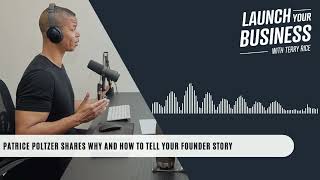
Patrice Poltzer, a storytelling expert, talks with Terry Rice about why founders need to tell their story and how to do it well. Video is the tool that works. Authentic stories connect with audiences and grow your brand.
So you have all these people now starting businesses because it's easy. The barrier to entry is easy. So if you think about, like, how much content there is and how many people are doing the exact same thing that you do, your features and what you do, that's not enough anymore because there's just too many people. So the founder story is literally the only unique thing about your business. And that is why it's really important to tap into that. And the sooner you do that, the faster you will be able to grow your business and work with the type of people that you want to work with.
Patrice Pulzer is an expert at helping founders tell stories that expand their influence, increase profits, and form deeper connections. And today, she's going to teach you how to tell your story. This is the Launch youh Business Podcast, because we know starting a business is challenging, but it doesn't have to be confusing. Each week, we'll give you the tactical advice and the necessary tools to scale your business without feeling burnt out. I'm Terry Rice, business development consultant and staff writer here at Entrepreneur Magazine. Let's dive in. I met Patrice when I was teaching a social media workshop at General Assembly. I discovered that she was a video producer, which included roles working at the Today Show. And within a few months, I hired her to help me create a few videos for my own company. I remember the first day she told me, when you're on camera, you have to up your excitement by 25%. And then once she heard me speak and noticed how stoic I was, she said, okay, how about we up it by 50%? And that's just an example of how great Patrice is at helping people effectively tell their story. For our most recent project, we created a founder video, and I thought she was going a bit over the top, but numbers don't lie. That video made me $4,000 within 48 hours. So today, Patrisse is here to teach you how to tell your story so you can grow your brand and generate revenue. We'll walk through why you need a founder story, the components of a good founder story, and how to tell your story, even if you don't think you have anything interesting to say. Patrice, how are you today?
I am fabulous, now that I'm sitting next to you doing this podcast.
Awesome. Awesome. So we clearly know each other.
We do.
But for those people who do not know you, do you mind introducing yourself?
Yes, I can. So I'm Patrisse, and I live in Brooklyn, and I run a storytelling and video company where my team makes videos for brands big and small. And then I also help entrepreneurs and social media solopreneurs had to tap into the power of their own story in order to have more impact and increase their business.
All right, so I'm going to play devil's advocate here. Oh, so I am a solopreneur.
Okay.
I just started my business.
Got it.
And I'm very clear on what I want to do.
Okay.
Why do I need a founder story? Why can't I just say, here's what I do, here's who I help, and here's the impact. Why do I need a founder story on top of a brand story?
That is a great question. Coming out strong, out of the gates, keeping me on my toes. Okay, so here is the thing. What you just proposed to me five plus years ago, you probably didn't need a founder story. Not really. It didn't really matter. But now we are in this age where so many people are starting businesses. I mean, last year it was like the record number. I think it was like 55 plus million people started businesses. And that's not even including people that are starting side hustles and doing that on the side. So you have all these people now starting businesses because it's easy. The barrier to entry is easy. So if you think about, like, how much content there is and how many people are doing the exact same thing that you do, your features and what you do, that's not enough anymore because there's just too many people. So the founder story is literally the only unique thing about your business. I don't care if you make a product and you think it's the most unique thing in the world. It's probably not. It's probably built off of something else. I don't care if you think you're the most unique social media strategist in the world. I'm sorry, you're not. But you know what is unique? Your story, your background, your journey. And that is why it's really important to tap into that. And the sooner you do that, the faster you will be able to grow your business and, like, work with the type of people that you want to work with.
All right, so you made your point, and I'm sure.
Drop the mic.
We all appreciate that. I'm going to try telling my founder story.
Okay.
And then you can tell me how good I am at telling my story. Maybe I'll embellish if it's not good. But. But on my end, I worked in corporate for about 10 years. I worked at Facebook. I worked at Adobe. And on the outside, it looked great. People are like, wow, you know, you're doing really well, so and so forth, but I didn't enjoy it. I remember one time looking around and looking at my manager and saying, I don't want her job. I don't want anyone's job here, including my own. And there was. There's. There's a guilt to an extent that goes into that because you're working at a tech company, making all this money and. But I just knew it wasn't right for me. It was right for someone else, just not me. So I left and I started my own business doing pretty much what I was doing as a corporate employee. And that's when I found out I was very good at this time digital marketing, but really bad at running a business. So I struggled very badly for the first 18 months. But just like you, I also had a newborn daughter, so I was scared all the time. I was concerned because I thought her future was tied to the success of my business and I had no clue what I was doing. So I missed out on a lot. I was there every day, but I wasn't mentally present, unfortunately. But again, fast forward 18 months, I found a process that worked for me. Various actions, tools, and mindset. And now that's what I do. I help other emerging entrepreneurs just get rid of all that anxiety, all that worry, all that stress that goes into building a business by helping them master the fundamentals. We can do all the fancy stuff later, but right now, let's master the fundamentals that get you 80% there. And that's what I do.
Okay. Do you want me to critique you right now?
I'd rather you didn't.
I'm going to. I'm going to. That was excellent. And I'm going to tell you why it was excellent. I'm actually going to tell you what you just said makes that an impactful founder story. Number one. You showcased a struggle. That is the biggest tip I have for anyone who is thinking about a founder story is like, you need to own your shit. Can we swear on this? I don't know if. Okay, beep. But owning it is what makes us human, because everyone has it. And I think sometimes founders think that you need to portray yourself a certain way, and especially when you're starting out because you have no idea what you're doing. You have massive imposter syndrome. Most people do. And so you just think, like, I need to portray myself as someone that I'm actually not right now in order to, like, make people Think I'm better at this. But what I loved what you did is that you were very honest about the struggle and what you have. So, number one, that's great. So you showcase a struggle, and that instantly makes you likable, number one. Number two, what I liked what you did was the whole point of a founder story. Again, we have to remember, no one cares about us. No one cares about you at all. Because people care about themselves. So when someone is watching a story or when someone is reading a story, the only reason they're reading it or watching it is they're hoping to glean something that they can take away for their own life. They want to be inspired. They. They want to feel hopeful. They want to maybe feel like, God, I can do it too. And what you did so beautifully there in your story is that because you showcased the struggle and you made me connect with you, and then you got out of the struggle. So now, all of a sudden, I'm seeing, wow, if Terry can figure out a process and not suck anymore, after sucking for 18 months and feeling scared, I bet I can learn something from him, because I could do it too. Number two, and the final thing that you did really well is I always say to people, you do not need an epic story to have an epic story. You know, what you just described, like, feeling dissatisfied, unfulfilled, being in corporate jobs, that is really relatable. I think most of us have felt that at some point, and, you know, you wanting to figure out something else or a different way of life and having a new baby and being scared, what are those emotions? Those are all universal, relatable emotions. And so you actually, my friend, ticked three major boxes of a impactful founder story, and you did very well. I'm impressed.
Awesome. Awesome. Appreciate that. So let's go back and bullet point them for everyone who's taking. Taking notes here. So step one, step two, step three, step four, can you go ahead and just revisit those?
Okay, so if we're doing, like, three or four points of what makes an impactful founder story, first of all, we are not doing our autobiographies here, people. These are not Netflix documentaries. These are not our memoirs, and these are not, like our Dear Diary journals. So you do have to remember that, because this is a founder story, and it's leading back to your business. You want to be mindful. Like, maybe I don't need to hear about, like, every single breakup you had in high school, you know, or college. Like, that might not be relevant. Like, maybe keep that to cocktail. So you do want to make sure that you're balancing important, pivotal moments in your life. But will those moments matter to my audience I'm currently trying to attract through my business? So, number one, number two, your struggles, hard moments and failures are the foundation for real connection. And I cannot tell you how many founders miss it. They just miss an opportunity to connect because they are so focused on showing just like the shiny social media highlights or the award reel or the accolade reel or the fancy job that they used to have. Again, no one cares. Like I, you know, you have to think about. You think about when someone goes to the about page. When someone goes to the about page of your website, they've already know about you, they've heard about you through social, through a newsletter or referral. They actually want to go deeper with you. So it's an opportunity connect. So if you're not showcasing a struggle or showing sharing something deeper, you're missing it. And then the third point is universal emotions. You do not need an epic story to have an epic story. Often the most inspirational stories that everyone connects to are so basic because that relatability of what most human beings go through, you know, we all go through love, we all go through loss, we all go through endurance, we all go through abandonment. Like, you know, if you can touch on some of these like, fundamental emotional pillars of emotion in your story and hang your story on like, one of them, you already know you're in a better place because you know that more people would probably connect to that story because of that one human universal emotion.
All right, we're going to take a break here, but when we come back, we're going to walk through how to tell your founder story. Even if you don't think you have anything interesting to say, just get started. If you've ever looked for tips on launching a business, just get started seems to come up a lot. And while that's vaguely motivational, it does not provide any real direction. Because the next logical question for anyone would be, well, how do I get started? What specifically should I do? Well, if you're looking to quickly start a business without the confusion, risk and pressure of doing something entirely new, I've got a solution for you. It's called the Solopreneur's Fast Track, a step by step process on how to start a business, you using the skills you already have and actually enjoy using. So let's say your favorite part of a previous job was email marketing. You'll learn how to start a business offering other companies advice on how they can improve their email marketing. Or maybe you are really good at integrating complicated tech tools. You can help other organizations do the same thing without the need to bring on a full time hire. So the main point here is that everything you need to start a business is already within you. You don't need a cool website or fancy tools. And by completing the course, you'll also discover a simpler approach for attracting clients without using complicated funnels or cheesy sales tactics. You can finish it over a weekend and start making money in as little as 30 days. You'll gain the clarity and confidence you need to start your business and receive a one page business plan so you can immediately apply what you've learned. Get started today and receive a 20% discount by heading to terryrice co. Fast. That's terryrice co. Fast. So let me ask another question.
Yeah, shoot.
Because there are times when I'll visit someone's website and there is no about section.
Yeah.
Or it's just like very basic. Right. So why do you think some people are hesitant to tell their founder story?
Well, I think it's just like a really basic level. I think it's hard to talk about yourself. I mean if you think about, you know, you know how it's always like you have amazing advice for all your friends, like you should dump them, like get out of that job. They don't value you. And it's so crystal clear when you're looking at someone else. But then all of a sudden when the table is turned and you're looking in the mirror and you have to talk about your story, you get, you don't know what's important, you don't know what's relevant. It's your life. So to actually have that introspection and that separation to look at your own self and actually connect what events might matter to a stranger or to a potential client or a potential customer, that is hard. So I think number one, that's one reason, I think another reason is that you know, as a solopreneur, as a new business person, you're, there's so much to do. You got to get the business bank account, you got to get a website up, you got to get your social media handles, you got to get LinkedIn. Ah, you got content like you got invoicing, you have, there is so much stuff. So a founder story, are you out of your mind? Like that is. It goes down to the bottom of the list because there's so many other tactical things that you need to do in order to run Your business. But I will die on this hill. That needs to be inverted. Your founder story and getting really clear on who you are, that the other. You don't need a website. That. You know what I mean? You need a website. But it's like all those other things don't make a business. You know, what makes a business is people talking about you. People, you know, coming to you because they've heard about you, people being connected to you. Like, all those things that actually what makes like, a type of business that's going to be a legacy business.
So I get the need for introspection. I understand that. But I'm going to share an example.
Okay.
I can never think of a fun fact about myself. Like, whenever there's that icebreaker, I feel.
Like I can think of five right now.
Whenever there's that icebreaker, like, I can't think of a fun fact about myself, I'm like, I am six, four. That's it.
Yeah.
So what I'm wondering, and you kind of alluded to that as we're telling our founder story, should we ask other people to give us their feedback on our life, what we've done? That's interesting, because that way, if we're blind to it, someone else can reveal it for us.
You know, that's a really great tip. Yes. You know, but you also want to. You have to be careful who you ask because you know, your family, your closest inner circle, you know, they. They know stuff about you or they look at you. But you also have to, again, balance that with, like, the founder story is, you know, that one time in college when you were wasted, you know, like, so there. I think it is important to get some insight. But more important than anything, and this is what I teach to a lot of my students and clients, is you got a timeline brain dump. And in order to write a story or in order to forget about going on video, before you go on video and tell your own story, you got to write it first. But before you write, you need to know what you're dealing with, what's your material, because it's your life. So the first step in all of this is really to download your life. And that sounds scary, but I have processes for that that make it a little bit less scary. And so once you kind of see the moments you're working for, you're working with, then really it's just picking one or two that you think your audience will best like, because, again, it's about them. So it's not maybe even picking the most traumatic experience in your life if you don't think that's relevant to the audience. And that's another thing that's interesting is choosing the right story is often just as important. It's not just like your founder story. It's actually choosing the right story to hook your founder story on.
One thing that I do is I will change my founder story based on the audience that is going to see it.
So very smart.
If it's like an educational opportunity, I'll say, yeah, well, I've actually logged in over 3000 hours of adult instruction in my career, both online and offline. But if I'm just going to consult someone how to build their personal brand, they don't care about that.
Right?
So I think it almost needs to be like a modular approach. Like, what part of the story do you tell based on the context that you're telling it in? Otherwise, you will lose people with interesting information. But it's not just not. It's not contextually relevant. So let's say this is the challenge. Let's pretend someone is just boring. Just boring. Just classical click, you know, check the box. Boring. Like, they didn't have any struggles. They went to, oh, liar. Some kind of state school where they got like a, you know, 3.2 GPA or whatever.
Okay.
And the reason why they don't want to tell their story is because it's not interesting. How can you work with someone to pull out that interesting part of their story?
Yeah, I get that a lot. I get a lot of founders that come to me and they're like, I'm so boring. I'm so vanilla. Why would anyone care? I had a really great childhood. You know, it's like, wait, you don't have childhood trauma? Like, what? You know, but you do get those occasional people that have, like, idyllic childhoods and are super tight with their, you know, nothing major, like. Right? And so here's again what I said earlier. You know, you don't need an epic story to have an epic story. There's a lot of people like that. You know, you like, having a great founder story does not mean you have to, like, weather huge trauma. And I'll give you an example. I had a student of mine last, you know, I run these programs, right, where I help founders tell their stories. And she was one of those people, great childhood, trying to travel. Like, loved her parents. Like, no real issues, you know, like, I don't even think she needed therapy. You're just like, are you crazy? And she was really struggling with her founder story because she's like, I'm so freaking boring. Like, what is my struggle? And when we got deep, when we got into it, we realized that, you know, she was in corporate America for a while and it was a great job. Kind of what you like, yourself, from the outside, people thought that it was like the dream job. And she was very unsatisfied in her life and she felt incredible guilt. And she felt incredible guilt because she was living the New York dream and was making lots of money. And it turns out that, you know, the company she started, you know, she grew up in service. Like, her parents were very service oriented people. So she would go on a lot of mission trips and like, you know, you know, and so she realized that she was dissatisfied in life because she wasn't actually kind of like fulfilling how she was raised. And it's very simple, but it totally relates to her current business and what she pivoted to. And it's really impactful. And it's not like this. I, you know, so I challenge people when they say they're boring. I say they're just not looking at their life from an outside perspective and really focusing on what is that universal relatability. Because again, I bet we all, everyone has one. Everyone has something in their backstory that is interesting.
Yeah. Er, one time you were actually interviewing me and you asked me, terry, how do your kids inspire you? And you didn't like my response. And then eventually I was like, they don't. My kids don't inspire me. I mean, like, the oldest one is seven. But as I think about it more they do inspire me because I know that the more effort I put into developing passive revenue streams, the more time I can spend with them. So they inspired me to be more efficient, to find leverage, to find connections, to find partnerships. And that's how I grow more efficiently. So I know that's still not the answer that you were looking for that day.
I remember you said that. And I was like, what? I'm like, we're going to take two on that. I'm like, I'm going to ask you that again. But. And you know what? But I appreciate it. Which was what I love about you is like, you're so blunt sometimes to the point of like, is he kidding? I have no idea. But yes, it's, it's, it's. And maybe it was the wrong question. Maybe I didn't ask the right question because getting the right answer is all about asking the right questions.
Yeah. But I mean, the point I'm getting at Though, is it revealed a powerful answer. It just took me a while to think what it was. And yeah, maybe it's not the one. Someone else would say, oh, they inspire me because they're curious. And I want to be curious too. I'm like, I'm already curious. Like, I don't need a five year old teaching me to be curious. You know what I mean?
Also, like, you know, and here's what I say too. If you are an entrepreneur and you are a solopreneur, you're automatically inspiring because it is a tough road. You have to be really committed to it because there's a lot of days you don't want to do it and you don't want to like, get up and you don't want to like, oh my God. Right? Especially in that beginning few years where it's very hard, I think, to get into a groove and you're making so many mistakes that are absolutely necessary. But that's why when entrepreneurs are like, I don't have a story. I'm like, are you crazy? Did you leave corporate America? You have a story. Like, trust me, every one of us has a story. Because it's like there, it takes a certain amount of guts and you're betting on yourself and you're kind of throwing it to the wall and that's inspiring to people. That's like, attractive. You want to be around that energy. So no, no one in entrepreneurship is boring.
So let's do this right. So we're.
This is fun. Are we gonna play a game?
We're. It's not gonna be a game. It's gonna be actually you giving us advice on which could turn into a game. You can do it how you want, but. So I'm clear enough on my founder story, and I know you excel at helping people tell their story through video.
Yes.
So again, now, like, I don't even want to be on video. What are like three steps I can take or four steps I can take just using my phone to be more comfortable on video, just telling this founder story?
I love this question. Okay, so the goal is always to eventually get you to speak on video. Right? The connection that you have with your voice talking to your audience, it's priceless. Like, it really is this. That sounds like overly cliche and cheesy, but it's a powerful tool and it's the reason why us smaller brands and businesses can compete with brands that have million dollar marketing budgets. Because we can actually get on our phones, talk about ourselves, and storytell and connect in a Way that, like, the big brands wish they could still do, right. They spend millions to actually kind of get back to the level that we're at. So always remember that. That we're in a very unique, special, powerful position. But I get it, like, you're not born. Social media has everyone think that, you know, you are literally, like spooted out of like, the womb knowing how to just get on camera. And that is just not true at all. It takes tremendous practice. And so if you're not there yet, a few tips. Number one, you don't need to talk your founder story at first. So, for example, I had a client who. She had a. You know, I say, you don't need an epic story to have an epic story. She actually had an epic story. She left an arranged marriage, no money, a suitcase at o' Hare airport. It was like depths of the lowest of point in her life. Couldn't go back to her country because she would have brought shame to her family. I mean, this is like. She's like, I have no story. I was like, are you out of your mind? Like, you. You can you have a movie? So anyway. But she was very nervous about. She was not ready to go on camera and tell that story. So what we did was we wrote. I had her write a little story. And I have lots of templates and structure and storytelling structures that I keep people in. You gotta give people bumper rails for stories. And she wrote it in a caption on social media. She had her face on the camera. She put it to music, you know, like a TikTok or a real, real music. And then she told the story. Look in the pointing, right? But she wasn't pointing and dancing. She was pointing to big major takeaways in her story. Left my husband there. So she told her story, didn't open her mouth. She said, that video exploded. And she has never had so many requests from people to work with her. She helps immigrant women and men navigate corporate America. I'm just obsessed with her. She's just a very cool person. But again, so if you're not ready to talk, you know what, Write your story in a little caption and show your face and you know, put. Put a few point to it. You know, just point to the text, right? So that's one easy way. The other easy. The other tip I have for people that are just not ready. Most people don't listen to themselves first before uploading stuff to social media. They literally, like, take the camera, start talking, or even if they do, like, write a script, they'll they'll just like go do it. Record yourself in your app. Like, take your phone out, listen to yourself say your story out loud. Are you bored? If you're bored, guess what? Like, everyone's bored. So people don't like do these small steps and listening to yourself and like actually saying out loud your story in your phone and then hearing it back, you're like, oh my God, get to the point. Or actually that's not necessary. Or wow, I'm bored. That's like, you can start editing yourself before you actually like get to the point where you're putting yourself on camera.
So the first step is to just write your story. And if you want to make it easier to do a video, just you can do like a real type story or like a TikTok where you're pointing at things. And the other one is just make sure that you're not boring yourself because if you bore yourself, everyone else is going to get lost.
And you know what? One of my. And I do this all the time on my own platforms. You know, I just, I recently just got into TikTok. Oh my God, I sound a thousand years old. But like, you know, I, what I do is I write a script, I voice it over and I just go to my old photos and videos in my Google Photos archive and I string a story together with my voice over me in old photos and old footage. And it's the, they are doing so well. I've had two videos that have like, I had no followers there and it's like they've gone like mini viral for me because people are connecting. It's like my story, but I'm not, not frame. Am I actually talking to the camera? So it's like just hearing your voice and seeing your face, that too is, is really great way to connect if you're just not quite ready to just like, all right, let's, let's do this. Like, you know, but we, but that is the goal to ultimately get you to that point. Also, another quick tip for your viewers. 150 words is roughly one minute of video. Most people don't get to a 30 second mark in a video. So that is why when we're writing for video, it is really important to just. I always keep that in the back of my mind. Like, you know, it's not a lot of words. So it forces you to. That's why when you say it in your phone first, it forces you to actually listen. And if you're rambling and you're already at two minutes and you're not even done with your story. Rest be assured, unless you are a brilliant storyteller, most people will not finish that story.
One time I had to pick up all of my children from school. So, like, all 20 of them? Yeah. I mean, well, round down to four, right? So I'm carrying four kids, and I asked my. My son's, like, daycare teacher to take a video of me with all the kids, and she's like, why am I doing this? And I'm like, I need this for social media, but don't ask questions. For me, that's part of my definition of success, is being able to take off work or leave early to get all my kids because my wife was working. Right? So that's. For me, it's important to share these things. But just on your end, what is your operational definition of success as an entrepreneur?
Oh, God, Terry. Getting deep now, you know, And I want to explain it because I feel like it's such an overused definition, even though it is so true. It's not just about freedom, right? Like, yes, you know, having the freedom or, like, to kind of do what you want with your day, but, you know, if you're not making money and you're not having impact on people, then you might have freedom, but it still might be stressful. So to me, it's the balance is having the freedom to, let's say, live in Europe all summer. And financially, that being not a deal. And so it kind of goes hand in hand to me. So it's like, if I, you know, we travel a lot, and the thought of, like, being able to kind of pick up my family and go, or to not have to think twice about, yeah, okay, like, maybe my kids want to do, like, three sports. And, you know, New York City is not, like, normal places. You know, it's. It's so expensive to be here. And so to me, it's like, success means, like, being able to just provide or being able to take my whole family on me through my business, like, oh, I just booked spring break and not even have to think about it. And it just being, like, not a deal, because those are all experiences. And, you know, and it's not about, like. It's not about, like, you know, giving stuff or anything, but to me, like, being able to do whatever you want to do in this life without having to ask anyone or get permission or, you know, so much of my media career was put through the lens of my ideas of, like, a dude. Honestly, it was just like. And if a dude doesn't like it because usually dudes are my boss, then you couldn't do it. And even if you thought it was the most amazing story in the world and the story needed to be told, if your male dude boss said no, that was it. And it was, it was like soul crushing to me. So I think I love now that I am the maker of my fate. I am the maker of my opportunities. I can do whatever I want and work with whoever I want and say no to whatever I want. And that is like really powerful and still provide for my family.
So Patrice, this has been amazing. Thank you very much for your time. So where can people learn more about you?
So so my main hub is Instagram. I'm pretty active there. But My website is patricepoltzer creative.com and I have, you know, info about my courses, my coaching, my programs and I also have like a video team. So if you need just done for you video and need help with video strategy like come to mama. So yeah, Instagram or my website. And also like, because of you, I'm now getting much more active on LinkedIn even though it scares me. So I'm also on LinkedIn.
Awesome. Thanks, Patrice. It's been great.
You're welcome.
And that's our show for today and I want to encourage you to get started telling your founder story. It's the foundation of your personal brand, which is the only real unique differentiator. And I know this might not feel comfortable for some of you because I've been there before, but it gets easier. Patrisse shared a lot of great tips today and you can learn more on her website as well. The link will be in the show notes. Thanks for listening and I'll see you next time. Apply what you've learned on today's show. You'll find the show notes and more resources at Terryrice Co. Podcast. Again, that's Terryrice Co Podcast. And the best way to support this podcast is by subscribing, telling a friend and leaving a review. Also, you can get more tips by following me on Instagram at Terryrice or follow me on LinkedIn. This episode was produced by Josh Wilcox of Brooklyn Podcasting Studio and edited by Dan Lardy. Special thanks to my wife, Dominique, for keeping our kids relatively quiet as I recorded. Thanks again for listening. I'll see you next time.
Don't.
More from Terry







When you want to quit, don’t. #FitnessOver40 #MindsetShift #TiredIsNotAnExcuse #PersonalGrowth




You’re gonna want to give up. Don’t. #mindsetshift #motivationalquotes #motivation #dontgiveup