Personal Branding for Entrepreneurs (Presented by Squarespace & General Assembly)
Terry Rice walks through personal branding for entrepreneurs, from defining your brand to using social media and content marketing to generate leads. The session includes real examples and answers from the audience.
And let me know if you can see that. Okay.
Looks good, Terry, you're good.
All right, let me double check, make sure I can see the chat window. All right, so yeah, personal branding for entrepreneurs. Looking forward to chatting with everyone about this today. Because one of the benefits of being an entrepreneur is the flexibility you have in how you get to represent yourself online. And I want to give you some tips on how to do that on purpose, so with intent and with structure. But I'm just curious, in the chat window, can you say roughly how long you've been an entrepreneur? One year, two years, three years, so on and so forth. Just want to get an idea of where we're at in regards to our journey here at one year, two years, going on five, ten years. Wow, thanks for attending. You're probably busy. Seven months, 15 years, three working on it. A minute. There you go. So just recently, not there yet, but you're planning on it. I dig that. Three, three months, eight years. Just starting on your way to becoming one. I like that mindset, right? Not yet, but I'm on my way to becoming one. 17 years, 13 years. Wow, this is amazing. Tom, you're going to start next year and hoping to become one very soon. All right, cool, great. So let's keep it moving here. Talia, three years. My niece's name is Talia. So cool. I'll tell you that. You're here. All right, cool, let's get started. So, so here's my background. Some of you may have heard of me before or pretended other sessions that I've led here at General assembly or Entrepreneur or other places. But I'm a business development consultant. And normally what that involves is me helping other knowledge based entrepreneurs grow their brand and their revenue. Outside of that, I'm also a contributor to Entrepreneur magazine. And the cool thing about that is I get to interview a lot of entrepreneurs and learn their best practices and then try them on myself. And if it works, I pass it on to people like you. So I'm kind of that conduit for all of you and it's a great opportunity for me just to learn and get paid for it at the same time. So pretty cool. Before all that, I worked in house at Facebook. I was at Adobe for a while, so that's more or less where I started my career. And I also am an advisor at Amazon as well as the NYU Entrepreneurial Institute. So that's me, that's my background. I see some of you sharing your LinkedIn, your websites, go for it, you know, network. That's we're all here for, but let's keep it moving along here. So here's the agenda. I want to talk about developing your personal brand. So by design, just making sure that people know how to express what you do to the world, who you are, and not just who you are, but why you do what you do. So going deep into that, then going into social media as well as content marketing. Right. Super important to have content to express who you are for your target audience, landing media opportunities. So as a contributor to Entrepreneur magazine, again, I get these a lot, these requests a lot. How do I, you know, how can you write about me? How can I write for the magazine? I'm going to give you some really good tips on how to do that, if that's what you're interested in doing. And then lastly, lead generation. Why are we doing all this stuff in the first place? Are we trying to get more likes, you know, more shares, more engagement? No, we want to get revenue.
Right.
So I'll talk to you about lead generation and how you can track the source of everything that you're doing to make sure that you're investing your time wisely, the way that you're building your personal brand. So that's what we're doing. What else? Housekeeping. If you want to get a copy of this deck, there's a bitly up here. It's going to appear several times during the session as well, but there you go. And I'm doing this now because I want you to take notes on things that are specific to you. Don't take notes on every single thing on the screen. That would be largely a waste of your time. Just get a copy of the deck and as things come up to you that are important, you can go ahead and take a note on it. So just do that. And I want to say thank you for putting that bitly in there already. Also, if you post on social, can you please tag me at. It's Terryrice and I'm going to put a link to my Instagram in here right now. But that would be amazing because what I'd like us all to do is keep track of our key takeaways and then share them.
Right.
So we can kind of crowdsource this information. And then outside of that, I like collecting them and resharing them from my profile as well. So again, I just put a link to my Instagram in there. Take any screenshots. That would be cool. Just tag me and I would love to share that afterwards. Cool, let's keep it moving.
Here.
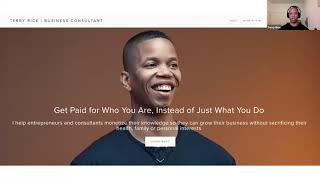
Developing your personal brand. All right, so this is going to be very valuable for a lot of you because there's a difference between personal brand and personal branding. Your personal brand is how people perceive you. Personal branding is the impression that you want to give across. But if you're not encoding the message in the way that people can decode it, the way that you want them to understand it, you're kind of messing up. So I want to make it very clear on how to do that. How to express yourself in a way that, that people know. Not just, you know, your experience, what you do, but also your personality and the way you want the world to see you. And I always say, you know, being an expert at whatever you do is a prerequisite. You have to be an expert, but your personal brand is often your unique differentiator. But realize you don't have to be everything for everyone. You should be somewhat polarizing. I'm for this audience. There's a thousand people in this target audience. I only care about these hundred over here, right? And I'll give you a really good example of that. Nickelback. If you google most hated band in the world, Nickelback comes up. Alright, so they're a Canadian band and I don't think they're that bad, but they're just known as one of the most hated bands in the world. This is how it kind of goes, right? But here's the thing. If you also look at the most successful bands in the world in Canada, Nickelback also comes up, right? So again, they might be one of the most hated bands in the world. Except for Z. Jones likes them. Shannon does too. So there you go. Shannon is someone who's putting them in this category of most successful Canadian bands. And someone else is saying Creed is way worse. Yeah, Creed should be on the list too, I'll give you that. Do they qualify as a band? Okay, guys, we get it. So anyways, the point is some people don't like them, but the people who like them love them, right? Same with your personal brand. Don't try to be everything for everyone, or else you'll be boring, right? So you're better off being Nickelback, even if some of you are already saying bad things about them. That's how it goes. Now let's. Let's stick with Nickelback for a minute. This was a recent post I had on my Instagram and it's a true story. I said, you know, problem? My 4 year old refused to go to sleep last night. Solution? I made her listen to Nickelback. Until she gave up. It took her about 4 minutes and 12 seconds. Follow me for more great parenting tips. So this is me joking around on Instagram, but it's also part of my personal brand. So outside of my personal brand, being an expert at building businesses, I also have a lot of dad jokes. That's my life. I have three kids here. You're probably going to hear them soon in the background. So realize when you have this personal brand, there's a freedom for you to express yourself however you want. You don't have to be so buttoned up all the time because you're building your personal brand, right? Your Nickelback. You're like, I care about this audience, not everyone else. So going a bit further, this is my website and as a person, when you're developing your personal brand, you are going to want to build your own personal website as well. Now mine is on Squarespace, conveniently, and all the other examples that I'm going to show you momentarily are too. The reason why Squarespace is beneficial is because it's easy to make a really good looking websites. You, even if you don't have any coding knowledge, right? But you want to have some good pictures too. So you want to have these professional photos where you're looking at something, looking happy because it's your personal brand. Don't have stock images on there, right? And then you have this statement here, get paid for who you are instead of what you do. Because my goal here is to help you join what's called the being economy. And the being economy is when you get rewarded for who you are. Your personality, the way you express yourself, not just what you do. So that's the goal, right? Get paid for who you are instead of just what you do. That's one of my taglines. Here's another friend of mine, Amina Altai. She is a holistic business coach. And if you look at her tagline, it says, make work a place you freaking love, feel good and get paid. Now some people might think, oh, should you say freaking love? You know, isn't that going to offend some people? Yeah, that's the point, right? And she, she's a very nice person, but she also swears a lot and she says, you know, if we can't swear, we can't be friends. So she's trying to get this off you immediately, that, hey, this is a personality. So you know what this is. Sally Arias is a friend and a client of mine. She says, I teach entrepreneurs to curate. Sorry. To create impact and increase revenue by leveraging easy to learn operations processes. So she's more or less an outsourced coo, but she's also very quirky.
Right.
That's just her personality and you see that immediately from her website. So building this personal brand. We can show you one more really good example. I like this one a lot. Joe Polish, yes or no? Has anyone heard of Joe Polish before? So Joe Polish is an amazing marketer, but he's also known as one of the most connected people in the business world. He has this platform called the Genius Network where he brings people together who are very successful and just connects them. But if you look at what he's saying on here, it says, from a dead broke carpet cleaner to one of the most connected businessmen on the planet. Pay very close attention to this.
Right?
Very close attention. He says, I was 18 years old and in my worst state. I weighed 105 pounds from free basing cocaine and was inches away from rock bottom. I'll say that again. He said, I weighed 105 pounds from free basing cocaine and I was inches away from rock bottom. Again, this is someone who's just really doubling down on their personal brand. And that's a large part of who he is. Yes, he's a marketing expert, but he also wants to help people just understand the stigma around addiction and solve for that. So in this case, what he says is the opposite of addiction is connection. So do you see how he's bringing in his personal brand story into this slogan and this mission? The opposite of addiction is connection. And I just think it's so brave of him to put this out here.
Right.
Because so many people will be afraid to say, oh, I don't want to talk about my past. I don't want to talk about this part. Well, it's your personal brand. You can talk about as much as you want. Because again, you're not trying to necessarily appeal to everyone. You just want to talk to your specific audience. Such Joe. He's a multimillionaire because of it, by the way. So he's not that broke anymore. Nicholas is saying, yeah, he shows a 360 change. Yeah, if he can change, you know, you can change as well.
Right.
So it's a great story. So your personal brand statement is something you're going to work on.
All right?
And you're going to. There's various ways to put this together, but more or less it's a catchphrase for people to know what you do. You know, here's what I do, here's how I do it. For here's how I make it unique or here's how I'm unique. But what I want you to do is just kind of get the basics of it down. This is going to be a good opportunity to take a screenshot momentarily. The first thing is the expertise that you provide, right? What do you do? Let's say you're a financial manager. Next thing is how do you help people? So in this case you're going to help them, you know, gain or lose time or money, Right? How do you actually help people based on the expertise that you provide? Who is your target audience in this case? High net worth entrepreneurs. I see so many people devalue their brand by saying, I do it for this audience, this audience and this audience and this audience and this audience. Every and or, or that you add actually decreases the impact of what you're saying because it's like, who are you for? You know, I help nonprofits, corporations, startups and stay at home moms. Like really, like what do you do that makes no sense. So you want to be sure, you want to be super clear on who your target audience is. I see someone saying that, hey, your Bentley's not working. I'll fix it. Thanks for asking me. I'll fix that when I get a chance to hop into some Q and A. But thanks for flagging that. What else? What makes you uniquely qualified? Oh, it works for you, Alex. Hey, if it works for Alex. Alex, why don't you just put in the full link? Thanks. Um, what makes you uniquely qualified? Maybe you're a former entrepreneur, so you learned these little known tax tricks that weren't taught in school. So please screenshot this one because this is more or less your guide to creating your personal brand statement. And again, to get a copy of this deck, which apparently bitly is working, you can go there to do it. Thanks, Alex. So here's an example of a personal brand statement. Okay, this is different from an elevator pitch. It's not going to be that long and you don't have to worry about going so super deep into all the details of what you do. It should be enough to attract the right people saying, oh, I want to learn more and detract. Some people are like, no thanks. So in this case we're saying I help high net worth entrepreneurs invest so they can spend more time doing what they love and less time worrying about their money differentiator. As a former entrepreneur, I leverage the little to known tax secrets that aren't taught in school, saving my clients hundreds of thousands of dollars. You all need some kind of statement like this, okay? Because this is how you want to express yourself to people, and it makes other people. It makes it easier for them to recommend you or introduce you. If you already have this stuff created, now you might say, terry, that seems like a mouthful. Hey, you're going to have shorter versions of it, too. That's fine. But just have something ready. Don't say, oh, it kind of depends. Sometimes I do this and sometimes I do that. It's like, just be clear about who you are. Because clarity is the precursor to confidence. And that confidence will take you a long way in communicating what you have to offer as an individual and as your brand.
Right.
I'll say that again. Clarity is the precursor to confidence. So you want to make sure that you actually write this stuff down, Right? Super simple. I help this audience do this so they can achieve this outcome.
That's all it is, Right?
I help this audience do this so they can achieve that outcome. If you can just put that together, you'll be in a very good spot. Okay, so that's gonna be your first action item, is to create your personal brand statement. Let me take a look and see if there's any questions.
Nope.
Okay, if you have questions, put them in the Q and A thing. Don't wait for Q and A. I have three kids. They never wait for anything. You probably heard one of the other snow. So don't feel like you have to wait for me to pause to answer questions. Just pop them in as they come up. But please do put them in the Q and A part. It's easier for us all to keep track of them. But for now, let's keep it going. Social media strategy question for all of you. How often do you post on social media? Once a week, Once a month? Never. Just give me some broad answers here. Rarely weekly. Not enough.
Rarely.
One or twice a day. Once a month. Never daily. All right, we got some dailies here. Solid. I'm a daily, too. Different accounts. Not enough. Nowhere near enough. Well, Jennifer, maybe. I mean, what's your goal?
Right?
Maybe you don't have to post every day. Maybe it's, you know, once in a while, sometimes weekly. You like the quote? Sweet. Thanks. Three to three times a week. Hashtag, huh?
Got it.
You don't have content. All right, well, listen, you're not going to have that excuse. After about 20 minutes, you're all going to have content. Is there something like posting too much? Only if it's boring and no one cares if you're like, I just Had a sandwich and no one cares. Yeah, you might be posting too much, but again, that's your audience. It all depends. Someone's saying you took a break after George Floyd. Yes. Sometimes when there's big events going on, like right now at the election, you might not feel comfortable posting.
Right.
And I understand that. So in those situations, you should never feel forced to do it just because, oh, I got to post today. If you have something relevant to add to the conversation or you just want to express yourself, go with it. But it's a challenging time now in the U.S. yeah, Erica, I thought about that this morning. I'm like, should I post on LinkedIn? Because it felt weird saying, hey, click here and buy stuff from me. And what I did was I posted, yeah, I did post. I said, click here and buy something because my brand is empowerment. My brand is helping people if they want to grow their knowledge based business. So I'm like, hey, if you're curious about what I can do, here you go. And then here's another thing for all of you. I can't tell you yes or no to do something if I don't try it out on myself too. So I can't say, don't do it. I have to be that guy who posts on a holiday. I have to post Sunday at 9pm So I can say from experience in the data, I've seen that, yes, this is a good idea or a bad idea because you have to learn it, live it and then teach it. Say it one more time, Learn it, live it and then teach it. So if I'm not actually learning and living it, I would be a hypocrite to try to teach it.
Right.
So that's why I experiment today. Yes, I did post, but that's something to be aware of. Question. I'll grab this one. Do you have to be careful with what you post on social media? If you're looking for a job or clients, you can say whatever you want on social media as long as you're prepared to handle the consequences. That's it. Say one more time, you can say whatever you want on social media so long as you're prepared to handle the consequences. So it depends on what kind of client you're trying to attract, what kind of job you're trying to get, so on, so forth.
Right?
That's it. So use your judgment. What makes sense. But what I would say is this. I talked to this one person before, he happened to be gay. He's like, should I post about LGBTQ stuff? I'm Afraid it might hurt my chance of getting a job. I'm like, why would you want to work somewhere where they're not LGBTQ friendly? That makes no sense. Why would you want to work somewhere with a bunch of bigots? So, seriously, dude, talk about it. Be yourself. Would you want to hide that the whole time? No, you shouldn't. That's ridiculous. So keep that in mind. Are you trying to hide something that is a part of you or just makes sense? So, yeah, you can say whatever you want.
Cool.
All right, so let me stop preaching and start teaching. Let's keep it going. So you want to be where your audience is, and just maybe you only want to be on one or two channels as opposed to spreading yourself too thin. For me, that's primarily LinkedIn and Instagram. That's where the majority of my engagement comes from. That's where the majority of my leads come from. So that's what I do. I posted on Twitter once in December of last year, and I got a speaking opportunity from it, a paid speaking opportunity, and I posted again, and nothing happened since then. So I'm kind of done with Twitter. But it's like, where's your audience at? I mean, one of my buddies, he has this app that allows you to play video games against celebrities for a fee. So for him, it makes more sense for him to be on Twitch and, like, other channels that gamers are on.
Right.
So you want to be where your audience is. Someone's saying, is Facebook irrelevant if you have Instagram? It depends on your audience.
Right?
Because someone's still on Facebook. And if you're getting results from it, you know, go for it. I would say you're often better off posting in Facebook groups as opposed to hoping people see this stuff in your newsfeed. But you gotta test it out. Like, don't say, this guy that I saw in a webinar said not to do it. So I'm never going to test it. It flops. Okay, I'm not gonna do it. But to be more specific, you normally have better results by being in regards to engagement and reach. If you post in a group, and I'm gonna ask everyone, can you please post these questions as a Q and A function? Cause I don't wanna miss any of these. So if I didn't answer your question, it's because someone said something else and it kind of scrolled by. So, yeah, do that.
Cool.
Let's keep it going. So I'm going to show you a few platforms to keep in mind. The first one being LinkedIn. Now, here's the thing about LinkedIn. 80% of B2B leads come from LinkedIn. For social, I'll say it again, 80% of socially generated B2B leads come from LinkedIn. So for the most of us, this is the place to be, right? I'm not saying don't use Facebook. I'm not saying don't use Instagram. I have friends who, they have thousands of followers on Instagram. They get a lot of engagement, they post on LinkedIn. No one cares.
Right?
So what I'm saying is test things out. But I think it's a good place to start, is getting a very clear on your LinkedIn profile. So if you look at mine, upper right hand corner, my cover photo there, see how there's a call to action there. Do that. Don't just have like that generic blue background. Just have something talk about your product, talk about some kind of freebie. You have whatever it is, but don't just leave that blank space there because it's almost like the landing page on a website. You want to make a good first impression when people go to your website. Okay, so do that. Another thing to be aware of is your title down here. This is more or less your micro brand.
Okay?
This is your micro brand. So whenever you comment on LinkedIn, that's the first thing people are going to see, even without going to your profile. And then beyond that, when they do go to your profile, they'll see this as well. So right here, you see where it says, I help consultants grow their brand and revenue at the bottom, it's because I want people to be very clear about what I do. So whatever you do, maybe it's like I help accountants find better assistants. Whatever it is. Or my app helps bookkeepers keep books better. Whatever it is, just get that in your title because that's your micro brand and you want to be very clear about that.
Okay?
So again, just keep this in mind. You want to make a good first impression here and make sure people are very clear on what you do and who you do it for.
Right?
And Lauren, thanks for chiming in there. We have someone who went to Buffalo State. Yeah, my brother went there.
Cool.
Go, go, Bangles. Use a professional photo. I'm going to take you on a little journey here. This is me back in 2007 when I was that guy who, like just took a picture at a bar and said, hey, look in this picture, I'm going to put that up on LinkedIn. But this is back when I worked in house. I think I was at Adobe at the time. I can't remember where. But, you know, this picture, it doesn't. It's not professional. It's not, you know, like, necessarily somebody you'd want to engage with that they reached out nowhere. It's like, looks like some guy who likes to party or whatever. So that was me back then, 2014. I put up this picture that I took for free at some conference, and I'm like somewhat smiling, but also somewhat too serious. And it was like black and white, so doing a little bit better here. And then last year I changed it to this one, so it's me looking at something aspirationally. And just this alone can make your brand right. The way that you present yourself with your cover photos, whether it be on Instagram, LinkedIn, Twitter, so on and so forth. Now, right now, I know it's hard to get a photographer to take these pictures for you, but heck, you can just get in front of like a white wall or something and use your phone and take a good picture, but just be very clear.
More from Terry







When you want to quit, don’t. #FitnessOver40 #MindsetShift #TiredIsNotAnExcuse #PersonalGrowth




You’re gonna want to give up. Don’t. #mindsetshift #motivationalquotes #motivation #dontgiveup