Rebuilding After Reaching A Breaking Point with Tripp Lanier
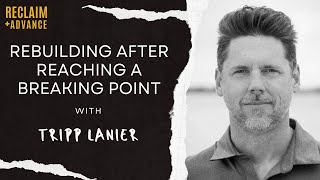
Terry Rice and Tripp Lanier talk about grief, loss, and rebuilding after hitting bottom. Terry shares losing his brother recently. They discuss how to move through emotional trauma and find resilience on the other side.
Tripp, how's it going today?
It's going well, Doing well. Good to see you again, Terry.
Yeah, it's good to see you again, too, because as I was saying before we hit record, the reason why this podcast exists is because I spoke to you several months ago, and you essentially removed the artificial constraints that I put in place between me, helping people overcome setbacks, seize opportunities. And that's what I'm doing through this podcast. That's what I'm doing through my work. So I'm just really excited to have you on here. And as I said before we started recording, this has been a challenging week for me because my brother just passed away last week. And when I started this podcast, my goal is to help other people get over their setbacks based on my personal experiences that I've had in the past. I never experienced that to happen while I was actually creating this project, actually putting it together. So in a way, I become part of the audience that I want to support, and it becomes even more meaningful in a selfish way to help people advance forward. So that's why I'm glad to have you here. It's a very meaningful moment and experience for me. But just to get the ball rolling here, do you mind introducing yourself?
Yeah. You sure you want to talk to me, like, about me? We could. You got it. Seems like there's so much more happening on your end.
I have the right trip. I'm good.
Okay. Trip linear. Yeah, I. I don't know how you. Let's see. How do I introduce myself? I've been a professional coach for nearly 20 years now. Before that, I had my own small company in media production, and that afforded me a very simple lifestyle to be able to travel and kind of be a personal development, spiritual development junkie. And then I kind of hit a place where I was like, gosh, I felt out of alignment with the things that mattered to me and how I was making a living. And so that brought me into the coaching world, and I've been really fortunate to be able to. Essentially, my wife and I and our daughter were able to live where we want and have a very simple life. And, you know, I get to work, have really great, impactful conversations with people every day, people that are trying to align their values with how they serve others or help others or create something out in the world. So.
Well, hopefully this will be another one of those conversations and, you know how it goes here. In a moment, I'm going to ask you to share the darkest part of your personal or professional life that you feel comfortable sharing and then how you got through it with a goal of inspiring and motivating our audience as well. And afterwards, like I said, we're going to make this a two part episode. Afterwards, you're actually going to interview me about some of my challenges, which are even coming up recently, and how I navigate them as well. So you're up first. So I'm going to go easy on you because I don't want you to go too hard on me. But Trip, let's, let's talk. What do you feel comfortable now?
Like you just like, like real right into the good stuff. The deepest, darkest moment. Let's see. Well, I. So I would say I was in my mid-20s, I can't remember how old, maybe 25, 26 and 13 years before. My mother had taken her own life and I'd never really, I'd never dealt with it. And I'd spent a good 12, 13 years just trying to control and manage my life so that I didn't have to experience anything or I didn't have to feel anything. I didn't have to feel threatened. My relationships, just the interests that I had. I couldn't, I, I couldn't see it at the time, but essentially I was living a very, very small life. And fast forward 12, 13 years later. I'd been living with my girlfriend and things were going great. I was starting to really like, oh, she could relax and I was really feeling like I could have a home. And one thing led to another and she decided, you know, she wasn't ready to settle down. We were both really young and she wanted to create a life for herself and a profession for herself elsewhere. And I totally understood and got it and yeah, of course, but what I didn't see coming was the house of cards that I was living in this, this emotional world. It just came crumbling down, you know, the abandonment stuff, whatever. So I, I was fortunate enough I was seeing a therapist at that time, but it was a very intellectual thing. It was like I was getting a degree and kind of understanding what was going on in my mind, but I wasn't feeling it anything. I wasn't, I wasn't able to experience anything. I was so muted and so withdrawn from that stuff. Well, not anymore. That all of that came crashing down. And I think for the better part of several weeks I couldn't leave the house. I lost like £30 and I was just a mess. And I didn't, I didn't really. I didn't understand what was going on with me. I didn't understand. I didn't have a context for what was going on. I didn't understand anything that, um. Yeah, it was just so much. And I.
And it.
At any given moment, if I tried to go to the grocery store or something, I would just start breaking. I just break down in the middle of the aisle or whatever. Not even see. Feel like it. I could sense that it was coming on or something. It was so bizarre. And so I remember I was laying there one night on the couch and just like, how do I make this stop? I've had enough. Like, please make it go away. Please make it stop. And I had so much resentment and so much hatred and so much. I was so angry at my mom for what she did, and I was in this kind of perpetual drama triangle. She was the villain, and I was the victim, and you. And. And, you know, I remember early on when I'd started working with the therapist that I was with, I was like, what's the end game here? And she's like, well, ideally, you'll forgive your mother. And I was like, there's no way. I just. This is just not feasible that I could forgive her. And I remember laying there on the couch, and I was like, how do I make this stop? What do I have to do to make this stop? What could I do? What could I do? And the thought crossed my mind, you could take your own life, and that would stop things. That would stop this. And I was like, oh, my God. Like, that's. Maybe that's part of what she was thinking. Maybe that's part of what she was feeling, that she. And she took that road. She took that. That doorway. And in that moment, I realized I didn't want it in my life. I didn't want to feel this anymore, but I didn't want her. And I was like, there's no way. I just. This is just not feasible that I could want to end my life either. And I. And I chose to live. But I. I felt like. Because I could see things from her perspective, and I could feel it. I could. I could sense what that door would be like and how it could provide relief in that really dark place. It was like a light switch. And I felt all of this weight. Forgive her. And I remember laying there on the couch, and I was like, how do I make this stop? What do I have to do to make this stop? What could I do? What could I do? And the. The thought crossed my mind, you could take your own life, and that would stop things that would go off and immediately I, I, I just got it. And I felt this forgiveness and this ease and this, it was like, oh, it's okay, it's all right. Like it was a stupid choice still. It was really dumb choice, but I get it. I get it. And that moment on the, the healing and the recovery process that I was in just got much, much easier. I still had a lot of waves and things that I went through, but I, it wasn't until that moment that I realized how much energy I was spending trying to contain my emotional world and trying to control my emotional world. It was like trying to keep an 800 pound girl stop this. And I was like, oh my God. Like that's, maybe that's part of what she was thinking. Maybe that's part of what she was feeling, that she, and she took that road, she took that, that doorway. And in that moment I realized I didn't want it in my life. I didn't want to feel this anymore, but I didn't reel it in a trash can or something. And it was just so much energy and suddenly I didn't have to worry about that anymore. It was okay. It was okay to have my emotions and it was okay to have to experience things and know that I could go there. Didn't really want to go there, but I could. And it wouldn't. It felt like it was going to kill me, but it wouldn't, it didn't kill me. And excuse me. So that was, that was a huge turning point. I learned so much in there about forgiveness. I learned so much about the willingness to experience things. The, and, you know, and that, and that put me on a path to become, you know, the one in my life either. And I, and I chose to live, but I, I felt like, because I could see things from her perspective and I could feel it. I could, I could sense what a person that was voraciously curious about the human experience, whether that was, you know, our own development or mentally, but also emotionally. And that door would be like, and how it could provide relief in that really dark place. It was like a light switch. And I felt all of this weight go off and immediately I, I just got it and I felt this forgiveness and this ease and this, it was like, oh, it's okay, it's all right. Like it was a stupid choice still. It was really dumb choice, but I get it, I get it. And that moment on the, the healing and the recovery process that I was in just got much, much easier. I still had a lot of waves and things that I went through, but I. It wasn't until that moment that I realized how much energy I was spending trying to contain my emotional world and trying to control my emotional world. It was like trying to keep an 800 pound gorilla in a trash can or something. And it was just so much energy. And suddenly I didn't have to worry about that anymore. It was okay. It was okay to have my emotions and it was okay to have to experience things and know that I could go there. Didn't really want to go there, but I could and it wouldn't. It felt like it was going to kill me, but it wouldn't. It didn't kill me. And. Excuse me. So that was, that was a huge turning point. I learned so much in there about forgiveness. I learned so much about the willingness to experience things. The. And, you know, and that, and that put me on a path to become, you know, a person that was voraciously curious about the human experience, whether that was, you know, our own development or mentally, but also emotionally and spiritually. And yeah, I can, I can zero everything back to that, to that moment. Everything. Just. It was a flashpoint for me.
I'm gonna ask a question that might sound morbidly curious, but there, I promise there is a goal to it, because I think a lot of people listening have heard this before. I'm about to say it in a moment and it stings. Here's what they've heard. They've heard everything happens for a reason. And when that thing happens and someone says that, it can seem very trite and dismissive. So in reflecting back on your life, losing your mom and even the depths that you went to, how would it feel if I said to you, well, everything happens to her for a reason?
Oh, I've heard it plenty of times. You know, I don't, I don't. It's not particularly part of my philosophy. But what I, what does give me comfort is that we have responsibility. So things happen. Terrible things happen. Terrible things happen to good people. It's not fair. And. But what does give me a sense of comfort is that if we can find the strength, we, we can find ways to, to utilize that and grow. But that's a really tough thing to say when you've just been knocked over the head. You know, it's a really tough thing to hear. That's not the time just yet. But there's a. But it is ultimately true that if we choose to look at that with curiosity and how can I grow from this? Or what can I learn from this? How can this help Me be a better version of me. Wow. There's so much possible, for sure.
Yeah. I like that approach better, where it's like you're trying to find, I don't say the gift that the experience gives you, but it's like the ability or the freedom or the opportunity to do something that is positive. And I think if we can take that approach to it, it seems less trite and callous than someone saying everything happens for a reason. Right. Because that's. It's like, well, what's the reason? It makes no sense. Right. So, yeah, so I can align with that. What I'm wondering is this, though, because you're a trained professional helping other people work through these. These challenges, this type of trauma, what would you have said to yourself back then that your therapist clearly didn't say to help you come to that realization? If anything, what tools would you give someone who's facing a similar situation?
Well, you know, I don't work with. With people that are. That are dealing with heavy trauma. I refer those people out and I work in conjunction with trained psychologists and psychotherapists and psychiatrists and stuff. But nonetheless, by and large, I'm lucky and I'm fortunate that the people that I work with are curious and they want to. There's a desire there to say, hey, I want to find the good in this. If it's a divorce, if it's, I've been fired from my career, if it's an illness, if it's some kind of setback, there's a desire to find a way to utilize this and benefit from it and leverage it in a positive way internally. What I don't tend to work with, and I don't tend to come across a lot of people in my professional life that are looking to fortify a victim mentality or victim identity if. If that's their thing. Like, look at. Look at how bad things have gotten for me. And let's just talk about that. That's not helpful. I mean, it's not going to help them solve their problems, and it can be a really tough place to be. And that's very different from, I'm so sad and I'm hurt and I feel alone and I feel crushed. That's very different from, let's talk about how the world turned on me and why, you know, we should feel sorry for me in this moment. So those are very. I think if I. If I can help people spiritually and, yeah, I can. I can zero everything back to that, to that moment. I would want to Help them nudge that into a place of, are you interested? At what point are you going to be interested in seeing and using this to grow? And you may not be there yet. You might need to just feel like the world wronged you and that might be part of your process to be pissed off or to be hurt in that.
That way.
But we can. Like, I was there for years, so it didn't do me any good to, to stay there. It was only eating me up in, you know, inside.
Yeah, I, I have a statement then, a question. So the statement is you, you hinted at having a victim mentality. And I think when my son died, I over indexed on not wanting to be seen as a victim. I wanted to be seen as strong and resilient. And I think as a result that that wound didn't heal as well as it. As it could have. And it's things that I'm still working through now, seven years later. So now with my brother passing away recently, I am, I'm showing that, yes, I am hurt, I am grieving, but I'm showing the resilience that I try to share with other people and how I'm getting through it. Instead of saying what was me, I'm saying, okay, this horrible thing happened. That's why today I'm going to go exercise. That's why today I'm going to meditate. I'm going to make sure I'm focusing on the controllable. So I'm glad you brought that up because there's nothing. These things happen. But it's like, what is your attitude towards it? Does this become your new identity? Or do you see this, like this horrible situation that you really got to put your arms around and fight to work through. The question is this. I'm looking behind you and I see this sign that says freedom, aliveness, love and peace. And I know that was referenced heavily in your book. This book will make you dangerous, which I highly recommend. I've bought it for people on more than one occasion. Can you break down what these four words represent in your book? And then from there, which one do you think we over index on in regards to how we're trying to improve our life? And I promise listening audience this will make sense once he goes into it. So Tripp, take it away before they get too confused here.
Well, what am I pointing to with freedom, aliveness, love and peace? Well, a lot of people that I've worked with have had a lot of success in their lives, meaning they've accomplished a lot of the things that they wanted to. They set out to do. They've been high achievers. And then they got to this place and they felt empty or they felt like something was wrong or off. And they didn't realize that they had created a theory that if they just got xyz, then they would feel differently. They hadn't connected the dots between that external accomplishment and how the experience or the internal experience that they wanted to have. And so it was very. It's very crazy when we get to this place and like, wait a second, I've accomplished xyz, why do I still feel this way? And typically, you kind of largely feel trapped or drained or isolated or bored or overwhelmed. Those are. Those are the things that kind of loosely. Those are kind of the general areas there. And nobody sets out to feel that way. I don't know anybody. It's like, I'd love to get to a place where I feel isolated. That's a different from I need alone time. Isolated is like I'm cut off from humanity and all right, nobody knows me and nobody cares about me. There's like, those are terrible. It's a terrible place to be. So with that in mind, if I don't want to feel trapped, then that points to freedom. I do want to feel free. If I don't want to feel drained, that tells me I want to feel alive. If I don't want to feel isolated, it tells me I want to feel connected or loved. And if I don't want to feel bored or overwhelmed or stressed out, then that. That points to peace of mind. And so when I'm working with people and we are kind of setting out and getting clarity about what it is that they want to create in their lives, Ultimately, I'm helping them point to this. What's going to help you feel more free or more alive or more love or more peace of mind? Because if we go and accomplish this thing that looks really cool on paper or on your foam core vision board that you got in your office at home, and you still feel trapped or drained or isolated or bored or overwhelmed, then we miss the mark. We screwed up somewhere. And so we're always coming back to where can I experience freedom, aliveness, love, and peace today? Not at the end of some big finish line or at the end of some big accomplishment. And that usually challenges us to start to live our lives a bit differently.
I've been doing that since I read your book, and it's amazing how you're giving very practical, but rarely utilize suggestions on how to do that. So if you want to feel more free, I might say, oh, I want to go on some crazy vacation that's going to be around the world or something like that. Well, what can you do right now? Oh, I can go to the Brooklyn Bridge Park. You know, it's like there's. There's options that are at least getting you closer to that vision. But I feel like sometimes we just feel trapped because it seems like it's so hard to attain or it's so far away when if you can explore the agenda, you're giving very practical but rarely utilized suggestions possible you can get that freedom aliveness, love and peace today. And then, yeah, keep building towards, you know, other outcomes. But it just unlocks so many opportunities for me. So I appreciate that.
Yeah. And it also starts to poke through all of the excuses we're making. I don't have time or my partner won't let me do that or, you know, whatever. And we can start to see, like those are the reasons why we don't feel this way. It's not because we haven't achieved this big goal. We've created an environment that keeps us stuck in this place. And that's where it feels dangerous, is to start to. To reshape that or to challenge those ideas that I can't because of xyz. It's that victim mentality we're talking about.
Yeah. Yeah. So, Tripp, this is going to be an interesting sign off because you're going to interview me right after this in the next episode. But let's wrap this one up here. Where can people learn more about you if they want to follow your work?
Yeah. So this book will make you dangerous. It's available everywhere you get books. Amazon's obviously the easiest place to get it. And I also have been hosting a podcast since the 2007, 2008, called the New Man Podcast, which folks can learn about there. And then if you want to learn more about the coaching that I do, you can visit trip linear.com awesome.
Thanks, Tripper. I appreciate it.
Thank you, man.
All right, so now we're gonna. We're gonna flip it. We got 20 minutes. And this is what I was not ready for. But let's. Oh, let's do it. I'm gonna. I'm gonna tee it up still. And then you're just gonna interview me and basically just ask same questions, ask you what was the shittiest moment of your life? And I'll see.
Okay. Are you open to me? Are you open to me improvising a little bit? On the questions.
Oh, yeah, you're the pro. Yeah, yeah. Please, please. You're the pro. I. I actually need the help here. All right, so let's go start here. All right. All right, Tripp, we're here for part two of this podcast. Previously, I interviewed you about some challenges that you had in your life, and you gave us some really good guidance on how to push through if we experience something similar. But like I said, now it's my turn in the hot seat where you're going to interview me about my challenges, and I'll let you know how I've worked through them and am still working through them. So I'm going to turn the mic over to you.
Okay. Well, you know, the elephant in the room is obviously you lost your brother this past week. And so I don't. I don't know if you want to lead off with that or if you want to address some other challenge that you've had, but I just want to take a minute to feel more connected to you and just get a sense of where you are before we start to dive in here. But the context is obviously working through very difficult challenges, and so I just want to name that.
Yeah, no, I appreciate that. And it's. It's interesting because my story of. Of sorrow is often around death and loss of family members. So I'll go back my. Actually, I'll take a sip. First one. Edit that part out. I'll go back. My company. I started my company in 2015, and December 8th of 2015, my daughter was born. My first kid. December 20th, my dad died. So that was the first experience with loss. So I'm a new parent, new business owner, and didn't know how to do either one, and. And lost my father, who was a mentor as well. And then two years later, I lost my son, T.J. at birth. He was. He was stillborn. Rushed to the hospital. My wife's having contractions. Unfortunately, we lost him. And that's the part I think we can stick on or go back to, because that's when I was really going through it. 2020, lost my grandfather due to Covid.
And.
And then just this past week here in 2023, I lost my older brother, who suffered from Ms. And was actually in an assisted living facility for years, but just kept on getting all these infections to the point where this last one, it just overwhelmed his system and lost him. And so a lot of losses. But I. I'm in a weird spot right now where I've never had the actual tools in place to Deal with it. I was just either deflecting or assuming a role that I thought would get me through the situation. But I think we should zone in on my sons. I think that would be the most contextually relevant for today.
Okay, yeah, thanks for that. And I just. I appreciate the. What you've been through. It's a lot. That's a tough few years. And I'm trying to imagine how that would shape my worldview of when's the next. Like, is there a bit of that for you? Like, I can do that. Like, if I have a couple of knocks and it's like, it feels like, hold on. I don't know if it's safe to relax just yet. Do you experience anything like that?
No, I'm the opposite. And that was the weird thing I felt like with losing my son, like, the. The odds of, you know, losing a child at birth like that are very low. Like, you know, earlier on in. In pregnancy, like, you know, you can have a miscarriage, unfortunately, quite often, but, like, once you hit, like, 38 weeks, you're good to go. So my thought after that was, I've already been through the worst. I don't see how it could be my turn again for something horrible to happen. That was my thought process going forward. But initially when it happened, it was just so tough because when you're that pregnant, you're visibly pregnant, you know. So I'm walking around my neighborhood here in Brooklyn. Everyone sees us. You know, they've noticed for years, like, oh, yeah, there they are. They're having another one, right? And you're telling everybody, too, right? You're all over Facebook, oh, have another baby, blah, blah. You know, you want the likes and the shares and everything. And I remember going to the hospital and we just think, my wife's going into labor early because it's only like two weeks early, right? So we're going there and she's having contractions, usual stuff. And they hook her up to a machine. And the doctor's like, it looks at me. I'll never forget the look on his face. He's like, this is a very serious situation. We're going to try using a different machine and see what happens. Try a different machine. And there's still no heartbeat. So that's when I knew that I was going to have the worst night of my life. And I just accepted that. And it was because, not to get too graphic, but when you have a stillborn baby, you don't just leave and go home. You start to deliver the baby. So you're not done. And to see my son come into the world with his umbilical cord wrapped around his neck, that's not something you're gonna forget anytime soon, right? So there was that. But I didn't really take time off for work because I just wanted to stay busy. I was running. I was just running. I always want to stay busy with one thing or another because I never want to sit still with my feelings. And that's why I was saying to you earlier, that's the wound that has, like, the most scar tissue because of the approach I took immediately afterwards.
Did you ever get a chance to experience or allow yourself, or are you still running? How would you characterize it?
I. No, I'm not running anymore. I. I am amazed and pleased at the outcome that has came from me sharing it more publicly. And I'll tell you what happened. I normally didn't even talk about it publicly until this year, but I was at this conference for ConvertKit, and the day before, there was this mastermind where people were getting a bit looser and letting out some emotions and stuff like that. And that's the first time I talked about losing my son publicly in a group. Then the next day, I'm on stage doing my keynote, and I paused and I said, look, this is the part of my story where I usually give you some bullshit reason why I made a pivot in my career. Here's the real reason why. And I told the real reason, the truth. It's because I lost my son. And immediately afterwards, one of the attendees came over to me. He's like, look, I don't mean to be too prying or too personal, but I told my friend about your story because she just lost her son, and she's burying him today, and his name is tj, just like your sons. And I told her that story, and it gave her some comfort that you were able to get on stage and dishonor his legacy and share his story in front of that crowd. So I know you're going through a lot of pain. She is, too. But just by you sharing it, you made it better. And it's. It's rare you get that kind of immediate feedback on some kind of, like, moment that you have and the impact that it had on people. But that's when I knew it was on the right track. And now I'm just running with it. So I. I have a new sense of freedom that comes from being authentically vulnerable. And it's. It's been amazing, like, the outcome that's.
Come from it, what would you describe. How did you describe dealing with tough stuff before versus afterwards? What shifted for you there? Because that. That's a lot of times we think, oh, this is how I deal with tough things. And. And it seems like something. Then you got a new way of looking at it. How would you describe those two things?
Just getting through it before. Like, that's. I just got through stuff because that's how I was raised. I mean, my dad was in the military, fought in Vietnam, and he's, you know, like, it always baffled him, and I'm not. Hopefully doesn't, like, turn anybody off, but it always baffled him why his friends that he served with in Vietnam would keep on talking about the war and how horrible it was and all the stuff they went through. And he's like, the whole time I was there, I just wanted to be home. So now that I'm home, why would I talk about the war? That's just what made sense to him. And for me, that's. That's my dad, you know, that's what I look up to. And I was like, all right, well, that's how you do it. And even when my grandmother passed away, she told all her kids, like, look, when I'm gone, don't bother going to my graves. There's gonna be a bunch of bones there. Just go on and live a good life. So, like, that's really how it was. And conceptually, that can work. But in. In practice, I think most people would agree that it wasn't the right approach to take. And I'm lucky to have such a familiar relationship with death that now I know how to process it better. With my brother, it's still hard, but I'm not making mistakes that are making it harder, if that makes sense.
What would. What would those mistakes be? What are you talking about?
Acting like nothing's wrong. Pushing through work to stay busy, but also isolating myself at the same time. That's what I did. I isolated myself for a year. I didn't hang out with anybody in person whatsoever. And remember my best friend? He was moving from the New York area to Atlanta. He's like, I just want to say goodbye before we all leave. Can you come to this dinner? I'm like, yeah, sure. I'll do it. And then as I was getting dressed, I was like, nah, dude, I'm not doing it. I'll see you. See you some other time, right? So that wasn't that healthy. It just. I didn't want the questions. I didn't want the empathetic. Looks either. Like, how are you? No, really, how are you? You know, that type of shit. So I just want to avoid all that stuff. And that's why I isolated. And there were some good things that came from it. I got in really good physical shape, but mentally it wasn't the best way to move forward.
Okay, and so what would you add? If someone's listening to this, what would you add other than the okay, I'm going to move forward. Yeah, of course we keep living our lives. But what's the, there's, it seems like it's a nuanced aspect of this. What's the, what's. What is that?
Well, right now it's like a three step process. And I'm not saying anyone, there's a definite process or whatever, but it's like acknowledge, acknowledge, adapt in advance. So acknowledge. Yeah, this horrible thing happened. How am I going to adapt and move forward and then advance in a meaningful way? So I'm really sitting with it, how shitty it is. I'm not trying to deny it. I have no problems breaking down, crying and letting it out or removing myself from situations when I feel like it's not the time. But I'm also warding off depression by doing a few things. One is just self maintenance, right? So I'm going to the gym still. I got a massage the other day. I did some sensory deprivation where I was like floating in like some kind of pod. I'm doing some self reflection through journaling. And that alone, gosh, has been so powerful because I, I had a lot of guilt, obviously about my. I shouldn't say obviously, I had a lot of guilt about my brother passing away because I didn't visit him as much as I could have. I live in New York City, he lives in Brooklyn or, sorry, I live in Brooklyn, he lives in Buffalo. So there's that guilt. But when I was going to see him, I saw this red Blazer. I'm on the way to the hospital knowing he's gonna pass away in hours. I saw this red Blazer, like this old beat up Blazer on the side of the road. And it reminded me that 10 years earlier, actually 15 years earlier, when he was going through a tough time, I gave him that car, the same type of car to help him get back in his feet. And I, it just kind of passed through my mind real quick. But I was like, wait, you know, you, you were a good brother to him. You know, you did what you could with four kids here and a business to run and journaling that helped me cement that in my mind to not feel as guilty about that moment. So just really is dumping in all the emotions has been good. And I'm almost. This is gonna sound so weird, but I truly am happy for him that, that he's no longer suffering and that his quality of life is not what it declined to anymore. And this came from journaling, like, really working through the thoughts. So self maintenance, the gym, you know, massaging all that stuff, self journaling and just really being clear my boundaries with everybody too, like, hey, can't talk about this, can't talk about that, and. And we'll see where it goes from there. But I'm not in a rush to get over this. I don't want to get over this. I want to be changed forever in a way that helps other people.
I want to highlight something else that you're doing right now, which is talking about things openly and giving people, even though we may not be face to face with them, but there's something powerful that happens when we share and when. Even if somebody in that is not willing to necessarily acknowledge something on their own behalf, when someone else does. I've just seen this so many times sitting in circles with other men or sitting in circles with other people that one person's work ends up working for somebody else. And there's something that shifts there and it's quite beautiful. And I know that you understand this, but intuitively that's also part of the process, which is at some point we share, at some point we listen, and at some point we tell our story. We don't have to get stuck there. Some people can. They can kind of just get stuck in that story phase. But there is something really beautiful about telling these stories. And just like, wow, I'm not the only person, not the only one that something like this happened to, or I'm not the only person that felt this way or maybe felt confusing feelings where I feel lost, but also at the same time, I'm grateful. Like, that's really. That can be really weird for some folks to navigate. So when we name these experiences and we give other people, we invite other people to consider that or share their own things. Really beautiful, amazing things can happen.
I'll. I'll give you an example of the amazing things that can happen. I've been talking about my process for getting through this on LinkedIn and my most recent post. I said, hey, here's what I'm doing. I'm meditating, I'm journaling, I'm exercising, so on, so forth. And this random person sent me a message saying, hey, thanks so much for this. My brother died last year, and I've been a wreck. I just feel like my whole world is ending. I don't even want to get out of bed anymore, and I just feel lost. So hearing you say this about your brother was helpful, and I replied, hey, you know, I'm sorry to hear that. And here's one thing that helps me. I've been rewatching TV shows that me and my brother watched when we were kids. I've been doing that at night, and it's been helping me feel connected to him through these shows. And then she wrote back. She's like, hey, I did that the other night, and I feel so much better. Thank you so much for this. I appreciate it. And I was just. It felt so validating because it's scary to write posts like that right where you're saying, hey, I am sad. You know, Know, I'm this guy who you see is this person. But actually, I'm sad right now. And just for that one person that you always. People always say that if I just reach one person, it was worth it, but you don't always actually hear from that one person, whereas I did. And just to know that she was able to have a night where she was celebrating her brother and feeling connected again, that. That was pretty awesome.
Yeah. Yeah. Well, I'm glad you did that. And if anything, I would just encourage you to get in the room with people. You know, that's how I got into this world, was sharing these types of experiences in the room with real people. And those were transformative experiences. We'd walk in, sit around the fire of one person, and then leave as another. And I think it's great that we can utilize social media and some of the other platforms to. To do some version of this, but it really is pretty magical. What can happen when we get in the same room and we can see each other and. And feel that.
Yeah, yeah, I. I want to do that as well. And that's why I feel like this. This podcast, this social impact project is a first step, because I want to see who this resonates with. I want to hear from the audience, like, hey, was this useful? Is this helpful? What else do you want to hear? And I'm not in a rush for it to be anything other than what it's meant to be. And there's a piece in that, too. So. Still. Still a very rough time. But, gosh, I know some beautiful moments and connections are going to be made as a result of it. So that's where I'm at.
What did we miss? What did we touched? Have we missed anything so far?
I don't feel a need to make it conclusive. You know, I mean, story's not done, so, no, I think we got everything. But this is. This has been helpful for me, so thank you for. For allowing me to tell the story in a constructive way. Otherwise, I just would have been blabbering the whole time. And. And I appreciate that. So thank you.
I appreciate what you're doing, and I appreciate your willingness to.
Beautiful moments and connections are going to be made as a result of it. So to.
To lean into this is that the whole concept and the. The context for what you're trying to do is. Is unique, and it's bold. I mean, in the conversation you had with me about my experiences, it's not typically how we start the conversation, so you just go right in. And so I. I appreciate that.
All right, Tripp. Thank you very much. Until we speak again, I appreciate you.
All right, man. Sa.
More from Terry







When you want to quit, don’t. #FitnessOver40 #MindsetShift #TiredIsNotAnExcuse #PersonalGrowth




You’re gonna want to give up. Don’t. #mindsetshift #motivationalquotes #motivation #dontgiveup