Reclaiming Maximum Agency After Childhood Trauma with Barrett Brooks
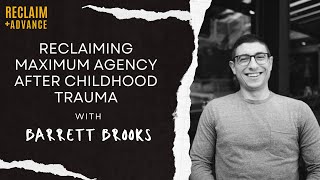
This is a YouTube video titled "Reclaiming Maximum Agency After Childhood Trauma with Barrett Brooks" published in August 2024. It features a deep and personal conversation between Terry Rice and Barrett Brooks, former COO of ConvertKit and now an executive coach and writer. The discussion covers Barrett's journey through childhood sexual abuse, addiction, recovery, and emotional healing, as well as his coaching philosophy and experiences. Terry Rice shares his own reflections on grief and vulnerability, making the dialogue intimate and impactful. The content is a candid interview focused on trauma, healing, and personal growth.
I said, look, I'm going to begin writing about this and speaking about this. My goal is not to cause you shame. It's not to cause you or your family harm. But I'm going to speak and write about this and I just want you to know. And that was the moment of maximum agency, was. This is mine now, and I'm not going to be silent about it anymore.
As a heads up, this episode contains discussions around sexual assault, so please take care while listening or feel free to skip to another episode. Today we're talking to Barrett Brooks. Barrett is the former COO of ConvertKit, where he helped the company grow from 3 million to 30 million in revenue. These days, Barrett is a writer and an executive coach on a mission to help other people do good work that makes a difference in the world. And coincidentally, Good Work is also the name of his podcast. Let's jump into the conversation. Barrett Terry Rice, how often do people call you Garrett?
Every time I say my name to a quick order food restaurant or a coffee shop, it is either Garrett or Gary.
Okay.
Or Barry. It's never Barrett unless I say bear it. So every time I have to say B A R R E T T. Yeah.
Do you ever just give up and you're like, whatever?
Yeah, often. Like I'll get beret written out on my drinks all the time at coffee shops and it's just like whatever, as long as I can get close enough.
Yeah, yeah, you just want the coffee.
All right, so besides that, let's, let's get into this. So Barrett, you're on a plane, you sit down and someone says, tell me about yourself.
What do you say?
You know, it's interesting because I'm often the question asker in my life and I tend to look for other people's stories a lot more than I like to tell my own. So I would probably deflect, to be honest. But for the sake of the exercise, I've gotten better at honoring the quality of the work that I do now. And so I would tell them that I'm based in Portland. I am an executive coach to creators running million dollar businesses who are at the intersection of deciding whether to scale or whether to settle in with systems and enjoy the point that they reached. And I'm the host of a long form podcast called Good Work where I have conversations with talented people who are using their careers to make the world a better place.
So how did you arrive at this.
Spot in your life long and winding journey? Yeah, I mean, so before this pretends.
A short flight and you don't have time for the long and winding journey.
Yeah, yeah. So, okay, so I've been with my wife for 15 years, married for eight, and she has been with me throughout the entire journey and is a key player in how I've become who I become today, and I think vice versa. And so she's at the core of everything but career wise. Before I did this, I was the CEO of a company called Convertkit. We're actually recording in their studios. They just announced today their kit now. So I was a COO there for five. Well, COO for three and a half years, but I was there for five years. We built the company from 3 million in revenue to 30 while I was there and grew the team from about 20 people to about 75. And I would say that's really, that's really where I got the bulk of my knowledge ground to stand on and kind of like earn stripes in terms of leading, building, culture, operations, growth. All of that came from those five years. But that was also the product of starting my own business before that, being at another smaller startup before that. And so that was kind of the culmination of everything. And then I had a period of, I call it my wilderness years for about a year and a half where I was trying to reclaim my own identity beyond that role as COO of Convertkit and figure out what I wanted to do from there. And so I ran some career experiments. I made a book about climate change with a mentor of mine. I spent six months as the COO of a local coffee company in Portland. It's got about five locations. And then went back into startups. And it was at that last startup where I realized I was having a lot of the same emotional experiences I had that caused me to leave Convertkit and that I didn't want to work for anyone anymore. I was the leader that I was looking for to work for. And so a big part of ending up here was owning that and the responsibility that comes with it to provide for my family and be entirely responsible for making enough money that I can be on my own and that I can be my own boss again.
You said that your wife is the center of everything, and I think that's a, that's a beautiful way to say it. My wife, Dominique, like, she's been with me through some very challenging times.
Yeah.
And I, I don't owe anyone a bigger debt than I do to her. Like, it's just, like it's this, it's just obvious through all the struggles that I have, through all the plans I had that just didn't work out so and so forth. And it makes you want to show up for that person even more.
Yeah.
When you realize they supported you before, you know, you had, like, all the accolades and on success and everything. So when you said that, it stood out to me. And Baron, every time I talk to you, it's just like you have a moving stillness about you that's very powerful. It's. It's grounding, but it's also inspiring, but not in a fleeting way. Like in a way that makes people really want to change their lives. And, you know, a year ago, we were here for the Convert Kit Now Kit conference, and you let this mastermind where it got very vulnerable very quickly.
Yeah.
And, like, grown men are in there crying, saying, you know, everyone thinks I'm so successful. I'm not making that much money. And, like, it just created a culture in an environment where it's like, hey, let's get real. And that's when I felt comfortable for the first time talking about losing my son, tj. And anyone who's listening to the podcast, they. They know the story by now, but that was the first time in that small group that I felt comfortable doing it. And then the following day, I was like, okay, let me try doing this on stage. And everything has changed since then for me, personally and professionally, the way I express myself. And I was interviewing Charlemagne, the God, the other day, and he has a book called why Small Talk Sucks. And his point is, it's not small talk like this, like shooting the. On an airplane. It's like you not fully expressing yourself, who you are.
Yeah.
What you believe in, your experiences. It is soul sucking. And I can say that because I've been there before. I've been on, you know, TV and, like, podcasts and, like, stages, like, being a lesser version of myself, because I did not want to unveil the pain that I'd gone through.
Yeah.
And it's like, well, hell, that's what people need to know. Like, they don't need another person saying, here's how to get leads on LinkedIn. They need someone to be like, hey, man, I've been through some. I'm still here. You can do it, too. So I want to thank you for that. I would not say you're the center of my life or everything like my wife is, but, you know, you're like, you're in orbit.
You know, I'm a character. I'm a character in the play.
You're helping out, so I appreciate that.
I can receive that. It felt. I mean, it was equally powerful for me, to be honest, to. That was really the first room I stepped into in this new identity of coach and said, I think I have something really to offer here that's quite different from what you might get at an event like this normally. And it felt like a huge risk, honestly, to invite a room of very successful, established entrepreneurs to let the guard down long enough to access these things that we carry around everywhere but never talk about. And the fact that a few people went first enough to open up the door to then create this arc of growth. I mean, I think I've had three or four people this year say a version of what you just said, that that experience in that community of people unlocks something in them that wasn't available to them prior to that experience. And I'm just grateful for that. I feel very grateful to have gotten to facilitate interactions between peers that open these things up for people. And then you stepping on the stage the next day, I mean, you went from, you know, to the name of the show, like, reclaiming it, and then immediately putting it into action in one of the most courageous ways I've ever seen. And my witnessing of that felt like it was healing to claim it in such a public and immediate way after the fact. It was really moving for me. I mean, I. I brought tears to my eyes, like I think it did a lot of people at the time.
So when you led that mastermind, how long had you been coaching for?
So I've coached kind of on the side for. Since 2012.
And the point I'm trying to get at is, like. Like, I thought you were an expert and, like, were you just, like, making that up and trying it out on us or.
No, I was not making. I mean, I was. I did use that session as an opportunity to invent a framework for the work I had been doing one on one. It came out of a prompt from my friend James Cleary. Said, look, from your years of coaching so far, what are the three or four best exercises that have gotten the best results? And I initially rejected the question because it's like, well, that's not really how it works. It's actually being in relationship with someone in a coaching dynamic for long enough for someone to experience. Change is what creates it. It's not one exercise. It's an exercise at a moment in time paired with support over a longer time period that allows people to grow in the way that they want to. So that workshop was me challenging my opinion on that. And Saying, but if I could unlock it in an hour, what would that look like? And so that's where it came from. But I had been coaching on the side of my main work for about 10 years, since 2012, but I started coaching full time last year, March, so about four months prior to that. And I think it was me, that was an opportunity for me to take everything I learned about my own emotional arc of growth and what I was seeing in clients and say, okay, what's been powerful? What unlocks this for people? And I mean, it was a, it was an experiment and it worked really well.
Yeah, yeah, I agree.
It's good to know the background. Yeah. But yeah, I think with, with James Clear, you need friends like that sometimes to remove self imposed obstacles.
Yeah.
Like, what if you only had an hour? You know, what if you didn't have like multiple sessions? What would you do?
Right.
Would you give up or would you try to help somebody?
Yeah.
And often we just, again, we, we sometimes assume these are constraints and they're really not.
Yeah.
So just giving yourself permission to just go with it and saying, okay, what if I just try? This is a huge unlock. So to our, our listeners, I want to encourage them to do that too because sometimes, sometimes you think you need the degree or the credibility or like the, like the roster of clients or whatever. It's like, what if you just started, you know what I mean? Like, and made messy progress instead of like waiting for things to be perfect, which they never will be.
Yeah.
So the unlock question for that that I found is if you tack on what would have to be true if. And then it's the thing you previously thought was impossible. It's just a mental exercise. And if you can just embrace the mental exercise long enough to say if it were possible, what would have to be true? It unlocks this whole other way of considering it because you're not sitting in what you thought was true a minute ago. You're just saying like, I'm letting that go for a minute and that unlocks all these new possibilities. To your point.
Yeah, there's another way I've heard that expressed. It's like it's impossible unless the following conditions are met.
Yeah, that's great.
And then you just try to find those conditions. And as a kid, I used to play that same exercise with myself. Like if I was trying to figure something out, I would pretend like I already knew the answer, I just had to remember it. So not a one to one, but just looking for opportunities as opposed to obstacles.
Right.
Whereas some People look for obstacles instead of opportunities, and I'll try, to an extent, to help them push through, but after a while, I'm like, bro, that's on you. Like, you must not want to make progress, because I'm begging you. I'm giving you all these solutions. You're like, no, no. I'm like, okay, well, this ain't gonna help me that much. So. So I'm out. But when you're coaching, I mean, how do you help people get through those blocks? I mean, I know it's different for every person, but, like, first of all, I want to know, like, do you feel any frustration? Sometimes you're like, dude, I said it three times. And the second is like, how do you help people push through?
So much of the work of being an effective coach is removing your own emotional reaction to what that person is going through and simply creating space for them to move through their problems at the pace that they are ready to move through them with.
Okay, what about microaggressions, though? Because, like, there are.
I mean, so I will embrace the question, right? Because there are these little moments where it is frustrating. It's like, I feel like I'm not helping them right now. And for me, the biggest thing I've realized is that most people know what they should do to solve their problems, but if they're not doing what they know they should do, it's usually because they're not ready to embrace the emotional cost of that.
Yeah, that.
There's some emotional underlayer that is there but not being acknowledged. And it is the thing standing in the way. Not. I don't have the steps. And so what I would bet on is when you're having those kinds of conversations, that person knows you're right. They're actually not debating that they are subconsciously processing, oh, well, that will require of me this, this, and this, and I'm not ready to pay that cost.
Mm.
And so an example of this would be the courage you showed last year to claim a part of you and unlock all of the work that's happened since then. You had to be ready for the emotional experience of saying out loud what you had lost and experiencing the tears and being vulnerable in a group that could hold that with you. And I think it was that moment in time when you were ready for it. Yeah, I was there as a facilitator, but we just created a container together, and you stepped into it and said, this feels like the time when this is ready. And so I don't know. I think that my job is then not to let people off the hook, to be a mirror of what is the emotional experience that's holding you back right now. Because as soon as we can work through that, it's going to be like shot out of a cannon. And that's what's magic about coaching, too, is as frustrating as it can be when someone is clearly not ready to move once they are ready, change happens like that. And it's like six months to overnight everything changing.
Yeah.
I was almost going to quote your own quote, but it's. You must confront the emotion that holds you back from doing what you know you must do.
Yeah.
And. And I've kept that top of mind because there's so many times it's like, I know I have to do this. I don't want to. Why just check in on that. Like, either way, you have to do it right. So, like, push through. But one challenge I think some people have with expressing some of the more the tougher parts of their life, which I know we're getting into with you soon, is like their reception.
Yeah.
Of other people. And I'll give you an example again. Same company, Convertkit, made a documentary about my life, you know, the ups and the downs. And I sent it to one of my best friends from college and high school, actually. And I was like, mike, did you watch it? And he's like, no, I couldn't get through it. It was so sad. I'm like, dude, that's my life. Imagine how I felt, you know, like. Like, what do you mean, dude? Like. And he finally watched it. But it's like, I think you can control your emotions, but you can't control other people's reception of it.
Yeah.
And if you let their reception of it stop you from sharing your story with other people, then you can't help other individuals because one person, you know, said something they didn't like. Right. So I'm. One point of this podcast is to get more people to express their challenges.
Yeah.
You know, their frustrations, the ups and downs to, first of all, to get acknowledged for it. But al also to help other people. So I just want to state that, like, not everyone's going to, you know, pat you on the back. You know, some people are going to get scared and some people might get even offended for whatever reason. But.
And real quick, so one is, that doesn't mean you shouldn't have told them. That doesn't mean that. It just means they might not have had the space to hold it.
Yeah.
And the second thing is noticing your own reaction to their reaction is really in a really important part of the process, because it's really easy in a moment like that to feel. For example, my version of it is shame. Oh, I shouldn't have shared that. Now they feel burdened by it. That was bad. I feel shame. That's my kind of line that I would go through for a long time. And what I've realized now is that shame, that wasn't mine. That was a thing I learned a long time ago because, you know, people in my life, adults in my life, didn't have space for that kind of thing, and that has nothing to do with me. That's really sad that they didn't have space for it. And it was hard. But I am an adult now, and I'm ready to share my stories. And I actually can't be whole if I'm not able to or if I'm not allowed to, if I don't allow myself to. And so I had to really start to notice when shame popped up for me in response to someone not being able to receive what I needed to be known for, because that can create a negative feedback loop that says, see, you got to keep it all in. And that is toxic. It is toxic.
All right, we're going to have a huge pivot here, and I want to learn more about the Barrett before. You did all these amazing things, and I know you experienced some challenges in your life.
Y.
So I want to open the floor for you to share anything that.
That you here.
I think I'm actually going to share two, if that's okay. I'll try and keep them tight. So the first one is we. I think I talked about this in the Mastermind last year, and I've talked about it on my podcast as well. So I experienced sexual abuse growing up, and it was by mail. And that created all kinds of challenging dynamics in terms of my own emotional relationship to myself, my development of my sexuality, my relationship to my wife. For a long time, trust I had and relatives and friends, but I didn't know. Was invisible for a long time to me, like it was present. I look back now, actually, and for years immediately after that happened to me, I had severe ocd. I would have to go to the bathroom at least three times at night before I could go to sleep. So my parents would put me in bed. I would crawl along the wall, and I would have to do that three times before I went to sleep. I had no idea why. I would turn the water off, and I would have to touch it with Every knuckle, the knob, in just the right format, before I could go back to bed, had all of these things like this. And I recognize now that that was likely an output of the abuse, that it was a psychological response to something I was out of control of, where I was trying to take extreme control over my environment and control for all the variables I could. And that played out in many different ways throughout my life. And I was sitting in a talk at World Domination Summit run by a guy named Chris Gillebo, that it was a conference for 10 years and a guy named Lewis Howells, who folks in your audience may have heard of, gave a keynote. And it was entitled the Myth of Masculinity. And he basically told his story of being abused and raped by a male in his life when he was young. And as he told this story, I was sitting in the theater, I think I was sitting right next to a friend. And it was like a curtain that had been surrounding me dropped. I get chills as I say this, actually. And I realized in that moment, oh my God, this happened to me. Not that I was not raped. And I'm very thankful that it was not as severe as what his experience was, but this happened to me. And it was the first moment when it became full color. You know, it was always there in the background, of course, because it never goes away. But that was the moment of recognition that then led to a very long period of growth for me. So that's the first thing. But before we talk about how that transformed my life, I want to also highlight one of the outputs of that and other things and, like, things that I needed from my dad that I didn't get, even though he's an incredible human being who loved me very much and still loves me to this day. I had about a four year period from 16 to 20 where there was a lot of binge drinking, there was a lot of seeking love from any woman I could receive it from in the form of affection and physical contact. And what I realize now is that that was the first time where I was trying to fill this hole that I thought I had in me with things drinking, partying, social interactions that were with people who didn't even like me and I didn't like. They were bullies to me. And yet I sought them out for trying to, like, fill this hole, sought out sex and women trying to fill this hole. And it took me getting arrested for the third time for drinking twice in high school and once in my freshman year of college before it finally began to Stop. And the only reason it did was when I got arrested in college because I had been through pre trial intervention in high school. The judge was a little more harsh and said you have to go to six months of AA meetings as a precautionary view into what your future will be like if you continue on this path. You were on legal probation for a year with a probation officer. And then the school put me on probation for a year where if I got in legal trouble again I'd be kicked out for at least a year. And I'm a smart human being. Like I was at college to get a degree and go get a job in business. And something about the combination of those consequences finally made me realize like I'm going to ruin my life if I continue like this.
Can we go back to the meetings? Because I went to AA for a while.
Yeah.
And there are people there that they just look leathery.
Yeah.
Like they really been through it. So as a 20 year old that would have scared the out of me.
It did.
Like, because they're probably telling stories like, I was just like you when I was, you know, your age. And look at me now. So what was that like being that kid in a room with like these. You know.
I wish I was a writer at the time because I wish I could read the words of my experience then now. So I'll give you the version that can't possibly be true. Is basically why I say that. The way I remember it is that it felt like, why are you sending me here? Like, this isn't relevant to me. I'm not an alcoholic. Like I don't belong here. But I remember having to go. And number one, how much shame I felt having to go that this was embarrassing.
Did you sneak in the building like I did?
Like, I don't remember.
I'm trying to get in on the assume.
Yes. I mean I just carried so much shame doing anything alone where I wasn't sure what the routine was like. I mean I didn't even like going to a new restaurant where I didn't know where to order or all of that kind of thing. And so having to go to a church basement or whatever alone to this group where I'm there because I've been arrested is embarrassing. And so I remember carrying a lot of shame and just walking in and looking around the room like, wow. I don't even know. There is no part of my background that would have suggested to me that I would ever be in a room like this. And here I am. Like, this is Scary. I mean, it's terrifying to think alcohol can ruin your life. It can ruin your life. And it was ruining my life. I don't think I realized that at the time, this degree to which it was ruining my life. And so in that way, I'm very grateful to that judge. I'm sure it's a very common thing they prescribe for people who get in trouble like this, but for me, it was part of the experience that I needed to begin on a different path.
Yeah, I. I'll let you continue. But one experience. I remember I only went to meetings for, like. Like a couple months. But just like, the pain, the guilt and the consequences that people experienced from it was heavy. And there's this one guy, you know, came in, always very well dressed, looked like a lawyer or some kind of Wall street guy or whatever. And he said, like, one thing that he did when he was abusing alcohol is for some reason, he would urinate on himself and at work.
Interesting.
And people could smell it. And, like, he wouldn't wash his clothes and, like, he would just wear the same clothes to work that, like, reed of urine. And I'm, like, looking at the guy, like, he just. He looks, you know, great now and everything. I'm like, man, that is a horrible existence that he was living because of, like, this one thing.
Y.
And, you know, luckily, you know, I wasn't, you know, that bad. And I want to make it seem like I wasn't that bad, but, like, yeah, yeah, yeah, but you know what I mean? Because everyone has their own rock bottom. But it's like, this stuff will really f you up, and I'm just glad you caught it early because we would be missing out on an amazing person who's, like, healing people instead of, you know, getting in trouble.
Yeah, I really appreciate that. Yeah, that brings some tears to my eyes. I. I'm. I'm also very grateful I was on a bad path. You know, I'm honestly lucky I. I'm probably lucky I did not die in high school for. From being in cars and just other things like that, where there were some close calls that just could have ended very poorly and did for a couple friends in those years. So I think about that a lot, and I don't carry that as a thing I'm trying to make up for, but I carry it very much as element of gratitude for the opportunities I have now and how different it could have turned out. So if I connect those things, I think that I was trying to. I did not have emotional awareness to see what was going on inside of me. And I think it was because my parents didn't always have the capacity to help me process. And so I was just kind of eating my emotions. My wife recently shared something with me she might have just found on Instagram. So I don't know if it has any real background in psychology research, but I'll share it for the sake of anecdote, because it resonated with me. Said she saw something that said that in family units, where there is brokenness that is not openly discussed, where there's not room to process the emotions related to the pain and hardship going on in the family, one family member becomes the carrier of the pain burden for the family unit. And that was my experience. And I did not realize this until not that long ago. Just a couple years back, I had this session of internal family systems therapy where it was like I was falling down a well into the bottom, and it was just filled with my whole family, extended family's pain from my whole life. Everything. Divorces, fights, conflict, you know, just things that people had done to one another that had never been discussed and never been reconciled, never been healed from. And it was like that realization allowed the well to finally empty. And I began to be able to go back and acknowledge all of this pain I had been carrying as if it was my job.
Yeah.
Because it wasn't being discussed. And that covering that well, trying to get rid of that feeling of carrying all of that weight for everyone around me was what I was trying to do with alcohol but didn't know it. And so if I bring that forward to that moment of realizing that I was abused, that was the beginning of me being able to heal and not carry burdens anymore. To start to speak about these things and to recover and to create new stories around it, to create meaning from it. That gave me a new reality to live in. It's not like I did something to deserve being abused. It's that happened to me, and that's hard. That had effects, and I don't have to live with that as my problem anymore. I can name it. I don't have to hide from it. The person who did it to me might want to hide from it. And that's their burden to carry.
Yeah.
And so that was kind of the beginning of a long process of ending up, going through a lot of therapy. My wife being an incredible partner with space to be on that journey with me, to give me a safe place to express myself and continuously heal and find new layers to all of this. And I'M very, very grateful for it now. I mean, it still has effects on me. You know, my emotional responses to things are still rooted in all those experiences. But what's changed is my ability to see that and to acknowledge it and then to choose different actions that I might have in the past because I have an awareness and I've integrated more of the impact it had on me.
I want to make a statement, then ask a question. The statement is, this is a hard conversation for me because when you mention, like, carrying the pain of your, of your family, I'm thinking about my wife and specifically in regards to my son dying because. And I'll out myself, I have not publicly honored him as much as I should or could.
Yeah.
And even at home, she's really the champion of keeping his voice in conversations. And one reason why initially I didn't want to talk about as much is because there's just so much pain.
Yeah.
And his birthday was actually recently a couple weeks ago. And my other kids, like, like, okay, we're going to celebrate TJ's birthday. All they wanted was the cupcakes. That's all they wanted. So she's upset. She's like, guys, this is not about you and your cupcakes. So, like, you know, we, we cancel it that day. We're trying again the, the next day. They still keep on talking about cupcakes. I'm like, kids, shut up about the damn cupcakes. You know, I mean, so forth. So it's like. But that's because, you know, she was the one who was forced to carry this burden because I didn't step up enough and even educate the kids enough about it. Maybe.
Well, you weren't ready to. You didn't have the capacity to at the time. You know, I. So I'll just name. I feel a ton of compassion for you because it's not that you didn't step up, you didn't suck it up enough. It's just that you couldn't. You weren't ready.
And that sounds like a cop out answer to an extent. Like, I clearly could have. I chose not to. You can say, like, here's why you chose not to. But it's like I could have done. You know what I mean? Like, I appreciate you being compassionate and everything, but it's like, I don't want to, like, try to hide from this.
Yeah, well, that's the opportunity now, right? Is now you do have the capacity.
You're really letting me off the hook with this one.
I'm not actually. I'm actually putting you back on it because now carrying weight or guilt about it from the past will hold you back from claiming the full power of what you have the capacity for now.
Yeah.
And you do have the ability to now. You have acknowledged it in public. You have begun to honor him, to keep his voice alive. And there might be more healing your wife needs. She might need to be mad at you now that you can. She might need to tell you all the ways you let her down then, now that you're able to hold it. And you creating that space for her now that you can is actually what matters, because that's the only thing that you can control at this point. You can't redo the version of right after he was gone. Grief is a really, really weird thing. And it doesn't matter how much we know. We should be processing what we think we're supposed to be doing, how we're supposed to show up. Grief does not care. It doesn't care. And so I'm not trying to let you off the hook. I'm trying to say, now you are here. We can talk about him. We can send love his way and appreciate all that he represented in your life and helping you get to this point to have this conversation with me and vice versa. And that's everything your family needs from you.
I. I appreciate that and I'll. I'll receive that. And as you were talking just now and even during your story, like, we've both done some things we're not proud of. Yes, we've made mistakes. And there's this quote by Kobe Bryant channel, the villain, unleash the hero. And I just love that approach. Like, you've done some messed up stuff. You screwed up, you've hurt people, whatever it is. Like, I like to use that anger and almost like that shame to say, okay, cool, let's. Let's correct that. Like, let's use that as positive energy to say, like, I'm gonna separate myself from that person so far by just unleashing this hero who's correcting things in the world instead of making them worse. And it's like, if you use that dark energy for good.
Yeah.
You can create a positive impact in the world. So, yeah, that just. It came to mind as you were talking earlier. But I do want to ask a question, and this is going to be difficult because you chose to confront your abuser. And I think a lot of people wouldn't do that because for several reasons. One is like, it's. It's tough to go through it Again, yeah. And then even more complexing is like you don't want to make the other person feel uncomfortable, maybe. And I don't need to know the details, but I would like to get clear on, like, how you found the courage.
Yeah.
To step to this person and anything you want to say after that as well.
I mean, it was one of the scariest things I've ever done. I will name that. That some people literally can't for fear of their own safety. And I didn't have that concern. So that made it possible for it to be a choice for me in a way that for some people, it's just not. Sometimes the abuser has died or she's not physically available to people. So that's another thing that can hold it back. So I just want to acknowledge that part first. But the therapist that helped me through all of this, we did a number of exercises where they were relatives of internal family Systems work, which is a system of therapy created by a guy named Richard Schwarz that we've talked about some, the two of us. And basically we did this exercise where I would have imagined conversations with an empty chair with different individuals from. From the situation in it. And that gave me some healing. But I realized I was still not feeling like I had taken my agency all the way back, that it lacked in some way. And so the next step was that I wrote a letter as if I were going to send it to the abuser. And we did a session on that. And I realized after we did the session on that that I wanted to send this letter to this person, that it actually wasn't the exercise. It was the action of essentially reclaiming it back from him. You don't get my silence anymore. I am taking my silence back and I'm going to speak. And so I wrote this letter and I said, here is what happened from my point of view. Here is. Are all the instances I can remember. Here are some of the impacts that it had on me. And I wonder if you would be open to sitting down and talking about this, because I have some questions. And to his great credit, he replied. I also asked in sending the letter, sent it as an email. I texted him and said that I had sent it. And I asked that, have you been.
Talking to him during the interim at all?
Yes. But, you know, it was very awkward for me because it's like there's something here that's not been acknowledged. Right. And so I don't feel I can be in relationship. But there were situations where there wasn't a choice Right. That we were in the same place. And so I said when I followed up with the text that you, you don't have to say yes to my request, but I do ask that you acknowledge receipts.
Why are you being so polite though? Like.
Well, I was at. So what I was asking for was.
Cuz you've been saying like to his great credit, I'm like, why are we giving this person like any kind of like that's fair, you know what I mean?
Like.
Well, because they could have completely disregarded me, I suppose. And so I'm, I'm, I'm grateful that I had the opportunity to sit across from them.
Okay.
And because it gave me something. And so I don't think I owe this person gratitude, but I am grateful that it, I was able to reclaim everything I needed to because of the circumstances.
Okay.
But what I, the thing that was important to me was to say, please acknowledge your seat. Because what would have been the worst case scenario was no response. I think that would have been really hard for me to process because I wanted to know that he knew that I knew that was what was important to me. And so he agreed. We had coffee and I remember I, I went to a Starbucks with my wife beforehand. She kind of rode with me there near his house. And I remember just sitting there having my coffee and just shaking. Not from the caffeine, just from the, the anxiety, the worry. I don't even know what it was, just the act of confronting this massive truth and burden that I had been carrying for so long. You know, it was a big moment of my life, I guess was probably why I was so anxious and worried. So she stayed at Starbucks and I went and met him and asked him a series of questions. You know, I wanted to know if he had been abused, if it was kind of like a carry on effect that's very common in these situations. Wanted to know if it was related to anything he had experienced in his parents divorce, if that had sparked any of his behavior for him. I wanted to know if he had ever told anyone, if he had processed it at all on his own. And honestly I was surprised by the answers. It was like, no, I don't think it was rooted in anything. No, I wasn't abused. You know, it was basically kind of like there wasn't any reason. And it was interesting to me because I thought I might be let down by that. I thought I might feel angry or something.
Did you want him to have a reason so you could almost, I would say excuse him, but like at least Probably.
I think I was looking for a way to empathize with him.
Okay.
Or to understand it, you know? And I think in a way, it was a gift, number one. He may not even have processed enough to know. Yeah, maybe it was attached to some of those things. He didn't realize it and that was the beginning of his process. I have no idea.
Yeah.
But there being no reason, really gave me the power to say, okay, this is mine now. I don't feel like I have to carry this at all. And I said to him, I said, look, I'm going to begin writing about this and speaking about this. My goal is not to cause you shame. It's not to cause you or your family harm. It's, I will not name you because that creates its own brokenness for me. But I'm going to speak and write about this. And I just want you to know there wasn't an option. There wasn't like a, I'll do it in the way you want me to. I was just informing. And that was the moment of Maximum Agency, was, this is mine now, and I'm not going to be silent about it anymore.
Can you explain that concept? Maximum agency?
Experiences like this sit in the shadows either of our hearts and souls or in the shadows of families and family units or of society, because they're taboo. We don't want to talk about them. The point of the show is that we don't want to talk about them. Right. This gives space to talk about it. And when we accept that we must be quiet, we lose a part of ourselves. I think I lose a part of myself. I know if I think I must be quiet about my actual experience of life. And so Maximum agency was saying, this is my story.
Right.
It is not my job to protect you. It is not my job to look out for you. It is my job to heal and advocate and make meaning of this, make this worth something to me. Because the more I can speak about this, I think the more it empowers other men to speak about their experiences. Many men go through this exact thing and it's never talked about. We talk a lot about the experience that women have when they are raped or abused, as we should, as we absolutely should. Men don't talk about it. I want to create an example where we talk about these things, especially as men, not because I think our pain is special, but because I think we experience the pain over and over and over because we aren't willing to name it.
Talk about good work. What is. What is good work?
Good work. Is my podcast. It is the show that I've always wanted to exist. It's the show that comes most purely from who I am, from the version of me that I have reclaimed through all of this process. And I'm an altruist. Like, I see problems in the world as just waiting on someone to come and solve them for the benefit of society, for the benefit of communities. And I think basically nothing is intractable. We can solve pretty much anything. It's a resource problem, It's a creativity problem, it's a talent problem. And so fundamentally, I view it as my mission in life to help people unlock their potential and their wholeness and to apply that to solving hard problems that benefit society. That's what I view as my mission. And so good work is stories of people doing that. It's my goal, is to honor the person as deeply as I possibly can. Through our conversation, I do 20 to 30 hours of research on every guest. I read their work, I listen to their work, I watch their work wherever it shows up. And I try to get to know them. I build a mental model of who is this person? What are the experiences that have shaped them, the people, the places, the books, the ideas. And I try and architect an conversation that does two things, that builds on everything they've ever said without repeating it. So entirely new stories, new questions, new ways of understanding this person, and that honors the biography of their life at a moment in time that made them into the person capable of doing the work that they do. And I select for people who I perceive as being highly mission driven in their work, as wanting to pursue excellence because they know it's the best way to serve others and of realizing potential, not just having potential. And so I'm looking for that type of person, and I want to help them tell their story in a way that feels like they are being deeply seen and understood, both by me in the conversation, but then also by the audience that gets to listen to it. So that's the goal.
So beyond that, what impact do you want it to have on the audience? And what outcomes would you like to see from that?
I want my guests to be lifted up as role models. I want them to be celebrated as examples of how we can use our careers as one of the greatest points of leverage for making a difference in the world. Not in the, you know, abstract, woo woo kind of way, but in the very concrete, solving problems that matter kind of way. And I hope that if we have role models of people who are working in that way, using their careers in that in that way that it will allow us to. It will unlock other people to say, I want to do work like that. I want to use my career to solve something important, to serve humanity in some way. Whether that's through beautiful art, through sharing of ideas, building a startup, researching science. There's any numbers, infinite ways to do it. But the thing that makes me the most sad is when I see humans with nearly unlimited potential sleepwalking through life and work because of pain, because of the fear of what if I try and fail, because of not wanting to be let down by caring. And so I want to tell stories of people who put all of that aside and say, I'm gonna go after it. And. And I want to reveal the humanity behind that. You know, that it's. They're not special. They just made a decision that they're gonna go use their potential and see how much of it they can bring to life.
Well, Barrett, I think your mission is accomplished today, and I just feel very fortunate to know you. And I just want to say thank you for this. Thank you for sharing everything. I know it's not easy. I know it is mission driven work for you, but it's still, like, potential.
And see how much of it they can bring to life.
Well, Barrett, I think your mission is accomplished today, and I just feel very fortunate to know you. And I just want to say thank you for this. Thank you for sharing everything. I know it's not easy. I know it is mission driven work for you, but it's still like, every time it must feel like you're ripping off the band aid again to an extent. And I. I have a lot of gratitude for you for sharing your story and just want to say thank you for that.
Yeah, it's mutual, Terry. It's nothing but love between us and your work and the way you move through the world inspires me, you know, it helps me show up differently. So I'm grateful for you.
Yeah, I feel like I'm making messy progress and you're so polished. So, like, we'll talk again, like a year. Maybe I'll be more on my game, but. But, yeah, for now I'll just say thank you.
I love it.
All right, thanks, brother.
More from Terry







When you want to quit, don’t. #FitnessOver40 #MindsetShift #TiredIsNotAnExcuse #PersonalGrowth




You’re gonna want to give up. Don’t. #mindsetshift #motivationalquotes #motivation #dontgiveup