Robert Palmer Full Episode R + A
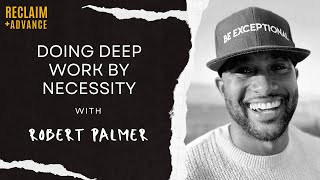
Terry Rice interviews performance and wellness coach Robert L. Palmer about his journey through family tragedies and his work helping high-performing men heal. They discuss a men's retreat focused on health for Black men and what it takes to build resilience after loss.
Robert, how's it going?
Oh, it's amazing, man. I can't complain. Even if I wanted to, it wouldn't be appropriate.
When's the last time you did complain, though? Because there's got to be a time when you're like, ah, let yourself slip a little bit.
Give me a moment. All right. I don't know. I don't mean to be complicated, but. But complaining for me, I've removed it from the way in which I see. See life. Right. So I can address something, but it not be a complaint. Because if I'm addressing it, I'm not addressing it from a negative standpoint, even if I do have feelings of annoyance. Like today I actually posted on my social media a funny. A funny story because I was actually trying to create content. And while I was watching Ava DuVernay's movie on Amazon Origin, which was really good, and I hit something in my gym, and on my face you saw annoyance, but I was just like, okay, whatever. I don't see it as a complaint. It's just hard. I wish I would have been able to completely film my content without hitting something. But complaining, I mean, I have no reason to complain. I really don't. I. I think other people will look at moments that I address issues or address situation that I want to bring light to so that we can have better perspective of one another and of the situation. Some people will see it as a complaint, but I have no reason to see anything that I say as a complaint. It's my observation, you know.
Well, I think some of our listeners might be observing the fact that you have not introduced yourself yet, and they might complain about the lack of context. So do you mind sharing? Who is Robert L. Palmer?
Oh, man, I. To the public, I'm a performance and wellness coach. I really focus on human performance of not only high performance executives and entrepreneurs and creatives, but also pro athletes and world renowned athletes. And I'm a father, I'm a husband. I am an advocate of health and wellness in the most holistic way. And I am happy to be on your show.
Yeah. And just so everybody knows, Robert is my coach, so that's why he's laughing over here. And it feels good to be almost in the driver's seat for once. But you've done a lot for me and by extension, my family. So I'm so glad that I met you through your wife who was also on the show. So I think it's the first time I've ever had a husband and wife on the podcast. But, oh, wow. But, yeah, I. The reason why I was looking forward to this episode is because I know that you're not full of shit. I know how impactful your work is. I know how much it means to you as well. And I think even just by listening to, like, the next 20 or 30 minutes or so, our listeners, their lives will change for the better. They'll understand. Like, hey, you know, there. There are challenges that you're going to face in life, but there are also tools you can use to get through them, and you have a lot of those. I mean, every time I have a problem, the funny thing is, like, you're. You're able to help. I'm like, hey, Robert, I'm really sore after working out. You're like, okay, do this. Hey, Robert, I'm having trouble. Okay, try that. Hey, Robert, I'm in trouble pitching this client. Okay, do this. And I'm like, wow, that guy's like. Like a jack of all trades here. So I appreciate you having. I appreciate having you as a resource, as a. As a. As a mentor, hopefully a friend. I don't know if I don't. I don't want to go that far unless you're. You're going along with me, But. But just thank you for. For existing. And I know that you're going to help a lot of people right now, so. So I appreciate it.
Oh, man, I appreciate that, Terry. I really do. I'm excited for today. And. Well, I've been literally preparing my mind. All of my clients know that I had a big interview coming up and that I wanted to really. In fact, is that. Is that anybody you visit?
I said, is that after this one?
No, that's this one. This one, you know, And I was like. And I really want to be infection, right? I want to be infectious in the best way possible. So I've been literally preparing for this. Not only did I take all of my brain food in, I prayed, I meditated, I worked out a little bit. I had some jazz music playing when we were waiting in the green room. I had my. My vitamin water right next to me. So, you know, be in the driver's seat, man. Like, I'm an open book. You know this about me. I have a lot of examples. I have a lot of perspective. My position is I can't tell any adult what to do. All I can do is give you a broader lens. I was a child. We loved playing with puzzles. Not only just the one that had large pieces that you can just fit together with it for move, but the Ones that had tiny pieces that made it super, super hard for you to see the larger picture. Because there's nothing more rewarding than giving a person perspective and telling them to take a step back and look at their situation and then being able to complete that puzzle along with them, not for them.
Where do you think that curiosity and that grit comes from?
The curiosity and the grit. Okay, so the curiosity came from, I would say, me questioning my religious teaching. Okay. I think as a young child growing up, especially in the south, in Texas, where Southern Baptist teachings and churches are everywhere in the black community. And, you know, the way in which they teach is so elaborate, and the stories and the parable are deeply rooted in how we originally learned as black Americans the Christian religion, which was through singing and praising and worshiping, and then we were able to start reading and start analyzing what the scriptures were actually telling us. But as a young child, you're trying to figure out the world. And so I would always ask why. I would always ask why. That was my curiosity. I was my natural innate curiosity in, like, how and why. And if it didn't make, then I never was shy. And I was actually explaining to my wife and through a different scenario as it relates to the kids, the type of child that I was. In school, my teacher started to give me three questions a day per class because I literally just wanted to know. I was just like Curious George. Curious George was a story about me. And. And through that, I learned a lot. And I became a. Somebody who had a really big appetite for knowledge and intelligence. And. And I wasn't afraid to be wrong. I wanted to be challenged, but I was also not afraid to challenge. And I think that's what allowed me to. To. To be able to come up with firm values and morals is through that curiosity. Now, through the grit, I think the grit came. Maybe it stemmed from also my faith. And what a lot of people don't realize is, yes, faith can be tied directly to religion or fear. Some people, they have faith because they are fearful of what's to come if they don't trust in a process. But for me, I had clarity in my own spiritual journey as a young child, I had clarity. So there was a way for me to be able to pull through my prayers, through my dreams, through my aspiration, pull that energy into my reality, which allowed for me to be tenacious in the way in which I attacked any of my goals, even as a young child, excelling football, basketball and track, gifted and talented, National Honor Society. As a product of a mom that Was a single parent and an entrepreneur herself, then going off to being able to receive a scholarship from a top university within the US and then being able to build my own company without having a sponsor or an agent or an advocate, just because I really did have faith in myself because I dreamt it before I actually executed on it. And I think that's what powers my grit to answer both of those questions.
Yeah, I. As you know, the premise of the show is you will talk about a very challenging part of your life. Whatever you feel comfortable sharing. But I want to ask a question. If you want to punt on this one, it's fine. If you want to answer it, I'm all ears. And I might be incorrect in this, but didn't your father play in the NFL? Is that correct or no?
Yes.
I've not heard you mention him in your upbringing. Do you mind sharing what that was like? Yeah, to whatever degree you feel comfortable.
Yeah, I mean, I'm comfortable with part of my story, who I am. And, and he and I have a really amazing relationship, I think, all things considered. And it doesn't come without challenges, it doesn't come without tough conversations. It doesn't come without, you know, rubs, because I'm a curious kid. But my mom and my father weren't together. So when I was had, you know, she basically did everything. She was mom and father. She was the one that I celebrated during Mother's Day and during Father's Day. I did develop a stronger relationship with my father as I became a teenager, which was amazing because there were so many answers that I was yearning for about myself, about my personality, about my nature that weren't answered through my family on my mother's side. And then when I was able to really sink my foot into the culture and the heritage and the history of my father's side, through him, through my grandmother on his side, through my aunts and uncles, I was like, okay, I now have a complete pitching. But yeah, he was an incredible athlete. He's still an incredible athlete. He looks really, really good. In his 60th year. He's a college hall of Famer, played for the Cowboys, had an opportunity to play for the Detroit lion, the Bengal, the Eagles. He was a first round draft pick, had a, had a decent career. He may have some all time rushing records in the NFL or in the ncaa. I think we had to kind of check that in, kind of blow the, blow the dust off of some of those records to see kind of where you fit. But yeah, the relationship, I think it, you know, as it pertains to who I am, the relationship that we do have, even though my mom was the leader, for me, it's a really good relationship, all things consider.
Okay, all right. That sounds like a challenge in and of itself because I, like, my parents were divorced, but it was weird because my dad lived, like, a mile away. Like, I would, like, walk to his house and, like, hang out there, but there was still a division that had an impact on me. And to this day, I think I try to overcompensate by being overly present with my kids. And sometimes they're like, dad, can I just watch a show? You know, like. Like, buzz off, but. But that's a different story to tell. So what I'd like to hear, though, and I think the audience would actually let me go away, but. But yeah, I'll.
I'll.
I'll punt that one to the side. But as I said earlier, whenever you're ready, we'd love to hear whatever story that you do feel comfortable sharing.
No, I think. I think I would. You know, if you do feel the need to ask any questions, you know, I don't mind answering questions. I think it's important for me to be relentlessly transparent and. And to pause for a second before I do answer to make sure that the words that I say are impactful and intentional. So don't. Don't feel the need to have to pull the plug at any point. But I think along the lines of speaking about family, one of the biggest challenges, I mean, I think there's four that I think I'm faith within my adulthood, and one was being at the crossroads between what I desired and my duties, deciding on my career path, considering the social implications of post life or post football life, and then being a steward for my family. And there's a story behind my younger brother and me taking care of him as brother, father, as well as honoring my late sister who passed away a week after I graduated. I think those are the things that bubble to the very top of my mind when I think about big challenges within my life. So whichever one you want to pull out the hat, let me know and we can start from there.
Yeah, there's a lot in, like, one challenge I have with this show is I never want to be seen as someone who's, like, just out for blood. Like, come on, come on, tell us, tell us. You know, so, yeah, I'm towing this line with you. I appreciate your authenticity, but I have to be a human, and I think our listeners, you know, want that to be as well. But I think from my understanding between your brother and your sister, fortunately, passing along, passing away, there is a line, there's a connection between what could have potentially helped her and how you learned some skills that helped your brother. So I think we can tell those stories in an interconnected way that will give us a great glimpse into regards to how you arrived at who you are today.
Yeah, of course. Man. So my younger brother, which was. Which he also had the experience, the maiden experience of having a very strong mother. His father was in his life at an early age, but it wasn't as consistent as our mom. And so for the most part, it was myself, my younger brother, who six years younger than me and my mother in Dallas, Texas. And she was registered nurse as well as an entrepreneur in telecommunications. And for her, she was always working to provide for us. Now, that doesn't mean that it was easy. It wasn't easy. I mean, there were times where, you know, we would hear her and we would experience utility problems. Right. You know, lights in water. There were times where the food and the dinner and the lunches weren't as elaborate as we had experienced before. But. But my brother and I, we had this special bond because he looked to me as not only his big brother, but a role model for him and his life. Now I'll start there with him. My older sister, I was able to form a relationship with her around the same time that I became really, really close and closer with my father. And through the relationship that I formed with my sister around 14, 15 years old, I realized how much I was alike to her. And that allowed me to understand that half of my life a little bit more. And so her and I, like, I never had a sister up to that point. You know, on my mom's side, my mom, her sisters, you know, out of about eight grandchildren from my grandmother, there was only one girl, right? Grandchildren and grandchildren. There's only like one girl. So I never had the experience of having a female counterpart to myself that wasn't somebody who I dated. So that was cool. Now fast forward to me, you know, going four years in school. And while I was in school, my sister and I, we would hang out. I will call her a lot, you know, and she would, you know, she would 100% fulfill her sister duties. If I had issues with girls or women, or I wanted to make sense of life, or I had doubts about myself and I wanted a perspective from somebody who wasn't going to judge me, I would reach out to her. So she definitely became a faith Haven for me. But then for my younger brother, I was all. I was always you. As I got older, as a disciplinary figure. Right. So when something would happen to him, maybe he wasn't doing well in school, maybe he was experimenting outside the home a little bit. Reparationally, I would be called to talk sense into him because he respected me. And there weren't too many men in my family that not only could reach him, but could reach him in a way that was with relentless love, so that he felt the intensity regardless if they were in front of him or miles away like I was. And throughout my four years in college, I would get a lot of calls about my younger brother. And the way in which I took it was he needed me in his life. He went his whole life, since he was a baby, having his big brother, who was the only solid male figure in his life, basically go away to college. And he was then had to be equipped with tools that he may not even have figured out how to use to then be a leader of the household with him and my mom and the relationships that she had to manage. And so to. To bring this and intertwine it together. I saw him deal with mental health issues. I saw him deal with depression. I saw him deal with anger issues. I saw his Drake grades drop. And he was brilliant. He was really brilliant. So by my senior year, I decided to allow him to come up and live with me. As I was making my transition out of college and where. Where I was really hit with this feeling of truly being a steward of my family. It came by way of my two siblings. My younger brother was coming up to live with me. And then a week after my graduation, my older sister, her background, as she was comforting me and giving me advice, she had also been dealing with anxiety and depression. And, you know, there is this moment to where when you do try to heal yourself, if you don't have the right tool, it could lead to you having recreational addiction, then self perpetuate or perpetuate the problem. Right. So there was a little bit of addiction involved and. But from there she was able to get help. She healed herself and. But we became very, very strong during that time of her. Her struggle and of her perseverance. Sorry. We became very, very strongly connected to me. Sorry. We became very, very strong during her. Hold on. Excuse me. Sorry. My bad. He got the door. You want to go get in the door? Yeah. But we became very, very strong during that moment in her life when she was able to remove the addictive personality and traits out of her life. And I really, really grew so much closer to my sister more than I think I would have if that wasn't involved. Um, so a week after I graduated, she was at my graduation and I ended up being a part of the crew that had to identify her body because she passed in her sleep during my younger sister birthday. And, and it was unfortunate. She had a seizure in her sleep and was not able to be resuscitated. And in that moment, having my younger brother go through his, going through his issue and then losing my sister, I went back into myself and said, Robert, what do you believe this meant? What do you believe this meant? And for me, what it meant is as it pertains to the subject matter, I have a challenge that I have to overcome. I need to make a decision about how I want to lead the rest of my life, how I'm going to be a steward for my family and make clear decisions about how I'm going to be infectious in the world. So both of my siblings had health related issues, partially related to mental health. You would say when it comes to addiction, when it comes to anxiety, when it comes to depression, that's a mental health issue, but it is a health issue. I grew up my whole life being an athlete, a high performing athlete, qualifying for state regional contests and getting a scholarship to go to Fordham, where I not only participated in football, but also ran track and field. I had the skill set of exercise and exercise science. But then my whole life I also dedicated toward servitude. I would always go and donate my time to the homeless. I would feed the homeless. My mom would house the homeless in our home. Sometimes it was dangerous, but she did it out of her heart. And so for me, I was like, okay, what I'm going to do with my life is going to be health focused. And because I don't want to lose another sibling, it's going to be helpful. And I have to find a way to use a skill set that I've been blessed with to be able to heal people. Right. Didn't know what that was going to be. I thought I was going to go into business finance. And then I read an article that talked about the rise in the health industry and I was like, bingo. That's how I'm able to now take the information that I learned about business, business finance and administration and marketing and managing. And I'm going to take the skills that I have in athletics. I'm going to take the passion for helping others more. So the passion that, the passion that I have in wanting to heal people around me and then go into the industry in a very unique way. And that was how I was able to overcome at least two of those challenges of not only being a steward of my family and being my brother and sister's keeper, but then finding a way to make a transition for what I thought was going to be a career path in business finance, to then putting my stake in the ground as an independent professional in the health and wellness industry, which has grown phenomenally since I left school.
It's, it's interesting because a lot of times entrepreneurs will start a business because they have a passion for it. They come very passionate about this, so and so forth. And passion only lasts for so long. If you have a purpose behind that passion, you're in a good spot. So on your end, I don't want to say you're lucky because it came from a horrible situation, but you had the combination of passion, purpose, and just good timing too, in regards to riding this wave. And I'm trying to narrate your story that I already know for the audience because I know that that led to something else, like your education, your commitment to this, when your brother had his own health challenge. So I'm going to tee you up for that one as well. Just knowing your backstory.
Yeah. So, you know, after my brother lived with me, he had the best grades that he ever had in school. He was making straight A's, joined jrotc. He was doing well. Once I realized he was doing well, I was like, okay, brother, son, it's time for you to go back, show up a new, a new way, and let me start to really jump start my adulthood. Right. As a bachelor, as somebody who's trying to, you know, find my way in the industry and find a meaningful relationship. So fast forward into the year of the pandemic. I had established my myself as a corporate wellness professional, working with Companies such as AT&P, Nike, Spartan with their Leadership Forum X and many, many other companies that I had affiliations with, as well as being able to curate experience for, as well as being able to build my own experiences. And Six Figure Fitness Seminar, which was supported by JPMorgan Chase and Google, and then a youth basketball experience. But that all was kind of put on pause because of the pandemic. And then I had a personal injury that happened. I tore my patella tendon. And during the time of me tearing my patella tendon, I had to look at the way in which I related to health a lot differently. So instead of me just using Exercise as a way to heal myself and heal others. I knew that I had to reach into the power of nutrition, the power of homeopathy, the power of aromatherapy, the power of sound therapy. And I really started to embrace all of these different components of health, which allowed me to form what I call the six pillars of health. Physical health, mental health, spiritual health, social health, environmental health, as well as physical health, slash professional health. As, as I went through the 2020 year and trying my best to keep my family healthy, having aromatherapy, having sound therapy within the house, making our own supplement, trying to bulletproof our immune system, something happened, a tragedy happened. My younger brother, where I took care of, he went into a coma. He had cardiac arrest. Now realize he's six years younger than me, had a cardiac arrest on his side of the family, his father's side, we have two separate fathers, but on his father's side they had had a history of heart disease. And so it was something that ran in his family. His father had heart attacks as well as his grandparents. And so he had this cardiac arrest. And about three to four days later, I get the call, and I didn't get the call because it had just happened. I got the call to say goodbye to him and I was like, whoa, I'm at the point to where I'm about to lose another sibling. Robin, this is the reason why you did this. This is the reason why you built this career. This is the reason why you, you developed a, a relentless independent business working with high performing executives who impact the world. It started from the anchor of you being your brother, sister's keeper, and now your brother, you have to go and say goodbye. So, but again, I'm a man of faith. So December 2020, my wife and I, we went down and he, as most people would describe it, he was non responsive and he could not actively control any of his functions by himself. He was basically being ran by a machine. Everything from his heart, lungs, filtration system barely had primal movement and there was no brain function. That night that I got there, about four or five days after he had went into that coma and they were telling me to say goodbye. My mom not only did a prayer vigil outside of the hospital where we had 50 to 60 people outside, a lot of the pastors, deacons, reverends that we knew throughout our life and throughout our family, I told everybody to leave the hospital room. And there were two things that I did out loud. I prayed life into my brother. And some people, they don't like the word prayer. Let me communicate A little bit different. I spoke life. I used my words to speak life into my brother. I told him that he will heal. I played binaural beats, which is a form of sound therapy at frequency 4 32. And I rubbed his body. I gave him physical touch. I transferred energy to him. At around 3 o' clock that morning, between 3, 3:30, he let out the biggest gasp that I've ever heard or seen anybody do. Even somebody that. It was almost as if a person was being held underwater and you finally let them up for air. He held it and let the air out. I screamed for the doctors to come in. I screamed for the doctors come in. I said, he's alive, he's alive. And they said, what? Are you serious? I said, I'm serious. He's alive. Then they checked his eyes. His eyes were moving now. He was still not responsive, but he started to give primitive responses, gag reflexes, things like that. Um, and he was able to make a full recovery in 10 weeks. The only issue that he ended up having, which was a little bit of hearing loss in his right. The right side of his. His ear. But the use of this holistic medicine and combining the six pillars and physical touch and him having a community around him and us using, changing the environment by using aromatherapy and sound therapy, I know for a fact that was a way that I was able to help him get another grasp of life and be able to get a second chance. And at that point, like, everything for me, everything changed. There's no good or bad. They even mentioned tragedy. There's no such thing. I don't believe in. There's no such thing as tragedy because there's always. It's an experience, it's an opportunity for you to learn and grow. And a lot of people, they see it as a tragedy and they miss the lesson. So I never want to miss a lesson. I want to learn. So I don't believe in losses. I only believe in win. And I believe in learning lessons. There's no such thing as a loss for me, right? And that's my mentality and that's how I approach the world and all the work that I do. Because now I'm a believer that through the work that I have been passionate about and learning and growing and praying and meditating and helping people change their lives and healing people that you can save lives with it. And so I'm a true believer in the work that I do and the impact that it can have. Not only are the people that I love, but the people around me, you.
Know, it's interesting, on this show, I have a trigger warning at the beginning sometimes if we're talking about suicide or eating disorders and things like that, to give our listeners a heads up. And even going into this interview with you, I knew what you were going to talk about. But as you were talking about your brother, I couldn't help but think about my brother, who I. Who I lost recently. And I literally held his hand as he took his last breath. It was very important for me to be there with him and hold his hand. And I am still looking for the lesson from that, or at least the complete lesson. But I know that this is part of it, because the more open you are, the more open I am about our experiences. I think it normalizes it for people and it lets them not feel as alone, but it still does hurt, man.
Say something.
You got it.
That's it. If I may give you perspective, if this is something that you can receive at this time as you're interviewing me, what I will say is, you said you held her hand when you took his laugh, bro. For me, the immediate thought that came to my head that I was able to feel in my heart, I got chills, was that that just shows you how precious the fabric of life is and how instant the fabric of life can be broken because it's delicate. In the instant he took his last breath, and it was no, he was no longer physically with you or spiritually with you or consciously with you. Right. But you were there. And so for me, it's a reminder of how delicate life is, which is why you should never take it for granted. Because at any given moment, a person, it may be your last time seeing a person. And so that's why I always make sure, like, before we get off this call, you're going to know how much I told you when I first got on, I care about you. I'm appreciative of you. Nobody will ever leave me. Not. Not realizing how much I care about people because. Because I know what loss feels like, and I don't. And I don't want to feel that and have it on my conscious that they didn't know that I love them.
Yeah, I can say this. It's definitely made me more empathetic because you never know what someone's going through. And I know that's. You know, people say that, but it's like it's legit. Like that person who was rude to you at the grocery store, that guy who cut you off in traffic, like it wasn't an Assault against you. They might be processing stuff and.
Exactly.
Often the best thing you can do is just be kind. Right? Don't make it worse. But I think again, like, going back to the empathy component, like, that I'm aligned with. I mean, some things I'm just like. Because as you were talking, like, he died of complications due to ms, and like, that's treatable. You know what I mean? If you just, like, eat the right food, if you do all the right things. And I was not geographically there to help them do that. And I. And I. And that's what I struggle with. If it was like something like. Like that wasn't preventable, I'd be like, okay, well, you know, that happened. So it's like, damn, dude. Like, if I never left Buffalo, and I don't carry guilt like that. I'm just. It's like a. What if. It's not like a guilt thing. But as you were talking, that's what came to mind. And I am glad to have this uncomfortable feeling because I never want to present myself as perfect. Like, I'm perfect turn into the next episode where I talk to people are fucked up. Like, no, like, I'm going through it too. And just like the audience listening is. I am as well. I'm on the same journey. So you opened up a. I don't call it. I don't know if it's a wound. I guess it is still a wound. But I. I am glad because even before this, before we started recording, I was like, oh, man, I gotta cry. I haven't cried in a long time. I gotta, like, find a way to get some deer slow.
It's. It's. Listen. And it's one of the most. Most primitive, organic forms of expression. It's the very first emotion that you express when you come into this world. So you said you witnessed your brother take his last breath. When you take your first breath into this world, the first thing is a yellow of. Of. Of life. Right? And so we sometimes as adults, we forget what that felt like. But it's what helped bring us into this world. That's how others are able to know that we're truly alive is through our ability to cry. But then also, when it comes to the healing process, we all know that if you have a gash that doesn't heal right or correctly, sometimes you have to reopen it so that it can heal properly. And it's okay. It's not a bad thing. It's actually a good thing that you reopen it so that you can Heal in a different way so that there's no visible scar, so that the bone is able to adhere and become thicker, so that the skin isn't as thick, stiff with phase elastic, so that the muscle can reattach to the bone so that you can sprint at 100% again. Right. So when, when you, when you close up a wound that is not fully healed, it, it probably needs to be reopened until it can heal properly and adhere organically in the way in which it's supposed to.
I'll say this. I saw you most recently down in Puerto Rico. You had this amazing retreat for, I would say, high performing men of color who just needed to get some healing. And within like minute two, someone was crying and I was like, man, like I didn't even sit down yet. But you created a really good atmosphere where we could talk more openly about our challenges and were pushed, but also supported at the same time. So I would love to hear more about why you decided to have this retreat as well as how you help other people navigate the challenges and, and also opportunities that come with life.
So how. The first question is how I form the retreat.
Correct. Actually, before we get to that, let me do one thing. I gotta tell this guy, gonna be like five minutes late.
All good.
I was not expecting to get all oops. This is fascinating, Austin. And hold on, let me just talk to my system real quick. Hey Megan, can you do me a favor and let Austin know I'm going to be like 10 minutes late for the, the podcast? I'm still recording one right now. Cool. All right. So do you remember the question?
Yeah. So the first question with how, how I formed the retreat. Okay. And then what was the second two so I can flow into it. Sorry, I apologize.
How do you help people in your day to day as well with your coaching?
Got you, got you. So I think it's actually appropriate for me to go in the reverse. So I am, I'm, I'm, I'm a performance coach. I'm a human performance coach and I only keep between 12 to 15 individuals and oftentimes their families when I'm working because I want to be as intentional as possible and I want to have intimate relationships with these individuals. My average tenure as of now, even though I brought on a whole new book is about seven to seven and a half years. My oldest 10 year client is about 11 and a half years and it age range from the youth all the way to 71 as of right now. The oldest client that I've ever worked with was 77, very, very active. But I'm spending between six to nine hours a day coaching individuals through leadership coaching, through health and wellness through lifestyle coaching, giving perspective, using the six pillars of health in which we spoke about earlier. And I have a hybrid model. So I have individuals that I see in person, but the majority of my business is remote work. Individuals that I'll meet along my journey around the world, individuals that I've been knowing or that have been referred to me from when I was living in New York. And I also have two active experiences and now a third one that we're kind of reigniting, one that's in the latter, that's in arts and culture. And then I have a mental health and wellness conference that I do the same week of the super bowl at the Super Bowl City. And then I have the men's retreat of which you reference. So my day to day in a little bit of administrative computer work, designing customer an audience experiences, but then also guiding the health and wellness journey and leadership journey of my corporate professionals and high performance individuals. Now when it came to the Ignite Men's Holistic health retreat, it was very serendipitous by design. About, I would say two years ago I met a gentleman named Christopher C.J. ross using the DEI space. And he has a very unique way of looking at DEI where he takes a look at zip codes and through analyzing zip codes he's able to come up with the very incredible and beautiful insight about the discrepancies of wealth and opportunity, so forth and so forth. And he's even wrote a book more recently about that. He asked me to be his coach. Part leadership coaching, giving perspective and part health and wellness coaching. And by about our month three, he was like, Robert, some of the things that you teach, I think they would be really appreciated in a group setting. Have you ever thought about doing retreats? And I was like, I have thought about doing retreat. I've done conferences before that I've built myself and then I've been able to get sponsorship from. But this retreat conversation is interesting. Who would you want to target in group setting? Have you ever thought about doing retreats? And I was like, I have thought about doing retreats, I've done conferences before that I've built myself and then I've been able to get sponsorship from. But this retreat conversation is interesting. Who would you want to target? And he said, men like me. I was like, absolutely. I said, the reason why is I've been looking for a way to be able to attract more high performance, high performing Black men, both entrepreneurs and corporate executives, to taking advantage of, of the value of health that I'm able to give other people access to that typically don't look like us. The majority of my clients are not black and brown folk. Okay. And it's interesting when you look at some of the health data in America and across the world, black and brown people, we suffer the most when it comes to health related diseases. Hypertension, the high blood pressure, the diabetes. Black men are at the bottom of the bottom. Okay. So I was excited to then go into this new venture with them. And he believed in me. And he was like, all right, let's do it. I said, okay, let's set a date. I'm gonna be 100% for you. Can you be 100% for me? If that's the case, let's set a date. So we did our first one actually last February. And we built around the six pillars of health, what I've used to help many, many individual. And we created a three day experience to where not only the men that come, we can tailor the experience to make sure that it's represented with culturally relevant stories in parable and example, real life example. But then it gives us moment to literally retreat from our day to day obligations and duty, which means have a break from it. It also allowed for us to be able to create a space of vulnerability. What I've realized, especially when it comes to men, we grow in three ways. A lot of this thought is influenced by a book called the Way of the Superior Man. But with men, we grow in three ways through isolation. And they use masculinity. The masculine energy, I'm going say through men though, through masculine energy. The masculine energy grows through isolation. Okay. When we do tough things and when we get around a group of people who can be super transparent with us and allow us to be super verbal, that's what I wanted to create. And I wanted to create a way that gave us all the right spices and sugars and herbs that allowed for us to have the perfect melting pot to heal and to grow. And Chris and I came together. He brings on his insight from, from attending many retreats with individuals that didn't look like him and observing what he was missing out. I used a lot of my insights of being a performance coach and we literally clashed them together. And it's been it, it worked very, very well. So much so that we were now able to get our first feature in Forbes, which is so cool. And, and, and what was so interesting also is you can't really find and I hope there are other but you can't really find other retreats focused on high performance black men. High performing black men. So even in the, in the Forbes article that was, that was, that was, that I was featured in and that we were featured in, it was retreat that were headed by women. And I was like, hey, this actually supports even more why we should continue to do this. And so that's kind of, that's kind of how the how and the why. This, this all got started with the retreat. And it's also from if I'm taking a step back and using my business paddle, it's given me an opportunity to scale my business. Typically the only way to scale your business as a coach is to charge more money per session or to get yourself into a group environment. This has allowed me to get into a group environment because I did not want to create barriers of communication just by overcharging people for access to something that everybody should have access to, which is health and wellness.
Yeah, well, it was an amazing experience. I am looking forward to going back again and bringing some friends with me. My only complaint is you could have told me to wear some sunblock because I was peeling upon my return, but I should have known better. I'm like chilling in Puerto Rico with like nothing on my face. So. So Robert, thank you for this. This has been amazing. I'm just glad that, that Lauren, your wife, connected us because it came at just the right time for me and I hope this message comes at just the right time for some of our listeners because again, there's a lot of people hurting out there, but there's also a lot of people healing by taking these initial steps. So I appreciate you. Before we let you go though, can you just let us know where we can find you online just to learn more from you?
Of course, of course. I am on prominently on LinkedIn and Instagram as RobertL Palmer. You type that in, you should be able to find me on LinkedIn. You may have to put fitness or wellness and it'll pop up or you can just do a Google search. Robert L. Palmer, Fitness I should pop up. Or you can find me on my website, www.robertl Palmer.com and you'll find all the things that I've done in the past, all the things that I have my hand in right now. And yeah, feel free to reach out, feel free to give a follow. I try to post as much inspirational content as possible. Positivity, heal and so that's what you're going to get from me.
Awesome. Thanks Robert. I appreciate it.
Thank you my guy. I appreciate you. And across the world, black and brown people, we suffer the most when it comes to health related diseases.
More from Terry







When you want to quit, don’t. #FitnessOver40 #MindsetShift #TiredIsNotAnExcuse #PersonalGrowth




You’re gonna want to give up. Don’t. #mindsetshift #motivationalquotes #motivation #dontgiveup