Soli Cayetano Interview: How You Can Achieve Incredible Results
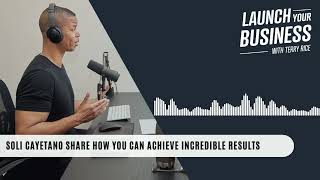
Terry Rice interviews real estate investor Soli Cayetano about building a portfolio starting in college. Cayetano shares strategies for business growth, social media presence, and overcoming financial challenges while pursuing entrepreneurship.
I like to consider myself a fairly risk averse person. I was like, save, save, save, save, save for a rainy day because this money might not overcome again. That's kind of the mindset I had. But you know, I sat and thought to myself for a little bit, most 22 year olds graduate in debt. This $50,000 seems like a lot today, but it won't seem like a lot in 10 years. And so the worst case scenario is I lose it all and I'm just where everybody else is and then that'll be okay. I'm okay with that worst case scenario.
At just 25 years old, solely Cayetano has invested in over 40 real estate units. But as you'll discover, she wasn't given this opportunity. She worked for it. And on today's show, she'll share how you can achieve incredible results for your company as well. This is the Launch youh Business podcast because we know starting a business is challenging, but it doesn't have to be confusing. Each week we'll give you the tactical advice and the necessary tools to scale your business without feeling burnt out. I'm Terry Rice, business development consultant and staff writer here at Entrepreneur magazine. Let's dive in. Hey, before we officially start today's show, I want to let you know how I can personally help you land more high paying clients by building an irresistible offer. It's called the Revenue Accelerator, a live workshop where I'll teach you how to multiply your revenue potential and spend less time working with premium price services. And as a listener, you'll save $50 by using the promo code. Launch space is limited and you can learn more by visiting TerryRice Co convert. That's TerryRice Co convert. And now let's hop into the show. To be successful at pretty much anything in life, there's a three step process. Take the right actions, leverage the right tools, and have the right mindset. And look, I know that I'm oversimplifying it, but at its core, that's all you need. And that's also why some people seem to just excel at any venture they take on. They just follow the same process, actions, tools, mindset. So what does that mean to you? It means you can learn from other successful people even if you're pursuing a different goal in an entirely different industry. And I'm bringing this up because today's guest, Solely Cayetano, is an expert real estate investor. But this episode isn't about how you can make money in real estate. We will talk about that, but that is not the Focus. My hope is that you'll gain inspiration and tactic level direction you can use to build your own business regardless of the industry that you're in. Solely graduated from college in 2020. And like a lot of fresh graduates, she landed her first real 9 to 5 job afterwards. But unlike most graduates, she also bought her first real estate property at just 22 years old. And before you ask, no, she wasn't given the money to buy the property. Instead, she invested all the money that she saved during college after graduation. Solely continued to work 9 to 5 at her job, while also working from 5 to 9 to build her real estate portfolio. She went from having no social media presence or connections in the real estate industry to using social media, over 100,000 Instagram followers, private capital and partnerships to buy 25 units in less than two years. That allowed her to replace her income, quit her job and become a full time real estate investor. And on today's show, we'll talk about how you can build a loyal following by sharing your journey on social media and the benefit that comes from that. The first steps for real estate investing and how it's much less expensive than you might think, and how you can build a successful business even if you don't have a lot of money or connections. Let's hop into it right now. Soli, first of all, welcome. Second of all, can you please introduce yourself?
Yeah. Thanks so much for having me. So I'm solely, I'm a 25 year old investor, real estate investor based out of the Bay Area and I have about 40 units out of state, so Georgia, South Carolina and Cincinnati, Ohio.
Awesome. So let's go there. Right, right. Cause we kind of launched into it. So where were you a few years ago? And I know just from doing some research that you launched your business in 2020, which is an interesting time. And I want to say you were still in college during that time too, is that correct?
Yeah, I was a senior in college and the pandemic hit early 2020. And I was also working as a commercial real estate broker at a time when nobody wanted office space. And I was about to go into that full time after college. So I really, you know, had a reckoning moment when the pandemic came and thought to myself, like, wow, I really have to figure out something whether it's some sort of passive income stream or some income coming in. So that if this pandemic lasted, you know, a couple years and the whole industry was still dead, I would still have some income coming in. So that was kind of the landscape of how I started investing in real estate.
Let's. Let's kind of double click on that because you're talking about investing in real estate. I want to imagine the majority of your friends weren't doing that. And I'm just curious, who was your biggest supporter at the time saying, look, you should do this. It's a good idea. You can do it. Like, who was encouraging you to move forward when you might have had some naysayers?
It's going to sound weird, but it was kind of my Instagram following at the time. So, you know, it's also just such a strange part of time when everybody was, I guess, isolated from all of their friends and family. Everyone was stuck at, you know, stay at home under curfew and stuff. And so I was at home alone and did not have anyone around me in college and really didn't know very many people locally who invested in real estate. And so I went and created an Instagram and said, hey, I'm just going to document my journey of buying my first rental property, whatever that meant, because I didn't have a rental property yet. And I found online that there were thousands of people who were real estate investors who were willing to help me. And so that's kind of who I had in my corner. It's kind of an unusual answer, but I found this crazy helpful network of people who were willing to kind of show me the way, jump on calls with me, support me, you know, pick me up when I was down in a virtual landscape during the pandemic.
So let's. Let's talk about this. So you're documenting on social media, and I love the fact that you're building in public, but who was engaging in this stuff? Because the reason why this is important is because often with our listeners, when they're doing something new, they feel like nobody cares. Right? They're posting on social media. They're not getting any likes or any comments or things like that. So where did you find that community that arose for your profile?
Yeah, I know a lot of people who hesitate to post on their friends and family pages because they're nervous about people judging them or, like, what are people gonna think? Me trying to be an influencer, posting content. So I did. I posted. You know, I'm starting a new page that's lattes and lisas, and if you want to follow it, great. If you don't want to follow it, that's fine too. You know, I kind of created an alter ego where I could keep my friends and family page and post about going on vacation. But then if you were interested in real estate, go over here. So I had, you know, a couple friends and family think, you know, that's interesting, great hobby. But mostly the people who were following me at first were just other real estate investors. And I think that people don't realize that the people who like you can totally curate your feed and you can create your following, you can create the type of content that you consume. And so there are niche groups for everything. If you're interested in digital marketing, there's a group out there for you. You're interested in books, there's people who just share about reading books and book reviews. And so I kind of tapped into, I didn't know it existed, but thousands of people who were interested in specifically reaching financial freedom through real estate investing, and they kind of found me. So they found me at an early place where I was brand new and was just cutting my teeth every day, but they were willing to help me out because they remembered that they were there just a few years ago too. And so that was my primary following. Mostly strangers. A lot of my friends, best friends to this day are just strangers who I met on Instagram in those early days.
That's awesome. And let's continue with your self education journey, because I think it's like Warren Buffett who said, formal education will make you a living, but self education will make you a fortune. So how far did you get with the free content available before making the shift to saying, look, I got to pay somebody something like, what was that process like?
Honestly, I learned for free for a really, really long time. And I think that because there's so much information out there, there's, you know, free masterminds, there's free meetups, there's free books that really tell you exactly A to Z how to do it. And what I learned the most from in the beginning was actually just like doing the thing. And so I don't think I paid for a mentor until I had maybe 25 or 30 units because I was hitting a ceiling. And I was like, how do I get past that ceiling? How do I make my business run smoother? How do I hire people and delegate people out? But in order to get into these base level, like mentorships, you don't really have to spend a lot of money. There's a lot of free education out there for you to figure out how to do it.
So to my understanding, you sought out mentorship, which is great, but you don't come from a family of entrepreneurs. So maybe that's why you needed a mentor. Can you just give me more information about your background, if you don't mind?
Yeah, so I grew up in a very lower middle class family. My dad was an immigrant from the Philippines. He came over in his early 20s and then my mom was basically a professional violinist. I have like no entrepreneurs in my family, no real estate investors. And so what I was doing was really uncharted territory. They honestly had no idea. And I had to find other people who could kind of guide me. A lot of people kind of rely on maybe family members or their dad was a real estate investor and therefore can kind of show them the ropes. But for me, it was kind of on an island trying to figure it out by myself and so really had to reach out to partners and people from the Internet to kind of show me the road.
Well, in that case, how did you overcome any imposter syndrome that you might have experienced? Because if you're that person who's like, maybe feels like they shouldn't even be in the room based on, you know, your background, did that ever plague you? Or was that a motivator, like, or maybe your dad's saying, look, I came here from the Philippines with nothing. You can walk in that room and demand respect, just like I did. Like, how did that go down?
I think the real motivation was just like the money talks that happened at my house. I don't know if my, my parents probably didn't mean for me to hear all these things, but there was always fighting about like, we don't have enough money, why are you buying this or that or how are we going to pay the mortgage this month? And I think hearing that as a kid, it just changes the way that your mind works. And you kind of think like, oh no, there is never enough money. You know, how are we going to eat dinner tonight or pay the mortgage? And I never wanted to feel like that again. I didn't want to grow up and be 40 years old and kind of trying to figure out how to make ends meet. I wanted to change my life so that I wasn't in that position as well when I grew up. And that was like the driving force is whatever I can do, whoever I can surround myself with, I'm going to do it, whatever it takes, because I don't want to end up there.
Did you know that over half of all businesses have reported a cyber attack and that it takes an average of 287 days for businesses to recover? Those are the kind of stats that can Keep a business owner up at night. So is it possible to help protect your company from something so ubiquitous and persistent as cyber threats? It is with Comcast Business. Their Internet and security has what you need to help protect your business online. Including Security Edge for every connected device on your network. To help keep your data secure, your customers data too. You can rest easier knowing you have Security Edge as a line of defense against cyber threats. It comes with a customizable, easy to use app that monitors your network for threats in real time. Security Edge helps block botnet, malware and phishing attacks for small businesses. It's a level of security every business should have on their side. Because whether you're a new or established company, Comcast Business offers a flexible array of products and services that can grow as you grow. And it's all from the company. Powered by the next generation 10G network advanced cybersecurity for small businesses. It's not just possible, it's happening. Comcast Business Powering POSSIBILITIES RESTRICTIONS APPLY CALL FOR DETAILS so again, you made this huge bold move, right? You went to college and all of a sudden you're like looking to become this, you know, this real estate expert and like you have all these properties. I imagine you have some friends you went to school with and you don't have to call them out but but that are afraid to make moves this bold. And I think a lot of our listeners might feel the same way too. Like they want to quit their job, they want to take on this next venture, but something's holding them back. What would you say to someone to encourage them just to make that leap like you did?
I would say it's really important to break your frame of reference. I hear, I think Cody Sanchez says that a lot. And it's by surrounding yourself with people who have done the thing, a lot of people in their mind think that you, you know, it's not possible because of this or that or the other. And there's a lot of reasons why you shouldn't be successful. But if you surround yourself with people who have done it and have been successful in it, then they can show you one, that it's possible and this is the way to do it. Like you are the sum of the average of the five people that you hang out with the most. I think that that's what the saying is and so be very intentional with who those five people are. Are they people who are holding you back and saying that you can't do it or are they people who are doing exactly want to do and showing you the way.
I'm glad you brought that up. And you realize that at such a young age that, hey, some people in your life like, they're, they're great for a season, but if you surround yourself with them going forward, they can actually thwart your progress and actually make you go backwards as well. Because maybe they're not as innovative as you, maybe not as forward looking as you, and as a result, that can hurt your business. So again, kudos to you on that one. But let's go deeper into real estate. All right, so someone listening right now is like, okay, wow, wait, she brought how many properties in that short period of time? How can I do that? So for anyone listening, what are some of the first things they should do if they're considering buying real estate as an investment property or as part of their overall business in general?
Yeah. So I think the first part is set your goals. So what do you want to accomplish with real estate? Are you trying to hit a certain number of cash flow in order to become financially free? And what is that number? I think the reason why you do that first is because you're trying to determine what your why is. Like, what is the driving force between doing this unconventional thing? It is difficult. I won't say it's easy. There's a lot of roadblocks that you run into. And so if you can really dig into that deeper why and then have that to revisit later on, you're going to start off on a way better foot. Second thing is really determine what kind of strategy you want to choose. So there's a whole lot of different ways you can invest in real estate. You can buy like long term buy and hold rentals, you can buy Airbnbs, you can flip properties, you can wholesale properties. And so just kind of getting educated on what different strategies exist with real estate investing and which one aligns best with your goals. If you're a really busy, high earning lawyer, then maybe you choose to invest passively by being a passive investor or investing in syndication. There's just different models for different people and different goals. The third thing I would do is choose if you want to be more of an active investor, is where do you want to invest? Like what market? So for me, I'm living in the Bay Area, California. It's very expensive. The average home, I just saw it like Santa Clara county was like $1.7 million on average. Wild. Very difficult for a young person to get started investing here and for it to actually make cash flow. And so for me, I Had to tap into a more affordable cash flowing market at a stage state. So I chose to invest in Cincinnati, Ohio, where the average home price is around $100,000 and I could really afford to start investing there and it would cash flow for me. So I think trying to figure out, you know, what market makes sense for you, it's a, it's a big decision. But you know, where do you know people? Where do you know investors? Where do you have a competitive advantage? Those are kind of the first three steps I would say is figure those three things out. And then the last thing would be start building your team. So a lot of people say, oh my gosh, how do you invest at estate? Do you like do it yourself? Do you like put in offers? Do you like fix the property? And it's like, no. I have an entire team who handles everything on the ground for me. So I have an agent who puts in offers for my properties. I have a property manager who handles the day to day operations of actually dealing with tenants. I have contractors, so I don't actually swing the hammer myself. The contractors do the work and, and you have lenders who help you qualify for properties. So it's kind of.
All right, so I'm going to run this by you. All right, here's my idea. You tell me where I'm messing up. I live in Brooklyn, which is very expensive, and before that I lived in Rochester, New York, which is a smaller city, not as expensive, but there's a lot of good colleges around there. So my thought has always been this. Like, I know when I was in college I trashed every house that I lived in. So I don't want like college students. But my thought is, what if I buy a house in Rochester, have one of my friends from high school be the property manager and only rent to grad students who might be a little bit more responsible. How does that sound in regards to a plan?
I think that sounds like pretty good. I think there's two different ways you can do it. You can do like an unfurnished rental and offer it just like, hey, someone want to lease it for a year or two years and you're a grad student. Another thing you could potentially do is offer it furnished. And so maybe you have people rent it for three or four months at a time and it really boosts your cash flow. So. So I think that's like the furnished rental model. And I would say it's a little bit more hands on in terms of management, a little bit more capital intensive in terms of what you have to put into the property, but your returns can be twice as good. And so it's really figuring out, like, what your goals are. Do you want to maximize that cash flow, and in turn, you're willing to put in a little bit more work and a little bit more capital, or do you want to kind of be more hands off and try to get a tenant who can stay in there for two years, and you offer it unfurnished? So that's kind of where those goals and preferences come into play so that you can figure out which strategy you'd like better.
Okay, I got another idea.
Okay.
My friend Amy Newsom is a traveling nurse, and one of her challenges often is finding locations to stay at. And I think, was this you that I talked about as well? So how about we buy these. These rental properties near these hospitals and then rent them out to the traveling nurses and then form a partnership with the hospital, saying, hey, if you got someone coming through, send them my way. I'll give you a cut. How's that work?
That's exactly right. So those are what's called medium term rentals or midterm rentals. And I own five of them in Cincinnati. Cincinnati has the number one children's hospital in the country. So there's a lot of people coming in and out, doing rotations, clinical work, travel nurses. And so that could be. Even if you wanted to do more of, like, the grad student route, it could still be considered a midterm rental if you just rent it out. Usually the contracts are about three months. Sometimes they extend to six months, and so you can rent it out to either person who comes up. Sometimes you'll get a student, do an internship in the summer, and then in the fall, you'll have a travel nurse. Winter, you'll have a travel nurse. In the spring, you'll have an insurance claim. But in terms of sourcing tenants, I mean, that's a great way to do it, is call a hospital, call a recruiter, and figure out who's placing those travel nurses and get contracts that way.
All right, so I'm getting a lot of great information from you, but I know people are listening or thinking, okay, cool, this sounds great, but how could I learn more from Soli? So what are some. Some steps they can do for that?
You can follow me on Instagram. I share everything good and the bad. It's lattes and Lisas, or I'm hosting a free out of state investor summit where we're trying to talk about all these things. So we're going to do like a strategy showdown. Long term rental. What is short term rental? What is nurse rentals? Like? You're talking about how to pick your market, how to navigate this economy since interest rates are so high right now, how to raise private money to fund your deals. And so if you're interested in that, I guess you can put the link in the description in order to sign up for the summit.
The issue of scaling comes up a lot, right? Because oftentimes you can get one part of your business working or maybe you bought like one property. But how do you scale up without working around the clock and jeopardizing your health or even like financially? Like, how do you find the money to continue scaling?
Yeah, so I used up all my money on my first property. I had about $50,000 saved up when I was a senior in college, which actually is kind of a lot of money for a senior in college. But I was grinding.
It's a lot of money for some.
Of our listeners, but I was working full time. So that's another thing, another conversation about delayed gratification and maximizing your income and minimizing your expenses. But anyways, I had used up basically all of that for my first rental property. And then I was like, I really want to continue buying real estate. This is a lot of people's biggest problem is I'm tapped out on capital. How do I keep scaling? And that's when I discovered the concept of private money. So as I was, you know, vlogging on Instagram, my mom was watching me and she messaged me and said, like, hey, like, I love what you're doing. I see you're really serious about this. You're really passionate about this, and I would love to invest in your next deal. I think everyone's response will be like, wow, you're lucky. You must come from money, right? You must be a trust fund kid. But I really don't. I don't come from any money. Lower middle class. And I would have never asked my mom because I'm just not that type of person. But I saw this, like, I had this big epiphany moment where it was like, okay, this is might be the answer to funding my deals. She has money to invest. I can give her a great return on a stable asset, and she can help me grow my rental portfolio. So that's actually how I bought my second property, with using her private money. And that kind of unlocked the conversation with all of my audience as well. And over the next year or two, I raised 5 or 6 million dollars from people in my audience in order to fund my deals. So. So that's kind of a secret unlock that I figured out pretty early on.
You may be familiar with Fiverr, the talent marketplace that connects freelancers to companies all over the world. What you may not know is that Fiverr has a business friendly offering called Fiverr Pro. Gain access to the very best freelancers for your projects through Fiverr Pro's curated catalog of exceptional talent. Streamline your workflow with their user friendly dashboard where you can organize projects, track progress, save talent lists, and collaborate effortlessly with your entire team. Designed to handle projects of any size, Fiverr Pro is the ultimate freelance solution for your business. And the best part, there are no hidden membership or subscription fees to get started. Find help with your next project by heading to pro fiverr.com that's P R O dot F I V E R R dot com I want to go down this path though. So if you're born lower middle class and you have $50,000 and you're about to invest it, that feels risky. So what was going through your mind when you're like, this might have been more than your parents made in a year, you know, like what was going through your mind?
I like to consider myself a fairly risk averse person because I came, I was grown up in like financially scarce household that, you know, it was like save, save, save, save, save for a rainy day because this money might not ever come again. That's kind of the mindset I had. But you know, I sat and thought to myself for a little bit. Most 22 year olds graduate in debt or with $0 if they're lucky. And this $50,000 seems like a lot today, but it won't seem like a lot in 10 years. And so the worst case scenario is I lose it all and I'm just where everybody else is and then that'll be okay. And I'm okay with that. I'm okay with that worst case scenario. So that's kind of what was going through my head when I made that decision.
So I'm gonna ask you one more question and this one's always interesting. The responses I get. What is one lesson about entrepreneurship that you wish you learned sooner?
I guess I would say that you don't have to do it alone. So when I originally started way back, maybe it was a pride issue, but I was like, I want to do it back by myself and I will do everything. I will fly out there, I will renovate this property, I will lease it out, I will do it all because I want to say, like, this was my baby in my project, but it's just very. It's not a very scalable model. You can't really do much. You're really limited by your own time. And I did that for the first two properties. And I wish I was a little bit more open to help earlier because I think I would have scaled a little bit faster. I guess the second lesson I can give you one more lesson is really to prioritize, like, health. Like, I think as entrepreneurs, it's really difficult because you just get into the grind. And I think, you know, a year ago I would, like, skip lunch and I would skip the gym because I just had to get another property under contract or deal with this or that problem. And I went through some really, really bad health issues earlier this year that just, like, put me out for a couple months. And from that, I think that was, like, after three. Three years of grinding in this business, I really learned that if you don't have your health, you don't have anything. And so take the time. Even if that seems like it's a step back in your business, it's really not because that's the one thing that you can't really get back. You can't do anything if you don't have your health. I know you love health stuff.
I do. I do. Well, this has been amazing. Thank you so much for your time. And again, where can we find you online?
Instagram is probably the best place. It's Lattes and Lisas.
Awesome. Thanks so much. Solely appreciate it. And that's our show for today. You can learn more about Soli by visiting lattesandleases.com and follow solely on social media at Lattes and Leases. Thanks for listening and I'll catch up with you next time. Apply what you've learned on today's show. You'll find the show notes and more resources at Terryrice Co. Podcast. Again, that's Terryrice Co. And the best way to support this podcast is by subscribing, telling a friend and leaving a review. Also, you can get more tips by following me on Instagram at Terryrice or follow me on LinkedIn. This episode was produced by Josh Wilcox of Brooklyn Podcasting Studio and edited by Dan Lardy. Special thanks to my wife, Dominique, for keeping our kids relatively quiet as I record it. Thanks again for listening. I'll see you next time.
More from Terry







When you want to quit, don’t. #FitnessOver40 #MindsetShift #TiredIsNotAnExcuse #PersonalGrowth




You’re gonna want to give up. Don’t. #mindsetshift #motivationalquotes #motivation #dontgiveup