Transforming Your Identity After Hitting Your Breaking Point With Anthony Trucks
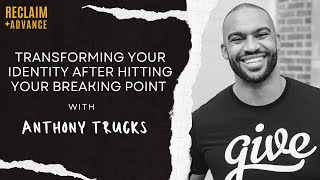
Anthony Trucks talks about losing his football career, family struggles, and mental health battles before transforming through what he calls dark work. He discusses how hitting bottom forced him to rebuild his identity and rethink what legacy means.
So, Anthony, I chose you specifically for the lead off episode of this new podcast because I think you're going to set the culture in the context for what comes next. And I just appreciate you so much because you were very open and authentic about your experiences before authenticity was a buzzword. Like you're doing this stuff for real. You've lived it, you learned it, you're teaching it. And I know you've gone through some challenges in your life. And it's funny, as I'm thinking about it right now, the audience is not aware of what they're in for. Like, this is going to get real deep real quick. And as we were talking before, this is the information people need, right? Not the sugar coated. Hey, it's going to be okay. Hey, sometimes it's not okay. And this is to your point, the dark work you have to use to, to get through it. So I'm excited for this. Are you ready?
Me too, man. Hey, let's rock and roll. I like, I like conversations that make my butt pucker. It's, it's good for everybody.
All right, all right, so let's, let's, let's. I'm gonna give you an easy one to start. This probably won't make your butt pucker, but, but what are you up to these days? Just for context.
Yeah, for context, I, I get to go and hop on stages and talk to companies like Amazon, PayPal, T Mobile. We just signed up with Chick Fil A and Google for some different work. So I get to go out to companies and teach them how to do the work in the dark, to shine in the light. It's a big part of my, my work. So it's teaching, coaching, consulting. Then I'm a dad, I'm a husband, and I'm a friend and I human. Like if you saw me around town, you'd be like, who's that guy with flip flops and sweatpants and a beat up hoodie, right? I'm just a dude, but when I show up in the world, I show up in an amazing way.
All right, so now let's get into this. We're going to get, like I said, really deep very quickly. And what I'd like you to do is share the darkest time of your life, whether it be personal or professional. And if you can give us some lead up to it, what was going on like the few months before, and then maybe there's this, this event that, that really sparked things off. But like I said, this is going to be interesting. So floor is yours.
They Actually connect, they merge. So I. My career was football, right? I'd done football all my life from 13 on. Did it in college, had a blast. You know, I got a chance to play the NFL, did my thing and then it becomes who you are and then it's ripped from you. Mine was an injury tore my shoulder, came home August of 2008. And so I had to come home and figure out who was Anthony without the game of football. That's a heavy answer because nobody has the direct answer. I don't care what you've been doing for your life. If you build into something and then all of a sudden you can't do that thing, you question what you're supposed to do at all. So I try to fill the gaping hole with like, you know, I'm gonna get this business and build it up. So I had this gym business I was gonna start. I did start it. Had a degree in kinesiology, still do, obviously. So I had this whole thing going. And then in the process of trying to build this big name for Anthony Trucks again, Sands football, like I lost myself. I at this time had married high school sweetheart. You know, I have a son from my college years with her. We have two more kids, we have these twins. So as I'm trying to build this business, I'm gone. I'm gone. I'd leave the morning, six in the morning, I wouldn't get back till 10 o' clock at night. And she has a four year old newborn twins by herself all day long. And I'm like a mile and a half away. I'm never there. I'm just trying to build this business. It's going to be great. And the business is failing, so the business is failing, my marriage is failing, my family is failing. And I'm on a trip in Hawaii and I find my wife is having a text conversation with this guy and end up finding out that she's having an affair. And so the other part nobody knows at this moment now is I grew up in foster care, so me having my family holds a massive weight more than anybody can comprehend. And so now this family that I have is being ripped apart. I feel like I'm subjecting my kids to my kind of childhood of like, dad, not in the house. My marriage has fallen apart and it's the only woman I've loved in my entire life from high school. My business isn't doing well because I don't know what I'm doing. I get served eviction papers and I have to figure out to not get evicted from this location and be bankrupt. And I don't even have the physical body I used to have because I'm not playing football because I had an injury, and I can't. Everything that made me me was gone. There was no. There was nothing I could latch onto and be anchored down. It was all floaty. I would find myself not having the physical energy to drive home after work because I'm hurting inside. And I got to go to a gym and be a trainer, and I got to be your happy for the day, but I don't got enough happy for me for the day. So just as, like, this, logging through the days and getting in the car and not having the energy to pick my hand at a steering wheel. I remember one night, it was like a Saturday, because I went to see a client play the game, and my wife had said something on the way out the door. We're still married at this time. And she says something about, like, the marriage, and it was like she made a statement that made it clear that it was not gonna work. We're gonna get divorced. I just. It was something that was, like. It settled in, and I go, shit. Like, this? Is this what's gonna go on? Went to the game, and I was just there, but wasn't there. You know, I was at the game, and then I ended up going UFC fights that night at a buddy's house. And it had been a day of just settling in and settling in and just having this turmoil in my heart. I remember going to this fight, and I sit there at this couch, just sitting at the couch. I remember leaving. I remember getting there and leaving. On the way out, my best friend Jason comes up. He goes, hey, man, we've been here for four hours. He says, you didn't talk to anybody. You didn't move from the seat. He's like, dude, I know you got some stuff going on, and at this time, I hadn't told everybody the true depths of all of it. And he goes, look, I know you got some things you're battling. He says, but I need you to realize this. And this is the four words. He says, this is your. Your reality forwards. And everything came slamming down on my chest in real time. The feeling of betrayal and pain and the business and just everything. Everything you can imagine. And it's interesting as a brain can't always differentiate between the real and the imagined or the real and the emotional. And just the emotional pain felt so physical, I couldn't stop it. And I sent a text to my friends and family Driving off that plane, I said, please tell my kids who their father was. I was headed out to find a store that had sold some rat poison, right? It's 10:45, 10:30 at night. There's nothing open, thankfully. I just drive for, like an hour. I end up in this town called Stockton, California, and I'm at a gas station. I just parked a car, and I'm just, like, sobbing, like, still crying. I couldn't see sometimes through the tears. Like, it just was heavy. And the more I kind of sat there, the kind of. The pain had its wave is the best way to explain it, right? It just. It didn't go away, but it wasn't as sharp and as acute as it had previously been. I kind of paused, and then GPS from my phone. I didn't realize the police found me. They tracked me, found me, like, hey, are you okay? And I go, oh, yeah, I'm fine. You know, I can talk. So I'm telling them I'm fine. Like, we need to go home. So I go home, and I pull up to my house, and there are about 40 people outside that I know that are all out there wondering whether I'm still alive. And the wave of shame that just poured over me was just. It's huge. Like, my dad kind of walked up and I kind of talked to him. And then. And I don't tell this part of the story often. There's a. An ambulance there, and they. You know, when someone's had some problems, they 5150 you. They. They tackle you, wrap you up, and they put you in. They drive you out in the paddy wagon, you know, well, the ambulance showed up, and they're like, you know, they're talking to me, and I got, you know, I can. I can talk. And I'm. I'm, at this point, I'm calmer, and I'm kind of letting it go. And they go, look, we're here to take you. And they go, you don't have to go. Like, we're obviously aware. You're not. You're not the ones that's kicking, screaming. You're like, we know. You don't have to go. But I was like, no, I'd like to. And I did, because I didn't want to face the people. There was so much shame. Was like, I don't. I don't want to face these people right now. And so I got in the ambulance and it took me off. And like, that was kind of like this. The bottom. Bottom of the bottoms, you know, and. And There was a huge climb out of that, but things got really dark, you know, and I had to figure out how to climb back out. And the way I did, the start of it, the catalyst, we'll call it, is, you know, I came home that night, wife and I had some conversations. It was still heading towards divorce, and it eventually did. And the two days later, I show up to my gym because I just. Gym business. It's like, well, how do you enter life after you've done that? There's no game plan. You just go to life. So I just show up to work like nothing happened. One of the guys, my former high school teammate, buddy of mine, guy worked for me, takes a head back and goes, hey, I need to have a conversation. Because I need you to realize two things. One, you better never in your life even consider that again. Because when I found out what happened, I. I threw up in a toilet. Said I thought I lost a hero. I go, what are you talking about, a hero? He goes, like, you may not know it, but this is the second thing, is a lot of people in this town, they know what you've gone through in life and to see what you've created. Like, you're a hero to a lot of people, myself included, even though I'm close to. And he says, you've made an impact in a lot of people's lives unintentionally. And that was a seed. And I will not say that that was the moment in time I took the seed. It's just that the seed was there. I wasn't in a place to help anybody's life, to do what I do now by any means. I wasn't in a spot to go like, hey, guys, be happy. I wasn't happy, right? But it. Seed of a simple reality and this kind of framing of, well, if I'd been doing this stuff accidentally to positively impact people, what if someday I used all this craziness of my life in foster care and given away and the beatings and all that kind of stuff. What if that can be a benefit to the world sometime later? And I probably say about four, four, four, five years, like maybe four or five years later, the seed got planted, it was watered, and it grew into what it is now over time.
What were you doing between those. Those four and five years, in between the seed being planted and you becoming the Anthony Trucks that we know now?
I was avoiding the truth. That's what you do, right? You. You realize what it is, and you don't want to. It's all her Fault the marriage fell apart. How? You know, you horrible person, you blame it on her. You blame the business failures and not being great on the economy. You blame being out of shape on your injury. You know, it's a bunch. You just blame it because. Because you don't want to accept it. And it took me three years of, you know, doing all the things, partying, hanging out, drinking, you know, doing all the sex and multiple partners and stuff. You think it's like it's gonna fill the hole, and it's empty. Very, very empty. And you wake up one day, and I did. I unfortunately lost my mom, my adoptive mom, who was the reason I wasn't a statistic. And I promised to myself and to her I'd figure a way to fix my life. Took me another 14 months to finally wake up on New Year's Day with a strange woman from Russia. I'd flown out in my bed, hookah on my tongue, and just going, I hate this man. And so I went through that dark alley, and then finally, like, that was the bottom, and I was just hanging out down there. And that was the moment I go, I can't do this. This isn't what a father would do. That's going to be a great man for his boys to mimic or his daughter to look up to. My mom wouldn't approve of this. She's in heaven looking down. I got to fix something. And then I started doing the work. And the biggest part of it was just accepting I was the common nominator in my failures. Whether I allowed it or I was allowing it to continue to pervade into my life. It was like this thing where I finally go, okay, I gotta change some things. And so that was the start of it. And to be honest, the initial kickstart was about three, four months of me just honing in on me, asking a ton of dark questions I didn't want answers to, having a bunch of really hard conversations, a bunch of hard apologies. I mean, I talked to the guy my wife had an affair with. I apologized to her for my role in this situation, which was she made a crappy choice, but it took two people to get that relationship to a point where she thought she needed to make a choice. You know, these little nuances kind of trickled in. And so the more I did that, the better I got clarity, and I got the old baggage off and could actually feel free to move into the next stage of my life.
I think often when people have great challenges, they try to go around it. They try to go under it, but you got to go through it. And on my end, my. My darkest time was when I lost my son. My son TJ and when I would go to the gym to try to get my mind off it, I would walk by this car that had a license plate that said Dr. T.J. every day, Dr. T.J. i'm like, man, I don't need this in my face. Because I was thinking, he could be a doctor, he could be a lawyer, he could be an entrepreneur, so and so forth. But one thing I realized is I could have walked the other way around the block. I didn't have to walk by that car. I was forcing myself to, because for a while, like you, I wasn't pretending like it never happened, but I wasn't dealing with it. And I think sometimes you can use anger as motivation, like, keep on moving forward, but the exhaust from that, like, the.
The.
It's just. It's. It's toxic, and it will creep up on you. And I think that's our. We're aligned. And I'm wondering, did you. If you feel comfortable sharing this, did other people in your family also have some kind of spiritual transformation, almost like an identity shift, as you're saying, based on you setting. Setting an example for them?
Yes and no. I think they're my wife. Over time, she found that the way I changed, I think led her to change. We were separate, by the way. Divorced, custody battle, all the good stuff. So the things we're having as conversation, discussions beyond that point, they were me being a shining example of how I wanted to live my life. And I think her realizing, because she's like, I woke up one day and I looked, you know, in the house. No one was at the house. The kids are with you. She's like, I was hungover. No one was answering the phone. And I just had this moment of sitting here going like this. I can't do this. Like, she had her own realization, and I think it woke her up to it, but she didn't have that or even have the. I think the feeling that she could step into a better part of life, having done what she did in the marriage without me giving her grace and forgiving her. And so it was. It gave her a catalyst to be able to feel like she could open up and actually go into the next stage of her life, too, I think. And then friends that were around my life, they're doing stuff with me, you know, like, they. They grew up, too. And so I think I have an effect on people that are near me. In a way that I may not even realize this is kind of passive, but. But, yes, I think me being a kickstart did help kickstart other people's lives as well.
Yeah. It's interesting just because, like, you and my wife went to college together at the same time. You're both athletes, and. And correct me if I'm wrong, but, like, you were the man on campus. Like, you were that guy. Right. So people adored you, and you had a lot of influence. And it's funny, like, 20 years later, you still have a lot of influence. You're still the man, and you're just finding a different way to use this charisma in storytelling and sharing your experiences to help others.
Yeah, it's kind of. I don't know. I don't know where it came from. I don't know that I care to have that. Like, I don't want to be the band. I was a homecoming king in high school. I didn't even care to be. You know, I just have always tried to be a good dude. I said, if I could be a good dude, the rest of it kind of takes care of itself. And then if I could be a good dude with purpose. Right. Then you can take care of what you want to take care of. And so, yeah, I think there is definitely something within that, and I don't know where it fits, but I try to just be me, genuinely just be whoever I. That's. Maybe a gracious guy some days. May not be the most gracious guy some days. I'll apologize for the things that I think should be apologized for, but I don't apologize for people's feelings. It's one thing I don't do. Like, if I made you feel bad, it's like, well, let me. Let me. Did I make you feel bad? Because it was, like, a really disrespectful thing. Yes. But if you just feel bad because I told you the truth, I could tell you I'm sorry, but I wouldn't be. And I'll tell you that, like, so there's a nuance to it, but I think part of. Is, like you said, I don't know if it's charisma. I just care to talk to people. I care about who you are, and I'm patient with people. And I think that the idea of the charisma to. It's just the natural part of how it comes off. But I actually do care to talk and to listen and to have these. There's no ulterior motives. I'm just here with people, and I think they feel that in a good way, which I think turns into people liking me. Yeah.
Can you explain dark work and how it might help our listeners get through some challenging situations they might be facing?
Oh, yeah, definitely. Dark work is the work you do in the dark so you can shine in the light later on. All of us have a desire to create something and shine brightest in some next stage. It could be in the marriage and the parenting. Your business. Right. But it's not going to be predicated on things you do that are cheered on. It's usually the things that nobody sees. There's a lot that I do that no one will ever see, and I don't need to have praise for that. But it does develop the skill that I need. It develops the muscles I need, the willpower I need, as well as the brazenness, the confidence that go to deploy that skill in the world. So dark work is not just the things you do to achieve. It's the things you do to become. And when you become, you achieve. And that's kind of what I look at for folks. It's. You have to optimize your identity at a higher level to perform at a higher level. And so I don't think you can attain or sustain a dream above your identity. So I do work in the dark to elevate the identity so that you can then shine brightest in the light later on.
I love it. Anthony, how do you want your legacy to be defined?
My kids, man. I want people to meet my kids in the future and go, wait, your dad was. Oh, he was a good dude. That's what I want. The rest of the stuff, it's all good. Like, oh, he has his name on a building. Like, cool. How many names on buildings do I look at and go, I'm gonna look that guy up, you know? So I think we live for that kind of flow. If you're. If I'm not already, like, a president or someone, that's gonna go down in the history books for that. My thing is, I want to leave a fulfilling legacy in my children and in my, you know, my nuance of whatever business I might create and help people do something cool. So the legacy is not just this thing where it's a staple and nobody knows you, but I want it to be within the people that actually knew me and knew my life.
When Year now, my personal philosophy is live your legacy. So if that's how you want to be remembered, live that way today. And what I'm wondering is, Just based on your childhood and your upbringing, do you feel more pressure to be an almost, like, perfect dad because of the childhood you had? And how do you deal with that pressure?
I don't know if it's a pressure to be a perfect dad, per se. No. But it is a pressure to. To make sure that I'm. I'm living in the direction of the kind of dad I want to be. I know that there's like. So as a foster kid, like, you don't have a good example. I don't know what it is. And. And I just know that my pressure doesn't come outwardly. It's like, I love my kids, man. I want my kids to be great. So the pressure, if anything, is like, make sure my kids are great. So in that aspect of what I create when I do, how I show up, yeah, the pressure is the same as any other parent. There is, however, pressure to make sure I don't diminish the teachings by doing dumb stuff in life. I can teach them all day long, but if later on they find out some weird, dark secret or something crazy, right? They're gonna be like, damn, can I listen to anything he said? And then you start messing with people's psyche and the confidence. So the pressure I have is just to stay clean and clear. The good thing is I don't do dumb stuff, man. I got a great marriage. I love doing what I do is simple. So I live in a really cool space of, like, that's never gonna happen. I don't do things that are stupid in the background that someone's gonna all of a sudden see and go, oh, I found it out. So I don't have that pressure. I live a light life. I get to go and do cool things and travel. I fall asleep in, like, 30 seconds each night because my heart is light. So there is a pressure, but it's not the same. Kind of, like, I gotta be great kind of pressure.
Yeah. Your point about being able to sleep at night is. Is real because on my end, I. I had trouble with sleeping, so I resorted to alcohol. And I'm just, like, drinking every night. That was my thing. And as you know, if you drink alcohol, you might fall asleep and you wake up and then you're like, oh, you're faced with the reality, right? You're like, oh, I'm awake again. What I'm going to do, drink some more. And I used to hate it when, like, I'd hear the birds chirping in the sun coming up, like, normally now I welcome the day. Now I welcome the morning. All right, let's get it. But back then, I was just like, oh, man, another day. Like, it wasn't. Wasn't something forward to.
So, yeah, yeah, I used to go to the gym. There's times that I had that for sure. I would go to the gym and I would work out, like, with my clients, and we're like, all right, be in shape. And I'd go home and I would hit a bottle, like a. Probably two or three cans of, like, Blue Moon, put some, you know, orange peels in it, and, like, drinking beer in the middle of the day, and then go to work, be like, hey, get in shape again. I've had those days. I mean, it's. I don't. I don't like that they happened, but I appreciate that they did. You know, I don't hate them because it gives me a juxtaposition of joy and happiness, of what it can and should be. What I think most people don't have that. And so while I don't want my kids to have to go through it, I wish they could just listen through my experiences. My guess is they're probably gonna have to do some dumb stuff, too, to learn it. Learn it. But. But for me, those are the things that anchor me deeply to these moments now of going, like, I don't wanna mess up that. I wanna make sure that the clean, pure guy that they see me to be, it's who I really am, so that the second shoe never drops, you know, that they can actually live off their life and go, man, like, I had a really good dad and a great experience with him, and, like, that's what I want. Even people that I meet and, you know, hop on a stage, you never know. Nowadays, there's people that. In our position of what we do and share, like, you always find these backside stories, and that'll never be me. There's. I don't do anything. Like, I'm not explaining. Like, I am here with my family every day. You can't. I'm not talked off. And, like, I'm going to Mexico for a few days, obviously, when I get home. And I'm out there, you know, chasing leprechauns and trying to find. You know, it's like, I'm just regular dude. I'm here. So it allows me to live a light life. But I did. I did experience those crazy windows. So it gives me a perspective of what that's like and how much that doesn't benefit me in the long run.
Yeah, I would not agree that you're a regular dude, but I think you're a good example of how we can ascend if we go through this identity shift and this dark work and just really take steps every day to live in the vision that we have for our life. So, Anthony, this has been amazing. I appreciate it. And like I said, I wanted you specifically to be the lead off episode, so. So thank you for, again, your transparency and sharing those lessons you learned the hard way. Appreciate it.
Hey, welcome. I'm glad you're doing this because there is a plethora of things out there that are all about the good, and it's amazing. And I think that people, they fail to connect with those sometimes because they. They don't know that there's something to connect with beyond that of a person's life. So I love you doing this because you get to get people behind the scenes. Because I can show you the Ninja War and the TV show stuff, and people go like, yeah, but I didn't do that. I can't do that. But they don't realize that the only reason that I'm there is because of the crap I went through and got through. So it gives them a perspective like, oh, shoot, this person's human. If they can do that, maybe I actually could do it too. And that's the gift I think people need nowadays.
Awesome. Thanks, brother. Appreciate it.
Welcome.
More from Terry







When you want to quit, don’t. #FitnessOver40 #MindsetShift #TiredIsNotAnExcuse #PersonalGrowth




You’re gonna want to give up. Don’t. #mindsetshift #motivationalquotes #motivation #dontgiveup